
How To Develop Thermal Management Solutions For Dry Electrodes
JUN 3, 20269 MIN READ
Generate Your Research Report Instantly with AI Agent
Patsnap Eureka helps you evaluate technical feasibility & market potential.
Thermal Management for Dry Electrodes Background and Goals
Dry electrodes represent a paradigm shift in electrochemical energy storage systems, eliminating the need for liquid electrolytes while maintaining high performance characteristics. These solid-state interfaces have emerged as critical components in next-generation battery technologies, particularly in lithium-ion and solid-state battery applications. The evolution from traditional wet electrodes to dry electrode configurations has been driven by demands for enhanced safety, improved energy density, and reduced manufacturing complexity.
The historical development of dry electrode technology traces back to early solid-state electrochemistry research in the 1970s, with significant acceleration occurring in the past decade as battery manufacturers sought alternatives to conventional slurry-based electrode production. This technological transition has introduced unique thermal challenges that were previously managed through liquid electrolyte circulation and evaporation cooling mechanisms.
Thermal management in dry electrode systems presents fundamentally different challenges compared to conventional battery architectures. Without liquid electrolytes to facilitate heat dissipation, dry electrodes experience localized temperature variations that can significantly impact performance, safety, and longevity. Heat generation occurs primarily through ohmic resistance, electrochemical reactions, and mechanical stress during charge-discharge cycles, creating thermal gradients that must be carefully controlled.
The primary objective of developing effective thermal management solutions for dry electrodes centers on maintaining optimal operating temperatures while preventing thermal runaway conditions. Target temperature ranges typically fall between 20-60°C for most applications, with temperature uniformity requirements of ±5°C across electrode surfaces. These specifications ensure consistent electrochemical kinetics, minimize degradation mechanisms, and preserve structural integrity of the solid-state interfaces.
Key performance goals include achieving thermal conductivity improvements of 200-500% compared to baseline configurations, reducing peak operating temperatures by 15-25°C, and extending operational lifespan by 30-50% through effective heat dissipation strategies. Additionally, thermal management solutions must integrate seamlessly with existing manufacturing processes while maintaining cost-effectiveness and scalability for commercial production.
The strategic importance of this technology extends beyond immediate performance benefits, positioning organizations to capitalize on the growing solid-state battery market projected to reach $8.7 billion by 2030, while addressing critical safety and reliability requirements in automotive, aerospace, and grid storage applications.
The historical development of dry electrode technology traces back to early solid-state electrochemistry research in the 1970s, with significant acceleration occurring in the past decade as battery manufacturers sought alternatives to conventional slurry-based electrode production. This technological transition has introduced unique thermal challenges that were previously managed through liquid electrolyte circulation and evaporation cooling mechanisms.
Thermal management in dry electrode systems presents fundamentally different challenges compared to conventional battery architectures. Without liquid electrolytes to facilitate heat dissipation, dry electrodes experience localized temperature variations that can significantly impact performance, safety, and longevity. Heat generation occurs primarily through ohmic resistance, electrochemical reactions, and mechanical stress during charge-discharge cycles, creating thermal gradients that must be carefully controlled.
The primary objective of developing effective thermal management solutions for dry electrodes centers on maintaining optimal operating temperatures while preventing thermal runaway conditions. Target temperature ranges typically fall between 20-60°C for most applications, with temperature uniformity requirements of ±5°C across electrode surfaces. These specifications ensure consistent electrochemical kinetics, minimize degradation mechanisms, and preserve structural integrity of the solid-state interfaces.
Key performance goals include achieving thermal conductivity improvements of 200-500% compared to baseline configurations, reducing peak operating temperatures by 15-25°C, and extending operational lifespan by 30-50% through effective heat dissipation strategies. Additionally, thermal management solutions must integrate seamlessly with existing manufacturing processes while maintaining cost-effectiveness and scalability for commercial production.
The strategic importance of this technology extends beyond immediate performance benefits, positioning organizations to capitalize on the growing solid-state battery market projected to reach $8.7 billion by 2030, while addressing critical safety and reliability requirements in automotive, aerospace, and grid storage applications.
Market Demand for Advanced Dry Electrode Thermal Solutions
The global battery industry is experiencing unprecedented growth driven by the rapid expansion of electric vehicles, energy storage systems, and portable electronics. This surge has created substantial demand for advanced electrode technologies that can deliver superior performance while addressing critical thermal management challenges. Dry electrodes represent a revolutionary approach that eliminates the need for toxic solvents used in traditional wet electrode manufacturing, offering significant environmental and cost advantages.
Electric vehicle manufacturers are increasingly seeking thermal management solutions that can handle higher energy densities and faster charging rates. Current lithium-ion batteries with conventional electrodes face thermal runaway risks and performance degradation under extreme temperature conditions. The automotive sector requires electrode thermal management systems capable of operating efficiently across temperature ranges from negative forty to positive sixty degrees Celsius while maintaining consistent performance and safety standards.
Energy storage applications for grid-scale deployments present unique thermal challenges due to their large-scale nature and continuous operation requirements. These systems demand robust thermal management solutions that can maintain optimal operating temperatures over extended periods while minimizing energy losses. The growing deployment of renewable energy infrastructure has intensified the need for reliable, thermally stable electrode technologies that can support long-duration energy storage applications.
Consumer electronics manufacturers face increasing pressure to develop thinner, more powerful devices with extended battery life. This trend drives demand for dry electrode thermal solutions that can manage heat dissipation in compact form factors while maintaining high energy density. The miniaturization of electronic devices requires innovative thermal management approaches that integrate seamlessly with advanced electrode architectures.
Industrial applications including aerospace, medical devices, and telecommunications equipment require specialized thermal management solutions that can operate reliably under extreme conditions. These sectors demand dry electrode technologies with precise thermal control capabilities to ensure consistent performance in mission-critical applications where failure is not acceptable.
The regulatory landscape increasingly favors environmentally sustainable manufacturing processes, creating additional market pull for dry electrode technologies. Government incentives and environmental regulations are accelerating adoption of cleaner battery manufacturing methods, driving investment in advanced thermal management solutions that support sustainable production while delivering superior performance characteristics.
Electric vehicle manufacturers are increasingly seeking thermal management solutions that can handle higher energy densities and faster charging rates. Current lithium-ion batteries with conventional electrodes face thermal runaway risks and performance degradation under extreme temperature conditions. The automotive sector requires electrode thermal management systems capable of operating efficiently across temperature ranges from negative forty to positive sixty degrees Celsius while maintaining consistent performance and safety standards.
Energy storage applications for grid-scale deployments present unique thermal challenges due to their large-scale nature and continuous operation requirements. These systems demand robust thermal management solutions that can maintain optimal operating temperatures over extended periods while minimizing energy losses. The growing deployment of renewable energy infrastructure has intensified the need for reliable, thermally stable electrode technologies that can support long-duration energy storage applications.
Consumer electronics manufacturers face increasing pressure to develop thinner, more powerful devices with extended battery life. This trend drives demand for dry electrode thermal solutions that can manage heat dissipation in compact form factors while maintaining high energy density. The miniaturization of electronic devices requires innovative thermal management approaches that integrate seamlessly with advanced electrode architectures.
Industrial applications including aerospace, medical devices, and telecommunications equipment require specialized thermal management solutions that can operate reliably under extreme conditions. These sectors demand dry electrode technologies with precise thermal control capabilities to ensure consistent performance in mission-critical applications where failure is not acceptable.
The regulatory landscape increasingly favors environmentally sustainable manufacturing processes, creating additional market pull for dry electrode technologies. Government incentives and environmental regulations are accelerating adoption of cleaner battery manufacturing methods, driving investment in advanced thermal management solutions that support sustainable production while delivering superior performance characteristics.
Current Thermal Challenges in Dry Electrode Applications
Dry electrode applications face significant thermal challenges that fundamentally impact their performance, reliability, and commercial viability. The absence of liquid electrolytes, while eliminating certain safety concerns, creates unique heat dissipation problems that require innovative thermal management approaches. These challenges are particularly pronounced in high-power applications where rapid charge-discharge cycles generate substantial heat loads.
The primary thermal challenge stems from the inherently higher electrical resistance of dry electrode systems compared to their wet counterparts. This increased resistance leads to elevated Joule heating during operation, creating localized hot spots that can exceed safe operating temperatures. The heat generation is further amplified by the solid-state interfaces between electrode materials and current collectors, which often exhibit poor thermal conductivity and create thermal bottlenecks.
Interface thermal resistance represents another critical challenge in dry electrode systems. The mechanical contact between solid components typically results in microscopic air gaps and surface irregularities that impede heat transfer. These thermal interface resistances can be orders of magnitude higher than the bulk material thermal conductivity, creating significant temperature gradients across relatively small distances.
Temperature uniformity across electrode surfaces poses additional complications. Non-uniform temperature distributions lead to uneven electrochemical reactions, reduced efficiency, and accelerated degradation of electrode materials. Hot spots can trigger thermal runaway conditions in certain applications, while cold regions may experience reduced ionic conductivity and poor performance.
The thermal expansion mismatch between different materials in dry electrode assemblies creates mechanical stress that compounds thermal management difficulties. As temperatures fluctuate during operation, differential expansion rates can cause delamination, cracking, or loss of electrical contact, further increasing thermal resistance and creating additional heat generation points.
Packaging constraints in dry electrode applications often limit the available space for conventional thermal management solutions. The need for compact, lightweight designs restricts the use of traditional heat sinks, fans, or liquid cooling systems, necessitating innovative approaches that integrate thermal management functionality directly into the electrode structure.
Transient thermal behavior presents unique challenges as dry electrodes must handle rapid temperature changes during dynamic operating conditions. The thermal mass and heat capacity of solid-state systems differ significantly from liquid electrolyte systems, requiring specialized thermal modeling and management strategies to prevent temperature overshoot and ensure stable operation across varying load conditions.
The primary thermal challenge stems from the inherently higher electrical resistance of dry electrode systems compared to their wet counterparts. This increased resistance leads to elevated Joule heating during operation, creating localized hot spots that can exceed safe operating temperatures. The heat generation is further amplified by the solid-state interfaces between electrode materials and current collectors, which often exhibit poor thermal conductivity and create thermal bottlenecks.
Interface thermal resistance represents another critical challenge in dry electrode systems. The mechanical contact between solid components typically results in microscopic air gaps and surface irregularities that impede heat transfer. These thermal interface resistances can be orders of magnitude higher than the bulk material thermal conductivity, creating significant temperature gradients across relatively small distances.
Temperature uniformity across electrode surfaces poses additional complications. Non-uniform temperature distributions lead to uneven electrochemical reactions, reduced efficiency, and accelerated degradation of electrode materials. Hot spots can trigger thermal runaway conditions in certain applications, while cold regions may experience reduced ionic conductivity and poor performance.
The thermal expansion mismatch between different materials in dry electrode assemblies creates mechanical stress that compounds thermal management difficulties. As temperatures fluctuate during operation, differential expansion rates can cause delamination, cracking, or loss of electrical contact, further increasing thermal resistance and creating additional heat generation points.
Packaging constraints in dry electrode applications often limit the available space for conventional thermal management solutions. The need for compact, lightweight designs restricts the use of traditional heat sinks, fans, or liquid cooling systems, necessitating innovative approaches that integrate thermal management functionality directly into the electrode structure.
Transient thermal behavior presents unique challenges as dry electrodes must handle rapid temperature changes during dynamic operating conditions. The thermal mass and heat capacity of solid-state systems differ significantly from liquid electrolyte systems, requiring specialized thermal modeling and management strategies to prevent temperature overshoot and ensure stable operation across varying load conditions.
Existing Thermal Management Solutions for Dry Electrodes
01 Heat dissipation structures and cooling systems for dry electrodes
Implementation of specialized heat dissipation structures and active cooling systems to manage thermal buildup in dry electrode applications. These systems utilize heat sinks, thermal conductive materials, and forced air or liquid cooling mechanisms to maintain optimal operating temperatures and prevent electrode degradation due to excessive heat.- Heat dissipation structures and cooling systems for dry electrodes: Implementation of specialized heat dissipation structures and active cooling systems to manage thermal buildup in dry electrode applications. These systems utilize heat sinks, thermal conductive materials, and forced air or liquid cooling mechanisms to maintain optimal operating temperatures and prevent electrode degradation.
- Thermal interface materials and conductive pathways: Development of advanced thermal interface materials and conductive pathways to efficiently transfer heat away from dry electrode contact points. These materials provide enhanced thermal conductivity while maintaining electrical isolation, ensuring effective heat management without compromising electrode performance.
- Temperature monitoring and control systems: Integration of temperature sensing and automated control systems for real-time thermal management of dry electrodes. These systems continuously monitor electrode temperatures and adjust cooling parameters or operational settings to maintain safe operating conditions and extend electrode lifespan.
- Electrode material composition for thermal stability: Optimization of dry electrode material composition and structure to enhance thermal stability and heat resistance. This includes the use of thermally stable substrates, heat-resistant coatings, and materials with improved thermal properties to reduce heat generation and improve thermal management.
- Packaging and enclosure thermal design: Design of specialized packaging and enclosure systems that facilitate thermal management for dry electrode assemblies. These designs incorporate ventilation systems, thermal barriers, and heat distribution features to create optimal thermal environments for electrode operation.
02 Thermal interface materials and conductive pathways
Development of advanced thermal interface materials and conductive pathways to efficiently transfer heat away from dry electrode contact points. These materials provide enhanced thermal conductivity while maintaining electrical performance, creating effective heat transfer routes from the electrode to external cooling elements.Expand Specific Solutions03 Temperature monitoring and control systems
Integration of temperature sensing and automated control systems for real-time thermal management of dry electrodes. These systems continuously monitor electrode temperatures and automatically adjust cooling parameters or operational settings to maintain safe thermal conditions and prevent overheating damage.Expand Specific Solutions04 Electrode design optimization for thermal performance
Structural and material optimization of dry electrode designs to inherently improve thermal characteristics. This includes electrode geometry modifications, material selection for better heat distribution, and surface treatments that enhance natural heat dissipation while maintaining electrical contact quality.Expand Specific Solutions05 Thermal protection and safety mechanisms
Implementation of thermal protection circuits and safety mechanisms to prevent electrode damage from excessive heat exposure. These systems include thermal cutoff switches, protective coatings, and emergency cooling protocols that activate when temperature thresholds are exceeded to ensure safe operation.Expand Specific Solutions
Key Players in Dry Electrode and Thermal Management Industry
The thermal management solutions for dry electrodes market represents an emerging sector within the broader energy storage and electric vehicle industries, currently in its early development stage with significant growth potential. The market is driven by the increasing adoption of dry electrode technology in lithium-ion batteries, which offers advantages in manufacturing efficiency and cost reduction. Key players demonstrate varying levels of technological maturity, with specialized companies like Pixion Batteries and LICAP Technologies leading in dry electrode processing innovations, while established automotive manufacturers such as Nissan Motor, China FAW, and GM Global Technology Operations are integrating thermal management solutions into their electric vehicle platforms. Battery manufacturers including LG Energy Solution and VARTA Microbattery are advancing electrode technologies, supported by thermal management specialists like Gentherm, Advanced Cooling Technologies, and Valeo Thermal Systems. The competitive landscape also includes major technology corporations such as Intel, IBM, and Microsoft Technology Licensing, alongside research institutions like Texas A&M University, indicating strong cross-industry collaboration and substantial R&D investment in this nascent but rapidly evolving market segment.
Gentherm, Inc.
Technical Solution: Gentherm develops advanced thermal management solutions specifically designed for dry electrode applications in battery systems. Their technology focuses on precision temperature control using thermoelectric cooling and heating elements integrated directly into electrode assemblies. The system employs micro-channel cooling plates with optimized fluid dynamics to maintain uniform temperature distribution across dry electrode surfaces. Their proprietary thermal interface materials ensure efficient heat transfer while maintaining electrical isolation. The solution includes real-time temperature monitoring with feedback control algorithms that adjust cooling/heating power based on electrode performance metrics and ambient conditions.
Strengths: Proven expertise in automotive thermal management, precise temperature control capabilities. Weaknesses: Higher power consumption, complex integration requirements.
LG Energy Solution Ltd.
Technical Solution: LG Energy Solution has developed comprehensive thermal management systems for dry electrode battery cells, focusing on passive and active cooling strategies. Their approach integrates phase change materials (PCMs) within the electrode structure to absorb excess heat during high-rate charging and discharging cycles. The system combines aluminum heat spreaders with graphite thermal pads to create efficient heat dissipation pathways. Advanced thermal modeling software optimizes the placement of cooling elements to prevent hot spots and ensure uniform temperature distribution across large-format dry electrode assemblies used in electric vehicle applications.
Strengths: Large-scale manufacturing capabilities, integrated battery system expertise. Weaknesses: Limited customization for specialized applications, dependency on material suppliers.
Core Thermal Innovations in Dry Electrode Design
Optimized method for thermal control of electrochemical storage devices
PatentInactiveJP2014522548A
Innovation
- A method using a lumped parameter model to predict core temperature by establishing an electrochemical and thermal model with multiple parameters, considering electrode-electrolyte interfaces, charge redistribution, and thermal diffusion, allowing for real-time core temperature calculation and thermochemical runaway prevention.


Thermal management using variation of thermal resistance of thermal interface
PatentWO2021138177A1
Innovation
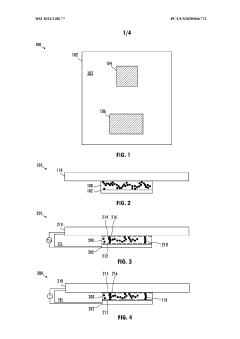
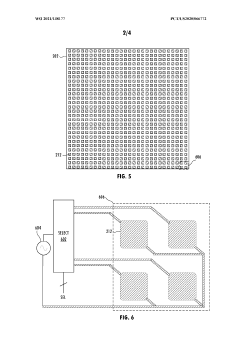
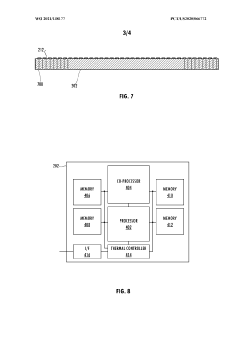
- A thermal management system that uses a thermal interface material with thermally conductive particles suspended in a fluid, where an electric field is applied to align these particles between electrodes, creating a high thermal conductivity path specifically at hot spots, reducing thermal resistance and enhancing localized cooling.

Safety Standards for Electrode Thermal Management Systems
The development of thermal management solutions for dry electrodes necessitates adherence to comprehensive safety standards that govern both design parameters and operational protocols. Current regulatory frameworks primarily draw from established electrical safety standards such as IEC 60601 series for medical devices and IEC 62133 for battery systems, which provide foundational guidelines for thermal behavior and temperature limits in electrode applications.
Temperature threshold specifications represent a critical component of safety standards, typically mandating maximum surface temperatures not exceeding 41°C for patient-contacting electrodes during continuous operation. These limits are derived from extensive biocompatibility studies and thermal injury prevention research, ensuring that prolonged skin contact remains safe across diverse patient populations and environmental conditions.
Material safety requirements encompass both thermal and chemical stability criteria, demanding that electrode substrates and thermal interface materials maintain structural integrity across operational temperature ranges of -10°C to 60°C. Standards specify flame retardancy ratings, typically requiring UL94 V-0 classification for polymer components, while metallic elements must demonstrate corrosion resistance under thermal cycling conditions.
Electromagnetic compatibility standards become particularly relevant for active thermal management systems incorporating fans, thermoelectric coolers, or heating elements. IEC 60601-1-2 establishes emission limits and immunity requirements, ensuring that thermal control circuits do not interfere with sensitive medical equipment or wireless communication systems commonly present in clinical environments.
Testing protocols mandate accelerated aging assessments under elevated temperature conditions, typically involving 1000-hour exposure cycles at maximum rated temperatures. These evaluations verify long-term reliability and identify potential failure modes such as adhesive degradation, conductor fatigue, or insulation breakdown that could compromise patient safety.
Quality management systems must incorporate thermal validation procedures throughout the product lifecycle, from initial design verification through manufacturing process controls and post-market surveillance. Documentation requirements include thermal modeling reports, temperature mapping studies, and risk analysis matrices that demonstrate compliance with applicable safety standards and regulatory requirements for electrode thermal management systems.
Temperature threshold specifications represent a critical component of safety standards, typically mandating maximum surface temperatures not exceeding 41°C for patient-contacting electrodes during continuous operation. These limits are derived from extensive biocompatibility studies and thermal injury prevention research, ensuring that prolonged skin contact remains safe across diverse patient populations and environmental conditions.
Material safety requirements encompass both thermal and chemical stability criteria, demanding that electrode substrates and thermal interface materials maintain structural integrity across operational temperature ranges of -10°C to 60°C. Standards specify flame retardancy ratings, typically requiring UL94 V-0 classification for polymer components, while metallic elements must demonstrate corrosion resistance under thermal cycling conditions.
Electromagnetic compatibility standards become particularly relevant for active thermal management systems incorporating fans, thermoelectric coolers, or heating elements. IEC 60601-1-2 establishes emission limits and immunity requirements, ensuring that thermal control circuits do not interfere with sensitive medical equipment or wireless communication systems commonly present in clinical environments.
Testing protocols mandate accelerated aging assessments under elevated temperature conditions, typically involving 1000-hour exposure cycles at maximum rated temperatures. These evaluations verify long-term reliability and identify potential failure modes such as adhesive degradation, conductor fatigue, or insulation breakdown that could compromise patient safety.
Quality management systems must incorporate thermal validation procedures throughout the product lifecycle, from initial design verification through manufacturing process controls and post-market surveillance. Documentation requirements include thermal modeling reports, temperature mapping studies, and risk analysis matrices that demonstrate compliance with applicable safety standards and regulatory requirements for electrode thermal management systems.
Material Science Advances in Thermally Conductive Electrodes
The development of thermally conductive electrodes represents a critical frontier in material science, particularly for dry electrode applications where traditional liquid electrolyte cooling mechanisms are absent. Recent advances in nanomaterial engineering have enabled the creation of electrode materials with significantly enhanced thermal conductivity while maintaining electrochemical performance.
Carbon-based nanomaterials have emerged as leading candidates for thermally conductive electrode development. Graphene and carbon nanotubes demonstrate exceptional thermal conductivity values exceeding 2000 W/mK, making them ideal additives for electrode composites. Multi-walled carbon nanotubes (MWCNTs) have shown particular promise when integrated into electrode matrices, creating percolation networks that facilitate efficient heat dissipation pathways.
Metal matrix composites represent another significant advancement in electrode thermal management. Copper and aluminum-based composites incorporating ceramic reinforcements such as aluminum nitride (AlN) and boron nitride (BN) have achieved thermal conductivities ranging from 200-400 W/mK. These materials offer excellent electrical conductivity alongside enhanced thermal properties, making them suitable for high-power dry electrode applications.
Polymer-based thermally conductive materials have gained attention for their processing flexibility and cost-effectiveness. Advanced thermoplastic composites filled with thermally conductive fillers like graphite platelets and ceramic particles can achieve thermal conductivities of 5-20 W/mK while maintaining mechanical integrity and electrical performance required for electrode applications.
Surface modification techniques have revolutionized electrode thermal management capabilities. Atomic layer deposition (ALD) and chemical vapor deposition (CVD) enable the creation of ultra-thin thermally conductive coatings on electrode surfaces. These coatings, typically consisting of materials like aluminum oxide or diamond-like carbon, provide enhanced thermal pathways without significantly impacting electrode electrochemical properties.
Hybrid material architectures combining multiple thermally conductive phases represent the cutting edge of electrode thermal management. Three-dimensional graphene foams infiltrated with phase change materials or thermally conductive polymers create multifunctional electrodes capable of both active heat dissipation and thermal energy storage, addressing the complex thermal challenges inherent in dry electrode systems.
Carbon-based nanomaterials have emerged as leading candidates for thermally conductive electrode development. Graphene and carbon nanotubes demonstrate exceptional thermal conductivity values exceeding 2000 W/mK, making them ideal additives for electrode composites. Multi-walled carbon nanotubes (MWCNTs) have shown particular promise when integrated into electrode matrices, creating percolation networks that facilitate efficient heat dissipation pathways.
Metal matrix composites represent another significant advancement in electrode thermal management. Copper and aluminum-based composites incorporating ceramic reinforcements such as aluminum nitride (AlN) and boron nitride (BN) have achieved thermal conductivities ranging from 200-400 W/mK. These materials offer excellent electrical conductivity alongside enhanced thermal properties, making them suitable for high-power dry electrode applications.
Polymer-based thermally conductive materials have gained attention for their processing flexibility and cost-effectiveness. Advanced thermoplastic composites filled with thermally conductive fillers like graphite platelets and ceramic particles can achieve thermal conductivities of 5-20 W/mK while maintaining mechanical integrity and electrical performance required for electrode applications.
Surface modification techniques have revolutionized electrode thermal management capabilities. Atomic layer deposition (ALD) and chemical vapor deposition (CVD) enable the creation of ultra-thin thermally conductive coatings on electrode surfaces. These coatings, typically consisting of materials like aluminum oxide or diamond-like carbon, provide enhanced thermal pathways without significantly impacting electrode electrochemical properties.
Hybrid material architectures combining multiple thermally conductive phases represent the cutting edge of electrode thermal management. Three-dimensional graphene foams infiltrated with phase change materials or thermally conductive polymers create multifunctional electrodes capable of both active heat dissipation and thermal energy storage, addressing the complex thermal challenges inherent in dry electrode systems.
Unlock deeper insights with Patsnap Eureka Quick Research — get a full tech report to explore trends and direct your research. Try now!
Generate Your Research Report Instantly with AI Agent
Supercharge your innovation with Patsnap Eureka AI Agent Platform!