How to Enhance Monomode Fiber Splicing Process Accuracy
MAR 11, 20268 MIN READ
Generate Your Research Report Instantly with AI Agent
Patsnap Eureka helps you evaluate technical feasibility & market potential.
Fiber Splicing Technology Background and Precision Goals
Fiber optic communication technology has undergone remarkable evolution since its inception in the 1960s, transforming from experimental laboratory demonstrations to the backbone of global telecommunications infrastructure. The development trajectory began with multimode fibers and progressively advanced to single-mode fibers, which now dominate long-distance and high-bandwidth applications due to their superior signal integrity and minimal modal dispersion characteristics.
The splicing process represents a critical juncture in fiber optic network deployment, where individual fiber segments are permanently joined to create continuous optical pathways. This process has evolved from mechanical splicing methods to sophisticated fusion splicing techniques that utilize electric arc discharge to melt and fuse fiber ends together. The precision requirements have intensified dramatically as network demands have grown exponentially.
Current industry trends indicate an accelerating shift toward higher fiber densities, increased bandwidth requirements, and more stringent loss specifications. The proliferation of 5G networks, data centers, and cloud computing infrastructure has created unprecedented demands for ultra-low-loss connections. Modern applications require splice losses consistently below 0.02 dB, with many next-generation systems targeting even lower thresholds.
The precision goals for contemporary monomode fiber splicing encompass multiple critical parameters. Primary objectives include achieving splice losses below 0.01 dB for standard single-mode fibers, maintaining return losses exceeding 60 dB, and ensuring long-term mechanical reliability under various environmental conditions. These targets represent significant improvements over earlier standards and reflect the industry's commitment to supporting emerging applications such as coherent optical transmission systems and advanced modulation formats.
Technological advancement drivers include the deployment of submarine cable systems requiring exceptional reliability, metropolitan area networks demanding cost-effective high-performance solutions, and fiber-to-the-home installations necessitating rapid, consistent splicing processes. The convergence of these market forces has established precision enhancement as a fundamental priority for equipment manufacturers and network operators alike.
The splicing process represents a critical juncture in fiber optic network deployment, where individual fiber segments are permanently joined to create continuous optical pathways. This process has evolved from mechanical splicing methods to sophisticated fusion splicing techniques that utilize electric arc discharge to melt and fuse fiber ends together. The precision requirements have intensified dramatically as network demands have grown exponentially.
Current industry trends indicate an accelerating shift toward higher fiber densities, increased bandwidth requirements, and more stringent loss specifications. The proliferation of 5G networks, data centers, and cloud computing infrastructure has created unprecedented demands for ultra-low-loss connections. Modern applications require splice losses consistently below 0.02 dB, with many next-generation systems targeting even lower thresholds.
The precision goals for contemporary monomode fiber splicing encompass multiple critical parameters. Primary objectives include achieving splice losses below 0.01 dB for standard single-mode fibers, maintaining return losses exceeding 60 dB, and ensuring long-term mechanical reliability under various environmental conditions. These targets represent significant improvements over earlier standards and reflect the industry's commitment to supporting emerging applications such as coherent optical transmission systems and advanced modulation formats.
Technological advancement drivers include the deployment of submarine cable systems requiring exceptional reliability, metropolitan area networks demanding cost-effective high-performance solutions, and fiber-to-the-home installations necessitating rapid, consistent splicing processes. The convergence of these market forces has established precision enhancement as a fundamental priority for equipment manufacturers and network operators alike.
Market Demand for High-Precision Fiber Splicing Solutions
The telecommunications industry's exponential growth has created unprecedented demand for high-precision fiber splicing solutions, driven primarily by the global expansion of 5G networks, data centers, and fiber-to-the-home deployments. Network operators require splicing equipment capable of achieving insertion losses below 0.02 dB consistently, as even minor signal degradation can significantly impact network performance across long-distance transmissions.
Data center interconnectivity represents a particularly demanding market segment, where hyperscale operators prioritize splicing accuracy to maintain signal integrity across complex network architectures. The proliferation of cloud computing services and edge computing infrastructure has intensified requirements for reliable, low-loss fiber connections that can support high-bandwidth applications without performance degradation.
Submarine cable installations constitute another critical market driver, where splicing precision directly impacts system reliability and operational costs. These applications demand splicing solutions capable of operating in challenging environmental conditions while maintaining exceptional accuracy standards, as repairs in deep-sea environments are extremely costly and complex.
The aerospace and defense sectors present specialized market opportunities for precision splicing technologies, particularly in satellite communications and military communication systems. These applications require splicing equipment that can function reliably in extreme temperature variations and high-vibration environments while maintaining stringent accuracy specifications.
Emerging applications in autonomous vehicles, industrial IoT, and smart city infrastructure are creating new market segments that demand robust, high-precision fiber splicing capabilities. These applications often require splicing solutions that can operate in harsh industrial environments while maintaining consistent performance over extended periods.
Market research indicates strong growth potential in developing regions where telecommunications infrastructure expansion is accelerating. Countries investing heavily in digital transformation initiatives represent significant opportunities for advanced splicing technology providers, particularly those offering solutions that combine high precision with cost-effectiveness.
The medical device industry increasingly relies on fiber optic technologies for minimally invasive procedures and diagnostic equipment, creating specialized demand for ultra-precise splicing solutions that meet stringent regulatory requirements and biocompatibility standards.
Data center interconnectivity represents a particularly demanding market segment, where hyperscale operators prioritize splicing accuracy to maintain signal integrity across complex network architectures. The proliferation of cloud computing services and edge computing infrastructure has intensified requirements for reliable, low-loss fiber connections that can support high-bandwidth applications without performance degradation.
Submarine cable installations constitute another critical market driver, where splicing precision directly impacts system reliability and operational costs. These applications demand splicing solutions capable of operating in challenging environmental conditions while maintaining exceptional accuracy standards, as repairs in deep-sea environments are extremely costly and complex.
The aerospace and defense sectors present specialized market opportunities for precision splicing technologies, particularly in satellite communications and military communication systems. These applications require splicing equipment that can function reliably in extreme temperature variations and high-vibration environments while maintaining stringent accuracy specifications.
Emerging applications in autonomous vehicles, industrial IoT, and smart city infrastructure are creating new market segments that demand robust, high-precision fiber splicing capabilities. These applications often require splicing solutions that can operate in harsh industrial environments while maintaining consistent performance over extended periods.
Market research indicates strong growth potential in developing regions where telecommunications infrastructure expansion is accelerating. Countries investing heavily in digital transformation initiatives represent significant opportunities for advanced splicing technology providers, particularly those offering solutions that combine high precision with cost-effectiveness.
The medical device industry increasingly relies on fiber optic technologies for minimally invasive procedures and diagnostic equipment, creating specialized demand for ultra-precise splicing solutions that meet stringent regulatory requirements and biocompatibility standards.
Current Challenges in Monomode Fiber Splicing Accuracy
Monomode fiber splicing accuracy faces significant technical challenges that stem from the inherent physical properties of single-mode fibers and the precision requirements of optical communication systems. The core diameter of monomode fibers, typically 8-10 micrometers, demands sub-micrometer alignment precision to minimize splice losses and maintain signal integrity. Current splicing processes struggle to consistently achieve the required positioning accuracy due to mechanical limitations in fiber handling and alignment systems.
Fiber end-face preparation represents a critical bottleneck in achieving optimal splice quality. Cleaving irregularities, including angle deviations exceeding 0.5 degrees and surface roughness variations, directly impact splice loss performance. Traditional cleaving tools often produce inconsistent results due to blade wear, environmental factors, and operator technique variations. These preparation inconsistencies compound alignment challenges and reduce overall splice reliability.
Environmental stability during the splicing process poses substantial operational challenges. Temperature fluctuations, vibrations, and air currents can disrupt the delicate fiber positioning required for high-accuracy splicing. Fusion splicers operating in field conditions frequently encounter environmental disturbances that exceed equipment compensation capabilities, resulting in increased splice losses and reduced process repeatability.
Arc discharge parameter optimization remains a complex technical challenge requiring precise control of multiple variables. Current fusion splicing systems struggle to adapt discharge parameters dynamically based on real-time fiber conditions and environmental factors. Inadequate arc control leads to fiber geometry distortions, including core deformation and cladding irregularities that significantly impact optical performance.
Automated alignment algorithms in existing splicing equipment demonstrate limitations in handling fiber variations and contamination scenarios. Machine vision systems used for fiber positioning often fail to accurately detect and compensate for fiber defects, dust particles, or coating residues. These detection failures result in suboptimal alignment decisions and increased splice loss variability.
Real-time monitoring and feedback mechanisms in current splicing processes lack the sophistication required for dynamic process optimization. Existing systems provide limited diagnostic capabilities during the splicing operation, preventing immediate corrective actions when process deviations occur. This limitation reduces the ability to achieve consistent high-accuracy results across varying operational conditions and fiber specifications.
Fiber end-face preparation represents a critical bottleneck in achieving optimal splice quality. Cleaving irregularities, including angle deviations exceeding 0.5 degrees and surface roughness variations, directly impact splice loss performance. Traditional cleaving tools often produce inconsistent results due to blade wear, environmental factors, and operator technique variations. These preparation inconsistencies compound alignment challenges and reduce overall splice reliability.
Environmental stability during the splicing process poses substantial operational challenges. Temperature fluctuations, vibrations, and air currents can disrupt the delicate fiber positioning required for high-accuracy splicing. Fusion splicers operating in field conditions frequently encounter environmental disturbances that exceed equipment compensation capabilities, resulting in increased splice losses and reduced process repeatability.
Arc discharge parameter optimization remains a complex technical challenge requiring precise control of multiple variables. Current fusion splicing systems struggle to adapt discharge parameters dynamically based on real-time fiber conditions and environmental factors. Inadequate arc control leads to fiber geometry distortions, including core deformation and cladding irregularities that significantly impact optical performance.
Automated alignment algorithms in existing splicing equipment demonstrate limitations in handling fiber variations and contamination scenarios. Machine vision systems used for fiber positioning often fail to accurately detect and compensate for fiber defects, dust particles, or coating residues. These detection failures result in suboptimal alignment decisions and increased splice loss variability.
Real-time monitoring and feedback mechanisms in current splicing processes lack the sophistication required for dynamic process optimization. Existing systems provide limited diagnostic capabilities during the splicing operation, preventing immediate corrective actions when process deviations occur. This limitation reduces the ability to achieve consistent high-accuracy results across varying operational conditions and fiber specifications.
Existing Methods for Improving Splicing Precision
01 Precision alignment and positioning systems for fiber splicing
Advanced alignment mechanisms and positioning systems are employed to achieve high-precision fiber splicing. These systems utilize precise mechanical stages, motors, and actuators to accurately position and align the fiber cores before splicing. The alignment process may involve multi-axis movement control and fine adjustment capabilities to ensure optimal core-to-core alignment, which is critical for minimizing splice loss in single-mode fibers.- Precision alignment and positioning systems for fiber splicing: Advanced alignment mechanisms and positioning systems are employed to achieve high-precision fiber splicing. These systems utilize precise mechanical stages, motors, and actuators to accurately position and align the fiber cores before splicing. The alignment process may involve multi-axis movement control and fine adjustment capabilities to ensure optimal core-to-core alignment, which is critical for minimizing splice loss in single-mode fibers.
- Optical monitoring and detection methods for splice quality: Optical monitoring techniques are implemented to assess and improve splicing accuracy. These methods involve using imaging systems, light injection and detection, or optical power measurement to evaluate fiber alignment and splice quality in real-time. The monitoring systems can detect misalignment, core offset, and other defects during the splicing process, enabling adjustments to be made before final fusion to achieve optimal splice performance.
- Arc discharge control and fusion parameters optimization: Precise control of arc discharge parameters is essential for achieving accurate and low-loss splices. The fusion process involves optimizing parameters such as arc power, duration, and current to ensure proper melting and joining of fiber ends without causing excessive deformation or damage. Advanced control algorithms and feedback mechanisms are used to adjust these parameters based on fiber type and environmental conditions, resulting in consistent and high-quality splices.
- Automated fiber preparation and cleaving techniques: Automated systems for fiber preparation and cleaving contribute significantly to splicing accuracy. These systems ensure that fiber ends are properly stripped, cleaned, and cleaved at precise angles to create flat, perpendicular end faces. High-quality cleaving is fundamental to achieving low splice loss, as it minimizes the gap between fibers and reduces the need for extensive alignment adjustments during the fusion process.
- Splice loss estimation and quality verification methods: Methods for estimating splice loss and verifying splice quality are integrated into modern splicing systems. These techniques may include analyzing the splice region through image processing, measuring optical transmission characteristics, or calculating estimated loss based on geometric parameters. Quality verification ensures that splices meet required specifications and allows for immediate detection of defective splices, enabling corrective actions to be taken during the splicing process.
02 Optical monitoring and detection methods for splice quality
Optical monitoring techniques are implemented to assess and verify splice quality during the splicing process. These methods involve using imaging systems, light injection and detection mechanisms, or optical power measurement to evaluate fiber alignment and splice performance. Real-time optical feedback enables operators to make adjustments and ensures that the splice meets required specifications for transmission loss and accuracy.Expand Specific Solutions03 Automated control and feedback systems for splice optimization
Automated control systems with feedback mechanisms are utilized to optimize the splicing process and improve accuracy. These systems incorporate sensors, processors, and algorithms that automatically adjust splicing parameters based on real-time measurements. The automation reduces human error, ensures consistent splice quality, and can adapt to variations in fiber characteristics to maintain high precision throughout the splicing operation.Expand Specific Solutions04 Cleaving and end-face preparation techniques
Proper fiber cleaving and end-face preparation are essential for achieving accurate splices in single-mode fibers. Specialized cleaving tools and methods are used to create flat, perpendicular end faces with minimal defects. The quality of the cleave directly impacts splice loss and accuracy, as any angle deviation or surface irregularity can cause misalignment and increased attenuation. Advanced preparation techniques ensure consistent end-face quality for reliable splicing.Expand Specific Solutions05 Arc discharge control and fusion splicing parameters
Precise control of arc discharge parameters during fusion splicing is crucial for achieving accurate and low-loss splices. The fusion process involves carefully controlled electrical discharge to melt and fuse the fiber ends together. Parameters such as arc power, duration, and positioning are optimized to ensure proper fusion without causing excessive deformation or damage to the fiber cores. Advanced splicing equipment allows for programmable control of these parameters to accommodate different fiber types and achieve consistent splice quality.Expand Specific Solutions
Key Players in Fiber Splicing Equipment Industry
The monomode fiber splicing process accuracy enhancement market represents a mature yet evolving sector within the broader fiber optic communications industry. The market is experiencing steady growth driven by increasing demand for high-speed data transmission and 5G network deployments. Technology maturity varies significantly across market participants, with established leaders like Fujikura Ltd., Sumitomo Electric Industries, and Furukawa Electric Co. demonstrating advanced fusion splicing technologies and comprehensive product portfolios. These Japanese companies, alongside AFL Telecommunications and OFS Fitel, represent the mature technology tier with decades of experience. Emerging players like CAILabs SAS and Aurora Optics bring innovative approaches to optical solutions, while Chinese manufacturers such as Yangtze Optical Fibre & Cable are rapidly advancing their technological capabilities. The competitive landscape shows consolidation among traditional players while new entrants focus on specialized applications and next-generation splicing accuracy improvements.
Fujikura Ltd.
Technical Solution: Fujikura has developed advanced fusion splicing technology featuring automated core alignment systems with precision positioning accuracy of ±0.1μm. Their splicing machines incorporate real-time image processing algorithms that analyze fiber core geometry and automatically adjust alignment parameters. The company's proprietary arc discharge control technology optimizes fusion temperature and duration based on fiber type recognition, achieving splice losses as low as 0.02dB for standard single-mode fibers. Their systems also feature automated cleave angle detection and compensation mechanisms to ensure optimal splice quality consistency.
Strengths: Industry-leading precision alignment technology, comprehensive automation features, excellent splice loss performance. Weaknesses: Higher equipment costs, complex maintenance requirements for advanced systems.
Sumitomo Electric Industries Ltd.
Technical Solution: Sumitomo Electric has pioneered intelligent fusion splicing systems with AI-enhanced fiber recognition and adaptive splicing parameter optimization. Their technology employs multi-angle fiber imaging with sub-micron resolution to detect core eccentricity and geometric variations. The company's advanced arc calibration algorithms automatically adjust discharge power and timing based on environmental conditions and fiber characteristics. Their splicing systems feature predictive maintenance capabilities and real-time quality monitoring with automated rejection of substandard splices, achieving consistent splice losses below 0.03dB across various fiber types.
Strengths: AI-driven automation, robust environmental adaptation, comprehensive quality control systems. Weaknesses: Requires specialized training for operators, higher initial investment costs.
Core Technologies in Advanced Fiber Alignment Systems
Splicing process and device
PatentWO1991012546A1
Innovation
- The method involves real-time image recording and evaluation using a high-resolution CCD camera during the splicing process, allowing for dynamic control of splicing parameters such as arc current and welding time, enabling detection of core misalignment and adjustment thereof, thereby improving splice quality.


Method for fusion splicing optical fibers and fusion splicer
PatentInactiveUS7140786B2
Innovation
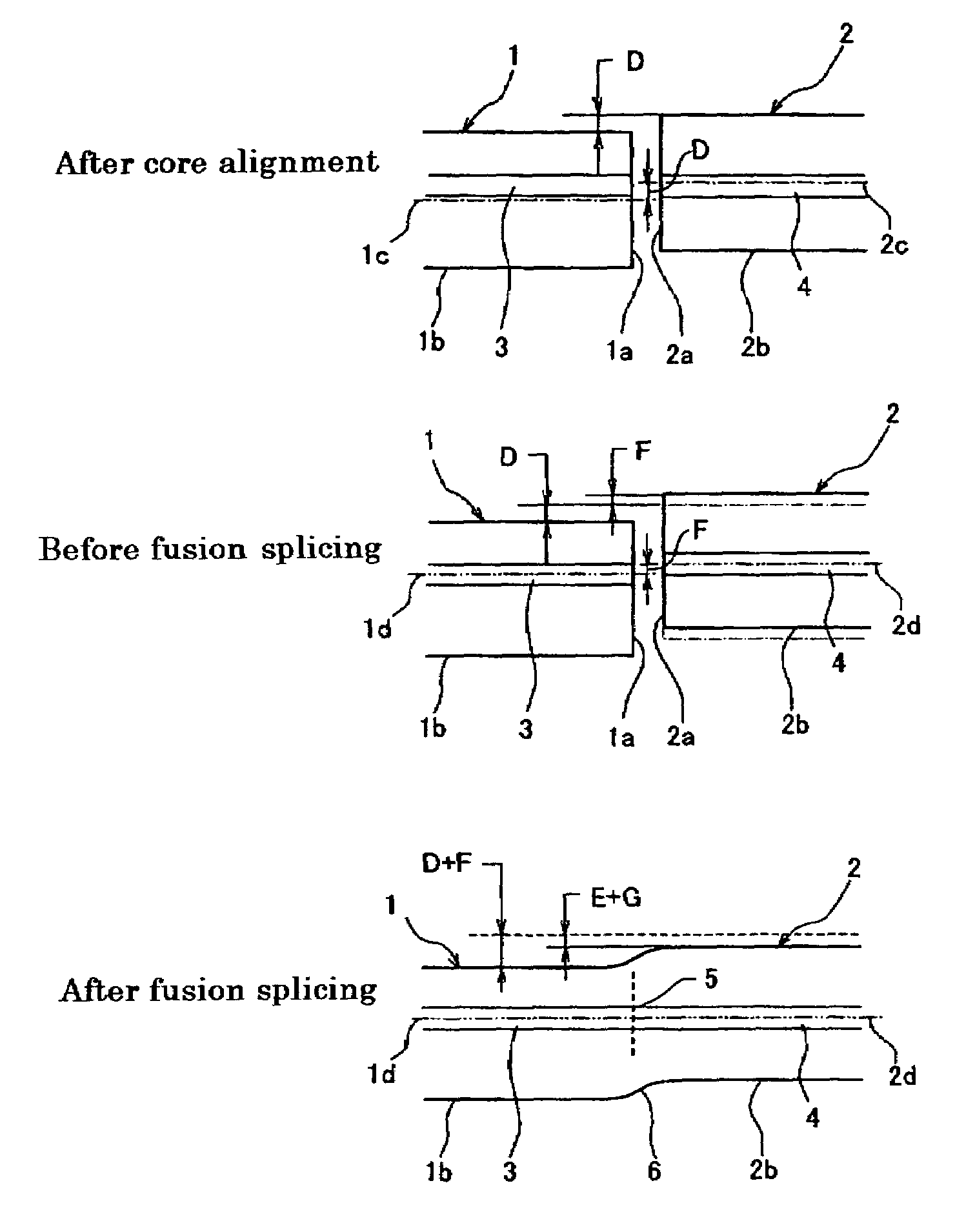
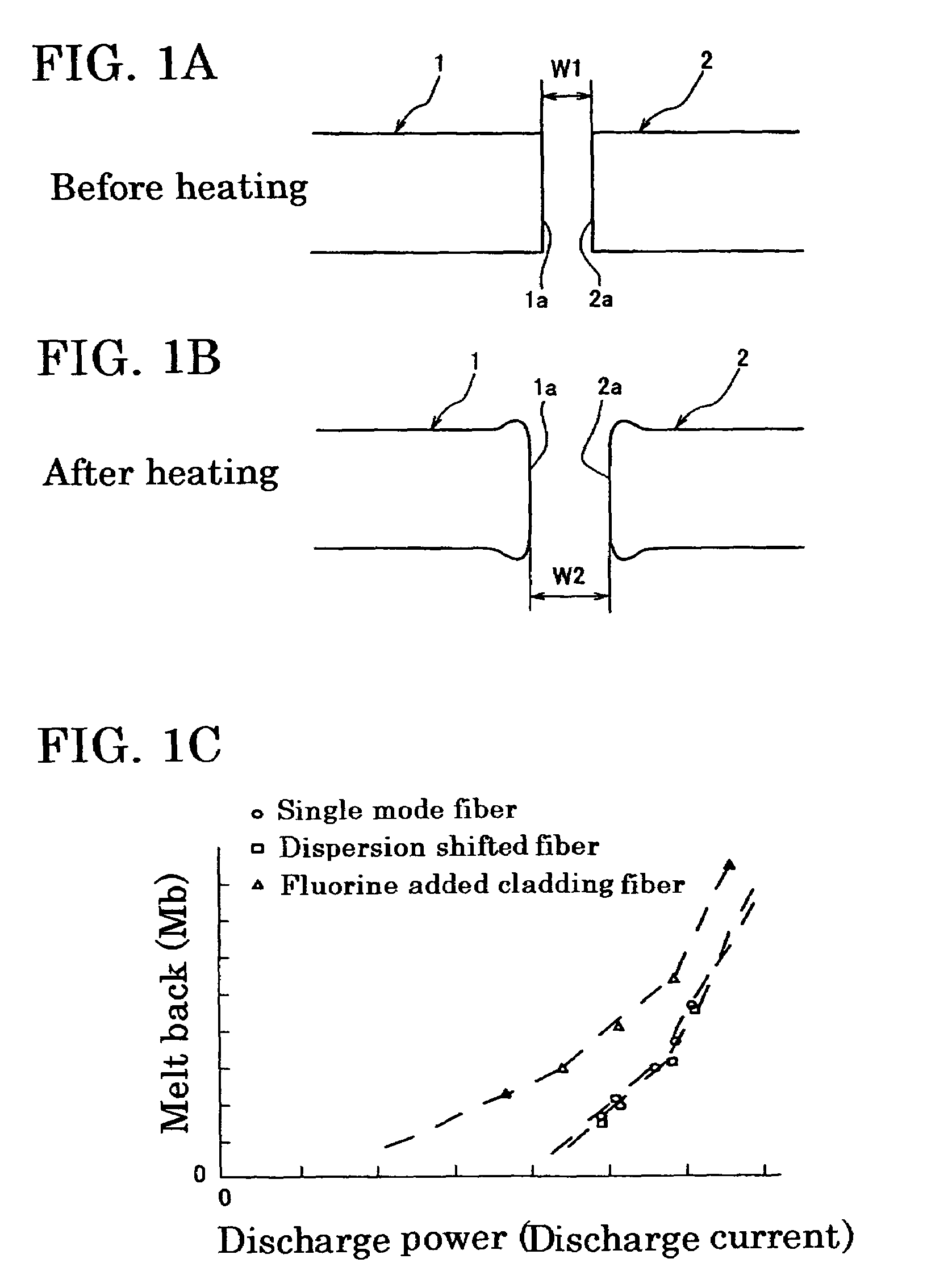
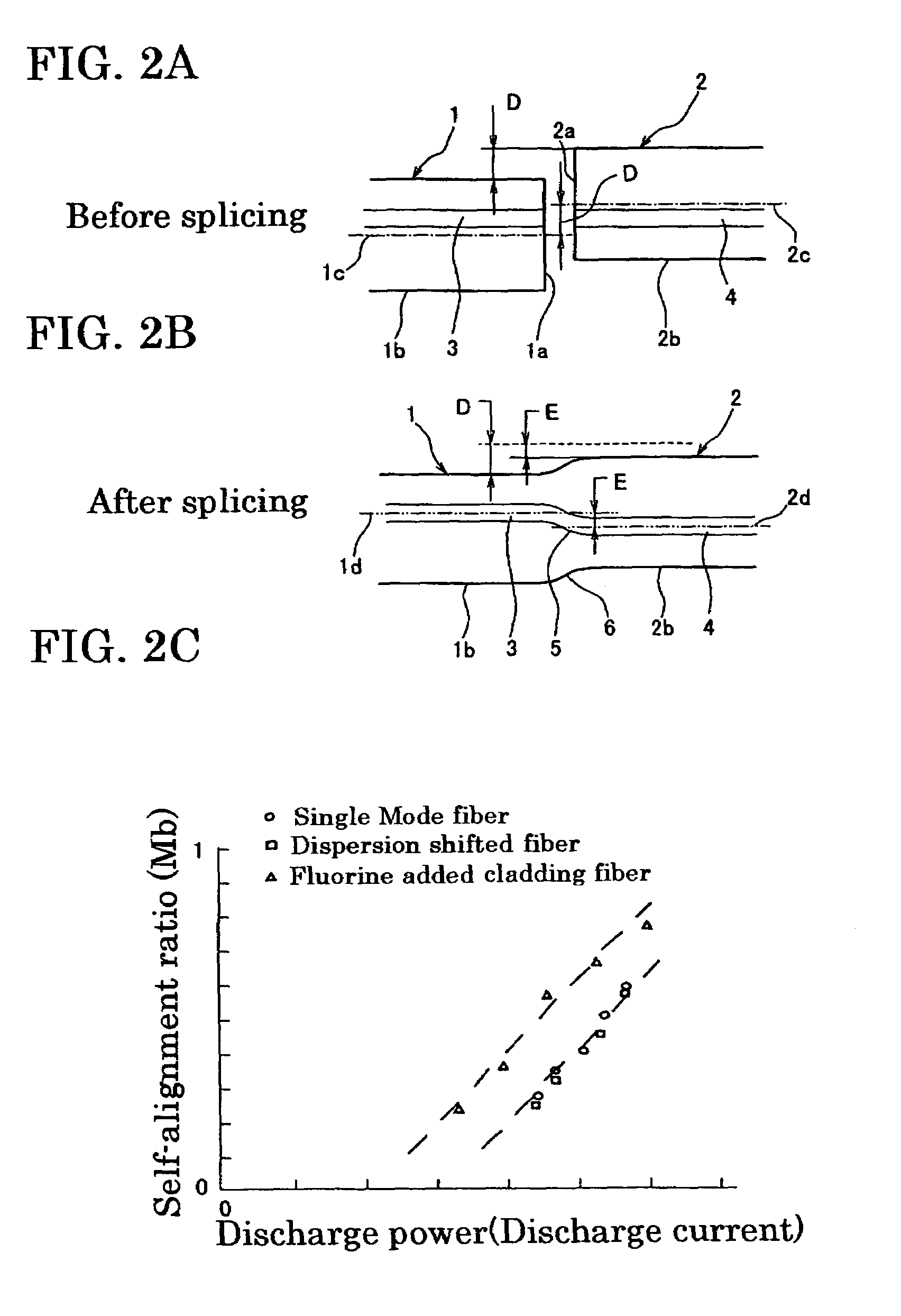
- An optical fiber fusion splicer is equipped with position detection, alignment, heating, melted condition value detection, self-alignment calculation, and control means to measure and compensate for fiber offset, allowing for precise core alignment and intentional offsetting to achieve a prescribed splicing loss.

Quality Standards for Telecommunications Infrastructure
The telecommunications industry operates under stringent quality standards that directly impact monomode fiber splicing process accuracy. International standards such as ITU-T G.652 and G.657 define the fundamental requirements for single-mode optical fibers, establishing critical parameters including mode field diameter, chromatic dispersion, and attenuation coefficients. These specifications serve as the foundation for splice quality assessment and process optimization.
IEC 61300 series standards provide comprehensive guidelines for fiber optic interconnecting devices and passive components, with particular emphasis on splice performance metrics. The standard mandates maximum insertion loss thresholds of 0.1 dB for fusion splices and return loss requirements exceeding 60 dB. Additionally, Telcordia GR-20-CORE specifications outline environmental testing protocols that spliced fibers must withstand, including temperature cycling, humidity exposure, and mechanical stress evaluations.
Regional telecommunications authorities have established complementary standards that enhance global requirements. The European Telecommunications Standards Institute (ETSI) EN 188000 series addresses network infrastructure quality, while North American standards through the Telecommunications Industry Association (TIA) provide detailed splice acceptance criteria. These regional frameworks often incorporate more stringent requirements for specific deployment environments, such as submarine cables or harsh industrial conditions.
Quality assurance protocols mandate comprehensive documentation and traceability throughout the splicing process. Standards require real-time monitoring of splice parameters including core alignment accuracy, cleave angle measurements, and fusion arc optimization. Statistical process control methodologies must be implemented to track splice performance trends and identify potential degradation patterns before they impact network reliability.
Certification requirements for splicing equipment and technician competency form integral components of quality standards. Equipment must undergo rigorous calibration procedures according to manufacturer specifications and industry guidelines. Personnel certification programs ensure consistent application of splicing techniques and adherence to established quality metrics across different operational environments and network deployment scenarios.
IEC 61300 series standards provide comprehensive guidelines for fiber optic interconnecting devices and passive components, with particular emphasis on splice performance metrics. The standard mandates maximum insertion loss thresholds of 0.1 dB for fusion splices and return loss requirements exceeding 60 dB. Additionally, Telcordia GR-20-CORE specifications outline environmental testing protocols that spliced fibers must withstand, including temperature cycling, humidity exposure, and mechanical stress evaluations.
Regional telecommunications authorities have established complementary standards that enhance global requirements. The European Telecommunications Standards Institute (ETSI) EN 188000 series addresses network infrastructure quality, while North American standards through the Telecommunications Industry Association (TIA) provide detailed splice acceptance criteria. These regional frameworks often incorporate more stringent requirements for specific deployment environments, such as submarine cables or harsh industrial conditions.
Quality assurance protocols mandate comprehensive documentation and traceability throughout the splicing process. Standards require real-time monitoring of splice parameters including core alignment accuracy, cleave angle measurements, and fusion arc optimization. Statistical process control methodologies must be implemented to track splice performance trends and identify potential degradation patterns before they impact network reliability.
Certification requirements for splicing equipment and technician competency form integral components of quality standards. Equipment must undergo rigorous calibration procedures according to manufacturer specifications and industry guidelines. Personnel certification programs ensure consistent application of splicing techniques and adherence to established quality metrics across different operational environments and network deployment scenarios.
Environmental Factors Impact on Splicing Performance
Environmental conditions play a critical role in determining the precision and reliability of monomode fiber splicing operations. Temperature fluctuations represent one of the most significant environmental challenges, as they directly affect the thermal expansion and contraction of fiber materials during the fusion process. Optimal splicing typically occurs within a controlled temperature range of 20-25°C, with variations beyond ±5°C potentially causing misalignment and increased splice loss. Extreme temperatures can also impact the viscosity of index-matching gels and the performance of precision positioning mechanisms within splicing equipment.
Humidity levels significantly influence splicing outcomes through multiple pathways. High humidity environments can lead to moisture absorption on fiber end faces, creating contamination that interferes with proper fusion. Conversely, extremely low humidity conditions may generate static electricity, attracting dust particles to critical optical surfaces. The recommended relative humidity range for optimal splicing performance typically falls between 45-65%, requiring environmental control systems in professional splicing facilities.
Atmospheric pressure variations, while often overlooked, can affect the arc discharge characteristics during fusion splicing. Changes in air density alter the electrical properties of the plasma arc, potentially leading to inconsistent heating patterns and suboptimal fusion results. This factor becomes particularly relevant in high-altitude installations or locations with significant barometric pressure fluctuations.
Vibration and mechanical disturbances constitute another crucial environmental factor. Even minute vibrations from nearby machinery, traffic, or HVAC systems can disrupt the precise fiber alignment required for low-loss splicing. Professional splicing operations often employ vibration-isolation platforms and select locations away from potential disturbance sources to maintain the sub-micron positioning accuracy necessary for optimal splice performance.
Airborne contaminants, including dust particles, chemical vapors, and electromagnetic interference, can compromise splicing quality. Clean room environments or portable clean air enclosures are frequently employed to minimize particulate contamination during critical splicing operations, ensuring consistent results across varying field conditions.
Humidity levels significantly influence splicing outcomes through multiple pathways. High humidity environments can lead to moisture absorption on fiber end faces, creating contamination that interferes with proper fusion. Conversely, extremely low humidity conditions may generate static electricity, attracting dust particles to critical optical surfaces. The recommended relative humidity range for optimal splicing performance typically falls between 45-65%, requiring environmental control systems in professional splicing facilities.
Atmospheric pressure variations, while often overlooked, can affect the arc discharge characteristics during fusion splicing. Changes in air density alter the electrical properties of the plasma arc, potentially leading to inconsistent heating patterns and suboptimal fusion results. This factor becomes particularly relevant in high-altitude installations or locations with significant barometric pressure fluctuations.
Vibration and mechanical disturbances constitute another crucial environmental factor. Even minute vibrations from nearby machinery, traffic, or HVAC systems can disrupt the precise fiber alignment required for low-loss splicing. Professional splicing operations often employ vibration-isolation platforms and select locations away from potential disturbance sources to maintain the sub-micron positioning accuracy necessary for optimal splice performance.
Airborne contaminants, including dust particles, chemical vapors, and electromagnetic interference, can compromise splicing quality. Clean room environments or portable clean air enclosures are frequently employed to minimize particulate contamination during critical splicing operations, ensuring consistent results across varying field conditions.
Unlock deeper insights with Patsnap Eureka Quick Research — get a full tech report to explore trends and direct your research. Try now!
Generate Your Research Report Instantly with AI Agent
Supercharge your innovation with Patsnap Eureka AI Agent Platform!