How to Evaluate Schumann Resonance for Climate Modelling?
JUN 24, 20259 MIN READ
Generate Your Research Report Instantly with AI Agent
Patsnap Eureka helps you evaluate technical feasibility & market potential.
Schumann Resonance Background and Objectives
Schumann resonances, discovered by physicist Winfried Otto Schumann in 1952, are global electromagnetic resonances generated and excited by lightning discharges in the cavity formed by the Earth's surface and the ionosphere. These resonances occur at extremely low frequencies (ELF) with fundamental modes around 7.83 Hz and harmonics at approximately 14.3, 20.8, 27.3, and 33.8 Hz.
The study of Schumann resonances has gained significant attention in recent years due to their potential applications in climate modeling and monitoring. As a global phenomenon, these resonances are sensitive to various atmospheric and ionospheric conditions, making them valuable indicators of global climate patterns and changes.
The primary objective of evaluating Schumann resonances for climate modeling is to develop a robust and reliable method for integrating this electromagnetic phenomenon into existing climate models. This integration aims to enhance the accuracy and predictive power of climate simulations by incorporating a novel set of data that reflects global atmospheric dynamics.
One key aspect of this evaluation process is to establish a clear correlation between Schumann resonance parameters and specific climate variables. This includes investigating how changes in temperature, humidity, and atmospheric composition affect the resonance frequencies and amplitudes. By understanding these relationships, researchers can potentially use Schumann resonance data as a proxy for monitoring global climate trends.
Another important objective is to develop standardized measurement and analysis techniques for Schumann resonances. This standardization is crucial for ensuring that data collected from different monitoring stations worldwide can be accurately compared and integrated into climate models. It involves addressing challenges such as noise reduction, signal processing, and data interpretation.
Furthermore, the evaluation of Schumann resonances for climate modeling aims to explore their potential in detecting and predicting extreme weather events. As these resonances are influenced by global lightning activity, which is closely linked to severe weather patterns, they could serve as an early warning system for phenomena such as hurricanes, typhoons, and intense thunderstorms.
Lastly, this research seeks to understand the long-term trends in Schumann resonance characteristics and their implications for global climate change. By analyzing historical data and comparing it with current measurements, scientists hope to gain insights into the Earth's changing electromagnetic environment and its relationship to climate dynamics.
The study of Schumann resonances has gained significant attention in recent years due to their potential applications in climate modeling and monitoring. As a global phenomenon, these resonances are sensitive to various atmospheric and ionospheric conditions, making them valuable indicators of global climate patterns and changes.
The primary objective of evaluating Schumann resonances for climate modeling is to develop a robust and reliable method for integrating this electromagnetic phenomenon into existing climate models. This integration aims to enhance the accuracy and predictive power of climate simulations by incorporating a novel set of data that reflects global atmospheric dynamics.
One key aspect of this evaluation process is to establish a clear correlation between Schumann resonance parameters and specific climate variables. This includes investigating how changes in temperature, humidity, and atmospheric composition affect the resonance frequencies and amplitudes. By understanding these relationships, researchers can potentially use Schumann resonance data as a proxy for monitoring global climate trends.
Another important objective is to develop standardized measurement and analysis techniques for Schumann resonances. This standardization is crucial for ensuring that data collected from different monitoring stations worldwide can be accurately compared and integrated into climate models. It involves addressing challenges such as noise reduction, signal processing, and data interpretation.
Furthermore, the evaluation of Schumann resonances for climate modeling aims to explore their potential in detecting and predicting extreme weather events. As these resonances are influenced by global lightning activity, which is closely linked to severe weather patterns, they could serve as an early warning system for phenomena such as hurricanes, typhoons, and intense thunderstorms.
Lastly, this research seeks to understand the long-term trends in Schumann resonance characteristics and their implications for global climate change. By analyzing historical data and comparing it with current measurements, scientists hope to gain insights into the Earth's changing electromagnetic environment and its relationship to climate dynamics.
Climate Modelling Market Analysis
The climate modelling market has experienced significant growth in recent years, driven by increasing concerns about climate change and the need for accurate predictions of future environmental conditions. This market encompasses a wide range of products and services, including software tools, data analytics platforms, and consulting services focused on climate simulation and forecasting.
The global climate modelling market size was valued at approximately $2.5 billion in 2020 and is projected to reach $3.8 billion by 2025, growing at a compound annual growth rate (CAGR) of 8.7%. This growth is primarily attributed to the rising demand for climate risk assessment and adaptation strategies across various sectors, including agriculture, energy, and urban planning.
Key market drivers include government initiatives to mitigate climate change impacts, increasing investments in climate research and development, and the growing adoption of advanced technologies such as artificial intelligence and machine learning in climate modelling. The integration of Schumann Resonance data into climate models represents an emerging trend in this market, as researchers explore new ways to improve the accuracy and reliability of climate predictions.
The market is segmented by application into weather forecasting, climate change assessment, natural disaster risk management, and others. Weather forecasting currently holds the largest market share, accounting for approximately 40% of the total market revenue. However, the climate change assessment segment is expected to witness the highest growth rate over the forecast period, driven by increasing awareness of long-term climate impacts on ecosystems and human activities.
Geographically, North America dominates the climate modelling market, followed by Europe and Asia-Pacific. The United States, in particular, leads in terms of market share due to substantial investments in climate research and the presence of major technology companies developing advanced modelling solutions. However, the Asia-Pacific region is anticipated to exhibit the fastest growth rate, fueled by rapid industrialization, urbanization, and growing environmental concerns in countries like China and India.
The competitive landscape of the climate modelling market is characterized by the presence of both established players and innovative startups. Key market players include IBM, Microsoft, Google, and The Climate Corporation, alongside specialized climate modelling firms and research institutions. These companies are increasingly focusing on developing user-friendly, cloud-based climate modelling platforms that can integrate diverse data sources, including Schumann Resonance measurements, to enhance model accuracy and accessibility.
The global climate modelling market size was valued at approximately $2.5 billion in 2020 and is projected to reach $3.8 billion by 2025, growing at a compound annual growth rate (CAGR) of 8.7%. This growth is primarily attributed to the rising demand for climate risk assessment and adaptation strategies across various sectors, including agriculture, energy, and urban planning.
Key market drivers include government initiatives to mitigate climate change impacts, increasing investments in climate research and development, and the growing adoption of advanced technologies such as artificial intelligence and machine learning in climate modelling. The integration of Schumann Resonance data into climate models represents an emerging trend in this market, as researchers explore new ways to improve the accuracy and reliability of climate predictions.
The market is segmented by application into weather forecasting, climate change assessment, natural disaster risk management, and others. Weather forecasting currently holds the largest market share, accounting for approximately 40% of the total market revenue. However, the climate change assessment segment is expected to witness the highest growth rate over the forecast period, driven by increasing awareness of long-term climate impacts on ecosystems and human activities.
Geographically, North America dominates the climate modelling market, followed by Europe and Asia-Pacific. The United States, in particular, leads in terms of market share due to substantial investments in climate research and the presence of major technology companies developing advanced modelling solutions. However, the Asia-Pacific region is anticipated to exhibit the fastest growth rate, fueled by rapid industrialization, urbanization, and growing environmental concerns in countries like China and India.
The competitive landscape of the climate modelling market is characterized by the presence of both established players and innovative startups. Key market players include IBM, Microsoft, Google, and The Climate Corporation, alongside specialized climate modelling firms and research institutions. These companies are increasingly focusing on developing user-friendly, cloud-based climate modelling platforms that can integrate diverse data sources, including Schumann Resonance measurements, to enhance model accuracy and accessibility.
Current Challenges in SR Measurement
Measuring Schumann Resonance (SR) for climate modeling presents several significant challenges. One of the primary difficulties is the low signal-to-noise ratio of SR signals. The natural electromagnetic resonances in the Earth-ionosphere cavity are extremely weak, often overshadowed by anthropogenic electromagnetic noise and other natural disturbances. This necessitates highly sensitive equipment and sophisticated signal processing techniques to accurately detect and analyze SR signals.
The global nature of SR measurements adds another layer of complexity. To obtain a comprehensive understanding of SR patterns and their relationship to climate phenomena, a network of measurement stations distributed across different geographical locations is required. Establishing and maintaining such a global network involves substantial logistical and financial challenges, including the need for standardized equipment and data collection protocols across diverse environments.
Temporal variations in SR signals pose additional challenges for measurement and interpretation. SR characteristics exhibit diurnal, seasonal, and long-term fluctuations, which can be influenced by various factors such as solar activity, ionospheric conditions, and global lightning activity. Distinguishing climate-related changes from these natural variations requires long-term, continuous measurements and advanced statistical analysis techniques.
The interdisciplinary nature of SR research further complicates measurement efforts. Effective SR measurement for climate modeling requires expertise in atmospheric physics, electromagnetics, signal processing, and climate science. Integrating these diverse fields and translating SR measurements into meaningful climate indicators demands a high level of collaboration and cross-disciplinary understanding.
Technical limitations in current measurement systems also present ongoing challenges. The need for high-precision, low-frequency magnetic field sensors capable of detecting subtle changes in SR parameters pushes the boundaries of existing technology. Additionally, the development of robust algorithms for real-time SR data processing and analysis remains an active area of research, with ongoing efforts to improve accuracy and reliability.
Environmental factors can significantly impact SR measurements. Local weather conditions, geological features, and even human activities in the vicinity of measurement stations can introduce noise and distortions into SR signals. Mitigating these local effects while capturing global SR patterns requires careful site selection and the implementation of advanced noise reduction techniques.
Lastly, the interpretation of SR measurements in the context of climate modeling introduces its own set of challenges. Establishing clear, quantitative relationships between SR parameters and specific climate variables is an ongoing research endeavor. The complex, non-linear nature of the Earth's climate system makes it difficult to isolate the influence of individual factors, necessitating sophisticated modeling approaches to effectively incorporate SR data into climate predictions.
The global nature of SR measurements adds another layer of complexity. To obtain a comprehensive understanding of SR patterns and their relationship to climate phenomena, a network of measurement stations distributed across different geographical locations is required. Establishing and maintaining such a global network involves substantial logistical and financial challenges, including the need for standardized equipment and data collection protocols across diverse environments.
Temporal variations in SR signals pose additional challenges for measurement and interpretation. SR characteristics exhibit diurnal, seasonal, and long-term fluctuations, which can be influenced by various factors such as solar activity, ionospheric conditions, and global lightning activity. Distinguishing climate-related changes from these natural variations requires long-term, continuous measurements and advanced statistical analysis techniques.
The interdisciplinary nature of SR research further complicates measurement efforts. Effective SR measurement for climate modeling requires expertise in atmospheric physics, electromagnetics, signal processing, and climate science. Integrating these diverse fields and translating SR measurements into meaningful climate indicators demands a high level of collaboration and cross-disciplinary understanding.
Technical limitations in current measurement systems also present ongoing challenges. The need for high-precision, low-frequency magnetic field sensors capable of detecting subtle changes in SR parameters pushes the boundaries of existing technology. Additionally, the development of robust algorithms for real-time SR data processing and analysis remains an active area of research, with ongoing efforts to improve accuracy and reliability.
Environmental factors can significantly impact SR measurements. Local weather conditions, geological features, and even human activities in the vicinity of measurement stations can introduce noise and distortions into SR signals. Mitigating these local effects while capturing global SR patterns requires careful site selection and the implementation of advanced noise reduction techniques.
Lastly, the interpretation of SR measurements in the context of climate modeling introduces its own set of challenges. Establishing clear, quantitative relationships between SR parameters and specific climate variables is an ongoing research endeavor. The complex, non-linear nature of the Earth's climate system makes it difficult to isolate the influence of individual factors, necessitating sophisticated modeling approaches to effectively incorporate SR data into climate predictions.
Existing SR Evaluation Methods
01 Schumann Resonance Monitoring Devices
Various devices and systems have been developed to monitor and measure Schumann resonances. These devices typically include sensors, antennas, and signal processing units to detect and analyze electromagnetic waves in the extremely low frequency (ELF) range associated with Schumann resonances. Such monitoring systems can be used to collect data for climate modeling and environmental research.- Schumann resonance detection and analysis: Systems and methods for detecting and analyzing Schumann resonances in the Earth's atmosphere. These technologies can be used to monitor global electromagnetic activity and potentially correlate it with climate patterns. The detection systems may include specialized antennas and signal processing algorithms to isolate and measure Schumann resonance frequencies.
- Climate modeling incorporating Schumann resonance data: Integration of Schumann resonance measurements into climate models to improve prediction accuracy. This approach considers the potential influence of global electromagnetic phenomena on weather patterns and long-term climate trends. The models may incorporate Schumann resonance data as an additional parameter in complex climate simulations.
- Schumann resonance-based environmental monitoring: Utilization of Schumann resonance measurements for monitoring various environmental factors, including air quality, atmospheric composition, and potential seismic activity. These monitoring systems can provide valuable data for climate research and early warning systems for natural disasters.
- Artificial Schumann resonance generation for climate studies: Development of technologies to artificially generate or modulate Schumann resonance-like frequencies for controlled climate studies. These systems aim to investigate the potential effects of electromagnetic frequencies on local weather conditions and ecosystem responses in controlled environments.
- Data processing and visualization for Schumann resonance climate research: Advanced data processing and visualization techniques specifically designed for analyzing the relationship between Schumann resonances and climate patterns. These tools may include machine learning algorithms, big data analytics, and interactive visualization platforms to help researchers identify correlations and trends in complex datasets.
02 Integration of Schumann Resonance Data in Climate Models
Researchers are incorporating Schumann resonance data into climate models to improve their accuracy and predictive capabilities. By analyzing the relationship between Schumann resonances and various atmospheric and climatic parameters, scientists can enhance their understanding of global climate patterns and potentially forecast weather events more accurately.Expand Specific Solutions03 Schumann Resonance-based Environmental Monitoring
Schumann resonances are being used as indicators of global environmental changes. By monitoring variations in Schumann resonance parameters, researchers can detect and study phenomena such as lightning activity, ionospheric disturbances, and potential correlations with climate change. This approach provides a novel method for global-scale environmental monitoring.Expand Specific Solutions04 Artificial Intelligence in Schumann Resonance Analysis
Advanced artificial intelligence and machine learning techniques are being applied to analyze Schumann resonance data for climate modeling. These AI-driven approaches can process large datasets, identify patterns, and extract meaningful insights from Schumann resonance measurements, potentially leading to more accurate climate predictions and a better understanding of Earth's electromagnetic environment.Expand Specific Solutions05 Schumann Resonance and Atmospheric Electricity Studies
Research is being conducted on the relationship between Schumann resonances and atmospheric electricity phenomena. This includes studying the effects of solar activity, cosmic rays, and other space weather events on Schumann resonances and their potential impact on climate. These studies aim to provide a more comprehensive understanding of the Earth's electromagnetic environment and its role in climate dynamics.Expand Specific Solutions
Key Players in SR Research
The evaluation of Schumann Resonance for climate modelling is an emerging field in the intersection of atmospheric science and geophysics. The market is still in its early stages, with a relatively small but growing size as researchers explore its potential applications. Technologically, it's in the developmental phase, with varying levels of maturity across different institutions. Universities like Nanjing University, Peking University, and Wuhan University are at the forefront of research, while international collaborations, such as with the University of Bern, are advancing the field. Companies like Guangdong Power Grid Co., Ltd. and State Grid Jiangsu Electric Power Co., Ltd. are also showing interest, indicating potential industrial applications. The competitive landscape is primarily academic-driven, with increasing industry participation as the technology's relevance to climate modelling becomes more apparent.
University of Bern
Technical Solution: The University of Bern has developed a comprehensive approach to evaluate Schumann Resonance for climate modeling. Their method involves using a network of high-sensitivity magnetic field sensors to detect and analyze Schumann Resonance signals. They employ advanced signal processing techniques, including wavelet analysis and machine learning algorithms, to extract relevant information from the Schumann Resonance data. This information is then integrated into climate models to improve the understanding of global electromagnetic phenomena and their potential impacts on climate systems.
Strengths: Advanced signal processing techniques and integration with climate models. Weaknesses: Limited global coverage of sensor network and potential interference from local electromagnetic sources.
Nanjing University of Information Science & Technology
Technical Solution: Nanjing University of Information Science & Technology has developed a unique approach to evaluate Schumann Resonance for climate modeling. Their method focuses on the development of high-precision, low-noise Schumann Resonance detectors that can be deployed in a dense network across various geographical locations. They use advanced signal processing algorithms to filter out anthropogenic noise and extract clear Schumann Resonance signals. The university has also developed a specialized climate model that incorporates Schumann Resonance data as a key input, allowing for the exploration of potential links between global electromagnetic phenomena and climate variability.
Strengths: High-precision detection equipment and specialized climate model integration. Weaknesses: Limited to ground-based measurements and potential challenges in global deployment.
Innovative SR Data Analysis Techniques
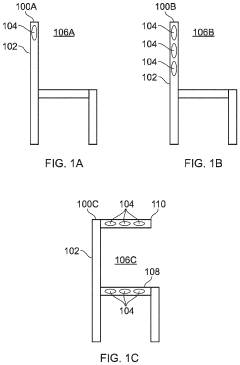
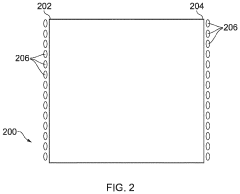
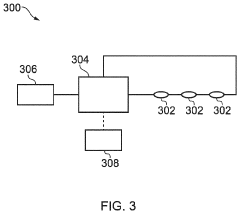
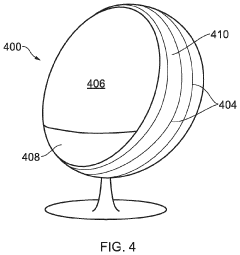
A magnetic field exposure system and uses thereof
PatentWO2021191443A1
Innovation
- A magnetic field exposure system generating an amplitude-modulated low frequency magnetic field with a carrier frequency of 360 to 450 Hz and a modulation frequency of 0.5 to 100 Hz, with a field strength of 0.5 to 250 mT, specifically designed to expose organic cells or tissues to improve cell survival, proliferation, reduce stress, and enhance well-being.
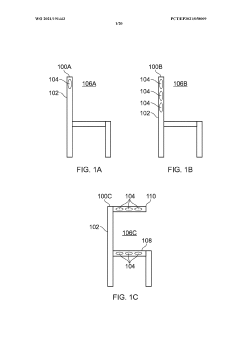
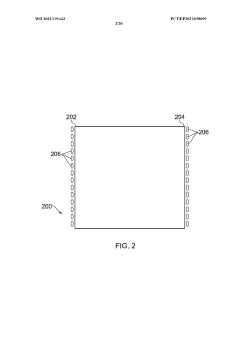
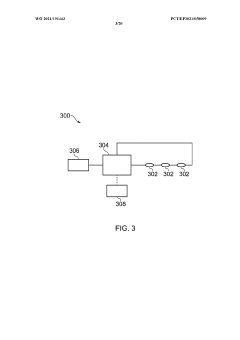
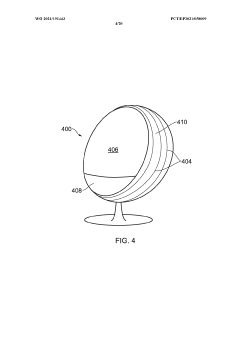
A magnetic field exposure system and uses thereof
PatentPendingUS20230372726A1
Innovation
- A magnetic field exposure system generating an amplitude-modulated low frequency magnetic field with a carrier frequency of 360 to 450 Hz and a modulation frequency of 0.5 to 100 Hz, providing a field strength of 0.5 to 250 μT, specifically designed to enhance cell survival, proliferation, reduce stress, and promote tissue regeneration.
Global SR Monitoring Network Development
The development of a Global Schumann Resonance (SR) Monitoring Network is crucial for advancing our understanding of the Earth's electromagnetic environment and its potential applications in climate modeling. This network aims to establish a comprehensive system of SR monitoring stations strategically positioned around the globe to capture and analyze SR data with unprecedented accuracy and coverage.
The network's primary objective is to create a standardized infrastructure for SR measurements, ensuring data consistency and comparability across different geographical locations. This involves the deployment of highly sensitive electromagnetic sensors capable of detecting the subtle variations in the Earth's resonant frequencies. These sensors are typically installed in remote areas to minimize anthropogenic electromagnetic interference, thereby improving the signal-to-noise ratio of SR measurements.
A key aspect of the network's development is the implementation of advanced data processing and analysis techniques. Real-time data acquisition systems are being integrated to capture SR signals continuously, allowing for the detection of both short-term fluctuations and long-term trends. Sophisticated algorithms are being developed to filter out noise and extract meaningful SR parameters, such as frequency, amplitude, and phase variations.
The network also incorporates state-of-the-art communication technologies to facilitate rapid data transmission and sharing among research institutions worldwide. This global collaboration enables scientists to conduct comprehensive studies on SR phenomena and their potential correlations with various atmospheric and climatic processes.
To enhance the network's capabilities, efforts are being made to integrate SR measurements with other geophysical and meteorological observations. This multi-disciplinary approach aims to provide a more holistic understanding of the Earth system and improve the accuracy of climate models.
As the network expands, researchers are focusing on optimizing the spatial distribution of monitoring stations to achieve global coverage while addressing challenges such as geographical constraints and varying levels of electromagnetic noise. The development of portable SR monitoring units is also underway, allowing for temporary deployments in areas of particular interest or to fill gaps in the permanent network.
The Global SR Monitoring Network represents a significant step forward in SR research and its potential applications in climate science. By providing high-quality, globally consistent SR data, this network is poised to unlock new insights into the complex interactions between the Earth's electromagnetic environment and climate systems, ultimately contributing to more accurate climate modeling and prediction capabilities.
The network's primary objective is to create a standardized infrastructure for SR measurements, ensuring data consistency and comparability across different geographical locations. This involves the deployment of highly sensitive electromagnetic sensors capable of detecting the subtle variations in the Earth's resonant frequencies. These sensors are typically installed in remote areas to minimize anthropogenic electromagnetic interference, thereby improving the signal-to-noise ratio of SR measurements.
A key aspect of the network's development is the implementation of advanced data processing and analysis techniques. Real-time data acquisition systems are being integrated to capture SR signals continuously, allowing for the detection of both short-term fluctuations and long-term trends. Sophisticated algorithms are being developed to filter out noise and extract meaningful SR parameters, such as frequency, amplitude, and phase variations.
The network also incorporates state-of-the-art communication technologies to facilitate rapid data transmission and sharing among research institutions worldwide. This global collaboration enables scientists to conduct comprehensive studies on SR phenomena and their potential correlations with various atmospheric and climatic processes.
To enhance the network's capabilities, efforts are being made to integrate SR measurements with other geophysical and meteorological observations. This multi-disciplinary approach aims to provide a more holistic understanding of the Earth system and improve the accuracy of climate models.
As the network expands, researchers are focusing on optimizing the spatial distribution of monitoring stations to achieve global coverage while addressing challenges such as geographical constraints and varying levels of electromagnetic noise. The development of portable SR monitoring units is also underway, allowing for temporary deployments in areas of particular interest or to fill gaps in the permanent network.
The Global SR Monitoring Network represents a significant step forward in SR research and its potential applications in climate science. By providing high-quality, globally consistent SR data, this network is poised to unlock new insights into the complex interactions between the Earth's electromagnetic environment and climate systems, ultimately contributing to more accurate climate modeling and prediction capabilities.
SR Data Validation and Standardization
Validating and standardizing Schumann Resonance (SR) data is crucial for its effective use in climate modeling. This process involves several key steps to ensure data quality and consistency across different measurement sources and time periods.
Firstly, data collection methods must be standardized. SR measurements can be affected by various factors, including the type of equipment used, its calibration, and the specific location of the measurement. Establishing a uniform protocol for data collection, including specifications for equipment sensitivity and placement, is essential. This standardization helps minimize discrepancies between datasets from different sources.
Data quality control is the next critical step. This involves identifying and filtering out anomalous readings that may result from equipment malfunctions, local electromagnetic interference, or extreme geophysical events. Statistical methods, such as outlier detection algorithms, can be employed to flag suspicious data points for further investigation or removal.
Cross-validation between different SR monitoring stations is another important aspect of data validation. By comparing measurements from multiple locations, researchers can identify systematic biases or errors in individual datasets. This process also helps in creating a more robust global SR dataset by combining and reconciling data from various sources.
Temporal consistency is a key consideration in SR data validation, especially for climate modeling applications. Long-term trends in SR data should be carefully examined to distinguish between genuine climate-related changes and artifacts introduced by changes in measurement techniques or environmental conditions around monitoring stations.
Frequency analysis is an integral part of SR data validation. The SR spectrum consists of several resonance modes, each with characteristic frequencies. Validating that these frequencies are consistently observed and accurately measured across different datasets is crucial for ensuring the reliability of SR measurements for climate studies.
Metadata management is another critical aspect of SR data standardization. Comprehensive documentation of measurement conditions, equipment specifications, data processing methods, and any known issues or limitations should accompany each dataset. This metadata is essential for researchers to understand the context of the measurements and to make informed decisions about data usage in climate models.
Finally, the development of a centralized database or repository for validated and standardized SR data is highly beneficial. Such a resource would facilitate easier access to high-quality SR data for climate researchers and promote consistency in climate modeling studies that incorporate SR measurements.
Firstly, data collection methods must be standardized. SR measurements can be affected by various factors, including the type of equipment used, its calibration, and the specific location of the measurement. Establishing a uniform protocol for data collection, including specifications for equipment sensitivity and placement, is essential. This standardization helps minimize discrepancies between datasets from different sources.
Data quality control is the next critical step. This involves identifying and filtering out anomalous readings that may result from equipment malfunctions, local electromagnetic interference, or extreme geophysical events. Statistical methods, such as outlier detection algorithms, can be employed to flag suspicious data points for further investigation or removal.
Cross-validation between different SR monitoring stations is another important aspect of data validation. By comparing measurements from multiple locations, researchers can identify systematic biases or errors in individual datasets. This process also helps in creating a more robust global SR dataset by combining and reconciling data from various sources.
Temporal consistency is a key consideration in SR data validation, especially for climate modeling applications. Long-term trends in SR data should be carefully examined to distinguish between genuine climate-related changes and artifacts introduced by changes in measurement techniques or environmental conditions around monitoring stations.
Frequency analysis is an integral part of SR data validation. The SR spectrum consists of several resonance modes, each with characteristic frequencies. Validating that these frequencies are consistently observed and accurately measured across different datasets is crucial for ensuring the reliability of SR measurements for climate studies.
Metadata management is another critical aspect of SR data standardization. Comprehensive documentation of measurement conditions, equipment specifications, data processing methods, and any known issues or limitations should accompany each dataset. This metadata is essential for researchers to understand the context of the measurements and to make informed decisions about data usage in climate models.
Finally, the development of a centralized database or repository for validated and standardized SR data is highly beneficial. Such a resource would facilitate easier access to high-quality SR data for climate researchers and promote consistency in climate modeling studies that incorporate SR measurements.
Unlock deeper insights with Patsnap Eureka Quick Research — get a full tech report to explore trends and direct your research. Try now!
Generate Your Research Report Instantly with AI Agent
Supercharge your innovation with Patsnap Eureka AI Agent Platform!