

How to hit optical engine CRI >90 using multi-channel LEDs
MAY 9, 20269 MIN READ
Generate Your Research Report Instantly with AI Agent
PatSnap Eureka helps you evaluate technical feasibility & market potential.
Multi-Channel LED CRI Enhancement Background and Goals
The Color Rendering Index (CRI) has emerged as a critical performance metric in modern lighting applications, particularly as LED technology continues to replace traditional incandescent and fluorescent lighting systems. CRI measures a light source's ability to accurately reproduce the colors of objects compared to natural sunlight, with values ranging from 0 to 100. While conventional single-chip white LEDs typically achieve CRI values between 70-85, many premium applications now demand CRI values exceeding 90 to ensure superior color fidelity.
The evolution of LED technology has progressed from simple monochromatic devices to sophisticated multi-channel systems capable of producing high-quality white light. Traditional phosphor-converted white LEDs, while cost-effective, face inherent limitations in spectral completeness that restrict their CRI performance. The phosphor conversion process often results in spectral gaps, particularly in the red region, leading to compromised color rendering capabilities.
Multi-channel LED architectures represent a paradigm shift in achieving superior color quality by combining multiple discrete LED emitters with different peak wavelengths. This approach enables precise spectral engineering, allowing designers to fill spectral gaps and optimize the overall spectral power distribution. The fundamental principle involves strategically selecting LED wavelengths and their relative intensities to create a composite spectrum that closely matches the continuous spectrum of natural light sources.
The primary objective of implementing multi-channel LED systems for CRI enhancement centers on achieving CRI values above 90 while maintaining acceptable luminous efficacy and color consistency. This target represents a significant technical challenge, as improving CRI often comes at the expense of luminous efficiency due to the need for additional spectral content in less efficient wavelength regions, particularly deep red and far-red portions of the spectrum.
Current market demands across various sectors, including retail lighting, museum displays, medical facilities, and high-end residential applications, increasingly specify CRI requirements above 90. The photography and film industry particularly values high-CRI lighting solutions for accurate color reproduction. Additionally, emerging research on circadian lighting and human-centric lighting further emphasizes the importance of spectral quality, driving the need for advanced multi-channel LED solutions that can dynamically adjust both intensity and spectral characteristics throughout the day.
The evolution of LED technology has progressed from simple monochromatic devices to sophisticated multi-channel systems capable of producing high-quality white light. Traditional phosphor-converted white LEDs, while cost-effective, face inherent limitations in spectral completeness that restrict their CRI performance. The phosphor conversion process often results in spectral gaps, particularly in the red region, leading to compromised color rendering capabilities.
Multi-channel LED architectures represent a paradigm shift in achieving superior color quality by combining multiple discrete LED emitters with different peak wavelengths. This approach enables precise spectral engineering, allowing designers to fill spectral gaps and optimize the overall spectral power distribution. The fundamental principle involves strategically selecting LED wavelengths and their relative intensities to create a composite spectrum that closely matches the continuous spectrum of natural light sources.
The primary objective of implementing multi-channel LED systems for CRI enhancement centers on achieving CRI values above 90 while maintaining acceptable luminous efficacy and color consistency. This target represents a significant technical challenge, as improving CRI often comes at the expense of luminous efficiency due to the need for additional spectral content in less efficient wavelength regions, particularly deep red and far-red portions of the spectrum.
Current market demands across various sectors, including retail lighting, museum displays, medical facilities, and high-end residential applications, increasingly specify CRI requirements above 90. The photography and film industry particularly values high-CRI lighting solutions for accurate color reproduction. Additionally, emerging research on circadian lighting and human-centric lighting further emphasizes the importance of spectral quality, driving the need for advanced multi-channel LED solutions that can dynamically adjust both intensity and spectral characteristics throughout the day.
Market Demand for High CRI Optical Engine Applications
The global lighting industry is experiencing a significant transformation driven by increasing demand for high-quality illumination that closely mimics natural sunlight. High Color Rendering Index optical engines, particularly those achieving CRI values exceeding 90, have emerged as critical components across multiple market segments where color accuracy and visual comfort are paramount.
The architectural and commercial lighting sector represents one of the largest market drivers for high CRI optical engines. Museums, art galleries, and retail environments require precise color reproduction to showcase artwork, merchandise, and products in their truest form. Premium retail chains and luxury brands are increasingly specifying high CRI lighting solutions to enhance customer experience and product presentation, creating substantial demand for advanced multi-channel LED optical engines.
Healthcare facilities constitute another rapidly expanding market segment. Medical examination rooms, surgical suites, and diagnostic areas require lighting systems that enable accurate color perception for proper diagnosis and treatment. The aging global population and expansion of healthcare infrastructure worldwide are driving sustained demand for high-performance optical engines that can deliver consistent, high-quality illumination while maintaining energy efficiency.
The residential premium lighting market is witnessing unprecedented growth as consumers become more aware of lighting quality's impact on well-being and circadian rhythms. Smart home integration and human-centric lighting concepts are pushing demand for tunable, high CRI optical engines that can adapt throughout the day while maintaining excellent color rendering performance.
Professional photography and videography studios represent a specialized but lucrative market segment requiring extremely high color fidelity. The growth of content creation industries, streaming platforms, and digital media production has created consistent demand for lighting solutions that can accurately reproduce colors across various skin tones and materials.
Industrial applications, particularly in textile manufacturing, food processing, and quality control environments, increasingly require high CRI lighting for accurate color matching and defect detection. These sectors demand robust, reliable optical engines capable of maintaining consistent performance in challenging operating conditions.
The automotive industry is emerging as a new growth area, with premium vehicle manufacturers incorporating high CRI interior lighting to enhance passenger comfort and brand differentiation. This trend is expected to expand as automotive lighting becomes increasingly sophisticated and consumer-focused.
The architectural and commercial lighting sector represents one of the largest market drivers for high CRI optical engines. Museums, art galleries, and retail environments require precise color reproduction to showcase artwork, merchandise, and products in their truest form. Premium retail chains and luxury brands are increasingly specifying high CRI lighting solutions to enhance customer experience and product presentation, creating substantial demand for advanced multi-channel LED optical engines.
Healthcare facilities constitute another rapidly expanding market segment. Medical examination rooms, surgical suites, and diagnostic areas require lighting systems that enable accurate color perception for proper diagnosis and treatment. The aging global population and expansion of healthcare infrastructure worldwide are driving sustained demand for high-performance optical engines that can deliver consistent, high-quality illumination while maintaining energy efficiency.
The residential premium lighting market is witnessing unprecedented growth as consumers become more aware of lighting quality's impact on well-being and circadian rhythms. Smart home integration and human-centric lighting concepts are pushing demand for tunable, high CRI optical engines that can adapt throughout the day while maintaining excellent color rendering performance.
Professional photography and videography studios represent a specialized but lucrative market segment requiring extremely high color fidelity. The growth of content creation industries, streaming platforms, and digital media production has created consistent demand for lighting solutions that can accurately reproduce colors across various skin tones and materials.
Industrial applications, particularly in textile manufacturing, food processing, and quality control environments, increasingly require high CRI lighting for accurate color matching and defect detection. These sectors demand robust, reliable optical engines capable of maintaining consistent performance in challenging operating conditions.
The automotive industry is emerging as a new growth area, with premium vehicle manufacturers incorporating high CRI interior lighting to enhance passenger comfort and brand differentiation. This trend is expected to expand as automotive lighting becomes increasingly sophisticated and consumer-focused.
Current CRI Performance Limitations in Multi-Channel LED Systems
Multi-channel LED systems face several fundamental limitations that prevent them from achieving CRI values above 90, despite their theoretical potential for superior color rendering. The primary constraint stems from the spectral distribution characteristics of individual LED chips, which typically exhibit narrow emission peaks that fail to provide adequate coverage across the visible spectrum. This spectral inadequacy becomes particularly pronounced in the red and deep red regions (620-700nm), where conventional phosphor-converted LEDs demonstrate significant gaps that directly impact the R9 and R12 color rendering indices.
Current multi-channel configurations commonly utilize three to six LED channels, including combinations of cool white, warm white, red, green, blue, and amber LEDs. However, these systems struggle with spectral optimization due to the inherent trade-offs between luminous efficacy and color quality. When attempting to boost CRI performance by increasing red content, systems experience substantial efficiency losses, often dropping 20-30% in luminous output while generating excessive heat that further degrades performance.
The binning variations among LED manufacturers present another critical limitation. Even within the same product specification, individual LEDs exhibit wavelength shifts of ±5-10nm and flux variations of ±7%, making it extremely difficult to maintain consistent color rendering across production batches. This variability becomes amplified in multi-channel systems where multiple LED types must work in harmony to achieve target CRI values.
Thermal management represents a significant technical barrier, as multi-channel systems require higher drive currents to compensate for spectral deficiencies. The resulting thermal stress causes wavelength drift and accelerated degradation, particularly affecting red LEDs which are most sensitive to temperature variations. Junction temperatures exceeding 85°C can shift red LED peak wavelengths by 0.2-0.3nm per degree, fundamentally altering the system's color rendering capabilities.
Control complexity further compounds these limitations. Achieving CRI >90 requires precise current balancing across all channels, but existing control algorithms struggle with the non-linear relationships between individual channel outputs and overall color rendering metrics. The lack of real-time spectral feedback mechanisms means systems cannot adapt to aging-induced spectral shifts or environmental variations that affect color rendering performance over time.
Current multi-channel configurations commonly utilize three to six LED channels, including combinations of cool white, warm white, red, green, blue, and amber LEDs. However, these systems struggle with spectral optimization due to the inherent trade-offs between luminous efficacy and color quality. When attempting to boost CRI performance by increasing red content, systems experience substantial efficiency losses, often dropping 20-30% in luminous output while generating excessive heat that further degrades performance.
The binning variations among LED manufacturers present another critical limitation. Even within the same product specification, individual LEDs exhibit wavelength shifts of ±5-10nm and flux variations of ±7%, making it extremely difficult to maintain consistent color rendering across production batches. This variability becomes amplified in multi-channel systems where multiple LED types must work in harmony to achieve target CRI values.
Thermal management represents a significant technical barrier, as multi-channel systems require higher drive currents to compensate for spectral deficiencies. The resulting thermal stress causes wavelength drift and accelerated degradation, particularly affecting red LEDs which are most sensitive to temperature variations. Junction temperatures exceeding 85°C can shift red LED peak wavelengths by 0.2-0.3nm per degree, fundamentally altering the system's color rendering capabilities.
Control complexity further compounds these limitations. Achieving CRI >90 requires precise current balancing across all channels, but existing control algorithms struggle with the non-linear relationships between individual channel outputs and overall color rendering metrics. The lack of real-time spectral feedback mechanisms means systems cannot adapt to aging-induced spectral shifts or environmental variations that affect color rendering performance over time.
Existing Multi-Channel LED CRI Optimization Solutions
01 Multi-channel LED color mixing for enhanced CRI
Multi-channel LED systems utilize multiple LED chips with different wavelengths to achieve improved color rendering by mixing various spectral components. This approach allows for better reproduction of colors across the visible spectrum by combining red, green, blue, and additional color channels such as amber or white LEDs to fill spectral gaps and enhance overall color quality.- Multi-channel LED array configurations for enhanced CRI: Multi-channel LED systems utilize arrays of different colored LEDs arranged in specific configurations to achieve improved color rendering performance. These configurations typically involve strategic placement and combination of red, green, blue, and white LEDs to create a broader spectrum output that more accurately renders colors across the visible spectrum.
- Spectral optimization through phosphor integration: Enhancement of color rendering index is achieved through the integration of specialized phosphor materials with multi-channel LED systems. These phosphor coatings convert portions of the LED emission to fill spectral gaps, creating a more continuous and balanced light spectrum that improves the accurate reproduction of object colors under artificial lighting.
- Dynamic color temperature control systems: Advanced control systems enable real-time adjustment of color temperature and spectral output in multi-channel LED fixtures. These systems use feedback mechanisms and algorithmic control to maintain optimal color rendering performance across different operating conditions and user preferences, allowing for adaptive lighting solutions.
- Thermal management for CRI stability: Specialized thermal management solutions are implemented to maintain consistent color rendering performance in multi-channel LED systems. Effective heat dissipation prevents color shift and maintains spectral stability over extended operating periods, ensuring reliable color reproduction throughout the fixture's operational lifetime.
- Optical mixing and beam shaping technologies: Advanced optical systems combine and shape the output from multiple LED channels to create uniform color mixing and optimal light distribution. These technologies include specialized lenses, reflectors, and diffusion elements that ensure consistent color rendering across the entire illuminated area while minimizing color separation and hot spots.
02 Phosphor-based color conversion for CRI optimization
Phosphor materials are strategically applied to LED chips to convert blue or UV light into broader spectrum white light with improved color rendering properties. Different phosphor compositions and combinations are used to achieve specific color temperatures while maintaining high color rendering index values through careful selection of phosphor materials that emit complementary wavelengths.Expand Specific Solutions03 Dynamic color temperature adjustment with maintained CRI
Advanced LED systems incorporate dynamic control mechanisms that allow real-time adjustment of color temperature while preserving high color rendering index performance. These systems use intelligent control algorithms to modulate different LED channels independently, enabling seamless transitions between warm and cool white light while maintaining consistent color rendering quality across the entire range.Expand Specific Solutions04 Spectral optimization through additional color channels
Enhancement of color rendering index is achieved by incorporating additional color channels beyond traditional RGB configurations. These supplementary channels, including cyan, amber, or deep red LEDs, are strategically positioned to fill spectral gaps and improve the rendering of specific color ranges, particularly in the red and green regions where standard LEDs typically show deficiencies.Expand Specific Solutions05 Feedback control systems for CRI maintenance
Sophisticated feedback control systems monitor and maintain color rendering index performance over time by compensating for LED aging, temperature variations, and other environmental factors. These systems employ optical sensors and calibration algorithms to continuously adjust LED output intensities across multiple channels, ensuring consistent color rendering performance throughout the operational lifetime of the lighting system.Expand Specific Solutions
Key Players in High CRI LED and Optical Engine Industry
The optical engine CRI >90 multi-channel LED technology market represents a mature growth phase within the broader LED lighting industry, driven by increasing demand for high-quality color rendering in professional and consumer applications. The market demonstrates significant scale potential, particularly in architectural, retail, and display sectors where color accuracy is critical. Technology maturity varies considerably among key players, with established lighting giants like Signify (Philips) and Koninklijke Philips leading in advanced multi-channel LED solutions and color management algorithms. Display technology leaders including BOE Technology Group, LG Display, and Samsung Display contribute sophisticated optical engine expertise, while specialized companies like Appotronics advance laser-phosphor technologies. Chinese manufacturers such as Opple Lighting and regional players like Tianma Microelectronics are rapidly developing competitive solutions. The competitive landscape shows convergence between traditional lighting companies and display manufacturers, indicating technology cross-pollination and increasing market sophistication in achieving superior color rendering performance.
Signify Holding BV
Technical Solution: Signify employs advanced multi-channel LED technology combining red, green, blue, and amber LEDs with sophisticated color mixing algorithms to achieve CRI values exceeding 90. Their optical engines utilize proprietary phosphor combinations and precise current control systems to optimize spectral power distribution. The company's TuneWhite technology dynamically adjusts color temperature while maintaining high CRI through real-time feedback control and spectral sensing. Their multi-die LED packages incorporate specialized optical elements including micro-lenses and reflectors to enhance light extraction efficiency and color uniformity across the entire spectrum.
Strengths: Market leader with extensive R&D resources and proven track record in high-CRI lighting solutions. Weaknesses: Higher cost structure compared to competitors, complex manufacturing processes.
Appotronics Corp. Ltd.
Technical Solution: Appotronics specializes in laser-phosphor hybrid optical engines that combine blue laser diodes with multi-phosphor wheels and supplementary red LEDs to achieve CRI values above 90. Their technology utilizes rotating phosphor wheels with segmented red, green, and yellow phosphor materials, synchronized with pulsed laser excitation to create broad-spectrum white light. The company's proprietary phosphor formulations and precise timing control systems enable fine-tuning of spectral characteristics. Their optical engines incorporate advanced heat dissipation mechanisms and feedback control systems to maintain consistent color performance across varying operating conditions and power levels.
Strengths: Innovative laser-phosphor technology offers high brightness and efficiency for projection applications. Weaknesses: Limited market presence outside of projection systems, higher complexity compared to traditional LED solutions.
Core Patents in CRI >90 Multi-Channel LED Technologies
System, method and tool for optimizing generation of high CRI white light, and an optimized combination of light emitting diodes
PatentInactiveUS7972028B2
Innovation
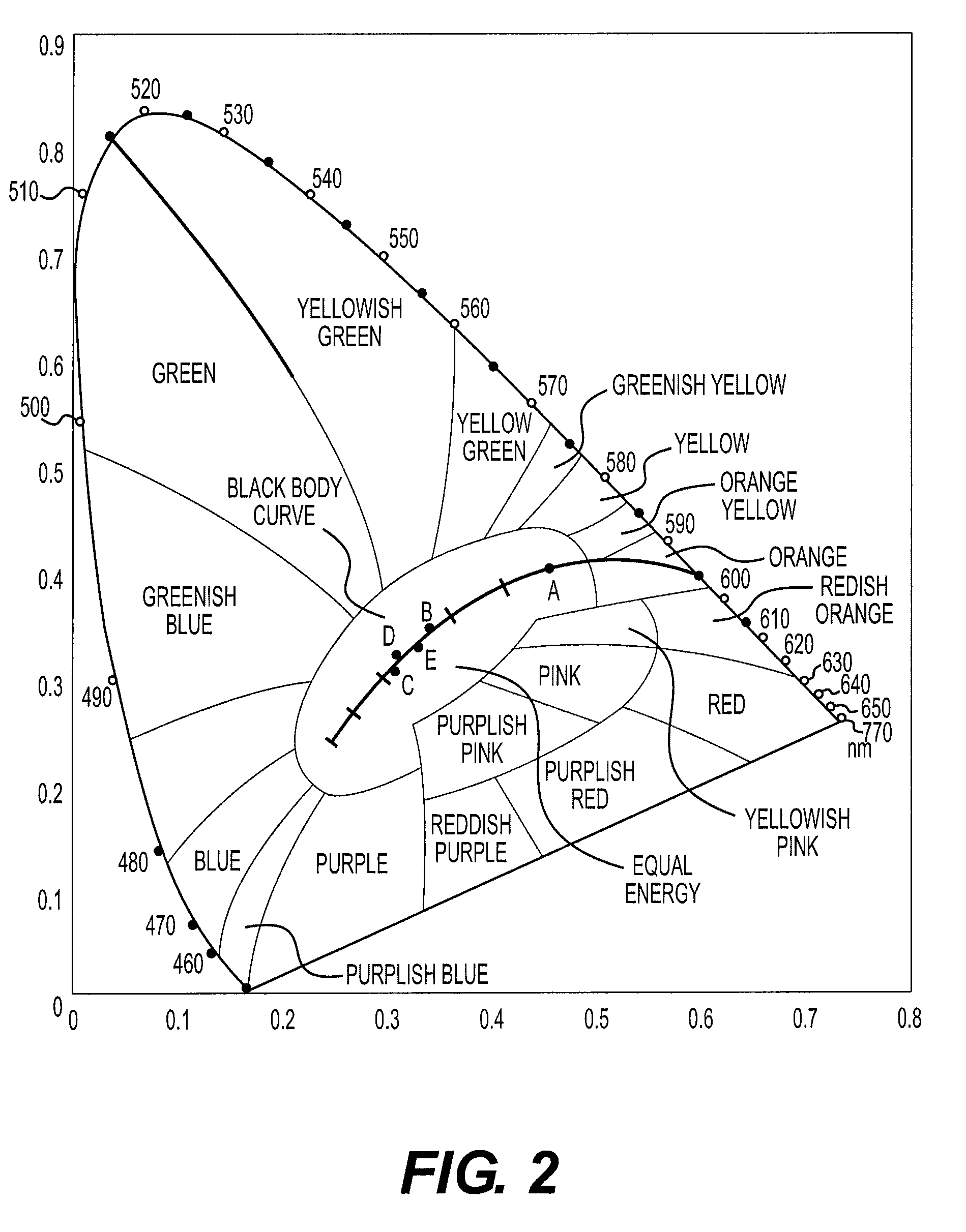
- A system, method, and tool that optimize the combination of LEDs by using a color bin accessing module, entry module, and processing module to select and calculate the optimal combination of LEDs based on color temperature, color rendering index, and luminous flux, excluding blue LEDs and utilizing red, green, white, amber, and cyan LEDs to achieve high color rendering index white light.
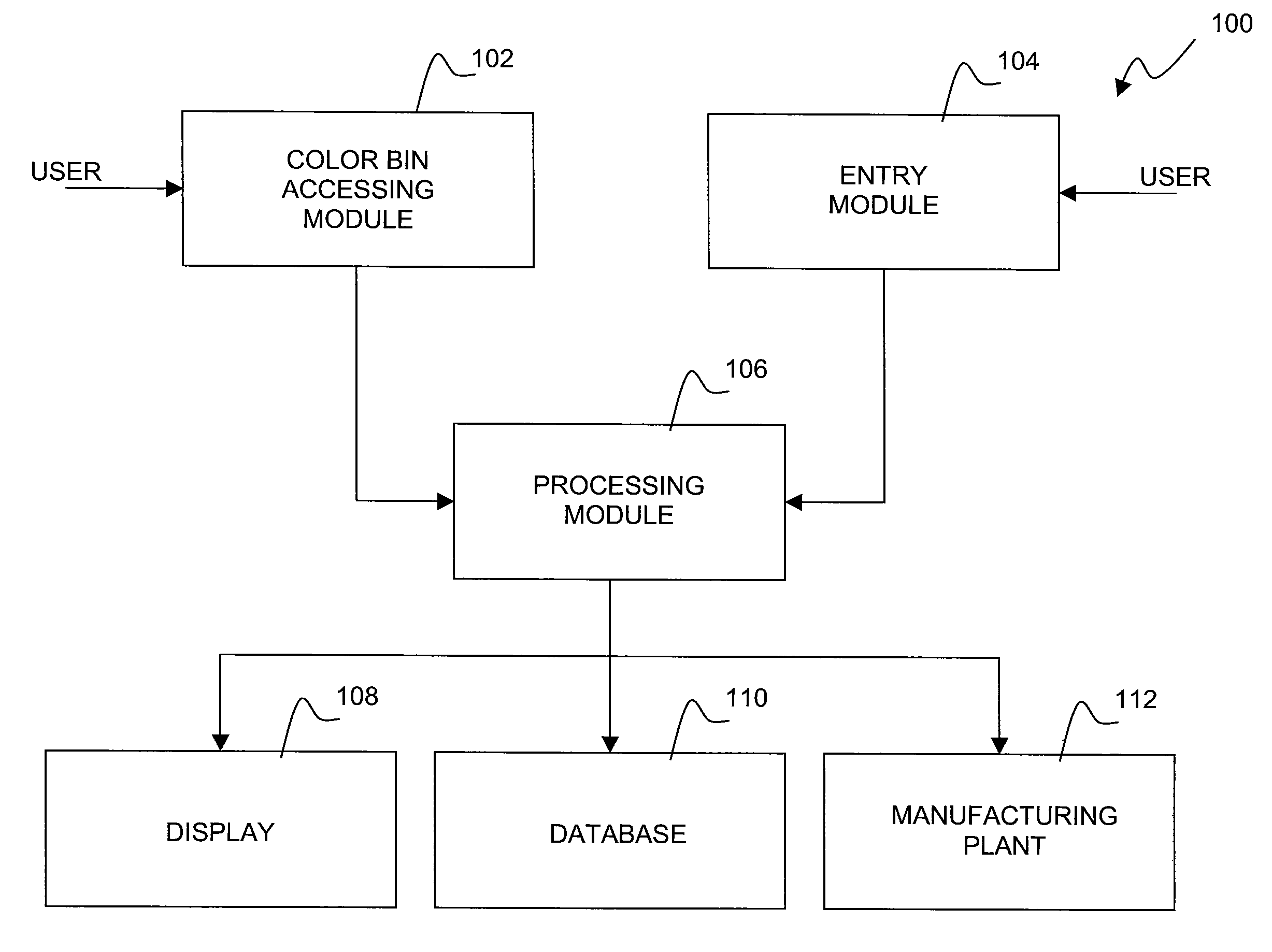
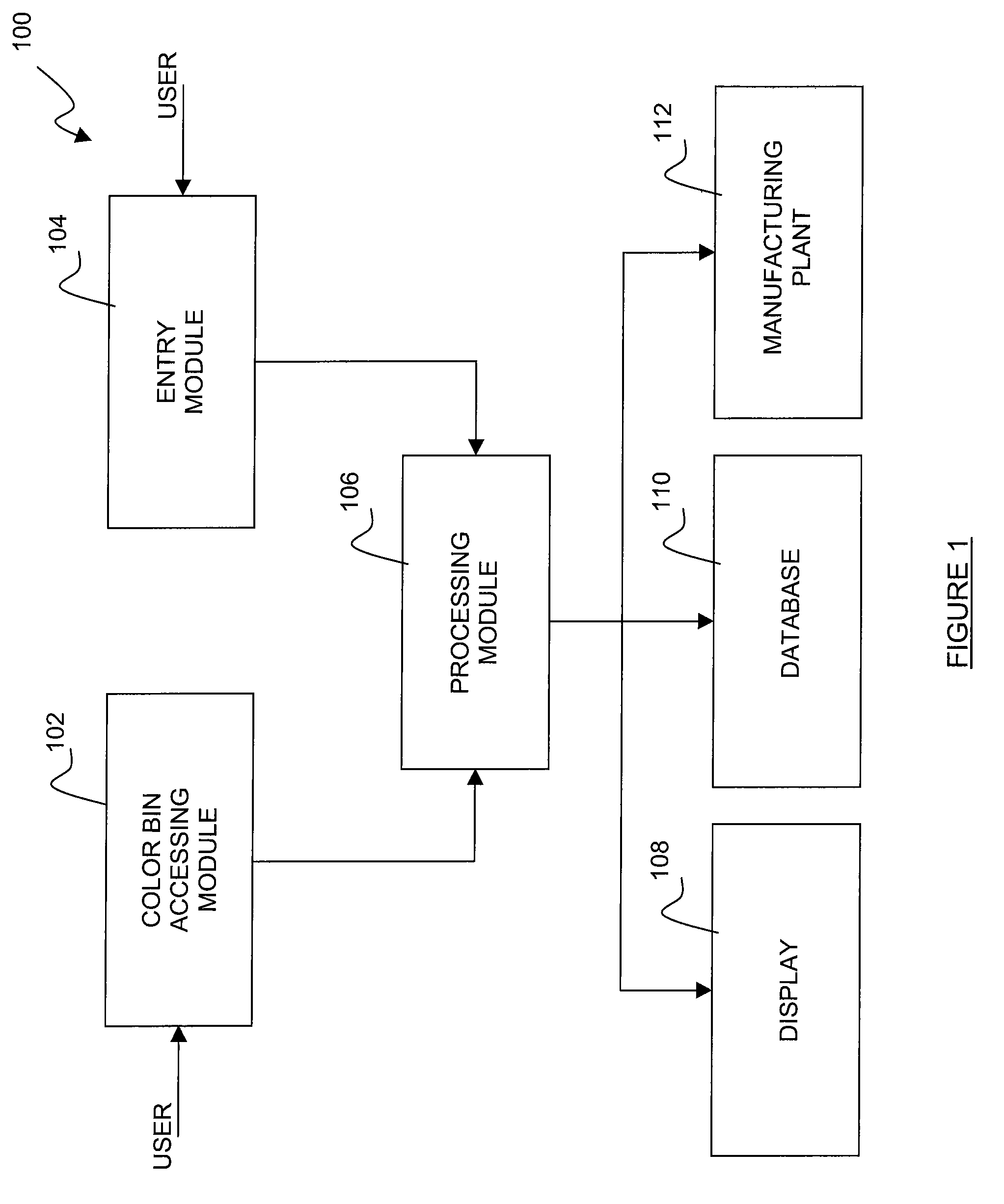

High color rendering index white LED light system using multi-wavelength pump sources and mixed phosphors
PatentInactiveEP2122240A2
Innovation
- A multi-wavelength pump source LED light system using a mixed phosphor layer with different ratios of phosphors emitting at various wavelengths, such as 600/524 nm and 573 nm, is applied to a combination of blue, cyan, and red LEDs to enhance CRI and adjust color temperature, with the phosphor layer optionally deposited on all or selected LEDs.
LED Spectral Optimization and Color Mixing Algorithms
LED spectral optimization represents a fundamental approach to achieving high Color Rendering Index (CRI) values exceeding 90 in multi-channel optical engines. The core principle involves strategically selecting LED wavelengths and their relative intensities to create a composite spectrum that closely matches the spectral power distribution of reference illuminants. Advanced optimization algorithms utilize mathematical models to determine the optimal combination of LED channels, considering factors such as spectral overlap, photometric efficiency, and color temperature stability.
Modern spectral optimization techniques employ multi-objective optimization frameworks that simultaneously maximize CRI while maintaining luminous efficacy and color consistency. These algorithms typically incorporate constraints related to power consumption, thermal management, and manufacturing tolerances. Genetic algorithms, particle swarm optimization, and gradient-based methods have proven effective in solving these complex multi-dimensional optimization problems, enabling designers to identify optimal LED combinations from vast solution spaces.
Color mixing algorithms form the operational backbone of high-CRI optical engines, translating theoretical spectral optimization results into practical control strategies. These algorithms must account for real-world factors including LED aging characteristics, temperature-dependent spectral shifts, and manufacturing variations. Adaptive color mixing approaches utilize feedback mechanisms to maintain consistent color output over the operational lifetime of the optical engine.
Advanced color mixing implementations incorporate predictive models that anticipate spectral changes due to environmental conditions and component aging. Machine learning techniques are increasingly being integrated into these algorithms, enabling real-time optimization based on sensor feedback and historical performance data. The algorithms must also address temporal color stability, ensuring that rapid changes in LED drive currents do not introduce perceptible color variations.
Spectral reconstruction algorithms play a crucial role in determining the minimum number of LED channels required to achieve target CRI values. These algorithms analyze the spectral requirements for high color rendering and identify critical wavelength regions that most significantly impact CRI calculations. By optimizing the spectral content in these regions, multi-channel systems can achieve CRI values exceeding 90 while maintaining reasonable system complexity and cost-effectiveness.
Modern spectral optimization techniques employ multi-objective optimization frameworks that simultaneously maximize CRI while maintaining luminous efficacy and color consistency. These algorithms typically incorporate constraints related to power consumption, thermal management, and manufacturing tolerances. Genetic algorithms, particle swarm optimization, and gradient-based methods have proven effective in solving these complex multi-dimensional optimization problems, enabling designers to identify optimal LED combinations from vast solution spaces.
Color mixing algorithms form the operational backbone of high-CRI optical engines, translating theoretical spectral optimization results into practical control strategies. These algorithms must account for real-world factors including LED aging characteristics, temperature-dependent spectral shifts, and manufacturing variations. Adaptive color mixing approaches utilize feedback mechanisms to maintain consistent color output over the operational lifetime of the optical engine.
Advanced color mixing implementations incorporate predictive models that anticipate spectral changes due to environmental conditions and component aging. Machine learning techniques are increasingly being integrated into these algorithms, enabling real-time optimization based on sensor feedback and historical performance data. The algorithms must also address temporal color stability, ensuring that rapid changes in LED drive currents do not introduce perceptible color variations.
Spectral reconstruction algorithms play a crucial role in determining the minimum number of LED channels required to achieve target CRI values. These algorithms analyze the spectral requirements for high color rendering and identify critical wavelength regions that most significantly impact CRI calculations. By optimizing the spectral content in these regions, multi-channel systems can achieve CRI values exceeding 90 while maintaining reasonable system complexity and cost-effectiveness.
Thermal Management Challenges in Multi-Channel LED Arrays
Thermal management represents one of the most critical engineering challenges in multi-channel LED arrays designed to achieve CRI values exceeding 90. The integration of multiple LED channels, each emitting different wavelengths to optimize color rendering, generates substantial heat loads that must be effectively dissipated to maintain optical performance and system reliability.
Multi-channel LED configurations typically incorporate 4-7 different LED types, including red, green, blue, amber, cyan, and sometimes violet or deep red channels. Each channel operates at different thermal characteristics and efficiency levels, creating non-uniform heat distribution patterns across the array. Red and amber LEDs generally exhibit lower luminous efficacy compared to blue and green counterparts, resulting in higher heat generation per unit of light output.
Junction temperature control becomes particularly challenging as CRI optimization often requires higher drive currents for specific channels, especially red and amber LEDs which are crucial for achieving warm color temperatures and high CRI values. Elevated junction temperatures directly impact LED performance through reduced luminous flux, color shift, and accelerated degradation, potentially compromising the carefully calibrated spectral balance required for high CRI performance.
Thermal crosstalk between adjacent LED channels presents another significant challenge. Heat generated by high-power channels can elevate the temperature of neighboring LEDs, causing unwanted spectral shifts that affect overall color rendering accuracy. This thermal interdependence requires sophisticated thermal modeling and strategic LED placement to minimize cross-channel thermal interference.
Advanced thermal management solutions must address both steady-state and transient thermal conditions. Dynamic dimming protocols and color tuning operations create varying thermal loads that can cause temporal color instability if not properly managed. Effective thermal design strategies include optimized heat sink geometries, thermal interface materials with high conductivity, and active cooling systems for high-power applications.
The compact form factors demanded by modern optical engines further constrain thermal management options, requiring innovative approaches such as micro-channel cooling, vapor chambers, or thermally conductive substrates to achieve adequate heat dissipation within space limitations while maintaining the precise thermal control necessary for consistent high-CRI performance.
Multi-channel LED configurations typically incorporate 4-7 different LED types, including red, green, blue, amber, cyan, and sometimes violet or deep red channels. Each channel operates at different thermal characteristics and efficiency levels, creating non-uniform heat distribution patterns across the array. Red and amber LEDs generally exhibit lower luminous efficacy compared to blue and green counterparts, resulting in higher heat generation per unit of light output.
Junction temperature control becomes particularly challenging as CRI optimization often requires higher drive currents for specific channels, especially red and amber LEDs which are crucial for achieving warm color temperatures and high CRI values. Elevated junction temperatures directly impact LED performance through reduced luminous flux, color shift, and accelerated degradation, potentially compromising the carefully calibrated spectral balance required for high CRI performance.
Thermal crosstalk between adjacent LED channels presents another significant challenge. Heat generated by high-power channels can elevate the temperature of neighboring LEDs, causing unwanted spectral shifts that affect overall color rendering accuracy. This thermal interdependence requires sophisticated thermal modeling and strategic LED placement to minimize cross-channel thermal interference.
Advanced thermal management solutions must address both steady-state and transient thermal conditions. Dynamic dimming protocols and color tuning operations create varying thermal loads that can cause temporal color instability if not properly managed. Effective thermal design strategies include optimized heat sink geometries, thermal interface materials with high conductivity, and active cooling systems for high-power applications.
The compact form factors demanded by modern optical engines further constrain thermal management options, requiring innovative approaches such as micro-channel cooling, vapor chambers, or thermally conductive substrates to achieve adequate heat dissipation within space limitations while maintaining the precise thermal control necessary for consistent high-CRI performance.
Unlock deeper insights with PatSnap Eureka Quick Research — get a full tech report to explore trends and direct your research. Try now!
Generate Your Research Report Instantly with AI Agent
Supercharge your innovation with PatSnap Eureka AI Agent Platform!