How to Implement Combustion Phasing with Catalytic Converters
MAR 24, 20269 MIN READ
Generate Your Research Report Instantly with AI Agent
PatSnap Eureka helps you evaluate technical feasibility & market potential.
Combustion Phasing and Catalytic Converter Integration Background
The integration of combustion phasing with catalytic converters represents a critical advancement in modern internal combustion engine technology, addressing the dual challenges of optimizing engine performance while meeting increasingly stringent emission regulations. This technological convergence has emerged as a fundamental requirement for achieving sustainable automotive propulsion systems that balance efficiency, power output, and environmental compliance.
Combustion phasing, defined as the precise timing and control of fuel ignition and burn progression within the engine cylinder, has evolved from basic mechanical timing systems to sophisticated electronic control mechanisms. The technology encompasses various parameters including ignition timing, fuel injection timing, and burn duration control, all of which directly influence engine efficiency, power delivery, and emission characteristics. Traditional approaches focused primarily on performance optimization, with limited consideration for downstream emission control systems.
Catalytic converter technology has simultaneously undergone significant evolution since its introduction in the 1970s, progressing from simple oxidation catalysts to complex three-way catalytic systems capable of simultaneously reducing nitrogen oxides, carbon monoxide, and unburned hydrocarbons. Modern catalytic converters incorporate advanced materials including platinum group metals, cerium oxide, and specialized washcoat formulations designed to operate effectively across varying temperature and chemical composition ranges.
The convergence of these technologies has been driven by regulatory pressures, particularly the implementation of increasingly stringent emission standards such as Euro 6, EPA Tier 3, and emerging zero-emission vehicle mandates. These regulations have necessitated a systems-level approach where combustion optimization and aftertreatment systems must function as integrated components rather than independent subsystems.
Contemporary research focuses on developing closed-loop control strategies that optimize combustion phasing specifically to enhance catalytic converter performance. This includes managing exhaust gas temperature profiles, maintaining optimal air-fuel ratios, and controlling the chemical composition of exhaust gases to maximize catalytic efficiency while preserving engine performance characteristics. The integration challenges encompass thermal management, chemical compatibility, and real-time control system coordination across multiple engine operating conditions.
Combustion phasing, defined as the precise timing and control of fuel ignition and burn progression within the engine cylinder, has evolved from basic mechanical timing systems to sophisticated electronic control mechanisms. The technology encompasses various parameters including ignition timing, fuel injection timing, and burn duration control, all of which directly influence engine efficiency, power delivery, and emission characteristics. Traditional approaches focused primarily on performance optimization, with limited consideration for downstream emission control systems.
Catalytic converter technology has simultaneously undergone significant evolution since its introduction in the 1970s, progressing from simple oxidation catalysts to complex three-way catalytic systems capable of simultaneously reducing nitrogen oxides, carbon monoxide, and unburned hydrocarbons. Modern catalytic converters incorporate advanced materials including platinum group metals, cerium oxide, and specialized washcoat formulations designed to operate effectively across varying temperature and chemical composition ranges.
The convergence of these technologies has been driven by regulatory pressures, particularly the implementation of increasingly stringent emission standards such as Euro 6, EPA Tier 3, and emerging zero-emission vehicle mandates. These regulations have necessitated a systems-level approach where combustion optimization and aftertreatment systems must function as integrated components rather than independent subsystems.
Contemporary research focuses on developing closed-loop control strategies that optimize combustion phasing specifically to enhance catalytic converter performance. This includes managing exhaust gas temperature profiles, maintaining optimal air-fuel ratios, and controlling the chemical composition of exhaust gases to maximize catalytic efficiency while preserving engine performance characteristics. The integration challenges encompass thermal management, chemical compatibility, and real-time control system coordination across multiple engine operating conditions.
Market Demand for Advanced Engine Emission Control Systems
The global automotive industry faces unprecedented pressure to reduce emissions while maintaining engine performance, creating substantial market demand for advanced engine emission control systems. Stringent environmental regulations across major markets, including Euro 7 standards in Europe, Tier 3 emissions standards in the United States, and China VI regulations, are driving manufacturers to seek innovative solutions that integrate combustion optimization with catalytic converter technologies.
Market demand is particularly strong for systems that can achieve precise combustion phasing control while maximizing catalytic converter efficiency. Fleet operators and automotive manufacturers are increasingly prioritizing technologies that can reduce cold-start emissions, improve fuel economy, and extend catalyst durability. The commercial vehicle segment shows especially high demand due to stricter NOx emission limits and the need for robust emission control systems that maintain performance across diverse operating conditions.
The passenger vehicle market demonstrates growing interest in integrated emission control solutions that combine advanced combustion timing strategies with next-generation catalytic converters. Consumers are driving demand for vehicles that meet environmental standards without compromising performance or fuel efficiency. This has created opportunities for technologies that optimize the relationship between combustion phasing and catalyst light-off temperatures.
Emerging markets present significant growth potential as emission regulations become more stringent globally. Developing economies are implementing increasingly strict emission standards, creating demand for cost-effective solutions that can achieve compliance while remaining economically viable for mass production. The retrofit market also shows substantial potential, particularly for commercial fleets seeking to upgrade existing vehicles with advanced emission control technologies.
The market increasingly values integrated approaches that consider the entire emission control system rather than individual components. Manufacturers are seeking solutions that optimize combustion phasing specifically to enhance catalytic converter performance, reduce precious metal loading requirements, and improve overall system durability. This holistic approach addresses both regulatory compliance and economic considerations, making it attractive to automotive manufacturers facing cost pressures while meeting environmental targets.
Technology suppliers report growing demand for real-time combustion control systems that can adapt to varying operating conditions while maintaining optimal catalyst temperatures and conversion efficiency throughout the drive cycle.
Market demand is particularly strong for systems that can achieve precise combustion phasing control while maximizing catalytic converter efficiency. Fleet operators and automotive manufacturers are increasingly prioritizing technologies that can reduce cold-start emissions, improve fuel economy, and extend catalyst durability. The commercial vehicle segment shows especially high demand due to stricter NOx emission limits and the need for robust emission control systems that maintain performance across diverse operating conditions.
The passenger vehicle market demonstrates growing interest in integrated emission control solutions that combine advanced combustion timing strategies with next-generation catalytic converters. Consumers are driving demand for vehicles that meet environmental standards without compromising performance or fuel efficiency. This has created opportunities for technologies that optimize the relationship between combustion phasing and catalyst light-off temperatures.
Emerging markets present significant growth potential as emission regulations become more stringent globally. Developing economies are implementing increasingly strict emission standards, creating demand for cost-effective solutions that can achieve compliance while remaining economically viable for mass production. The retrofit market also shows substantial potential, particularly for commercial fleets seeking to upgrade existing vehicles with advanced emission control technologies.
The market increasingly values integrated approaches that consider the entire emission control system rather than individual components. Manufacturers are seeking solutions that optimize combustion phasing specifically to enhance catalytic converter performance, reduce precious metal loading requirements, and improve overall system durability. This holistic approach addresses both regulatory compliance and economic considerations, making it attractive to automotive manufacturers facing cost pressures while meeting environmental targets.
Technology suppliers report growing demand for real-time combustion control systems that can adapt to varying operating conditions while maintaining optimal catalyst temperatures and conversion efficiency throughout the drive cycle.
Current State of Combustion Phasing with Catalyst Technologies
The current landscape of combustion phasing with catalyst technologies represents a sophisticated integration of engine control systems and exhaust aftertreatment solutions. Modern automotive powertrains employ advanced engine management systems that precisely control ignition timing, fuel injection parameters, and valve timing to optimize combustion phasing while ensuring compatibility with downstream catalytic converter operations.
Contemporary gasoline engines utilize variable valve timing (VVT) systems and direct injection technologies to achieve optimal combustion phasing. These systems work in conjunction with three-way catalytic converters, which require precise air-fuel ratio control to maintain the stoichiometric conditions necessary for simultaneous reduction of NOx, CO, and hydrocarbon emissions. The integration challenge lies in balancing combustion efficiency with catalyst light-off requirements and thermal management.
Diesel engine applications present more complex scenarios, where combustion phasing control involves multiple injection events and exhaust gas recirculation (EGR) systems. Current diesel aftertreatment systems incorporate diesel oxidation catalysts (DOC), selective catalytic reduction (SCR) systems, and diesel particulate filters (DPF). The combustion phasing strategies must account for the temperature requirements of these components while managing soot formation and NOx production.
Advanced control algorithms now employ model predictive control (MPC) and machine learning approaches to optimize combustion phasing in real-time. These systems consider catalyst temperature, conversion efficiency, and aging characteristics to adjust combustion parameters dynamically. Sensor feedback from lambda sensors, temperature probes, and NOx sensors provides continuous monitoring of catalyst performance.
Emerging technologies include electrically heated catalysts (EHC) and close-coupled catalyst configurations that reduce light-off times and enable more aggressive combustion phasing strategies during cold-start conditions. Additionally, lean-burn gasoline engines with NOx storage catalysts represent a growing segment where combustion phasing control becomes critical for managing the lean-rich cycling required for catalyst regeneration.
The integration of hybrid powertrains introduces additional complexity, as combustion phasing strategies must account for intermittent engine operation and rapid thermal cycling of catalyst systems. Current research focuses on predictive thermal management and coordinated control between electric motor assistance and combustion optimization to maintain catalyst effectiveness across diverse operating conditions.
Contemporary gasoline engines utilize variable valve timing (VVT) systems and direct injection technologies to achieve optimal combustion phasing. These systems work in conjunction with three-way catalytic converters, which require precise air-fuel ratio control to maintain the stoichiometric conditions necessary for simultaneous reduction of NOx, CO, and hydrocarbon emissions. The integration challenge lies in balancing combustion efficiency with catalyst light-off requirements and thermal management.
Diesel engine applications present more complex scenarios, where combustion phasing control involves multiple injection events and exhaust gas recirculation (EGR) systems. Current diesel aftertreatment systems incorporate diesel oxidation catalysts (DOC), selective catalytic reduction (SCR) systems, and diesel particulate filters (DPF). The combustion phasing strategies must account for the temperature requirements of these components while managing soot formation and NOx production.
Advanced control algorithms now employ model predictive control (MPC) and machine learning approaches to optimize combustion phasing in real-time. These systems consider catalyst temperature, conversion efficiency, and aging characteristics to adjust combustion parameters dynamically. Sensor feedback from lambda sensors, temperature probes, and NOx sensors provides continuous monitoring of catalyst performance.
Emerging technologies include electrically heated catalysts (EHC) and close-coupled catalyst configurations that reduce light-off times and enable more aggressive combustion phasing strategies during cold-start conditions. Additionally, lean-burn gasoline engines with NOx storage catalysts represent a growing segment where combustion phasing control becomes critical for managing the lean-rich cycling required for catalyst regeneration.
The integration of hybrid powertrains introduces additional complexity, as combustion phasing strategies must account for intermittent engine operation and rapid thermal cycling of catalyst systems. Current research focuses on predictive thermal management and coordinated control between electric motor assistance and combustion optimization to maintain catalyst effectiveness across diverse operating conditions.
Existing Solutions for Combustion Phasing Optimization
01 Combustion phasing control through fuel injection timing adjustment
Methods for controlling combustion phasing by adjusting the timing of fuel injection in internal combustion engines. This approach optimizes the start of combustion relative to piston position to improve engine efficiency and reduce emissions. The timing can be dynamically adjusted based on engine operating conditions, load, and speed to achieve optimal combustion phasing for catalytic converter performance.- Combustion phasing control through fuel injection timing adjustment: Methods for controlling combustion phasing in engines by adjusting the timing of fuel injection to optimize the combustion process. This approach allows for precise control of when combustion occurs in the engine cycle, improving efficiency and reducing emissions. The timing adjustments can be made based on various engine operating parameters and conditions to achieve optimal combustion phasing for catalytic converter performance.
- Catalytic converter heating strategies for cold start conditions: Techniques for rapidly heating catalytic converters during engine cold start by retarding combustion phasing to increase exhaust gas temperatures. This approach helps the catalytic converter reach its light-off temperature more quickly, reducing cold start emissions. The methods involve strategic control of ignition timing and combustion phasing to generate higher exhaust temperatures while maintaining acceptable engine performance and fuel economy.
- Multi-stage combustion control for emission reduction: Systems implementing multi-stage or stratified combustion processes to optimize both engine performance and catalytic converter efficiency. These methods involve controlling combustion phasing through multiple injection events or staged combustion to reduce raw emissions entering the catalytic converter. The approach allows for better control of combustion temperatures and exhaust gas composition to enhance catalytic conversion efficiency.
- Exhaust gas recirculation integration with combustion phasing: Methods combining exhaust gas recirculation with combustion phasing control to reduce nitrogen oxide emissions and improve catalytic converter performance. The integration allows for lower combustion temperatures while maintaining efficient operation, reducing the formation of pollutants that must be treated by the catalytic converter. This approach optimizes the balance between in-cylinder emission formation and post-combustion catalytic treatment.
- Sensor-based feedback control for combustion phasing optimization: Advanced control systems using various sensors to monitor combustion parameters and provide feedback for real-time combustion phasing adjustments. These systems measure parameters such as cylinder pressure, exhaust temperature, and emissions to dynamically optimize combustion timing for catalytic converter efficiency. The feedback control enables adaptive adjustment of combustion phasing based on actual operating conditions and catalytic converter performance requirements.
02 Catalytic converter heating strategies for cold start emissions
Techniques for rapidly heating catalytic converters during engine cold start by retarding combustion phasing to increase exhaust gas temperatures. This approach reduces the time required for the catalytic converter to reach its light-off temperature, thereby minimizing cold start emissions. The strategy may involve delayed ignition timing or post-injection of fuel to generate additional heat in the exhaust system.Expand Specific Solutions03 Homogeneous charge compression ignition with controlled combustion phasing
Systems utilizing homogeneous charge compression ignition combustion modes where combustion phasing is precisely controlled to optimize catalytic converter efficiency. This technology involves controlling the auto-ignition timing of a homogeneous air-fuel mixture through temperature and pressure management, enabling lower emissions and improved fuel economy while maintaining optimal exhaust temperatures for catalyst operation.Expand Specific Solutions04 Dual-mode combustion with adaptive phasing control
Engine control systems that switch between different combustion modes while adaptively adjusting combustion phasing to maintain catalytic converter effectiveness across various operating conditions. The system can transition between conventional spark ignition and advanced combustion modes, with phasing adjustments ensuring consistent exhaust gas composition and temperature for optimal catalyst performance throughout the operating range.Expand Specific Solutions05 Exhaust gas recirculation integration with combustion phasing
Methods combining exhaust gas recirculation with combustion phasing control to reduce emissions while maintaining catalytic converter efficiency. The integration allows for precise control of combustion temperatures and exhaust gas composition by coordinating the amount of recirculated exhaust with the timing of combustion events, optimizing both in-cylinder conditions and downstream catalyst performance.Expand Specific Solutions
Key Players in Engine Control and Catalytic Converter Industry
The combustion phasing with catalytic converters technology represents a mature automotive emissions control sector experiencing steady growth driven by stringent environmental regulations. The market, valued at several billion dollars globally, is dominated by established automotive suppliers and OEMs who have developed sophisticated integration capabilities. Technology maturity is high, with companies like Robert Bosch GmbH, Vitesco Technologies, and Siemens AG leading advanced engine management systems, while automotive manufacturers including Mercedes-Benz Group AG, Volkswagen AG, BMW AG, and Audi AG integrate these solutions into production vehicles. Chinese players like Sinopec and its research institutes contribute to catalyst material development, while specialized firms such as BASF Corp. and Air Liquide SA provide essential chemical components. The competitive landscape shows consolidation around proven technologies with incremental improvements focusing on efficiency optimization and regulatory compliance rather than breakthrough innovations.
Robert Bosch GmbH
Technical Solution: Bosch has developed advanced engine management systems that integrate combustion phasing control with catalytic converter optimization. Their technology utilizes precise fuel injection timing and ignition control algorithms to achieve optimal combustion phasing, ensuring that exhaust gas temperatures and chemical compositions are ideal for catalytic converter efficiency. The system employs real-time feedback from oxygen sensors and temperature monitoring to adjust combustion parameters dynamically. This approach maximizes the conversion efficiency of NOx, CO, and hydrocarbons while maintaining engine performance and fuel economy. Bosch's solution includes sophisticated ECU programming that coordinates between engine combustion cycles and aftertreatment systems.
Strengths: Market-leading expertise in automotive control systems, comprehensive integration capabilities, proven reliability in mass production. Weaknesses: High complexity requiring specialized maintenance, significant development costs for customization.
Mercedes-Benz Group AG
Technical Solution: Mercedes-Benz has implemented advanced combustion phasing strategies in their premium engines, particularly focusing on the coordination between combustion timing and catalytic converter light-off performance. Their approach involves sophisticated engine control algorithms that optimize ignition timing and fuel injection patterns to ensure rapid catalytic converter heating during cold starts while maintaining optimal conversion efficiency during normal operation. The system incorporates predictive thermal management that anticipates catalytic converter temperature requirements and adjusts combustion phasing accordingly. This technology is particularly evident in their AMG performance engines and efficient diesel powertrains, where precise combustion control is critical for both performance and emissions compliance.
Strengths: Premium engineering quality, extensive R&D resources, strong integration with luxury vehicle systems. Weaknesses: High cost implementation, primarily focused on premium market segments limiting broader applicability.
Core Technologies in Integrated Combustion-Catalyst Systems
Method, an arrangement, and a computer readable storage device for controlling homogeneous charge compression ignition combustion
PatentInactiveUS7089912B2
Innovation
- The method involves increasing the residual gas fraction and decreasing fresh air intake stepwise for the first few engine cycles after a mode change, adjusting valve timing and exhaust manifold gas pressure to stabilize auto-ignition timing, and using negative valve overlap to retain exhaust residuals, thereby correcting combustion phasing.
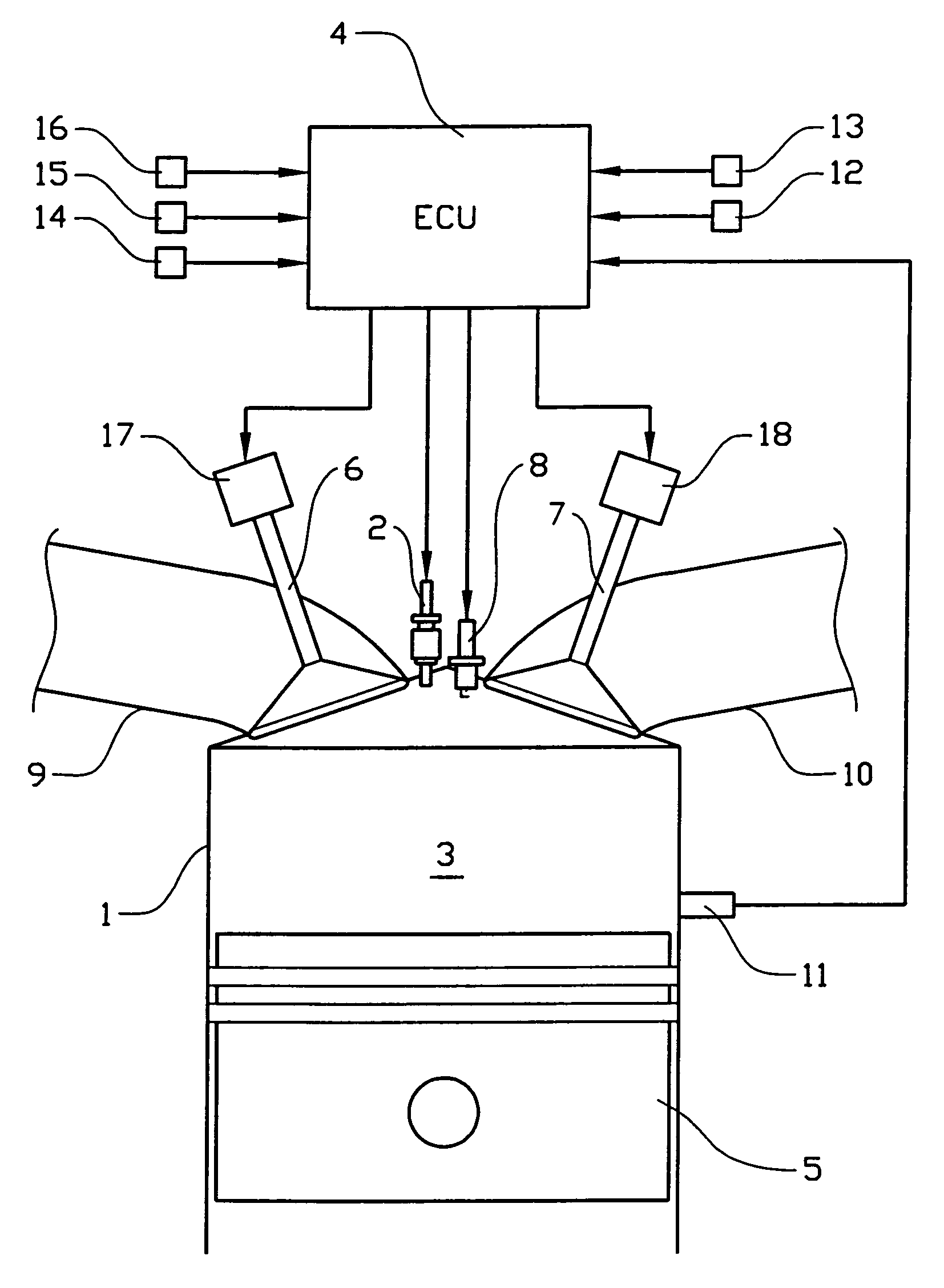
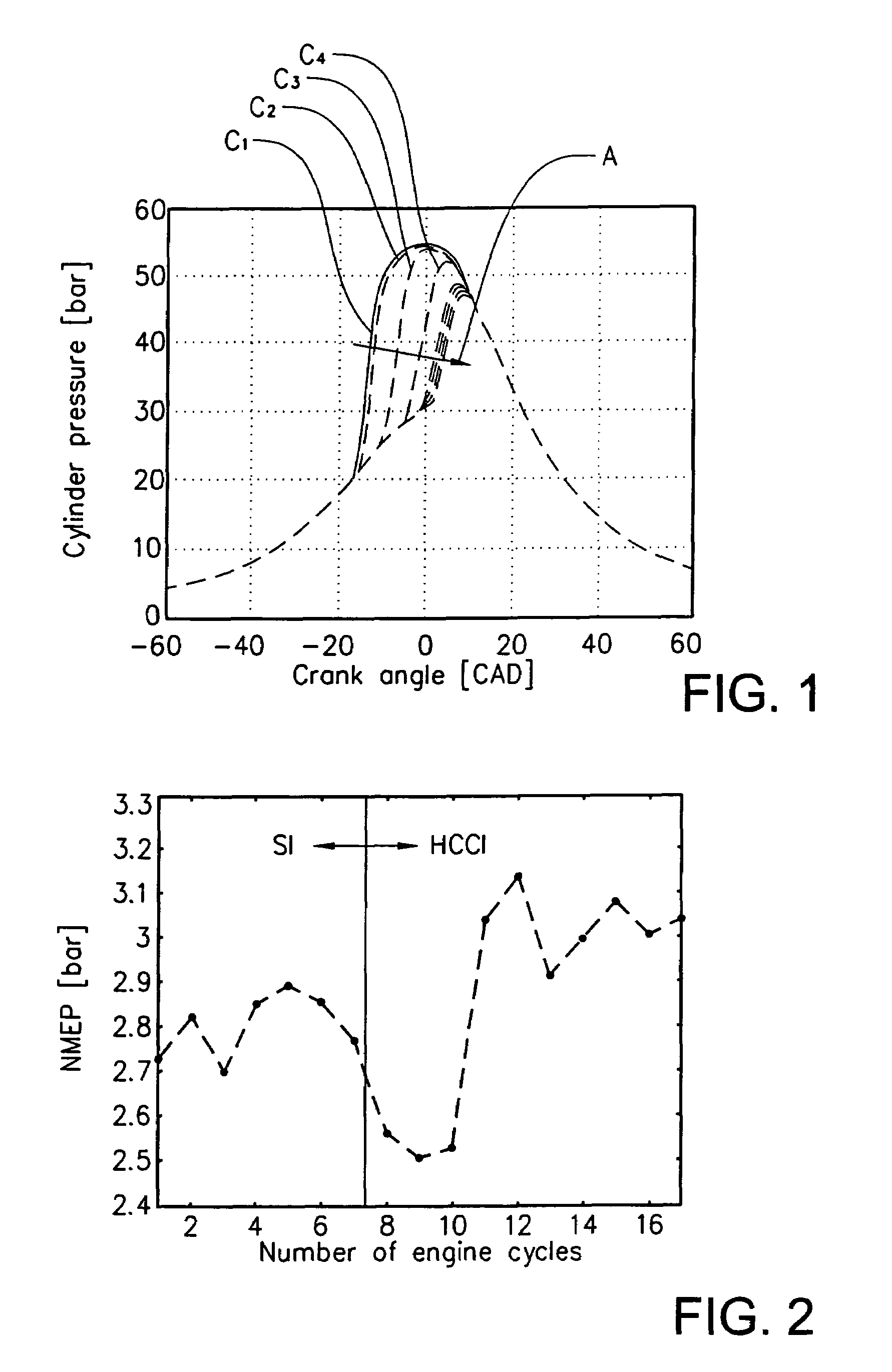
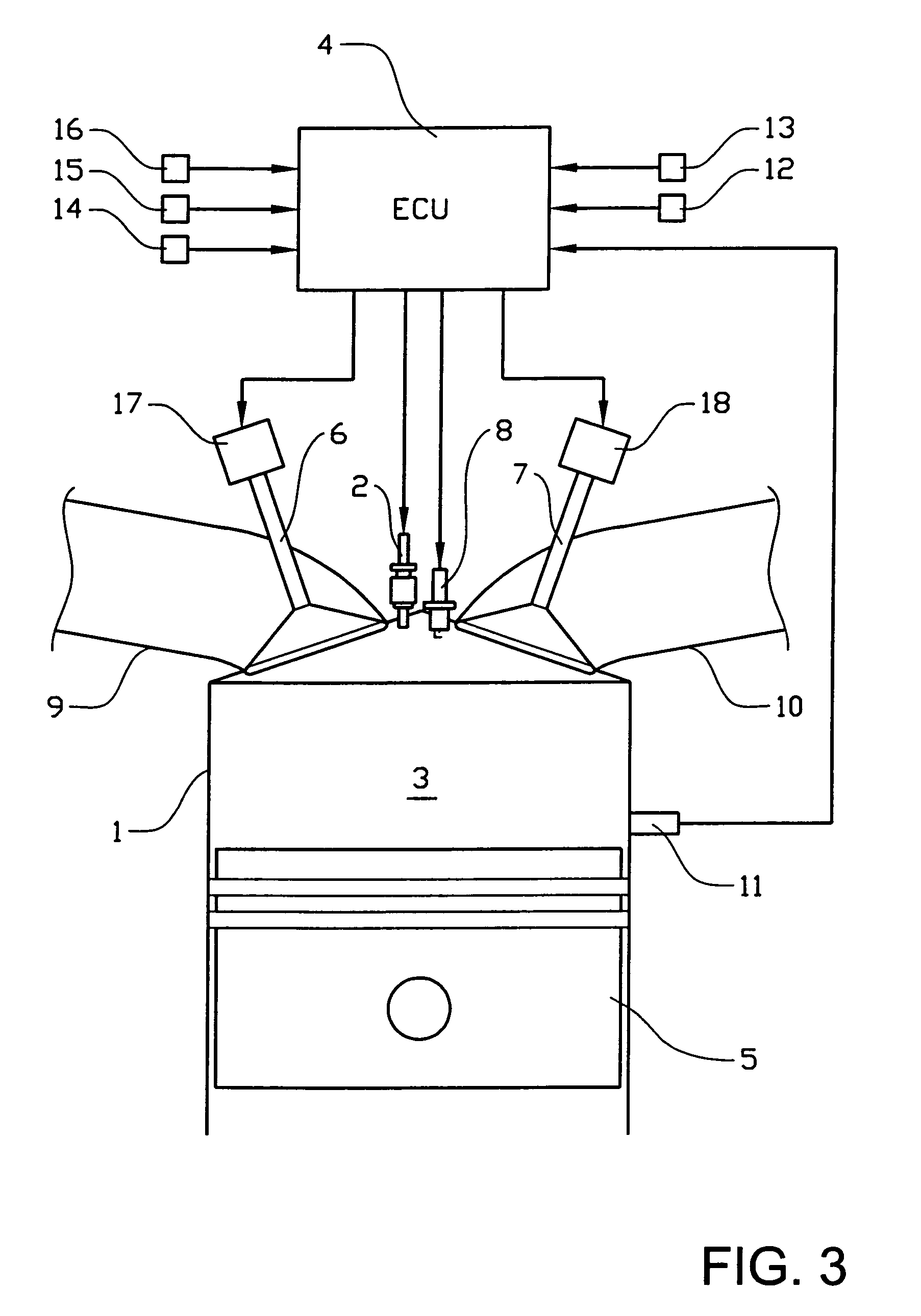

Combustion phasing control for high substitution lean burn of gaseous fuels in dual fuel engine
PatentActiveUS20200263627A1
Innovation
- A combustion control system that includes a combustion sensor and a control unit to adjust pilot fueling and valve timing parameters based on phasing data from previous engine cycles, allowing for variation in the phasing of combustion of a main charge of gaseous fuel ignited by pilot shots of liquid fuel, thereby optimizing combustion efficiency and reducing emissions.


Emission Regulations Impact on Combustion Technologies
The evolution of emission regulations has fundamentally transformed combustion technology development, particularly in the integration of combustion phasing with catalytic converter systems. Stringent standards such as Euro 6/VI, EPA Tier 3, and China VI have established increasingly restrictive limits for nitrogen oxides (NOx), particulate matter (PM), carbon monoxide (CO), and unburned hydrocarbons (HC). These regulations have created a paradigm shift where combustion phasing strategies must be optimized not only for engine performance but also for catalyst efficiency and durability.
Modern emission standards have driven the development of advanced combustion phasing techniques that specifically support three-way catalyst (TWC) and selective catalytic reduction (SCR) systems. The regulatory emphasis on real driving emissions (RDE) testing has particularly influenced combustion timing strategies, requiring precise control across diverse operating conditions. This has led to the adoption of variable valve timing, direct injection systems, and exhaust gas recirculation technologies that enable optimal combustion phasing while maintaining catalyst operating temperatures within effective windows.
The implementation of on-board diagnostics (OBD) requirements has further shaped combustion technology evolution. Regulations mandate continuous monitoring of catalyst efficiency, necessitating combustion phasing strategies that ensure consistent exhaust gas composition for accurate catalyst performance assessment. This has driven the development of closed-loop combustion control systems that adjust phasing based on downstream oxygen sensor feedback and catalyst temperature monitoring.
Regional variations in emission standards have created diverse technological approaches to combustion phasing implementation. European regulations emphasizing NOx reduction have promoted lean-burn combustion strategies coupled with NOx storage catalysts, while North American standards focusing on comprehensive emission control have favored stoichiometric combustion with advanced TWC systems. These regulatory differences have influenced the development of adaptive combustion phasing algorithms capable of optimizing performance across multiple emission control architectures.
Future regulatory trends toward zero-emission mandates are driving research into combustion phasing strategies for hybrid powertrains and alternative fuel applications. Anticipated regulations targeting greenhouse gas emissions are pushing the development of high-efficiency combustion phasing techniques that maximize fuel economy while maintaining catalyst effectiveness, creating new challenges for integrated powertrain optimization.
Modern emission standards have driven the development of advanced combustion phasing techniques that specifically support three-way catalyst (TWC) and selective catalytic reduction (SCR) systems. The regulatory emphasis on real driving emissions (RDE) testing has particularly influenced combustion timing strategies, requiring precise control across diverse operating conditions. This has led to the adoption of variable valve timing, direct injection systems, and exhaust gas recirculation technologies that enable optimal combustion phasing while maintaining catalyst operating temperatures within effective windows.
The implementation of on-board diagnostics (OBD) requirements has further shaped combustion technology evolution. Regulations mandate continuous monitoring of catalyst efficiency, necessitating combustion phasing strategies that ensure consistent exhaust gas composition for accurate catalyst performance assessment. This has driven the development of closed-loop combustion control systems that adjust phasing based on downstream oxygen sensor feedback and catalyst temperature monitoring.
Regional variations in emission standards have created diverse technological approaches to combustion phasing implementation. European regulations emphasizing NOx reduction have promoted lean-burn combustion strategies coupled with NOx storage catalysts, while North American standards focusing on comprehensive emission control have favored stoichiometric combustion with advanced TWC systems. These regulatory differences have influenced the development of adaptive combustion phasing algorithms capable of optimizing performance across multiple emission control architectures.
Future regulatory trends toward zero-emission mandates are driving research into combustion phasing strategies for hybrid powertrains and alternative fuel applications. Anticipated regulations targeting greenhouse gas emissions are pushing the development of high-efficiency combustion phasing techniques that maximize fuel economy while maintaining catalyst effectiveness, creating new challenges for integrated powertrain optimization.
Thermal Management Challenges in Catalyst Systems
Thermal management represents one of the most critical engineering challenges in implementing combustion phasing with catalytic converters. The integration of these systems creates complex thermal dynamics that must be carefully controlled to achieve optimal performance while preventing component degradation.
The primary challenge stems from the inherent temperature requirements of catalytic converters, which need to reach light-off temperatures of 200-400°C to initiate chemical reactions effectively. However, combustion phasing strategies often involve delayed ignition timing or lean combustion modes that can significantly reduce exhaust gas temperatures. This creates a fundamental conflict between engine efficiency optimization and catalyst activation requirements.
Heat retention becomes particularly problematic during cold start conditions and low-load operations. Traditional thermal management approaches rely on exhaust gas heat, but phased combustion strategies may reduce this heat source by 50-150°C compared to conventional timing. Advanced insulation materials and heat exchangers are being developed to address this gap, though they add system complexity and cost.
Thermal cycling presents another significant challenge, as catalytic converters experience repeated heating and cooling cycles that can cause substrate cracking and precious metal sintering. The washcoat materials, typically composed of alumina or ceria-zirconia, are particularly susceptible to thermal shock when temperature gradients exceed 10°C per second during rapid load changes.
Innovative solutions include electrically heated catalysts that can maintain operating temperatures independent of exhaust heat, though power consumption remains a concern for fuel economy. Phase change materials integrated into catalyst housings show promise for thermal buffering, storing excess heat during high-load conditions and releasing it during low-temperature phases.
Advanced thermal modeling and real-time temperature monitoring systems are becoming essential for managing these challenges. Multi-zone temperature sensors and predictive algorithms enable dynamic adjustment of combustion phasing parameters to maintain optimal catalyst temperatures while preserving the benefits of advanced combustion strategies.
The primary challenge stems from the inherent temperature requirements of catalytic converters, which need to reach light-off temperatures of 200-400°C to initiate chemical reactions effectively. However, combustion phasing strategies often involve delayed ignition timing or lean combustion modes that can significantly reduce exhaust gas temperatures. This creates a fundamental conflict between engine efficiency optimization and catalyst activation requirements.
Heat retention becomes particularly problematic during cold start conditions and low-load operations. Traditional thermal management approaches rely on exhaust gas heat, but phased combustion strategies may reduce this heat source by 50-150°C compared to conventional timing. Advanced insulation materials and heat exchangers are being developed to address this gap, though they add system complexity and cost.
Thermal cycling presents another significant challenge, as catalytic converters experience repeated heating and cooling cycles that can cause substrate cracking and precious metal sintering. The washcoat materials, typically composed of alumina or ceria-zirconia, are particularly susceptible to thermal shock when temperature gradients exceed 10°C per second during rapid load changes.
Innovative solutions include electrically heated catalysts that can maintain operating temperatures independent of exhaust heat, though power consumption remains a concern for fuel economy. Phase change materials integrated into catalyst housings show promise for thermal buffering, storing excess heat during high-load conditions and releasing it during low-temperature phases.
Advanced thermal modeling and real-time temperature monitoring systems are becoming essential for managing these challenges. Multi-zone temperature sensors and predictive algorithms enable dynamic adjustment of combustion phasing parameters to maintain optimal catalyst temperatures while preserving the benefits of advanced combustion strategies.
Unlock deeper insights with PatSnap Eureka Quick Research — get a full tech report to explore trends and direct your research. Try now!
Generate Your Research Report Instantly with AI Agent
Supercharge your innovation with PatSnap Eureka AI Agent Platform!