

How to Implement Electrolyte Gating in Low-Noise Amplifiers
MAY 13, 20269 MIN READ
Generate Your Research Report Instantly with AI Agent
PatSnap Eureka helps you evaluate technical feasibility & market potential.
Electrolyte Gating LNA Background and Objectives
Electrolyte gating represents a revolutionary approach in semiconductor device control, leveraging ionic conductivity to modulate electronic properties at the device interface. This technique has emerged from the convergence of electrochemistry and solid-state electronics, offering unprecedented control over carrier concentration and device characteristics. The fundamental principle involves using an electrolyte medium to create an electric double layer at the semiconductor surface, enabling dynamic modulation of the channel conductivity through ionic redistribution.
The historical development of electrolyte gating traces back to early electrochemical transistor research in the 1980s, where scientists first demonstrated the possibility of using ionic solutions to control semiconductor properties. The technique gained significant momentum in the 2000s with advances in organic electronics and the discovery of high-mobility two-dimensional materials. The evolution has been marked by progressive improvements in electrolyte materials, from simple salt solutions to sophisticated polymer electrolytes and ionic liquids.
In the context of low-noise amplifiers, electrolyte gating presents a paradigm shift from conventional voltage-controlled devices. Traditional LNAs rely on junction-based field-effect transistors where gate voltage modulates the depletion region. Electrolyte gating, however, enables direct control of surface charge density through electrochemical processes, potentially offering superior noise performance and enhanced gain control capabilities.
The primary technical objective centers on achieving ultra-low noise figures while maintaining high transconductance and stable operation. Electrolyte-gated devices can theoretically reach higher carrier densities than conventional MOSFETs, potentially enabling better signal-to-noise ratios. The ionic nature of the gating mechanism also provides inherent isolation from electronic noise sources, which is crucial for sensitive RF applications.
Current research objectives focus on developing stable electrolyte formulations that maintain consistent performance across temperature variations and extended operational periods. The integration challenge involves creating hermetically sealed electrolyte chambers that preserve ionic conductivity while preventing contamination. Additionally, optimizing the electrolyte-semiconductor interface to minimize parasitic capacitance and maximize frequency response represents a critical technical milestone for practical LNA implementations.
The historical development of electrolyte gating traces back to early electrochemical transistor research in the 1980s, where scientists first demonstrated the possibility of using ionic solutions to control semiconductor properties. The technique gained significant momentum in the 2000s with advances in organic electronics and the discovery of high-mobility two-dimensional materials. The evolution has been marked by progressive improvements in electrolyte materials, from simple salt solutions to sophisticated polymer electrolytes and ionic liquids.
In the context of low-noise amplifiers, electrolyte gating presents a paradigm shift from conventional voltage-controlled devices. Traditional LNAs rely on junction-based field-effect transistors where gate voltage modulates the depletion region. Electrolyte gating, however, enables direct control of surface charge density through electrochemical processes, potentially offering superior noise performance and enhanced gain control capabilities.
The primary technical objective centers on achieving ultra-low noise figures while maintaining high transconductance and stable operation. Electrolyte-gated devices can theoretically reach higher carrier densities than conventional MOSFETs, potentially enabling better signal-to-noise ratios. The ionic nature of the gating mechanism also provides inherent isolation from electronic noise sources, which is crucial for sensitive RF applications.
Current research objectives focus on developing stable electrolyte formulations that maintain consistent performance across temperature variations and extended operational periods. The integration challenge involves creating hermetically sealed electrolyte chambers that preserve ionic conductivity while preventing contamination. Additionally, optimizing the electrolyte-semiconductor interface to minimize parasitic capacitance and maximize frequency response represents a critical technical milestone for practical LNA implementations.
Market Demand for Ultra-Low-Noise Amplification Solutions
The global electronics industry is experiencing unprecedented demand for ultra-low-noise amplification solutions, driven by the rapid advancement of quantum computing, precision measurement systems, and next-generation communication technologies. Traditional amplification technologies are reaching their fundamental noise limits, creating substantial market opportunities for innovative approaches such as electrolyte gating in low-noise amplifiers.
Quantum computing applications represent one of the most significant growth drivers for ultra-low-noise amplification solutions. Quantum processors require extremely sensitive readout electronics capable of detecting minute signals while maintaining coherence times. The stringent noise requirements in quantum systems have pushed conventional semiconductor amplifiers to their theoretical limits, necessitating novel approaches that can achieve sub-femtoampere current sensitivity and noise temperatures approaching the quantum limit.
Scientific instrumentation markets are experiencing robust growth in demand for precision measurement capabilities. High-resolution spectroscopy, gravitational wave detection, and advanced microscopy applications require amplification systems with noise floors several orders of magnitude lower than current commercial solutions. Research institutions and industrial laboratories are increasingly seeking amplification technologies that can enable breakthrough discoveries in fundamental physics and materials science.
The telecommunications sector is driving demand for ultra-low-noise amplifiers in satellite communication systems and deep-space communication networks. As data transmission requirements continue to expand and signal sources become more distant, the need for amplification systems with exceptional signal-to-noise ratios becomes critical for maintaining communication reliability and data integrity.
Medical device applications, particularly in neural signal processing and biomedical imaging, are creating new market segments for ultra-low-noise amplification. Brain-computer interfaces and advanced diagnostic equipment require amplifiers capable of detecting biological signals with minimal interference, driving innovation in low-noise electronic systems.
The convergence of these market demands is creating a substantial opportunity for electrolyte gating technology in low-noise amplifiers, as traditional approaches struggle to meet the increasingly stringent performance requirements across these diverse application domains.
Quantum computing applications represent one of the most significant growth drivers for ultra-low-noise amplification solutions. Quantum processors require extremely sensitive readout electronics capable of detecting minute signals while maintaining coherence times. The stringent noise requirements in quantum systems have pushed conventional semiconductor amplifiers to their theoretical limits, necessitating novel approaches that can achieve sub-femtoampere current sensitivity and noise temperatures approaching the quantum limit.
Scientific instrumentation markets are experiencing robust growth in demand for precision measurement capabilities. High-resolution spectroscopy, gravitational wave detection, and advanced microscopy applications require amplification systems with noise floors several orders of magnitude lower than current commercial solutions. Research institutions and industrial laboratories are increasingly seeking amplification technologies that can enable breakthrough discoveries in fundamental physics and materials science.
The telecommunications sector is driving demand for ultra-low-noise amplifiers in satellite communication systems and deep-space communication networks. As data transmission requirements continue to expand and signal sources become more distant, the need for amplification systems with exceptional signal-to-noise ratios becomes critical for maintaining communication reliability and data integrity.
Medical device applications, particularly in neural signal processing and biomedical imaging, are creating new market segments for ultra-low-noise amplification. Brain-computer interfaces and advanced diagnostic equipment require amplifiers capable of detecting biological signals with minimal interference, driving innovation in low-noise electronic systems.
The convergence of these market demands is creating a substantial opportunity for electrolyte gating technology in low-noise amplifiers, as traditional approaches struggle to meet the increasingly stringent performance requirements across these diverse application domains.
Current State and Challenges of Electrolyte Gating in LNAs
Electrolyte gating in low-noise amplifiers represents an emerging field that combines ionic liquid technology with semiconductor device engineering. Currently, the implementation of electrolyte gates in LNA circuits remains largely in the research and development phase, with limited commercial applications. The technology leverages the unique properties of ionic liquids to create ultra-high capacitance gates, enabling precise control of carrier density in semiconductor channels while maintaining low power consumption.
The primary advantage of electrolyte gating lies in its ability to achieve carrier densities that are difficult to obtain through conventional solid-state gating methods. This capability is particularly valuable in LNA applications where fine-tuning of device characteristics is crucial for optimizing noise performance. However, the integration of liquid electrolytes into traditional semiconductor manufacturing processes presents significant engineering challenges.
One of the most critical obstacles is the inherent incompatibility between liquid electrolytes and standard semiconductor fabrication techniques. Traditional cleanroom environments and photolithography processes are not designed to accommodate liquid components, requiring entirely new manufacturing approaches. The encapsulation of electrolyte materials while maintaining electrical contact poses additional complexity in device packaging and reliability.
Temperature stability represents another major challenge in electrolyte-gated LNA implementation. Ionic liquids exhibit temperature-dependent conductivity and viscosity characteristics that can significantly impact device performance across operational temperature ranges. This variability is particularly problematic for LNA applications that require consistent noise figures and gain characteristics under varying environmental conditions.
The long-term reliability of electrolyte-gated devices remains largely unproven in practical applications. Issues such as electrolyte degradation, ion migration, and interface stability over extended operational periods have not been thoroughly characterized. These reliability concerns are compounded by the difficulty in performing accelerated aging tests on devices containing liquid components.
Current research efforts are primarily concentrated in academic institutions and specialized research laboratories, with limited industrial involvement. The geographical distribution of expertise is heavily weighted toward regions with strong materials science and nanotechnology research capabilities, particularly in East Asia, Europe, and North America. The lack of standardized fabrication protocols and characterization methods further impedes progress toward commercial viability.
Despite these challenges, recent advances in ionic liquid chemistry and microfluidic device fabrication are beginning to address some fundamental limitations. Novel encapsulation techniques and hybrid solid-liquid gate structures show promise for bridging the gap between laboratory demonstrations and practical implementations.
The primary advantage of electrolyte gating lies in its ability to achieve carrier densities that are difficult to obtain through conventional solid-state gating methods. This capability is particularly valuable in LNA applications where fine-tuning of device characteristics is crucial for optimizing noise performance. However, the integration of liquid electrolytes into traditional semiconductor manufacturing processes presents significant engineering challenges.
One of the most critical obstacles is the inherent incompatibility between liquid electrolytes and standard semiconductor fabrication techniques. Traditional cleanroom environments and photolithography processes are not designed to accommodate liquid components, requiring entirely new manufacturing approaches. The encapsulation of electrolyte materials while maintaining electrical contact poses additional complexity in device packaging and reliability.
Temperature stability represents another major challenge in electrolyte-gated LNA implementation. Ionic liquids exhibit temperature-dependent conductivity and viscosity characteristics that can significantly impact device performance across operational temperature ranges. This variability is particularly problematic for LNA applications that require consistent noise figures and gain characteristics under varying environmental conditions.
The long-term reliability of electrolyte-gated devices remains largely unproven in practical applications. Issues such as electrolyte degradation, ion migration, and interface stability over extended operational periods have not been thoroughly characterized. These reliability concerns are compounded by the difficulty in performing accelerated aging tests on devices containing liquid components.
Current research efforts are primarily concentrated in academic institutions and specialized research laboratories, with limited industrial involvement. The geographical distribution of expertise is heavily weighted toward regions with strong materials science and nanotechnology research capabilities, particularly in East Asia, Europe, and North America. The lack of standardized fabrication protocols and characterization methods further impedes progress toward commercial viability.
Despite these challenges, recent advances in ionic liquid chemistry and microfluidic device fabrication are beginning to address some fundamental limitations. Novel encapsulation techniques and hybrid solid-liquid gate structures show promise for bridging the gap between laboratory demonstrations and practical implementations.
Existing Electrolyte Gating Implementation Solutions
01 Noise reduction in electrolyte-gated transistors through material optimization
Various materials and structures can be optimized to reduce noise in electrolyte-gated devices. This includes the use of specific semiconductor materials, gate dielectrics, and interface treatments that minimize charge trapping and fluctuations. The optimization focuses on reducing flicker noise and thermal noise through careful selection of materials with low defect densities and stable electrical properties.- Noise reduction in electrolyte-gated transistors through material optimization: Various materials and structures can be optimized to reduce noise in electrolyte-gated devices. This includes the use of specific semiconductor materials, gate dielectrics, and interface treatments that minimize charge trapping and fluctuations. The optimization focuses on reducing flicker noise and thermal noise through careful selection of materials with low defect densities and stable electrical properties.
- Circuit design techniques for electrolyte gating noise suppression: Circuit-level approaches can be implemented to suppress noise in electrolyte-gated systems. These techniques include differential amplification, feedback control circuits, and signal processing methods that actively cancel or reduce noise components. The designs often incorporate multiple stages of filtering and amplification to achieve low-noise operation while maintaining device performance.
- Electrolyte composition and ionic conductivity optimization: The formulation and properties of electrolytes significantly impact gating noise characteristics. Optimized electrolyte compositions with controlled ionic strength, pH, and additive concentrations can minimize noise generation. This includes the use of specific salts, buffers, and stabilizing agents that reduce ionic fluctuations and improve the stability of the electrical double layer formation.
- Device geometry and electrode configuration for noise minimization: The physical design and geometry of electrolyte-gated devices play a crucial role in noise performance. This includes optimization of electrode spacing, channel dimensions, and contact configurations to minimize parasitic effects and noise coupling. Specific geometries and layouts can reduce capacitive coupling and improve signal-to-noise ratios in the gating mechanism.
- Signal processing and filtering methods for electrolyte gating applications: Advanced signal processing techniques can be applied to reduce noise in electrolyte-gated systems. These methods include digital filtering algorithms, adaptive noise cancellation, and statistical signal processing approaches that can distinguish between desired signals and noise components. The techniques often involve real-time processing and can be implemented in both hardware and software solutions.
02 Circuit design techniques for electrolyte gating noise suppression
Circuit-level approaches can be implemented to suppress noise in electrolyte-gated systems. These techniques involve specific circuit topologies, feedback mechanisms, and signal processing methods that actively reduce or compensate for noise generated in the electrolyte gating process. The methods focus on maintaining signal integrity while minimizing unwanted electrical fluctuations.Expand Specific Solutions03 Electrolyte composition and ionic conductivity control
The formulation and properties of electrolytes significantly impact gating noise characteristics. Specific ionic compositions, concentrations, and additives can be used to achieve stable ionic conductivity while minimizing electrical noise. The approach involves controlling ion mobility, reducing parasitic reactions, and maintaining consistent electrolyte properties over time and temperature variations.Expand Specific Solutions04 Device structure and geometry optimization for noise reduction
The physical design and geometry of electrolyte-gated devices can be optimized to minimize noise generation. This includes considerations of electrode spacing, contact areas, device dimensions, and structural configurations that reduce parasitic effects and improve signal-to-noise ratios. The optimization focuses on minimizing current fluctuations and voltage variations through proper device architecture.Expand Specific Solutions05 Signal processing and filtering methods for electrolyte gating applications
Advanced signal processing techniques and filtering methods can be applied to reduce noise in electrolyte-gated systems. These approaches include digital filtering algorithms, analog filtering circuits, and real-time noise cancellation techniques that improve the overall performance of electrolyte-gated devices. The methods focus on preserving desired signals while effectively removing unwanted noise components.Expand Specific Solutions
Key Players in Electrolyte Gating and LNA Industry
The electrolyte gating technology for low-noise amplifiers represents an emerging field at the intersection of advanced semiconductor physics and RF electronics, currently in its early development stage with significant growth potential. The market remains nascent but shows promise for applications in high-performance communication systems, medical devices, and precision instrumentation where ultra-low noise characteristics are critical. Technology maturity varies significantly across industry participants, with established semiconductor leaders like Texas Instruments, Samsung Electronics, and Analog Devices leveraging their extensive RF and analog expertise to explore electrolyte-based solutions, while research institutions such as California Institute of Technology and Columbia University drive fundamental innovation. Companies like Qorvo, pSemi, and Nisshinbo Micro Devices bring specialized RF amplifier knowledge, whereas emerging players and academic institutions focus on novel material science approaches. The competitive landscape suggests a technology still in research phases, requiring substantial development before commercial viability.
Qorvo US, Inc.
Technical Solution: Qorvo has developed electrolyte-gated transistor (EGT) based low-noise amplifiers utilizing ionic liquid gating mechanisms. Their approach employs high-k dielectric materials combined with electrolyte solutions to achieve ultra-low voltage operation while maintaining excellent noise performance. The company's EGT-LNA architecture features dynamic threshold voltage control through electrolyte concentration modulation, enabling noise figure optimization below 0.5 dB at frequencies up to 10 GHz. Their proprietary fabrication process integrates biocompatible electrolytes with standard CMOS technology, allowing for real-time gain and bandwidth adjustment through gate voltage tuning.
Strengths: Ultra-low power consumption, excellent noise performance, real-time tunability. Weaknesses: Complex fabrication process, potential reliability issues with liquid electrolytes, limited high-frequency performance.
Texas Instruments Incorporated
Technical Solution: Texas Instruments has implemented electrolyte gating in their precision analog front-end amplifiers using solid-state ionic conductors. Their technology leverages lithium-ion conducting glass ceramics as the electrolyte medium, providing stable ionic transport while eliminating liquid handling challenges. The TI approach focuses on neuromorphic computing applications where ultra-low noise amplification is critical. Their electrolyte-gated amplifiers achieve sub-microvolt input-referred noise levels through optimized channel geometry and electrolyte composition. The design incorporates temperature compensation mechanisms and features programmable gain control ranging from 20 dB to 80 dB with minimal noise penalty.
Strengths: Solid-state reliability, excellent temperature stability, programmable gain control. Weaknesses: Limited bandwidth compared to traditional amplifiers, higher manufacturing complexity, slower response time.
Core Patents in Electrolyte-Gated LNA Technologies
Active bias circuit for low-noise amplifiers
PatentInactiveUS7515000B1
Innovation
- An active bias control system using a feedback circuit with a comparator to adjust the bias current in LNAs, ensuring it remains independent of transistor variations and environmental factors, by comparing the output current with a reference current to generate a bias signal.


Low-noise amplifiers
PatentActiveUS7489192B2
Innovation
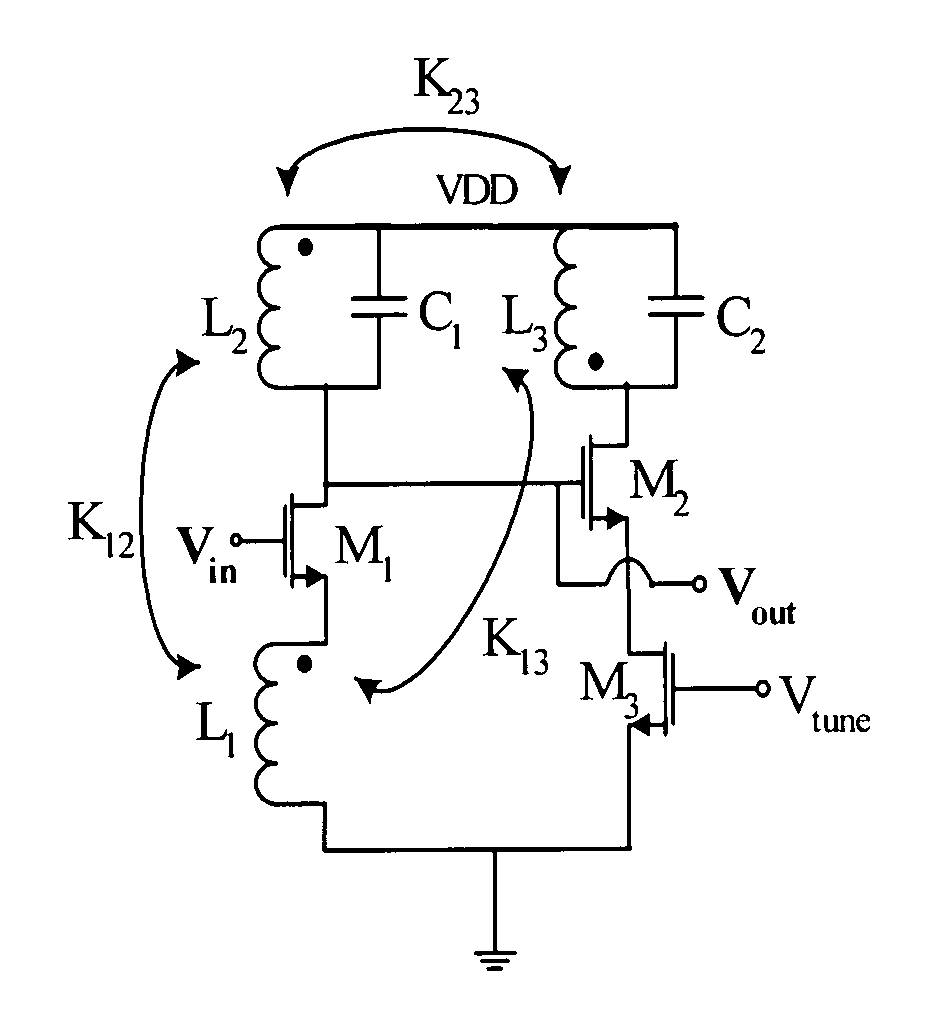
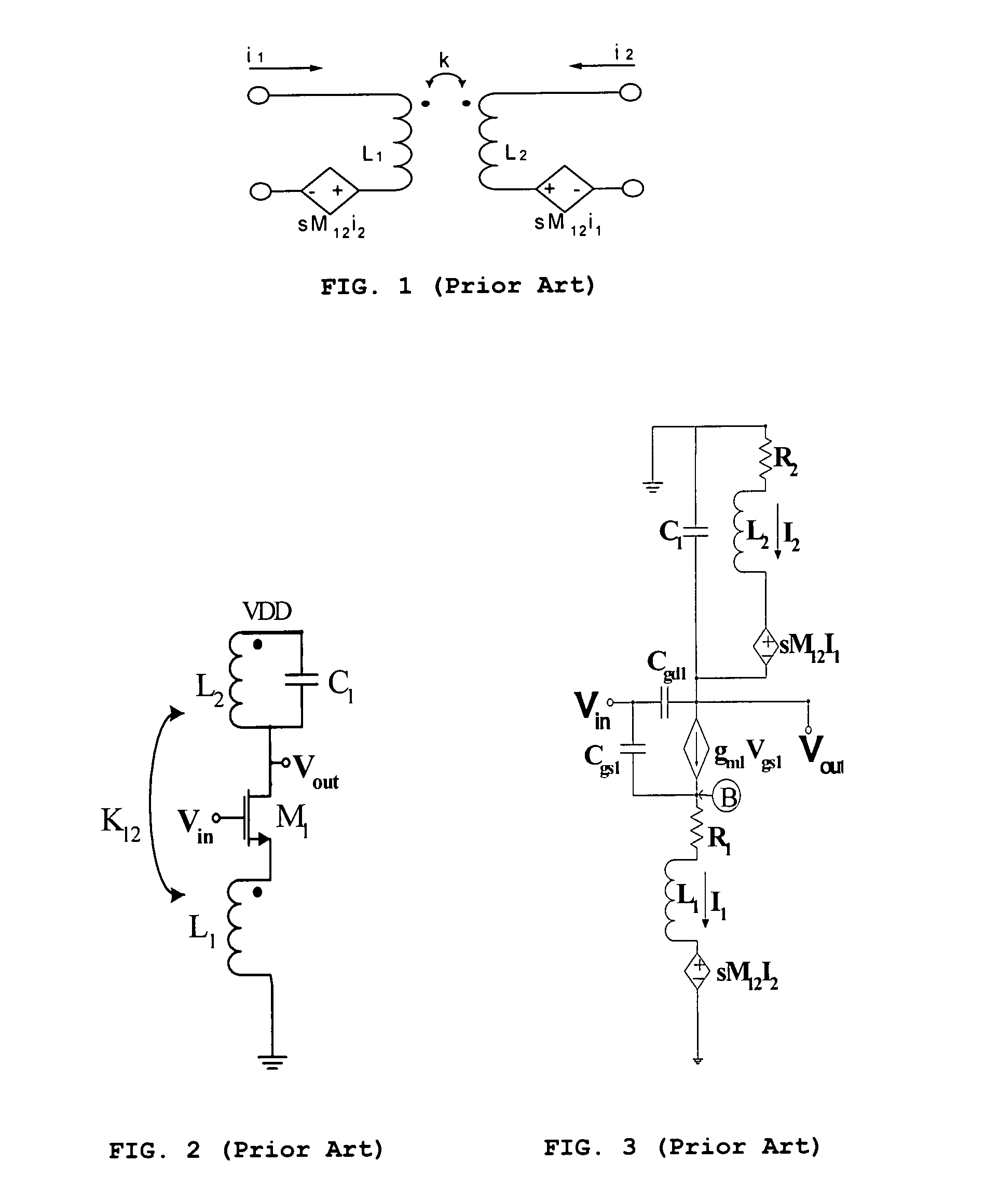
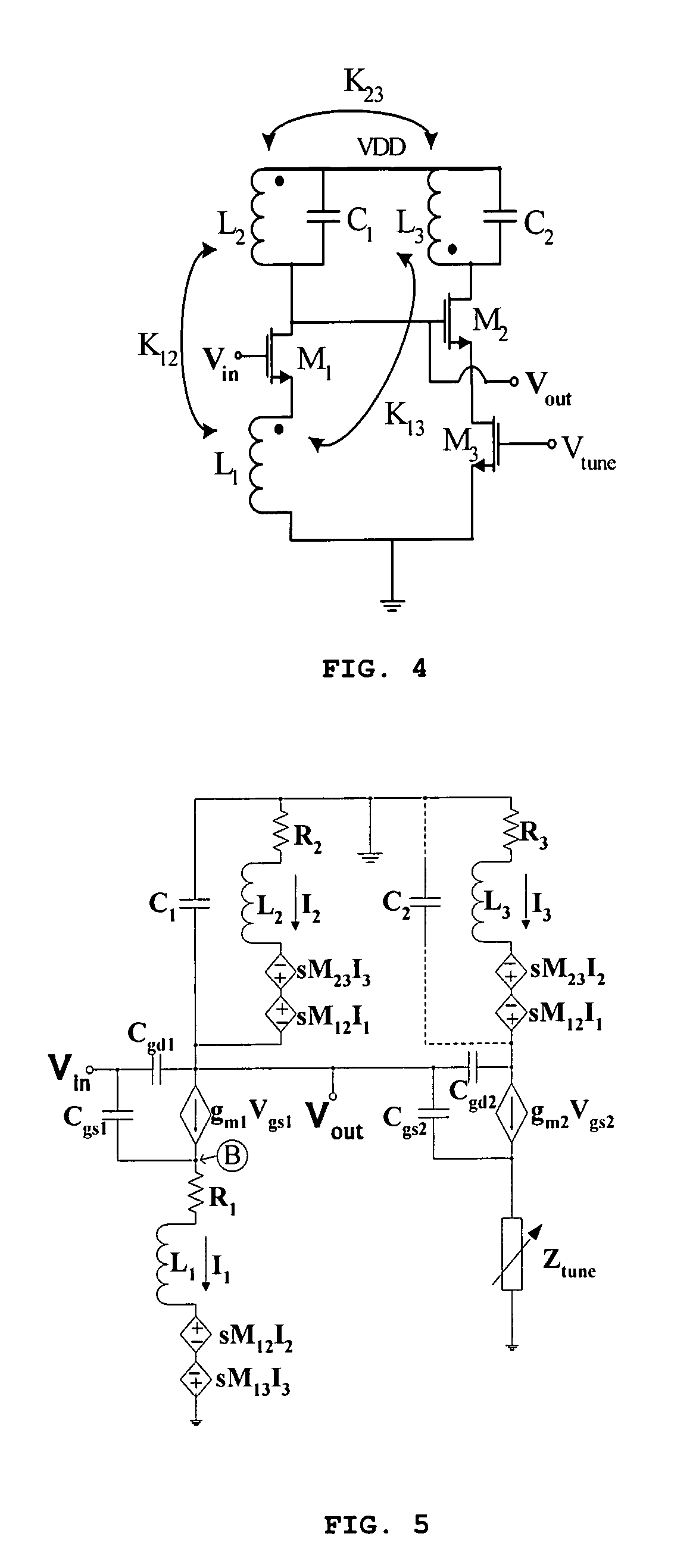
- A low-noise amplifier utilizing multiple monolithic transformer magnetic feedback to apply negative and positive feedback constructively, allowing for high gain and large reverse isolation, independent of each other, and enabling operation at low voltage levels by relaxing the values of inductor coupling coefficients.

Material Safety and Environmental Impact Assessment
The implementation of electrolyte gating in low-noise amplifiers involves several critical materials that require comprehensive safety evaluation. Ionic liquids, commonly used as electrolytes, present varying degrees of toxicity and environmental persistence. Room-temperature ionic liquids such as 1-ethyl-3-methylimidazolium bis(trifluoromethylsulfonyl)imide exhibit low volatility but may cause skin and eye irritation upon direct contact. Proper handling protocols mandate the use of chemical-resistant gloves, safety goggles, and adequate ventilation systems during device fabrication and testing procedures.
Semiconductor materials utilized in electrolyte-gated transistors, including indium gallium zinc oxide and molybdenum disulfide, pose specific occupational health risks. Indium compounds require particular attention due to potential pulmonary toxicity from inhalation exposure. Manufacturing facilities must implement stringent air filtration systems and regular atmospheric monitoring to maintain exposure levels below established threshold limit values.
The environmental impact assessment reveals both immediate and long-term considerations for electrolyte gating technology deployment. Ionic liquid disposal presents challenges due to their non-biodegradable nature and potential bioaccumulation in aquatic ecosystems. Current waste management protocols recommend specialized treatment facilities capable of handling fluorinated organic compounds through advanced oxidation processes or high-temperature incineration with appropriate emission controls.
Life cycle analysis indicates that electrolyte-gated devices demonstrate favorable environmental profiles compared to conventional silicon-based amplifiers due to reduced energy consumption during operation. The low-voltage operation characteristics of electrolyte-gated systems contribute to decreased carbon footprint over the device lifetime, potentially offsetting manufacturing-related environmental impacts.
Regulatory compliance frameworks vary significantly across jurisdictions, with the European Union's REACH regulation imposing stringent registration requirements for novel ionic liquid formulations. The United States Environmental Protection Agency has initiated preliminary assessments of ionic liquids under the Toxic Substances Control Act, emphasizing the need for comprehensive toxicological data before commercial deployment.
Emerging green chemistry approaches focus on developing biodegradable electrolytes derived from natural sources, including bio-ionic liquids synthesized from amino acids and organic acids. These alternatives demonstrate comparable electrochemical performance while significantly reducing environmental persistence and toxicity concerns associated with traditional synthetic ionic liquids.
Semiconductor materials utilized in electrolyte-gated transistors, including indium gallium zinc oxide and molybdenum disulfide, pose specific occupational health risks. Indium compounds require particular attention due to potential pulmonary toxicity from inhalation exposure. Manufacturing facilities must implement stringent air filtration systems and regular atmospheric monitoring to maintain exposure levels below established threshold limit values.
The environmental impact assessment reveals both immediate and long-term considerations for electrolyte gating technology deployment. Ionic liquid disposal presents challenges due to their non-biodegradable nature and potential bioaccumulation in aquatic ecosystems. Current waste management protocols recommend specialized treatment facilities capable of handling fluorinated organic compounds through advanced oxidation processes or high-temperature incineration with appropriate emission controls.
Life cycle analysis indicates that electrolyte-gated devices demonstrate favorable environmental profiles compared to conventional silicon-based amplifiers due to reduced energy consumption during operation. The low-voltage operation characteristics of electrolyte-gated systems contribute to decreased carbon footprint over the device lifetime, potentially offsetting manufacturing-related environmental impacts.
Regulatory compliance frameworks vary significantly across jurisdictions, with the European Union's REACH regulation imposing stringent registration requirements for novel ionic liquid formulations. The United States Environmental Protection Agency has initiated preliminary assessments of ionic liquids under the Toxic Substances Control Act, emphasizing the need for comprehensive toxicological data before commercial deployment.
Emerging green chemistry approaches focus on developing biodegradable electrolytes derived from natural sources, including bio-ionic liquids synthesized from amino acids and organic acids. These alternatives demonstrate comparable electrochemical performance while significantly reducing environmental persistence and toxicity concerns associated with traditional synthetic ionic liquids.
Integration Challenges with Existing RF Systems
The integration of electrolyte-gated low-noise amplifiers into existing RF systems presents significant technical challenges that must be carefully addressed to ensure successful deployment. Traditional RF architectures are designed around solid-state semiconductor devices with well-established electrical characteristics, making the incorporation of ionic-electronic hybrid devices a complex undertaking that requires fundamental system redesign considerations.
Impedance matching represents one of the most critical integration challenges. Electrolyte-gated devices exhibit dynamic impedance characteristics that vary with gate voltage and frequency, creating mismatches with conventional 50-ohm RF transmission lines. The ionic conductivity of electrolytes introduces frequency-dependent behavior that differs substantially from traditional semiconductor junctions, necessitating adaptive matching networks or specialized interface circuits to maintain signal integrity across the desired frequency range.
Packaging and encapsulation pose additional complexities for system integration. Electrolyte-based devices require hermetic sealing to prevent contamination and maintain stable ionic concentrations, while simultaneously providing reliable electrical connections to external RF circuits. Standard RF packaging techniques may not be compatible with liquid or gel electrolytes, demanding innovative packaging solutions that can withstand environmental variations without compromising performance.
Thermal management becomes particularly challenging when integrating electrolyte-gated amplifiers into existing RF systems. The thermal coefficients of ionic conductivity differ significantly from electronic transport properties, creating temperature-dependent performance variations that may not align with existing thermal compensation schemes. System-level thermal design must account for the unique heat dissipation characteristics of electrolyte interfaces and their impact on overall amplifier stability.
Signal routing and layout considerations require substantial modifications to accommodate electrolyte-gated devices. The physical dimensions and connection requirements of these devices may not conform to standard RF circuit board layouts, potentially necessitating custom interconnect solutions and modified ground plane designs to maintain electromagnetic compatibility with surrounding components.
Power supply integration presents another significant challenge, as electrolyte-gated devices may require specialized bias conditions that differ from conventional RF amplifier power requirements. The ionic nature of the gating mechanism demands careful consideration of DC bias stability and the potential for electrochemical reactions that could degrade device performance over time.
Impedance matching represents one of the most critical integration challenges. Electrolyte-gated devices exhibit dynamic impedance characteristics that vary with gate voltage and frequency, creating mismatches with conventional 50-ohm RF transmission lines. The ionic conductivity of electrolytes introduces frequency-dependent behavior that differs substantially from traditional semiconductor junctions, necessitating adaptive matching networks or specialized interface circuits to maintain signal integrity across the desired frequency range.
Packaging and encapsulation pose additional complexities for system integration. Electrolyte-based devices require hermetic sealing to prevent contamination and maintain stable ionic concentrations, while simultaneously providing reliable electrical connections to external RF circuits. Standard RF packaging techniques may not be compatible with liquid or gel electrolytes, demanding innovative packaging solutions that can withstand environmental variations without compromising performance.
Thermal management becomes particularly challenging when integrating electrolyte-gated amplifiers into existing RF systems. The thermal coefficients of ionic conductivity differ significantly from electronic transport properties, creating temperature-dependent performance variations that may not align with existing thermal compensation schemes. System-level thermal design must account for the unique heat dissipation characteristics of electrolyte interfaces and their impact on overall amplifier stability.
Signal routing and layout considerations require substantial modifications to accommodate electrolyte-gated devices. The physical dimensions and connection requirements of these devices may not conform to standard RF circuit board layouts, potentially necessitating custom interconnect solutions and modified ground plane designs to maintain electromagnetic compatibility with surrounding components.
Power supply integration presents another significant challenge, as electrolyte-gated devices may require specialized bias conditions that differ from conventional RF amplifier power requirements. The ionic nature of the gating mechanism demands careful consideration of DC bias stability and the potential for electrochemical reactions that could degrade device performance over time.
Unlock deeper insights with PatSnap Eureka Quick Research — get a full tech report to explore trends and direct your research. Try now!
Generate Your Research Report Instantly with AI Agent
Supercharge your innovation with PatSnap Eureka AI Agent Platform!