How to Implement Standard Protocols for Radiation Heat Transfer
FEB 12, 20269 MIN READ
Generate Your Research Report Instantly with AI Agent
PatSnap Eureka helps you evaluate technical feasibility & market potential.
Radiation Heat Transfer Protocol Background and Objectives
Radiation heat transfer represents a fundamental mode of thermal energy exchange that occurs through electromagnetic waves without requiring a physical medium. Unlike conduction and convection, radiation can propagate through vacuum, making it critical in applications ranging from spacecraft thermal management to industrial furnace design. The complexity of radiation phenomena, involving wavelength-dependent properties, geometric configurations, and surface characteristics, necessitates standardized protocols to ensure consistency, accuracy, and interoperability across different systems and applications.
The historical development of radiation heat transfer protocols traces back to the early 20th century with Planck's law and Stefan-Boltzmann formulations. However, the systematic standardization efforts gained momentum in the 1960s alongside aerospace advancements, where precise thermal control became mission-critical. Over subsequent decades, industries including energy, manufacturing, and electronics have increasingly recognized the need for unified methodologies to characterize radiative properties, model thermal exchanges, and validate computational predictions against experimental data.
Current technological evolution emphasizes the integration of radiation heat transfer protocols with advanced computational frameworks and real-time monitoring systems. The proliferation of high-performance computing enables detailed Monte Carlo ray tracing and discrete ordinates methods, while emerging sensor technologies facilitate in-situ measurement of surface emissivity and temperature distributions. These capabilities demand protocols that accommodate both traditional analytical approaches and modern numerical techniques, ensuring seamless data exchange and reproducible results across platforms.
The primary objective of implementing standard protocols for radiation heat transfer is to establish a comprehensive framework that addresses measurement methodologies, computational validation procedures, and data reporting formats. This framework must accommodate diverse application domains while maintaining scientific rigor and practical applicability. Key goals include reducing uncertainty in radiative property measurements, enabling reliable comparison of simulation results across different software tools, and facilitating knowledge transfer between research institutions and industrial practitioners.
Furthermore, standardization efforts aim to accelerate innovation by providing a common foundation upon which advanced techniques can be developed and benchmarked. As thermal management challenges grow increasingly complex with miniaturization trends and extreme operating environments, robust protocols become essential for ensuring safety, efficiency, and performance optimization across multiple engineering disciplines.
The historical development of radiation heat transfer protocols traces back to the early 20th century with Planck's law and Stefan-Boltzmann formulations. However, the systematic standardization efforts gained momentum in the 1960s alongside aerospace advancements, where precise thermal control became mission-critical. Over subsequent decades, industries including energy, manufacturing, and electronics have increasingly recognized the need for unified methodologies to characterize radiative properties, model thermal exchanges, and validate computational predictions against experimental data.
Current technological evolution emphasizes the integration of radiation heat transfer protocols with advanced computational frameworks and real-time monitoring systems. The proliferation of high-performance computing enables detailed Monte Carlo ray tracing and discrete ordinates methods, while emerging sensor technologies facilitate in-situ measurement of surface emissivity and temperature distributions. These capabilities demand protocols that accommodate both traditional analytical approaches and modern numerical techniques, ensuring seamless data exchange and reproducible results across platforms.
The primary objective of implementing standard protocols for radiation heat transfer is to establish a comprehensive framework that addresses measurement methodologies, computational validation procedures, and data reporting formats. This framework must accommodate diverse application domains while maintaining scientific rigor and practical applicability. Key goals include reducing uncertainty in radiative property measurements, enabling reliable comparison of simulation results across different software tools, and facilitating knowledge transfer between research institutions and industrial practitioners.
Furthermore, standardization efforts aim to accelerate innovation by providing a common foundation upon which advanced techniques can be developed and benchmarked. As thermal management challenges grow increasingly complex with miniaturization trends and extreme operating environments, robust protocols become essential for ensuring safety, efficiency, and performance optimization across multiple engineering disciplines.
Market Demand for Standardized Radiation Heat Transfer Solutions
The demand for standardized radiation heat transfer solutions has intensified across multiple industrial sectors as thermal management challenges grow increasingly complex. Industries such as aerospace, energy systems, electronics cooling, and building climate control require reliable and interoperable methods to predict, measure, and optimize radiative heat exchange. The absence of universally accepted protocols has historically led to inconsistencies in simulation results, difficulties in cross-platform data exchange, and increased costs associated with proprietary or incompatible systems.
In the aerospace sector, precise thermal control is critical for spacecraft and satellite operations where radiation is the primary heat transfer mechanism in vacuum environments. Standardized protocols enable better collaboration between international space agencies and commercial entities, facilitating component interoperability and reducing mission risks. Similarly, concentrated solar power plants and nuclear reactor designs depend on accurate radiation modeling to optimize energy conversion efficiency and ensure safety margins.
The electronics industry faces mounting pressure to manage heat dissipation in increasingly compact devices. As chip densities rise and miniaturization continues, radiation becomes a significant contributor to thermal management alongside conduction and convection. Standardized computational frameworks allow manufacturers to integrate thermal analysis seamlessly into design workflows, reducing time-to-market and improving product reliability.
Building energy efficiency regulations worldwide are driving demand for accurate thermal performance predictions. Radiation heat transfer through windows, walls, and roofs significantly impacts heating and cooling loads. Standardized protocols enable architects and engineers to compare materials and designs using consistent methodologies, supporting compliance with energy codes and sustainability certifications.
The industrial furnace and high-temperature processing sectors require robust radiation models to optimize combustion efficiency and product quality. Standardization facilitates equipment design, process control, and predictive maintenance across diverse manufacturing environments. Furthermore, emerging applications in additive manufacturing and laser processing technologies increasingly rely on precise radiation heat transfer modeling to control material properties and dimensional accuracy.
Market growth is further propelled by the proliferation of multiphysics simulation platforms and the need for validated, reproducible results in research and development. Regulatory bodies and standards organizations are recognizing the necessity for harmonized approaches to thermal analysis, creating momentum for protocol adoption across industries.
In the aerospace sector, precise thermal control is critical for spacecraft and satellite operations where radiation is the primary heat transfer mechanism in vacuum environments. Standardized protocols enable better collaboration between international space agencies and commercial entities, facilitating component interoperability and reducing mission risks. Similarly, concentrated solar power plants and nuclear reactor designs depend on accurate radiation modeling to optimize energy conversion efficiency and ensure safety margins.
The electronics industry faces mounting pressure to manage heat dissipation in increasingly compact devices. As chip densities rise and miniaturization continues, radiation becomes a significant contributor to thermal management alongside conduction and convection. Standardized computational frameworks allow manufacturers to integrate thermal analysis seamlessly into design workflows, reducing time-to-market and improving product reliability.
Building energy efficiency regulations worldwide are driving demand for accurate thermal performance predictions. Radiation heat transfer through windows, walls, and roofs significantly impacts heating and cooling loads. Standardized protocols enable architects and engineers to compare materials and designs using consistent methodologies, supporting compliance with energy codes and sustainability certifications.
The industrial furnace and high-temperature processing sectors require robust radiation models to optimize combustion efficiency and product quality. Standardization facilitates equipment design, process control, and predictive maintenance across diverse manufacturing environments. Furthermore, emerging applications in additive manufacturing and laser processing technologies increasingly rely on precise radiation heat transfer modeling to control material properties and dimensional accuracy.
Market growth is further propelled by the proliferation of multiphysics simulation platforms and the need for validated, reproducible results in research and development. Regulatory bodies and standards organizations are recognizing the necessity for harmonized approaches to thermal analysis, creating momentum for protocol adoption across industries.
Current Status and Challenges in Radiation Heat Transfer Standards
Radiation heat transfer standards currently exist in a fragmented state across multiple international and regional organizations, creating significant implementation challenges for industries requiring precise thermal management. The International Organization for Standardization (ISO), American Society for Testing and Materials (ASTM), and various national standards bodies have developed separate protocols that often lack harmonization. This fragmentation results in inconsistent measurement methodologies, divergent calculation procedures, and incompatible reporting formats across different jurisdictions and industrial sectors.
The primary technical challenge lies in the complexity of accurately measuring and modeling radiation heat transfer phenomena. Unlike conduction and convection, radiation involves electromagnetic wave propagation that depends on surface properties, geometric configurations, and spectral characteristics. Current standards struggle to address the full spectrum of variables including surface emissivity variations, view factor calculations for complex geometries, and the interaction between radiation and participating media. Many existing protocols rely on simplified assumptions that limit their applicability to real-world scenarios involving non-gray surfaces, temperature-dependent properties, and multi-surface enclosures.
Measurement standardization faces particular difficulties due to the sensitivity of radiative properties to surface conditions, temperature ranges, and wavelength dependencies. Existing standards often provide limited guidance on calibration procedures for infrared measurement equipment, uncertainty quantification methods, and validation protocols for computational models. The lack of universally accepted reference materials and benchmark test cases further complicates the verification of measurement accuracy across different laboratories and facilities.
Implementation barriers also stem from the rapid advancement of computational capabilities and measurement technologies that outpace standard development cycles. Modern computational fluid dynamics and finite element analysis tools incorporate sophisticated radiation models that exceed the scope of traditional standards. Similarly, emerging technologies such as thermographic imaging, spectral radiometry, and advanced coating materials require updated standardization frameworks that current protocols do not adequately address.
The industrial demand for standardized radiation heat transfer protocols spans diverse sectors including aerospace thermal protection systems, building energy efficiency, solar energy harvesting, and electronic device cooling. Each sector faces unique requirements regarding accuracy levels, applicable temperature ranges, and geometric complexity, making the development of universally applicable standards particularly challenging. This diversity necessitates flexible standardization approaches that balance generality with sector-specific precision requirements.
The primary technical challenge lies in the complexity of accurately measuring and modeling radiation heat transfer phenomena. Unlike conduction and convection, radiation involves electromagnetic wave propagation that depends on surface properties, geometric configurations, and spectral characteristics. Current standards struggle to address the full spectrum of variables including surface emissivity variations, view factor calculations for complex geometries, and the interaction between radiation and participating media. Many existing protocols rely on simplified assumptions that limit their applicability to real-world scenarios involving non-gray surfaces, temperature-dependent properties, and multi-surface enclosures.
Measurement standardization faces particular difficulties due to the sensitivity of radiative properties to surface conditions, temperature ranges, and wavelength dependencies. Existing standards often provide limited guidance on calibration procedures for infrared measurement equipment, uncertainty quantification methods, and validation protocols for computational models. The lack of universally accepted reference materials and benchmark test cases further complicates the verification of measurement accuracy across different laboratories and facilities.
Implementation barriers also stem from the rapid advancement of computational capabilities and measurement technologies that outpace standard development cycles. Modern computational fluid dynamics and finite element analysis tools incorporate sophisticated radiation models that exceed the scope of traditional standards. Similarly, emerging technologies such as thermographic imaging, spectral radiometry, and advanced coating materials require updated standardization frameworks that current protocols do not adequately address.
The industrial demand for standardized radiation heat transfer protocols spans diverse sectors including aerospace thermal protection systems, building energy efficiency, solar energy harvesting, and electronic device cooling. Each sector faces unique requirements regarding accuracy levels, applicable temperature ranges, and geometric complexity, making the development of universally applicable standards particularly challenging. This diversity necessitates flexible standardization approaches that balance generality with sector-specific precision requirements.
Mainstream Protocol Implementation Solutions for Radiation Heat Transfer
01 Radiation heat transfer measurement devices and apparatus
Standard protocols for radiation heat transfer often involve specialized measurement devices and apparatus designed to accurately quantify radiative heat exchange. These devices typically include sensors, detectors, and calibrated instruments that can measure thermal radiation across different wavelengths. The apparatus may incorporate blackbody references, thermopile sensors, or infrared detectors to ensure precise measurements according to established standards. Such equipment is essential for validating heat transfer models and ensuring compliance with industry protocols.- Radiation heat transfer measurement devices and apparatus: Standard protocols for radiation heat transfer often involve specialized measurement devices and apparatus designed to accurately quantify radiative heat exchange. These devices typically include sensors, detectors, and calibrated instruments that can measure thermal radiation across different wavelengths. The apparatus may incorporate blackbody references, thermopile sensors, or infrared detectors to ensure precise measurements according to established standards. Such equipment is essential for validating heat transfer models and ensuring compliance with industry protocols.
- Testing chambers and controlled environment systems: Standardized testing protocols require controlled environment chambers where radiation heat transfer can be measured under specific conditions. These systems provide isolated environments with regulated temperature, pressure, and atmospheric composition to eliminate external variables. The chambers often feature viewing windows, sample holders, and integrated measurement systems that allow for reproducible testing conditions. Such facilities enable researchers to conduct experiments following standardized procedures and obtain comparable results across different laboratories.
- Calibration methods and reference standards: Establishing standard protocols necessitates robust calibration methods and reference standards for radiation heat transfer measurements. These protocols define procedures for calibrating instruments against known reference sources, ensuring measurement traceability and accuracy. The methods typically involve the use of certified blackbody sources, standard lamps, or reference materials with well-characterized radiative properties. Regular calibration according to these standards is essential for maintaining measurement reliability and enabling data comparison across different facilities and time periods.
- Computational modeling and simulation protocols: Standard protocols for radiation heat transfer include computational approaches that complement experimental methods. These protocols establish guidelines for numerical modeling, including mesh generation, boundary condition specification, and solution convergence criteria. The computational methods often involve solving radiative transfer equations using established algorithms and validated software tools. Standardized simulation protocols ensure that computational predictions are reliable, reproducible, and can be verified against experimental benchmarks.
- Industrial application and quality control procedures: Standard protocols extend to industrial applications where radiation heat transfer plays a critical role in manufacturing processes and quality control. These procedures define testing methods for materials, coatings, and products that involve radiative heat exchange. The protocols specify sampling techniques, measurement frequencies, acceptance criteria, and documentation requirements to ensure consistent product quality. Implementation of these standardized procedures helps industries maintain process control, meet regulatory requirements, and ensure product performance related to thermal radiation characteristics.
02 Testing chambers and controlled environment systems
Standardized testing of radiation heat transfer requires controlled environment chambers that can maintain specific temperature, pressure, and atmospheric conditions. These systems provide isolated environments where radiative heat transfer can be measured without interference from convection or conduction. The chambers often feature temperature-controlled walls, viewing ports with specific optical properties, and precise environmental controls to replicate various operational conditions according to standard testing protocols.Expand Specific Solutions03 Calibration methods and reference standards
Establishing standard protocols requires robust calibration methods using certified reference materials and standards. These calibration procedures ensure measurement accuracy and traceability across different testing facilities and equipment. The methods typically involve comparison against known radiation sources, use of standard reference materials with established emissivity values, and periodic verification procedures to maintain measurement integrity over time.Expand Specific Solutions04 Computational modeling and simulation protocols
Standard protocols increasingly incorporate computational methods for predicting and validating radiation heat transfer phenomena. These protocols define procedures for numerical modeling, including mesh generation, boundary condition specification, and solution verification techniques. The standardized computational approaches enable comparison of results across different software platforms and provide guidelines for model validation against experimental data.Expand Specific Solutions05 Industrial application-specific testing procedures
Different industries require specialized protocols tailored to their specific radiation heat transfer applications. These application-specific standards address unique requirements in sectors such as aerospace, energy systems, manufacturing, and materials processing. The protocols define testing conditions, acceptance criteria, and reporting formats relevant to particular industrial contexts while maintaining consistency with fundamental heat transfer principles.Expand Specific Solutions
Major Players in Radiation Heat Transfer Standardization
The radiation heat transfer protocol standardization field is in a mature development stage, driven by growing demands from aerospace, semiconductor manufacturing, and advanced materials processing sectors. Market expansion is fueled by increasing complexity in thermal management systems across satellite engineering, electronic device fabrication, and industrial applications. Technology maturity varies significantly among key players: aerospace institutes like Shanghai Institute of Satellite Engineering, China Academy of Launch Vehicle Technology, and Beijing Institute of Spacecraft System Engineering demonstrate advanced capabilities in space-based thermal systems, while semiconductor leaders including Applied Materials, Samsung Electronics, and Soitec SA excel in precision thermal control for manufacturing processes. Research institutions such as Xi'an Jiaotong University, Harbin Institute of Technology, and Hefei Institutes of Physical Science contribute fundamental protocol development. Industrial giants like Huawei Technologies, Raytheon, and Sony Group integrate standardized thermal solutions into complex systems, indicating broad cross-sector adoption and competitive intensity in establishing universal implementation frameworks.
Shanghai Institute of Satellite Engineering
Technical Solution: The institute implements standard radiation heat transfer protocols through multi-layer insulation (MLI) systems combined with thermal control coatings for spacecraft applications. Their approach integrates view factor calculations based on Monte Carlo ray tracing methods to accurately model radiative exchanges between satellite surfaces and space environment. The system employs standardized thermal mathematical models following ECSS standards, incorporating surface emissivity measurements and temperature-dependent radiative properties. Advanced thermal analysis software is utilized to simulate radiation coupling effects between components, ensuring compliance with spacecraft thermal design specifications. The protocol includes ground-based thermal vacuum testing to validate radiative heat transfer predictions against flight conditions.
Strengths: Extensive heritage in space thermal engineering with proven flight validation; comprehensive integration of international thermal standards. Weaknesses: Solutions primarily optimized for space applications with limited terrestrial industrial adaptability; high implementation costs.
Applied Materials, Inc.
Technical Solution: Applied Materials implements radiation heat transfer protocols in semiconductor manufacturing equipment through precision-engineered thermal chambers with controlled emissivity surfaces. Their systems utilize advanced pyrometry and radiometric temperature measurement techniques compliant with SEMI standards for wafer processing. The protocol incorporates computational fluid dynamics (CFD) coupled with discrete ordinates method (DOM) for radiation modeling in chemical vapor deposition (CVD) and physical vapor deposition (PVD) chambers. Temperature uniformity across wafer surfaces is maintained through optimized heater designs and reflective shield configurations that manage radiative heat flux distribution. Real-time thermal monitoring systems ensure process repeatability and adherence to thermal budget specifications.
Strengths: Industry-leading precision in thermal control for semiconductor processes; robust integration with manufacturing automation systems. Weaknesses: Highly specialized for semiconductor applications; significant capital investment required for implementation.
Core Technical Insights on Radiation Heat Transfer Standards
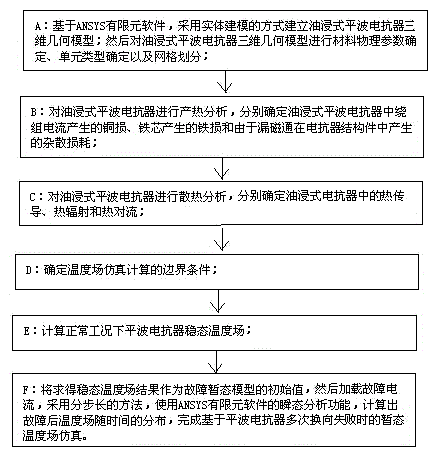
Transient temperature field simulation method based on multiple commutation failures of smoothing reactor
PatentActiveCN104834781A
Innovation
- Use ANSYS finite element software for solid modeling, establish a three-dimensional geometric model of the oil-immersed smoothing reactor, determine the material physical parameters and mesh division, conduct heat generation and heat dissipation analysis, calculate steady-state and transient temperature fields, and load faults Conduct transient analysis on the current to simulate the transient temperature field when the smoothing reactor fails to commutate multiple times.



Radiation heat transfer plate, radiation heat transfer plate group and radiation heat transfer system
PatentWO2021259210A1
Innovation
- Design a radiation heat exchange plate including a plate main body. The plate main body is provided with a medium inlet and outlet. A connected microchannel is formed inside or on the side. The microchannel is used for medium circulation and phase change space. Through the series connection of multiple microchannels And set up in parallel to form multiple radiation working surfaces, combined with compressors, condensers, throttling components and control valves to form different circulation loops to achieve radiation heat exchange.


International Standards and Compliance Requirements
Radiation heat transfer implementation requires adherence to a comprehensive framework of international standards that ensure consistency, safety, and interoperability across different industries and geographical regions. The primary governing bodies include the International Organization for Standardization (ISO), American Society of Mechanical Engineers (ASME), International Electrotechnical Commission (IEC), and various national standards organizations such as ASTM International and DIN. These organizations have established specific protocols addressing measurement methodologies, calculation procedures, material property specifications, and testing requirements for radiation heat transfer applications.
ISO 9050 and ISO 10292 provide fundamental guidelines for determining solar and light transmittance properties of glazing materials, which directly impact radiation heat transfer calculations in building and automotive applications. For industrial applications, ASME Boiler and Pressure Vessel Code Section VIII addresses radiation heat transfer in high-temperature equipment design. The ISO 12567 series specifies thermal transmission properties measurement methods that incorporate radiation effects, while ISO 6946 establishes calculation methods for thermal resistance and transmittance in building components where radiation plays a significant role.
Compliance requirements vary significantly across different sectors and jurisdictions. In the European Union, the Energy Performance of Buildings Directive (EPBD) mandates specific calculation methods for radiation heat transfer in building energy assessments. Similarly, the U.S. Department of Energy enforces compliance through building energy codes that reference ASHRAE standards, particularly ASHRAE 90.1, which incorporates radiation heat transfer protocols for fenestration systems and thermal envelope design.
Industrial sectors face additional regulatory requirements. Nuclear facilities must comply with NRC regulations and ASME Nuclear Codes that specify rigorous radiation heat transfer analysis for reactor vessel design and thermal management systems. Aerospace applications require adherence to NASA standards and military specifications that address radiation heat transfer in extreme thermal environments. Medical device manufacturers must follow FDA guidelines and IEC 60601 series standards when implementing radiation-based thermal therapies or diagnostic equipment.
Documentation and certification processes constitute critical compliance elements. Organizations must maintain detailed records demonstrating conformance to applicable standards, including calculation methodologies, material certifications, testing protocols, and validation procedures. Third-party verification through accredited testing laboratories often becomes mandatory for products entering regulated markets, requiring comprehensive technical documentation that traces all radiation heat transfer assumptions and calculations back to recognized international standards.
ISO 9050 and ISO 10292 provide fundamental guidelines for determining solar and light transmittance properties of glazing materials, which directly impact radiation heat transfer calculations in building and automotive applications. For industrial applications, ASME Boiler and Pressure Vessel Code Section VIII addresses radiation heat transfer in high-temperature equipment design. The ISO 12567 series specifies thermal transmission properties measurement methods that incorporate radiation effects, while ISO 6946 establishes calculation methods for thermal resistance and transmittance in building components where radiation plays a significant role.
Compliance requirements vary significantly across different sectors and jurisdictions. In the European Union, the Energy Performance of Buildings Directive (EPBD) mandates specific calculation methods for radiation heat transfer in building energy assessments. Similarly, the U.S. Department of Energy enforces compliance through building energy codes that reference ASHRAE standards, particularly ASHRAE 90.1, which incorporates radiation heat transfer protocols for fenestration systems and thermal envelope design.
Industrial sectors face additional regulatory requirements. Nuclear facilities must comply with NRC regulations and ASME Nuclear Codes that specify rigorous radiation heat transfer analysis for reactor vessel design and thermal management systems. Aerospace applications require adherence to NASA standards and military specifications that address radiation heat transfer in extreme thermal environments. Medical device manufacturers must follow FDA guidelines and IEC 60601 series standards when implementing radiation-based thermal therapies or diagnostic equipment.
Documentation and certification processes constitute critical compliance elements. Organizations must maintain detailed records demonstrating conformance to applicable standards, including calculation methodologies, material certifications, testing protocols, and validation procedures. Third-party verification through accredited testing laboratories often becomes mandatory for products entering regulated markets, requiring comprehensive technical documentation that traces all radiation heat transfer assumptions and calculations back to recognized international standards.
Interoperability and Integration Framework
Establishing an effective interoperability and integration framework for radiation heat transfer protocols requires addressing the fundamental challenge of enabling seamless communication between heterogeneous computational systems and simulation platforms. The framework must accommodate diverse software architectures, ranging from commercial finite element analysis tools to custom-built research codes, while maintaining computational accuracy and physical consistency. This necessitates the development of standardized application programming interfaces that can translate between different data formats and coordinate systems without introducing numerical artifacts or compromising the fidelity of radiation calculations.
The integration framework should be built upon modular middleware components that facilitate data exchange through well-defined communication protocols. These components must support both synchronous and asynchronous coupling mechanisms to accommodate various simulation scenarios, from tightly coupled multiphysics problems to loosely coupled co-simulation environments. Particular attention must be given to handling view factor calculations, spectral property data, and surface discretization information across platform boundaries, ensuring that geometric representations remain consistent throughout the computational workflow.
A critical aspect involves implementing adapter layers that can bridge legacy systems with modern protocol standards. These adapters should provide backward compatibility while encouraging migration toward standardized interfaces. The framework must also incorporate validation mechanisms to verify data integrity during transfer operations, including checksums for geometric data and consistency checks for thermophysical properties. Support for parallel computing environments is essential, requiring careful consideration of domain decomposition strategies and load balancing across distributed systems.
The framework should embrace service-oriented architecture principles, enabling radiation heat transfer solvers to be deployed as independent computational services that can be dynamically discovered and invoked by client applications. This approach facilitates cloud-based simulation workflows and promotes code reusability across different projects. Additionally, the integration framework must provide comprehensive logging and diagnostic capabilities to assist developers in troubleshooting interoperability issues and optimizing data exchange performance in complex multiphysics simulation environments.
The integration framework should be built upon modular middleware components that facilitate data exchange through well-defined communication protocols. These components must support both synchronous and asynchronous coupling mechanisms to accommodate various simulation scenarios, from tightly coupled multiphysics problems to loosely coupled co-simulation environments. Particular attention must be given to handling view factor calculations, spectral property data, and surface discretization information across platform boundaries, ensuring that geometric representations remain consistent throughout the computational workflow.
A critical aspect involves implementing adapter layers that can bridge legacy systems with modern protocol standards. These adapters should provide backward compatibility while encouraging migration toward standardized interfaces. The framework must also incorporate validation mechanisms to verify data integrity during transfer operations, including checksums for geometric data and consistency checks for thermophysical properties. Support for parallel computing environments is essential, requiring careful consideration of domain decomposition strategies and load balancing across distributed systems.
The framework should embrace service-oriented architecture principles, enabling radiation heat transfer solvers to be deployed as independent computational services that can be dynamically discovered and invoked by client applications. This approach facilitates cloud-based simulation workflows and promotes code reusability across different projects. Additionally, the integration framework must provide comprehensive logging and diagnostic capabilities to assist developers in troubleshooting interoperability issues and optimizing data exchange performance in complex multiphysics simulation environments.
Unlock deeper insights with PatSnap Eureka Quick Research — get a full tech report to explore trends and direct your research. Try now!
Generate Your Research Report Instantly with AI Agent
Supercharge your innovation with PatSnap Eureka AI Agent Platform!