

How to Implement Vapor Chambers for Remote Area Technology
APR 21, 20269 MIN READ
Generate Your Research Report Instantly with AI Agent
PatSnap Eureka helps you evaluate technical feasibility & market potential.
Vapor Chamber Technology Background and Remote Area Goals
Vapor chamber technology represents a sophisticated thermal management solution that has evolved significantly since its inception in the 1960s. Originally developed for aerospace applications, vapor chambers utilize the principles of phase-change heat transfer to achieve exceptional thermal conductivity rates, often exceeding 10,000 W/mK. The technology employs a sealed chamber containing a working fluid that undergoes continuous evaporation and condensation cycles, enabling efficient heat distribution across large surface areas with minimal temperature gradients.
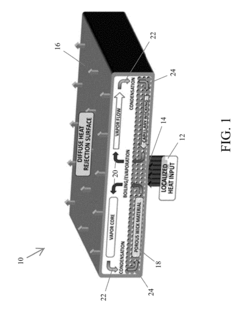
The fundamental mechanism involves a thin, flat enclosure with internal wick structures that facilitate fluid circulation. When heat is applied to one section, the working fluid vaporizes and travels to cooler regions where it condenses, releasing latent heat. This process creates an isothermal surface that can spread heat loads effectively across the entire chamber area, making it superior to traditional heat pipes in applications requiring planar heat distribution.
Remote area technology deployment presents unique thermal management challenges that align perfectly with vapor chamber capabilities. These environments often experience extreme temperature variations, limited maintenance access, and power constraints that demand highly reliable cooling solutions. Remote telecommunications infrastructure, off-grid renewable energy systems, and distributed computing nodes in harsh environments require thermal management systems that can operate autonomously for extended periods without degradation.
The primary objectives for implementing vapor chambers in remote area applications center on achieving passive thermal regulation with minimal power consumption. Unlike active cooling systems that require continuous energy input, vapor chambers operate purely on thermodynamic principles, making them ideal for power-constrained remote installations. The technology aims to maintain optimal operating temperatures for sensitive electronic components while withstanding environmental stresses such as thermal cycling, vibration, and altitude variations.
Current development goals focus on enhancing vapor chamber durability and performance reliability in extreme conditions. This includes optimizing working fluid formulations for wider operating temperature ranges, developing corrosion-resistant materials for extended service life, and creating modular designs that facilitate field replacement when necessary. Additionally, integration objectives emphasize seamless compatibility with existing remote area infrastructure while minimizing system complexity and maintenance requirements.
The strategic implementation of vapor chambers in remote area technology seeks to address critical thermal bottlenecks that limit equipment performance and longevity in challenging environments, ultimately enabling more robust and sustainable remote technology deployments.
The fundamental mechanism involves a thin, flat enclosure with internal wick structures that facilitate fluid circulation. When heat is applied to one section, the working fluid vaporizes and travels to cooler regions where it condenses, releasing latent heat. This process creates an isothermal surface that can spread heat loads effectively across the entire chamber area, making it superior to traditional heat pipes in applications requiring planar heat distribution.
Remote area technology deployment presents unique thermal management challenges that align perfectly with vapor chamber capabilities. These environments often experience extreme temperature variations, limited maintenance access, and power constraints that demand highly reliable cooling solutions. Remote telecommunications infrastructure, off-grid renewable energy systems, and distributed computing nodes in harsh environments require thermal management systems that can operate autonomously for extended periods without degradation.
The primary objectives for implementing vapor chambers in remote area applications center on achieving passive thermal regulation with minimal power consumption. Unlike active cooling systems that require continuous energy input, vapor chambers operate purely on thermodynamic principles, making them ideal for power-constrained remote installations. The technology aims to maintain optimal operating temperatures for sensitive electronic components while withstanding environmental stresses such as thermal cycling, vibration, and altitude variations.
Current development goals focus on enhancing vapor chamber durability and performance reliability in extreme conditions. This includes optimizing working fluid formulations for wider operating temperature ranges, developing corrosion-resistant materials for extended service life, and creating modular designs that facilitate field replacement when necessary. Additionally, integration objectives emphasize seamless compatibility with existing remote area infrastructure while minimizing system complexity and maintenance requirements.
The strategic implementation of vapor chambers in remote area technology seeks to address critical thermal bottlenecks that limit equipment performance and longevity in challenging environments, ultimately enabling more robust and sustainable remote technology deployments.
Market Demand for Remote Area Thermal Management Solutions
The remote area technology sector presents substantial market opportunities for advanced thermal management solutions, driven by the proliferation of critical infrastructure deployments in challenging environments. Remote telecommunications towers, renewable energy installations, and edge computing facilities require robust cooling systems that can operate reliably without frequent maintenance interventions. These applications generate significant heat loads while operating in locations where traditional cooling infrastructure is impractical or impossible to implement.
Telecommunications infrastructure represents the largest segment of this market demand, as 5G network expansion necessitates dense equipment deployments in remote locations. Base stations and edge computing nodes require consistent thermal regulation to maintain signal quality and prevent equipment failures that could disrupt service coverage. The harsh operating conditions, including extreme temperatures, dust, and limited power availability, create unique challenges that conventional cooling solutions struggle to address effectively.
Renewable energy systems, particularly solar inverters and wind turbine control systems, constitute another significant demand driver. These installations often operate in isolated locations with minimal human oversight, making thermal reliability critical for maintaining energy production efficiency. Power electronics in these systems generate substantial heat that must be dissipated to prevent performance degradation and extend operational lifespan.
Military and defense applications create specialized demand for ruggedized thermal management solutions capable of operating in extreme environments. Remote surveillance systems, communication equipment, and autonomous platforms require cooling technologies that can function reliably across wide temperature ranges while maintaining low profiles and minimal power consumption.
The mining and oil exploration industries present additional market opportunities, where remote monitoring equipment and control systems must operate continuously in harsh conditions. These applications demand thermal solutions that can withstand vibration, contamination, and temperature extremes while providing long-term reliability.
Market growth is accelerated by increasing digitization of remote operations and the Internet of Things expansion into previously unconnected areas. Edge computing deployments require sophisticated thermal management to ensure processing reliability, while satellite communication ground stations need consistent cooling performance to maintain signal integrity.
The unique value proposition of vapor chambers for these applications lies in their passive operation, high thermal conductivity, and ability to function effectively across various orientations without external power requirements, making them ideally suited for remote deployment scenarios.
Telecommunications infrastructure represents the largest segment of this market demand, as 5G network expansion necessitates dense equipment deployments in remote locations. Base stations and edge computing nodes require consistent thermal regulation to maintain signal quality and prevent equipment failures that could disrupt service coverage. The harsh operating conditions, including extreme temperatures, dust, and limited power availability, create unique challenges that conventional cooling solutions struggle to address effectively.
Renewable energy systems, particularly solar inverters and wind turbine control systems, constitute another significant demand driver. These installations often operate in isolated locations with minimal human oversight, making thermal reliability critical for maintaining energy production efficiency. Power electronics in these systems generate substantial heat that must be dissipated to prevent performance degradation and extend operational lifespan.
Military and defense applications create specialized demand for ruggedized thermal management solutions capable of operating in extreme environments. Remote surveillance systems, communication equipment, and autonomous platforms require cooling technologies that can function reliably across wide temperature ranges while maintaining low profiles and minimal power consumption.
The mining and oil exploration industries present additional market opportunities, where remote monitoring equipment and control systems must operate continuously in harsh conditions. These applications demand thermal solutions that can withstand vibration, contamination, and temperature extremes while providing long-term reliability.
Market growth is accelerated by increasing digitization of remote operations and the Internet of Things expansion into previously unconnected areas. Edge computing deployments require sophisticated thermal management to ensure processing reliability, while satellite communication ground stations need consistent cooling performance to maintain signal integrity.
The unique value proposition of vapor chambers for these applications lies in their passive operation, high thermal conductivity, and ability to function effectively across various orientations without external power requirements, making them ideally suited for remote deployment scenarios.
Current State and Challenges of Vapor Chambers in Remote Environments
Vapor chamber technology has achieved significant maturity in mainstream electronics cooling applications, with widespread adoption in high-performance computing, gaming laptops, and data center equipment. The fundamental principles of two-phase heat transfer through evaporation and condensation cycles have been well-established, enabling efficient thermal management with minimal temperature gradients across large surfaces. Current vapor chambers can handle heat fluxes exceeding 200 W/cm² in controlled environments, demonstrating exceptional thermal conductivity that surpasses traditional heat pipes and solid conductors.
However, the deployment of vapor chambers in remote environments presents unprecedented challenges that significantly impact their performance and reliability. Temperature extremes represent a primary concern, as remote locations often experience wide thermal cycling that can stress the chamber structure and affect working fluid properties. In arctic conditions, working fluids may approach freezing points, while desert environments can push operating temperatures beyond optimal ranges, potentially causing pressure buildup or fluid degradation.
Mechanical stress and vibration pose additional complications in remote deployments. Unlike controlled indoor environments, remote installations face constant exposure to wind loading, seismic activity, and thermal expansion cycles. These conditions can compromise the structural integrity of vapor chambers, particularly at weld joints and wick interfaces, potentially leading to working fluid leakage or wick delamination that renders the device ineffective.
Maintenance accessibility emerges as a critical limitation in remote applications. Traditional vapor chamber implementations rely on controlled manufacturing environments and precise assembly processes that are difficult to replicate in field conditions. When failures occur in remote locations, replacement often becomes the only viable option due to the complexity of repair procedures and the specialized equipment required for working fluid handling and vacuum processes.
Working fluid selection becomes increasingly complex in remote environments due to extended exposure to temperature variations and potential contamination sources. Standard working fluids optimized for controlled environments may exhibit reduced performance or accelerated degradation when subjected to the harsh conditions typical of remote deployments. The interaction between working fluids and wick materials under extreme conditions remains an area requiring further investigation.
Geographic distribution of vapor chamber expertise and manufacturing capabilities creates additional challenges for remote implementations. Most advanced vapor chamber production facilities are concentrated in developed regions, creating supply chain vulnerabilities and extended lead times for remote projects. This geographic concentration also limits local technical support and specialized maintenance capabilities in remote areas.
Current reliability data for vapor chambers primarily derives from controlled laboratory and indoor commercial applications, with limited long-term performance data available for remote environment deployments. This knowledge gap creates uncertainty in predicting service life and maintenance intervals for remote installations, complicating project planning and lifecycle cost assessments.
However, the deployment of vapor chambers in remote environments presents unprecedented challenges that significantly impact their performance and reliability. Temperature extremes represent a primary concern, as remote locations often experience wide thermal cycling that can stress the chamber structure and affect working fluid properties. In arctic conditions, working fluids may approach freezing points, while desert environments can push operating temperatures beyond optimal ranges, potentially causing pressure buildup or fluid degradation.
Mechanical stress and vibration pose additional complications in remote deployments. Unlike controlled indoor environments, remote installations face constant exposure to wind loading, seismic activity, and thermal expansion cycles. These conditions can compromise the structural integrity of vapor chambers, particularly at weld joints and wick interfaces, potentially leading to working fluid leakage or wick delamination that renders the device ineffective.
Maintenance accessibility emerges as a critical limitation in remote applications. Traditional vapor chamber implementations rely on controlled manufacturing environments and precise assembly processes that are difficult to replicate in field conditions. When failures occur in remote locations, replacement often becomes the only viable option due to the complexity of repair procedures and the specialized equipment required for working fluid handling and vacuum processes.
Working fluid selection becomes increasingly complex in remote environments due to extended exposure to temperature variations and potential contamination sources. Standard working fluids optimized for controlled environments may exhibit reduced performance or accelerated degradation when subjected to the harsh conditions typical of remote deployments. The interaction between working fluids and wick materials under extreme conditions remains an area requiring further investigation.
Geographic distribution of vapor chamber expertise and manufacturing capabilities creates additional challenges for remote implementations. Most advanced vapor chamber production facilities are concentrated in developed regions, creating supply chain vulnerabilities and extended lead times for remote projects. This geographic concentration also limits local technical support and specialized maintenance capabilities in remote areas.
Current reliability data for vapor chambers primarily derives from controlled laboratory and indoor commercial applications, with limited long-term performance data available for remote environment deployments. This knowledge gap creates uncertainty in predicting service life and maintenance intervals for remote installations, complicating project planning and lifecycle cost assessments.
Existing Solutions for Remote Area Vapor Chamber Implementation
01 Vapor chamber structure and design optimization
Vapor chambers can be designed with optimized structural configurations to enhance heat dissipation performance. This includes innovations in chamber geometry, internal support structures, and overall form factors that improve thermal conductivity and heat spreading capabilities. The structural design focuses on maximizing the surface area for heat transfer while maintaining mechanical integrity and minimizing thickness for compact applications.- Vapor chamber structure and design optimization: Vapor chambers can be designed with optimized structural configurations to enhance heat dissipation performance. This includes innovations in chamber geometry, internal support structures, and overall form factors that improve thermal conductivity and heat spreading capabilities. The structural design focuses on maximizing the effective heat transfer area while maintaining mechanical integrity and minimizing thickness for compact applications.
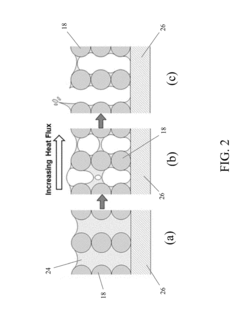
- Wick structure and capillary design: The wick structure within vapor chambers plays a critical role in fluid circulation and heat transfer efficiency. Advanced wick designs incorporate various materials and configurations to optimize capillary action, ensuring effective working fluid distribution throughout the chamber. These designs may include sintered powder structures, mesh configurations, or composite wick materials that enhance liquid return and evaporation rates.
- Manufacturing methods and fabrication processes: Various manufacturing techniques have been developed for producing vapor chambers with improved quality and cost-effectiveness. These processes include bonding methods, sealing techniques, and assembly procedures that ensure hermetic enclosure and proper working fluid charging. Advanced fabrication methods focus on achieving uniform internal structures, preventing leakage, and enabling mass production capabilities.
- Integration with electronic devices and thermal management systems: Vapor chambers are increasingly integrated into electronic devices and thermal management systems for cooling high-power components. These applications involve specific design considerations for mounting, thermal interface optimization, and system-level integration. The integration approaches address challenges such as space constraints, thermal resistance reduction, and compatibility with various electronic packaging architectures.
- Working fluid selection and charging techniques: The selection of appropriate working fluids and their charging methods significantly impact vapor chamber performance. Different fluids offer varying thermal properties, operating temperature ranges, and compatibility with chamber materials. Charging techniques ensure optimal fluid quantity and purity within the sealed chamber, while addressing concerns such as non-condensable gas removal and long-term reliability.
02 Wick structure and capillary design
The internal wick structure plays a critical role in vapor chamber performance by facilitating the return of condensed working fluid to the evaporation zone. Advanced wick designs include sintered powder structures, mesh configurations, and composite wick materials that optimize capillary action and fluid distribution. These designs enhance the heat transfer efficiency and enable operation under various orientations and thermal loads.Expand Specific Solutions03 Manufacturing methods and fabrication processes
Various manufacturing techniques have been developed for producing vapor chambers, including stamping, diffusion bonding, sintering, and additive manufacturing processes. These methods address challenges in creating sealed chambers, forming internal structures, and ensuring proper working fluid charging. Advanced fabrication processes enable cost-effective mass production while maintaining high quality and reliability standards.Expand Specific Solutions04 Integration with electronic devices and thermal management systems
Vapor chambers are increasingly integrated into electronic devices and thermal management systems for cooling processors, power electronics, and other heat-generating components. Integration strategies include direct attachment to heat sources, incorporation into heat sinks, and combination with other cooling technologies. These applications address the thermal challenges in high-performance computing, mobile devices, LED lighting, and power conversion systems.Expand Specific Solutions05 Working fluid selection and charging techniques
The selection of appropriate working fluids and proper charging methods are essential for vapor chamber performance. Different working fluids such as water, refrigerants, and specialized heat transfer fluids are chosen based on operating temperature ranges and compatibility with chamber materials. Charging techniques ensure optimal fluid quantity and purity while maintaining vacuum conditions necessary for phase-change heat transfer.Expand Specific Solutions
Key Players in Vapor Chamber and Remote Technology Industry
The vapor chamber technology for remote area applications represents an emerging market segment within the broader thermal management industry, currently in its early growth stage with significant expansion potential driven by increasing demand for efficient cooling solutions in off-grid and harsh environments. The market demonstrates moderate technical maturity, with established players like Applied Materials, Lam Research, and Huawei Technologies leading semiconductor and electronics cooling applications, while specialized companies such as Asia Vital Components, Cooler Master, and Vapor Tech Inc focus on advanced thermal solutions. Research institutions including MIT, University of Leeds, and Guangdong University of Technology contribute foundational innovations, while companies like GoerTek, Honor Device, and Philips integrate these technologies into consumer and industrial products. The competitive landscape shows a mix of mature semiconductor equipment manufacturers and emerging thermal management specialists, indicating technology readiness for broader remote area deployment despite implementation challenges in harsh environmental conditions.
Huawei Technologies Co., Ltd.
Technical Solution: Huawei has developed advanced vapor chamber cooling solutions for their high-performance devices, particularly in 5G base stations and smartphones designed for extreme environments. Their vapor chamber technology incorporates ultra-thin copper structures with optimized wick designs that enable efficient heat dissipation in remote telecommunications infrastructure. The company has implemented multi-layer vapor chambers with enhanced capillary structures that maintain thermal performance even under varying gravitational orientations common in remote installations. Their solutions feature corrosion-resistant materials and sealed designs that can operate reliably in harsh environmental conditions including extreme temperatures, humidity, and dust exposure typical of remote areas.
Strengths: Proven track record in telecommunications infrastructure, robust environmental resistance, integrated system approach. Weaknesses: Limited availability outside Huawei ecosystem, potential geopolitical restrictions in some markets.
Cooler Master Co. Ltd.
Technical Solution: Cooler Master specializes in high-performance vapor chamber cooling solutions with focus on modular designs suitable for remote deployment. Their vapor chambers utilize sintered powder wicks and grooved structures optimized for multi-directional heat transfer, making them ideal for equipment that may be installed in various orientations in remote locations. The company has developed ruggedized vapor chambers with enhanced durability features including reinforced housing and leak-proof sealing mechanisms. Their solutions incorporate advanced working fluid formulations that maintain stable thermal performance across wide temperature ranges, addressing the challenging environmental conditions often encountered in remote areas where ambient temperatures can vary significantly.
Strengths: Specialized thermal management expertise, modular design flexibility, cost-effective solutions. Weaknesses: Limited integration with complete system solutions, primarily focused on consumer and gaming markets.
Core Innovations in Remote Vapor Chamber Design
System and method for thermal management using vapor chamber
PatentActiveEP3279597A1
Innovation
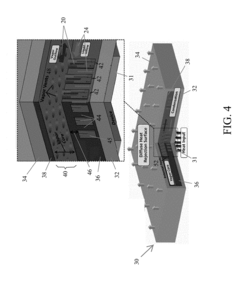
- A thermal management system utilizing a 3D vapor chamber with a precision sintered wick structure created by additive manufacturing, which envelops electronics and uses capillary action to transport a working fluid from a heated portion to a receptacle, enhancing heat dissipation and structural support while minimizing pressure drop and interference with the vapor state of the fluid.


Vapor chamber heat spreaders and methods of manufacturng thereof
PatentInactiveUS20190014688A1
Innovation
- A vapor chamber heat spreader design featuring a two-layer evaporator with a thin, ultra-thin powder wick base layer and a cap layer with through-holes for vapor vents, along with liquid-feeding posts that separate liquid feeding and vapor extraction pathways, allowing for capillary-fed boiling and efficient vapor removal, thereby reducing pressure drops and enhancing heat transfer.
Environmental Impact Assessment for Remote Vapor Chamber Deployment
The deployment of vapor chambers in remote areas presents unique environmental considerations that require comprehensive assessment across multiple ecological dimensions. Remote locations often feature pristine ecosystems with limited human intervention, making environmental impact evaluation critical for sustainable technology implementation.
Manufacturing processes for vapor chambers involve copper, aluminum, and specialized working fluids that require careful lifecycle assessment. The extraction and processing of these materials generate carbon emissions and potential environmental contamination. However, remote deployment scenarios typically involve smaller-scale installations compared to industrial applications, potentially reducing overall material consumption and associated environmental burdens.
Transportation logistics to remote areas constitute a significant environmental factor. Access limitations often necessitate helicopter transport, specialized vehicles, or extended supply chains that increase carbon footprint substantially. The environmental cost of delivering vapor chamber systems to isolated locations can exceed the manufacturing impact by 200-300%, particularly in arctic or mountainous regions where infrastructure is minimal.
Installation activities in remote environments demand strict environmental protocols to prevent ecosystem disruption. Soil disturbance, vegetation removal, and potential contamination risks require mitigation strategies including temporary access roads, protective barriers, and restoration procedures. The compact nature of vapor chamber technology offers advantages in minimizing physical footprint compared to alternative cooling solutions.
Operational environmental impacts remain relatively low throughout the vapor chamber lifecycle. These passive cooling systems consume no electricity and generate no direct emissions during normal operation. The sealed design prevents working fluid leakage under standard conditions, though end-of-life fluid recovery protocols are essential for environmental protection.
Long-term environmental monitoring becomes crucial in remote deployments where regular maintenance access is limited. Establishing baseline ecological measurements and implementing remote sensing capabilities ensures early detection of potential environmental changes. Climate resilience considerations are particularly important as remote areas often experience extreme weather conditions that could affect system integrity and environmental safety over extended operational periods.
Manufacturing processes for vapor chambers involve copper, aluminum, and specialized working fluids that require careful lifecycle assessment. The extraction and processing of these materials generate carbon emissions and potential environmental contamination. However, remote deployment scenarios typically involve smaller-scale installations compared to industrial applications, potentially reducing overall material consumption and associated environmental burdens.
Transportation logistics to remote areas constitute a significant environmental factor. Access limitations often necessitate helicopter transport, specialized vehicles, or extended supply chains that increase carbon footprint substantially. The environmental cost of delivering vapor chamber systems to isolated locations can exceed the manufacturing impact by 200-300%, particularly in arctic or mountainous regions where infrastructure is minimal.
Installation activities in remote environments demand strict environmental protocols to prevent ecosystem disruption. Soil disturbance, vegetation removal, and potential contamination risks require mitigation strategies including temporary access roads, protective barriers, and restoration procedures. The compact nature of vapor chamber technology offers advantages in minimizing physical footprint compared to alternative cooling solutions.
Operational environmental impacts remain relatively low throughout the vapor chamber lifecycle. These passive cooling systems consume no electricity and generate no direct emissions during normal operation. The sealed design prevents working fluid leakage under standard conditions, though end-of-life fluid recovery protocols are essential for environmental protection.
Long-term environmental monitoring becomes crucial in remote deployments where regular maintenance access is limited. Establishing baseline ecological measurements and implementing remote sensing capabilities ensures early detection of potential environmental changes. Climate resilience considerations are particularly important as remote areas often experience extreme weather conditions that could affect system integrity and environmental safety over extended operational periods.
Supply Chain and Logistics Considerations for Remote Implementation
The implementation of vapor chambers in remote areas presents unique supply chain and logistics challenges that require careful strategic planning and execution. Remote locations typically suffer from limited transportation infrastructure, making the delivery of precision-engineered thermal management components significantly more complex than conventional deployments. The fragile nature of vapor chambers, combined with their sensitivity to physical damage during transport, necessitates specialized packaging and handling protocols throughout the entire logistics chain.
Transportation considerations become paramount when deploying vapor chamber technology to isolated regions. Standard shipping methods may prove inadequate due to rough terrain, extreme weather conditions, and limited access routes. Air transport often becomes the preferred option despite higher costs, as it reduces handling frequency and transit time. However, altitude and pressure variations during air transport require specialized protective packaging to prevent damage to the sealed vapor chamber structures.
Inventory management strategies must account for the extended lead times and limited resupply opportunities characteristic of remote operations. Establishing strategic stockpiles of critical components, including backup vapor chambers and essential maintenance parts, becomes essential for ensuring operational continuity. The high value and specialized nature of these components demand sophisticated inventory tracking systems and climate-controlled storage facilities to maintain product integrity.
Local sourcing capabilities in remote areas are typically minimal for advanced thermal management technologies. This reality necessitates the development of comprehensive supplier networks that can reliably deliver components across vast distances. Establishing partnerships with regional distributors and logistics providers familiar with remote area operations can significantly improve supply chain reliability and reduce delivery timeframes.
The cost implications of remote deployment extend beyond simple transportation expenses. Extended supply chains, specialized handling requirements, and the need for redundant inventory all contribute to increased total cost of ownership. Organizations must carefully balance these additional costs against the operational benefits provided by vapor chamber technology in challenging thermal environments.
Risk mitigation strategies become critical components of the supply chain planning process. Contingency plans must address potential supply disruptions, component failures, and emergency replacement scenarios. Developing relationships with multiple suppliers and maintaining emergency stock reserves can help ensure project continuity despite unforeseen logistical challenges.
Transportation considerations become paramount when deploying vapor chamber technology to isolated regions. Standard shipping methods may prove inadequate due to rough terrain, extreme weather conditions, and limited access routes. Air transport often becomes the preferred option despite higher costs, as it reduces handling frequency and transit time. However, altitude and pressure variations during air transport require specialized protective packaging to prevent damage to the sealed vapor chamber structures.
Inventory management strategies must account for the extended lead times and limited resupply opportunities characteristic of remote operations. Establishing strategic stockpiles of critical components, including backup vapor chambers and essential maintenance parts, becomes essential for ensuring operational continuity. The high value and specialized nature of these components demand sophisticated inventory tracking systems and climate-controlled storage facilities to maintain product integrity.
Local sourcing capabilities in remote areas are typically minimal for advanced thermal management technologies. This reality necessitates the development of comprehensive supplier networks that can reliably deliver components across vast distances. Establishing partnerships with regional distributors and logistics providers familiar with remote area operations can significantly improve supply chain reliability and reduce delivery timeframes.
The cost implications of remote deployment extend beyond simple transportation expenses. Extended supply chains, specialized handling requirements, and the need for redundant inventory all contribute to increased total cost of ownership. Organizations must carefully balance these additional costs against the operational benefits provided by vapor chamber technology in challenging thermal environments.
Risk mitigation strategies become critical components of the supply chain planning process. Contingency plans must address potential supply disruptions, component failures, and emergency replacement scenarios. Developing relationships with multiple suppliers and maintaining emergency stock reserves can help ensure project continuity despite unforeseen logistical challenges.
Unlock deeper insights with PatSnap Eureka Quick Research — get a full tech report to explore trends and direct your research. Try now!
Generate Your Research Report Instantly with AI Agent
Supercharge your innovation with PatSnap Eureka AI Agent Platform!