

How to Improve Redox Flow Cell Energy Density Efficiently
MAY 20, 20269 MIN READ
Generate Your Research Report Instantly with AI Agent
PatSnap Eureka helps you evaluate technical feasibility & market potential.
Redox Flow Battery Energy Density Enhancement Background and Goals
Redox flow batteries have emerged as a critical technology for large-scale energy storage applications, particularly in grid-scale renewable energy integration and industrial energy management systems. The fundamental principle of storing energy in liquid electrolytes contained in external tanks provides inherent advantages in terms of scalability and operational flexibility. However, the technology faces significant challenges in achieving competitive energy density compared to conventional battery technologies such as lithium-ion systems.
The historical development of redox flow batteries dates back to the 1970s with early vanadium-based systems, followed by continuous evolution through zinc-bromine, iron-chromium, and advanced organic electrolyte configurations. Each generation has progressively addressed specific limitations while introducing new optimization opportunities. The technology has matured from laboratory demonstrations to commercial deployments, yet energy density remains a persistent bottleneck limiting broader market adoption.
Current market demands for energy storage solutions emphasize the need for systems that can deliver both high energy capacity and compact footprint requirements. Grid-scale applications increasingly require energy densities exceeding 40-50 Wh/L to achieve economic viability, while maintaining the inherent safety and longevity advantages of flow battery technology. Industrial applications further demand energy density improvements to justify capital investments and operational space requirements.
The primary technical objective centers on developing methodologies to enhance volumetric and gravimetric energy density while preserving system reliability and cost-effectiveness. This encompasses optimizing electrolyte formulations, improving cell stack designs, and advancing system integration approaches. The target involves achieving energy density improvements of 2-3x current commercial systems through systematic engineering approaches.
Secondary objectives include maintaining operational stability across extended cycling periods, ensuring compatibility with existing infrastructure, and developing scalable manufacturing processes. The ultimate goal involves establishing redox flow battery technology as a competitive solution for diverse energy storage applications through fundamental energy density enhancements that address current market limitations and unlock new application opportunities.
The historical development of redox flow batteries dates back to the 1970s with early vanadium-based systems, followed by continuous evolution through zinc-bromine, iron-chromium, and advanced organic electrolyte configurations. Each generation has progressively addressed specific limitations while introducing new optimization opportunities. The technology has matured from laboratory demonstrations to commercial deployments, yet energy density remains a persistent bottleneck limiting broader market adoption.
Current market demands for energy storage solutions emphasize the need for systems that can deliver both high energy capacity and compact footprint requirements. Grid-scale applications increasingly require energy densities exceeding 40-50 Wh/L to achieve economic viability, while maintaining the inherent safety and longevity advantages of flow battery technology. Industrial applications further demand energy density improvements to justify capital investments and operational space requirements.
The primary technical objective centers on developing methodologies to enhance volumetric and gravimetric energy density while preserving system reliability and cost-effectiveness. This encompasses optimizing electrolyte formulations, improving cell stack designs, and advancing system integration approaches. The target involves achieving energy density improvements of 2-3x current commercial systems through systematic engineering approaches.
Secondary objectives include maintaining operational stability across extended cycling periods, ensuring compatibility with existing infrastructure, and developing scalable manufacturing processes. The ultimate goal involves establishing redox flow battery technology as a competitive solution for diverse energy storage applications through fundamental energy density enhancements that address current market limitations and unlock new application opportunities.
Market Demand for High Energy Density Flow Batteries
The global energy storage market is experiencing unprecedented growth driven by the accelerating transition to renewable energy sources and the urgent need for grid stabilization solutions. Wind and solar power generation, characterized by their intermittent nature, require robust energy storage systems to ensure reliable power supply and grid stability. This fundamental shift in energy infrastructure has created substantial demand for advanced storage technologies that can operate efficiently at utility scale.
Redox flow batteries have emerged as a promising solution for large-scale energy storage applications, particularly in scenarios requiring long-duration discharge capabilities. Unlike conventional lithium-ion batteries, flow batteries offer unique advantages including decoupled power and energy capacity, extended cycle life, and enhanced safety characteristics. However, their commercial adoption has been limited by relatively low energy density compared to competing technologies, resulting in higher installation costs and larger footprint requirements.
The utility-scale energy storage sector represents the primary market opportunity for high energy density flow batteries. Grid operators and renewable energy developers are actively seeking storage solutions that can provide four to twelve hours of continuous discharge while maintaining cost-effectiveness over decades of operation. Current market requirements emphasize systems capable of delivering energy density levels that make flow battery installations economically competitive with alternative storage technologies.
Industrial and commercial energy users constitute another significant market segment driving demand for improved flow battery performance. Manufacturing facilities, data centers, and large commercial complexes require reliable backup power systems and peak shaving capabilities. These applications demand compact, high-density storage solutions that can be integrated into existing infrastructure without extensive facility modifications.
The transportation electrification trend has also generated interest in flow battery technology for specific applications. Electric vehicle charging infrastructure, particularly fast-charging stations in remote locations, requires high-capacity energy storage to manage grid demand and provide consistent charging speeds. Maritime and stationary transportation applications present additional opportunities where the unique characteristics of flow batteries align with operational requirements.
Emerging markets in developing regions are increasingly recognizing the value proposition of long-duration energy storage for grid modernization and renewable energy integration. These markets often prioritize total cost of ownership over initial capital expenditure, creating favorable conditions for flow battery deployment once energy density improvements reduce installation and maintenance costs.
The competitive landscape continues to evolve as energy density improvements directly impact market positioning against established technologies. Enhanced energy density translates to reduced balance-of-system costs, smaller installation footprints, and improved project economics, making flow batteries increasingly attractive for applications previously dominated by other storage technologies.
Redox flow batteries have emerged as a promising solution for large-scale energy storage applications, particularly in scenarios requiring long-duration discharge capabilities. Unlike conventional lithium-ion batteries, flow batteries offer unique advantages including decoupled power and energy capacity, extended cycle life, and enhanced safety characteristics. However, their commercial adoption has been limited by relatively low energy density compared to competing technologies, resulting in higher installation costs and larger footprint requirements.
The utility-scale energy storage sector represents the primary market opportunity for high energy density flow batteries. Grid operators and renewable energy developers are actively seeking storage solutions that can provide four to twelve hours of continuous discharge while maintaining cost-effectiveness over decades of operation. Current market requirements emphasize systems capable of delivering energy density levels that make flow battery installations economically competitive with alternative storage technologies.
Industrial and commercial energy users constitute another significant market segment driving demand for improved flow battery performance. Manufacturing facilities, data centers, and large commercial complexes require reliable backup power systems and peak shaving capabilities. These applications demand compact, high-density storage solutions that can be integrated into existing infrastructure without extensive facility modifications.
The transportation electrification trend has also generated interest in flow battery technology for specific applications. Electric vehicle charging infrastructure, particularly fast-charging stations in remote locations, requires high-capacity energy storage to manage grid demand and provide consistent charging speeds. Maritime and stationary transportation applications present additional opportunities where the unique characteristics of flow batteries align with operational requirements.
Emerging markets in developing regions are increasingly recognizing the value proposition of long-duration energy storage for grid modernization and renewable energy integration. These markets often prioritize total cost of ownership over initial capital expenditure, creating favorable conditions for flow battery deployment once energy density improvements reduce installation and maintenance costs.
The competitive landscape continues to evolve as energy density improvements directly impact market positioning against established technologies. Enhanced energy density translates to reduced balance-of-system costs, smaller installation footprints, and improved project economics, making flow batteries increasingly attractive for applications previously dominated by other storage technologies.
Current State and Challenges of Flow Cell Energy Density
Redox flow batteries currently face significant energy density limitations that constrain their widespread adoption in energy storage applications. The energy density of conventional vanadium redox flow batteries typically ranges from 15-25 Wh/L, which is substantially lower than lithium-ion batteries that achieve 250-400 Wh/L. This disparity primarily stems from the inherent design characteristics of flow batteries, where active materials are dissolved in electrolyte solutions rather than stored in solid electrodes.
The fundamental challenge lies in the solubility constraints of redox-active species in aqueous electrolytes. Vanadium-based systems, while offering excellent cycling stability, are limited by vanadium salt solubility of approximately 1.5-2.0 M in sulfuric acid solutions. Higher concentrations lead to precipitation issues, particularly at elevated temperatures or during charging cycles, which can cause system failures and reduced operational efficiency.
Membrane technology presents another critical bottleneck in energy density optimization. Current ion-exchange membranes, while providing necessary ionic conductivity, contribute to significant voltage losses and crossover of active species. The trade-off between selectivity and conductivity remains a persistent challenge, with high-performance membranes often exhibiting thickness requirements that increase internal resistance and reduce overall system efficiency.
Temperature management emerges as a complex operational challenge affecting energy density. While elevated temperatures can enhance reaction kinetics and potentially increase solubility limits, they simultaneously accelerate membrane degradation and electrolyte decomposition. Most commercial systems operate within narrow temperature windows of 10-40°C to maintain stability, limiting opportunities for density improvements through thermal optimization.
Electrolyte engineering faces multiple constraints including pH stability, electrochemical windows, and material compatibility. Aqueous systems are restricted by water electrolysis limits, while non-aqueous alternatives introduce complexity in terms of cost, safety, and environmental considerations. The development of hybrid or novel electrolyte formulations requires balancing multiple competing factors including conductivity, stability, and active material concentration.
System-level challenges include tank sizing, pumping losses, and auxiliary component integration. The external storage tanks, while providing scalability advantages, contribute to overall system volume and reduce practical energy density. Pumping requirements for electrolyte circulation introduce parasitic losses that can significantly impact round-trip efficiency, particularly in high-concentration systems where viscosity increases substantially.
Manufacturing and cost considerations further complicate energy density improvements. Advanced materials and complex system designs often correlate with increased production costs, creating economic barriers to implementation. The balance between performance enhancement and commercial viability remains a critical factor in determining feasible pathways for energy density advancement in redox flow cell technology.
The fundamental challenge lies in the solubility constraints of redox-active species in aqueous electrolytes. Vanadium-based systems, while offering excellent cycling stability, are limited by vanadium salt solubility of approximately 1.5-2.0 M in sulfuric acid solutions. Higher concentrations lead to precipitation issues, particularly at elevated temperatures or during charging cycles, which can cause system failures and reduced operational efficiency.
Membrane technology presents another critical bottleneck in energy density optimization. Current ion-exchange membranes, while providing necessary ionic conductivity, contribute to significant voltage losses and crossover of active species. The trade-off between selectivity and conductivity remains a persistent challenge, with high-performance membranes often exhibiting thickness requirements that increase internal resistance and reduce overall system efficiency.
Temperature management emerges as a complex operational challenge affecting energy density. While elevated temperatures can enhance reaction kinetics and potentially increase solubility limits, they simultaneously accelerate membrane degradation and electrolyte decomposition. Most commercial systems operate within narrow temperature windows of 10-40°C to maintain stability, limiting opportunities for density improvements through thermal optimization.
Electrolyte engineering faces multiple constraints including pH stability, electrochemical windows, and material compatibility. Aqueous systems are restricted by water electrolysis limits, while non-aqueous alternatives introduce complexity in terms of cost, safety, and environmental considerations. The development of hybrid or novel electrolyte formulations requires balancing multiple competing factors including conductivity, stability, and active material concentration.
System-level challenges include tank sizing, pumping losses, and auxiliary component integration. The external storage tanks, while providing scalability advantages, contribute to overall system volume and reduce practical energy density. Pumping requirements for electrolyte circulation introduce parasitic losses that can significantly impact round-trip efficiency, particularly in high-concentration systems where viscosity increases substantially.
Manufacturing and cost considerations further complicate energy density improvements. Advanced materials and complex system designs often correlate with increased production costs, creating economic barriers to implementation. The balance between performance enhancement and commercial viability remains a critical factor in determining feasible pathways for energy density advancement in redox flow cell technology.
Existing Solutions for Energy Density Improvement
01 Electrolyte composition optimization for enhanced energy density
Advanced electrolyte formulations utilizing high-concentration active species and optimized supporting electrolytes can significantly improve the energy storage capacity of redox flow batteries. These compositions focus on maximizing the solubility of redox-active materials while maintaining electrochemical stability and reducing parasitic reactions that can limit overall system performance.- Electrolyte composition optimization for enhanced energy density: Advanced electrolyte formulations utilizing high-concentration active species and optimized supporting electrolytes can significantly improve the energy density of redox flow batteries. These compositions focus on maximizing the solubility of redox-active materials while maintaining electrochemical stability and reducing parasitic reactions that can limit overall system performance.
- Novel redox-active materials and couples: Development of new redox-active compounds and redox couples that offer higher theoretical energy densities compared to conventional vanadium-based systems. These materials include organic redox species, metal complexes, and hybrid systems that can operate at different voltage windows to achieve improved energy storage capacity per unit volume.
- Cell stack design and architecture improvements: Enhanced cell stack configurations and membrane technologies that reduce internal resistance and improve ion transport efficiency. These design improvements focus on optimizing the electrode structure, flow field patterns, and separator materials to maximize the utilization of active materials and minimize energy losses during charge-discharge cycles.
- Electrode material enhancement and surface modification: Advanced electrode materials with improved surface area, conductivity, and catalytic activity that enable higher current densities and better mass transport. These enhancements include carbon-based materials, surface treatments, and nanostructured electrodes that facilitate faster redox reactions and reduce overpotentials.
- System integration and operational optimization: Comprehensive system-level approaches that optimize flow rates, temperature control, and charging protocols to maximize energy density while maintaining cycle life. These strategies include advanced control algorithms, thermal management systems, and operational parameters that ensure optimal performance across different operating conditions.
02 Novel redox-active materials with high theoretical capacity
Development of new organic and inorganic redox couples that exhibit higher theoretical energy densities compared to conventional vanadium-based systems. These materials are designed to provide multiple electron transfer processes and higher voltage windows, enabling substantial improvements in volumetric and gravimetric energy density while maintaining cycling stability.Expand Specific Solutions03 Cell stack design and membrane technology improvements
Advanced cell architectures incorporating high-performance ion-exchange membranes and optimized flow field designs that minimize internal resistance and crossover effects. These innovations focus on reducing inactive components while maximizing active material utilization, leading to improved overall system energy density and efficiency.Expand Specific Solutions04 Concentrated electrolyte systems and solubility enhancement
Implementation of highly concentrated electrolyte solutions and solubility enhancement techniques that allow for increased active material loading without compromising system operability. These approaches include the use of supporting additives, temperature management, and chemical modifications to achieve higher energy densities per unit volume.Expand Specific Solutions05 Hybrid and multi-electron redox systems
Integration of hybrid battery concepts and multi-electron transfer mechanisms that combine the advantages of different energy storage technologies. These systems utilize cascaded redox reactions or coupled electrochemical processes to achieve energy densities beyond conventional single-electron transfer limitations while maintaining the operational flexibility of flow batteries.Expand Specific Solutions
Key Players in Redox Flow Battery Industry
The redox flow cell energy density improvement sector represents an emerging yet rapidly evolving market within the broader energy storage landscape. The industry is transitioning from early-stage research to commercial deployment, with market size expanding significantly due to increasing renewable energy integration demands. Technology maturity varies considerably across players, with established industrial giants like Sumitomo Electric Industries, Mitsubishi Heavy Industries, and Honda Motor leveraging their manufacturing expertise alongside specialized developers such as Dalian Rongke Power and Jenabatteries who focus exclusively on flow battery innovations. Academic institutions including University of Tokyo, Harbin Institute of Technology, and Friedrich Schiller University contribute fundamental research breakthroughs, while companies like CellCube Energy Storage and RFC Power drive commercial applications. The competitive landscape shows a convergence of traditional chemical and automotive companies with dedicated energy storage startups, indicating strong market confidence and diverse technological approaches to achieving higher energy densities in redox flow systems.
Sumitomo Electric Industries Ltd.
Technical Solution: Sumitomo Electric has developed advanced vanadium redox flow battery systems with focus on improving energy density through enhanced electrolyte formulations and optimized system design. Their technology incorporates proprietary ion-exchange membranes and advanced carbon felt electrodes to achieve higher energy conversion efficiency and reduced system footprint. The company has implemented thermal management and electrolyte circulation optimization techniques to increase vanadium ion utilization rates, achieving energy densities of approximately 30-35 Wh/L while maintaining excellent cycle life performance for grid-scale energy storage applications.
Strengths: Strong materials science expertise with advanced membrane and electrode technologies, established presence in energy storage markets. Weaknesses: Focus primarily on vanadium chemistry limits potential for breakthrough energy density improvements and faces vanadium price volatility.
Dalian Rongke Power Co Ltd
Technical Solution: Dalian Rongke Power has developed advanced vanadium redox flow battery (VRFB) systems with enhanced energy density through optimized electrolyte formulations and improved cell stack designs. Their technology focuses on increasing vanadium ion concentrations in electrolytes while maintaining system stability, achieving energy densities of up to 35-40 Wh/L. The company has implemented proprietary membrane technologies and advanced flow field designs to reduce internal resistance and improve ion transport efficiency, resulting in more compact battery systems suitable for grid-scale energy storage applications.
Strengths: Leading commercial VRFB manufacturer with proven large-scale deployment experience and strong electrolyte optimization capabilities. Weaknesses: Limited to vanadium-based chemistry which faces raw material cost constraints and supply chain dependencies.
Core Innovations in High Concentration Electrolyte Systems
High energy density redox flow device
PatentActiveUS20110200848A1
Innovation
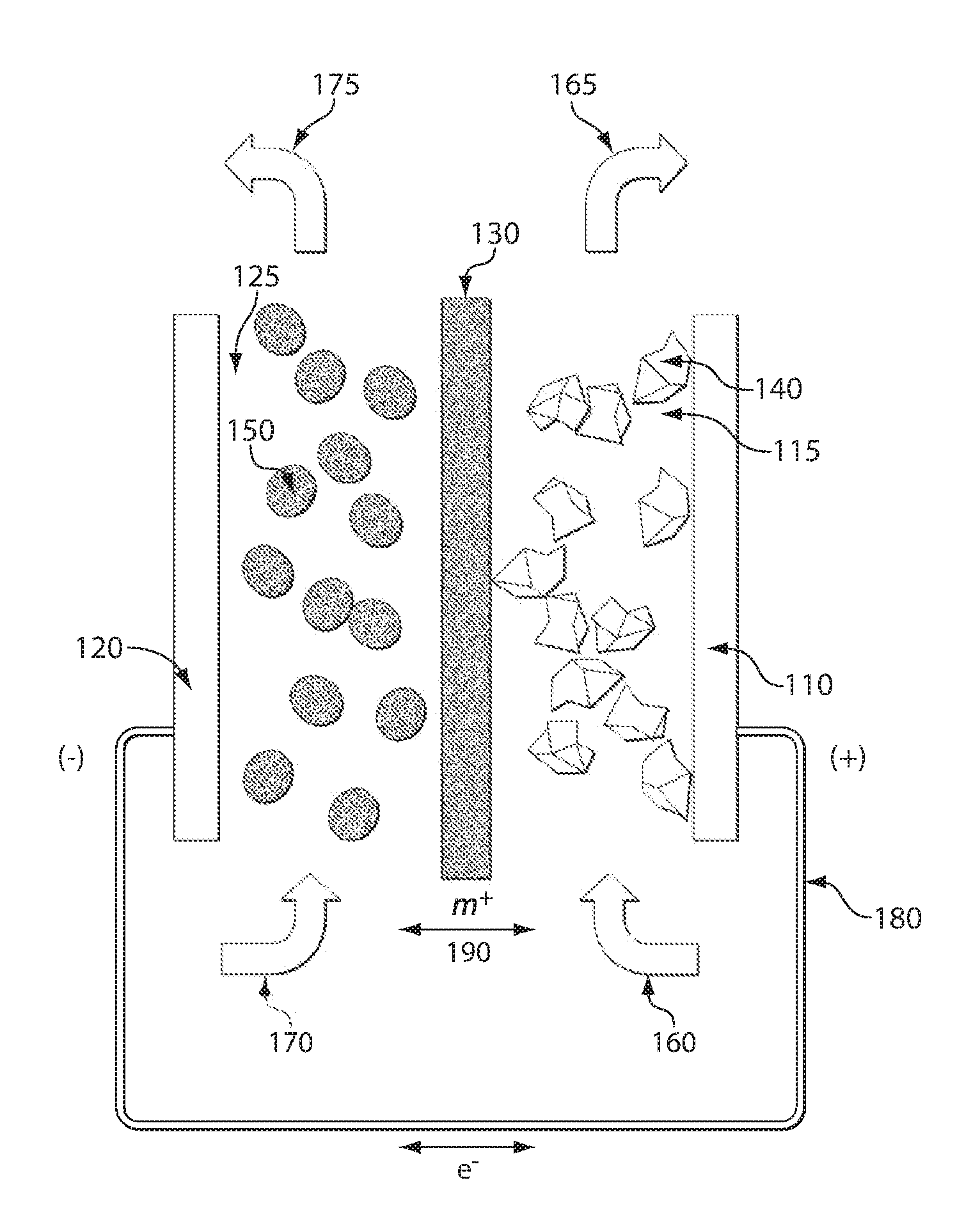
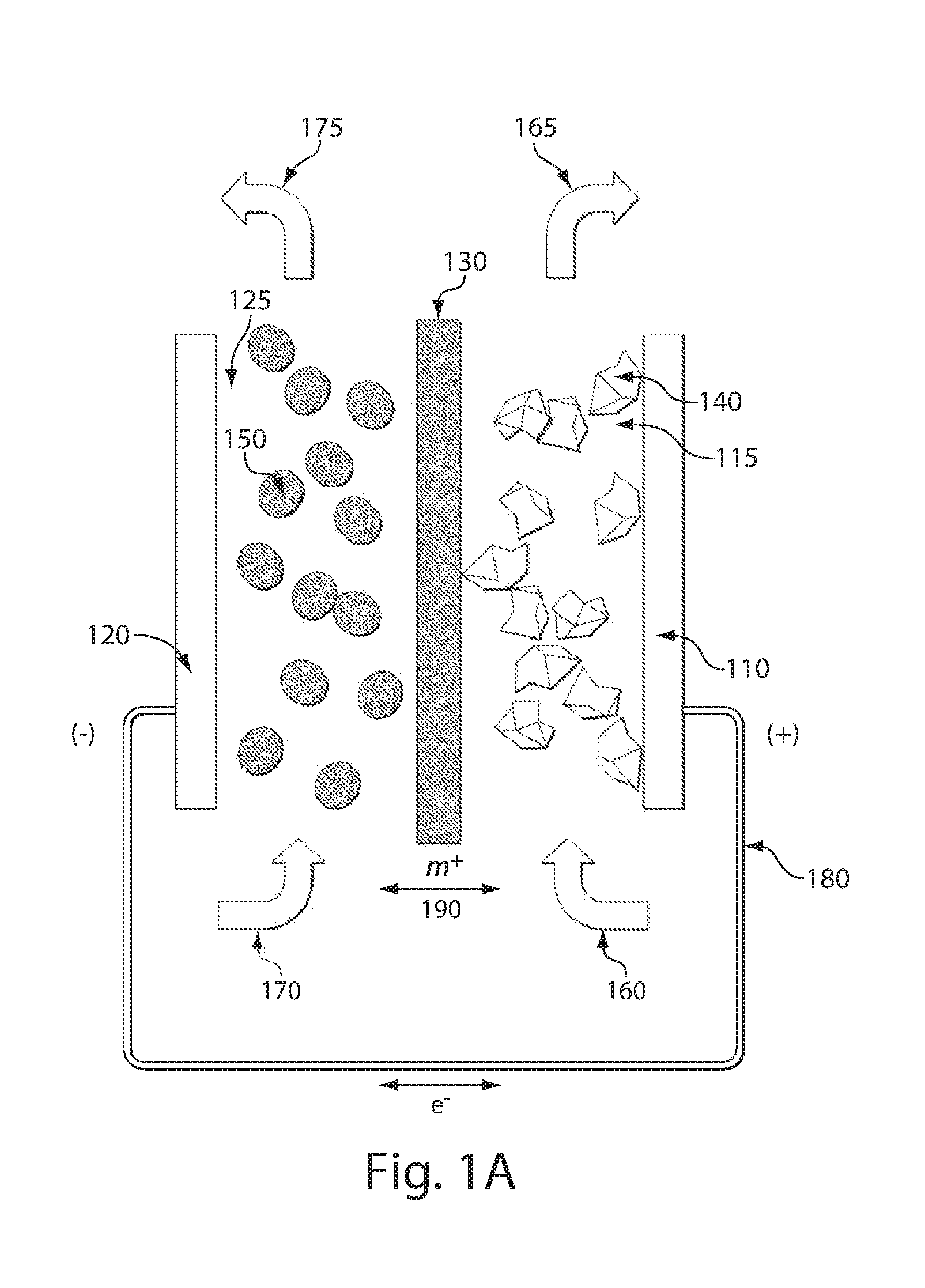
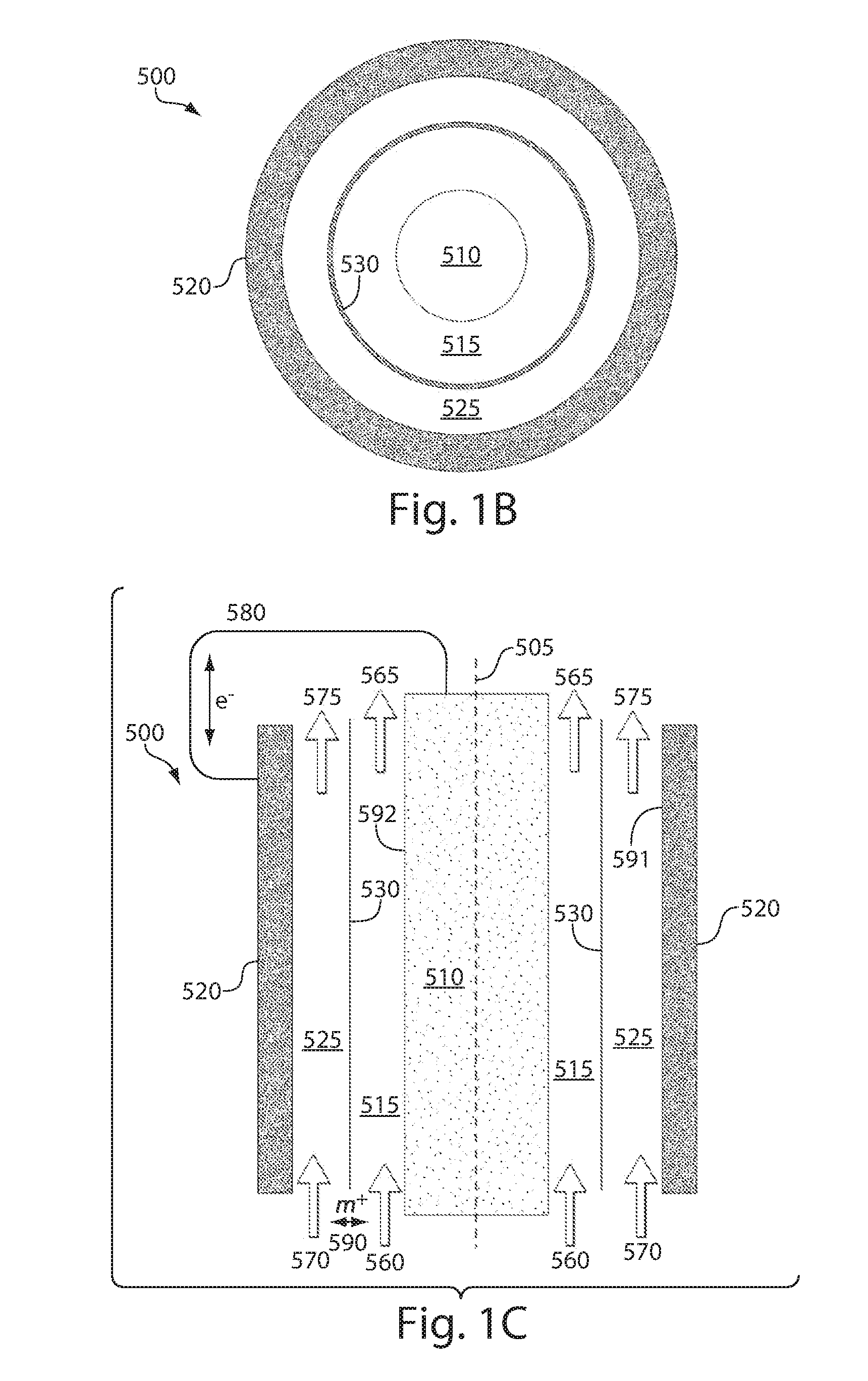
- Incorporating a semi-solid or condensed ion-storing liquid reactant in at least one of the electrodes, which can take up or release ions during operation, enhancing energy storage capacity and power density.

Energy dense materials for redox flow batteries
PatentActiveUS11437641B2
Innovation
- The development of redox active ionic liquids with a bipyridinium core and suitable substituents that lower the melting point below 70°C, allowing for a single molecular species to act as both solvent and redox-active material, thereby increasing energy density and reducing the need for bulk solvent.


Environmental Impact Assessment of Flow Battery Systems
The environmental impact assessment of redox flow battery systems reveals a complex landscape of ecological considerations that must be carefully evaluated alongside energy density improvements. Flow batteries present distinct environmental advantages compared to conventional lithium-ion technologies, particularly in terms of material sustainability and end-of-life management. The primary electrolyte materials, such as vanadium compounds, exhibit excellent recyclability characteristics, with recovery rates exceeding 95% through established hydrometallurgical processes.
Manufacturing phase assessments indicate that flow battery production generates approximately 30-40% lower carbon emissions per kWh of storage capacity compared to lithium-ion alternatives. This advantage stems from reduced mining requirements for rare earth elements and simplified manufacturing processes. The modular design of flow systems enables component-level replacement rather than complete system disposal, significantly extending operational lifespans to 20-25 years with minimal performance degradation.
Operational environmental impacts demonstrate favorable profiles across multiple metrics. Flow batteries exhibit negligible thermal runaway risks, eliminating fire suppression chemical requirements and associated soil contamination concerns. Water consumption during operation remains minimal, primarily limited to cooling system requirements in large-scale installations. The absence of toxic gas emissions during normal operation and failure modes represents a substantial safety advantage over alternative storage technologies.
End-of-life environmental considerations highlight the superior recyclability of flow battery components. Electrolyte solutions maintain chemical stability throughout operational lifecycles, enabling direct reuse or straightforward reprocessing. Membrane materials, typically composed of ion-exchange polymers, can be recycled through established plastic waste streams. The steel and carbon components used in electrode structures integrate seamlessly into existing metal recycling infrastructure.
Lifecycle assessment studies consistently demonstrate 60-70% lower environmental impact scores for flow batteries across acidification, eutrophication, and human toxicity categories. These findings support the environmental viability of pursuing enhanced energy density improvements through advanced electrolyte formulations and system optimization strategies, as environmental benefits scale proportionally with performance enhancements.
Manufacturing phase assessments indicate that flow battery production generates approximately 30-40% lower carbon emissions per kWh of storage capacity compared to lithium-ion alternatives. This advantage stems from reduced mining requirements for rare earth elements and simplified manufacturing processes. The modular design of flow systems enables component-level replacement rather than complete system disposal, significantly extending operational lifespans to 20-25 years with minimal performance degradation.
Operational environmental impacts demonstrate favorable profiles across multiple metrics. Flow batteries exhibit negligible thermal runaway risks, eliminating fire suppression chemical requirements and associated soil contamination concerns. Water consumption during operation remains minimal, primarily limited to cooling system requirements in large-scale installations. The absence of toxic gas emissions during normal operation and failure modes represents a substantial safety advantage over alternative storage technologies.
End-of-life environmental considerations highlight the superior recyclability of flow battery components. Electrolyte solutions maintain chemical stability throughout operational lifecycles, enabling direct reuse or straightforward reprocessing. Membrane materials, typically composed of ion-exchange polymers, can be recycled through established plastic waste streams. The steel and carbon components used in electrode structures integrate seamlessly into existing metal recycling infrastructure.
Lifecycle assessment studies consistently demonstrate 60-70% lower environmental impact scores for flow batteries across acidification, eutrophication, and human toxicity categories. These findings support the environmental viability of pursuing enhanced energy density improvements through advanced electrolyte formulations and system optimization strategies, as environmental benefits scale proportionally with performance enhancements.
Cost-Performance Trade-offs in Energy Density Enhancement
The pursuit of higher energy density in redox flow batteries inevitably involves complex cost-performance considerations that significantly impact commercial viability. While theoretical improvements can achieve substantial energy density gains, the economic feasibility of these enhancements often determines their practical implementation in real-world applications.
Electrolyte concentration optimization represents a primary area where cost-performance trade-offs become evident. Increasing active species concentration from standard 1-2 M to 3-4 M can theoretically double energy density, but this enhancement comes with exponentially rising material costs and potential stability issues. The premium pricing of high-purity vanadium compounds, for instance, can increase system costs by 40-60% while delivering only 20-30% energy density improvements under practical operating conditions.
Advanced membrane technologies exemplify another critical trade-off scenario. High-performance ion-selective membranes can reduce crossover losses and enable higher concentration operations, potentially improving energy density by 25-35%. However, these specialized membranes typically cost 3-5 times more than conventional alternatives and may require more frequent replacement due to chemical degradation, significantly impacting long-term operational economics.
Stack design modifications present varying cost-effectiveness profiles depending on implementation scale. Bipolar plate optimization and enhanced flow field designs can improve energy utilization efficiency with relatively modest capital investment increases of 10-15%. Conversely, advanced electrode materials incorporating carbon nanotubes or graphene derivatives may boost performance by 20-40% but can increase manufacturing costs by 100-200%.
The temporal aspect of cost-performance analysis reveals that initial capital expenditure increases for energy density enhancement often yield favorable returns through reduced balance-of-plant costs. Higher energy density systems require smaller electrolyte volumes, reduced pumping infrastructure, and compact installation footprints, potentially offsetting 30-50% of initial premium costs over system lifetime.
Manufacturing scale considerations fundamentally alter cost-performance equations. Technologies demonstrating marginal economic benefits at laboratory scale may achieve compelling cost-effectiveness at industrial production volumes, where economies of scale can reduce per-unit costs by 60-80% while maintaining performance advantages.
Electrolyte concentration optimization represents a primary area where cost-performance trade-offs become evident. Increasing active species concentration from standard 1-2 M to 3-4 M can theoretically double energy density, but this enhancement comes with exponentially rising material costs and potential stability issues. The premium pricing of high-purity vanadium compounds, for instance, can increase system costs by 40-60% while delivering only 20-30% energy density improvements under practical operating conditions.
Advanced membrane technologies exemplify another critical trade-off scenario. High-performance ion-selective membranes can reduce crossover losses and enable higher concentration operations, potentially improving energy density by 25-35%. However, these specialized membranes typically cost 3-5 times more than conventional alternatives and may require more frequent replacement due to chemical degradation, significantly impacting long-term operational economics.
Stack design modifications present varying cost-effectiveness profiles depending on implementation scale. Bipolar plate optimization and enhanced flow field designs can improve energy utilization efficiency with relatively modest capital investment increases of 10-15%. Conversely, advanced electrode materials incorporating carbon nanotubes or graphene derivatives may boost performance by 20-40% but can increase manufacturing costs by 100-200%.
The temporal aspect of cost-performance analysis reveals that initial capital expenditure increases for energy density enhancement often yield favorable returns through reduced balance-of-plant costs. Higher energy density systems require smaller electrolyte volumes, reduced pumping infrastructure, and compact installation footprints, potentially offsetting 30-50% of initial premium costs over system lifetime.
Manufacturing scale considerations fundamentally alter cost-performance equations. Technologies demonstrating marginal economic benefits at laboratory scale may achieve compelling cost-effectiveness at industrial production volumes, where economies of scale can reduce per-unit costs by 60-80% while maintaining performance advantages.
Unlock deeper insights with PatSnap Eureka Quick Research — get a full tech report to explore trends and direct your research. Try now!
Generate Your Research Report Instantly with AI Agent
Supercharge your innovation with PatSnap Eureka AI Agent Platform!