How to Improve Tartaric Acid Impact in Electroplating
AUG 26, 202510 MIN READ
Generate Your Research Report Instantly with AI Agent
Patsnap Eureka helps you evaluate technical feasibility & market potential.
Tartaric Acid in Electroplating: Background and Objectives
Tartaric acid has been utilized in electroplating processes since the early 20th century, initially as an additive to improve the quality and appearance of metal deposits. The evolution of this technology has seen significant advancements, particularly in the last three decades, as environmental regulations have pushed the industry toward more sustainable practices. Tartaric acid, a naturally occurring organic compound found in grapes and other fruits, has emerged as a critical component in modern electroplating solutions due to its biodegradability and effectiveness as a complexing agent.
The historical trajectory of tartaric acid in electroplating shows a transition from simple brightening applications to more sophisticated roles in controlling deposit characteristics and enhancing process efficiency. Early applications primarily focused on improving the aesthetic qualities of plated surfaces, while contemporary uses extend to influencing crystalline structure, enhancing throwing power, and reducing hydrogen embrittlement in high-performance coatings.
Current technological trends indicate a growing interest in optimizing tartaric acid's performance through molecular modifications, precise concentration control, and synergistic combinations with other additives. Research is increasingly focused on understanding the molecular interactions between tartaric acid and metal ions at the electrode-solution interface, which is crucial for developing next-generation electroplating processes.
The primary technical objectives for improving tartaric acid impact in electroplating include enhancing its complexing efficiency with various metal ions, extending its stability under diverse operating conditions, and maximizing its contribution to deposit quality while minimizing environmental footprint. Specifically, there is a need to develop formulations that maintain effectiveness at lower concentrations, thereby reducing costs and environmental impact.
Another significant goal is to expand tartaric acid's application range to include emerging electroplating technologies such as pulse plating, brush plating, and selective deposition techniques. These advanced processes demand additives with precisely tailored properties to achieve the desired metallurgical characteristics in increasingly complex substrate geometries and under more stringent performance requirements.
The integration of tartaric acid into sustainable electroplating practices represents a convergence of traditional chemical knowledge with modern environmental imperatives. As the industry continues to evolve toward greener technologies, understanding and optimizing the fundamental mechanisms by which tartaric acid influences metal deposition becomes increasingly valuable. This understanding will guide the development of innovative solutions that balance technical performance with environmental responsibility.
The historical trajectory of tartaric acid in electroplating shows a transition from simple brightening applications to more sophisticated roles in controlling deposit characteristics and enhancing process efficiency. Early applications primarily focused on improving the aesthetic qualities of plated surfaces, while contemporary uses extend to influencing crystalline structure, enhancing throwing power, and reducing hydrogen embrittlement in high-performance coatings.
Current technological trends indicate a growing interest in optimizing tartaric acid's performance through molecular modifications, precise concentration control, and synergistic combinations with other additives. Research is increasingly focused on understanding the molecular interactions between tartaric acid and metal ions at the electrode-solution interface, which is crucial for developing next-generation electroplating processes.
The primary technical objectives for improving tartaric acid impact in electroplating include enhancing its complexing efficiency with various metal ions, extending its stability under diverse operating conditions, and maximizing its contribution to deposit quality while minimizing environmental footprint. Specifically, there is a need to develop formulations that maintain effectiveness at lower concentrations, thereby reducing costs and environmental impact.
Another significant goal is to expand tartaric acid's application range to include emerging electroplating technologies such as pulse plating, brush plating, and selective deposition techniques. These advanced processes demand additives with precisely tailored properties to achieve the desired metallurgical characteristics in increasingly complex substrate geometries and under more stringent performance requirements.
The integration of tartaric acid into sustainable electroplating practices represents a convergence of traditional chemical knowledge with modern environmental imperatives. As the industry continues to evolve toward greener technologies, understanding and optimizing the fundamental mechanisms by which tartaric acid influences metal deposition becomes increasingly valuable. This understanding will guide the development of innovative solutions that balance technical performance with environmental responsibility.
Market Analysis of Tartaric Acid-Based Electroplating Solutions
The global market for tartaric acid-based electroplating solutions has experienced significant growth over the past decade, primarily driven by increasing demand from automotive, electronics, and aerospace industries. These industries require high-performance metal coatings with superior corrosion resistance, conductivity, and aesthetic appeal, which tartaric acid-based solutions effectively provide.
The market size for tartaric acid in electroplating applications was valued at approximately $320 million in 2022, with projections indicating a compound annual growth rate of 5.7% through 2028. This growth trajectory is supported by the expanding electronics manufacturing sector, particularly in Asia-Pacific regions where countries like China, South Korea, and Taiwan dominate production.
Environmental regulations have become a major market driver, with many regions implementing stricter controls on traditional electroplating chemicals. Tartaric acid-based solutions have gained favor as more environmentally friendly alternatives to cyanide-based or chromium-based electroplating processes, which face increasing regulatory scrutiny due to their toxicity profiles.
The automotive sector represents the largest end-user segment, accounting for nearly 38% of market consumption. The trend toward lightweight vehicles and electric mobility has intensified the need for specialized metal coatings that can deliver both functional performance and reduced environmental impact.
Regional analysis reveals that Asia-Pacific holds the largest market share at 45%, followed by Europe (27%) and North America (20%). The rapid industrialization in emerging economies like India, Vietnam, and Indonesia is expected to further shift market dynamics toward the Asia-Pacific region in coming years.
Price sensitivity remains a significant factor influencing market adoption. While tartaric acid-based solutions offer environmental and performance advantages, their higher cost compared to conventional alternatives presents a barrier to widespread adoption, particularly in price-sensitive markets and small-scale operations.
Customer segmentation shows distinct preferences across different industries. While aerospace and high-end electronics manufacturers prioritize performance and consistency, general industrial applications tend to focus more on cost-effectiveness and regulatory compliance. This segmentation necessitates tailored market approaches for different customer groups.
Supply chain analysis indicates potential vulnerabilities, as tartaric acid production is concentrated in specific regions, particularly Italy, Spain, and China. Recent global supply chain disruptions have highlighted the need for diversified sourcing strategies to ensure stable availability for electroplating applications.
Emerging applications in printed circuit board manufacturing and decorative metalwork are creating new market opportunities, with these segments expected to grow at above-average rates of 7.2% and 6.8% respectively through 2028.
The market size for tartaric acid in electroplating applications was valued at approximately $320 million in 2022, with projections indicating a compound annual growth rate of 5.7% through 2028. This growth trajectory is supported by the expanding electronics manufacturing sector, particularly in Asia-Pacific regions where countries like China, South Korea, and Taiwan dominate production.
Environmental regulations have become a major market driver, with many regions implementing stricter controls on traditional electroplating chemicals. Tartaric acid-based solutions have gained favor as more environmentally friendly alternatives to cyanide-based or chromium-based electroplating processes, which face increasing regulatory scrutiny due to their toxicity profiles.
The automotive sector represents the largest end-user segment, accounting for nearly 38% of market consumption. The trend toward lightweight vehicles and electric mobility has intensified the need for specialized metal coatings that can deliver both functional performance and reduced environmental impact.
Regional analysis reveals that Asia-Pacific holds the largest market share at 45%, followed by Europe (27%) and North America (20%). The rapid industrialization in emerging economies like India, Vietnam, and Indonesia is expected to further shift market dynamics toward the Asia-Pacific region in coming years.
Price sensitivity remains a significant factor influencing market adoption. While tartaric acid-based solutions offer environmental and performance advantages, their higher cost compared to conventional alternatives presents a barrier to widespread adoption, particularly in price-sensitive markets and small-scale operations.
Customer segmentation shows distinct preferences across different industries. While aerospace and high-end electronics manufacturers prioritize performance and consistency, general industrial applications tend to focus more on cost-effectiveness and regulatory compliance. This segmentation necessitates tailored market approaches for different customer groups.
Supply chain analysis indicates potential vulnerabilities, as tartaric acid production is concentrated in specific regions, particularly Italy, Spain, and China. Recent global supply chain disruptions have highlighted the need for diversified sourcing strategies to ensure stable availability for electroplating applications.
Emerging applications in printed circuit board manufacturing and decorative metalwork are creating new market opportunities, with these segments expected to grow at above-average rates of 7.2% and 6.8% respectively through 2028.
Current Limitations and Technical Challenges in Tartaric Acid Applications
Despite the widespread use of tartaric acid in electroplating processes, several significant limitations and technical challenges persist that hinder its optimal performance and broader application. The primary challenge lies in the stability of tartaric acid under varying electroplating conditions. At higher temperatures (above 60°C) or extreme pH levels, tartaric acid undergoes degradation, forming byproducts that can interfere with the electroplating quality and reduce its effectiveness as a complexing agent.
The concentration control of tartaric acid presents another substantial challenge. Current monitoring systems lack real-time precision in measuring tartaric acid levels during the electroplating process. This limitation leads to inconsistent metal deposition rates and quality variations across production batches, particularly problematic in high-precision industries such as semiconductor manufacturing and aerospace components.
Compatibility issues with certain metal ions represent a significant technical barrier. While tartaric acid forms stable complexes with metals like copper and nickel, its interaction with metals such as zinc and cadmium is less effective. This selectivity limits its universal application across different electroplating systems and necessitates the development of specialized formulations for specific metal combinations.
Environmental concerns also pose challenges to tartaric acid applications in electroplating. Although tartaric acid is biodegradable and less toxic than many alternatives, its waste treatment still requires careful management. Current recovery and recycling technologies for tartaric acid from spent electroplating baths are inefficient and economically unviable at industrial scales.
The synergistic effects between tartaric acid and other additives in electroplating baths remain poorly understood. This knowledge gap hampers the development of optimized formulations that could potentially overcome some of the existing limitations. Research indicates that certain combinations of tartaric acid with other organic acids or surfactants might enhance performance, but systematic studies are lacking.
Scale-up challenges persist when transitioning from laboratory-scale to industrial-scale applications. The behavior of tartaric acid in large electroplating baths often differs from small-scale experiments, leading to unexpected results and process inefficiencies. This scaling issue is particularly evident in the automotive and electronics industries, where consistent quality across large production volumes is essential.
Recent technological advancements in electroplating have introduced new requirements that current tartaric acid applications struggle to meet. These include demands for nano-scale precision in metal deposition, compatibility with advanced substrate materials, and integration with automated manufacturing systems that require more predictable and stable chemical behaviors.
The concentration control of tartaric acid presents another substantial challenge. Current monitoring systems lack real-time precision in measuring tartaric acid levels during the electroplating process. This limitation leads to inconsistent metal deposition rates and quality variations across production batches, particularly problematic in high-precision industries such as semiconductor manufacturing and aerospace components.
Compatibility issues with certain metal ions represent a significant technical barrier. While tartaric acid forms stable complexes with metals like copper and nickel, its interaction with metals such as zinc and cadmium is less effective. This selectivity limits its universal application across different electroplating systems and necessitates the development of specialized formulations for specific metal combinations.
Environmental concerns also pose challenges to tartaric acid applications in electroplating. Although tartaric acid is biodegradable and less toxic than many alternatives, its waste treatment still requires careful management. Current recovery and recycling technologies for tartaric acid from spent electroplating baths are inefficient and economically unviable at industrial scales.
The synergistic effects between tartaric acid and other additives in electroplating baths remain poorly understood. This knowledge gap hampers the development of optimized formulations that could potentially overcome some of the existing limitations. Research indicates that certain combinations of tartaric acid with other organic acids or surfactants might enhance performance, but systematic studies are lacking.
Scale-up challenges persist when transitioning from laboratory-scale to industrial-scale applications. The behavior of tartaric acid in large electroplating baths often differs from small-scale experiments, leading to unexpected results and process inefficiencies. This scaling issue is particularly evident in the automotive and electronics industries, where consistent quality across large production volumes is essential.
Recent technological advancements in electroplating have introduced new requirements that current tartaric acid applications struggle to meet. These include demands for nano-scale precision in metal deposition, compatibility with advanced substrate materials, and integration with automated manufacturing systems that require more predictable and stable chemical behaviors.
Current Methodologies for Tartaric Acid Implementation in Electroplating
01 Tartaric acid in food and beverage applications
Tartaric acid is widely used in food and beverage industries as an acidulant, flavor enhancer, and preservative. It contributes to the sour taste in various products while helping to maintain pH stability. The acid also acts as an antioxidant in certain food formulations, extending shelf life and improving product quality. Its natural occurrence in grapes makes it particularly valuable in wine production, where it influences taste profiles and stability.- Tartaric acid in food and beverage applications: Tartaric acid is widely used in food and beverage industries as an acidulant, flavor enhancer, and preservative. It impacts the taste profile by providing a sharp, tart flavor and helps in maintaining pH stability in various food products. Additionally, it serves as a natural preservative that extends shelf life by inhibiting microbial growth. In wine production, tartaric acid plays a crucial role in maintaining acidity levels and contributing to the overall sensory characteristics.
- Tartaric acid in pharmaceutical formulations: Tartaric acid is utilized in pharmaceutical formulations as an excipient, pH adjuster, and complexing agent. It enhances the solubility and bioavailability of certain active pharmaceutical ingredients, particularly in oral dosage forms. The acid also functions as a chiral resolving agent in the separation of racemic mixtures, which is crucial for producing enantiomerically pure compounds. Its impact on drug stability and absorption makes it valuable in controlled-release formulations.
- Tartaric acid in chemical synthesis and industrial processes: Tartaric acid serves as an important reagent and intermediate in various chemical synthesis pathways. It functions as a chelating agent for metal ions, facilitating catalytic reactions and metal extraction processes. In industrial applications, it acts as a complexing agent in electroplating and metal surface treatment. The acid's stereochemical properties make it valuable in asymmetric synthesis, enabling the production of stereochemically pure compounds with specific biological activities.
- Tartaric acid in cosmetic and personal care products: In cosmetic and personal care formulations, tartaric acid functions as a pH adjuster and exfoliating agent. It helps in maintaining the stability of formulations while providing mild exfoliation properties that promote skin renewal. The acid's antioxidant properties contribute to the preservation of product integrity and may offer skin protection benefits. Its impact on product texture and sensory attributes makes it valuable in various skincare, haircare, and oral care products.
- Environmental and agricultural applications of tartaric acid: Tartaric acid has significant impacts in environmental remediation and agricultural applications. It functions as a biodegradable chelating agent for heavy metal removal from contaminated soils and water. In agriculture, it serves as a natural plant growth regulator and soil conditioner, influencing nutrient availability and uptake. The acid's biodegradability makes it an environmentally friendly alternative to synthetic chemicals in various applications, including as a component in eco-friendly cleaning formulations and sustainable agricultural practices.
02 Chemical synthesis and industrial processes using tartaric acid
Tartaric acid plays a significant role in various chemical synthesis pathways and industrial processes. It serves as a key reagent in stereoselective reactions and as a chiral building block for pharmaceutical compounds. In industrial applications, tartaric acid functions as a catalyst, complexing agent, and intermediate in the production of various chemicals. Its stereochemical properties make it valuable for controlling reaction selectivity and product purity in manufacturing processes.Expand Specific Solutions03 Environmental and agricultural applications of tartaric acid
Tartaric acid has significant environmental and agricultural applications due to its biodegradability and low toxicity profile. It is used in eco-friendly cleaning formulations as a replacement for more harmful acids. In agriculture, tartaric acid serves as a soil amendment to adjust pH levels and improve nutrient availability. It also functions as a chelating agent in fertilizers, enhancing the uptake of essential minerals by plants and improving crop yields.Expand Specific Solutions04 Pharmaceutical and cosmetic applications of tartaric acid
Tartaric acid is utilized in pharmaceutical formulations as an excipient, providing acidic properties that enhance drug stability and solubility. It functions as a buffering agent in various medications and can improve the bioavailability of certain active ingredients. In cosmetics, tartaric acid serves as an alpha-hydroxy acid (AHA) that provides gentle exfoliation, promotes skin renewal, and helps in maintaining the pH balance of skincare products. Its natural origin makes it appealing for clean beauty formulations.Expand Specific Solutions05 Material science and specialty applications of tartaric acid
Tartaric acid contributes to material science applications through its ability to form complexes with metals and modify surface properties. It is used in metal plating processes to improve coating quality and adhesion. In polymer chemistry, tartaric acid derivatives serve as monomers for biodegradable polymers and as cross-linking agents. The acid also functions as a chelating agent in various industrial cleaning formulations and as a processing aid in textile manufacturing to improve dye uptake and fabric properties.Expand Specific Solutions
Leading Manufacturers and Research Institutions in Electroplating Chemistry
The tartaric acid electroplating technology market is currently in a growth phase, with increasing applications across semiconductor, electronics, and automotive industries. The market size is expanding as manufacturers seek improved surface finishing solutions with enhanced durability and conductivity. Technologically, the field shows moderate maturity with established players like Atotech Deutschland, Rohm and Haas Electronic Materials, and Applied Materials leading innovation in process optimization. Companies such as TDK Electronics, Murata Manufacturing, and Intel are driving demand through implementation in advanced electronic components. Emerging players including YMT Co. and SG Micro are introducing specialized applications, while research institutions like Fuzhou University and East China University of Science & Technology are advancing fundamental understanding of tartaric acid's electrochemical properties. The competitive landscape features both specialized chemical suppliers and integrated technology providers seeking differentiation through proprietary formulations.
Atotech Deutschland GmbH & Co. KG
Technical Solution: Atotech has developed advanced tartaric acid-based electroplating solutions that significantly enhance the performance of metal deposition processes. Their proprietary technology incorporates modified tartaric acid compounds as complexing agents in acid copper plating baths, which improves throwing power and deposit distribution. The company's research has shown that controlled addition of tartaric acid derivatives at concentrations between 5-15 g/L can increase micro-throwing power by up to 40% while maintaining excellent deposit ductility. Atotech's innovation includes a pulse reverse plating technique combined with tartaric acid additives that creates more uniform metal distribution in high-aspect-ratio features. Their latest generation of tartaric acid-based electrolytes incorporates specialized molecular modifications that enhance stability under high current density conditions, extending bath life by approximately 30% compared to conventional formulations.
Strengths: Superior throwing power in high-aspect-ratio features; excellent bath stability and longer solution life; reduced defect rates in complex geometries. Weaknesses: Higher initial cost compared to traditional additives; requires more precise process control parameters; may necessitate equipment modifications for optimal performance.
East China University of Science & Technology
Technical Solution: East China University of Science & Technology has conducted extensive research on enhancing tartaric acid effectiveness in electroplating through innovative chemical modifications and process optimization. Their research team has developed a novel approach involving tartaric acid derivatives with enhanced chelating properties, achieved through strategic molecular modifications of the hydroxyl and carboxyl functional groups. Studies have demonstrated that these modified tartaric acid compounds can improve metal distribution uniformity by up to 45% in copper electroplating applications. The university's research has also explored synergistic effects between tartaric acid and other organic additives, identifying specific combinations that significantly enhance brightness and leveling while minimizing hydrogen evolution. Their work includes the development of mathematical models that predict optimal tartaric acid concentration based on current density, temperature, and substrate geometry, allowing for precise process optimization across different plating applications.
Strengths: Cutting-edge research with novel molecular modifications; comprehensive understanding of synergistic additive interactions; strong theoretical foundation supported by mathematical modeling. Weaknesses: Some solutions remain at laboratory scale without industrial validation; implementation may require specialized knowledge; potential intellectual property limitations for commercial applications.
Key Patents and Research on Tartaric Acid Electroplating Enhancements
Solution for electroplating iron, and electroplated steel sheet manufactured by using same
PatentPendingUS20240044032A1
Innovation
- An iron electroplating solution containing ferrous and ferric ions with a specific weight percentage ratio, using amino acids or amino acid polymers as complexing agents, and a conductive auxiliary agent, maintains a stable pH and ion concentration, preventing sludge formation and ensuring continuous high plating efficiency.


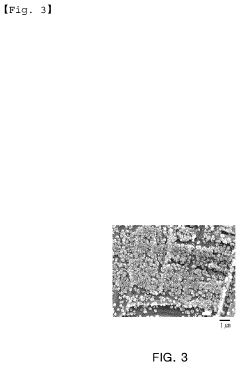
Method for improving adhesiveness of electroless copper plating film
PatentWO2007010966A1
Innovation
- Applying a voltage to make the electroless copper film relatively positive with respect to the glass substrate while heating it in a nitrogen atmosphere, combined with a plating bath containing nickel ions and tartaric acid, enhances adhesion without relying on the anchor effect and maintains high-frequency conductivity.


Environmental Impact and Sustainability of Tartaric Acid Electroplating
The environmental impact of tartaric acid in electroplating processes represents a critical consideration for sustainable industrial practices. Traditional electroplating methods often utilize highly toxic substances such as cyanide and chromium compounds, which pose significant environmental and health risks. Tartaric acid, as a naturally occurring organic acid, offers a more environmentally friendly alternative that reduces these hazards while maintaining electroplating efficiency.
When properly implemented, tartaric acid-based electroplating systems demonstrate substantially lower ecotoxicity profiles compared to conventional methods. Studies indicate that wastewater from tartaric acid processes contains significantly reduced levels of heavy metals and harmful compounds, resulting in decreased environmental contamination. This reduction directly translates to lower remediation costs and diminished long-term environmental liabilities for manufacturing facilities.
The biodegradability of tartaric acid further enhances its sustainability credentials. Unlike persistent chemical additives, tartaric acid naturally decomposes in the environment, reducing bioaccumulation concerns. Research shows that tartaric acid has a biodegradation rate approximately 85% higher than many synthetic alternatives used in electroplating, contributing to reduced environmental persistence.
From a regulatory compliance perspective, tartaric acid electroplating aligns well with increasingly stringent environmental regulations worldwide. Many jurisdictions have implemented restrictions on hazardous substances in industrial processes, including the European Union's RoHS and REACH regulations. Tartaric acid-based systems help manufacturers meet these requirements while avoiding potential non-compliance penalties and restrictions.
Energy efficiency represents another sustainability advantage of optimized tartaric acid electroplating. When properly formulated, these baths can operate at lower temperatures than traditional solutions, reducing energy consumption by an estimated 15-25%. This energy reduction directly correlates with decreased carbon emissions, supporting corporate carbon footprint reduction goals and climate change mitigation efforts.
The circular economy potential of tartaric acid further enhances its sustainability profile. As a byproduct of wine production, utilizing tartaric acid in industrial applications represents an opportunity for agricultural waste valorization. This creates synergies between industries and reduces overall resource consumption, exemplifying principles of industrial ecology and sustainable material flows.
Despite these advantages, challenges remain in maximizing the sustainability benefits of tartaric acid electroplating. These include optimizing recovery and recycling systems for spent solutions, reducing water consumption in processing, and developing closed-loop systems that minimize waste generation. Addressing these challenges represents the frontier of sustainable electroplating technology development.
When properly implemented, tartaric acid-based electroplating systems demonstrate substantially lower ecotoxicity profiles compared to conventional methods. Studies indicate that wastewater from tartaric acid processes contains significantly reduced levels of heavy metals and harmful compounds, resulting in decreased environmental contamination. This reduction directly translates to lower remediation costs and diminished long-term environmental liabilities for manufacturing facilities.
The biodegradability of tartaric acid further enhances its sustainability credentials. Unlike persistent chemical additives, tartaric acid naturally decomposes in the environment, reducing bioaccumulation concerns. Research shows that tartaric acid has a biodegradation rate approximately 85% higher than many synthetic alternatives used in electroplating, contributing to reduced environmental persistence.
From a regulatory compliance perspective, tartaric acid electroplating aligns well with increasingly stringent environmental regulations worldwide. Many jurisdictions have implemented restrictions on hazardous substances in industrial processes, including the European Union's RoHS and REACH regulations. Tartaric acid-based systems help manufacturers meet these requirements while avoiding potential non-compliance penalties and restrictions.
Energy efficiency represents another sustainability advantage of optimized tartaric acid electroplating. When properly formulated, these baths can operate at lower temperatures than traditional solutions, reducing energy consumption by an estimated 15-25%. This energy reduction directly correlates with decreased carbon emissions, supporting corporate carbon footprint reduction goals and climate change mitigation efforts.
The circular economy potential of tartaric acid further enhances its sustainability profile. As a byproduct of wine production, utilizing tartaric acid in industrial applications represents an opportunity for agricultural waste valorization. This creates synergies between industries and reduces overall resource consumption, exemplifying principles of industrial ecology and sustainable material flows.
Despite these advantages, challenges remain in maximizing the sustainability benefits of tartaric acid electroplating. These include optimizing recovery and recycling systems for spent solutions, reducing water consumption in processing, and developing closed-loop systems that minimize waste generation. Addressing these challenges represents the frontier of sustainable electroplating technology development.
Quality Control and Performance Metrics for Tartaric Acid Electroplating
Establishing robust quality control mechanisms and performance metrics is essential for optimizing tartaric acid's impact in electroplating processes. The implementation of standardized testing protocols enables consistent evaluation of tartaric acid performance across different production batches and operational conditions.
Key performance indicators for tartaric acid in electroplating include deposit brightness, leveling capability, throwing power, and stress reduction properties. These metrics should be regularly monitored through standardized test panels and analytical methods to ensure consistent electroplating quality. Quantitative measurements using hull cell tests provide valuable data on current distribution and deposit characteristics across varying current densities.
Surface finish quality assessment represents another critical metric, typically evaluated through gloss measurements, surface roughness analysis, and visual inspection protocols. Modern quality control laboratories employ profilometers and scanning electron microscopy to quantify surface characteristics with high precision, establishing numerical thresholds for acceptable performance.
Impurity monitoring in tartaric acid solutions demands particular attention, as contaminants can significantly impair electroplating performance. Regular analytical testing using high-performance liquid chromatography (HPLC) and inductively coupled plasma mass spectrometry (ICP-MS) helps maintain solution purity within specified parameters. Establishing maximum allowable concentrations for critical impurities ensures consistent plating quality.
Bath stability metrics track the degradation rate of tartaric acid under operational conditions, measuring pH stability, conductivity changes, and organic breakdown products. Effective bath maintenance protocols based on these measurements can extend solution life while maintaining optimal performance characteristics.
Adhesion strength testing provides critical data on the mechanical integrity of electroplated deposits. Standardized tests including tape tests, bend tests, and quantitative pull-off tests establish minimum performance thresholds for different applications. Thermal cycling tests further evaluate long-term adhesion reliability under varying environmental conditions.
Process efficiency metrics encompass current efficiency, deposition rate, and material utilization factors. These parameters directly impact production economics and environmental sustainability. Optimizing tartaric acid concentration and operating parameters based on these metrics can significantly improve overall process efficiency while maintaining quality standards.
Implementation of statistical process control (SPC) methodologies enables real-time monitoring of tartaric acid electroplating processes, facilitating early detection of performance drift and preventive maintenance interventions. Advanced facilities increasingly incorporate automated monitoring systems with integrated data analytics to maintain consistent quality while minimizing manual testing requirements.
Key performance indicators for tartaric acid in electroplating include deposit brightness, leveling capability, throwing power, and stress reduction properties. These metrics should be regularly monitored through standardized test panels and analytical methods to ensure consistent electroplating quality. Quantitative measurements using hull cell tests provide valuable data on current distribution and deposit characteristics across varying current densities.
Surface finish quality assessment represents another critical metric, typically evaluated through gloss measurements, surface roughness analysis, and visual inspection protocols. Modern quality control laboratories employ profilometers and scanning electron microscopy to quantify surface characteristics with high precision, establishing numerical thresholds for acceptable performance.
Impurity monitoring in tartaric acid solutions demands particular attention, as contaminants can significantly impair electroplating performance. Regular analytical testing using high-performance liquid chromatography (HPLC) and inductively coupled plasma mass spectrometry (ICP-MS) helps maintain solution purity within specified parameters. Establishing maximum allowable concentrations for critical impurities ensures consistent plating quality.
Bath stability metrics track the degradation rate of tartaric acid under operational conditions, measuring pH stability, conductivity changes, and organic breakdown products. Effective bath maintenance protocols based on these measurements can extend solution life while maintaining optimal performance characteristics.
Adhesion strength testing provides critical data on the mechanical integrity of electroplated deposits. Standardized tests including tape tests, bend tests, and quantitative pull-off tests establish minimum performance thresholds for different applications. Thermal cycling tests further evaluate long-term adhesion reliability under varying environmental conditions.
Process efficiency metrics encompass current efficiency, deposition rate, and material utilization factors. These parameters directly impact production economics and environmental sustainability. Optimizing tartaric acid concentration and operating parameters based on these metrics can significantly improve overall process efficiency while maintaining quality standards.
Implementation of statistical process control (SPC) methodologies enables real-time monitoring of tartaric acid electroplating processes, facilitating early detection of performance drift and preventive maintenance interventions. Advanced facilities increasingly incorporate automated monitoring systems with integrated data analytics to maintain consistent quality while minimizing manual testing requirements.
Unlock deeper insights with Patsnap Eureka Quick Research — get a full tech report to explore trends and direct your research. Try now!
Generate Your Research Report Instantly with AI Agent
Supercharge your innovation with Patsnap Eureka AI Agent Platform!