

How to Increase Wind Turbine Grid Reliability
MAR 12, 20269 MIN READ
Generate Your Research Report Instantly with AI Agent
PatSnap Eureka helps you evaluate technical feasibility & market potential.
Wind Turbine Grid Integration Background and Objectives
Wind energy has emerged as one of the fastest-growing renewable energy sources globally, with cumulative installed capacity exceeding 900 GW by 2023. The integration of wind turbines into electrical grids represents a fundamental shift from traditional centralized power generation to distributed renewable energy systems. This transformation began in the 1980s with small-scale wind farms and has evolved into massive offshore installations capable of generating several gigawatts of power.
The historical development of wind turbine grid integration can be traced through distinct phases. Early wind installations operated as isolated systems with minimal grid interaction, primarily focusing on mechanical energy conversion efficiency. The 1990s marked the beginning of serious grid integration efforts, driven by government incentives and environmental regulations. The 2000s witnessed significant technological advances in power electronics, control systems, and grid codes specifically designed for wind energy integration.
Current grid integration challenges stem from the inherent variability and unpredictability of wind resources. Unlike conventional power plants that can provide consistent baseload power, wind turbines generate electricity intermittently, creating stability concerns for grid operators. The increasing penetration of wind energy has exposed limitations in existing grid infrastructure, particularly regarding voltage regulation, frequency control, and power quality management.
Modern wind turbine grid integration faces several critical technical challenges. Power quality issues, including voltage fluctuations, harmonic distortion, and flicker effects, significantly impact grid stability. Frequency regulation becomes increasingly complex as wind generation displaces traditional synchronous generators that naturally provide grid inertia. Additionally, the geographic distribution of optimal wind resources often requires extensive transmission infrastructure upgrades to deliver power to load centers.
The primary objective of enhancing wind turbine grid reliability centers on achieving seamless integration while maintaining power system stability and quality. This involves developing advanced control algorithms that enable wind turbines to provide ancillary services traditionally supplied by conventional generators. Grid support capabilities, including reactive power compensation, voltage regulation, and frequency response, represent essential targets for next-generation wind turbine systems.
Technological objectives encompass improving fault ride-through capabilities, enabling wind turbines to remain connected during grid disturbances rather than disconnecting and exacerbating system instability. Enhanced forecasting accuracy for wind power generation represents another crucial goal, facilitating better grid planning and operation. The development of energy storage integration solutions aims to smooth power output variations and provide dispatchable renewable energy resources.
The historical development of wind turbine grid integration can be traced through distinct phases. Early wind installations operated as isolated systems with minimal grid interaction, primarily focusing on mechanical energy conversion efficiency. The 1990s marked the beginning of serious grid integration efforts, driven by government incentives and environmental regulations. The 2000s witnessed significant technological advances in power electronics, control systems, and grid codes specifically designed for wind energy integration.
Current grid integration challenges stem from the inherent variability and unpredictability of wind resources. Unlike conventional power plants that can provide consistent baseload power, wind turbines generate electricity intermittently, creating stability concerns for grid operators. The increasing penetration of wind energy has exposed limitations in existing grid infrastructure, particularly regarding voltage regulation, frequency control, and power quality management.
Modern wind turbine grid integration faces several critical technical challenges. Power quality issues, including voltage fluctuations, harmonic distortion, and flicker effects, significantly impact grid stability. Frequency regulation becomes increasingly complex as wind generation displaces traditional synchronous generators that naturally provide grid inertia. Additionally, the geographic distribution of optimal wind resources often requires extensive transmission infrastructure upgrades to deliver power to load centers.
The primary objective of enhancing wind turbine grid reliability centers on achieving seamless integration while maintaining power system stability and quality. This involves developing advanced control algorithms that enable wind turbines to provide ancillary services traditionally supplied by conventional generators. Grid support capabilities, including reactive power compensation, voltage regulation, and frequency response, represent essential targets for next-generation wind turbine systems.
Technological objectives encompass improving fault ride-through capabilities, enabling wind turbines to remain connected during grid disturbances rather than disconnecting and exacerbating system instability. Enhanced forecasting accuracy for wind power generation represents another crucial goal, facilitating better grid planning and operation. The development of energy storage integration solutions aims to smooth power output variations and provide dispatchable renewable energy resources.
Market Demand for Reliable Wind Power Grid Connection
The global energy transition toward renewable sources has created unprecedented demand for reliable wind power grid integration. Wind energy capacity has experienced exponential growth over the past decade, with installations expanding rapidly across both developed and emerging markets. This surge reflects not only environmental commitments but also economic imperatives as wind power achieves grid parity in numerous regions.
Grid operators worldwide face mounting pressure to accommodate increasing wind penetration while maintaining system stability and reliability. Traditional power grids were designed for predictable, centralized generation sources, making the integration of variable renewable energy a complex technical challenge. The intermittent nature of wind resources creates operational difficulties that require sophisticated solutions to ensure continuous power supply.
Industrial and commercial energy consumers increasingly prioritize renewable energy procurement through long-term power purchase agreements and corporate sustainability initiatives. These stakeholders demand consistent, high-quality power delivery regardless of the generation source. Any reliability issues associated with wind power integration can undermine confidence in renewable energy investments and slow adoption rates.
Utility companies recognize that grid reliability directly impacts their operational costs and regulatory compliance. Frequency deviations, voltage fluctuations, and grid instability events associated with wind power integration can result in significant financial penalties and infrastructure damage. The economic case for improved wind turbine grid reliability extends beyond immediate operational benefits to include reduced maintenance costs and extended equipment lifespans.
Emerging markets present particularly strong demand for reliable wind power solutions as they simultaneously expand electricity access and pursue clean energy development goals. These regions often lack robust transmission infrastructure, making grid reliability challenges more acute. The ability to deploy wind power systems that enhance rather than compromise grid stability becomes a critical factor in project feasibility and financing.
Regulatory frameworks increasingly emphasize grid code compliance and power quality standards for renewable energy installations. Wind power developers must demonstrate their projects can meet stringent technical requirements for grid connection, including fault ride-through capabilities, reactive power support, and frequency response characteristics. This regulatory environment drives continuous demand for advanced grid reliability solutions.
Grid operators worldwide face mounting pressure to accommodate increasing wind penetration while maintaining system stability and reliability. Traditional power grids were designed for predictable, centralized generation sources, making the integration of variable renewable energy a complex technical challenge. The intermittent nature of wind resources creates operational difficulties that require sophisticated solutions to ensure continuous power supply.
Industrial and commercial energy consumers increasingly prioritize renewable energy procurement through long-term power purchase agreements and corporate sustainability initiatives. These stakeholders demand consistent, high-quality power delivery regardless of the generation source. Any reliability issues associated with wind power integration can undermine confidence in renewable energy investments and slow adoption rates.
Utility companies recognize that grid reliability directly impacts their operational costs and regulatory compliance. Frequency deviations, voltage fluctuations, and grid instability events associated with wind power integration can result in significant financial penalties and infrastructure damage. The economic case for improved wind turbine grid reliability extends beyond immediate operational benefits to include reduced maintenance costs and extended equipment lifespans.
Emerging markets present particularly strong demand for reliable wind power solutions as they simultaneously expand electricity access and pursue clean energy development goals. These regions often lack robust transmission infrastructure, making grid reliability challenges more acute. The ability to deploy wind power systems that enhance rather than compromise grid stability becomes a critical factor in project feasibility and financing.
Regulatory frameworks increasingly emphasize grid code compliance and power quality standards for renewable energy installations. Wind power developers must demonstrate their projects can meet stringent technical requirements for grid connection, including fault ride-through capabilities, reactive power support, and frequency response characteristics. This regulatory environment drives continuous demand for advanced grid reliability solutions.
Current Grid Reliability Challenges in Wind Energy Systems
Wind energy systems face significant grid reliability challenges that stem from the inherent variability and unpredictability of wind resources. The intermittent nature of wind creates substantial fluctuations in power output, making it difficult for grid operators to maintain stable voltage and frequency levels. These variations can occur over multiple time scales, from seconds to seasonal patterns, creating complex operational challenges for power system stability.
Power quality issues represent another critical challenge in wind turbine grid integration. Voltage fluctuations, harmonic distortions, and flicker effects can degrade overall grid performance and affect other connected equipment. Modern wind turbines, particularly older generation systems, may contribute to these power quality problems through their electrical conversion systems and switching operations.
Grid integration complexities arise from the distributed nature of wind farms and their connection to transmission networks. Many wind installations are located in remote areas with limited transmission infrastructure, creating bottlenecks and potential points of failure. The distance between generation sites and load centers requires extensive transmission lines that are vulnerable to weather-related outages and equipment failures.
Forecasting accuracy limitations pose ongoing challenges for grid operators attempting to balance supply and demand. Despite advances in meteorological modeling, wind prediction errors can lead to significant deviations from scheduled power delivery. These forecasting uncertainties force grid operators to maintain higher reserve margins, reducing overall system efficiency and increasing operational costs.
Reactive power management presents technical difficulties as wind turbines consume reactive power during operation, potentially causing voltage stability issues. The variable nature of wind generation makes it challenging to maintain optimal power factor and voltage profiles across the transmission network, particularly during periods of high wind penetration.
Grid code compliance requirements continue to evolve as wind penetration increases, demanding enhanced fault ride-through capabilities and grid support functions. Many existing wind installations struggle to meet updated grid codes without significant retrofitting, creating potential reliability risks during system disturbances and fault conditions.
Power quality issues represent another critical challenge in wind turbine grid integration. Voltage fluctuations, harmonic distortions, and flicker effects can degrade overall grid performance and affect other connected equipment. Modern wind turbines, particularly older generation systems, may contribute to these power quality problems through their electrical conversion systems and switching operations.
Grid integration complexities arise from the distributed nature of wind farms and their connection to transmission networks. Many wind installations are located in remote areas with limited transmission infrastructure, creating bottlenecks and potential points of failure. The distance between generation sites and load centers requires extensive transmission lines that are vulnerable to weather-related outages and equipment failures.
Forecasting accuracy limitations pose ongoing challenges for grid operators attempting to balance supply and demand. Despite advances in meteorological modeling, wind prediction errors can lead to significant deviations from scheduled power delivery. These forecasting uncertainties force grid operators to maintain higher reserve margins, reducing overall system efficiency and increasing operational costs.
Reactive power management presents technical difficulties as wind turbines consume reactive power during operation, potentially causing voltage stability issues. The variable nature of wind generation makes it challenging to maintain optimal power factor and voltage profiles across the transmission network, particularly during periods of high wind penetration.
Grid code compliance requirements continue to evolve as wind penetration increases, demanding enhanced fault ride-through capabilities and grid support functions. Many existing wind installations struggle to meet updated grid codes without significant retrofitting, creating potential reliability risks during system disturbances and fault conditions.
Existing Grid Stability Enhancement Technologies
01 Grid integration and power quality control systems
Wind turbine systems incorporate advanced grid integration technologies to maintain power quality and stability. These systems include power converters, voltage regulators, and reactive power compensation devices that ensure smooth connection to the electrical grid. Control algorithms monitor grid parameters and adjust turbine output to meet grid code requirements, preventing voltage fluctuations and frequency deviations that could compromise grid reliability.- Grid integration and power quality control systems: Wind turbine systems incorporate advanced grid integration technologies to maintain power quality and stability. These systems include power converters, voltage regulators, and frequency control mechanisms that ensure smooth connection to the electrical grid. The technologies monitor grid parameters in real-time and adjust turbine output accordingly to prevent disturbances and maintain grid reliability during varying wind conditions and load demands.
- Fault ride-through capability and protection systems: Wind turbines are equipped with fault ride-through capabilities that allow them to remain connected to the grid during voltage dips or grid disturbances. These protection systems include circuit breakers, surge protection devices, and control algorithms that detect abnormal grid conditions and implement protective measures. The systems enable turbines to support grid stability during faults rather than disconnecting, which is critical for maintaining overall grid reliability.
- Predictive monitoring and condition-based maintenance: Advanced monitoring systems continuously track turbine performance parameters and grid connection status to predict potential failures before they occur. These systems utilize sensors, data analytics, and machine learning algorithms to assess component health and grid interaction quality. By implementing condition-based maintenance strategies, operators can address issues proactively, reducing unexpected downtime and improving overall grid reliability.
- Energy storage integration and power smoothing: Wind turbine systems incorporate energy storage solutions to smooth power output fluctuations and provide grid support services. These storage systems buffer the intermittent nature of wind energy, delivering consistent power to the grid and providing ancillary services such as frequency regulation and voltage support. The integration enhances grid stability by compensating for rapid changes in wind speed and power generation.
- Communication and control coordination systems: Modern wind turbines employ sophisticated communication networks and coordinated control systems to interact with grid operators and other generation sources. These systems enable real-time data exchange, remote monitoring, and coordinated response to grid events. The communication infrastructure supports distributed control strategies that optimize wind farm performance while maintaining grid stability requirements and responding to dispatch commands from system operators.
02 Fault ride-through capability and protection mechanisms
Wind turbines are equipped with fault ride-through capabilities that allow them to remain connected to the grid during voltage dips or grid disturbances. Protection systems detect abnormal grid conditions and implement appropriate responses, such as adjusting active and reactive power output or temporarily disconnecting from the grid. These mechanisms prevent cascading failures and enhance overall grid stability during fault conditions.Expand Specific Solutions03 Predictive monitoring and condition-based maintenance
Advanced monitoring systems continuously track wind turbine performance parameters and grid connection status to predict potential failures before they occur. Sensors collect data on mechanical components, electrical systems, and grid interface equipment, which is analyzed using machine learning algorithms to identify degradation patterns. This predictive approach enables scheduled maintenance activities that minimize unplanned downtime and improve grid reliability.Expand Specific Solutions04 Energy storage integration and power smoothing
Energy storage systems are integrated with wind turbines to buffer power fluctuations and provide consistent grid supply. Battery systems or other storage technologies absorb excess energy during high wind periods and discharge during low production, smoothing the power output profile. This integration helps maintain grid frequency stability and reduces the impact of wind intermittency on grid reliability.Expand Specific Solutions05 Communication networks and coordinated control strategies
Wind farms utilize sophisticated communication networks to enable coordinated control among multiple turbines and with grid operators. Real-time data exchange allows for optimized power dispatch, load balancing, and rapid response to grid operator commands. Coordinated control strategies ensure that wind farms operate as unified power plants, providing ancillary services such as frequency regulation and voltage support that enhance grid reliability.Expand Specific Solutions
Major Players in Wind Power Grid Reliability Solutions
The wind turbine grid reliability sector represents a mature and rapidly expanding market driven by global renewable energy transitions. The industry has evolved from experimental installations to large-scale commercial deployments, with the global wind power market exceeding $100 billion annually. Technology maturity varies significantly across market players, with established manufacturers like Vestas Wind Systems A/S, Siemens Gamesa Renewable Energy, and GE Infrastructure Technology leading in advanced turbine technologies and grid integration solutions. Chinese companies including Goldwind Science & Technology and Windey Energy Technology Group have achieved substantial technological advancement, while state-owned entities like State Grid Corp. of China and China Electric Power Research Institute focus on grid infrastructure optimization. European players such as Nordex Energy and innogy SE contribute specialized reliability solutions, indicating a competitive landscape where technological sophistication in grid integration, predictive maintenance, and smart grid compatibility determines market positioning and long-term viability.
Siemens Gamesa Renewable Energy AS
Technical Solution: Siemens Gamesa focuses on grid reliability through their advanced power converter technology and grid integration solutions. Their wind turbines incorporate full-scale power converters that provide complete decoupling between the generator and grid, enabling superior grid support capabilities. The company's GridCode compliance solutions ensure seamless integration with various international grid requirements. Their digital services platform utilizes machine learning algorithms for predictive maintenance and performance optimization, reducing downtime and improving grid stability. Siemens Gamesa also implements advanced control algorithms that enable their turbines to provide ancillary services such as inertial response and primary frequency control, contributing to overall grid reliability.
Strengths: Strong technological innovation, comprehensive digital solutions, excellent grid code compliance capabilities. Weaknesses: Limited market presence in some regions, dependency on complex software systems.
Goldwind Science & Technology Co., Ltd.
Technical Solution: Goldwind enhances wind turbine grid reliability through their permanent magnet direct-drive technology combined with advanced power electronics systems. Their wind turbines feature full-scale power converters that provide excellent grid integration capabilities and superior power quality. The company implements intelligent control systems that enable their turbines to provide grid support services including voltage regulation and frequency response. Goldwind's smart wind farm solutions integrate multiple turbines with centralized control systems for optimized grid interaction and reduced power fluctuations. Their predictive maintenance platform utilizes big data analytics and machine learning to minimize unplanned downtime and ensure consistent power delivery to the grid.
Strengths: Cost-effective solutions, strong presence in emerging markets, reliable direct-drive technology. Weaknesses: Limited advanced grid services compared to European competitors, newer entrant in offshore wind market.
Core Innovations in Wind Turbine Grid Reliability Patents
Method for operating or controlling a wind turbine and method for providing primary control power by means of wind turbines
PatentWO2005025026A1
Innovation
- A method for operating wind turbines that utilizes the kinetic energy of rotating parts to dynamically adjust power output by changing rotor speed and blade angle, allowing wind turbines to feed additional power into the grid during grid frequency changes, thereby providing control reserve and reducing grid frequency fluctuations.


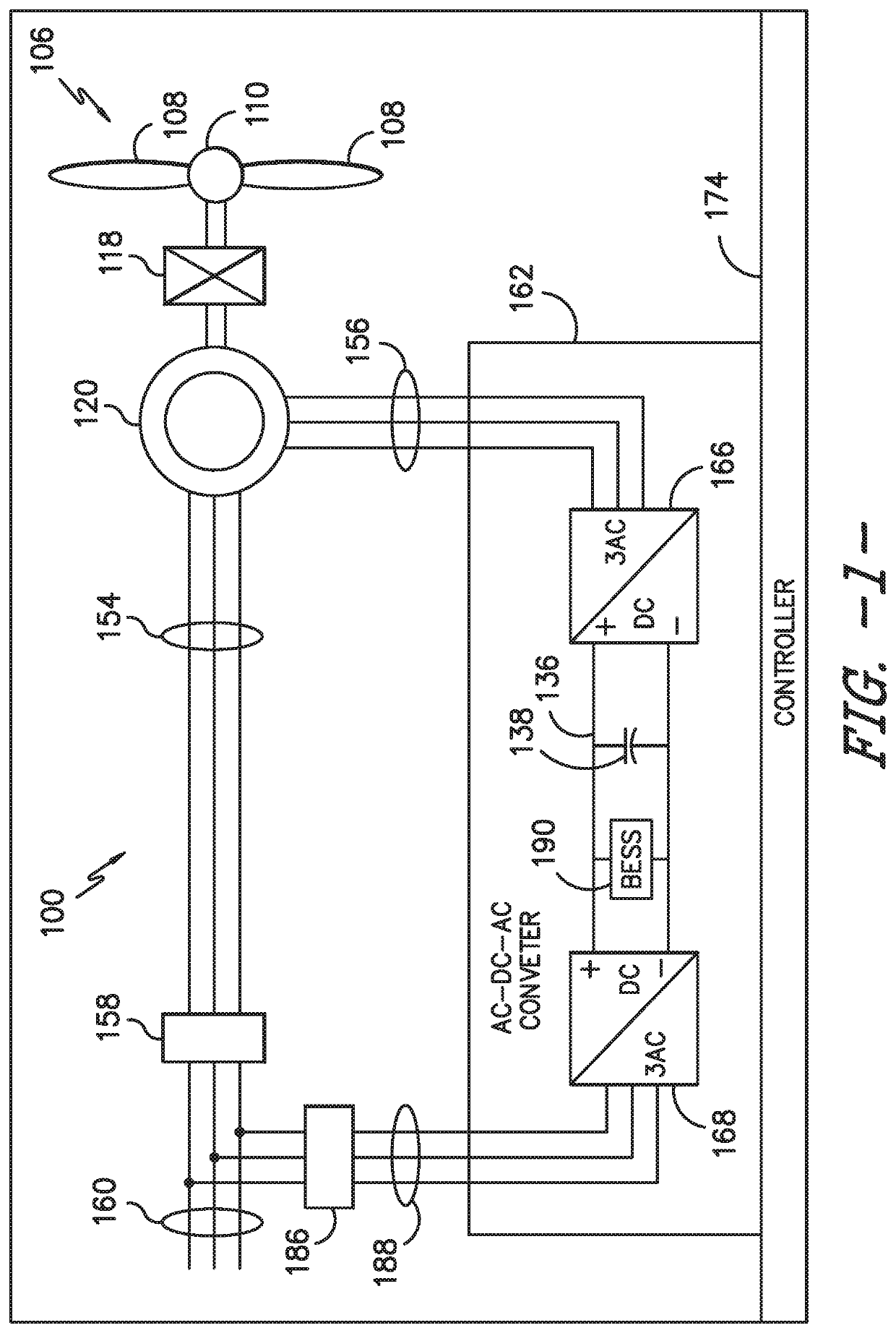
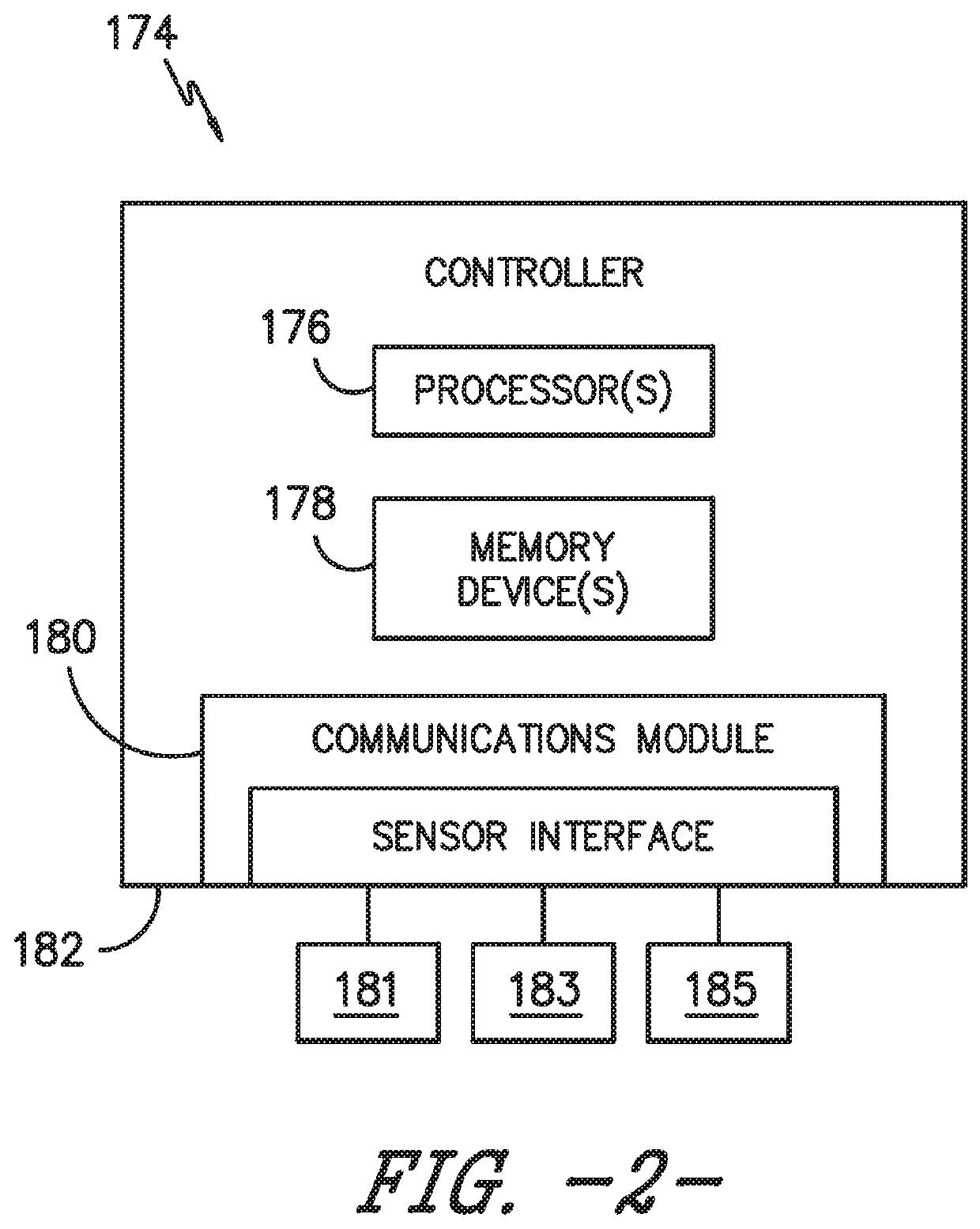
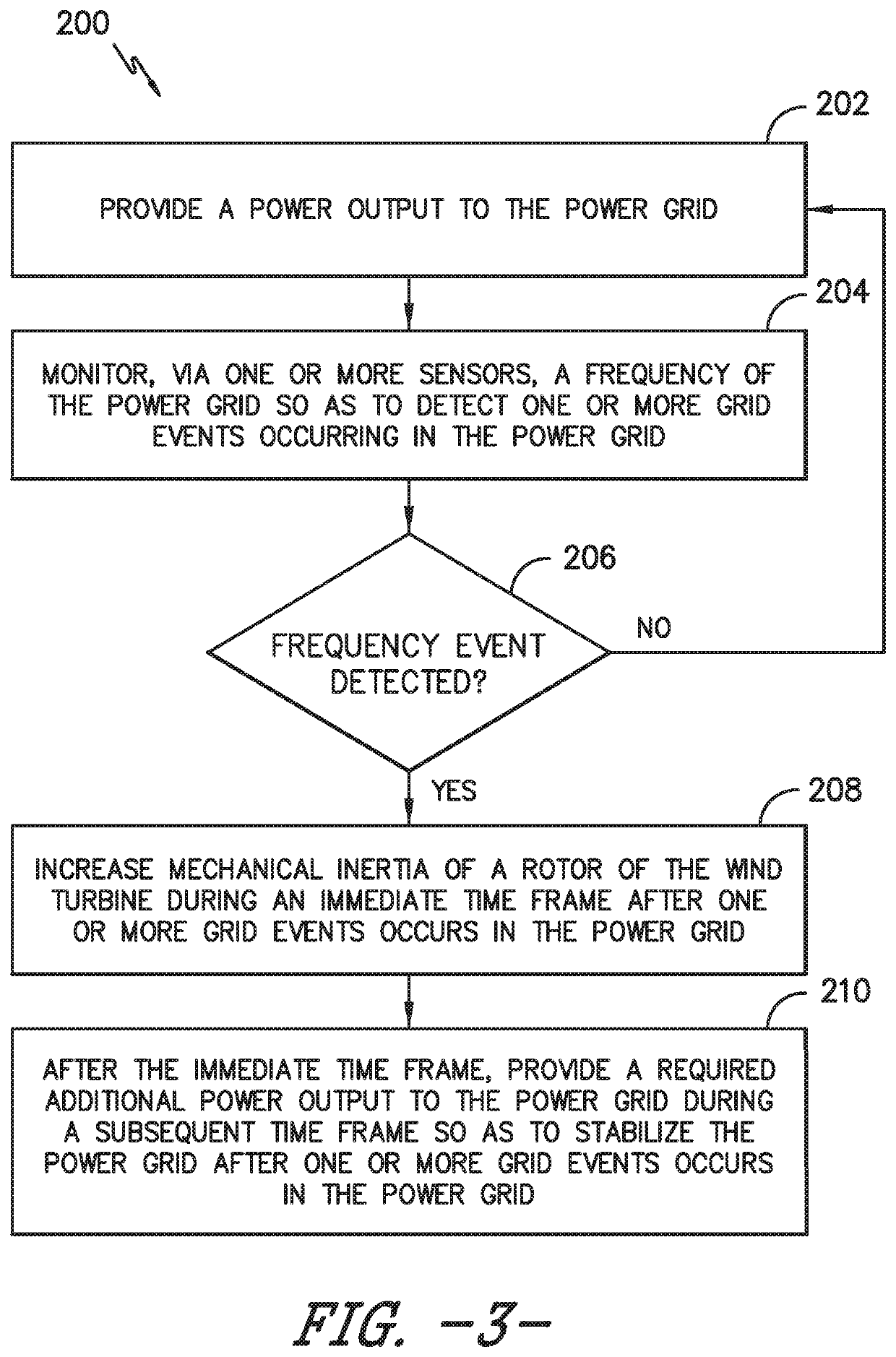
System and Method for Increasing Mechanical Inertia of Wind Turbine Rotor to Support Grid During Frequency Event
PatentActiveUS20200072194A1
Innovation
- A method and system that monitor grid frequency events, increase the mechanical inertia of the wind turbine rotor by adjusting its speed and torque immediately after an event, and provide additional power output to stabilize the grid within specific time frames.

Grid Code Compliance and Regulatory Requirements
Grid code compliance represents a fundamental pillar for enhancing wind turbine grid reliability, establishing the technical and operational standards that wind energy systems must meet to ensure stable grid integration. These regulatory frameworks define specific requirements for voltage regulation, frequency response, power quality, and fault ride-through capabilities that directly impact overall system reliability.
Modern grid codes have evolved significantly to address the increasing penetration of renewable energy sources. Key compliance areas include low voltage ride-through (LVRT) capabilities, which require wind turbines to remain connected during grid disturbances rather than disconnecting, thereby preventing cascading failures. Power factor requirements mandate wind farms to provide reactive power support, enhancing voltage stability across transmission networks.
Frequency response obligations have become increasingly stringent, requiring wind turbines to participate in primary frequency control through rapid power output adjustments. These requirements ensure that wind energy systems contribute to grid stability rather than merely consuming grid services, fundamentally improving overall reliability metrics.
Regional variations in grid codes present significant challenges for wind turbine manufacturers and operators. European grid codes emphasize fault ride-through capabilities and reactive power provision, while North American standards focus heavily on frequency response and power quality metrics. Asian markets are rapidly developing comprehensive frameworks that combine elements from both approaches while addressing unique regional grid characteristics.
Compliance verification processes require extensive testing and certification procedures, including both laboratory testing and field validation. These requirements ensure that wind turbines perform reliably under various grid conditions, from normal operations to extreme disturbance scenarios. Continuous monitoring and reporting obligations maintain ongoing compliance throughout operational lifecycles.
The regulatory landscape continues evolving toward more sophisticated requirements, including synthetic inertia provision, advanced grid support functions, and cybersecurity standards. These emerging requirements reflect the growing recognition that wind energy systems must actively contribute to grid reliability rather than simply generating clean electricity, establishing a foundation for enhanced overall system performance.
Modern grid codes have evolved significantly to address the increasing penetration of renewable energy sources. Key compliance areas include low voltage ride-through (LVRT) capabilities, which require wind turbines to remain connected during grid disturbances rather than disconnecting, thereby preventing cascading failures. Power factor requirements mandate wind farms to provide reactive power support, enhancing voltage stability across transmission networks.
Frequency response obligations have become increasingly stringent, requiring wind turbines to participate in primary frequency control through rapid power output adjustments. These requirements ensure that wind energy systems contribute to grid stability rather than merely consuming grid services, fundamentally improving overall reliability metrics.
Regional variations in grid codes present significant challenges for wind turbine manufacturers and operators. European grid codes emphasize fault ride-through capabilities and reactive power provision, while North American standards focus heavily on frequency response and power quality metrics. Asian markets are rapidly developing comprehensive frameworks that combine elements from both approaches while addressing unique regional grid characteristics.
Compliance verification processes require extensive testing and certification procedures, including both laboratory testing and field validation. These requirements ensure that wind turbines perform reliably under various grid conditions, from normal operations to extreme disturbance scenarios. Continuous monitoring and reporting obligations maintain ongoing compliance throughout operational lifecycles.
The regulatory landscape continues evolving toward more sophisticated requirements, including synthetic inertia provision, advanced grid support functions, and cybersecurity standards. These emerging requirements reflect the growing recognition that wind energy systems must actively contribute to grid reliability rather than simply generating clean electricity, establishing a foundation for enhanced overall system performance.
Environmental Impact Assessment of Grid Reliability Measures
The implementation of grid reliability enhancement measures for wind turbines necessitates comprehensive environmental impact assessment to ensure sustainable energy development. These measures, while improving system stability and performance, can introduce various environmental considerations that require careful evaluation and mitigation strategies.
Energy storage systems, particularly large-scale battery installations, present significant environmental implications throughout their lifecycle. The extraction of lithium, cobalt, and rare earth materials for battery production generates substantial ecological footprints, including habitat disruption and water contamination. Additionally, the manufacturing processes contribute to carbon emissions, potentially offsetting some renewable energy benefits. End-of-life battery disposal poses long-term environmental challenges, requiring robust recycling infrastructure and proper hazardous material management protocols.
Grid infrastructure upgrades, including transmission line reinforcement and smart grid technologies, involve extensive construction activities that can impact local ecosystems. Expanded transmission corridors may fragment wildlife habitats and affect migratory patterns, particularly for avian species already vulnerable to wind turbine operations. Electromagnetic field emissions from enhanced grid components require assessment for potential effects on sensitive wildlife populations and nearby communities.
Advanced forecasting systems and grid management technologies, while improving operational efficiency, increase the overall energy consumption of wind farm operations through enhanced computing requirements and data processing centers. The carbon footprint of these digital infrastructure components must be weighed against their reliability benefits to ensure net positive environmental outcomes.
Predictive maintenance technologies utilizing sensors and monitoring equipment introduce additional electronic waste streams and require consideration of material sourcing and disposal practices. However, these systems can significantly reduce unplanned maintenance activities, thereby minimizing transportation-related emissions and extending turbine operational lifespans.
The cumulative environmental impact of reliability measures must be evaluated against baseline wind energy environmental benefits. Life cycle assessments should encompass manufacturing, installation, operation, and decommissioning phases to provide comprehensive environmental impact quantification. Mitigation strategies, including habitat restoration programs, wildlife protection protocols, and circular economy approaches for equipment recycling, are essential components of responsible grid reliability enhancement initiatives.
Energy storage systems, particularly large-scale battery installations, present significant environmental implications throughout their lifecycle. The extraction of lithium, cobalt, and rare earth materials for battery production generates substantial ecological footprints, including habitat disruption and water contamination. Additionally, the manufacturing processes contribute to carbon emissions, potentially offsetting some renewable energy benefits. End-of-life battery disposal poses long-term environmental challenges, requiring robust recycling infrastructure and proper hazardous material management protocols.
Grid infrastructure upgrades, including transmission line reinforcement and smart grid technologies, involve extensive construction activities that can impact local ecosystems. Expanded transmission corridors may fragment wildlife habitats and affect migratory patterns, particularly for avian species already vulnerable to wind turbine operations. Electromagnetic field emissions from enhanced grid components require assessment for potential effects on sensitive wildlife populations and nearby communities.
Advanced forecasting systems and grid management technologies, while improving operational efficiency, increase the overall energy consumption of wind farm operations through enhanced computing requirements and data processing centers. The carbon footprint of these digital infrastructure components must be weighed against their reliability benefits to ensure net positive environmental outcomes.
Predictive maintenance technologies utilizing sensors and monitoring equipment introduce additional electronic waste streams and require consideration of material sourcing and disposal practices. However, these systems can significantly reduce unplanned maintenance activities, thereby minimizing transportation-related emissions and extending turbine operational lifespans.
The cumulative environmental impact of reliability measures must be evaluated against baseline wind energy environmental benefits. Life cycle assessments should encompass manufacturing, installation, operation, and decommissioning phases to provide comprehensive environmental impact quantification. Mitigation strategies, including habitat restoration programs, wildlife protection protocols, and circular economy approaches for equipment recycling, are essential components of responsible grid reliability enhancement initiatives.
Unlock deeper insights with PatSnap Eureka Quick Research — get a full tech report to explore trends and direct your research. Try now!
Generate Your Research Report Instantly with AI Agent
Supercharge your innovation with PatSnap Eureka AI Agent Platform!