How to Innovate Material Science Using Fluoroantimonic Acid?
JUN 23, 20259 MIN READ
Generate Your Research Report Instantly with AI Agent
Patsnap Eureka helps you evaluate technical feasibility & market potential.
Fluoroantimonic Acid: Background and Objectives
Fluoroantimonic acid, a superacid composed of a mixture of hydrogen fluoride (HF) and antimony pentafluoride (SbF5), stands at the forefront of material science innovation. This powerful compound, with its exceptional acidity and unique chemical properties, has been a subject of intense research and development since its discovery in the mid-20th century.
The evolution of fluoroantimonic acid technology has been closely tied to advancements in industrial chemistry and materials processing. Initially developed as a theoretical concept, it quickly gained practical significance due to its unparalleled ability to protonate even the weakest bases. This characteristic has opened up new possibilities in various fields, including catalysis, organic synthesis, and materials modification.
The primary objective in exploring fluoroantimonic acid's potential in material science innovation is to harness its extreme acidity for novel applications. Researchers aim to utilize its protonating power to manipulate molecular structures in ways previously thought impossible, potentially leading to the creation of new materials with extraordinary properties.
One of the key goals in this field is to develop safer and more controlled methods for handling and applying fluoroantimonic acid. Given its highly corrosive nature and reactivity, significant efforts are being made to create containment systems and application techniques that maximize its benefits while minimizing risks to researchers and the environment.
Another crucial objective is to expand the range of materials that can be processed or synthesized using fluoroantimonic acid. This includes exploring its potential in nanotechnology, where its ability to interact with materials at the molecular level could lead to breakthroughs in nanostructure fabrication and modification.
The technology trend in fluoroantimonic acid research is moving towards more precise and targeted applications. Scientists are investigating ways to fine-tune its acidity and reactivity for specific material science challenges, such as creating super-hydrophobic surfaces, developing new catalysts for petrochemical processes, or synthesizing novel polymers with unique properties.
As material science continues to push boundaries, fluoroantimonic acid represents a powerful tool with the potential to drive innovation across multiple sectors. From enhancing the efficiency of fuel cells to enabling the creation of advanced composite materials, the applications of this superacid are diverse and promising. The ongoing research aims not only to unlock new capabilities but also to address the practical challenges of working with such a potent substance, paving the way for its broader adoption in industrial and research settings.
The evolution of fluoroantimonic acid technology has been closely tied to advancements in industrial chemistry and materials processing. Initially developed as a theoretical concept, it quickly gained practical significance due to its unparalleled ability to protonate even the weakest bases. This characteristic has opened up new possibilities in various fields, including catalysis, organic synthesis, and materials modification.
The primary objective in exploring fluoroantimonic acid's potential in material science innovation is to harness its extreme acidity for novel applications. Researchers aim to utilize its protonating power to manipulate molecular structures in ways previously thought impossible, potentially leading to the creation of new materials with extraordinary properties.
One of the key goals in this field is to develop safer and more controlled methods for handling and applying fluoroantimonic acid. Given its highly corrosive nature and reactivity, significant efforts are being made to create containment systems and application techniques that maximize its benefits while minimizing risks to researchers and the environment.
Another crucial objective is to expand the range of materials that can be processed or synthesized using fluoroantimonic acid. This includes exploring its potential in nanotechnology, where its ability to interact with materials at the molecular level could lead to breakthroughs in nanostructure fabrication and modification.
The technology trend in fluoroantimonic acid research is moving towards more precise and targeted applications. Scientists are investigating ways to fine-tune its acidity and reactivity for specific material science challenges, such as creating super-hydrophobic surfaces, developing new catalysts for petrochemical processes, or synthesizing novel polymers with unique properties.
As material science continues to push boundaries, fluoroantimonic acid represents a powerful tool with the potential to drive innovation across multiple sectors. From enhancing the efficiency of fuel cells to enabling the creation of advanced composite materials, the applications of this superacid are diverse and promising. The ongoing research aims not only to unlock new capabilities but also to address the practical challenges of working with such a potent substance, paving the way for its broader adoption in industrial and research settings.
Market Analysis for Superacid Applications
The market for superacid applications, particularly those involving fluoroantimonic acid, has shown significant growth potential in recent years. This powerful superacid, known for its extreme acidity and unique chemical properties, has found increasing use across various industries, driving innovation in material science and chemical processes.
In the petrochemical sector, fluoroantimonic acid has become a crucial catalyst for alkylation reactions, enhancing the production of high-octane gasoline components. This application has led to improved fuel efficiency and reduced emissions, aligning with global environmental regulations. The demand for such catalysts is expected to rise as the automotive industry continues to seek cleaner fuel solutions.
The electronics industry has also embraced fluoroantimonic acid for its ability to etch and clean semiconductor materials. As the demand for smaller, more powerful electronic devices grows, the need for precise etching agents becomes paramount. This has opened up new market opportunities for superacid applications in the production of microchips and advanced electronic components.
In the field of materials science, fluoroantimonic acid has shown promise in the synthesis of novel polymers and advanced materials. Its extreme acidity allows for unique chemical reactions that were previously unattainable, leading to the development of materials with enhanced properties such as improved strength, heat resistance, or conductivity. This has attracted significant interest from aerospace, automotive, and consumer electronics manufacturers looking to innovate their product offerings.
The pharmaceutical industry has begun exploring the potential of fluoroantimonic acid in drug synthesis and purification processes. Its ability to catalyze certain reactions under milder conditions could lead to more efficient and cost-effective production methods for complex pharmaceutical compounds. This emerging application represents a potentially lucrative market segment for superacid producers.
Despite its promising applications, the market for fluoroantimonic acid faces challenges related to safety concerns and handling difficulties. The extreme corrosiveness of the acid requires specialized equipment and stringent safety protocols, which can increase production costs and limit widespread adoption. However, ongoing research into safer handling methods and the development of more stable superacid formulations could help overcome these barriers and expand market opportunities.
In the petrochemical sector, fluoroantimonic acid has become a crucial catalyst for alkylation reactions, enhancing the production of high-octane gasoline components. This application has led to improved fuel efficiency and reduced emissions, aligning with global environmental regulations. The demand for such catalysts is expected to rise as the automotive industry continues to seek cleaner fuel solutions.
The electronics industry has also embraced fluoroantimonic acid for its ability to etch and clean semiconductor materials. As the demand for smaller, more powerful electronic devices grows, the need for precise etching agents becomes paramount. This has opened up new market opportunities for superacid applications in the production of microchips and advanced electronic components.
In the field of materials science, fluoroantimonic acid has shown promise in the synthesis of novel polymers and advanced materials. Its extreme acidity allows for unique chemical reactions that were previously unattainable, leading to the development of materials with enhanced properties such as improved strength, heat resistance, or conductivity. This has attracted significant interest from aerospace, automotive, and consumer electronics manufacturers looking to innovate their product offerings.
The pharmaceutical industry has begun exploring the potential of fluoroantimonic acid in drug synthesis and purification processes. Its ability to catalyze certain reactions under milder conditions could lead to more efficient and cost-effective production methods for complex pharmaceutical compounds. This emerging application represents a potentially lucrative market segment for superacid producers.
Despite its promising applications, the market for fluoroantimonic acid faces challenges related to safety concerns and handling difficulties. The extreme corrosiveness of the acid requires specialized equipment and stringent safety protocols, which can increase production costs and limit widespread adoption. However, ongoing research into safer handling methods and the development of more stable superacid formulations could help overcome these barriers and expand market opportunities.
Current State and Challenges in Superacid Research
Superacid research has made significant strides in recent years, with fluoroantimonic acid (HSbF6) at the forefront of innovation. This powerful superacid, composed of a mixture of hydrogen fluoride (HF) and antimony pentafluoride (SbF5), has garnered attention for its exceptional acidity and potential applications in material science.
The current state of superacid research is characterized by intensive efforts to understand and harness the unique properties of these compounds. Fluoroantimonic acid, in particular, has been the subject of numerous studies due to its classification as the strongest known superacid. Its ability to protonate even extremely weak bases has opened up new possibilities in chemical synthesis and materials processing.
One of the primary challenges in superacid research is the development of safe handling and containment methods. The extreme reactivity of fluoroantimonic acid necessitates specialized equipment and protocols to prevent corrosion and ensure researcher safety. This has led to innovations in materials science, with the creation of new fluoropolymers and composite materials capable of withstanding superacidic environments.
Another significant challenge lies in the scalability of superacid-based processes. While laboratory-scale experiments have demonstrated the potential of fluoroantimonic acid in various applications, translating these findings to industrial-scale production remains a hurdle. Researchers are actively working on developing reactor designs and process engineering solutions to overcome these limitations.
The exploration of novel applications for superacids in material science is an ongoing area of research. Recent studies have shown promising results in using fluoroantimonic acid for the synthesis of advanced materials, such as nanostructured carbons and high-performance polymers. However, controlling the reaction conditions and achieving precise molecular structures remain challenging.
Environmental concerns also pose a significant challenge in superacid research. The potential ecological impact of these highly reactive compounds has led to increased focus on developing more environmentally friendly alternatives or finding ways to mitigate their environmental footprint. This has spurred research into green chemistry approaches and the development of recyclable superacid systems.
In the field of catalysis, superacids like fluoroantimonic acid have shown great promise. However, challenges persist in optimizing catalyst selectivity and longevity under extreme acidic conditions. Researchers are exploring novel support materials and catalyst designs to enhance the efficiency and durability of superacid-based catalytic systems.
The current state of superacid research is characterized by intensive efforts to understand and harness the unique properties of these compounds. Fluoroantimonic acid, in particular, has been the subject of numerous studies due to its classification as the strongest known superacid. Its ability to protonate even extremely weak bases has opened up new possibilities in chemical synthesis and materials processing.
One of the primary challenges in superacid research is the development of safe handling and containment methods. The extreme reactivity of fluoroantimonic acid necessitates specialized equipment and protocols to prevent corrosion and ensure researcher safety. This has led to innovations in materials science, with the creation of new fluoropolymers and composite materials capable of withstanding superacidic environments.
Another significant challenge lies in the scalability of superacid-based processes. While laboratory-scale experiments have demonstrated the potential of fluoroantimonic acid in various applications, translating these findings to industrial-scale production remains a hurdle. Researchers are actively working on developing reactor designs and process engineering solutions to overcome these limitations.
The exploration of novel applications for superacids in material science is an ongoing area of research. Recent studies have shown promising results in using fluoroantimonic acid for the synthesis of advanced materials, such as nanostructured carbons and high-performance polymers. However, controlling the reaction conditions and achieving precise molecular structures remain challenging.
Environmental concerns also pose a significant challenge in superacid research. The potential ecological impact of these highly reactive compounds has led to increased focus on developing more environmentally friendly alternatives or finding ways to mitigate their environmental footprint. This has spurred research into green chemistry approaches and the development of recyclable superacid systems.
In the field of catalysis, superacids like fluoroantimonic acid have shown great promise. However, challenges persist in optimizing catalyst selectivity and longevity under extreme acidic conditions. Researchers are exploring novel support materials and catalyst designs to enhance the efficiency and durability of superacid-based catalytic systems.
Existing Applications of Fluoroantimonic Acid
01 Synthesis and production of fluoroantimonic acid
Fluoroantimonic acid is synthesized through the reaction of hydrogen fluoride and antimony pentafluoride. The production process involves careful handling of highly reactive and corrosive materials under controlled conditions. Specialized equipment and safety measures are required due to the extreme acidity and reactivity of the compound.- Synthesis and preparation methods: Various methods for synthesizing and preparing fluoroantimonic acid are described. These methods may involve the reaction of hydrogen fluoride with antimony pentafluoride or other precursors under specific conditions. The synthesis process often requires careful control of temperature, pressure, and reactant ratios to achieve the desired product.
- Applications in catalysis: Fluoroantimonic acid is utilized as a powerful catalyst in various chemical reactions. Its superacidic properties make it effective for promoting reactions such as isomerization, alkylation, and polymerization. The acid's catalytic activity is particularly useful in the petrochemical industry and in the synthesis of specialty chemicals.
- Material compatibility and handling: Due to its highly corrosive nature, special considerations are required for the handling and storage of fluoroantimonic acid. Materials resistant to its corrosive effects, such as certain fluoropolymers or specially treated metals, are used for containment and processing equipment. Safety protocols and specialized handling techniques are essential when working with this superacid.
- Analytical and characterization techniques: Various analytical methods are employed to characterize fluoroantimonic acid and its reactions. These may include spectroscopic techniques, such as NMR and IR spectroscopy, as well as electrochemical methods. The characterization of fluoroantimonic acid and its complexes is crucial for understanding its properties and optimizing its use in different applications.
- Environmental and safety considerations: The use of fluoroantimonic acid requires strict environmental and safety measures due to its extreme reactivity and potential hazards. Proper disposal methods, containment strategies, and emergency response procedures are essential. Research into safer alternatives or modified forms of the acid with reduced environmental impact is ongoing.
02 Applications in organic synthesis and catalysis
Fluoroantimonic acid is utilized as a powerful superacid catalyst in various organic synthesis reactions. It facilitates alkylation, isomerization, and polymerization processes. The compound's extreme acidity enables it to catalyze reactions that are challenging or impossible with conventional acid catalysts.Expand Specific Solutions03 Use in materials science and surface treatment
Fluoroantimonic acid finds applications in materials science for surface treatment and modification of various substrates. It can be used to etch or activate surfaces, create specialized coatings, or modify the properties of materials such as polymers or metals.Expand Specific Solutions04 Safety considerations and handling procedures
Due to its extreme corrosiveness and reactivity, fluoroantimonic acid requires stringent safety measures and specialized handling procedures. This includes the use of appropriate personal protective equipment, containment systems, and neutralization protocols. Proper storage and disposal methods are crucial to prevent accidents and environmental contamination.Expand Specific Solutions05 Analytical and characterization techniques
Various analytical and characterization techniques are employed to study fluoroantimonic acid and its reactions. These may include spectroscopic methods, electrochemical analysis, and computational modeling. Such techniques help in understanding the compound's structure, properties, and behavior in different chemical environments.Expand Specific Solutions
Key Players in Fluoroantimonic Acid Research
The innovation landscape for using fluoroantimonic acid in material science is in its early stages, with significant potential for growth. The market size is relatively small but expanding as researchers explore novel applications. The technology's maturity varies across different sectors, with some companies leading the way. 3M Innovative Properties Co. and DuPont de Nemours, Inc. are at the forefront, leveraging their extensive R&D capabilities. Universities like Central South University and Nanjing University are contributing to fundamental research. Industrial players such as Toyota Motor Corp. and AGC, Inc. are exploring practical applications, while specialized firms like Hybrid Plastics, Inc. focus on niche developments. The US Air Force's involvement indicates potential defense applications, highlighting the technology's strategic importance.
3M Innovative Properties Co.
Technical Solution: 3M has developed a novel application of fluoroantimonic acid in the field of advanced adhesives and coatings. Their approach involves using the superacid as a surface activation agent for difficult-to-bond materials such as fluoropolymers and high-performance plastics. By carefully controlling the exposure of these materials to fluoroantimonic acid, 3M has created a process that dramatically enhances surface energy and allows for unprecedented bonding strength. Additionally, the company has developed a range of fluoroantimonic acid-resistant elastomers and sealants that can withstand extreme chemical environments, opening up new possibilities in industries such as chemical processing and aerospace.
Strengths: Enables bonding of previously incompatible materials, expanding design possibilities. Weaknesses: Process requires precise control and specialized safety measures.
AGC, Inc. (Japan)
Technical Solution: AGC has developed a groundbreaking method for using fluoroantimonic acid in the production of ultra-high purity glass for advanced optics and electronics. Their process involves using the superacid to remove trace impurities from raw materials and as an etching agent for creating nanoscale surface structures on glass. This results in glass with unprecedented optical clarity and surface properties. AGC has also engineered specialized glass compositions that are resistant to fluoroantimonic acid, allowing for the creation of containment vessels and reaction chambers for handling this extremely corrosive substance in industrial applications.
Strengths: Production of ultra-high purity materials for critical applications. Weaknesses: High energy consumption and stringent safety requirements in the manufacturing process.
Core Innovations in Superacid Chemistry
Method for regenerating basic anion-exchange resin
PatentInactiveUS7622608B2
Innovation
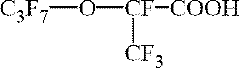
- A method involving contacting a basic anion-exchange resin with an aqueous alkaline solution at temperatures between 60 to 105°C to elute fluorinated emulsifiers, thereby regenerating the resin, which can be reused to adsorb fluorinated surfactants from various sources including aqueous dispersions and waste water, without the need for inflammable organic solvents.
Process to reduce the concentration of fluoroorganic acidic compounds in aqueous dispersions
PatentPendingUS20230312776A1
Innovation
- A process involving the formation of a mixture with a pH value of less than 6, using a dispersion of fluoroorganic polymer particles and a protic solvent, reacting the fluoroorganic acidic compounds with an alkylamine to form a hydrophobic ionic compound, and separating this compound from the mixture into distinct phases for efficient removal.



Safety and Environmental Considerations
Fluoroantimonic acid, known as the world's strongest superacid, presents significant safety and environmental challenges that must be carefully addressed in any material science innovation. The extreme corrosiveness and reactivity of this compound necessitate stringent handling protocols and specialized containment systems to prevent accidents and exposure.
Personal protective equipment (PPE) is crucial when working with fluoroantimonic acid. Researchers must wear fully encapsulating chemical-resistant suits, gloves, and face shields. Respiratory protection with supplied air or self-contained breathing apparatus is essential due to the acid's ability to produce toxic fumes. All work should be conducted in a fume hood with proper ventilation systems to prevent the accumulation of hazardous vapors.
Storage and transportation of fluoroantimonic acid require specially designed containers made of materials resistant to its corrosive properties, such as polytetrafluoroethylene (PTFE) or certain fluoropolymers. These containers must be sealed and stored in cool, dry areas away from incompatible substances. Emergency response plans and spill containment measures should be in place to address potential leaks or accidents.
Environmental considerations are paramount when using fluoroantimonic acid in material science research. The acid's extreme reactivity with water and most organic compounds poses a significant risk to ecosystems if released. Proper waste management and disposal procedures must be implemented to prevent environmental contamination. This includes neutralization of waste products and adherence to strict regulatory guidelines for hazardous waste disposal.
The potential for long-term environmental impacts must also be evaluated. Research into the degradation pathways and environmental fate of fluoroantimonic acid and its byproducts is essential to understand and mitigate any persistent effects on soil, water, or air quality. Monitoring systems should be established to detect any unintended releases and assess potential ecological consequences.
Occupational health monitoring is critical for personnel working with fluoroantimonic acid. Regular medical check-ups, including lung function tests and dermal examinations, should be conducted to detect any early signs of exposure or health effects. Training programs must be implemented to ensure all staff are aware of the hazards and proper handling procedures associated with this superacid.
Innovation in material science using fluoroantimonic acid must prioritize the development of safer handling techniques and more environmentally friendly alternatives. Research into less hazardous catalysts or reaction pathways that can achieve similar results should be encouraged. Additionally, exploring methods to reduce the quantity of acid required or to recycle it effectively can help minimize safety risks and environmental impact.
Personal protective equipment (PPE) is crucial when working with fluoroantimonic acid. Researchers must wear fully encapsulating chemical-resistant suits, gloves, and face shields. Respiratory protection with supplied air or self-contained breathing apparatus is essential due to the acid's ability to produce toxic fumes. All work should be conducted in a fume hood with proper ventilation systems to prevent the accumulation of hazardous vapors.
Storage and transportation of fluoroantimonic acid require specially designed containers made of materials resistant to its corrosive properties, such as polytetrafluoroethylene (PTFE) or certain fluoropolymers. These containers must be sealed and stored in cool, dry areas away from incompatible substances. Emergency response plans and spill containment measures should be in place to address potential leaks or accidents.
Environmental considerations are paramount when using fluoroantimonic acid in material science research. The acid's extreme reactivity with water and most organic compounds poses a significant risk to ecosystems if released. Proper waste management and disposal procedures must be implemented to prevent environmental contamination. This includes neutralization of waste products and adherence to strict regulatory guidelines for hazardous waste disposal.
The potential for long-term environmental impacts must also be evaluated. Research into the degradation pathways and environmental fate of fluoroantimonic acid and its byproducts is essential to understand and mitigate any persistent effects on soil, water, or air quality. Monitoring systems should be established to detect any unintended releases and assess potential ecological consequences.
Occupational health monitoring is critical for personnel working with fluoroantimonic acid. Regular medical check-ups, including lung function tests and dermal examinations, should be conducted to detect any early signs of exposure or health effects. Training programs must be implemented to ensure all staff are aware of the hazards and proper handling procedures associated with this superacid.
Innovation in material science using fluoroantimonic acid must prioritize the development of safer handling techniques and more environmentally friendly alternatives. Research into less hazardous catalysts or reaction pathways that can achieve similar results should be encouraged. Additionally, exploring methods to reduce the quantity of acid required or to recycle it effectively can help minimize safety risks and environmental impact.
Potential Industrial Applications
Fluoroantimonic acid, known as the world's strongest superacid, presents numerous potential industrial applications that could revolutionize material science. Its exceptional proton-donating ability and extreme acidity make it a powerful tool for various chemical processes and material modifications.
In the petrochemical industry, fluoroantimonic acid shows promise for enhancing catalytic cracking processes. Its strong acidic properties could potentially increase the efficiency of hydrocarbon conversion, leading to improved yields in fuel production and the synthesis of valuable chemical intermediates. This application could significantly impact the energy sector by optimizing resource utilization and reducing processing costs.
The semiconductor industry stands to benefit from fluoroantimonic acid's unique properties in etching and surface modification processes. Its ability to react with a wide range of materials, including traditionally resistant substances like silicon dioxide, opens up new possibilities for creating more intricate and precise microstructures in electronic components. This could lead to advancements in miniaturization and performance enhancement of electronic devices.
In the field of materials engineering, fluoroantimonic acid could be utilized to develop novel surface treatments for metals and alloys. Its extreme acidity could potentially create highly reactive surfaces, improving adhesion properties, corrosion resistance, and wear resistance. Such treatments could find applications in aerospace, automotive, and industrial machinery sectors, where material performance under extreme conditions is crucial.
The pharmaceutical industry might leverage fluoroantimonic acid for the synthesis of complex organic compounds. Its strong proton-donating ability could facilitate challenging chemical transformations, potentially enabling the creation of new drug molecules or improving the efficiency of existing synthetic routes. This could accelerate drug discovery processes and reduce production costs for certain pharmaceuticals.
In the realm of advanced materials, fluoroantimonic acid could play a role in the development of novel polymers and composites. Its ability to initiate polymerization reactions under unique conditions might lead to the creation of materials with unprecedented properties, such as extreme chemical resistance or enhanced mechanical strength. These materials could find applications in protective coatings, specialized containers, or high-performance components for various industries.
The waste management and environmental remediation sectors could potentially benefit from fluoroantimonic acid's powerful reactivity. It might be employed in the treatment of hazardous waste materials, breaking down persistent organic pollutants or neutralizing toxic substances. However, such applications would require careful handling and containment strategies due to the acid's extreme corrosiveness.
In the petrochemical industry, fluoroantimonic acid shows promise for enhancing catalytic cracking processes. Its strong acidic properties could potentially increase the efficiency of hydrocarbon conversion, leading to improved yields in fuel production and the synthesis of valuable chemical intermediates. This application could significantly impact the energy sector by optimizing resource utilization and reducing processing costs.
The semiconductor industry stands to benefit from fluoroantimonic acid's unique properties in etching and surface modification processes. Its ability to react with a wide range of materials, including traditionally resistant substances like silicon dioxide, opens up new possibilities for creating more intricate and precise microstructures in electronic components. This could lead to advancements in miniaturization and performance enhancement of electronic devices.
In the field of materials engineering, fluoroantimonic acid could be utilized to develop novel surface treatments for metals and alloys. Its extreme acidity could potentially create highly reactive surfaces, improving adhesion properties, corrosion resistance, and wear resistance. Such treatments could find applications in aerospace, automotive, and industrial machinery sectors, where material performance under extreme conditions is crucial.
The pharmaceutical industry might leverage fluoroantimonic acid for the synthesis of complex organic compounds. Its strong proton-donating ability could facilitate challenging chemical transformations, potentially enabling the creation of new drug molecules or improving the efficiency of existing synthetic routes. This could accelerate drug discovery processes and reduce production costs for certain pharmaceuticals.
In the realm of advanced materials, fluoroantimonic acid could play a role in the development of novel polymers and composites. Its ability to initiate polymerization reactions under unique conditions might lead to the creation of materials with unprecedented properties, such as extreme chemical resistance or enhanced mechanical strength. These materials could find applications in protective coatings, specialized containers, or high-performance components for various industries.
The waste management and environmental remediation sectors could potentially benefit from fluoroantimonic acid's powerful reactivity. It might be employed in the treatment of hazardous waste materials, breaking down persistent organic pollutants or neutralizing toxic substances. However, such applications would require careful handling and containment strategies due to the acid's extreme corrosiveness.
Unlock deeper insights with Patsnap Eureka Quick Research — get a full tech report to explore trends and direct your research. Try now!
Generate Your Research Report Instantly with AI Agent
Supercharge your innovation with Patsnap Eureka AI Agent Platform!