How to Inspect Progressive Cavity Pump Stator Condition
MAR 19, 20268 MIN READ
Generate Your Research Report Instantly with AI Agent
PatSnap Eureka helps you evaluate technical feasibility & market potential.
PCP Stator Inspection Technology Background and Goals
Progressive Cavity Pumps (PCPs) have emerged as critical components in artificial lift systems for oil and gas production, particularly in applications involving heavy crude oil, high sand content, and challenging downhole conditions. The stator, as one of the two primary components alongside the rotor, consists of a double-helix elastomer lining within a steel housing that forms cavities for fluid displacement. The integrity of this elastomer lining directly impacts pump performance, operational efficiency, and overall production economics.
The evolution of PCP technology dates back to the 1930s when René Moineau first patented the progressive cavity principle. However, widespread adoption in oilfield applications began in the 1980s as elastomer technology advanced and drilling techniques evolved to access unconventional reservoirs. Early PCP systems suffered from frequent stator failures due to limited understanding of elastomer degradation mechanisms and inadequate monitoring capabilities.
Traditional inspection methods have relied primarily on indirect performance indicators such as production decline, increased power consumption, and fluid analysis. These reactive approaches often result in costly workover operations and extended downtime. The industry has recognized the critical need for proactive stator condition monitoring to optimize maintenance schedules, prevent catastrophic failures, and maximize asset utilization.
Current technological objectives focus on developing non-invasive, real-time monitoring solutions that can accurately assess stator wear patterns, elastomer swelling, chemical degradation, and mechanical damage. Advanced inspection technologies aim to provide quantitative measurements of remaining stator life, enabling predictive maintenance strategies that minimize operational disruptions while maximizing equipment longevity.
The integration of digital technologies, including IoT sensors, machine learning algorithms, and advanced data analytics, represents the next frontier in PCP stator inspection. These innovations promise to transform reactive maintenance practices into predictive, condition-based approaches that optimize both technical performance and economic outcomes in artificial lift operations.
The evolution of PCP technology dates back to the 1930s when René Moineau first patented the progressive cavity principle. However, widespread adoption in oilfield applications began in the 1980s as elastomer technology advanced and drilling techniques evolved to access unconventional reservoirs. Early PCP systems suffered from frequent stator failures due to limited understanding of elastomer degradation mechanisms and inadequate monitoring capabilities.
Traditional inspection methods have relied primarily on indirect performance indicators such as production decline, increased power consumption, and fluid analysis. These reactive approaches often result in costly workover operations and extended downtime. The industry has recognized the critical need for proactive stator condition monitoring to optimize maintenance schedules, prevent catastrophic failures, and maximize asset utilization.
Current technological objectives focus on developing non-invasive, real-time monitoring solutions that can accurately assess stator wear patterns, elastomer swelling, chemical degradation, and mechanical damage. Advanced inspection technologies aim to provide quantitative measurements of remaining stator life, enabling predictive maintenance strategies that minimize operational disruptions while maximizing equipment longevity.
The integration of digital technologies, including IoT sensors, machine learning algorithms, and advanced data analytics, represents the next frontier in PCP stator inspection. These innovations promise to transform reactive maintenance practices into predictive, condition-based approaches that optimize both technical performance and economic outcomes in artificial lift operations.
Market Demand for PCP Stator Condition Monitoring
The global progressive cavity pump market has experienced substantial growth driven by increasing demand across oil and gas, wastewater treatment, and industrial processing sectors. This expansion has created a corresponding surge in demand for effective stator condition monitoring solutions, as operators seek to maximize equipment reliability and minimize unplanned downtime.
Oil and gas operations represent the largest market segment for PCP stator monitoring technologies. Artificial lift applications in unconventional reservoirs, particularly in shale formations, have intensified the need for continuous stator health assessment. The harsh operating conditions, including abrasive fluids and high temperatures, accelerate stator wear patterns, making predictive maintenance capabilities essential for maintaining production efficiency.
Municipal and industrial wastewater treatment facilities constitute another significant demand driver. These applications often involve pumping fluids containing suspended solids and corrosive chemicals that can rapidly degrade stator elastomers. Regulatory requirements for continuous operation and environmental compliance have heightened the importance of reliable condition monitoring systems that can detect deterioration before catastrophic failure occurs.
The mining and chemical processing industries have emerged as growing market segments for stator monitoring solutions. These sectors frequently handle highly abrasive slurries and corrosive chemicals that create challenging operating environments for PCP systems. The high cost of process interruptions and safety considerations have driven increased adoption of advanced monitoring technologies.
Market demand is increasingly shifting toward integrated monitoring solutions that combine multiple inspection methodologies. Operators are seeking systems that can provide real-time condition assessment rather than periodic offline inspections. This trend reflects the broader industrial movement toward digitalization and predictive maintenance strategies.
Geographic demand patterns show strong growth in North American shale regions, Middle Eastern oil fields, and emerging industrial markets in Asia-Pacific. The expansion of unconventional oil and gas development has created new applications requiring specialized monitoring approaches adapted to specific operational challenges.
The market is also responding to evolving regulatory frameworks that emphasize equipment reliability and environmental protection. These requirements are driving demand for more sophisticated monitoring capabilities that can provide early warning of potential failures and support compliance documentation requirements.
Oil and gas operations represent the largest market segment for PCP stator monitoring technologies. Artificial lift applications in unconventional reservoirs, particularly in shale formations, have intensified the need for continuous stator health assessment. The harsh operating conditions, including abrasive fluids and high temperatures, accelerate stator wear patterns, making predictive maintenance capabilities essential for maintaining production efficiency.
Municipal and industrial wastewater treatment facilities constitute another significant demand driver. These applications often involve pumping fluids containing suspended solids and corrosive chemicals that can rapidly degrade stator elastomers. Regulatory requirements for continuous operation and environmental compliance have heightened the importance of reliable condition monitoring systems that can detect deterioration before catastrophic failure occurs.
The mining and chemical processing industries have emerged as growing market segments for stator monitoring solutions. These sectors frequently handle highly abrasive slurries and corrosive chemicals that create challenging operating environments for PCP systems. The high cost of process interruptions and safety considerations have driven increased adoption of advanced monitoring technologies.
Market demand is increasingly shifting toward integrated monitoring solutions that combine multiple inspection methodologies. Operators are seeking systems that can provide real-time condition assessment rather than periodic offline inspections. This trend reflects the broader industrial movement toward digitalization and predictive maintenance strategies.
Geographic demand patterns show strong growth in North American shale regions, Middle Eastern oil fields, and emerging industrial markets in Asia-Pacific. The expansion of unconventional oil and gas development has created new applications requiring specialized monitoring approaches adapted to specific operational challenges.
The market is also responding to evolving regulatory frameworks that emphasize equipment reliability and environmental protection. These requirements are driving demand for more sophisticated monitoring capabilities that can provide early warning of potential failures and support compliance documentation requirements.
Current State and Challenges in Stator Inspection Methods
Progressive cavity pump stator inspection currently relies on several established methodologies, each presenting distinct advantages and limitations. Visual inspection remains the most fundamental approach, involving direct examination of the stator's elastomeric lining for signs of wear, cracking, or deformation. This method requires pump disassembly and provides comprehensive surface assessment but is time-intensive and results in significant operational downtime.
Dimensional measurement techniques using specialized gauges and coordinate measuring machines offer quantitative assessment of stator geometry. These methods can detect dimensional changes and wear patterns with high precision, enabling comparison against original specifications. However, they require complete pump dismantling and skilled technicians to interpret results accurately.
Non-destructive testing methods have gained prominence in recent years. Ultrasonic testing can detect internal defects and measure remaining wall thickness without complete disassembly. Magnetic particle inspection helps identify surface and near-surface discontinuities in metallic components. These approaches reduce downtime but may not capture all types of stator degradation, particularly in complex geometries.
The primary challenge facing current inspection methods is the balance between inspection thoroughness and operational efficiency. Traditional approaches requiring complete disassembly result in extended downtime, directly impacting production schedules and operational costs. This creates pressure to extend inspection intervals, potentially leading to unexpected failures and more severe damage.
Accessibility represents another significant constraint. Many progressive cavity pumps operate in challenging environments where complete disassembly is difficult or hazardous. Offshore installations, underground mining operations, and chemical processing facilities present logistical challenges that complicate traditional inspection procedures.
Interpretation of inspection results poses additional difficulties. Stator condition assessment often relies on subjective visual evaluation, leading to inconsistent decision-making regarding replacement timing. The lack of standardized criteria for determining acceptable wear levels results in either premature replacements or extended operation beyond optimal performance parameters.
Emerging technologies show promise but face implementation barriers. In-situ inspection methods using advanced sensors and imaging systems could revolutionize stator monitoring by enabling continuous condition assessment without disassembly. However, these technologies require significant capital investment and specialized expertise for effective deployment and data interpretation.
Dimensional measurement techniques using specialized gauges and coordinate measuring machines offer quantitative assessment of stator geometry. These methods can detect dimensional changes and wear patterns with high precision, enabling comparison against original specifications. However, they require complete pump dismantling and skilled technicians to interpret results accurately.
Non-destructive testing methods have gained prominence in recent years. Ultrasonic testing can detect internal defects and measure remaining wall thickness without complete disassembly. Magnetic particle inspection helps identify surface and near-surface discontinuities in metallic components. These approaches reduce downtime but may not capture all types of stator degradation, particularly in complex geometries.
The primary challenge facing current inspection methods is the balance between inspection thoroughness and operational efficiency. Traditional approaches requiring complete disassembly result in extended downtime, directly impacting production schedules and operational costs. This creates pressure to extend inspection intervals, potentially leading to unexpected failures and more severe damage.
Accessibility represents another significant constraint. Many progressive cavity pumps operate in challenging environments where complete disassembly is difficult or hazardous. Offshore installations, underground mining operations, and chemical processing facilities present logistical challenges that complicate traditional inspection procedures.
Interpretation of inspection results poses additional difficulties. Stator condition assessment often relies on subjective visual evaluation, leading to inconsistent decision-making regarding replacement timing. The lack of standardized criteria for determining acceptable wear levels results in either premature replacements or extended operation beyond optimal performance parameters.
Emerging technologies show promise but face implementation barriers. In-situ inspection methods using advanced sensors and imaging systems could revolutionize stator monitoring by enabling continuous condition assessment without disassembly. However, these technologies require significant capital investment and specialized expertise for effective deployment and data interpretation.
Existing Stator Condition Assessment Solutions
01 Monitoring and detecting stator wear conditions
Methods and systems for monitoring the condition of progressive cavity pump stators involve detecting wear patterns, degradation, and damage through various sensing techniques. These approaches enable early identification of stator deterioration, allowing for timely maintenance and replacement. Monitoring can include measuring dimensional changes, surface conditions, and operational parameters that indicate stator health.- Monitoring and detection methods for stator wear: Various monitoring techniques can be employed to assess the condition of progressive cavity pump stators, including sensors that detect changes in pressure, vibration, temperature, or acoustic signals. These methods enable real-time or periodic assessment of stator degradation, allowing for predictive maintenance and prevention of catastrophic failures. Advanced detection systems may incorporate data analysis algorithms to identify wear patterns and predict remaining service life.
- Stator material composition and design improvements: The stator condition can be enhanced through the use of specialized elastomeric materials and composite formulations that provide improved wear resistance, chemical resistance, and temperature stability. Design modifications including optimized geometry, reinforcement layers, and surface treatments can extend stator service life. Material selection considerations include hardness, resilience, and compatibility with pumped fluids.
- Stator replacement and refurbishment techniques: Methods for replacing or refurbishing worn stators include procedures for removing degraded stators from pump housings, preparing surfaces for new installations, and installing replacement stators with proper interference fits. Refurbishment techniques may involve relining existing stator housings with new elastomeric materials or applying protective coatings to extend service life. These approaches can reduce downtime and maintenance costs.
- Assessment of stator-rotor interference and fit: The interference fit between the stator and rotor is critical for pump performance and stator longevity. Methods for evaluating this relationship include measuring dimensional changes, assessing contact patterns, and monitoring performance parameters such as flow rate and pressure. Proper interference ensures adequate sealing while minimizing excessive wear. Techniques for optimizing fit conditions during installation and operation can significantly impact stator service life.
- Predictive maintenance and service life estimation: Predictive maintenance strategies utilize historical data, operational parameters, and condition monitoring information to estimate remaining stator service life and optimize replacement schedules. These approaches may incorporate machine learning algorithms, statistical models, or physics-based simulations to forecast stator degradation. Implementation of predictive maintenance programs can reduce unplanned downtime, optimize inventory management, and lower overall maintenance costs.
02 Stator material composition and construction
The stator condition is influenced by the materials used in its construction, including elastomeric compounds and reinforcement structures. Advanced material formulations enhance durability, chemical resistance, and temperature tolerance. Specific construction techniques and material selections can significantly extend stator service life and improve performance under demanding operating conditions.Expand Specific Solutions03 Predictive maintenance and condition assessment
Predictive maintenance strategies utilize data analysis, operational history, and performance metrics to assess stator condition and predict remaining useful life. These methods incorporate algorithms and models that process operational data to forecast when stator replacement or maintenance will be required, optimizing maintenance schedules and reducing unplanned downtime.Expand Specific Solutions04 Stator geometry and interference fit optimization
The condition and performance of progressive cavity pump stators depend on proper geometric design and interference fit between the stator and rotor. Optimization of stator profile, pitch, and dimensional tolerances ensures appropriate sealing and minimizes premature wear. Design considerations account for thermal expansion, fluid properties, and operating pressures to maintain optimal stator condition throughout its service life.Expand Specific Solutions05 Stator replacement and refurbishment techniques
Methods for replacing and refurbishing worn stators include techniques for removing deteriorated elastomer linings, preparing stator housings, and installing new elastomeric elements. Refurbishment processes can restore stator functionality at lower cost than complete replacement. These techniques address various failure modes and enable extended use of stator housings while replacing only the worn components.Expand Specific Solutions
Key Players in PCP Inspection Equipment Industry
The progressive cavity pump stator inspection market represents a mature segment within the broader oilfield services industry, driven by the critical need for artificial lift system reliability in oil and gas operations. The market demonstrates steady growth as operators increasingly prioritize equipment monitoring to minimize downtime and optimize production efficiency. Technology maturity varies significantly across market participants, with established oilfield service giants like Baker Hughes, NOV Inc., Schlumberger entities, and Halliburton Energy Services leading advanced inspection solutions through sophisticated downhole monitoring and diagnostic technologies. Specialized pump manufacturers including Seepex GmbH and NETZSCH Pumpen & Systeme contribute domain-specific expertise, while companies like Geo Pressure Systems offer innovative real-time monitoring capabilities. The competitive landscape shows consolidation around integrated service providers who combine traditional inspection methods with emerging digital technologies, positioning the market in a transitional phase toward more automated, data-driven condition monitoring approaches.
Baker Hughes Co.
Technical Solution: Baker Hughes employs advanced downhole monitoring systems integrated with progressive cavity pump operations, utilizing real-time data acquisition through embedded sensors that monitor stator wear patterns, temperature variations, and fluid dynamics. Their inspection methodology combines electromagnetic flux leakage detection with ultrasonic thickness measurements to assess stator elastomer condition. The company's digital twin technology creates virtual models of stator performance, enabling predictive maintenance scheduling based on operational parameters such as torque variations, pump efficiency curves, and fluid production rates. Their inspection protocols include surface-based diagnostic tools that analyze pump cards and motor current signatures to identify stator degradation patterns without requiring pump retrieval.
Strengths: Comprehensive digital monitoring capabilities with real-time data analytics and established oilfield service network. Weaknesses: High implementation costs and dependency on complex digital infrastructure.
NOV, Inc.
Technical Solution: NOV has developed comprehensive stator inspection solutions that integrate mechanical assessment techniques with digital monitoring capabilities for progressive cavity pump systems. Their inspection methodology includes specialized downhole tools designed to measure stator cavity wear, elastomer condition, and geometric deformation patterns. The company utilizes advanced surface monitoring systems that analyze pump performance characteristics including flow rates, pressure differentials, and power consumption to assess stator health. Their inspection protocol incorporates electromagnetic testing methods combined with ultrasonic measurement techniques to evaluate elastomer integrity and detect potential failure points. NOV's digital platform processes operational data to create predictive maintenance recommendations, optimizing stator replacement intervals based on actual wear patterns and operating conditions rather than predetermined schedules.
Strengths: Comprehensive mechanical inspection tools with integrated digital monitoring and strong manufacturing expertise in pump components. Weaknesses: Limited advanced analytics capabilities compared to major service companies and higher dependency on manual inspection processes.
Core Technologies in Non-Destructive Stator Evaluation
Guided laser inspection and analysis system and method for a progressive cavity pump or motor rotor
PatentInactiveUS20210095954A1
Innovation
- A guided laser inspection and analysis system that rotates and moves along the pump rotor to determine distances from various surfaces relative to a datum, allowing for precise measurement of cross-sectional shapes and longitudinal alignment, optimizing the fit between rotor and stator for improved performance.


Progressive cavity pump/motor
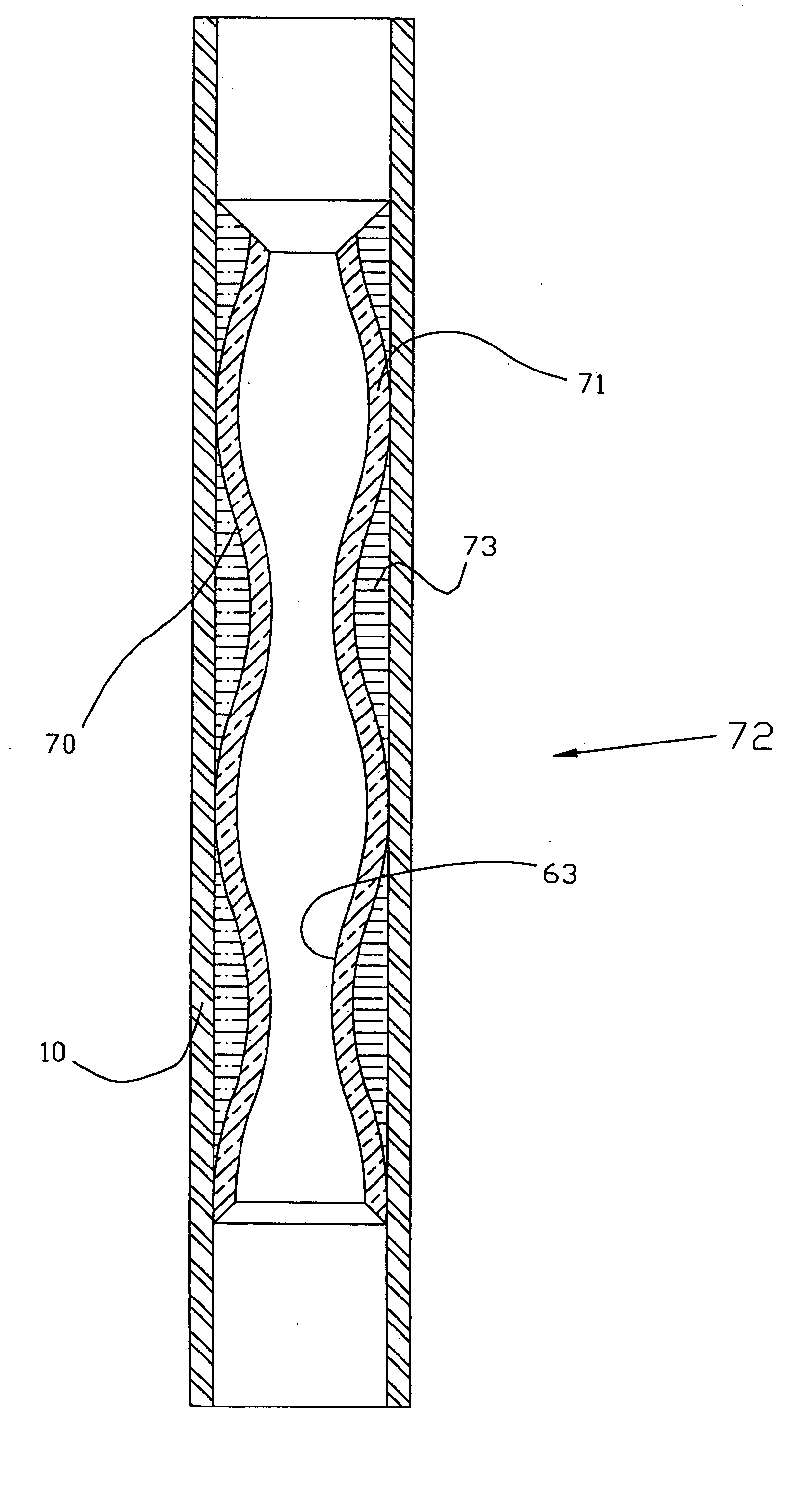
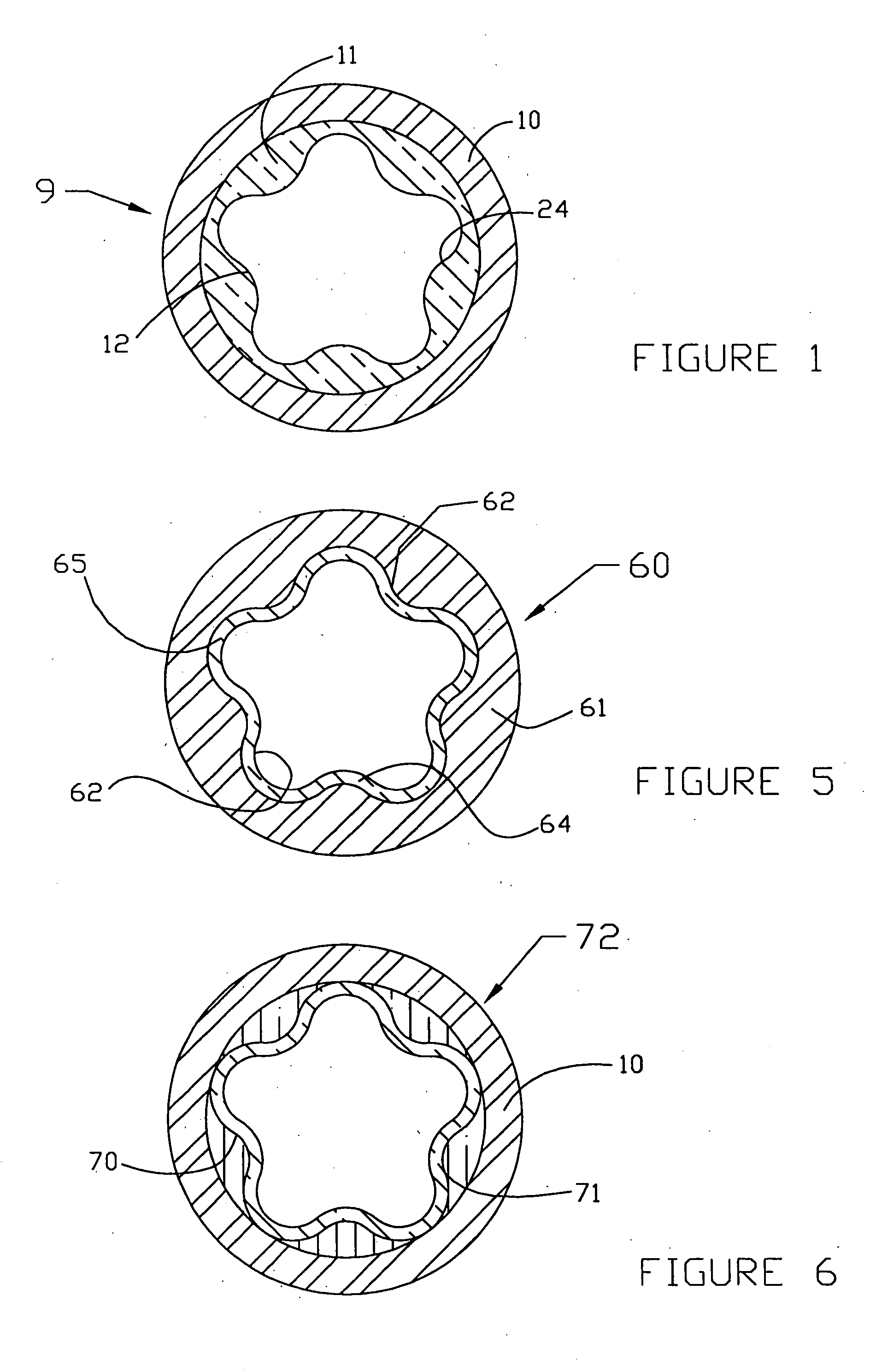
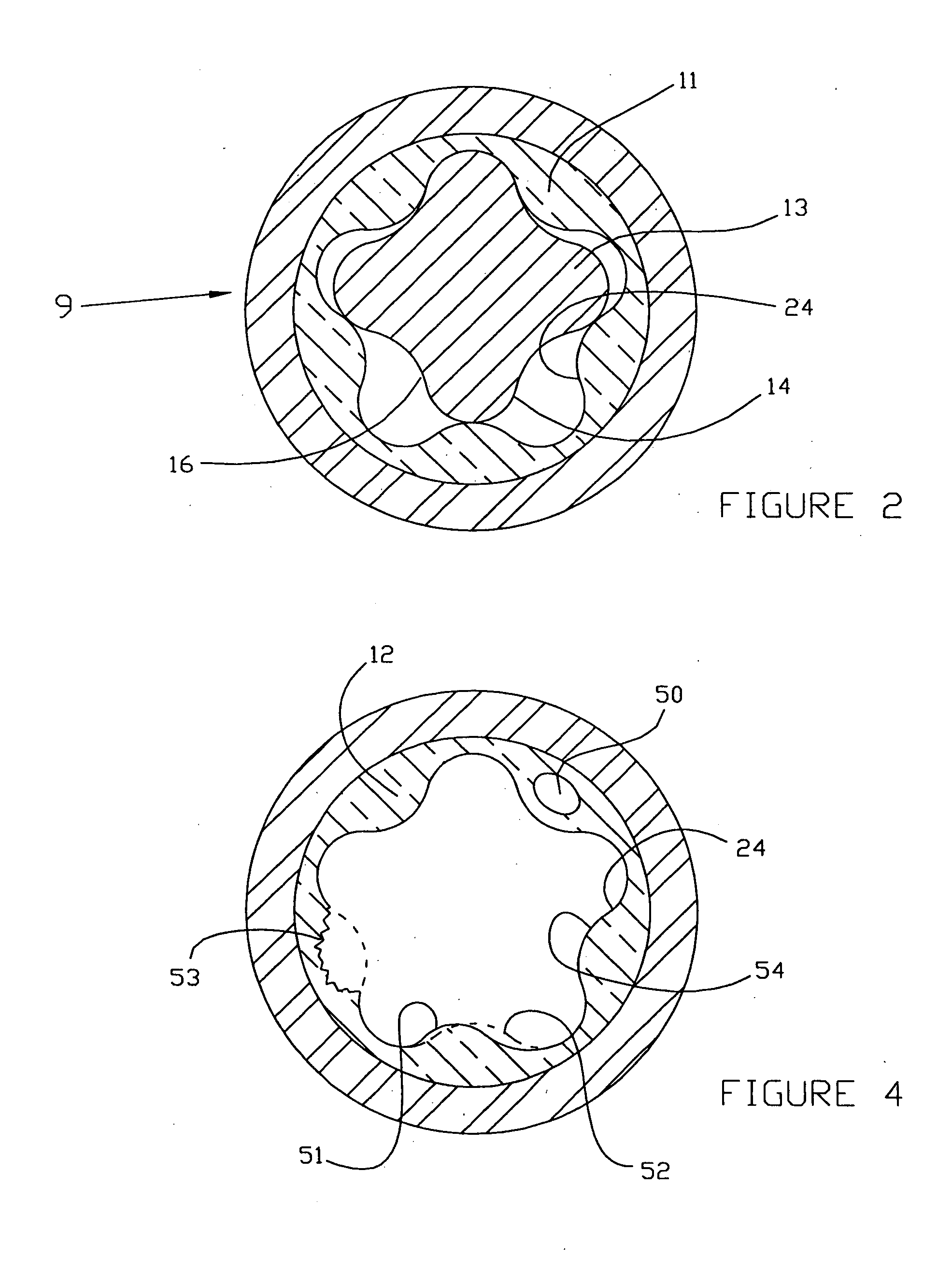
PatentInactiveUS20050118040A1
Innovation
- A stator design featuring a substantially uniform elastomer layer on the interior profile, with optional variations in thickness and reinforcement, to enhance mechanical strength and heat conduction, and an integral elastomeric layer formed on the interior profile of a cylindrical housing or tube, which can include a profiled reinforcement member or a cast-in inner stator member.

Safety Standards for Downhole Inspection Equipment
The safety standards for downhole inspection equipment used in progressive cavity pump stator condition assessment are governed by multiple regulatory frameworks and industry best practices. These standards primarily focus on equipment certification, operational safety protocols, and environmental protection measures specific to subsurface operations.
Equipment certification requirements mandate that all downhole inspection tools must comply with API (American Petroleum Institute) standards, particularly API RP 11S for progressive cavity pump systems. Additionally, ATEX (Atmosphères Explosibles) certification is essential for equipment operating in potentially explosive environments, ensuring intrinsic safety in hydrocarbon-rich downhole conditions.
Pressure rating specifications constitute a critical safety parameter, with inspection equipment required to withstand pressures exceeding the maximum anticipated downhole conditions by at least 25%. Temperature resistance standards typically require operational capability up to 150°C for standard applications, with specialized high-temperature variants rated for extreme geothermal conditions reaching 200°C or higher.
Material compatibility standards emphasize corrosion resistance and chemical compatibility with various downhole fluids, including produced water, hydrocarbons, and completion fluids. Equipment housings must utilize materials such as Inconel, Hastelloy, or specialized stainless steel alloys that demonstrate proven resistance to hydrogen sulfide and carbon dioxide environments.
Communication and data transmission safety protocols require redundant systems for critical measurements, with fail-safe mechanisms ensuring equipment retrieval even during communication failures. Wireline operations must adhere to strict tension monitoring and emergency disconnect procedures to prevent equipment loss or wellbore damage.
Personnel safety standards mandate comprehensive training programs for operators, including certification in confined space entry, gas detection procedures, and emergency response protocols. Regular equipment inspection schedules, typically every 30 days for active equipment, ensure continued compliance with safety specifications and early detection of potential equipment degradation that could compromise operational safety.
Equipment certification requirements mandate that all downhole inspection tools must comply with API (American Petroleum Institute) standards, particularly API RP 11S for progressive cavity pump systems. Additionally, ATEX (Atmosphères Explosibles) certification is essential for equipment operating in potentially explosive environments, ensuring intrinsic safety in hydrocarbon-rich downhole conditions.
Pressure rating specifications constitute a critical safety parameter, with inspection equipment required to withstand pressures exceeding the maximum anticipated downhole conditions by at least 25%. Temperature resistance standards typically require operational capability up to 150°C for standard applications, with specialized high-temperature variants rated for extreme geothermal conditions reaching 200°C or higher.
Material compatibility standards emphasize corrosion resistance and chemical compatibility with various downhole fluids, including produced water, hydrocarbons, and completion fluids. Equipment housings must utilize materials such as Inconel, Hastelloy, or specialized stainless steel alloys that demonstrate proven resistance to hydrogen sulfide and carbon dioxide environments.
Communication and data transmission safety protocols require redundant systems for critical measurements, with fail-safe mechanisms ensuring equipment retrieval even during communication failures. Wireline operations must adhere to strict tension monitoring and emergency disconnect procedures to prevent equipment loss or wellbore damage.
Personnel safety standards mandate comprehensive training programs for operators, including certification in confined space entry, gas detection procedures, and emergency response protocols. Regular equipment inspection schedules, typically every 30 days for active equipment, ensure continued compliance with safety specifications and early detection of potential equipment degradation that could compromise operational safety.
Predictive Maintenance Integration for PCP Systems
The integration of predictive maintenance technologies into Progressive Cavity Pump systems represents a paradigm shift from traditional reactive maintenance approaches to proactive condition monitoring strategies. Modern PCP systems increasingly incorporate advanced sensor networks, data analytics platforms, and machine learning algorithms to continuously assess stator condition and predict potential failures before they occur.
Contemporary predictive maintenance frameworks for PCP systems utilize multi-parameter monitoring approaches that combine vibration analysis, temperature profiling, pressure differential measurements, and fluid flow characteristics. These integrated systems employ Internet of Things sensors strategically positioned throughout the pump assembly to capture real-time operational data. The collected information feeds into centralized data processing platforms that apply sophisticated algorithms to identify patterns indicative of stator degradation or impending failure.
Machine learning models specifically trained on PCP operational datasets enable the prediction of stator wear patterns, elastomer degradation rates, and optimal maintenance intervals. These systems leverage historical performance data, operational parameters, and environmental conditions to generate predictive models that can forecast maintenance requirements weeks or months in advance. Advanced analytics platforms incorporate artificial intelligence algorithms that continuously refine their predictive accuracy through ongoing operational feedback.
Cloud-based predictive maintenance platforms facilitate remote monitoring capabilities, allowing operators to assess multiple PCP installations across geographically distributed locations from centralized control centers. These systems integrate with existing enterprise asset management platforms, automatically generating maintenance work orders, spare parts requirements, and scheduling recommendations based on predicted failure probabilities.
The implementation of digital twin technologies further enhances predictive maintenance capabilities by creating virtual replicas of physical PCP systems. These digital models simulate stator behavior under various operating conditions, enabling operators to test different operational scenarios and optimize maintenance strategies without disrupting actual production operations.
Modern predictive maintenance integration also incorporates augmented reality interfaces that guide field technicians through inspection procedures, overlay digital information onto physical equipment, and provide real-time access to historical performance data and maintenance recommendations during on-site interventions.
Contemporary predictive maintenance frameworks for PCP systems utilize multi-parameter monitoring approaches that combine vibration analysis, temperature profiling, pressure differential measurements, and fluid flow characteristics. These integrated systems employ Internet of Things sensors strategically positioned throughout the pump assembly to capture real-time operational data. The collected information feeds into centralized data processing platforms that apply sophisticated algorithms to identify patterns indicative of stator degradation or impending failure.
Machine learning models specifically trained on PCP operational datasets enable the prediction of stator wear patterns, elastomer degradation rates, and optimal maintenance intervals. These systems leverage historical performance data, operational parameters, and environmental conditions to generate predictive models that can forecast maintenance requirements weeks or months in advance. Advanced analytics platforms incorporate artificial intelligence algorithms that continuously refine their predictive accuracy through ongoing operational feedback.
Cloud-based predictive maintenance platforms facilitate remote monitoring capabilities, allowing operators to assess multiple PCP installations across geographically distributed locations from centralized control centers. These systems integrate with existing enterprise asset management platforms, automatically generating maintenance work orders, spare parts requirements, and scheduling recommendations based on predicted failure probabilities.
The implementation of digital twin technologies further enhances predictive maintenance capabilities by creating virtual replicas of physical PCP systems. These digital models simulate stator behavior under various operating conditions, enabling operators to test different operational scenarios and optimize maintenance strategies without disrupting actual production operations.
Modern predictive maintenance integration also incorporates augmented reality interfaces that guide field technicians through inspection procedures, overlay digital information onto physical equipment, and provide real-time access to historical performance data and maintenance recommendations during on-site interventions.
Unlock deeper insights with PatSnap Eureka Quick Research — get a full tech report to explore trends and direct your research. Try now!
Generate Your Research Report Instantly with AI Agent
Supercharge your innovation with PatSnap Eureka AI Agent Platform!