

How to Interpret Schumann Resonance Fluctuations?
JUN 24, 20259 MIN READ
Generate Your Research Report Instantly with AI Agent
PatSnap Eureka helps you evaluate technical feasibility & market potential.
Schumann Resonance Background and Research Objectives
Schumann resonances, discovered by physicist Winfried Otto Schumann in 1952, are a set of spectrum peaks in the extremely low frequency (ELF) portion of the Earth's electromagnetic field spectrum. These resonances occur between the Earth's surface and the ionosphere, creating a global electromagnetic resonance phenomenon. The fundamental frequency of Schumann resonances is approximately 7.83 Hz, with harmonics at higher frequencies.
The study of Schumann resonance fluctuations has gained significant attention in recent years due to its potential applications in various fields, including climate science, space weather monitoring, and even human health research. Understanding these fluctuations is crucial for developing more accurate models of the Earth's electromagnetic environment and its interactions with solar and cosmic phenomena.
The primary objective of research into Schumann resonance fluctuations is to develop robust methods for interpreting and analyzing these variations. This involves identifying the various factors that influence the resonances, such as solar activity, lightning storms, and changes in the ionosphere's composition. By accurately interpreting these fluctuations, researchers aim to gain insights into global atmospheric dynamics, electromagnetic field variations, and potential correlations with other geophysical phenomena.
One of the key challenges in this field is distinguishing between natural variations in Schumann resonances and those caused by human activities or instrumental artifacts. This requires the development of sophisticated signal processing techniques and data analysis methods to isolate and characterize different sources of fluctuations.
As technology advances, there is a growing interest in real-time monitoring and interpretation of Schumann resonance fluctuations. This could lead to the development of early warning systems for severe weather events, improved space weather forecasting, and potentially even applications in fields such as earthquake prediction and mental health research.
The evolution of Schumann resonance research has been marked by significant technological advancements, from the initial observations using basic radio equipment to modern high-sensitivity magnetometers and global sensor networks. These technological improvements have enabled researchers to detect and analyze even subtle variations in the resonances, opening up new avenues for scientific exploration and practical applications.
The study of Schumann resonance fluctuations has gained significant attention in recent years due to its potential applications in various fields, including climate science, space weather monitoring, and even human health research. Understanding these fluctuations is crucial for developing more accurate models of the Earth's electromagnetic environment and its interactions with solar and cosmic phenomena.
The primary objective of research into Schumann resonance fluctuations is to develop robust methods for interpreting and analyzing these variations. This involves identifying the various factors that influence the resonances, such as solar activity, lightning storms, and changes in the ionosphere's composition. By accurately interpreting these fluctuations, researchers aim to gain insights into global atmospheric dynamics, electromagnetic field variations, and potential correlations with other geophysical phenomena.
One of the key challenges in this field is distinguishing between natural variations in Schumann resonances and those caused by human activities or instrumental artifacts. This requires the development of sophisticated signal processing techniques and data analysis methods to isolate and characterize different sources of fluctuations.
As technology advances, there is a growing interest in real-time monitoring and interpretation of Schumann resonance fluctuations. This could lead to the development of early warning systems for severe weather events, improved space weather forecasting, and potentially even applications in fields such as earthquake prediction and mental health research.
The evolution of Schumann resonance research has been marked by significant technological advancements, from the initial observations using basic radio equipment to modern high-sensitivity magnetometers and global sensor networks. These technological improvements have enabled researchers to detect and analyze even subtle variations in the resonances, opening up new avenues for scientific exploration and practical applications.
Market Applications of Schumann Resonance Monitoring
Schumann resonance monitoring has emerged as a promising technology with diverse market applications across various sectors. In the field of geophysics and earth sciences, Schumann resonance data is increasingly utilized for studying global lightning activity, climate change, and ionospheric dynamics. Research institutions and meteorological agencies are incorporating Schumann resonance monitoring systems to enhance their understanding of Earth's electromagnetic environment and improve weather forecasting models.
The aerospace industry has shown significant interest in Schumann resonance monitoring for satellite communications and navigation systems. By analyzing Schumann resonance fluctuations, engineers can develop more robust communication protocols and improve the accuracy of GPS and other satellite-based positioning systems. This application has potential to enhance the reliability of satellite services in various industries, including telecommunications, transportation, and agriculture.
In the realm of natural disaster prediction and early warning systems, Schumann resonance monitoring is gaining traction. Seismologists and geologists are exploring the correlation between Schumann resonance anomalies and seismic activity, potentially leading to improved earthquake prediction capabilities. This application could have far-reaching implications for public safety and infrastructure protection in earthquake-prone regions.
The healthcare sector is also exploring the potential of Schumann resonance monitoring. Some researchers hypothesize that Schumann resonance fluctuations may influence human physiology and circadian rhythms. This has led to the development of wellness products and therapies that claim to synchronize human biorhythms with Earth's natural frequencies. While scientific evidence in this area is still limited, it represents a growing niche market within the health and wellness industry.
Environmental monitoring and climate research organizations are incorporating Schumann resonance data into their long-term studies of global climate patterns. By analyzing changes in Schumann resonance characteristics over time, scientists aim to gain insights into large-scale atmospheric processes and their relationship to climate change. This application could contribute to more accurate climate models and inform policy decisions related to environmental protection.
The defense and security sector has shown interest in Schumann resonance monitoring for its potential applications in long-range communication and detection systems. By leveraging the global nature of Schumann resonances, military organizations are exploring novel methods for secure, low-frequency communication and passive sensing technologies that could operate over vast distances.
As Schumann resonance monitoring technology continues to evolve, new market applications are likely to emerge. The interdisciplinary nature of this field suggests potential for innovation at the intersection of geophysics, telecommunications, environmental science, and health research. Future developments may lead to more integrated monitoring systems that combine Schumann resonance data with other environmental and electromagnetic parameters, offering comprehensive solutions for a wide range of industries and scientific endeavors.
The aerospace industry has shown significant interest in Schumann resonance monitoring for satellite communications and navigation systems. By analyzing Schumann resonance fluctuations, engineers can develop more robust communication protocols and improve the accuracy of GPS and other satellite-based positioning systems. This application has potential to enhance the reliability of satellite services in various industries, including telecommunications, transportation, and agriculture.
In the realm of natural disaster prediction and early warning systems, Schumann resonance monitoring is gaining traction. Seismologists and geologists are exploring the correlation between Schumann resonance anomalies and seismic activity, potentially leading to improved earthquake prediction capabilities. This application could have far-reaching implications for public safety and infrastructure protection in earthquake-prone regions.
The healthcare sector is also exploring the potential of Schumann resonance monitoring. Some researchers hypothesize that Schumann resonance fluctuations may influence human physiology and circadian rhythms. This has led to the development of wellness products and therapies that claim to synchronize human biorhythms with Earth's natural frequencies. While scientific evidence in this area is still limited, it represents a growing niche market within the health and wellness industry.
Environmental monitoring and climate research organizations are incorporating Schumann resonance data into their long-term studies of global climate patterns. By analyzing changes in Schumann resonance characteristics over time, scientists aim to gain insights into large-scale atmospheric processes and their relationship to climate change. This application could contribute to more accurate climate models and inform policy decisions related to environmental protection.
The defense and security sector has shown interest in Schumann resonance monitoring for its potential applications in long-range communication and detection systems. By leveraging the global nature of Schumann resonances, military organizations are exploring novel methods for secure, low-frequency communication and passive sensing technologies that could operate over vast distances.
As Schumann resonance monitoring technology continues to evolve, new market applications are likely to emerge. The interdisciplinary nature of this field suggests potential for innovation at the intersection of geophysics, telecommunications, environmental science, and health research. Future developments may lead to more integrated monitoring systems that combine Schumann resonance data with other environmental and electromagnetic parameters, offering comprehensive solutions for a wide range of industries and scientific endeavors.
Current Challenges in Interpreting Schumann Resonance Data
The interpretation of Schumann Resonance (SR) fluctuations presents several significant challenges for researchers and scientists in the field. One of the primary difficulties lies in distinguishing between natural variations and anthropogenic influences on SR measurements. The Earth's ionosphere and magnetosphere are complex systems affected by numerous factors, making it challenging to isolate the specific causes of observed fluctuations.
Signal-to-noise ratio is another critical issue in SR data interpretation. The Schumann Resonance signal is relatively weak compared to various sources of electromagnetic noise, including human-made interference and natural phenomena such as lightning strikes. This necessitates sophisticated signal processing techniques and advanced filtering methods to extract meaningful data from the background noise.
The global nature of Schumann Resonances adds another layer of complexity to their interpretation. SR measurements are influenced by worldwide thunderstorm activity, solar radiation, and ionospheric conditions. Consequently, local observations must be contextualized within a global framework, requiring extensive data collection and analysis from multiple monitoring stations across different geographical locations.
Temporal variations in SR pose additional challenges. Schumann Resonances exhibit diurnal, seasonal, and long-term fluctuations, which must be accounted for when interpreting data. Distinguishing between these natural cycles and anomalous changes that may indicate significant geophysical events or human activities is a complex task requiring long-term data sets and sophisticated statistical analysis.
The multidisciplinary nature of SR research further complicates interpretation efforts. Accurate analysis requires expertise in atmospheric physics, electromagnetic theory, signal processing, and geophysics. Integrating insights from these diverse fields to form a coherent understanding of SR fluctuations is an ongoing challenge for researchers.
Technical limitations in measurement equipment and methodology also contribute to interpretation difficulties. The need for highly sensitive instruments capable of detecting minute changes in the Earth's electromagnetic field, coupled with the requirement for consistent, long-term monitoring, presents both technological and logistical challenges.
Lastly, the potential influence of climate change on SR patterns introduces new uncertainties in data interpretation. As global weather patterns shift, their impact on thunderstorm activity and ionospheric conditions may alter SR characteristics in ways that are not yet fully understood or predictable.
Signal-to-noise ratio is another critical issue in SR data interpretation. The Schumann Resonance signal is relatively weak compared to various sources of electromagnetic noise, including human-made interference and natural phenomena such as lightning strikes. This necessitates sophisticated signal processing techniques and advanced filtering methods to extract meaningful data from the background noise.
The global nature of Schumann Resonances adds another layer of complexity to their interpretation. SR measurements are influenced by worldwide thunderstorm activity, solar radiation, and ionospheric conditions. Consequently, local observations must be contextualized within a global framework, requiring extensive data collection and analysis from multiple monitoring stations across different geographical locations.
Temporal variations in SR pose additional challenges. Schumann Resonances exhibit diurnal, seasonal, and long-term fluctuations, which must be accounted for when interpreting data. Distinguishing between these natural cycles and anomalous changes that may indicate significant geophysical events or human activities is a complex task requiring long-term data sets and sophisticated statistical analysis.
The multidisciplinary nature of SR research further complicates interpretation efforts. Accurate analysis requires expertise in atmospheric physics, electromagnetic theory, signal processing, and geophysics. Integrating insights from these diverse fields to form a coherent understanding of SR fluctuations is an ongoing challenge for researchers.
Technical limitations in measurement equipment and methodology also contribute to interpretation difficulties. The need for highly sensitive instruments capable of detecting minute changes in the Earth's electromagnetic field, coupled with the requirement for consistent, long-term monitoring, presents both technological and logistical challenges.
Lastly, the potential influence of climate change on SR patterns introduces new uncertainties in data interpretation. As global weather patterns shift, their impact on thunderstorm activity and ionospheric conditions may alter SR characteristics in ways that are not yet fully understood or predictable.
Existing Methods for Analyzing Schumann Resonance Fluctuations
01 Measurement and monitoring of Schumann resonance fluctuations
Various devices and methods are developed to measure and monitor Schumann resonance fluctuations. These systems typically include sensors, antennas, and signal processing units to detect and analyze electromagnetic waves in the extremely low frequency (ELF) range associated with Schumann resonances. The data collected can be used for scientific research, environmental monitoring, and potential health applications.- Measurement and analysis of Schumann resonance fluctuations: Various devices and methods are developed to measure and analyze Schumann resonance fluctuations. These systems often include sensors, signal processing units, and data analysis tools to detect and interpret changes in the Earth's electromagnetic field. The analysis of these fluctuations can provide insights into global weather patterns, ionospheric conditions, and other geophysical phenomena.
- Applications in health and wellness: Schumann resonance fluctuations are being explored for potential health and wellness applications. Devices and methods are developed to generate or simulate these frequencies, with the aim of promoting relaxation, improving sleep quality, or enhancing overall well-being. These applications often involve wearable devices or environmental systems that emit or modulate electromagnetic fields at specific frequencies.
- Integration with electronic devices and communication systems: Schumann resonance fluctuations are being considered in the design and operation of electronic devices and communication systems. This includes developing methods to mitigate potential interference from these natural electromagnetic phenomena or utilizing them to enhance signal propagation. Some applications focus on improving the reliability and efficiency of wireless communication systems in various environments.
- Environmental monitoring and prediction: Systems and methods are being developed to use Schumann resonance fluctuations for environmental monitoring and prediction. These applications include tracking changes in global temperature, monitoring seismic activity, or predicting severe weather events. The analysis of these fluctuations can provide valuable data for climate research and early warning systems for natural disasters.
- Energy harvesting and power generation: Research is being conducted on the potential use of Schumann resonance fluctuations for energy harvesting and power generation. This includes developing devices and methods to capture and convert these low-frequency electromagnetic waves into usable electrical energy. While still largely experimental, this field explores the possibility of creating sustainable and environmentally friendly power sources based on natural electromagnetic phenomena.
02 Applications in health and wellness
Schumann resonance fluctuations are being explored for potential health and wellness applications. Devices and methods are developed to generate or simulate Schumann resonance frequencies, which some believe may have beneficial effects on human health. These applications range from relaxation aids to potential therapeutic devices, although more research is needed to validate their efficacy.Expand Specific Solutions03 Integration with electronic devices and wearables
Schumann resonance technology is being integrated into various electronic devices and wearables. This includes the development of portable devices that can generate or detect Schumann resonance frequencies, as well as the incorporation of this technology into existing consumer electronics. These innovations aim to make Schumann resonance-based applications more accessible and convenient for users.Expand Specific Solutions04 Environmental and geophysical research applications
Schumann resonance fluctuations are utilized in environmental and geophysical research. Scientists use these fluctuations to study various phenomena, including global lightning activity, ionospheric conditions, and potentially even earthquake prediction. Specialized equipment and data analysis techniques are developed to extract meaningful information from Schumann resonance signals for these research purposes.Expand Specific Solutions05 Signal processing and noise reduction techniques
Advanced signal processing and noise reduction techniques are developed to improve the detection and analysis of Schumann resonance fluctuations. These methods aim to enhance the signal-to-noise ratio, filter out interference, and extract meaningful data from the weak Schumann resonance signals. Such techniques are crucial for both scientific research and practical applications of Schumann resonance technology.Expand Specific Solutions
Key Players in Schumann Resonance Research and Technology
The interpretation of Schumann Resonance fluctuations is an emerging field in geophysical research, currently in its early development stage. The market for related technologies and applications is relatively small but growing, driven by increasing interest in Earth's electromagnetic field monitoring and its potential implications for climate and human health. While the technology is still maturing, several key players are advancing research and development. Universities like Nanjing University and the University of Bern are at the forefront of academic research, while companies such as Siemens Healthineers AG and FUJIFILM Corp. are exploring potential commercial applications. The involvement of diverse entities, from academic institutions to large corporations, indicates a competitive landscape with significant potential for future growth and innovation.
University of Bern
Technical Solution: The University of Bern has developed a sophisticated approach to interpreting Schumann Resonance fluctuations. Their method involves using high-sensitivity magnetometers to detect extremely low-frequency electromagnetic waves in the Earth-ionosphere cavity. They employ advanced signal processing techniques, including wavelet analysis and machine learning algorithms, to extract meaningful patterns from the noisy Schumann Resonance data. The university's research team has also created a global network of monitoring stations to capture these resonances continuously, allowing for real-time analysis and interpretation of global electromagnetic phenomena.
Strengths: Comprehensive global monitoring network, advanced signal processing techniques. Weaknesses: Potential interference from local electromagnetic sources, need for continuous calibration of sensitive equipment.
Auburn University
Technical Solution: Auburn University has pioneered a novel approach to interpreting Schumann Resonance fluctuations using a combination of advanced spectral analysis and machine learning techniques. Their method involves the use of custom-designed ELF (Extremely Low Frequency) antennas and high-precision data acquisition systems to capture Schumann Resonance signals with unprecedented accuracy. The university's research team has developed proprietary algorithms that can distinguish between natural Schumann Resonance fluctuations and anthropogenic noise, allowing for more accurate interpretation of global electromagnetic phenomena. Additionally, they have integrated their Schumann Resonance data with other geophysical and meteorological parameters to create a holistic model for Earth system dynamics.
Strengths: High-precision data acquisition, innovative noise reduction algorithms. Weaknesses: Limited geographical coverage, potential bias in machine learning models.
Innovative Approaches to Schumann Resonance Interpretation
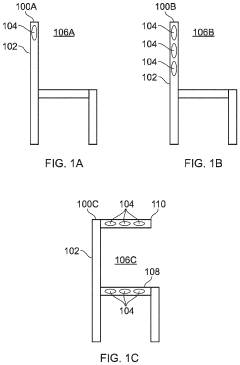
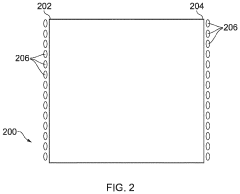
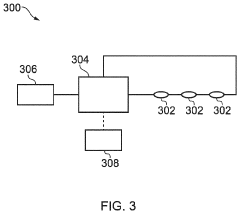
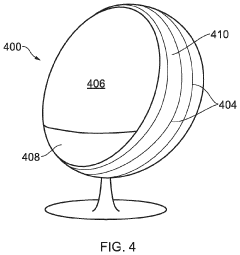
A magnetic field exposure system and uses thereof
PatentWO2021191443A1
Innovation
- A magnetic field exposure system generating an amplitude-modulated low frequency magnetic field with a carrier frequency of 360 to 450 Hz and a modulation frequency of 0.5 to 100 Hz, with a field strength of 0.5 to 250 mT, specifically designed to expose organic cells or tissues to improve cell survival, proliferation, reduce stress, and enhance well-being.
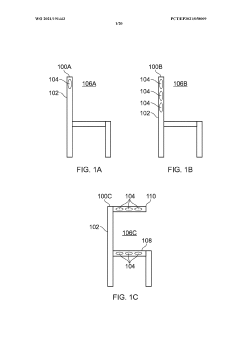
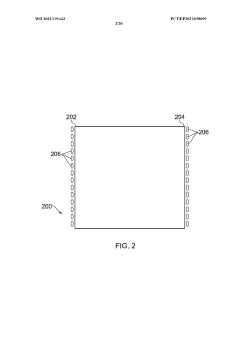
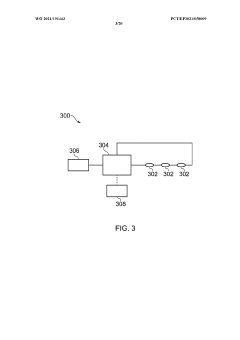
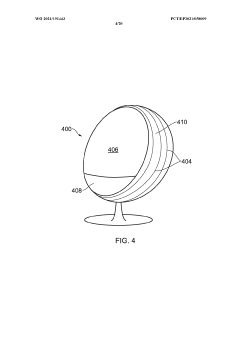
A magnetic field exposure system and uses thereof
PatentPendingUS20230372726A1
Innovation
- A magnetic field exposure system generating an amplitude-modulated low frequency magnetic field with a carrier frequency of 360 to 450 Hz and a modulation frequency of 0.5 to 100 Hz, providing a field strength of 0.5 to 250 μT, specifically designed to enhance cell survival, proliferation, reduce stress, and promote tissue regeneration.
Environmental Factors Affecting Schumann Resonance Measurements
Schumann resonances, the global electromagnetic resonances in the Earth-ionosphere cavity, are influenced by various environmental factors that can significantly affect their measurements. These factors play a crucial role in interpreting Schumann resonance fluctuations accurately.
One of the primary environmental factors is solar activity. Solar flares and coronal mass ejections can cause disturbances in the Earth's ionosphere, altering its conductivity and height. These changes directly impact the propagation of electromagnetic waves within the Earth-ionosphere cavity, leading to variations in Schumann resonance measurements. Solar activity follows an 11-year cycle, which should be considered when analyzing long-term Schumann resonance data.
Atmospheric conditions, particularly lightning activity, also play a significant role in Schumann resonance measurements. Lightning strikes are the primary source of excitation for these resonances, and their global distribution and intensity can vary seasonally and geographically. Regions with high thunderstorm activity, such as the tropics, contribute more to the overall Schumann resonance signal. Seasonal variations in lightning activity can lead to corresponding fluctuations in Schumann resonance measurements.
Geomagnetic storms, caused by interactions between the Earth's magnetosphere and solar wind, can significantly affect Schumann resonance measurements. These storms can alter the ionosphere's properties, leading to changes in the resonance cavity's characteristics. The intensity and frequency of geomagnetic storms should be considered when interpreting Schumann resonance data, especially during periods of high solar activity.
Local weather conditions at measurement sites can also influence Schumann resonance readings. Factors such as temperature, humidity, and atmospheric pressure can affect the sensitivity and performance of measurement equipment. Additionally, local electromagnetic noise sources, both natural and anthropogenic, can interfere with Schumann resonance signals, necessitating careful site selection and noise reduction techniques.
The Earth's magnetic field variations, including diurnal changes and long-term secular variations, can impact Schumann resonance measurements. These variations affect the propagation of electromagnetic waves within the Earth-ionosphere cavity and should be accounted for in data analysis.
Human activities, such as power line harmonics and industrial electromagnetic emissions, can introduce noise and artifacts into Schumann resonance measurements. The increasing prevalence of electromagnetic pollution in urban areas poses challenges for accurate measurements and requires sophisticated filtering techniques.
Understanding and accounting for these environmental factors is essential for accurately interpreting Schumann resonance fluctuations. Researchers must employ comprehensive data analysis techniques, considering multiple environmental parameters simultaneously to isolate genuine Schumann resonance signals from environmental influences and noise.
One of the primary environmental factors is solar activity. Solar flares and coronal mass ejections can cause disturbances in the Earth's ionosphere, altering its conductivity and height. These changes directly impact the propagation of electromagnetic waves within the Earth-ionosphere cavity, leading to variations in Schumann resonance measurements. Solar activity follows an 11-year cycle, which should be considered when analyzing long-term Schumann resonance data.
Atmospheric conditions, particularly lightning activity, also play a significant role in Schumann resonance measurements. Lightning strikes are the primary source of excitation for these resonances, and their global distribution and intensity can vary seasonally and geographically. Regions with high thunderstorm activity, such as the tropics, contribute more to the overall Schumann resonance signal. Seasonal variations in lightning activity can lead to corresponding fluctuations in Schumann resonance measurements.
Geomagnetic storms, caused by interactions between the Earth's magnetosphere and solar wind, can significantly affect Schumann resonance measurements. These storms can alter the ionosphere's properties, leading to changes in the resonance cavity's characteristics. The intensity and frequency of geomagnetic storms should be considered when interpreting Schumann resonance data, especially during periods of high solar activity.
Local weather conditions at measurement sites can also influence Schumann resonance readings. Factors such as temperature, humidity, and atmospheric pressure can affect the sensitivity and performance of measurement equipment. Additionally, local electromagnetic noise sources, both natural and anthropogenic, can interfere with Schumann resonance signals, necessitating careful site selection and noise reduction techniques.
The Earth's magnetic field variations, including diurnal changes and long-term secular variations, can impact Schumann resonance measurements. These variations affect the propagation of electromagnetic waves within the Earth-ionosphere cavity and should be accounted for in data analysis.
Human activities, such as power line harmonics and industrial electromagnetic emissions, can introduce noise and artifacts into Schumann resonance measurements. The increasing prevalence of electromagnetic pollution in urban areas poses challenges for accurate measurements and requires sophisticated filtering techniques.
Understanding and accounting for these environmental factors is essential for accurately interpreting Schumann resonance fluctuations. Researchers must employ comprehensive data analysis techniques, considering multiple environmental parameters simultaneously to isolate genuine Schumann resonance signals from environmental influences and noise.
Potential Applications in Climate and Space Weather Forecasting
The interpretation of Schumann resonance fluctuations holds significant potential for applications in climate and space weather forecasting. These global electromagnetic resonances, occurring in the Earth-ionosphere cavity, are sensitive to various atmospheric and ionospheric conditions, making them valuable indicators of global climate patterns and space weather events.
In climate forecasting, Schumann resonance data can provide insights into global temperature trends and extreme weather phenomena. Researchers have observed correlations between Schumann resonance parameters and El Niño-Southern Oscillation (ENSO) events, suggesting their potential use in predicting large-scale climate patterns. By monitoring long-term changes in Schumann resonance characteristics, scientists may be able to detect subtle shifts in global temperature and humidity distributions, contributing to more accurate climate models and predictions.
Space weather forecasting stands to benefit greatly from Schumann resonance analysis. Fluctuations in the resonance frequencies and amplitudes can indicate disturbances in the ionosphere caused by solar activity. This information can be crucial for predicting geomagnetic storms and their potential impacts on satellite communications, power grids, and other technological systems. By integrating Schumann resonance data with other space weather monitoring tools, forecasters can enhance their ability to issue timely warnings and mitigate the effects of solar-induced disturbances.
The application of Schumann resonance interpretation in these fields is still evolving, with ongoing research aimed at refining measurement techniques and improving data analysis methods. One promising approach involves the development of global networks of Schumann resonance monitoring stations, which could provide real-time, high-resolution data on a planetary scale. This comprehensive coverage would enable more accurate tracking of global electromagnetic patterns and their relationships to climate and space weather phenomena.
Machine learning and artificial intelligence algorithms are being explored to process the vast amounts of Schumann resonance data more efficiently. These advanced computational techniques could potentially uncover subtle patterns and correlations that human analysts might overlook, leading to more precise and reliable forecasts in both climate and space weather domains.
As our understanding of Schumann resonance fluctuations deepens, their integration into existing forecasting models is likely to increase. This could lead to the development of more holistic prediction systems that combine traditional meteorological and space weather data with Schumann resonance observations, potentially revolutionizing our ability to anticipate and prepare for a wide range of environmental and technological challenges.
In climate forecasting, Schumann resonance data can provide insights into global temperature trends and extreme weather phenomena. Researchers have observed correlations between Schumann resonance parameters and El Niño-Southern Oscillation (ENSO) events, suggesting their potential use in predicting large-scale climate patterns. By monitoring long-term changes in Schumann resonance characteristics, scientists may be able to detect subtle shifts in global temperature and humidity distributions, contributing to more accurate climate models and predictions.
Space weather forecasting stands to benefit greatly from Schumann resonance analysis. Fluctuations in the resonance frequencies and amplitudes can indicate disturbances in the ionosphere caused by solar activity. This information can be crucial for predicting geomagnetic storms and their potential impacts on satellite communications, power grids, and other technological systems. By integrating Schumann resonance data with other space weather monitoring tools, forecasters can enhance their ability to issue timely warnings and mitigate the effects of solar-induced disturbances.
The application of Schumann resonance interpretation in these fields is still evolving, with ongoing research aimed at refining measurement techniques and improving data analysis methods. One promising approach involves the development of global networks of Schumann resonance monitoring stations, which could provide real-time, high-resolution data on a planetary scale. This comprehensive coverage would enable more accurate tracking of global electromagnetic patterns and their relationships to climate and space weather phenomena.
Machine learning and artificial intelligence algorithms are being explored to process the vast amounts of Schumann resonance data more efficiently. These advanced computational techniques could potentially uncover subtle patterns and correlations that human analysts might overlook, leading to more precise and reliable forecasts in both climate and space weather domains.
As our understanding of Schumann resonance fluctuations deepens, their integration into existing forecasting models is likely to increase. This could lead to the development of more holistic prediction systems that combine traditional meteorological and space weather data with Schumann resonance observations, potentially revolutionizing our ability to anticipate and prepare for a wide range of environmental and technological challenges.
Unlock deeper insights with PatSnap Eureka Quick Research — get a full tech report to explore trends and direct your research. Try now!
Generate Your Research Report Instantly with AI Agent
Supercharge your innovation with PatSnap Eureka AI Agent Platform!