

How to Leverage Modular Construction in Green Building Design
MAR 16, 202610 MIN READ
Generate Your Research Report Instantly with AI Agent
PatSnap Eureka helps you evaluate technical feasibility & market potential.
Modular Green Building Background and Objectives
The construction industry has undergone significant transformation over the past century, evolving from traditional on-site building methods to increasingly sophisticated prefabrication and modular approaches. Modular construction, characterized by the off-site manufacturing of building components or entire modules that are subsequently assembled at the construction site, emerged as a response to challenges including labor shortages, quality control issues, and the need for faster project delivery. This methodology has gained particular momentum in recent decades as technological advances in manufacturing, transportation, and assembly techniques have enhanced its viability and appeal.
The convergence of modular construction with green building principles represents a natural evolution driven by mounting environmental concerns and regulatory pressures. As the built environment accounts for approximately 40% of global energy consumption and 36% of CO2 emissions, the construction industry faces unprecedented pressure to adopt sustainable practices. Green building design, which encompasses energy efficiency, resource conservation, waste reduction, and occupant health considerations, has become a critical imperative rather than an optional enhancement.
The integration of modular construction methodologies with sustainable design principles offers compelling advantages that address multiple industry challenges simultaneously. The controlled factory environment inherent in modular construction enables precise material usage, waste minimization, and quality assurance that often exceeds traditional construction standards. This controlled setting facilitates the implementation of advanced sustainable technologies and materials that might be difficult to execute effectively in conventional on-site construction scenarios.
The primary objective of leveraging modular construction in green building design centers on maximizing environmental performance while maintaining economic viability and construction efficiency. This approach aims to achieve superior energy performance through enhanced building envelope integrity, reduced thermal bridging, and optimized integration of renewable energy systems. Additionally, the methodology seeks to minimize construction waste, reduce embodied carbon through efficient material utilization, and accelerate project timelines while maintaining high sustainability standards.
Furthermore, this integration targets the advancement of circular economy principles within the construction sector by enabling design for disassembly, component reuse, and material recovery at end-of-life. The standardization inherent in modular approaches facilitates the development of sustainable material libraries and promotes innovation in eco-friendly building technologies through scalable manufacturing processes.
The convergence of modular construction with green building principles represents a natural evolution driven by mounting environmental concerns and regulatory pressures. As the built environment accounts for approximately 40% of global energy consumption and 36% of CO2 emissions, the construction industry faces unprecedented pressure to adopt sustainable practices. Green building design, which encompasses energy efficiency, resource conservation, waste reduction, and occupant health considerations, has become a critical imperative rather than an optional enhancement.
The integration of modular construction methodologies with sustainable design principles offers compelling advantages that address multiple industry challenges simultaneously. The controlled factory environment inherent in modular construction enables precise material usage, waste minimization, and quality assurance that often exceeds traditional construction standards. This controlled setting facilitates the implementation of advanced sustainable technologies and materials that might be difficult to execute effectively in conventional on-site construction scenarios.
The primary objective of leveraging modular construction in green building design centers on maximizing environmental performance while maintaining economic viability and construction efficiency. This approach aims to achieve superior energy performance through enhanced building envelope integrity, reduced thermal bridging, and optimized integration of renewable energy systems. Additionally, the methodology seeks to minimize construction waste, reduce embodied carbon through efficient material utilization, and accelerate project timelines while maintaining high sustainability standards.
Furthermore, this integration targets the advancement of circular economy principles within the construction sector by enabling design for disassembly, component reuse, and material recovery at end-of-life. The standardization inherent in modular approaches facilitates the development of sustainable material libraries and promotes innovation in eco-friendly building technologies through scalable manufacturing processes.
Market Demand for Sustainable Modular Construction
The global construction industry is experiencing a paradigm shift toward sustainable building practices, with modular construction emerging as a critical solution to address environmental concerns and efficiency demands. This transformation is driven by increasing awareness of the construction sector's environmental impact, which accounts for nearly forty percent of global carbon emissions and generates substantial waste streams.
Regulatory frameworks worldwide are accelerating demand for sustainable modular construction solutions. The European Union's Green Deal and similar initiatives in North America and Asia-Pacific regions have established stringent environmental standards for new construction projects. These regulations mandate reduced carbon footprints, improved energy efficiency, and enhanced waste management practices, creating a favorable environment for modular green building adoption.
The residential sector represents the largest market segment for sustainable modular construction, particularly in urban areas facing housing shortages. Developers are increasingly recognizing modular construction's ability to deliver energy-efficient housing solutions while reducing construction timelines and material waste. Multi-family residential projects, affordable housing initiatives, and student accommodation developments are driving significant market expansion.
Commercial and institutional sectors are demonstrating robust demand for sustainable modular solutions. Educational institutions, healthcare facilities, and office buildings are adopting modular construction to achieve sustainability certifications while maintaining cost-effectiveness. The ability to integrate renewable energy systems, advanced insulation materials, and smart building technologies within modular frameworks appeals to environmentally conscious organizations.
Market growth is further supported by evolving consumer preferences toward environmentally responsible construction practices. End-users increasingly prioritize buildings with lower operational costs, reduced environmental impact, and healthier indoor environments. This shift in consumer behavior is compelling developers and contractors to explore modular construction as a viable pathway to meet sustainability expectations.
Supply chain optimization represents another significant market driver. Modular construction's factory-based production model enables better material utilization, waste reduction, and quality control compared to traditional on-site construction methods. This efficiency translates into cost savings and environmental benefits that resonate with budget-conscious and sustainability-focused stakeholders.
The integration of advanced technologies such as Building Information Modeling, Internet of Things sensors, and automated manufacturing processes is expanding market opportunities. These technological advancements enable more sophisticated sustainable design implementations within modular construction frameworks, attracting technology-forward clients and projects.
Geographic expansion into emerging markets presents substantial growth potential. Developing regions with rapid urbanization rates and limited construction infrastructure are increasingly viewing sustainable modular construction as an efficient solution to meet growing building demands while minimizing environmental impact.
Regulatory frameworks worldwide are accelerating demand for sustainable modular construction solutions. The European Union's Green Deal and similar initiatives in North America and Asia-Pacific regions have established stringent environmental standards for new construction projects. These regulations mandate reduced carbon footprints, improved energy efficiency, and enhanced waste management practices, creating a favorable environment for modular green building adoption.
The residential sector represents the largest market segment for sustainable modular construction, particularly in urban areas facing housing shortages. Developers are increasingly recognizing modular construction's ability to deliver energy-efficient housing solutions while reducing construction timelines and material waste. Multi-family residential projects, affordable housing initiatives, and student accommodation developments are driving significant market expansion.
Commercial and institutional sectors are demonstrating robust demand for sustainable modular solutions. Educational institutions, healthcare facilities, and office buildings are adopting modular construction to achieve sustainability certifications while maintaining cost-effectiveness. The ability to integrate renewable energy systems, advanced insulation materials, and smart building technologies within modular frameworks appeals to environmentally conscious organizations.
Market growth is further supported by evolving consumer preferences toward environmentally responsible construction practices. End-users increasingly prioritize buildings with lower operational costs, reduced environmental impact, and healthier indoor environments. This shift in consumer behavior is compelling developers and contractors to explore modular construction as a viable pathway to meet sustainability expectations.
Supply chain optimization represents another significant market driver. Modular construction's factory-based production model enables better material utilization, waste reduction, and quality control compared to traditional on-site construction methods. This efficiency translates into cost savings and environmental benefits that resonate with budget-conscious and sustainability-focused stakeholders.
The integration of advanced technologies such as Building Information Modeling, Internet of Things sensors, and automated manufacturing processes is expanding market opportunities. These technological advancements enable more sophisticated sustainable design implementations within modular construction frameworks, attracting technology-forward clients and projects.
Geographic expansion into emerging markets presents substantial growth potential. Developing regions with rapid urbanization rates and limited construction infrastructure are increasingly viewing sustainable modular construction as an efficient solution to meet growing building demands while minimizing environmental impact.
Current State and Challenges of Green Modular Building
Green modular construction has emerged as a promising approach to sustainable building practices, yet its current implementation faces significant developmental hurdles. The technology combines prefabricated building components with environmentally conscious design principles, aiming to reduce construction waste, energy consumption, and overall environmental impact while maintaining structural integrity and aesthetic appeal.
The global green modular building market currently represents approximately 6-8% of the total construction industry, with notable concentration in developed regions including North America, Northern Europe, and parts of Asia-Pacific. Leading markets such as Sweden, Germany, and Japan have achieved modular construction penetration rates exceeding 15% in residential sectors, while emerging markets remain below 3% adoption rates.
Current technological capabilities enable the production of modular units with energy efficiency ratings 20-30% superior to traditional construction methods. Advanced manufacturing facilities can achieve precision tolerances within 2-3mm, ensuring optimal thermal performance and air tightness. However, these achievements are primarily limited to low-rise residential and commercial applications, with high-rise modular construction remaining technically challenging.
Several critical constraints impede widespread adoption of green modular construction. Regulatory frameworks in many jurisdictions lack specific provisions for modular building systems, creating approval delays and compliance uncertainties. Transportation limitations restrict module dimensions, typically constraining width to 4.3 meters and height to 4.0 meters, which impacts design flexibility and spatial efficiency.
Manufacturing capacity represents another significant bottleneck. Current global production facilities can accommodate approximately 2-3% of annual construction demand, with lead times extending 12-16 weeks for standard residential modules. Quality control inconsistencies across different manufacturers have resulted in performance variations of 15-25% in energy efficiency metrics.
Integration challenges between modular components and building systems present ongoing technical difficulties. Achieving seamless connections for mechanical, electrical, and plumbing systems while maintaining green building performance standards requires specialized expertise that remains scarce in many markets. Additionally, the limited availability of sustainable materials specifically designed for modular applications constrains environmental performance optimization.
Financial barriers further complicate market expansion. Initial capital requirements for modular manufacturing facilities range from $50-100 million, while uncertain demand patterns discourage investment. Construction financing mechanisms often penalize modular projects due to perceived risks, resulting in 0.5-1.5% higher interest rates compared to conventional construction projects.
The global green modular building market currently represents approximately 6-8% of the total construction industry, with notable concentration in developed regions including North America, Northern Europe, and parts of Asia-Pacific. Leading markets such as Sweden, Germany, and Japan have achieved modular construction penetration rates exceeding 15% in residential sectors, while emerging markets remain below 3% adoption rates.
Current technological capabilities enable the production of modular units with energy efficiency ratings 20-30% superior to traditional construction methods. Advanced manufacturing facilities can achieve precision tolerances within 2-3mm, ensuring optimal thermal performance and air tightness. However, these achievements are primarily limited to low-rise residential and commercial applications, with high-rise modular construction remaining technically challenging.
Several critical constraints impede widespread adoption of green modular construction. Regulatory frameworks in many jurisdictions lack specific provisions for modular building systems, creating approval delays and compliance uncertainties. Transportation limitations restrict module dimensions, typically constraining width to 4.3 meters and height to 4.0 meters, which impacts design flexibility and spatial efficiency.
Manufacturing capacity represents another significant bottleneck. Current global production facilities can accommodate approximately 2-3% of annual construction demand, with lead times extending 12-16 weeks for standard residential modules. Quality control inconsistencies across different manufacturers have resulted in performance variations of 15-25% in energy efficiency metrics.
Integration challenges between modular components and building systems present ongoing technical difficulties. Achieving seamless connections for mechanical, electrical, and plumbing systems while maintaining green building performance standards requires specialized expertise that remains scarce in many markets. Additionally, the limited availability of sustainable materials specifically designed for modular applications constrains environmental performance optimization.
Financial barriers further complicate market expansion. Initial capital requirements for modular manufacturing facilities range from $50-100 million, while uncertain demand patterns discourage investment. Construction financing mechanisms often penalize modular projects due to perceived risks, resulting in 0.5-1.5% higher interest rates compared to conventional construction projects.
Existing Modular Green Building Solutions
01 Prefabricated modular building systems with standardized components
Modular construction systems utilize prefabricated standardized components that can be manufactured off-site and assembled on-site. These systems feature interchangeable modules with standardized dimensions and connection interfaces, allowing for flexible configuration and rapid assembly. The standardization enables quality control during manufacturing and reduces construction time and labor costs on-site.- Prefabricated modular building systems with standardized components: Modular construction systems utilize prefabricated standardized components that can be manufactured off-site and assembled on-site. These systems feature interchangeable modules with standardized dimensions and connection interfaces, allowing for flexible configuration and rapid assembly. The standardization enables quality control during manufacturing and reduces construction time and labor costs on-site.
- Structural connection systems for modular units: Advanced connection mechanisms are designed to securely join modular building units together while maintaining structural integrity. These systems include various fastening methods, interlocking features, and alignment guides that facilitate quick and reliable assembly. The connection systems are engineered to transfer loads between modules and provide stability to the overall structure while allowing for disassembly and reconfiguration when needed.
- Transportable and relocatable modular structures: Modular construction designs emphasize portability and relocatability, allowing structures to be transported from manufacturing facilities to construction sites and potentially relocated to different sites. These designs incorporate features that facilitate transportation such as stackable configurations, foldable elements, and dimensions compatible with standard shipping methods. The modules are engineered to withstand transportation stresses while maintaining structural integrity.
- Integrated building services and utilities in modular units: Modular construction incorporates pre-installed building services and utilities within the modules, including electrical systems, plumbing, HVAC, and communication infrastructure. These integrated systems are installed and tested during the manufacturing phase, with standardized connection points that allow for quick integration when modules are assembled on-site. This approach reduces on-site installation time and improves quality control of building systems.
- Multi-story modular construction and vertical stacking systems: Specialized modular construction techniques enable the creation of multi-story buildings through vertical stacking of modular units. These systems incorporate structural reinforcement, load-bearing capabilities, and specialized connection methods to safely stack modules vertically. The designs account for load distribution, lateral stability, and compliance with building codes for multi-story structures while maintaining the efficiency benefits of modular construction.
02 Structural connection systems for modular units
Advanced connection mechanisms are designed to securely join modular building units together while maintaining structural integrity. These systems include various fastening methods, interlocking features, and alignment guides that facilitate quick and reliable assembly. The connection systems are engineered to transfer loads between modules and provide stability to the overall structure while allowing for disassembly and reconfiguration when needed.Expand Specific Solutions03 Transportable and relocatable modular structures
Modular construction designs emphasize portability and relocatability, allowing structures to be transported from manufacturing facilities to construction sites and potentially relocated to different sites. These designs incorporate features that facilitate transportation such as stackable configurations, foldable elements, and dimensions compatible with standard shipping methods. The modules are engineered to withstand transportation stresses while maintaining structural integrity.Expand Specific Solutions04 Integrated building services and utilities in modular units
Modular construction incorporates pre-installed building services and utilities within the modules, including electrical systems, plumbing, HVAC, and communication infrastructure. These integrated systems are installed and tested during the manufacturing phase, with standardized connection points that allow for quick integration when modules are assembled on-site. This approach reduces on-site installation time and improves quality control of building systems.Expand Specific Solutions05 Sustainable and energy-efficient modular construction methods
Modern modular construction emphasizes sustainability through efficient material usage, reduced waste generation, and incorporation of energy-efficient features. The controlled manufacturing environment allows for precise material cutting and recycling of excess materials. Modules can be designed with enhanced insulation, energy-efficient windows, and renewable energy systems. The ability to disassemble and reuse modules contributes to circular economy principles and reduces environmental impact over the building lifecycle.Expand Specific Solutions
Key Players in Modular Green Building Industry
The modular construction in green building design sector represents a rapidly evolving industry experiencing significant growth momentum. The market demonstrates substantial scale potential, driven by increasing sustainability demands and construction efficiency needs. Technology maturity varies considerably across key players, with established construction giants like China Construction Steel Structure Corp Ltd., Shanghai Construction Group, and MCC TianGong Group leading in large-scale implementation capabilities. Innovation-focused companies such as Cuby Technologies with their mobile micro-factories, Project Frog's component building systems, and Urban Beta's circular building solutions showcase advanced technological approaches. Academic institutions including South China University of Technology, Southeast University, and Beijing Institute of Technology contribute essential research foundations. The competitive landscape spans from traditional construction leaders adapting modular approaches to specialized technology companies pioneering automated solutions, indicating a transitional phase toward widespread industry adoption of integrated modular-green building methodologies.
Cuby Technologies, Inc.
Technical Solution: Develops innovative modular housing solutions that prioritize sustainability and energy efficiency through advanced prefabrication techniques. Their technology platform combines automated manufacturing processes with sustainable materials to create highly efficient building modules. The company focuses on residential applications, utilizing cross-laminated timber (CLT) and other engineered wood products in their modular designs. Their systems incorporate smart home technologies, high-performance insulation, and integrated renewable energy systems. The modular approach allows for rapid assembly while maintaining high standards for indoor air quality and energy performance. Each module is designed for disassembly and reuse, supporting circular economy principles in construction.
Strengths: Focus on innovative materials and technologies, strong emphasis on residential market needs, integration of smart building technologies. Weaknesses: Limited market presence and scale, relatively new company with unproven long-term performance, higher costs compared to conventional construction.
project frog, Inc.
Technical Solution: Develops integrated modular building systems specifically designed for sustainable construction with a focus on educational and commercial buildings. Their proprietary frog System combines prefabricated structural modules with high-performance building envelope components, achieving significant reductions in construction time and environmental impact. The system incorporates advanced insulation technologies, energy-efficient windows, and integrated renewable energy systems. Each module is manufactured in controlled factory conditions, ensuring consistent quality and minimizing waste. The company's approach includes comprehensive lifecycle analysis and carbon footprint tracking throughout the construction process. Their modular design allows for future expansion and reconfiguration, supporting adaptive reuse strategies.
Strengths: Proven track record in sustainable modular construction, comprehensive integrated systems approach, strong focus on educational market needs. Weaknesses: Limited geographic presence, relatively small scale compared to major construction companies, higher upfront investment requirements.
Core Innovations in Sustainable Modular Design
Methods and Systems for Modular Buildings
PatentInactiveUS20100235206A1
Innovation
- The development of smart or multifunctional panels for modular buildings, which include insulative bodies with sensors to measure interior and exterior conditions, signal couplers for data transmission, and photovoltaic arrays for energy generation, along with a modular building platform that optimizes design and construction using priority ranking distribution of parameters such as quality, environmental performance, and cost.
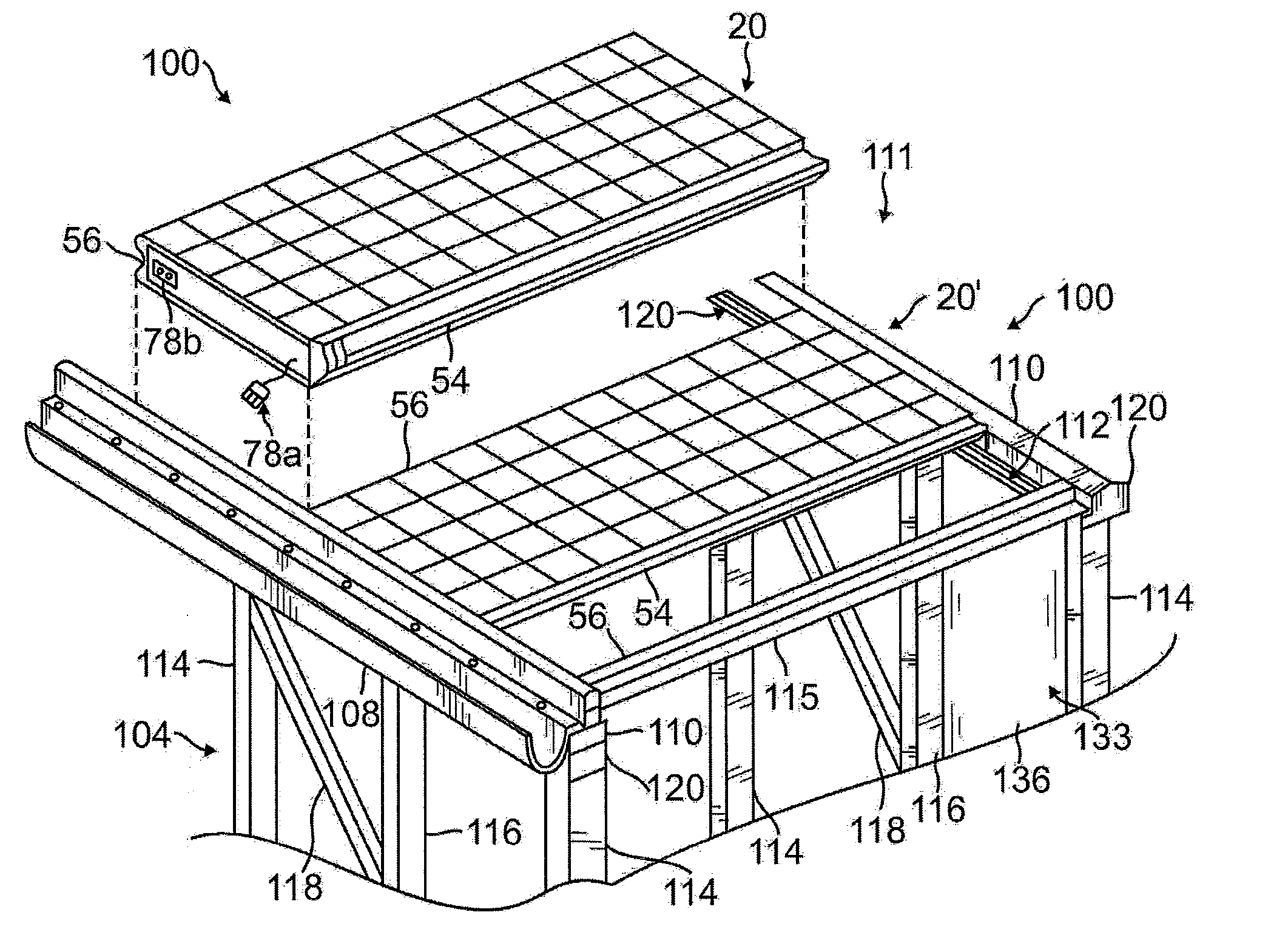
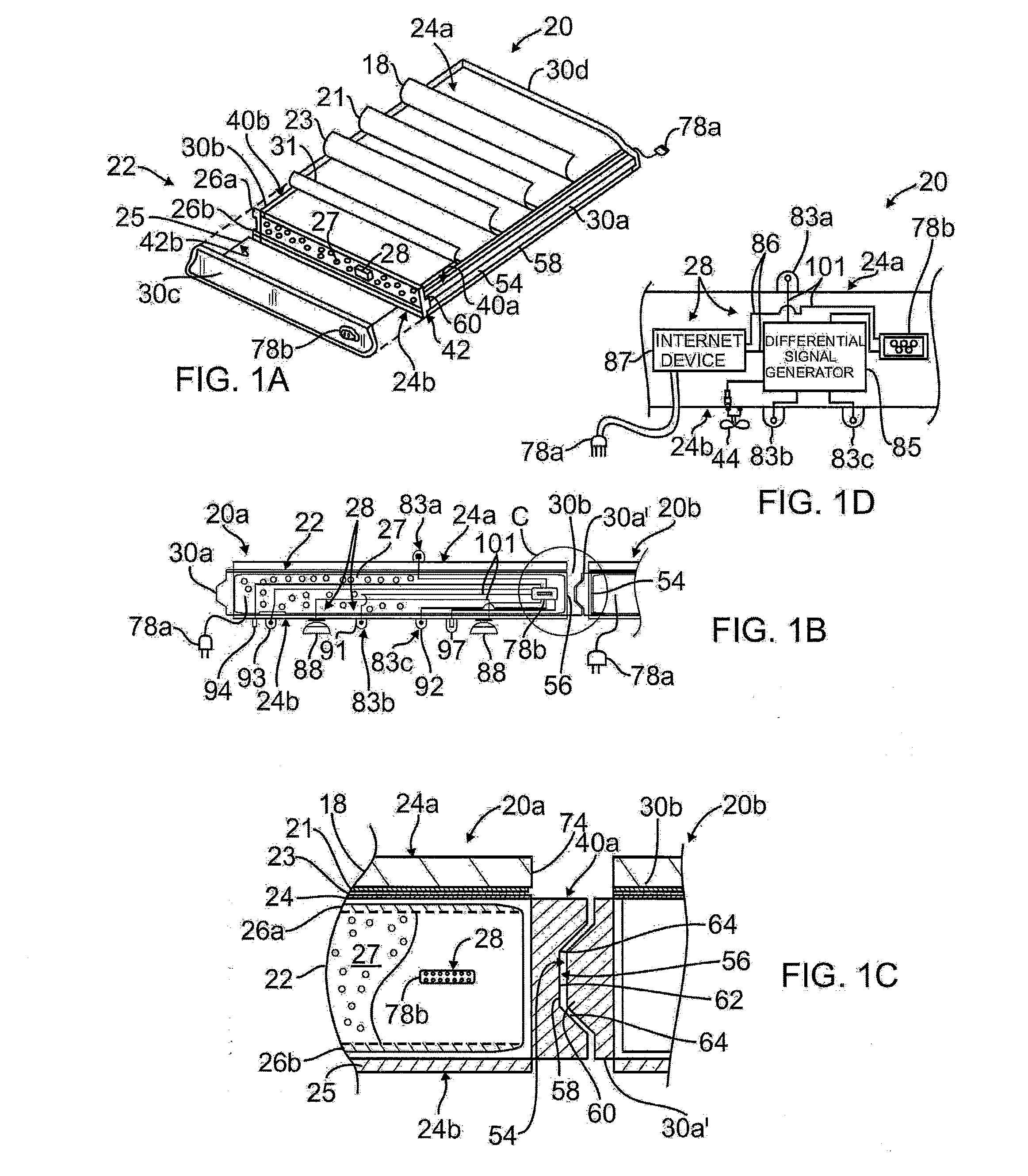
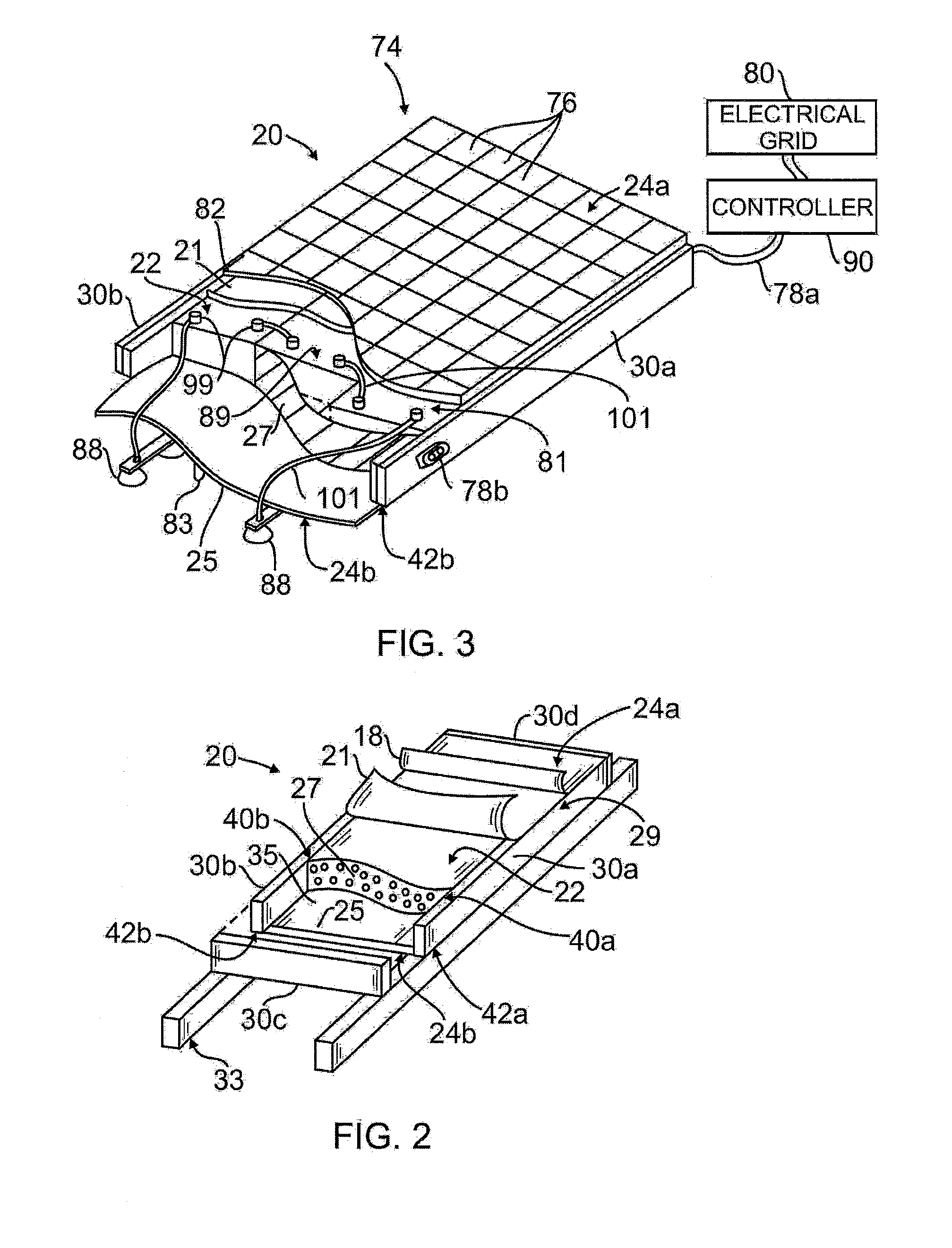

Multifunctional modular green building structure
PatentInactiveCN118223589A
Innovation
- A multi-functional modular green building structure is designed, including photovoltaic panels for solar conversion and storage of electrical energy, and a rainwater filtration system for collecting, filtering and storing rainwater for use and irrigation within the building.


Green Building Certification Standards for Modular
The integration of modular construction with green building practices requires adherence to established certification standards that validate environmental performance and sustainability credentials. Current certification frameworks have evolved to accommodate the unique characteristics of modular construction while maintaining rigorous environmental benchmarks.
LEED (Leadership in Energy and Environmental Design) has adapted its evaluation criteria to address modular construction projects, recognizing that factory-controlled manufacturing environments can enhance material efficiency and waste reduction. The certification process evaluates modular buildings based on energy performance, water efficiency, materials selection, and indoor environmental quality. Factory production allows for precise material quantification and waste stream management, often resulting in higher scores for material and resource credits.
BREEAM (Building Research Establishment Environmental Assessment Method) provides comprehensive assessment protocols for modular buildings, emphasizing lifecycle environmental impact and resource efficiency. The standard evaluates energy consumption, water usage, material sourcing, and ecological impact throughout the building's operational phase. Modular construction's inherent design standardization facilitates consistent performance metrics across multiple projects.
Green Star certification frameworks have developed specific pathways for modular construction, acknowledging the potential for reduced construction waste and improved energy efficiency through controlled manufacturing processes. The certification evaluates innovation in design, materials selection, and construction methodology, areas where modular approaches often demonstrate superior performance compared to traditional construction methods.
WELL Building Standard integration with modular construction focuses on occupant health and wellness, evaluating air quality, lighting, acoustics, and thermal comfort. Factory-controlled assembly environments enable precise installation of building systems, potentially improving indoor environmental quality metrics required for certification.
Emerging certification protocols specifically designed for modular construction are being developed to address unique aspects such as transportation impacts, assembly efficiency, and design flexibility. These standards recognize that modular construction's environmental benefits extend beyond operational performance to include reduced site disturbance, shortened construction timelines, and enhanced quality control through factory production processes.
The certification landscape continues evolving to better accommodate modular construction's distinct characteristics while maintaining stringent environmental performance requirements essential for green building validation.
LEED (Leadership in Energy and Environmental Design) has adapted its evaluation criteria to address modular construction projects, recognizing that factory-controlled manufacturing environments can enhance material efficiency and waste reduction. The certification process evaluates modular buildings based on energy performance, water efficiency, materials selection, and indoor environmental quality. Factory production allows for precise material quantification and waste stream management, often resulting in higher scores for material and resource credits.
BREEAM (Building Research Establishment Environmental Assessment Method) provides comprehensive assessment protocols for modular buildings, emphasizing lifecycle environmental impact and resource efficiency. The standard evaluates energy consumption, water usage, material sourcing, and ecological impact throughout the building's operational phase. Modular construction's inherent design standardization facilitates consistent performance metrics across multiple projects.
Green Star certification frameworks have developed specific pathways for modular construction, acknowledging the potential for reduced construction waste and improved energy efficiency through controlled manufacturing processes. The certification evaluates innovation in design, materials selection, and construction methodology, areas where modular approaches often demonstrate superior performance compared to traditional construction methods.
WELL Building Standard integration with modular construction focuses on occupant health and wellness, evaluating air quality, lighting, acoustics, and thermal comfort. Factory-controlled assembly environments enable precise installation of building systems, potentially improving indoor environmental quality metrics required for certification.
Emerging certification protocols specifically designed for modular construction are being developed to address unique aspects such as transportation impacts, assembly efficiency, and design flexibility. These standards recognize that modular construction's environmental benefits extend beyond operational performance to include reduced site disturbance, shortened construction timelines, and enhanced quality control through factory production processes.
The certification landscape continues evolving to better accommodate modular construction's distinct characteristics while maintaining stringent environmental performance requirements essential for green building validation.
Environmental Impact Assessment of Modular Buildings
Environmental impact assessment of modular buildings represents a critical evaluation framework that quantifies the ecological footprint throughout the entire lifecycle of prefabricated construction systems. This assessment methodology encompasses comprehensive analysis of resource consumption, waste generation, energy utilization, and emissions patterns from manufacturing through end-of-life disposal phases.
The manufacturing phase of modular construction demonstrates significantly reduced environmental impact compared to traditional building methods. Factory-controlled production environments enable precise material optimization, reducing waste generation by approximately 15-20% through standardized cutting processes and material reuse protocols. The controlled manufacturing setting also minimizes weather-related delays and material degradation, contributing to overall resource efficiency improvements.
Transportation considerations form a substantial component of environmental impact assessment for modular buildings. While the delivery of prefabricated modules requires specialized logistics and potentially longer transportation distances, the consolidated shipping approach often results in fewer total vehicle trips compared to traditional construction material deliveries. Advanced route optimization and load consolidation strategies further minimize transportation-related carbon emissions.
Energy consumption patterns during the construction phase reveal notable environmental advantages for modular systems. On-site assembly typically requires 50-70% less construction time, resulting in reduced equipment operation hours and associated fuel consumption. The elimination of wet trades and reduced need for temporary site facilities contributes to lower overall energy demands during the building assembly process.
Lifecycle carbon footprint analysis indicates that modular buildings can achieve 20-35% reduction in embodied carbon compared to conventional construction methods. This improvement stems from optimized material usage, reduced construction waste, and enhanced quality control measures that extend building lifespan. The standardization inherent in modular design also facilitates end-of-life disassembly and component reuse, supporting circular economy principles.
Water usage assessment reveals additional environmental benefits, particularly in regions with water scarcity concerns. Factory-based production eliminates most on-site water requirements for concrete curing and cleaning operations, while controlled environments enable water recycling systems that are impractical at traditional construction sites.
The assessment framework must also consider the environmental impact of enhanced building performance characteristics typical of modular construction, including improved thermal efficiency and reduced air leakage rates that contribute to long-term operational energy savings and associated emission reductions.
The manufacturing phase of modular construction demonstrates significantly reduced environmental impact compared to traditional building methods. Factory-controlled production environments enable precise material optimization, reducing waste generation by approximately 15-20% through standardized cutting processes and material reuse protocols. The controlled manufacturing setting also minimizes weather-related delays and material degradation, contributing to overall resource efficiency improvements.
Transportation considerations form a substantial component of environmental impact assessment for modular buildings. While the delivery of prefabricated modules requires specialized logistics and potentially longer transportation distances, the consolidated shipping approach often results in fewer total vehicle trips compared to traditional construction material deliveries. Advanced route optimization and load consolidation strategies further minimize transportation-related carbon emissions.
Energy consumption patterns during the construction phase reveal notable environmental advantages for modular systems. On-site assembly typically requires 50-70% less construction time, resulting in reduced equipment operation hours and associated fuel consumption. The elimination of wet trades and reduced need for temporary site facilities contributes to lower overall energy demands during the building assembly process.
Lifecycle carbon footprint analysis indicates that modular buildings can achieve 20-35% reduction in embodied carbon compared to conventional construction methods. This improvement stems from optimized material usage, reduced construction waste, and enhanced quality control measures that extend building lifespan. The standardization inherent in modular design also facilitates end-of-life disassembly and component reuse, supporting circular economy principles.
Water usage assessment reveals additional environmental benefits, particularly in regions with water scarcity concerns. Factory-based production eliminates most on-site water requirements for concrete curing and cleaning operations, while controlled environments enable water recycling systems that are impractical at traditional construction sites.
The assessment framework must also consider the environmental impact of enhanced building performance characteristics typical of modular construction, including improved thermal efficiency and reduced air leakage rates that contribute to long-term operational energy savings and associated emission reductions.
Unlock deeper insights with PatSnap Eureka Quick Research — get a full tech report to explore trends and direct your research. Try now!
Generate Your Research Report Instantly with AI Agent
Supercharge your innovation with PatSnap Eureka AI Agent Platform!