

How to Map Ion Diffusion Coefficient From a Cell Structure Diagram
JUL 17, 20269 MIN READ
Generate Your Research Report Instantly with AI Agent
Patsnap Eureka helps you evaluate technical feasibility & market potential.
Ion Diffusion Mapping Background and Objectives
Ion diffusion processes within electrochemical cells represent a fundamental mechanism governing the performance, efficiency, and longevity of energy storage devices. Understanding how ions migrate through complex cell architectures has become increasingly critical as battery technologies evolve toward higher energy densities and faster charging capabilities. The ability to accurately map ion diffusion coefficients from cell structure diagrams addresses a longstanding challenge in electrochemical engineering, where microscopic structural features directly influence macroscopic performance characteristics.
Historically, ion diffusion analysis relied heavily on experimental electrochemical techniques such as galvanostatic intermittent titration and electrochemical impedance spectroscopy. While these methods provide valuable empirical data, they offer limited spatial resolution and cannot directly correlate structural heterogeneities with local diffusion behavior. The emergence of advanced imaging technologies and computational modeling has created new opportunities to bridge this gap, enabling researchers to extract quantitative diffusion parameters directly from structural representations.
The primary objective of mapping ion diffusion coefficients from cell structure diagrams is to establish predictive relationships between architectural features and transport properties. This involves developing methodologies that can interpret two-dimensional or three-dimensional structural information, including porosity distributions, tortuosity factors, particle morphologies, and interfacial characteristics, then translate these geometric parameters into spatially resolved diffusion coefficients. Such capabilities would enable rapid screening of electrode designs, optimization of material compositions, and prediction of performance degradation patterns.
Current technological pursuits aim to integrate machine learning algorithms with physics-based models to automate the extraction and interpretation of structural data. The goal extends beyond simple coefficient calculation to encompass the creation of comprehensive digital twins that can simulate ion transport under various operating conditions. This approach promises to accelerate the development cycle of next-generation batteries by reducing reliance on time-consuming experimental iterations and enabling virtual prototyping of novel cell architectures before physical fabrication.
Historically, ion diffusion analysis relied heavily on experimental electrochemical techniques such as galvanostatic intermittent titration and electrochemical impedance spectroscopy. While these methods provide valuable empirical data, they offer limited spatial resolution and cannot directly correlate structural heterogeneities with local diffusion behavior. The emergence of advanced imaging technologies and computational modeling has created new opportunities to bridge this gap, enabling researchers to extract quantitative diffusion parameters directly from structural representations.
The primary objective of mapping ion diffusion coefficients from cell structure diagrams is to establish predictive relationships between architectural features and transport properties. This involves developing methodologies that can interpret two-dimensional or three-dimensional structural information, including porosity distributions, tortuosity factors, particle morphologies, and interfacial characteristics, then translate these geometric parameters into spatially resolved diffusion coefficients. Such capabilities would enable rapid screening of electrode designs, optimization of material compositions, and prediction of performance degradation patterns.
Current technological pursuits aim to integrate machine learning algorithms with physics-based models to automate the extraction and interpretation of structural data. The goal extends beyond simple coefficient calculation to encompass the creation of comprehensive digital twins that can simulate ion transport under various operating conditions. This approach promises to accelerate the development cycle of next-generation batteries by reducing reliance on time-consuming experimental iterations and enabling virtual prototyping of novel cell architectures before physical fabrication.
Market Demand for Cell Structure Analysis Tools
The battery industry is experiencing unprecedented growth driven by the global transition toward electrification and renewable energy storage. Electric vehicle manufacturers, energy storage system developers, and consumer electronics companies are intensifying their focus on battery performance optimization, particularly in understanding ion transport mechanisms within electrode materials. This heightened emphasis has created substantial demand for advanced analytical tools capable of extracting quantitative electrochemical parameters from structural characterization data.
Traditional battery development workflows rely heavily on experimental electrochemical testing, which is time-consuming and resource-intensive. Researchers and engineers increasingly seek computational approaches that can predict ion diffusion coefficients directly from structural imaging data such as scanning electron microscopy or computed tomography scans. The ability to rapidly assess ion transport properties from cell structure diagrams would significantly accelerate material screening processes, reduce development cycles, and lower research costs across the battery value chain.
Academic institutions and industrial research laboratories represent primary market segments for cell structure analysis tools. Universities conducting fundamental battery research require sophisticated software platforms that integrate image processing, structural analysis, and electrochemical modeling capabilities. Corporate research divisions at major battery manufacturers and automotive companies demand scalable solutions that can handle large datasets and integrate seamlessly with existing materials informatics infrastructure.
The market potential extends beyond lithium-ion battery applications. Emerging technologies including solid-state batteries, sodium-ion systems, and multivalent ion batteries all require detailed understanding of ion transport phenomena. Analysis tools capable of mapping diffusion coefficients from structural data offer universal applicability across diverse battery chemistries, expanding the addressable market significantly.
Current market gaps include the lack of standardized methodologies for correlating structural features with transport properties, limited availability of user-friendly software platforms, and insufficient validation frameworks. Companies and research groups developing solutions that address these limitations while offering robust automation, high accuracy, and comprehensive documentation stand to capture significant market share in this rapidly expanding sector. The convergence of artificial intelligence, high-resolution imaging, and computational materials science creates favorable conditions for innovative cell structure analysis tools to gain widespread adoption.
Traditional battery development workflows rely heavily on experimental electrochemical testing, which is time-consuming and resource-intensive. Researchers and engineers increasingly seek computational approaches that can predict ion diffusion coefficients directly from structural imaging data such as scanning electron microscopy or computed tomography scans. The ability to rapidly assess ion transport properties from cell structure diagrams would significantly accelerate material screening processes, reduce development cycles, and lower research costs across the battery value chain.
Academic institutions and industrial research laboratories represent primary market segments for cell structure analysis tools. Universities conducting fundamental battery research require sophisticated software platforms that integrate image processing, structural analysis, and electrochemical modeling capabilities. Corporate research divisions at major battery manufacturers and automotive companies demand scalable solutions that can handle large datasets and integrate seamlessly with existing materials informatics infrastructure.
The market potential extends beyond lithium-ion battery applications. Emerging technologies including solid-state batteries, sodium-ion systems, and multivalent ion batteries all require detailed understanding of ion transport phenomena. Analysis tools capable of mapping diffusion coefficients from structural data offer universal applicability across diverse battery chemistries, expanding the addressable market significantly.
Current market gaps include the lack of standardized methodologies for correlating structural features with transport properties, limited availability of user-friendly software platforms, and insufficient validation frameworks. Companies and research groups developing solutions that address these limitations while offering robust automation, high accuracy, and comprehensive documentation stand to capture significant market share in this rapidly expanding sector. The convergence of artificial intelligence, high-resolution imaging, and computational materials science creates favorable conditions for innovative cell structure analysis tools to gain widespread adoption.
Current Status of Ion Diffusion Coefficient Measurement
Ion diffusion coefficient measurement in battery systems has evolved significantly over the past decades, transitioning from traditional electrochemical methods to advanced characterization techniques. Currently, the field employs multiple experimental approaches, each with distinct advantages and limitations in capturing ion transport behavior within complex cell structures.
Electrochemical impedance spectroscopy remains the most widely adopted technique for determining ion diffusion coefficients in battery materials. This method analyzes the frequency-dependent response of electrochemical systems, enabling extraction of diffusion parameters through equivalent circuit modeling. However, EIS provides averaged values across the entire electrode structure rather than spatially resolved information, limiting its ability to correlate diffusion properties with specific microstructural features.
Galvanostatic intermittent titration technique and potentiostatic intermittent titration technique represent classical approaches that measure diffusion coefficients through controlled current or voltage pulses. These methods offer reliable quantitative data but require extended testing periods and assume homogeneous material properties, making them unsuitable for mapping spatial variations in diffusion behavior across heterogeneous cell structures.
Advanced imaging techniques have emerged as complementary tools for understanding ion transport mechanisms. Neutron depth profiling and secondary ion mass spectrometry provide concentration profiles of lithium ions with high spatial resolution, enabling calculation of local diffusion coefficients. Nevertheless, these techniques are destructive, expensive, and require specialized facilities, limiting their accessibility for routine characterization.
Recent developments in operando characterization methods, including X-ray computed tomography and nuclear magnetic resonance imaging, allow real-time visualization of ion distribution during battery operation. While these techniques offer valuable insights into dynamic transport processes, they primarily capture concentration gradients rather than directly measuring diffusion coefficients. The challenge of extracting quantitative diffusion parameters from structural imaging data remains a significant gap in current measurement capabilities.
The fundamental limitation across existing methods lies in the disconnect between structural characterization and diffusion coefficient determination. Most techniques either provide bulk-averaged transport properties without structural context or deliver high-resolution structural information without direct diffusion measurements, creating a critical need for integrated approaches that can map ion diffusion coefficients directly from cell structure diagrams.
Electrochemical impedance spectroscopy remains the most widely adopted technique for determining ion diffusion coefficients in battery materials. This method analyzes the frequency-dependent response of electrochemical systems, enabling extraction of diffusion parameters through equivalent circuit modeling. However, EIS provides averaged values across the entire electrode structure rather than spatially resolved information, limiting its ability to correlate diffusion properties with specific microstructural features.
Galvanostatic intermittent titration technique and potentiostatic intermittent titration technique represent classical approaches that measure diffusion coefficients through controlled current or voltage pulses. These methods offer reliable quantitative data but require extended testing periods and assume homogeneous material properties, making them unsuitable for mapping spatial variations in diffusion behavior across heterogeneous cell structures.
Advanced imaging techniques have emerged as complementary tools for understanding ion transport mechanisms. Neutron depth profiling and secondary ion mass spectrometry provide concentration profiles of lithium ions with high spatial resolution, enabling calculation of local diffusion coefficients. Nevertheless, these techniques are destructive, expensive, and require specialized facilities, limiting their accessibility for routine characterization.
Recent developments in operando characterization methods, including X-ray computed tomography and nuclear magnetic resonance imaging, allow real-time visualization of ion distribution during battery operation. While these techniques offer valuable insights into dynamic transport processes, they primarily capture concentration gradients rather than directly measuring diffusion coefficients. The challenge of extracting quantitative diffusion parameters from structural imaging data remains a significant gap in current measurement capabilities.
The fundamental limitation across existing methods lies in the disconnect between structural characterization and diffusion coefficient determination. Most techniques either provide bulk-averaged transport properties without structural context or deliver high-resolution structural information without direct diffusion measurements, creating a critical need for integrated approaches that can map ion diffusion coefficients directly from cell structure diagrams.
Existing Ion Diffusion Coefficient Mapping Solutions
01 Measurement methods for ion diffusion coefficient in battery materials
Various measurement techniques and apparatus have been developed to determine ion diffusion coefficients in battery materials, particularly for lithium-ion batteries. These methods include electrochemical impedance spectroscopy, galvanostatic intermittent titration technique (GITT), and potentiostatic intermittent titration technique (PITT). The measurement systems typically involve controlled testing environments with precise voltage and current control to accurately calculate diffusion coefficients from electrochemical responses.- Measurement methods for ion diffusion coefficient in battery materials: Various measurement techniques and apparatus have been developed to determine ion diffusion coefficients in battery materials, particularly for lithium-ion batteries. These methods include electrochemical impedance spectroscopy, galvanostatic intermittent titration technique (GITT), and potentiostatic intermittent titration technique (PITT). The measurement systems typically involve specialized testing equipment and data analysis algorithms to accurately calculate diffusion coefficients from experimental data. These techniques are essential for characterizing battery performance and optimizing material properties.
- Calculation and simulation of ion diffusion coefficient using computational models: Computational approaches have been developed to calculate and predict ion diffusion coefficients through numerical simulation and modeling. These methods employ various algorithms including finite element analysis, molecular dynamics simulations, and machine learning techniques to estimate diffusion behavior. The computational models can process experimental data or simulate ion transport mechanisms at different scales, from atomic to macroscopic levels. These approaches enable rapid screening of materials and prediction of diffusion properties without extensive experimental testing.
- Ion diffusion coefficient determination in solid electrolytes and membranes: Specialized techniques have been developed for measuring ion diffusion coefficients in solid-state electrolytes, ion-exchange membranes, and other solid ionic conductors. These methods account for the unique characteristics of solid materials, including grain boundaries, interfacial effects, and structural defects. The measurement approaches often combine electrochemical testing with structural characterization to correlate diffusion properties with material microstructure. Applications include solid-state batteries, fuel cells, and electrochemical sensors.
- Temperature-dependent ion diffusion coefficient analysis: Methods and systems have been developed to study the temperature dependence of ion diffusion coefficients across various temperature ranges. These approaches involve controlled temperature environments and multi-temperature testing protocols to establish the relationship between diffusion coefficient and temperature. The analysis typically includes determination of activation energy and pre-exponential factors based on Arrhenius-type relationships. Such studies are crucial for understanding ion transport mechanisms and predicting material performance under different operating conditions.
- Ion diffusion coefficient measurement in liquid electrolytes and solutions: Techniques have been established for determining ion diffusion coefficients in liquid electrolytes, aqueous solutions, and organic solvents. These methods include conductivity measurements, NMR spectroscopy, and electrochemical techniques adapted for liquid systems. The measurement approaches consider factors such as ion concentration, solvent properties, and ion-ion interactions. Applications span electrochemistry, chemical engineering, and environmental science, where understanding ion transport in liquids is essential for process optimization and system design.
02 Calculation models and algorithms for ion diffusion coefficient
Advanced computational methods and mathematical models have been developed to calculate ion diffusion coefficients from experimental data. These include finite element analysis, numerical simulation methods, and data processing algorithms that account for various factors such as temperature, concentration gradients, and material properties. The models enable more accurate prediction and analysis of ion transport behavior in different materials and conditions.Expand Specific Solutions03 Testing apparatus and devices for diffusion coefficient determination
Specialized testing equipment and devices have been designed for measuring ion diffusion coefficients. These apparatus include testing chambers, electrode configurations, and integrated measurement systems that provide controlled environments for diffusion studies. The devices often feature automated data collection, temperature control, and multi-channel testing capabilities to improve measurement accuracy and efficiency.Expand Specific Solutions04 Ion diffusion coefficient in solid electrolytes and membranes
Research has focused on determining and optimizing ion diffusion coefficients in solid electrolytes, ion exchange membranes, and separator materials. These studies investigate how material composition, structure, and processing conditions affect ion transport properties. Understanding diffusion behavior in these materials is critical for improving performance in batteries, fuel cells, and other electrochemical devices.Expand Specific Solutions05 Application of ion diffusion coefficient in battery performance evaluation
Ion diffusion coefficient serves as a key parameter for evaluating and predicting battery performance characteristics. It is used to assess charge-discharge rates, capacity retention, and overall electrochemical performance. Methods have been developed to correlate diffusion coefficients with practical battery metrics, enabling better material selection and battery design optimization for various applications including electric vehicles and energy storage systems.Expand Specific Solutions
Key Players in Cell Analysis and Imaging Systems
The technology of mapping ion diffusion coefficients from cell structure diagrams represents an emerging interdisciplinary field at the intersection of computational biology, materials science, and medical imaging. This domain is currently in its early-to-mid development stage, characterized by significant research activity from academic institutions like Tsinghua University, Harbin Institute of Technology, and Sichuan University, alongside established technology players such as Siemens Healthineers AG and Koninklijke Philips NV. The market shows promising growth potential, particularly in battery technology development through companies like Svolt Energy Technology and XTC New Energy Materials, as well as medical diagnostics applications. Technology maturity varies considerably across applications, with more advanced implementations in medical imaging systems from Siemens Healthineers and Philips, while computational mapping techniques remain largely in research phases at institutions like University of Washington and Oxford University Innovation. The competitive landscape reflects a hybrid ecosystem where healthcare equipment manufacturers, battery technology developers, and research universities collaborate to advance ion diffusion analysis methodologies.
Tsinghua University
Technical Solution: Tsinghua University has pioneered integrated approaches combining high-resolution structural characterization with computational electrochemistry to derive ion diffusion coefficients from battery cell architectures. Their methodology encompasses synchrotron X-ray computed tomography for non-destructive 3D structural mapping, coupled with physics-based models that solve Fick's diffusion equations within the actual geometric constraints observed in cell diagrams. The research team has developed open-source software tools that automate the process of segmenting structural features, meshing complex geometries, and performing finite element simulations to extract spatially-resolved diffusion coefficients. Their work particularly addresses heterogeneous electrode structures and interfaces in next-generation lithium-ion and sodium-ion batteries.
Strengths: World-class research institution with cutting-edge characterization equipment; strong collaboration networks enabling comprehensive validation; open-source tool development benefits broader community. Weaknesses: Academic focus may result in methods optimized for research rather than high-throughput industrial applications; computational intensity may limit accessibility.
Svolt Energy Technology Co., Ltd.
Technical Solution: Svolt Energy has developed advanced computational modeling techniques combined with experimental validation methods to map ion diffusion coefficients from cell structure diagrams. Their approach integrates multi-scale modeling frameworks that correlate structural features observed in microscopy images with electrochemical impedance spectroscopy (EIS) data. The methodology employs machine learning algorithms to identify key structural parameters such as porosity, tortuosity, and particle size distribution from cell cross-sectional images, then applies finite element analysis to simulate ion transport pathways. This enables quantitative determination of effective diffusion coefficients for lithium ions in various electrode architectures, supporting their battery design optimization efforts.
Strengths: Industry-leading expertise in battery manufacturing with direct application to production optimization; strong integration of computational and experimental approaches. Weaknesses: Methodology may be proprietary and less accessible for academic research; limited published validation across diverse cell chemistries.
Core Technologies in Image-Based Diffusion Analysis
Lithium ion diffusion coefficient calculation method and device
PatentPendingCN121113791A
Innovation
- The lithium-ion diffusion coefficient was calculated by fitting the PRT formula, obtaining test data of the potential relaxation stage of the test electrode and liquid phase material, and combining it with the theoretical model.


Method for testing calcium ion diffusion coefficient of concrete
PatentInactiveCN102621041A
Innovation
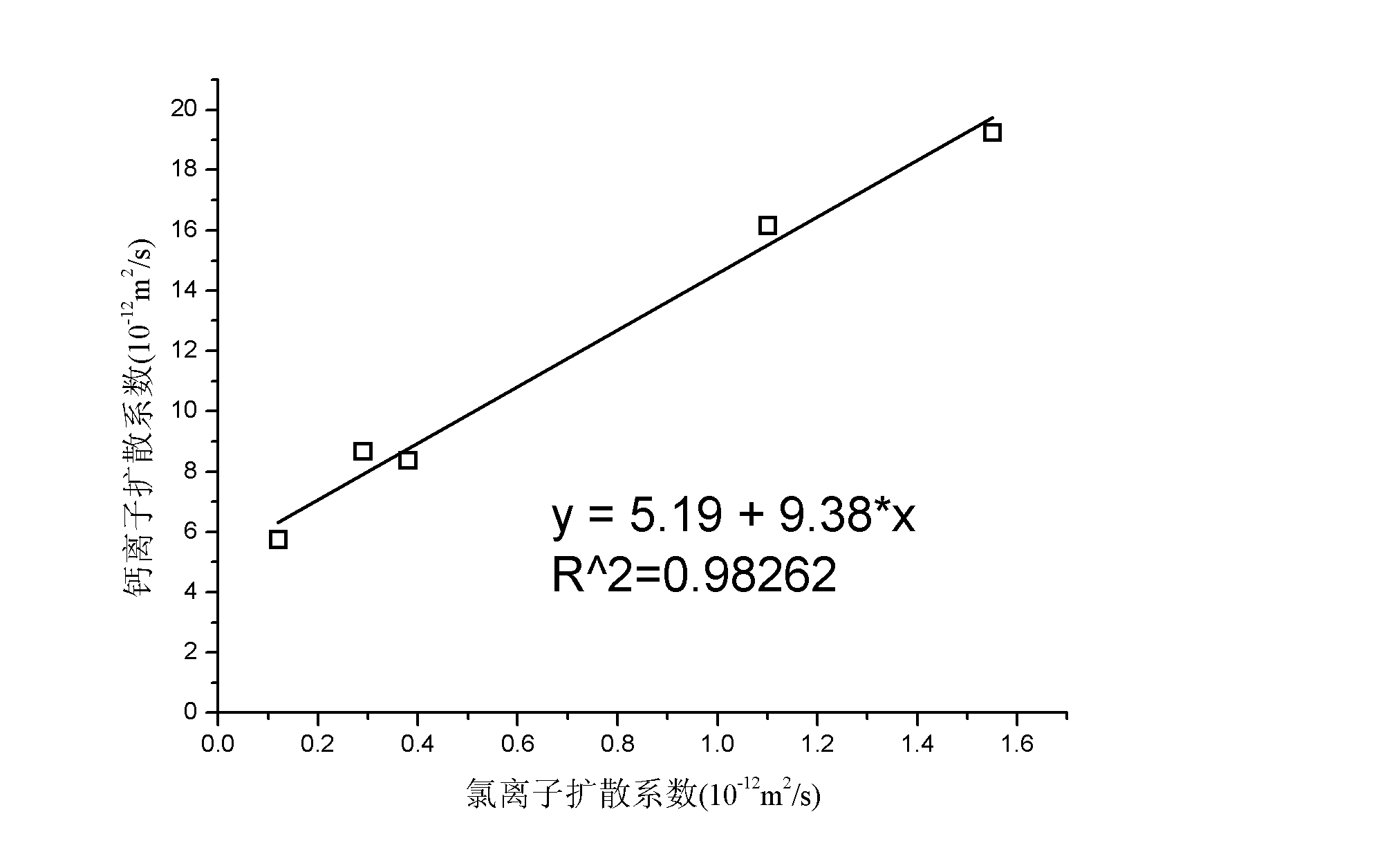
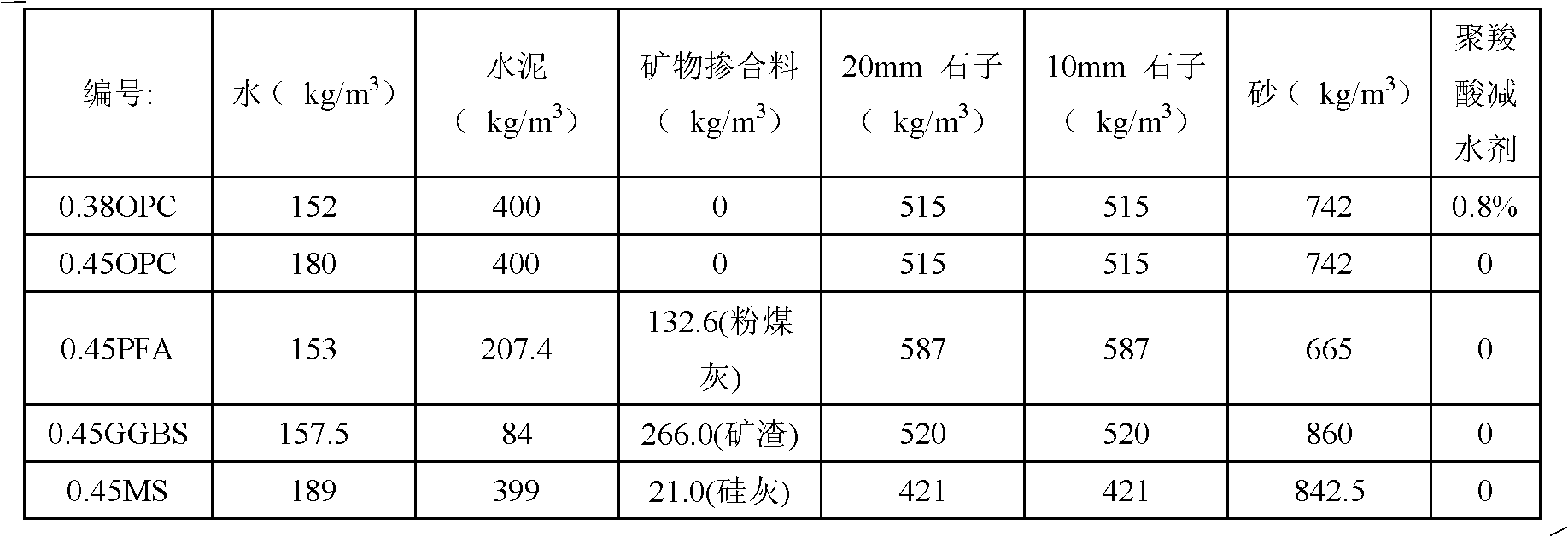
- A method for testing the calcium ion diffusion coefficient of concrete was designed. The concrete was made into thin slices, treated with vacuum saturated calcium hydroxide solution, and the migration rate of calcium ions was measured under a certain voltage. The calcium ion diffusion coefficient was calculated using formula D. Calculate Ca = (dc/dt) × (R × z × C × F × E) / (T × L × A).


AI-Driven Cell Structure Recognition Methods
AI-driven cell structure recognition methods have emerged as transformative approaches for analyzing battery cell architectures and extracting critical structural parameters necessary for ion diffusion coefficient mapping. These methods leverage advanced computer vision algorithms, deep learning frameworks, and image processing techniques to automate the interpretation of microscopy images, CT scans, and other imaging modalities that capture cell internal structures.
Convolutional Neural Networks (CNNs) represent the foundational architecture for cell structure recognition tasks. Models such as U-Net, ResNet, and their variants have demonstrated exceptional capability in segmenting different cell components including electrodes, separators, current collectors, and electrolyte regions. These networks are trained on annotated datasets of cell cross-sections to identify boundaries, measure layer thicknesses, and detect structural irregularities that influence ion transport pathways.
Recent advancements incorporate semantic segmentation and instance segmentation techniques to distinguish between multiple structural features simultaneously. Mask R-CNN and DeepLab architectures enable pixel-level classification, allowing precise delineation of porous electrode structures, particle boundaries, and void spaces. This granular recognition is essential for calculating tortuosity factors and porosity distributions that directly impact diffusion coefficient calculations.
Transfer learning strategies have accelerated model development by adapting pre-trained networks from general image recognition tasks to specialized battery cell analysis. This approach reduces the requirement for extensive labeled training data, which is often scarce in specialized materials science applications. Fine-tuning on domain-specific datasets enhances recognition accuracy for unique cell architectures and manufacturing variations.
Integration of multi-scale analysis frameworks addresses the challenge of recognizing structures across different magnification levels. Hierarchical models process images at various resolutions to capture both macro-scale cell geometry and micro-scale particle arrangements. This multi-resolution capability ensures comprehensive structural characterization necessary for accurate diffusion modeling.
Emerging hybrid approaches combine AI recognition with physics-based validation, where identified structural parameters are cross-verified against electrochemical performance data. This integration enhances reliability and provides feedback loops for continuous model improvement, establishing a robust pipeline from image acquisition to quantitative diffusion coefficient determination.
Convolutional Neural Networks (CNNs) represent the foundational architecture for cell structure recognition tasks. Models such as U-Net, ResNet, and their variants have demonstrated exceptional capability in segmenting different cell components including electrodes, separators, current collectors, and electrolyte regions. These networks are trained on annotated datasets of cell cross-sections to identify boundaries, measure layer thicknesses, and detect structural irregularities that influence ion transport pathways.
Recent advancements incorporate semantic segmentation and instance segmentation techniques to distinguish between multiple structural features simultaneously. Mask R-CNN and DeepLab architectures enable pixel-level classification, allowing precise delineation of porous electrode structures, particle boundaries, and void spaces. This granular recognition is essential for calculating tortuosity factors and porosity distributions that directly impact diffusion coefficient calculations.
Transfer learning strategies have accelerated model development by adapting pre-trained networks from general image recognition tasks to specialized battery cell analysis. This approach reduces the requirement for extensive labeled training data, which is often scarce in specialized materials science applications. Fine-tuning on domain-specific datasets enhances recognition accuracy for unique cell architectures and manufacturing variations.
Integration of multi-scale analysis frameworks addresses the challenge of recognizing structures across different magnification levels. Hierarchical models process images at various resolutions to capture both macro-scale cell geometry and micro-scale particle arrangements. This multi-resolution capability ensures comprehensive structural characterization necessary for accurate diffusion modeling.
Emerging hybrid approaches combine AI recognition with physics-based validation, where identified structural parameters are cross-verified against electrochemical performance data. This integration enhances reliability and provides feedback loops for continuous model improvement, establishing a robust pipeline from image acquisition to quantitative diffusion coefficient determination.
Multi-Modal Data Integration for Diffusion Prediction
Predicting ion diffusion coefficients from cell structure diagrams requires the integration of multiple data modalities to capture the complex relationships between structural features and transport properties. Multi-modal data integration represents a critical methodological advancement that combines visual information from microscopy images, geometric parameters from structural analysis, and physicochemical properties from material databases. This integrated approach enables more accurate and robust predictions by leveraging complementary information sources that individually provide incomplete representations of the diffusion phenomenon.
The primary challenge in multi-modal integration lies in establishing effective fusion strategies that preserve the unique characteristics of each data type while creating meaningful cross-modal correlations. Image data from cell structure diagrams contains spatial information about electrode morphology, porosity distribution, and particle arrangements. Simultaneously, tabular data encompasses quantitative metrics such as tortuosity factors, pore size distributions, and material composition ratios. Advanced integration frameworks must address the heterogeneity in data formats, scales, and dimensionalities to construct unified representations suitable for diffusion coefficient prediction.
Recent developments in deep learning architectures have introduced sophisticated fusion mechanisms that operate at different levels of the prediction pipeline. Early fusion approaches concatenate features from multiple modalities at the input stage, enabling the model to learn joint representations from the beginning. Late fusion strategies maintain separate processing pathways for each modality and combine predictions at the final decision layer, preserving modality-specific patterns. Hybrid fusion methods offer intermediate integration points, allowing hierarchical feature interactions that balance specificity and generalization.
The effectiveness of multi-modal integration depends critically on proper alignment and normalization procedures that ensure compatible feature spaces across modalities. Attention mechanisms have emerged as powerful tools for dynamically weighting the contribution of different data sources based on their relevance to specific prediction tasks. These mechanisms enable the model to adaptively focus on the most informative modality combinations for different structural configurations, improving prediction accuracy across diverse cell designs and operating conditions.
The primary challenge in multi-modal integration lies in establishing effective fusion strategies that preserve the unique characteristics of each data type while creating meaningful cross-modal correlations. Image data from cell structure diagrams contains spatial information about electrode morphology, porosity distribution, and particle arrangements. Simultaneously, tabular data encompasses quantitative metrics such as tortuosity factors, pore size distributions, and material composition ratios. Advanced integration frameworks must address the heterogeneity in data formats, scales, and dimensionalities to construct unified representations suitable for diffusion coefficient prediction.
Recent developments in deep learning architectures have introduced sophisticated fusion mechanisms that operate at different levels of the prediction pipeline. Early fusion approaches concatenate features from multiple modalities at the input stage, enabling the model to learn joint representations from the beginning. Late fusion strategies maintain separate processing pathways for each modality and combine predictions at the final decision layer, preserving modality-specific patterns. Hybrid fusion methods offer intermediate integration points, allowing hierarchical feature interactions that balance specificity and generalization.
The effectiveness of multi-modal integration depends critically on proper alignment and normalization procedures that ensure compatible feature spaces across modalities. Attention mechanisms have emerged as powerful tools for dynamically weighting the contribution of different data sources based on their relevance to specific prediction tasks. These mechanisms enable the model to adaptively focus on the most informative modality combinations for different structural configurations, improving prediction accuracy across diverse cell designs and operating conditions.
Unlock deeper insights with Patsnap Eureka Quick Research — get a full tech report to explore trends and direct your research. Try now!
Generate Your Research Report Instantly with AI Agent
Supercharge your innovation with Patsnap Eureka AI Agent Platform!