
How to Minimize Telemetry Interference in RF Environments
APR 3, 20269 MIN READ
Generate Your Research Report Instantly with AI Agent
Patsnap Eureka helps you evaluate technical feasibility & market potential.
RF Telemetry Interference Background and Objectives
Radio frequency telemetry systems have become indispensable across numerous critical applications, from aerospace missions and satellite communications to industrial monitoring and medical devices. However, the exponential growth in wireless communications and the increasing density of RF devices have created a complex electromagnetic environment where interference poses significant challenges to reliable data transmission.
The evolution of telemetry systems began in the early 20th century with simple radio transmissions for weather monitoring. Over decades, these systems have advanced to support high-speed data rates, multiple channel configurations, and sophisticated modulation schemes. Modern telemetry applications span from real-time monitoring of aircraft flight parameters to remote sensing in oil and gas pipelines, each demanding exceptional reliability and data integrity.
Contemporary RF environments present unprecedented challenges due to spectrum congestion, with multiple users competing for limited frequency bands. The proliferation of commercial wireless services, including cellular networks, WiFi systems, and emerging 5G infrastructure, has intensified the interference landscape. Additionally, intentional jamming threats and unintentional emissions from electronic devices further complicate the operational environment.
The primary objective of minimizing telemetry interference encompasses several critical goals. First, ensuring reliable data transmission with minimal packet loss and maintaining acceptable bit error rates under adverse conditions. Second, optimizing spectrum utilization efficiency to maximize throughput while coexisting with other RF systems. Third, developing adaptive mechanisms that can dynamically respond to changing interference conditions in real-time.
Technical objectives include implementing advanced signal processing techniques to enhance interference rejection capabilities, developing intelligent frequency management algorithms for optimal channel selection, and creating robust modulation schemes that maintain performance in high-interference scenarios. Furthermore, the integration of machine learning approaches for predictive interference mitigation represents a key advancement direction.
The ultimate goal extends beyond mere interference suppression to achieving seamless telemetry operations that support mission-critical applications with guaranteed quality of service parameters, enabling next-generation telemetry systems capable of operating reliably in increasingly complex electromagnetic environments.
The evolution of telemetry systems began in the early 20th century with simple radio transmissions for weather monitoring. Over decades, these systems have advanced to support high-speed data rates, multiple channel configurations, and sophisticated modulation schemes. Modern telemetry applications span from real-time monitoring of aircraft flight parameters to remote sensing in oil and gas pipelines, each demanding exceptional reliability and data integrity.
Contemporary RF environments present unprecedented challenges due to spectrum congestion, with multiple users competing for limited frequency bands. The proliferation of commercial wireless services, including cellular networks, WiFi systems, and emerging 5G infrastructure, has intensified the interference landscape. Additionally, intentional jamming threats and unintentional emissions from electronic devices further complicate the operational environment.
The primary objective of minimizing telemetry interference encompasses several critical goals. First, ensuring reliable data transmission with minimal packet loss and maintaining acceptable bit error rates under adverse conditions. Second, optimizing spectrum utilization efficiency to maximize throughput while coexisting with other RF systems. Third, developing adaptive mechanisms that can dynamically respond to changing interference conditions in real-time.
Technical objectives include implementing advanced signal processing techniques to enhance interference rejection capabilities, developing intelligent frequency management algorithms for optimal channel selection, and creating robust modulation schemes that maintain performance in high-interference scenarios. Furthermore, the integration of machine learning approaches for predictive interference mitigation represents a key advancement direction.
The ultimate goal extends beyond mere interference suppression to achieving seamless telemetry operations that support mission-critical applications with guaranteed quality of service parameters, enabling next-generation telemetry systems capable of operating reliably in increasingly complex electromagnetic environments.
Market Demand for Reliable RF Telemetry Systems
The global demand for reliable RF telemetry systems has experienced substantial growth across multiple industries, driven by the increasing complexity of modern electronic environments and the critical need for uninterrupted data transmission. This demand surge stems from the proliferation of wireless devices, IoT deployments, and mission-critical applications where telemetry interference can result in significant operational failures or safety hazards.
Aerospace and defense sectors represent the largest market segment for interference-resistant telemetry solutions. Military communications, satellite operations, and unmanned vehicle control systems require robust RF telemetry that can operate effectively in contested electromagnetic environments. The growing deployment of electronic warfare systems and the increasing density of RF spectrum usage have intensified the need for advanced anti-interference technologies.
Industrial automation and manufacturing sectors demonstrate rapidly expanding demand for reliable telemetry systems. Smart factories, process control systems, and remote monitoring applications depend on consistent data transmission to maintain operational efficiency and safety standards. The integration of Industry 4.0 technologies has created environments with high RF device density, necessitating sophisticated interference mitigation capabilities.
Healthcare applications present another significant growth area, particularly in medical device telemetry and patient monitoring systems. Hospitals and medical facilities contain numerous RF-emitting devices, creating challenging electromagnetic environments where reliable telemetry is essential for patient safety. Remote patient monitoring and telemedicine applications further drive demand for interference-resistant solutions.
The automotive industry's transition toward connected and autonomous vehicles has created substantial market opportunities for reliable RF telemetry systems. Vehicle-to-vehicle communication, sensor data transmission, and remote diagnostics require robust performance in urban RF environments with high interference levels.
Energy sector applications, including smart grid infrastructure, renewable energy monitoring, and oil and gas operations, increasingly rely on telemetry systems that can function reliably in electrically noisy environments. The expansion of distributed energy resources and smart metering deployments continues to drive market growth.
Market research indicates strong growth trajectories across all application sectors, with particular emphasis on solutions that can adapt dynamically to changing interference conditions and provide guaranteed performance levels in critical applications.
Aerospace and defense sectors represent the largest market segment for interference-resistant telemetry solutions. Military communications, satellite operations, and unmanned vehicle control systems require robust RF telemetry that can operate effectively in contested electromagnetic environments. The growing deployment of electronic warfare systems and the increasing density of RF spectrum usage have intensified the need for advanced anti-interference technologies.
Industrial automation and manufacturing sectors demonstrate rapidly expanding demand for reliable telemetry systems. Smart factories, process control systems, and remote monitoring applications depend on consistent data transmission to maintain operational efficiency and safety standards. The integration of Industry 4.0 technologies has created environments with high RF device density, necessitating sophisticated interference mitigation capabilities.
Healthcare applications present another significant growth area, particularly in medical device telemetry and patient monitoring systems. Hospitals and medical facilities contain numerous RF-emitting devices, creating challenging electromagnetic environments where reliable telemetry is essential for patient safety. Remote patient monitoring and telemedicine applications further drive demand for interference-resistant solutions.
The automotive industry's transition toward connected and autonomous vehicles has created substantial market opportunities for reliable RF telemetry systems. Vehicle-to-vehicle communication, sensor data transmission, and remote diagnostics require robust performance in urban RF environments with high interference levels.
Energy sector applications, including smart grid infrastructure, renewable energy monitoring, and oil and gas operations, increasingly rely on telemetry systems that can function reliably in electrically noisy environments. The expansion of distributed energy resources and smart metering deployments continues to drive market growth.
Market research indicates strong growth trajectories across all application sectors, with particular emphasis on solutions that can adapt dynamically to changing interference conditions and provide guaranteed performance levels in critical applications.
Current RF Interference Challenges and Limitations
RF interference in telemetry systems represents one of the most persistent and complex challenges facing modern wireless communication networks. The proliferation of electronic devices, wireless technologies, and communication systems has created an increasingly congested electromagnetic spectrum, where telemetry signals must compete for clean transmission paths. This congestion manifests in various forms, including co-channel interference, adjacent channel interference, and intermodulation distortion, each presenting unique obstacles to reliable data transmission.
The fundamental challenge stems from the finite nature of available spectrum resources coupled with exponentially growing demand for wireless connectivity. Traditional telemetry systems operating in ISM bands face particular difficulties as these frequencies are shared with numerous other applications, including Wi-Fi networks, Bluetooth devices, microwave ovens, and industrial equipment. The resulting interference patterns are often unpredictable and dynamic, making conventional mitigation strategies less effective.
Current RF environments exhibit several critical limitations that compound interference issues. Legacy infrastructure often lacks the sophistication to adapt to changing interference conditions in real-time. Many existing telemetry systems rely on fixed frequency allocation schemes that cannot dynamically respond to spectrum availability, resulting in suboptimal performance when interference levels fluctuate. Additionally, the increasing deployment density of wireless devices creates near-field interference effects that traditional far-field propagation models fail to accurately predict.
Power management presents another significant limitation in current approaches. Many telemetry devices operate under strict power constraints, limiting their ability to overcome interference through increased transmission power. This constraint is particularly problematic in industrial environments where high-power equipment generates substantial electromagnetic noise across wide frequency ranges. The challenge is further exacerbated by regulatory limitations that restrict maximum transmission power levels, creating a narrow operational window for effective communication.
Multipath propagation in complex RF environments introduces additional complications that current systems struggle to address effectively. Indoor industrial facilities, urban environments, and areas with significant metallic infrastructure create reflection and scattering patterns that can cause signal degradation and interference. These effects are often frequency-dependent and time-varying, making static compensation techniques inadequate for maintaining consistent telemetry performance.
The emergence of new wireless technologies, including 5G networks, IoT deployments, and advanced radar systems, continues to reshape the interference landscape. These technologies often employ sophisticated signal processing techniques and adaptive protocols that can inadvertently impact legacy telemetry systems not designed to coexist with such advanced interference sources. The rapid evolution of the RF environment outpaces the development cycles of many telemetry systems, creating a persistent gap between interference mitigation capabilities and actual field conditions.
The fundamental challenge stems from the finite nature of available spectrum resources coupled with exponentially growing demand for wireless connectivity. Traditional telemetry systems operating in ISM bands face particular difficulties as these frequencies are shared with numerous other applications, including Wi-Fi networks, Bluetooth devices, microwave ovens, and industrial equipment. The resulting interference patterns are often unpredictable and dynamic, making conventional mitigation strategies less effective.
Current RF environments exhibit several critical limitations that compound interference issues. Legacy infrastructure often lacks the sophistication to adapt to changing interference conditions in real-time. Many existing telemetry systems rely on fixed frequency allocation schemes that cannot dynamically respond to spectrum availability, resulting in suboptimal performance when interference levels fluctuate. Additionally, the increasing deployment density of wireless devices creates near-field interference effects that traditional far-field propagation models fail to accurately predict.
Power management presents another significant limitation in current approaches. Many telemetry devices operate under strict power constraints, limiting their ability to overcome interference through increased transmission power. This constraint is particularly problematic in industrial environments where high-power equipment generates substantial electromagnetic noise across wide frequency ranges. The challenge is further exacerbated by regulatory limitations that restrict maximum transmission power levels, creating a narrow operational window for effective communication.
Multipath propagation in complex RF environments introduces additional complications that current systems struggle to address effectively. Indoor industrial facilities, urban environments, and areas with significant metallic infrastructure create reflection and scattering patterns that can cause signal degradation and interference. These effects are often frequency-dependent and time-varying, making static compensation techniques inadequate for maintaining consistent telemetry performance.
The emergence of new wireless technologies, including 5G networks, IoT deployments, and advanced radar systems, continues to reshape the interference landscape. These technologies often employ sophisticated signal processing techniques and adaptive protocols that can inadvertently impact legacy telemetry systems not designed to coexist with such advanced interference sources. The rapid evolution of the RF environment outpaces the development cycles of many telemetry systems, creating a persistent gap between interference mitigation capabilities and actual field conditions.
Existing RF Interference Mitigation Solutions
01 Frequency hopping and channel management techniques
Telemetry systems can employ frequency hopping spread spectrum techniques to mitigate interference. By rapidly switching between multiple frequency channels according to a predetermined pattern, the system can avoid persistent interference on any single frequency. Channel management algorithms can detect interference levels across different frequencies and dynamically select the clearest channels for data transmission. This approach improves reliability in environments with multiple competing signals or intentional jamming attempts.- Frequency hopping and channel management techniques: Telemetry systems can employ frequency hopping spread spectrum techniques to mitigate interference. By rapidly switching between multiple frequency channels according to a predetermined pattern, the system can avoid persistent interference on any single frequency. Channel management algorithms can detect interference levels across different frequencies and dynamically select the cleanest channels for data transmission. This approach helps maintain reliable telemetry communication even in congested electromagnetic environments.
- Interference detection and signal processing methods: Advanced signal processing techniques can be implemented to detect and characterize telemetry interference. These methods include analyzing signal strength, signal-to-noise ratios, and spectral characteristics to identify interference sources. Digital filtering, adaptive filtering, and error correction coding can be applied to extract valid telemetry data from noisy or interfered signals. Machine learning algorithms may also be employed to recognize interference patterns and automatically adjust reception parameters.
- Time division and synchronization protocols: Time division multiple access techniques can reduce telemetry interference by allocating specific time slots to different transmitters. Precise synchronization between transmitting and receiving devices ensures that telemetry data is transmitted and received during designated time windows, minimizing the probability of signal collision. Scheduling algorithms can optimize time slot allocation based on priority levels, data rates, and interference conditions to maximize overall system throughput.
- Power control and spatial diversity techniques: Adaptive power control mechanisms can adjust transmission power levels to minimize interference while maintaining adequate signal quality. By reducing unnecessary transmission power, the system decreases the potential for interfering with other telemetry channels. Spatial diversity techniques, including the use of multiple antennas and beamforming, can improve signal reception by focusing energy in desired directions and nulling interference from specific spatial locations. These methods enhance the signal-to-interference ratio in challenging environments.
- Protocol optimization and error mitigation strategies: Telemetry protocols can be optimized to include robust error detection and correction mechanisms that maintain data integrity despite interference. Techniques such as automatic repeat request, forward error correction, and interleaving help recover lost or corrupted data packets. Protocol-level strategies may include adjusting packet sizes, transmission rates, and acknowledgment schemes based on real-time interference conditions. System architectures can incorporate redundant communication paths and fallback modes to ensure continuous telemetry operation when primary channels experience interference.
02 Interference detection and signal processing methods
Advanced signal processing techniques can be implemented to detect and characterize interference in telemetry systems. These methods include analyzing signal-to-noise ratios, identifying interference patterns, and employing adaptive filtering algorithms. By continuously monitoring the communication channel and detecting anomalies, the system can trigger appropriate countermeasures. Digital signal processing techniques can help distinguish between legitimate telemetry data and interference signals, enabling more robust data recovery even in challenging electromagnetic environments.Expand Specific Solutions03 Power control and transmission optimization
Adjusting transmission power levels dynamically can help overcome interference in telemetry systems. By increasing power when interference is detected or reducing power to minimize self-interference with other systems, telemetry devices can maintain reliable communication links. Transmission timing optimization, including adaptive data rate adjustment and burst transmission scheduling, can also reduce the impact of interference. These techniques allow the system to transmit during periods of lower interference or to concentrate energy in shorter, more powerful bursts.Expand Specific Solutions04 Antenna design and spatial diversity techniques
Specialized antenna configurations can reduce susceptibility to interference in telemetry applications. Directional antennas can focus transmission and reception in specific directions, reducing pickup of interference from other angles. Multiple-input multiple-output antenna systems and spatial diversity techniques use multiple antennas to create redundant communication paths, allowing the system to select the path with the least interference. Beamforming techniques can electronically steer antenna patterns to maximize signal quality while minimizing interference reception.Expand Specific Solutions05 Error correction and data redundancy protocols
Robust error correction coding schemes can enable telemetry systems to recover data even when interference corrupts portions of the transmission. Forward error correction techniques add redundant information to the data stream, allowing the receiver to detect and correct errors without retransmission. Interleaving techniques spread data across time or frequency to prevent burst errors from destroying consecutive data. Automatic repeat request protocols can detect corrupted packets and request retransmission, ensuring data integrity despite interference. These methods trade bandwidth or latency for improved reliability in interference-prone environments.Expand Specific Solutions
Key Players in RF Telemetry and Communication Industry
The RF telemetry interference minimization field represents a mature yet rapidly evolving market driven by increasing wireless device proliferation and spectrum congestion. The industry spans multiple sectors including telecommunications, medical devices, aerospace, and consumer electronics, with market growth fueled by 5G deployment and IoT expansion. Technology maturity varies significantly across applications, with established players like Qualcomm, Huawei, and Samsung leading in commercial RF solutions, while specialized companies such as Medtronic and Cardiac Pacemakers focus on medical telemetry applications. Academic institutions including MIT, Wuhan University, and Huazhong University of Science & Technology contribute fundamental research in advanced interference mitigation techniques. The competitive landscape shows consolidation among major semiconductor companies like Intel, Apple, and Silicon Laboratories, while emerging players from China Academy of Space Technology and Zhejiang Lab drive innovation in specialized applications, indicating a dynamic market with both established dominance and emerging technological disruption.
QUALCOMM, Inc.
Technical Solution: Qualcomm employs advanced frequency hopping spread spectrum (FHSS) and direct sequence spread spectrum (DSSS) techniques to minimize telemetry interference in RF environments. Their solutions include adaptive channel selection algorithms that dynamically identify and avoid interference sources, operating across multiple frequency bands including sub-6GHz and mmWave spectrum. The company implements sophisticated beamforming technologies and MIMO antenna systems to enhance signal directionality and reduce interference susceptibility. Additionally, Qualcomm utilizes machine learning-based interference detection and mitigation algorithms that can predict and preemptively avoid potential interference scenarios in dense RF environments.
Strengths: Industry-leading expertise in cellular and wireless technologies, extensive patent portfolio in interference mitigation, proven scalability across consumer and industrial applications. Weaknesses: Solutions may be optimized primarily for cellular applications, potentially higher cost for specialized telemetry applications.
Huawei Technologies Co., Ltd.
Technical Solution: Huawei's approach to minimizing telemetry interference focuses on intelligent spectrum management and coordinated multi-point transmission technologies. Their solutions incorporate AI-driven interference prediction algorithms that analyze RF environment patterns and automatically adjust transmission parameters including power levels, modulation schemes, and frequency allocation. The company implements advanced filtering techniques and software-defined radio architectures that enable real-time adaptation to changing interference conditions. Huawei's telemetry systems utilize coordinated beamforming and null-steering capabilities to minimize interference both to and from other RF systems, particularly effective in dense urban environments and industrial settings where multiple wireless systems coexist.
Strengths: Comprehensive end-to-end wireless infrastructure expertise, strong AI and machine learning capabilities for interference management, cost-effective solutions for large-scale deployments. Weaknesses: Regulatory restrictions in some markets, potential concerns about technology transfer and security in sensitive applications.
Core Innovations in RF Signal Processing and Filtering
System and method for reducing interference in a highly integrated radio frequency apparatus
PatentInactiveUS20080119140A1
Innovation
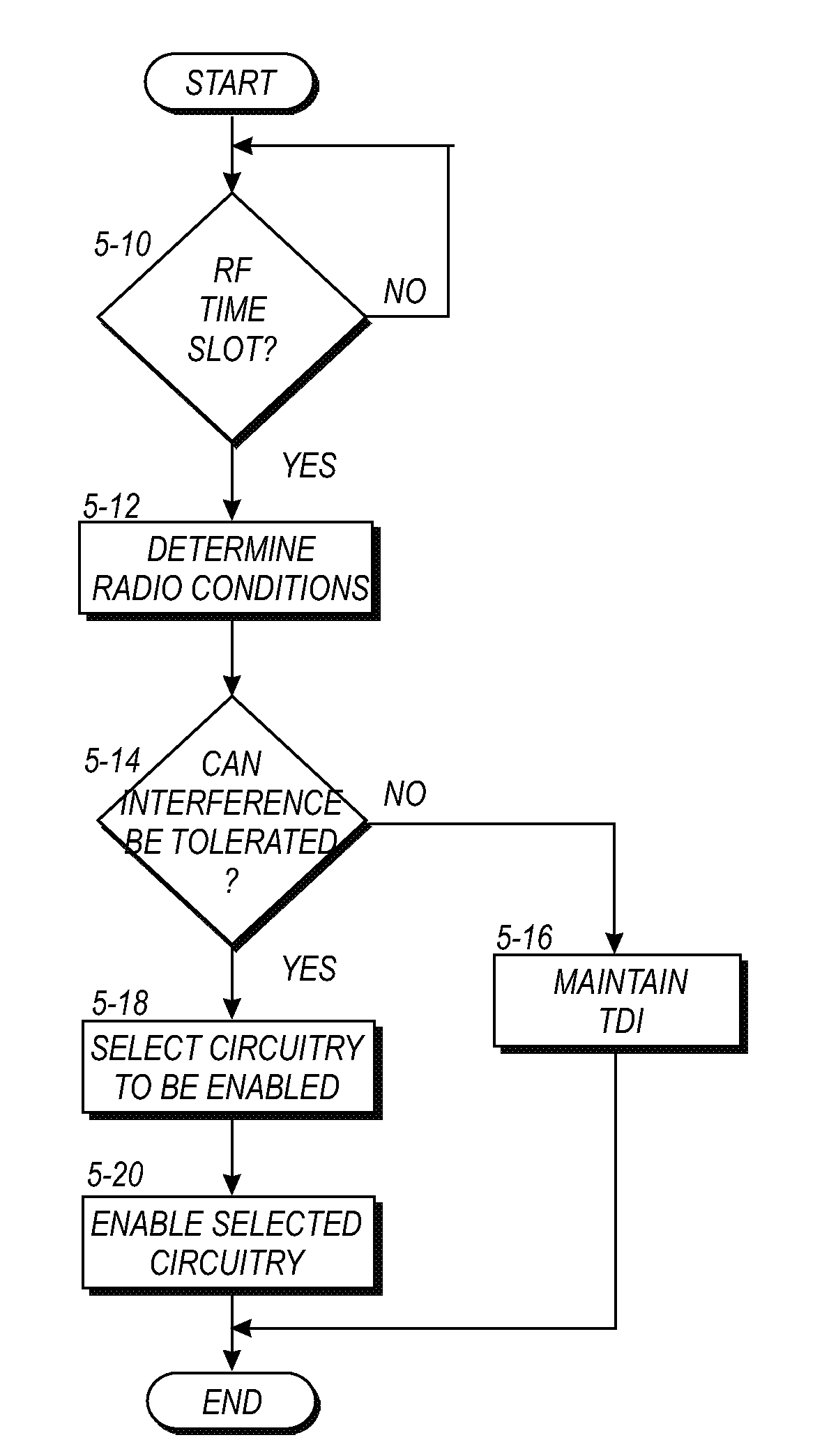
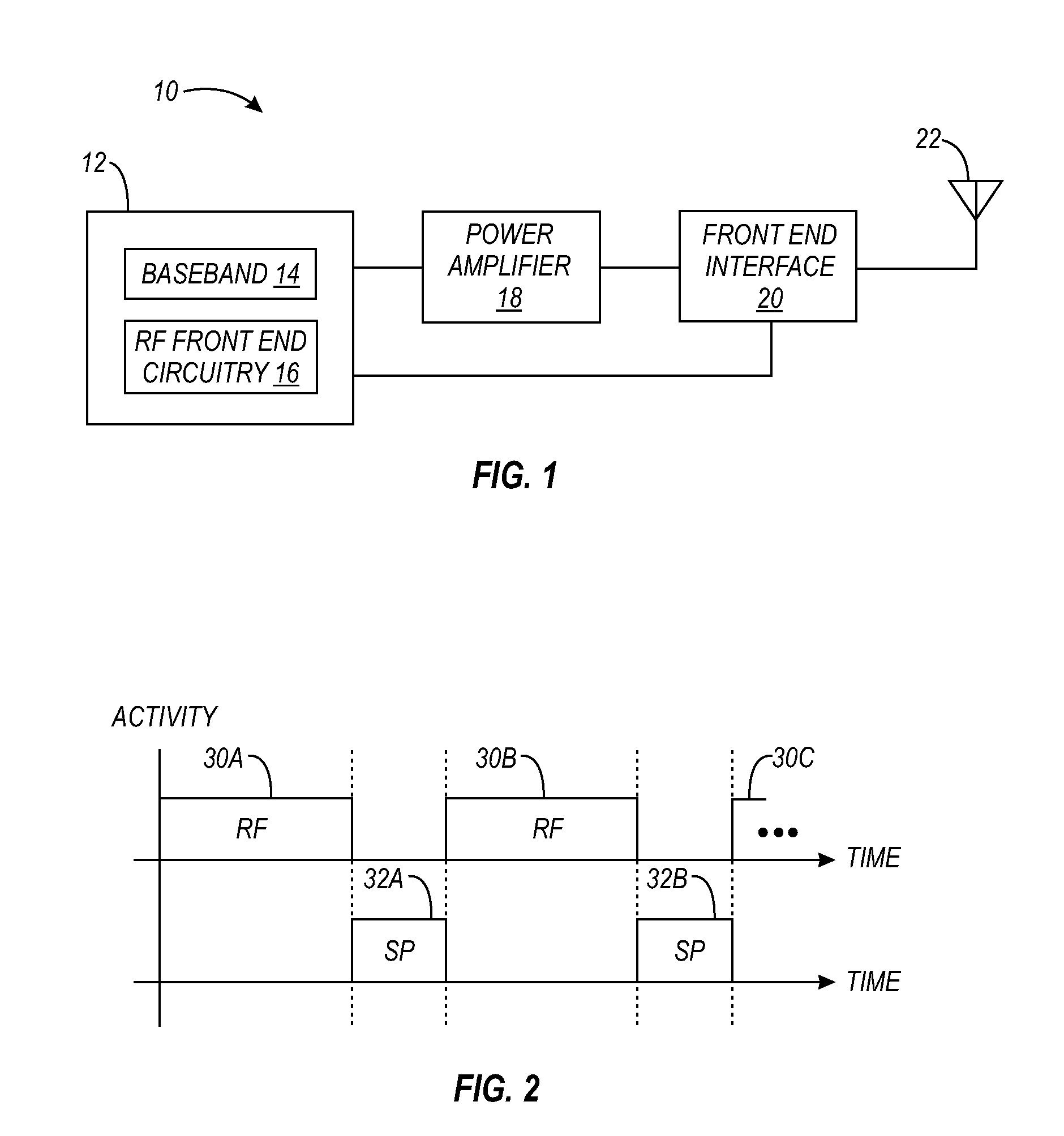
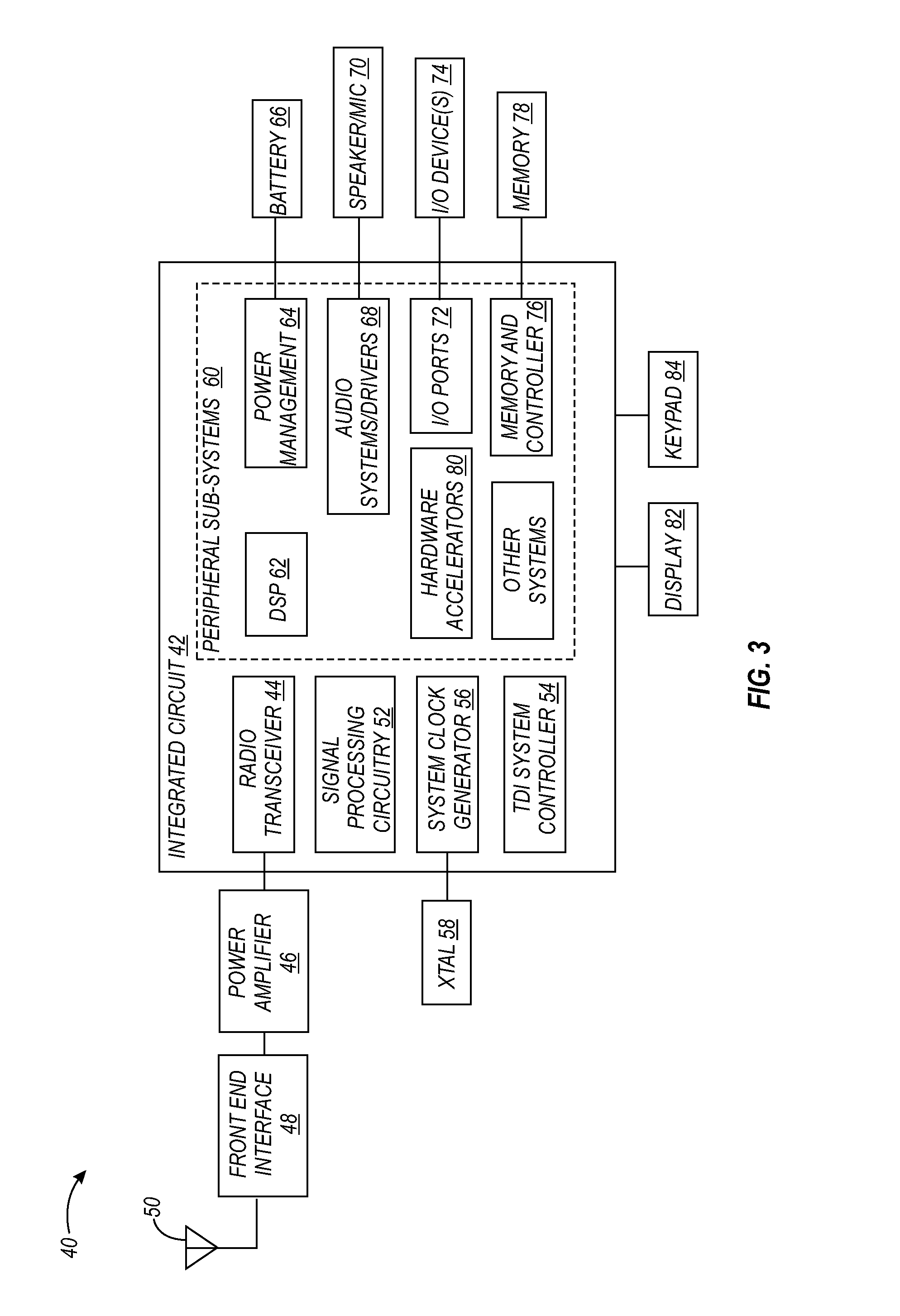
- Implementing time-domain isolation (TDI) techniques that alternate the operation of RF and signal-processing circuitry to minimize interference, allowing limited processing during RF operations and adjusting circuit characteristics to tolerate interference based on signal quality and link conditions.

Method and system for improved spectral efficiency of far field telemetry in a medical device
PatentInactiveUS7069086B2
Innovation
- A far field transmitter in an implantable medical device adjusts its radio frequency transmissions based on sensed temperature, using guard bands to allocate bandwidth, reducing output power or data rate, and disabling supply voltage when necessary, and employing wave shaping for improved spectral efficiency.


Spectrum Regulation and RF Compliance Standards
The regulatory landscape for RF spectrum management forms the foundation for minimizing telemetry interference across various operational environments. International bodies such as the International Telecommunication Union (ITU) establish global frameworks through Radio Regulations that define frequency allocations, power limitations, and coordination procedures for different services including telemetry operations. These regulations are subsequently implemented by national authorities like the Federal Communications Commission (FCC) in the United States and similar agencies worldwide.
Spectrum allocation policies specifically address telemetry applications through designated frequency bands, including the traditional 216-220 MHz and 2200-2300 MHz ranges for aeronautical telemetry, as well as emerging allocations in higher frequency bands. These allocations incorporate interference protection criteria that establish minimum separation distances, power spectral density limits, and coordination requirements between different users sharing or operating in adjacent frequency bands.
Compliance standards encompass both technical specifications and operational procedures designed to ensure electromagnetic compatibility. Key standards include RTCA DO-160 for airborne equipment environmental conditions, MIL-STD-461 for electromagnetic interference control, and ETSI standards for European markets. These specifications define acceptable emission levels, spurious signal limits, and receiver selectivity requirements that directly impact interference mitigation capabilities.
Recent regulatory developments reflect the increasing demand for spectrum efficiency and the proliferation of wireless technologies. Dynamic spectrum access frameworks and cognitive radio regulations are emerging to enable more flexible spectrum utilization while maintaining protection for primary services including telemetry operations. These evolving standards incorporate real-time interference monitoring requirements and adaptive power control mechanisms.
Enforcement mechanisms include type certification processes, periodic compliance testing, and interference resolution procedures. Regulatory bodies maintain databases of authorized equipment and coordinate international frequency usage through formal notification and coordination procedures. Non-compliance penalties range from equipment certification revocation to operational restrictions, emphasizing the critical importance of adherence to established RF compliance standards in telemetry system design and deployment.
Spectrum allocation policies specifically address telemetry applications through designated frequency bands, including the traditional 216-220 MHz and 2200-2300 MHz ranges for aeronautical telemetry, as well as emerging allocations in higher frequency bands. These allocations incorporate interference protection criteria that establish minimum separation distances, power spectral density limits, and coordination requirements between different users sharing or operating in adjacent frequency bands.
Compliance standards encompass both technical specifications and operational procedures designed to ensure electromagnetic compatibility. Key standards include RTCA DO-160 for airborne equipment environmental conditions, MIL-STD-461 for electromagnetic interference control, and ETSI standards for European markets. These specifications define acceptable emission levels, spurious signal limits, and receiver selectivity requirements that directly impact interference mitigation capabilities.
Recent regulatory developments reflect the increasing demand for spectrum efficiency and the proliferation of wireless technologies. Dynamic spectrum access frameworks and cognitive radio regulations are emerging to enable more flexible spectrum utilization while maintaining protection for primary services including telemetry operations. These evolving standards incorporate real-time interference monitoring requirements and adaptive power control mechanisms.
Enforcement mechanisms include type certification processes, periodic compliance testing, and interference resolution procedures. Regulatory bodies maintain databases of authorized equipment and coordinate international frequency usage through formal notification and coordination procedures. Non-compliance penalties range from equipment certification revocation to operational restrictions, emphasizing the critical importance of adherence to established RF compliance standards in telemetry system design and deployment.
EMC Testing and Validation Methodologies
Electromagnetic Compatibility (EMC) testing serves as the cornerstone for validating telemetry system performance in complex RF environments. These methodologies encompass a comprehensive suite of standardized procedures designed to assess both electromagnetic emissions and susceptibility characteristics of telemetry equipment. The testing framework typically follows international standards such as IEC 61000 series, CISPR publications, and military specifications like MIL-STD-461, ensuring consistent evaluation criteria across different applications and regulatory domains.
Conducted emissions testing represents a fundamental validation approach, measuring unwanted signals that telemetry devices inject into power lines and interconnecting cables. This methodology employs Line Impedance Stabilization Networks (LISN) and specialized receivers to quantify emission levels across frequency ranges from 150 kHz to 30 MHz for conducted measurements, and up to several GHz for radiated assessments. The testing protocols establish baseline interference signatures that help predict real-world performance degradation scenarios.
Radiated emissions validation extends the assessment to electromagnetic energy propagated through free space. Semi-anechoic chambers equipped with calibrated antennas and spectrum analyzers enable precise measurement of field strength levels at standardized distances. These facilities simulate open-area test sites while providing controlled environmental conditions, eliminating external interference variables that could compromise measurement accuracy and repeatability.
Susceptibility testing methodologies evaluate telemetry system resilience against external electromagnetic disturbances. Immunity assessments include radiated field exposure using specialized antennas, conducted disturbance injection through coupling networks, and electrostatic discharge simulation. These procedures systematically stress telemetry circuits across defined frequency bands and power levels, identifying vulnerability thresholds and failure modes that could compromise data integrity in operational environments.
Advanced validation techniques incorporate real-time monitoring capabilities during EMC testing procedures. Digital oscilloscopes with EMI pre-compliance software enable continuous assessment of telemetry signal quality throughout exposure cycles. Statistical analysis of bit error rates, signal-to-noise ratios, and packet loss percentages provides quantitative metrics for interference impact evaluation, supporting evidence-based design optimization decisions.
Validation methodologies increasingly integrate automated test systems that enhance measurement consistency and reduce human error factors. Computer-controlled test sequences ensure repeatable stimulus application while simultaneously monitoring multiple telemetry performance parameters. These systems generate comprehensive test reports with statistical correlation analysis, enabling systematic comparison of different mitigation strategies and their effectiveness across various interference scenarios.
Conducted emissions testing represents a fundamental validation approach, measuring unwanted signals that telemetry devices inject into power lines and interconnecting cables. This methodology employs Line Impedance Stabilization Networks (LISN) and specialized receivers to quantify emission levels across frequency ranges from 150 kHz to 30 MHz for conducted measurements, and up to several GHz for radiated assessments. The testing protocols establish baseline interference signatures that help predict real-world performance degradation scenarios.
Radiated emissions validation extends the assessment to electromagnetic energy propagated through free space. Semi-anechoic chambers equipped with calibrated antennas and spectrum analyzers enable precise measurement of field strength levels at standardized distances. These facilities simulate open-area test sites while providing controlled environmental conditions, eliminating external interference variables that could compromise measurement accuracy and repeatability.
Susceptibility testing methodologies evaluate telemetry system resilience against external electromagnetic disturbances. Immunity assessments include radiated field exposure using specialized antennas, conducted disturbance injection through coupling networks, and electrostatic discharge simulation. These procedures systematically stress telemetry circuits across defined frequency bands and power levels, identifying vulnerability thresholds and failure modes that could compromise data integrity in operational environments.
Advanced validation techniques incorporate real-time monitoring capabilities during EMC testing procedures. Digital oscilloscopes with EMI pre-compliance software enable continuous assessment of telemetry signal quality throughout exposure cycles. Statistical analysis of bit error rates, signal-to-noise ratios, and packet loss percentages provides quantitative metrics for interference impact evaluation, supporting evidence-based design optimization decisions.
Validation methodologies increasingly integrate automated test systems that enhance measurement consistency and reduce human error factors. Computer-controlled test sequences ensure repeatable stimulus application while simultaneously monitoring multiple telemetry performance parameters. These systems generate comprehensive test reports with statistical correlation analysis, enabling systematic comparison of different mitigation strategies and their effectiveness across various interference scenarios.
Unlock deeper insights with Patsnap Eureka Quick Research — get a full tech report to explore trends and direct your research. Try now!
Generate Your Research Report Instantly with AI Agent
Supercharge your innovation with Patsnap Eureka AI Agent Platform!