

How to Mitigate Pressure Oscillation Risks for Multi-Cell Electrolyzer Stacks
MAY 20, 20269 MIN READ
Generate Your Research Report Instantly with AI Agent
PatSnap Eureka helps you evaluate technical feasibility & market potential.
Electrolyzer Stack Pressure Control Background and Objectives
Electrolyzer technology has emerged as a cornerstone of the global hydrogen economy, representing a critical pathway for producing clean hydrogen through water electrolysis. The evolution of electrolyzer systems has progressed from single-cell laboratory prototypes to large-scale multi-cell industrial stacks capable of megawatt-level operations. This technological advancement has been driven by the urgent need for renewable energy storage solutions and the decarbonization of industrial processes.
The transition to multi-cell electrolyzer stacks has introduced complex operational challenges, particularly in pressure management and system stability. Unlike single-cell systems, multi-cell configurations create intricate fluid dynamics where pressure variations can propagate throughout the entire stack assembly. These pressure oscillations represent one of the most significant technical barriers to achieving reliable, long-term operation of large-scale electrolysis systems.
Historical development of electrolyzer technology reveals that early systems operated at relatively low pressures and modest scales, where pressure control was manageable through conventional methods. However, as industrial applications demand higher production rates and elevated operating pressures to improve efficiency and reduce downstream compression costs, the complexity of pressure management has increased exponentially.
The primary objective of addressing pressure oscillation risks centers on ensuring operational stability across all cells within the stack while maintaining optimal performance parameters. This involves developing sophisticated control strategies that can detect, predict, and mitigate pressure fluctuations before they compromise system integrity or efficiency. The goal extends beyond mere pressure regulation to encompass comprehensive stack health management.
Modern electrolyzer stacks must operate within increasingly narrow pressure tolerance bands to maximize efficiency and prevent mechanical stress on critical components such as membranes, gaskets, and bipolar plates. Pressure oscillations can lead to uneven current distribution, reduced faradaic efficiency, and accelerated component degradation, ultimately impacting the economic viability of hydrogen production.
The strategic importance of solving pressure oscillation challenges extends to enabling the deployment of larger, more cost-effective electrolyzer installations that can compete with conventional hydrogen production methods. Successful mitigation of these risks will unlock the potential for truly industrial-scale green hydrogen production, supporting global decarbonization efforts and energy transition goals.
The transition to multi-cell electrolyzer stacks has introduced complex operational challenges, particularly in pressure management and system stability. Unlike single-cell systems, multi-cell configurations create intricate fluid dynamics where pressure variations can propagate throughout the entire stack assembly. These pressure oscillations represent one of the most significant technical barriers to achieving reliable, long-term operation of large-scale electrolysis systems.
Historical development of electrolyzer technology reveals that early systems operated at relatively low pressures and modest scales, where pressure control was manageable through conventional methods. However, as industrial applications demand higher production rates and elevated operating pressures to improve efficiency and reduce downstream compression costs, the complexity of pressure management has increased exponentially.
The primary objective of addressing pressure oscillation risks centers on ensuring operational stability across all cells within the stack while maintaining optimal performance parameters. This involves developing sophisticated control strategies that can detect, predict, and mitigate pressure fluctuations before they compromise system integrity or efficiency. The goal extends beyond mere pressure regulation to encompass comprehensive stack health management.
Modern electrolyzer stacks must operate within increasingly narrow pressure tolerance bands to maximize efficiency and prevent mechanical stress on critical components such as membranes, gaskets, and bipolar plates. Pressure oscillations can lead to uneven current distribution, reduced faradaic efficiency, and accelerated component degradation, ultimately impacting the economic viability of hydrogen production.
The strategic importance of solving pressure oscillation challenges extends to enabling the deployment of larger, more cost-effective electrolyzer installations that can compete with conventional hydrogen production methods. Successful mitigation of these risks will unlock the potential for truly industrial-scale green hydrogen production, supporting global decarbonization efforts and energy transition goals.
Market Demand for Stable Multi-Cell Electrolyzer Systems
The global hydrogen economy is experiencing unprecedented growth, driven by ambitious decarbonization targets and the urgent need for clean energy solutions. Multi-cell electrolyzer systems represent a critical technology for large-scale hydrogen production, yet their commercial viability hinges significantly on operational stability and reliability. Pressure oscillation risks pose substantial challenges to system performance, creating a compelling market demand for stable electrolyzer technologies.
Industrial hydrogen production facilities require continuous, reliable operation to achieve economic feasibility. Pressure instabilities in multi-cell electrolyzer stacks can lead to reduced efficiency, premature component failure, and costly maintenance downtime. These operational challenges directly impact the total cost of ownership, making stability a primary purchasing criterion for industrial customers. The market increasingly prioritizes electrolyzer systems that demonstrate consistent performance under varying operational conditions.
The renewable energy integration sector represents another significant demand driver for stable electrolyzer systems. As wind and solar power generation inherently involves fluctuating energy inputs, electrolyzer stacks must accommodate rapid load changes without experiencing destabilizing pressure oscillations. Grid-scale energy storage applications require electrolyzer systems capable of frequent start-stop cycles and dynamic power modulation while maintaining operational integrity.
Large-scale industrial applications, including steel production, ammonia synthesis, and petroleum refining, are transitioning toward hydrogen-based processes. These industries demand electrolyzer systems with proven reliability records and minimal operational disruptions. Pressure oscillation mitigation becomes essential for meeting stringent industrial process requirements and ensuring consistent hydrogen quality specifications.
The emerging power-to-gas market segment emphasizes long-term operational stability for economic viability. Commercial operators seek electrolyzer technologies that minimize maintenance interventions and maximize system availability. Stable multi-cell electrolyzer systems command premium pricing due to their superior operational characteristics and reduced lifecycle costs.
Regulatory frameworks increasingly mandate higher safety standards for hydrogen production facilities, creating additional market pressure for stable electrolyzer technologies. Pressure oscillation mitigation directly addresses safety concerns while enhancing system reliability, making it a critical market differentiator for electrolyzer manufacturers targeting regulated industrial applications.
Industrial hydrogen production facilities require continuous, reliable operation to achieve economic feasibility. Pressure instabilities in multi-cell electrolyzer stacks can lead to reduced efficiency, premature component failure, and costly maintenance downtime. These operational challenges directly impact the total cost of ownership, making stability a primary purchasing criterion for industrial customers. The market increasingly prioritizes electrolyzer systems that demonstrate consistent performance under varying operational conditions.
The renewable energy integration sector represents another significant demand driver for stable electrolyzer systems. As wind and solar power generation inherently involves fluctuating energy inputs, electrolyzer stacks must accommodate rapid load changes without experiencing destabilizing pressure oscillations. Grid-scale energy storage applications require electrolyzer systems capable of frequent start-stop cycles and dynamic power modulation while maintaining operational integrity.
Large-scale industrial applications, including steel production, ammonia synthesis, and petroleum refining, are transitioning toward hydrogen-based processes. These industries demand electrolyzer systems with proven reliability records and minimal operational disruptions. Pressure oscillation mitigation becomes essential for meeting stringent industrial process requirements and ensuring consistent hydrogen quality specifications.
The emerging power-to-gas market segment emphasizes long-term operational stability for economic viability. Commercial operators seek electrolyzer technologies that minimize maintenance interventions and maximize system availability. Stable multi-cell electrolyzer systems command premium pricing due to their superior operational characteristics and reduced lifecycle costs.
Regulatory frameworks increasingly mandate higher safety standards for hydrogen production facilities, creating additional market pressure for stable electrolyzer technologies. Pressure oscillation mitigation directly addresses safety concerns while enhancing system reliability, making it a critical market differentiator for electrolyzer manufacturers targeting regulated industrial applications.
Current Pressure Oscillation Challenges in Electrolyzer Stacks
Multi-cell electrolyzer stacks face significant pressure oscillation challenges that threaten operational stability and system longevity. These pressure fluctuations manifest as dynamic variations in gas and liquid pressures within individual cells and across the entire stack assembly, creating complex fluid dynamic instabilities that can compromise performance and safety.
The primary challenge stems from uneven gas bubble formation and release patterns across multiple cells. As electrolysis proceeds, hydrogen and oxygen bubbles generate at different rates within each cell due to variations in current density distribution, temperature gradients, and local electrolyte conditions. This heterogeneous bubble behavior creates pressure imbalances that propagate throughout the stack, leading to oscillatory pressure waves that can destabilize the entire system.
Flow distribution irregularities represent another critical challenge affecting pressure stability. Multi-cell stacks rely on manifold systems to distribute electrolyte flow evenly across all cells. However, manufacturing tolerances, flow channel geometry variations, and differential pressure drops between cells create uneven flow patterns. These flow maldistributions exacerbate pressure oscillations by creating regions of varying hydraulic resistance and bubble accumulation points.
Thermal management complications further intensify pressure oscillation risks. Temperature variations across the stack create density differences in the electrolyte, leading to natural convection currents that interact with forced flow patterns. These thermal effects generate additional pressure fluctuations that compound existing oscillation problems, particularly during transient operating conditions or load changes.
Stack design constraints impose additional challenges for pressure oscillation mitigation. The compact nature of multi-cell configurations limits space for traditional pressure dampening components, while the need for electrical isolation between cells restricts the implementation of certain stabilization techniques. Manifold design becomes critical, as poor header design can amplify rather than dampen pressure oscillations.
Control system limitations present ongoing challenges in managing dynamic pressure variations. Traditional pressure control systems often lack the response speed necessary to counteract rapid oscillations, while sensor placement constraints in multi-cell stacks make it difficult to monitor pressure conditions accurately across all cells simultaneously. This creates blind spots in system monitoring and control capabilities.
Material compatibility issues add complexity to pressure oscillation management. The corrosive nature of electrolysis environments limits material choices for pressure regulation components, while the need for long-term durability under oscillating pressure conditions requires careful material selection and component design to prevent fatigue failures.
The primary challenge stems from uneven gas bubble formation and release patterns across multiple cells. As electrolysis proceeds, hydrogen and oxygen bubbles generate at different rates within each cell due to variations in current density distribution, temperature gradients, and local electrolyte conditions. This heterogeneous bubble behavior creates pressure imbalances that propagate throughout the stack, leading to oscillatory pressure waves that can destabilize the entire system.
Flow distribution irregularities represent another critical challenge affecting pressure stability. Multi-cell stacks rely on manifold systems to distribute electrolyte flow evenly across all cells. However, manufacturing tolerances, flow channel geometry variations, and differential pressure drops between cells create uneven flow patterns. These flow maldistributions exacerbate pressure oscillations by creating regions of varying hydraulic resistance and bubble accumulation points.
Thermal management complications further intensify pressure oscillation risks. Temperature variations across the stack create density differences in the electrolyte, leading to natural convection currents that interact with forced flow patterns. These thermal effects generate additional pressure fluctuations that compound existing oscillation problems, particularly during transient operating conditions or load changes.
Stack design constraints impose additional challenges for pressure oscillation mitigation. The compact nature of multi-cell configurations limits space for traditional pressure dampening components, while the need for electrical isolation between cells restricts the implementation of certain stabilization techniques. Manifold design becomes critical, as poor header design can amplify rather than dampen pressure oscillations.
Control system limitations present ongoing challenges in managing dynamic pressure variations. Traditional pressure control systems often lack the response speed necessary to counteract rapid oscillations, while sensor placement constraints in multi-cell stacks make it difficult to monitor pressure conditions accurately across all cells simultaneously. This creates blind spots in system monitoring and control capabilities.
Material compatibility issues add complexity to pressure oscillation management. The corrosive nature of electrolysis environments limits material choices for pressure regulation components, while the need for long-term durability under oscillating pressure conditions requires careful material selection and component design to prevent fatigue failures.
Existing Solutions for Electrolyzer Pressure Stabilization
01 Pressure control and regulation systems in electrolyzer stacks
Advanced pressure control mechanisms are implemented to maintain stable operating conditions in multi-cell electrolyzer stacks. These systems utilize feedback control loops, pressure sensors, and automated valves to regulate gas pressure and prevent oscillations. The control systems can dynamically adjust operating parameters to maintain optimal pressure levels across all cells in the stack, ensuring consistent performance and preventing damage from pressure fluctuations.- Pressure control and regulation systems in electrolyzer stacks: Advanced pressure control mechanisms are implemented to maintain stable operating conditions in multi-cell electrolyzer stacks. These systems utilize feedback control loops, pressure sensors, and automated valves to regulate gas pressure and prevent oscillations. The control systems can dynamically adjust operating parameters to maintain optimal pressure levels across all cells in the stack, ensuring consistent performance and preventing damage from pressure fluctuations.
- Gas management and flow distribution optimization: Proper gas management techniques are employed to ensure uniform gas flow distribution across multiple cells in electrolyzer stacks. This includes the design of manifolds, gas channels, and flow distributors that minimize pressure variations between cells. Advanced flow control systems help maintain balanced gas production and removal, reducing the likelihood of pressure oscillations that can affect stack performance and longevity.
- Stack design and cell interconnection methods: Innovative stack architectures and cell interconnection designs are developed to minimize pressure oscillation effects in multi-cell electrolyzer systems. These designs focus on optimizing the physical arrangement of cells, improving sealing mechanisms, and creating balanced pressure zones throughout the stack. The structural improvements help distribute mechanical stresses evenly and reduce the propagation of pressure disturbances between adjacent cells.
- Monitoring and diagnostic systems for pressure oscillation detection: Sophisticated monitoring systems are integrated into electrolyzer stacks to detect and analyze pressure oscillations in real-time. These systems employ multiple sensors, data acquisition units, and signal processing algorithms to identify oscillation patterns and their root causes. Early detection capabilities enable preventive maintenance and operational adjustments to minimize the impact of pressure fluctuations on system performance.
- Damping and vibration control mechanisms: Specialized damping systems and vibration control mechanisms are incorporated to suppress pressure oscillations and mechanical vibrations in electrolyzer stacks. These solutions include passive dampers, active vibration control systems, and structural modifications that absorb or redirect oscillatory energy. The implementation of these mechanisms helps maintain stable operating conditions and extends the operational life of the electrolyzer components.
02 Gas flow management and distribution optimization
Proper gas flow distribution systems are essential for minimizing pressure oscillations in electrolyzer stacks. These systems include manifold designs, flow distributors, and gas separation techniques that ensure uniform gas flow across all cells. The optimization of gas pathways and the implementation of buffer systems help to dampen pressure variations and maintain stable operation throughout the electrolyzer stack.Expand Specific Solutions03 Stack design and cell configuration for pressure stability
The physical design and configuration of electrolyzer cells within the stack play a crucial role in pressure oscillation control. This includes optimized cell spacing, improved sealing mechanisms, and structural reinforcements that can withstand pressure variations. The design considerations also encompass the arrangement of cells, interconnections, and support structures to minimize pressure-induced vibrations and maintain mechanical stability.Expand Specific Solutions04 Monitoring and diagnostic systems for pressure oscillation detection
Comprehensive monitoring systems are employed to detect and analyze pressure oscillations in real-time. These systems utilize various sensors, data acquisition methods, and analytical algorithms to identify pressure patterns and predict potential issues. The diagnostic capabilities enable early detection of abnormal pressure behaviors, allowing for preventive maintenance and operational adjustments to maintain stack performance.Expand Specific Solutions05 Operational control strategies and process optimization
Specific operational strategies and process control methods are developed to minimize pressure oscillations during electrolyzer operation. These approaches include optimized startup and shutdown procedures, load management techniques, and adaptive control algorithms that respond to changing operating conditions. The strategies focus on maintaining stable electrochemical processes while preventing pressure-related disturbances that could affect overall system efficiency.Expand Specific Solutions
Key Players in Electrolyzer and Pressure Control Industry
The multi-cell electrolyzer stack pressure oscillation mitigation field represents an emerging segment within the broader hydrogen economy, currently in its early commercialization phase with significant growth potential driven by global decarbonization initiatives. The market encompasses diverse players ranging from established industrial giants like Siemens Energy, ABB, and Toyota Motor Corp. to specialized electrolyzer manufacturers such as ITM Power and Hoeller Electrolyzer GmbH. Technology maturity varies considerably across stakeholders, with research institutions like Fraunhofer-Gesellschaft and Nanyang Technological University advancing fundamental solutions, while companies like PowerCell Sweden and Ceramatec focus on practical implementation. Asian manufacturers including Samsung Electronics, LG Energy Solution, and Contemporary Amperex Technology leverage their battery expertise for electrolyzer applications, creating a competitive landscape where traditional automotive and electronics companies intersect with dedicated hydrogen technology developers, indicating a rapidly evolving market with substantial innovation potential.
Fraunhofer-Gesellschaft eV
Technical Solution: Fraunhofer has developed innovative pressure oscillation mitigation strategies focusing on fundamental understanding of fluid dynamics in electrolyzer stacks. Their research-based approach includes advanced computational fluid dynamics modeling to optimize cell geometry and gas flow patterns. The technology incorporates novel pressure buffer systems and smart control algorithms that adapt to varying operational conditions. Their solutions emphasize the use of advanced materials and surface treatments to minimize pressure-induced mechanical stress while maintaining optimal electrochemical performance across all cells in the stack.
Strengths: Cutting-edge research capabilities and deep technical expertise in electrolyzer fundamentals. Weaknesses: Technology may require further development for large-scale commercial applications.
ABB AB
Technical Solution: ABB has implemented sophisticated pressure management solutions for multi-cell electrolyzer stacks through their advanced automation and control systems. Their technology features distributed pressure monitoring with high-precision sensors and real-time data analytics to predict and prevent pressure oscillations. The system includes automated pressure relief mechanisms, intelligent gas flow control, and machine learning algorithms that optimize operational parameters based on historical performance data. ABB's solution integrates seamlessly with their broader industrial automation platforms, providing comprehensive system monitoring and control capabilities.
Strengths: Extensive industrial automation experience and proven control system reliability. Weaknesses: May require significant customization for specific electrolyzer applications and higher integration complexity.
Core Innovations in Multi-Cell Pressure Oscillation Mitigation
Water electrolysis system (SOEC) or fuel cell (SOFC) operating under pressure in a tight enclosure with improved regulation
PatentActiveUS20190093242A1
Innovation
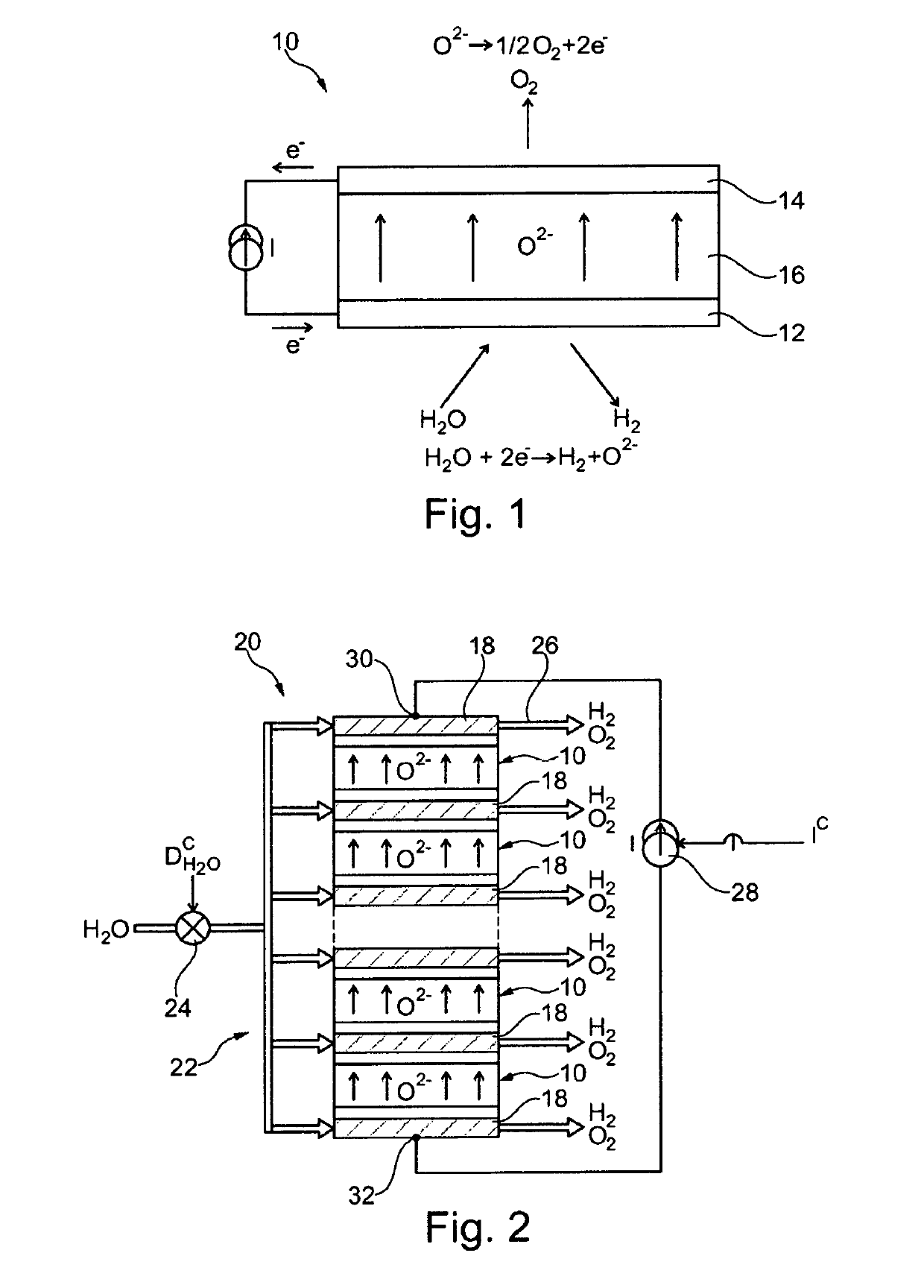
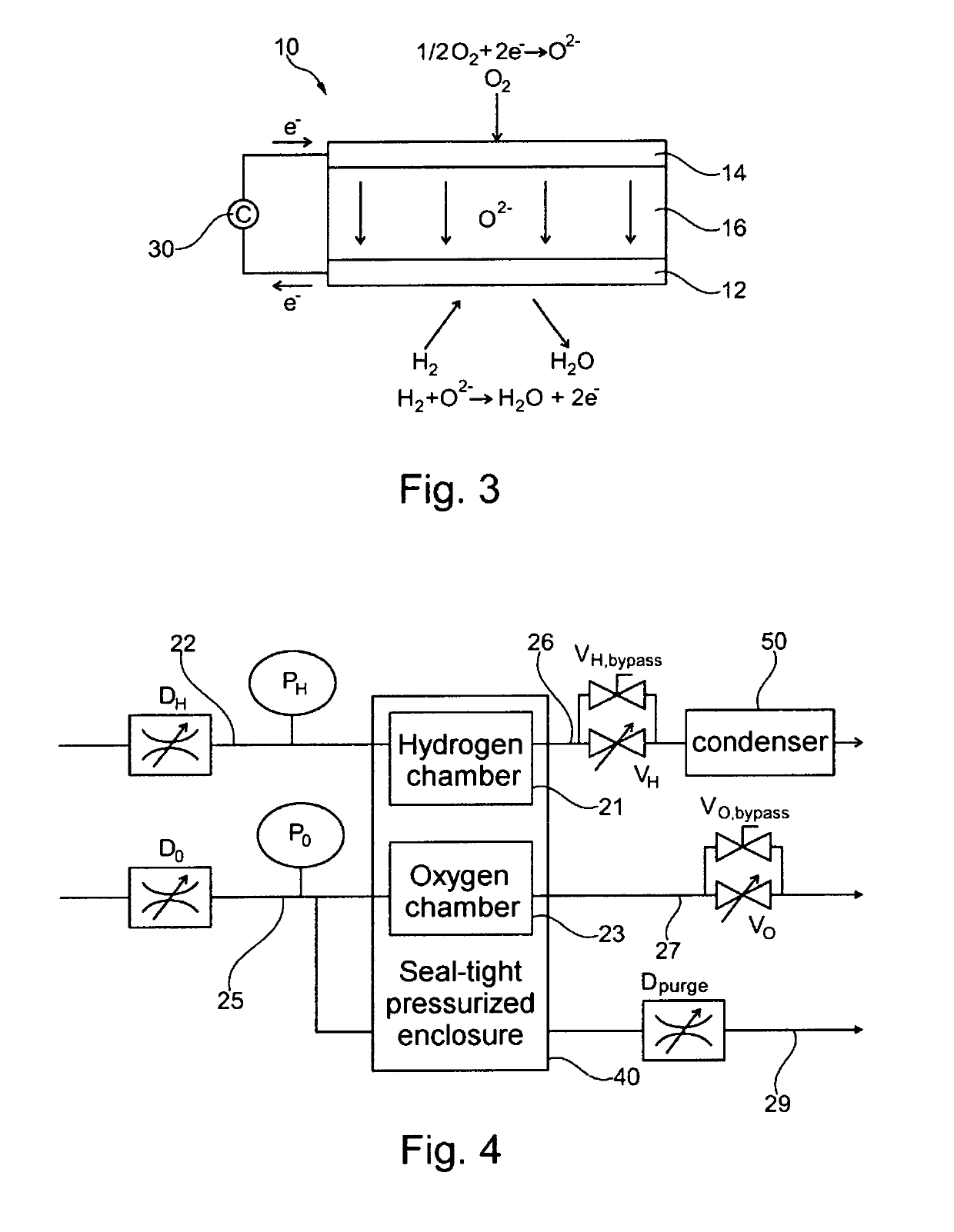
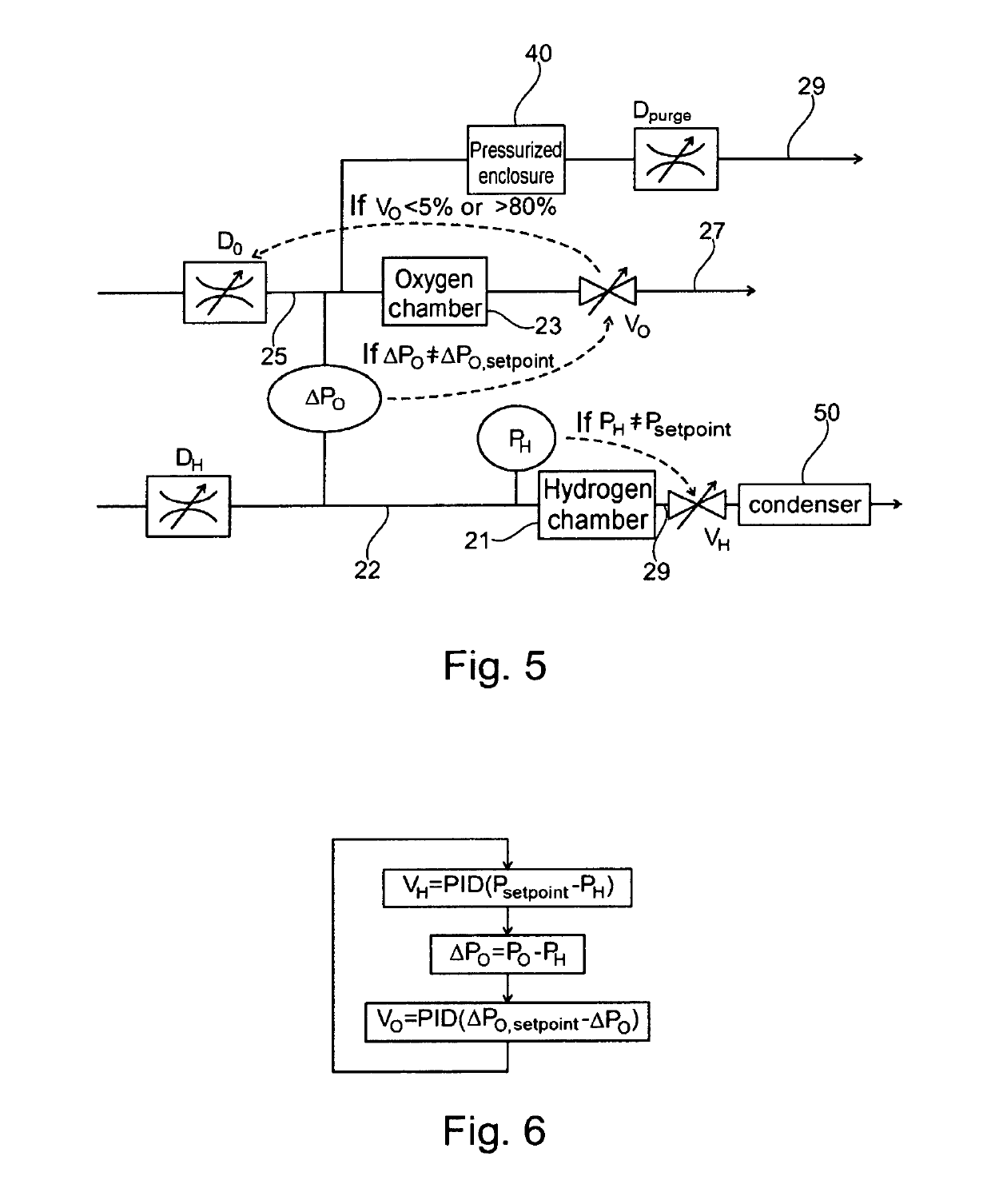
- A system with flow-rate regulators, pressure sensors, and automatically controlled valves that manage the flow of gases within and around the stack to maintain minimal pressure differences across chambers, ensuring seal-tightness and efficient operation from atmospheric pressure to several bars, using a seal-tight enclosure and maintaining gas lines above condensation temperatures to prevent steam condensation.

Pressure electrolyzer and method for operating one such electrolyzer
PatentInactiveUS7314539B2
Innovation
- The design separates the electrolyte-circuit system into two chambers within the pressure vessel, allowing for separate anolyte and catholyte circuits, with gas lift effects facilitating automatic electrolyte circulation and eliminating the need for additional pumps, while maintaining a compact and space-efficient layout.


Safety Standards for High-Pressure Electrolyzer Operations
High-pressure electrolyzer operations require comprehensive safety frameworks to address the inherent risks associated with hydrogen production, particularly in multi-cell stack configurations where pressure oscillations can lead to catastrophic failures. Current safety standards encompass multiple regulatory bodies and technical specifications that establish minimum requirements for design, installation, operation, and maintenance of electrolyzer systems operating above atmospheric pressure.
The International Electrotechnical Commission (IEC) 62282 series provides fundamental safety requirements for fuel cell and electrolyzer technologies, with specific provisions for high-pressure operations exceeding 30 bar. These standards mandate pressure relief systems, emergency shutdown protocols, and continuous monitoring capabilities to detect abnormal pressure variations that could indicate impending system failure.
ASME Boiler and Pressure Vessel Code Section VIII governs the mechanical design aspects of high-pressure electrolyzer vessels, establishing material specifications, welding procedures, and inspection requirements. The code requires pressure vessels to withstand operating pressures with appropriate safety factors, typically 1.5 to 4 times the maximum allowable working pressure depending on the application and failure consequences.
European standard EN 17124 specifically addresses large-scale electrolysis systems, incorporating requirements for pressure oscillation monitoring and mitigation. The standard mandates installation of pressure dampening systems, real-time pressure monitoring across all cells, and automated response mechanisms to prevent cascade failures in multi-cell configurations.
Occupational Safety and Health Administration (OSHA) regulations complement technical standards by establishing workplace safety requirements for personnel operating high-pressure electrolyzer systems. These include mandatory safety training, personal protective equipment specifications, and emergency response procedures for hydrogen leaks or pressure vessel failures.
National Fire Protection Association (NFPA) 2 Hydrogen Technologies Code provides comprehensive safety requirements for hydrogen production facilities, including specific provisions for electrolyzer installations. The code addresses facility design, ventilation requirements, electrical safety, and emergency systems to mitigate risks associated with hydrogen production and high-pressure operations.
Emerging standards development focuses on dynamic pressure management, incorporating advanced control algorithms and predictive maintenance protocols to prevent pressure oscillation incidents before they occur, representing the evolution toward proactive rather than reactive safety approaches.
The International Electrotechnical Commission (IEC) 62282 series provides fundamental safety requirements for fuel cell and electrolyzer technologies, with specific provisions for high-pressure operations exceeding 30 bar. These standards mandate pressure relief systems, emergency shutdown protocols, and continuous monitoring capabilities to detect abnormal pressure variations that could indicate impending system failure.
ASME Boiler and Pressure Vessel Code Section VIII governs the mechanical design aspects of high-pressure electrolyzer vessels, establishing material specifications, welding procedures, and inspection requirements. The code requires pressure vessels to withstand operating pressures with appropriate safety factors, typically 1.5 to 4 times the maximum allowable working pressure depending on the application and failure consequences.
European standard EN 17124 specifically addresses large-scale electrolysis systems, incorporating requirements for pressure oscillation monitoring and mitigation. The standard mandates installation of pressure dampening systems, real-time pressure monitoring across all cells, and automated response mechanisms to prevent cascade failures in multi-cell configurations.
Occupational Safety and Health Administration (OSHA) regulations complement technical standards by establishing workplace safety requirements for personnel operating high-pressure electrolyzer systems. These include mandatory safety training, personal protective equipment specifications, and emergency response procedures for hydrogen leaks or pressure vessel failures.
National Fire Protection Association (NFPA) 2 Hydrogen Technologies Code provides comprehensive safety requirements for hydrogen production facilities, including specific provisions for electrolyzer installations. The code addresses facility design, ventilation requirements, electrical safety, and emergency systems to mitigate risks associated with hydrogen production and high-pressure operations.
Emerging standards development focuses on dynamic pressure management, incorporating advanced control algorithms and predictive maintenance protocols to prevent pressure oscillation incidents before they occur, representing the evolution toward proactive rather than reactive safety approaches.
Environmental Impact of Electrolyzer Pressure Management
The environmental implications of pressure management in multi-cell electrolyzer stacks extend beyond operational efficiency to encompass broader sustainability considerations. Effective pressure oscillation mitigation directly correlates with reduced energy consumption, as unstable pressure conditions force systems to operate outside optimal parameters, leading to increased electrical demand and higher carbon footprints during operation.
Pressure instabilities in electrolyzer stacks contribute to accelerated component degradation, particularly in membrane assemblies and sealing systems. This degradation necessitates more frequent replacement cycles, generating additional manufacturing waste and requiring increased raw material consumption. The environmental burden of producing replacement components, including rare earth elements and specialized polymers, compounds the overall ecological impact of poorly managed pressure systems.
Water consumption patterns are significantly influenced by pressure management strategies. Oscillating pressures can cause inefficient electrolysis reactions, requiring higher water input rates to maintain desired hydrogen production levels. Additionally, pressure-related system failures often result in water contamination incidents, where electrolyte solutions may require specialized disposal procedures, creating hazardous waste streams.
The lifecycle environmental assessment reveals that optimized pressure management systems, while requiring initial investment in advanced control technologies, demonstrate substantially lower environmental impact over operational lifespans. Reduced maintenance requirements translate to fewer service interventions, minimizing transportation-related emissions and reducing the need for replacement parts manufacturing.
Noise pollution represents an often-overlooked environmental consideration in pressure oscillation scenarios. Unstable pressure conditions generate acoustic emissions that exceed standard industrial noise thresholds, potentially affecting surrounding ecosystems and communities. Implementing effective pressure stabilization technologies significantly reduces these acoustic disturbances.
Furthermore, the integration of renewable energy sources with electrolyzer systems becomes more environmentally beneficial when pressure oscillations are properly managed, as stable operating conditions enable better grid integration and reduced reliance on backup power systems that may utilize fossil fuel sources.
Pressure instabilities in electrolyzer stacks contribute to accelerated component degradation, particularly in membrane assemblies and sealing systems. This degradation necessitates more frequent replacement cycles, generating additional manufacturing waste and requiring increased raw material consumption. The environmental burden of producing replacement components, including rare earth elements and specialized polymers, compounds the overall ecological impact of poorly managed pressure systems.
Water consumption patterns are significantly influenced by pressure management strategies. Oscillating pressures can cause inefficient electrolysis reactions, requiring higher water input rates to maintain desired hydrogen production levels. Additionally, pressure-related system failures often result in water contamination incidents, where electrolyte solutions may require specialized disposal procedures, creating hazardous waste streams.
The lifecycle environmental assessment reveals that optimized pressure management systems, while requiring initial investment in advanced control technologies, demonstrate substantially lower environmental impact over operational lifespans. Reduced maintenance requirements translate to fewer service interventions, minimizing transportation-related emissions and reducing the need for replacement parts manufacturing.
Noise pollution represents an often-overlooked environmental consideration in pressure oscillation scenarios. Unstable pressure conditions generate acoustic emissions that exceed standard industrial noise thresholds, potentially affecting surrounding ecosystems and communities. Implementing effective pressure stabilization technologies significantly reduces these acoustic disturbances.
Furthermore, the integration of renewable energy sources with electrolyzer systems becomes more environmentally beneficial when pressure oscillations are properly managed, as stable operating conditions enable better grid integration and reduced reliance on backup power systems that may utilize fossil fuel sources.
Unlock deeper insights with PatSnap Eureka Quick Research — get a full tech report to explore trends and direct your research. Try now!
Generate Your Research Report Instantly with AI Agent
Supercharge your innovation with PatSnap Eureka AI Agent Platform!