

How to Model Pollutant Dispersion Using CFD Simulations
JUN 8, 20269 MIN READ
Generate Your Research Report Instantly with AI Agent
PatSnap Eureka helps you evaluate technical feasibility & market potential.
CFD Pollutant Modeling Background and Objectives
Computational Fluid Dynamics (CFD) has emerged as a cornerstone technology for environmental engineering and atmospheric science applications since the 1970s. The evolution from simple analytical models to sophisticated numerical simulations has revolutionized our understanding of pollutant transport phenomena. Early developments focused on basic turbulence modeling, while modern CFD incorporates advanced Large Eddy Simulation (LES) and Reynolds-Averaged Navier-Stokes (RANS) approaches for complex atmospheric boundary layer modeling.
The historical progression of CFD pollutant modeling began with fundamental research on atmospheric dispersion theory, building upon Gaussian plume models developed in the 1960s. Subsequent decades witnessed the integration of meteorological data, chemical reaction mechanisms, and multi-phase flow dynamics into comprehensive simulation frameworks. The advent of high-performance computing in the 1990s enabled three-dimensional modeling of urban canopies and industrial complexes with unprecedented spatial resolution.
Contemporary CFD pollutant modeling addresses critical environmental challenges including urban air quality assessment, industrial emission impact studies, and emergency response planning for hazardous material releases. The technology has become indispensable for regulatory compliance, environmental impact assessments, and public health protection strategies. Applications span from microscale building ventilation studies to mesoscale regional air quality modeling.
Current technological trends emphasize the integration of machine learning algorithms with traditional CFD solvers to enhance computational efficiency and predictive accuracy. Real-time data assimilation from sensor networks and satellite observations is increasingly incorporated into operational modeling systems. The development of cloud-based CFD platforms has democratized access to sophisticated modeling capabilities for smaller organizations and developing regions.
The primary objective of modern CFD pollutant modeling is to achieve accurate, computationally efficient predictions of contaminant transport across multiple spatial and temporal scales. This encompasses the development of robust turbulence closure models, advanced numerical schemes for convection-diffusion equations, and comprehensive validation frameworks using experimental data. The ultimate goal is to provide reliable decision-support tools for environmental management and policy development.
The historical progression of CFD pollutant modeling began with fundamental research on atmospheric dispersion theory, building upon Gaussian plume models developed in the 1960s. Subsequent decades witnessed the integration of meteorological data, chemical reaction mechanisms, and multi-phase flow dynamics into comprehensive simulation frameworks. The advent of high-performance computing in the 1990s enabled three-dimensional modeling of urban canopies and industrial complexes with unprecedented spatial resolution.
Contemporary CFD pollutant modeling addresses critical environmental challenges including urban air quality assessment, industrial emission impact studies, and emergency response planning for hazardous material releases. The technology has become indispensable for regulatory compliance, environmental impact assessments, and public health protection strategies. Applications span from microscale building ventilation studies to mesoscale regional air quality modeling.
Current technological trends emphasize the integration of machine learning algorithms with traditional CFD solvers to enhance computational efficiency and predictive accuracy. Real-time data assimilation from sensor networks and satellite observations is increasingly incorporated into operational modeling systems. The development of cloud-based CFD platforms has democratized access to sophisticated modeling capabilities for smaller organizations and developing regions.
The primary objective of modern CFD pollutant modeling is to achieve accurate, computationally efficient predictions of contaminant transport across multiple spatial and temporal scales. This encompasses the development of robust turbulence closure models, advanced numerical schemes for convection-diffusion equations, and comprehensive validation frameworks using experimental data. The ultimate goal is to provide reliable decision-support tools for environmental management and policy development.
Market Demand for CFD Environmental Simulation
The global environmental simulation market has experienced substantial growth driven by increasing regulatory pressures and environmental awareness. Governments worldwide are implementing stricter air quality standards and emission regulations, creating mandatory requirements for pollutant dispersion modeling in industrial project approvals, urban planning, and environmental impact assessments. This regulatory landscape has transformed CFD environmental simulation from an optional tool to an essential component of compliance workflows.
Industrial sectors represent the largest demand segment for CFD pollutant dispersion modeling. Power generation facilities, chemical processing plants, oil refineries, and manufacturing operations require sophisticated modeling capabilities to predict emission patterns, optimize stack designs, and demonstrate regulatory compliance. The automotive industry has emerged as a significant growth driver, utilizing CFD simulations for vehicle emission studies and urban air quality impact assessments.
Urban planning and smart city initiatives have created substantial market opportunities for environmental CFD applications. Metropolitan areas facing severe air pollution challenges are increasingly adopting computational modeling to evaluate traffic management strategies, building ventilation systems, and industrial zoning decisions. The integration of CFD simulations with real-time monitoring networks has enhanced the value proposition for municipal authorities and environmental consultancies.
The consulting services market has expanded significantly as organizations seek specialized expertise in environmental CFD modeling. Environmental consulting firms, engineering companies, and research institutions are investing heavily in advanced simulation capabilities to serve diverse client needs. This trend has been accelerated by the complexity of modern CFD software and the specialized knowledge required for accurate pollutant dispersion modeling.
Emerging applications in renewable energy development, particularly wind farm planning and solar installation optimization, have opened new market segments. Climate change adaptation strategies and disaster preparedness planning are driving additional demand for sophisticated environmental modeling capabilities, positioning CFD simulation as a critical tool for sustainable development initiatives.
Industrial sectors represent the largest demand segment for CFD pollutant dispersion modeling. Power generation facilities, chemical processing plants, oil refineries, and manufacturing operations require sophisticated modeling capabilities to predict emission patterns, optimize stack designs, and demonstrate regulatory compliance. The automotive industry has emerged as a significant growth driver, utilizing CFD simulations for vehicle emission studies and urban air quality impact assessments.
Urban planning and smart city initiatives have created substantial market opportunities for environmental CFD applications. Metropolitan areas facing severe air pollution challenges are increasingly adopting computational modeling to evaluate traffic management strategies, building ventilation systems, and industrial zoning decisions. The integration of CFD simulations with real-time monitoring networks has enhanced the value proposition for municipal authorities and environmental consultancies.
The consulting services market has expanded significantly as organizations seek specialized expertise in environmental CFD modeling. Environmental consulting firms, engineering companies, and research institutions are investing heavily in advanced simulation capabilities to serve diverse client needs. This trend has been accelerated by the complexity of modern CFD software and the specialized knowledge required for accurate pollutant dispersion modeling.
Emerging applications in renewable energy development, particularly wind farm planning and solar installation optimization, have opened new market segments. Climate change adaptation strategies and disaster preparedness planning are driving additional demand for sophisticated environmental modeling capabilities, positioning CFD simulation as a critical tool for sustainable development initiatives.
Current CFD Dispersion Modeling Challenges
CFD-based pollutant dispersion modeling faces significant computational complexity challenges that limit its practical implementation. The governing Navier-Stokes equations, coupled with species transport and turbulence models, require substantial computational resources for accurate solutions. High-resolution spatial and temporal discretization necessary for capturing fine-scale mixing processes often leads to prohibitively long simulation times, particularly for large-scale environmental applications spanning kilometers.
Turbulence modeling represents one of the most critical technical barriers in dispersion simulations. Traditional Reynolds-Averaged Navier-Stokes (RANS) models struggle to accurately capture the intermittent nature of atmospheric turbulence and complex flow structures around buildings or terrain features. Large Eddy Simulation (LES) approaches offer improved accuracy but demand exponentially higher computational costs, making them impractical for routine engineering applications or real-time emergency response scenarios.
Boundary condition specification poses another fundamental challenge, particularly for atmospheric dispersion problems. Accurate representation of inlet velocity profiles, turbulence intensity distributions, and surface roughness effects requires extensive meteorological data that is often unavailable or incomplete. The sensitivity of dispersion predictions to these boundary conditions can lead to significant uncertainties in concentration estimates, undermining confidence in simulation results.
Grid generation and mesh quality issues significantly impact solution accuracy and convergence behavior. Complex urban geometries or irregular terrain features require sophisticated meshing strategies to avoid numerical errors. Inadequate mesh resolution near emission sources or in wake regions can lead to artificial numerical diffusion, while overly refined meshes become computationally prohibitive. Achieving optimal balance between accuracy and efficiency remains a persistent challenge.
Validation and verification difficulties further complicate CFD dispersion modeling. Limited availability of high-quality experimental data for complex scenarios makes it challenging to assess model performance comprehensively. Wind tunnel experiments, while valuable, often cannot fully replicate atmospheric conditions, while field measurements are expensive and subject to numerous uncontrolled variables that complicate model validation efforts.
Multi-scale coupling represents an emerging challenge as applications increasingly require integration of microscale CFD results with mesoscale meteorological models. Inconsistencies between different modeling approaches, temporal and spatial scale mismatches, and data transfer protocols create additional sources of uncertainty and computational overhead in comprehensive dispersion assessment frameworks.
Turbulence modeling represents one of the most critical technical barriers in dispersion simulations. Traditional Reynolds-Averaged Navier-Stokes (RANS) models struggle to accurately capture the intermittent nature of atmospheric turbulence and complex flow structures around buildings or terrain features. Large Eddy Simulation (LES) approaches offer improved accuracy but demand exponentially higher computational costs, making them impractical for routine engineering applications or real-time emergency response scenarios.
Boundary condition specification poses another fundamental challenge, particularly for atmospheric dispersion problems. Accurate representation of inlet velocity profiles, turbulence intensity distributions, and surface roughness effects requires extensive meteorological data that is often unavailable or incomplete. The sensitivity of dispersion predictions to these boundary conditions can lead to significant uncertainties in concentration estimates, undermining confidence in simulation results.
Grid generation and mesh quality issues significantly impact solution accuracy and convergence behavior. Complex urban geometries or irregular terrain features require sophisticated meshing strategies to avoid numerical errors. Inadequate mesh resolution near emission sources or in wake regions can lead to artificial numerical diffusion, while overly refined meshes become computationally prohibitive. Achieving optimal balance between accuracy and efficiency remains a persistent challenge.
Validation and verification difficulties further complicate CFD dispersion modeling. Limited availability of high-quality experimental data for complex scenarios makes it challenging to assess model performance comprehensively. Wind tunnel experiments, while valuable, often cannot fully replicate atmospheric conditions, while field measurements are expensive and subject to numerous uncontrolled variables that complicate model validation efforts.
Multi-scale coupling represents an emerging challenge as applications increasingly require integration of microscale CFD results with mesoscale meteorological models. Inconsistencies between different modeling approaches, temporal and spatial scale mismatches, and data transfer protocols create additional sources of uncertainty and computational overhead in comprehensive dispersion assessment frameworks.
Existing CFD Pollutant Dispersion Solutions
01 Computational fluid dynamics modeling for atmospheric pollutant transport
Advanced computational methods are employed to simulate the transport and dispersion of pollutants in atmospheric environments. These techniques utilize mathematical models to predict how contaminants move through air masses under various meteorological conditions, enabling accurate forecasting of pollution patterns and concentration distributions in different geographical areas.- Computational fluid dynamics modeling for atmospheric pollutant transport: Advanced computational methods are employed to simulate the transport and dispersion of pollutants in atmospheric environments. These techniques utilize mathematical models to predict how contaminants move through air masses, considering factors such as wind patterns, turbulence, and atmospheric stability. The simulations help in understanding pollutant behavior over various spatial and temporal scales.
- Industrial emission dispersion modeling systems: Specialized modeling frameworks are developed to simulate pollutant dispersion from industrial sources such as smokestacks, manufacturing facilities, and chemical plants. These systems incorporate source characteristics, emission rates, and local meteorological conditions to predict concentration distributions and environmental impact zones. The models assist in regulatory compliance and environmental impact assessment.
- Urban air quality simulation and monitoring integration: Comprehensive approaches combine computational fluid dynamics with real-time monitoring data to simulate pollutant dispersion in urban environments. These methods account for complex urban geometries, building effects, and traffic-related emissions. The integration of simulation results with sensor networks enables improved air quality forecasting and public health protection strategies.
- Multi-scale pollutant transport modeling techniques: Advanced numerical methods are employed to simulate pollutant dispersion across multiple spatial scales, from local to regional levels. These techniques utilize nested grid systems and adaptive mesh refinement to capture both near-source high-resolution details and far-field transport patterns. The models incorporate various atmospheric processes including chemical reactions and deposition mechanisms.
- Emergency response and hazardous material dispersion prediction: Rapid simulation tools are developed for emergency scenarios involving accidental releases of hazardous materials. These systems provide real-time predictions of pollutant plume evolution, helping emergency responders determine evacuation zones and protective action recommendations. The models incorporate meteorological forecasts and terrain effects to enhance prediction accuracy during crisis situations.
02 Indoor air quality simulation and ventilation optimization
Simulation techniques are applied to model pollutant behavior within enclosed spaces such as buildings, industrial facilities, and transportation systems. These methods help optimize ventilation systems and air circulation patterns to minimize pollutant accumulation and ensure healthy indoor environments through proper air exchange and filtration strategies.Expand Specific Solutions03 Industrial emission dispersion modeling
Specialized computational approaches are developed to simulate the release and spread of pollutants from industrial sources including smokestacks, manufacturing facilities, and chemical plants. These models account for emission characteristics, local topography, and atmospheric stability to predict downwind pollutant concentrations and environmental impact zones.Expand Specific Solutions04 Urban pollution dispersion and street canyon effects
Computational models are designed to simulate pollutant behavior in complex urban environments, particularly focusing on street-level dispersion patterns and the influence of building configurations. These simulations help understand how urban geometry affects air flow and pollutant accumulation in city centers and residential areas.Expand Specific Solutions05 Multi-phase pollutant transport and chemical reaction modeling
Advanced simulation frameworks incorporate multiple phases of pollutant transport including gas-phase, particle-phase, and reactive species interactions. These comprehensive models account for chemical transformations, particle deposition, and complex atmospheric chemistry to provide detailed predictions of pollutant fate and transport in environmental systems.Expand Specific Solutions
Key Players in CFD Environmental Software
The CFD-based pollutant dispersion modeling field represents a mature technology sector experiencing steady growth driven by increasing environmental regulations and air quality concerns. The market demonstrates significant expansion potential as industries seek sophisticated simulation tools for compliance and environmental impact assessment. Technology maturity varies considerably across the competitive landscape, with leading research institutions like University of Science & Technology of China, Peking University, and East China University of Science & Technology advancing fundamental CFD algorithms and validation methodologies. Industrial players including China National Petroleum Corp., Huaneng Clean Energy Research Institute, and specialized firms like Combustion Science & Engineering demonstrate strong application-focused capabilities. Government entities and environmental institutes such as South China Institute of Environmental Sciences contribute regulatory frameworks and standardization efforts. The sector shows robust development with established players offering comprehensive solutions while emerging companies like Terrafuse introduce AI-enhanced approaches, indicating a competitive environment balancing traditional computational methods with innovative machine learning integration for enhanced predictive accuracy and operational efficiency.
South China Institute of Environmental Sciences
Technical Solution: Develops comprehensive CFD-based atmospheric dispersion models specifically designed for environmental monitoring and assessment in South China's complex meteorological conditions. Their methodology combines mesoscale meteorological modeling with high-resolution CFD simulations to predict pollutant transport across urban and industrial areas. The institute's approach incorporates local topographical features, seasonal wind patterns, and emission source characteristics to provide accurate dispersion forecasting for regulatory compliance and environmental protection planning.
Strengths: Deep understanding of regional environmental conditions and regulatory requirements with strong government backing. Weaknesses: Geographic focus may limit applicability to other regions with different meteorological patterns.
National Marine Environment Prediction Center
Technical Solution: Utilizes advanced CFD modeling techniques for marine and coastal pollutant dispersion prediction, focusing on oil spills, chemical releases, and atmospheric pollutants affecting marine environments. Their models integrate oceanographic data with atmospheric CFD simulations to predict pollutant behavior at the air-sea interface. The center employs coupled atmosphere-ocean models that account for wave dynamics, tidal effects, and coastal topography to provide comprehensive dispersion forecasts for emergency response and environmental protection in marine areas.
Strengths: Specialized expertise in marine environmental modeling with access to extensive oceanographic databases. Weaknesses: Primary focus on marine environments may limit terrestrial pollutant dispersion modeling capabilities.
Core CFD Turbulence and Dispersion Innovations
Method for building street pollutant concentration distribution model
PatentActiveCN104008229A
Innovation
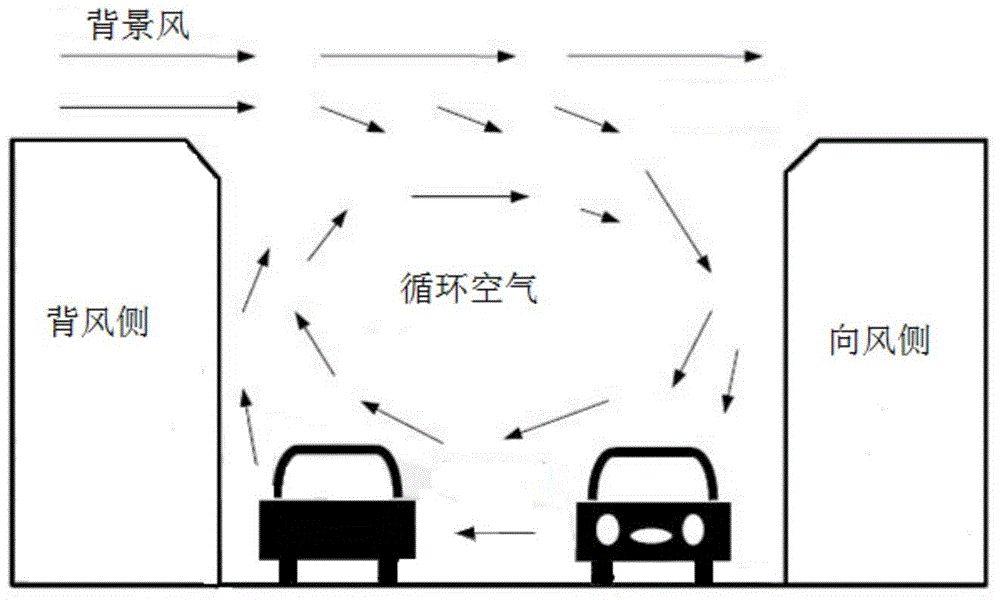
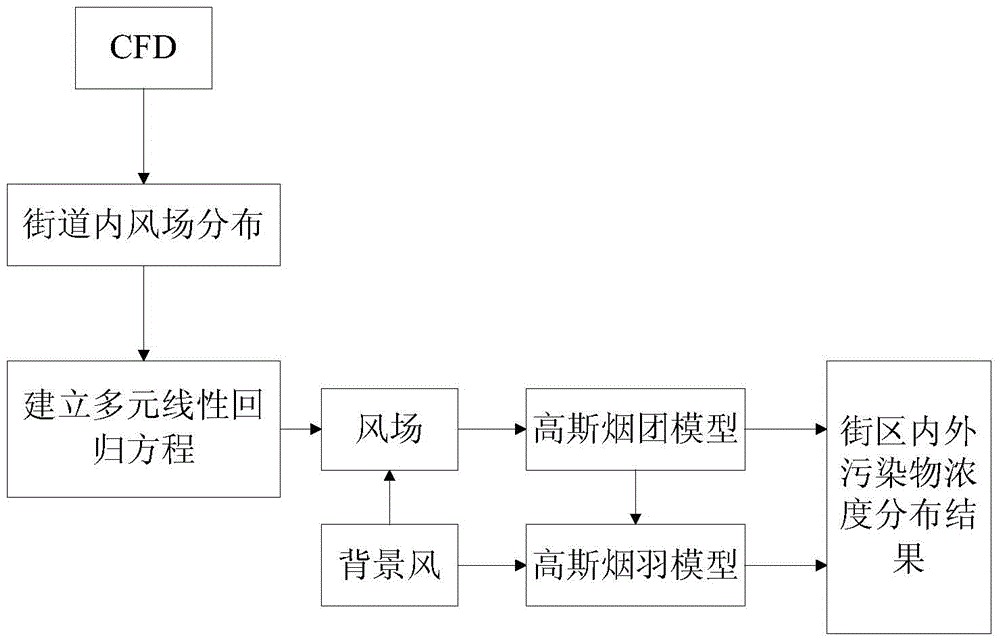
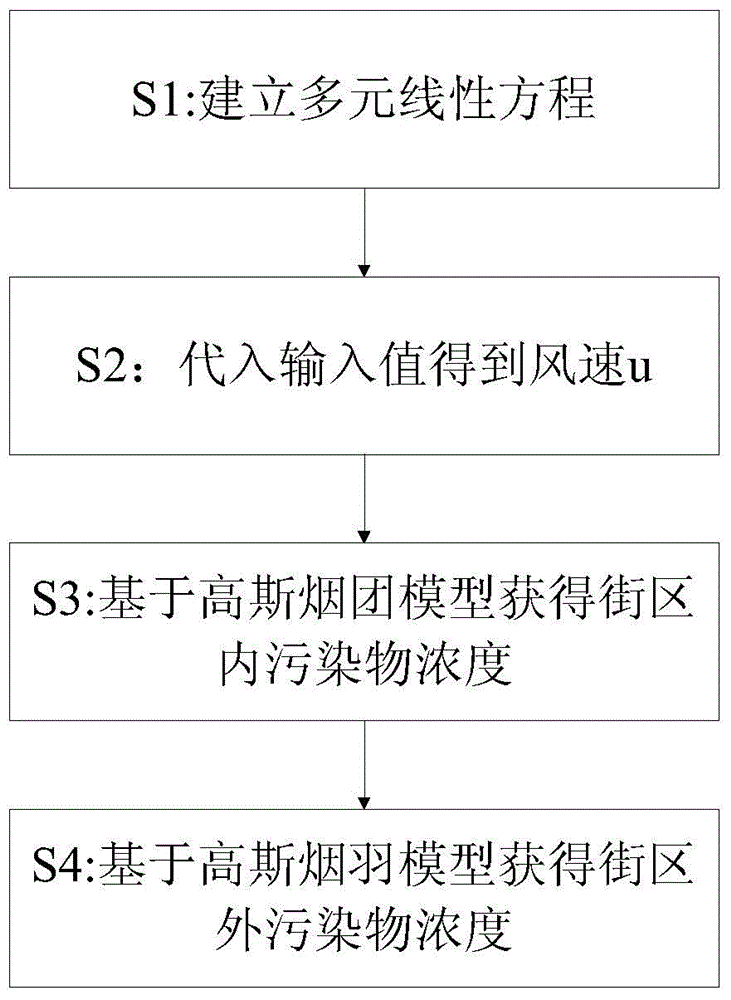
- Multiple linear regression equations are used to simplify wind field calculations, and combined with the CFD model, Gaussian puff model and Gaussian plume model, GPU parallel technology is used to calculate pollutant concentration distribution, reducing the need for on-site wind speed measurement.

Atmospheric pollutant diffusion assessment method based on computational fluid mechanics and model coupling
PatentPendingCN120671591A
Innovation
- Combining the CALPUFF/AERMOD model and CFD simulation, by considering complex meteorological conditions in a large area, using the CALPUFF/AERMOD model to provide boundary conditions, inputting the CFD model to perform high-precision pollutant diffusion simulation in local areas, and using the RANS model for flow field simulation.


Environmental Regulations for Pollutant Modeling
Environmental regulations governing pollutant modeling through CFD simulations form a complex framework that varies significantly across jurisdictions and application domains. In the United States, the Environmental Protection Agency (EPA) establishes primary guidelines through the Clean Air Act, requiring detailed atmospheric dispersion modeling for industrial facilities, power plants, and major emission sources. The EPA's Guideline on Air Quality Models specifies acceptable modeling practices, including requirements for meteorological data quality, terrain considerations, and validation protocols that directly impact CFD simulation methodologies.
European Union regulations under the Industrial Emissions Directive and Ambient Air Quality Directive mandate comprehensive environmental impact assessments that increasingly rely on advanced computational fluid dynamics approaches. These regulations specify minimum accuracy thresholds for pollutant concentration predictions, temporal resolution requirements, and spatial coverage standards that CFD models must satisfy. Member states have implemented additional national requirements, creating a layered regulatory environment where CFD practitioners must navigate both EU-wide and local compliance standards.
International standards such as ISO 14001 and sector-specific guidelines from organizations like the International Maritime Organization influence CFD modeling requirements for cross-border pollution scenarios. These frameworks emphasize the need for standardized modeling protocols, quality assurance procedures, and uncertainty quantification methods that ensure regulatory acceptance of CFD simulation results across different jurisdictions.
Regulatory compliance for CFD-based pollutant modeling typically requires extensive documentation including model validation studies, sensitivity analyses, and peer review processes. Agencies increasingly demand real-time monitoring data integration with CFD predictions, creating requirements for hybrid modeling approaches that combine computational simulations with observational datasets. These regulatory frameworks continue evolving to address emerging pollutants, climate change impacts, and advancing computational capabilities, necessitating adaptive modeling strategies that maintain compliance while leveraging technological innovations.
European Union regulations under the Industrial Emissions Directive and Ambient Air Quality Directive mandate comprehensive environmental impact assessments that increasingly rely on advanced computational fluid dynamics approaches. These regulations specify minimum accuracy thresholds for pollutant concentration predictions, temporal resolution requirements, and spatial coverage standards that CFD models must satisfy. Member states have implemented additional national requirements, creating a layered regulatory environment where CFD practitioners must navigate both EU-wide and local compliance standards.
International standards such as ISO 14001 and sector-specific guidelines from organizations like the International Maritime Organization influence CFD modeling requirements for cross-border pollution scenarios. These frameworks emphasize the need for standardized modeling protocols, quality assurance procedures, and uncertainty quantification methods that ensure regulatory acceptance of CFD simulation results across different jurisdictions.
Regulatory compliance for CFD-based pollutant modeling typically requires extensive documentation including model validation studies, sensitivity analyses, and peer review processes. Agencies increasingly demand real-time monitoring data integration with CFD predictions, creating requirements for hybrid modeling approaches that combine computational simulations with observational datasets. These regulatory frameworks continue evolving to address emerging pollutants, climate change impacts, and advancing computational capabilities, necessitating adaptive modeling strategies that maintain compliance while leveraging technological innovations.
Validation Standards for CFD Dispersion Models
The validation of CFD dispersion models requires adherence to established standards that ensure accuracy, reliability, and regulatory compliance. The American Society for Testing and Materials (ASTM) provides comprehensive guidelines through ASTM D6589, which outlines statistical performance measures for evaluating model predictions against experimental data. This standard emphasizes the use of metrics such as fractional bias, normalized mean square error, and geometric mean bias to quantify model performance across different atmospheric conditions.
The European Committee for Standardization has developed EN 16798 series standards that specifically address indoor air quality modeling, including pollutant dispersion validation protocols. These standards mandate minimum data requirements for model validation, including meteorological parameters, source characteristics, and receptor measurements. The validation process must demonstrate model performance across various stability classes and wind conditions to ensure robust predictive capabilities.
Regulatory agencies worldwide have established specific validation criteria for environmental impact assessments. The US Environmental Protection Agency's Guideline on Air Quality Models requires CFD models to undergo rigorous validation against wind tunnel experiments and field measurements before regulatory acceptance. The validation dataset must include at least three independent experimental studies with different source configurations and atmospheric conditions.
International standards such as ISO 16890 provide frameworks for evaluating model uncertainty and sensitivity analysis. These standards require comprehensive documentation of model assumptions, boundary conditions, and numerical schemes used in the simulation. The validation process must include statistical analysis of model performance, identification of systematic biases, and assessment of model limitations under different environmental conditions.
Quality assurance protocols mandate peer review processes and independent verification of validation studies. The validation documentation must include detailed descriptions of experimental setups, measurement uncertainties, and statistical analysis methods. Model developers must demonstrate compliance with established accuracy thresholds, typically requiring fractional bias within ±30% and correlation coefficients exceeding 0.8 for regulatory applications.
Emerging validation standards are incorporating machine learning techniques for automated model evaluation and real-time performance monitoring. These advanced approaches enable continuous validation against streaming environmental data, providing dynamic assessment of model reliability and triggering recalibration procedures when performance degrades below acceptable thresholds.
The European Committee for Standardization has developed EN 16798 series standards that specifically address indoor air quality modeling, including pollutant dispersion validation protocols. These standards mandate minimum data requirements for model validation, including meteorological parameters, source characteristics, and receptor measurements. The validation process must demonstrate model performance across various stability classes and wind conditions to ensure robust predictive capabilities.
Regulatory agencies worldwide have established specific validation criteria for environmental impact assessments. The US Environmental Protection Agency's Guideline on Air Quality Models requires CFD models to undergo rigorous validation against wind tunnel experiments and field measurements before regulatory acceptance. The validation dataset must include at least three independent experimental studies with different source configurations and atmospheric conditions.
International standards such as ISO 16890 provide frameworks for evaluating model uncertainty and sensitivity analysis. These standards require comprehensive documentation of model assumptions, boundary conditions, and numerical schemes used in the simulation. The validation process must include statistical analysis of model performance, identification of systematic biases, and assessment of model limitations under different environmental conditions.
Quality assurance protocols mandate peer review processes and independent verification of validation studies. The validation documentation must include detailed descriptions of experimental setups, measurement uncertainties, and statistical analysis methods. Model developers must demonstrate compliance with established accuracy thresholds, typically requiring fractional bias within ±30% and correlation coefficients exceeding 0.8 for regulatory applications.
Emerging validation standards are incorporating machine learning techniques for automated model evaluation and real-time performance monitoring. These advanced approaches enable continuous validation against streaming environmental data, providing dynamic assessment of model reliability and triggering recalibration procedures when performance degrades below acceptable thresholds.
Unlock deeper insights with PatSnap Eureka Quick Research — get a full tech report to explore trends and direct your research. Try now!
Generate Your Research Report Instantly with AI Agent
Supercharge your innovation with PatSnap Eureka AI Agent Platform!