

How to Optimize Anchor Bolt Spacing for Stability
FEB 12, 202610 MIN READ
Generate Your Research Report Instantly with AI Agent
PatSnap Eureka helps you evaluate technical feasibility & market potential.
Anchor Bolt Technology Background and Stability Goals
Anchor bolt technology has evolved significantly since its inception in the early 20th century, transitioning from simple mechanical fastening solutions to sophisticated engineered systems that form critical components in structural stability. Initially developed for basic construction applications, anchor bolts have become integral to modern infrastructure projects, including high-rise buildings, bridges, industrial facilities, and renewable energy installations. The technology encompasses various bolt types, materials, and installation methods, each designed to address specific load requirements and environmental conditions.
The fundamental principle of anchor bolt systems relies on transferring structural loads from superstructures to foundation elements through mechanical and chemical bonding mechanisms. Traditional approaches focused primarily on bolt diameter and embedment depth, but contemporary understanding recognizes that optimal spacing represents a critical parameter affecting overall system performance. The interaction between individual bolts within a group creates complex stress distribution patterns that significantly influence the structural integrity and load-bearing capacity of the entire assembly.
Modern anchor bolt applications face increasingly demanding performance requirements driven by evolving construction standards, seismic design codes, and sustainability considerations. The push toward taller structures, longer spans, and more efficient designs has intensified the need for optimized bolt spacing strategies that maximize structural efficiency while minimizing material usage and installation costs. Additionally, the integration of advanced materials such as high-strength steels and fiber-reinforced polymers has expanded the performance envelope of anchor bolt systems.
The primary stability goals for optimized anchor bolt spacing encompass multiple interconnected objectives that must be balanced to achieve optimal system performance. Load distribution uniformity stands as a fundamental goal, ensuring that applied forces are evenly distributed among all bolts within a group to prevent premature failure of individual fasteners. This objective requires careful consideration of bolt spacing relative to the structural geometry and anticipated load paths.
Minimization of stress concentration effects represents another critical stability goal, as improper spacing can create localized high-stress regions that compromise the overall system reliability. The spacing optimization must account for the interaction between adjacent bolts and their influence on the surrounding concrete or base material, preventing edge effects and group action phenomena that could reduce the effective capacity of the bolt assembly.
Long-term durability and fatigue resistance constitute essential stability objectives, particularly for structures subjected to cyclic loading conditions such as wind, seismic, or operational loads. Optimal spacing strategies must consider the dynamic response characteristics of the bolt group and ensure adequate fatigue life under anticipated service conditions. This includes accounting for potential loosening effects, corrosion influences, and material degradation over the structure's design life.
The fundamental principle of anchor bolt systems relies on transferring structural loads from superstructures to foundation elements through mechanical and chemical bonding mechanisms. Traditional approaches focused primarily on bolt diameter and embedment depth, but contemporary understanding recognizes that optimal spacing represents a critical parameter affecting overall system performance. The interaction between individual bolts within a group creates complex stress distribution patterns that significantly influence the structural integrity and load-bearing capacity of the entire assembly.
Modern anchor bolt applications face increasingly demanding performance requirements driven by evolving construction standards, seismic design codes, and sustainability considerations. The push toward taller structures, longer spans, and more efficient designs has intensified the need for optimized bolt spacing strategies that maximize structural efficiency while minimizing material usage and installation costs. Additionally, the integration of advanced materials such as high-strength steels and fiber-reinforced polymers has expanded the performance envelope of anchor bolt systems.
The primary stability goals for optimized anchor bolt spacing encompass multiple interconnected objectives that must be balanced to achieve optimal system performance. Load distribution uniformity stands as a fundamental goal, ensuring that applied forces are evenly distributed among all bolts within a group to prevent premature failure of individual fasteners. This objective requires careful consideration of bolt spacing relative to the structural geometry and anticipated load paths.
Minimization of stress concentration effects represents another critical stability goal, as improper spacing can create localized high-stress regions that compromise the overall system reliability. The spacing optimization must account for the interaction between adjacent bolts and their influence on the surrounding concrete or base material, preventing edge effects and group action phenomena that could reduce the effective capacity of the bolt assembly.
Long-term durability and fatigue resistance constitute essential stability objectives, particularly for structures subjected to cyclic loading conditions such as wind, seismic, or operational loads. Optimal spacing strategies must consider the dynamic response characteristics of the bolt group and ensure adequate fatigue life under anticipated service conditions. This includes accounting for potential loosening effects, corrosion influences, and material degradation over the structure's design life.
Market Demand for Optimized Anchor Bolt Solutions
The global construction industry's increasing emphasis on structural safety and regulatory compliance has created substantial market demand for optimized anchor bolt solutions. Traditional approaches to anchor bolt spacing often rely on conservative engineering practices that may result in over-engineered systems, leading to unnecessary material costs and installation complexity. This gap between current practices and optimal performance has generated significant interest from construction companies, structural engineers, and infrastructure developers seeking more efficient and cost-effective solutions.
Infrastructure modernization projects across developed nations represent a primary driver of market demand. Aging bridges, buildings, and industrial facilities require retrofitting with advanced anchoring systems that can provide enhanced stability while minimizing structural modifications. The need for precise anchor bolt spacing optimization becomes particularly critical in seismic zones, where improper spacing can compromise structural integrity during dynamic loading conditions.
The renewable energy sector has emerged as a significant market segment demanding optimized anchor bolt solutions. Wind turbine foundations, solar panel mounting systems, and energy storage facilities require specialized anchoring approaches that balance structural stability with cost efficiency. These applications often involve unique loading conditions and environmental factors that necessitate sophisticated spacing optimization techniques beyond conventional design standards.
Industrial manufacturing facilities and heavy equipment installations constitute another substantial market segment. Precision machinery, production lines, and processing equipment require anchor bolt configurations that minimize vibration transmission while ensuring operational stability. The growing trend toward automation and high-speed manufacturing processes has intensified the demand for optimized anchoring solutions that can accommodate dynamic loads and thermal expansion effects.
Regulatory developments and updated building codes have further amplified market demand for advanced anchor bolt optimization methods. Recent seismic design requirements and wind load specifications have prompted engineers to seek more sophisticated approaches to anchor bolt spacing that can demonstrate compliance through analytical validation rather than conservative rule-of-thumb methods.
The market opportunity extends beyond new construction to include retrofit and upgrade applications. Existing structures requiring capacity enhancements or equipment modifications often face spatial constraints that make optimized anchor bolt spacing essential for achieving required performance within limited installation areas.
Infrastructure modernization projects across developed nations represent a primary driver of market demand. Aging bridges, buildings, and industrial facilities require retrofitting with advanced anchoring systems that can provide enhanced stability while minimizing structural modifications. The need for precise anchor bolt spacing optimization becomes particularly critical in seismic zones, where improper spacing can compromise structural integrity during dynamic loading conditions.
The renewable energy sector has emerged as a significant market segment demanding optimized anchor bolt solutions. Wind turbine foundations, solar panel mounting systems, and energy storage facilities require specialized anchoring approaches that balance structural stability with cost efficiency. These applications often involve unique loading conditions and environmental factors that necessitate sophisticated spacing optimization techniques beyond conventional design standards.
Industrial manufacturing facilities and heavy equipment installations constitute another substantial market segment. Precision machinery, production lines, and processing equipment require anchor bolt configurations that minimize vibration transmission while ensuring operational stability. The growing trend toward automation and high-speed manufacturing processes has intensified the demand for optimized anchoring solutions that can accommodate dynamic loads and thermal expansion effects.
Regulatory developments and updated building codes have further amplified market demand for advanced anchor bolt optimization methods. Recent seismic design requirements and wind load specifications have prompted engineers to seek more sophisticated approaches to anchor bolt spacing that can demonstrate compliance through analytical validation rather than conservative rule-of-thumb methods.
The market opportunity extends beyond new construction to include retrofit and upgrade applications. Existing structures requiring capacity enhancements or equipment modifications often face spatial constraints that make optimized anchor bolt spacing essential for achieving required performance within limited installation areas.
Current Anchor Bolt Spacing Standards and Challenges
Current anchor bolt spacing standards are primarily governed by established building codes and engineering guidelines, with the International Building Code (IBC), American Concrete Institute (ACI) standards, and European Eurocode provisions serving as foundational references. These standards typically specify minimum spacing requirements based on bolt diameter, with common ratios ranging from 3 to 5 times the bolt diameter for center-to-center spacing. However, these prescriptive approaches often fail to account for the complex interaction between structural loads, material properties, and environmental conditions.
The American Institute of Steel Construction (AISC) provides detailed specifications for anchor bolt installations, emphasizing minimum edge distances and spacing requirements to prevent concrete breakout failures. Similarly, ACI 318 establishes comprehensive provisions for anchoring to concrete, including requirements for development length, edge distances, and spacing limitations. Despite these well-established guidelines, significant variations exist across different jurisdictions and application contexts.
One of the primary challenges in current anchor bolt spacing practices lies in the oversimplified approach to load distribution analysis. Traditional methods often assume uniform load sharing among bolts, neglecting the reality that bolt groups experience non-uniform stress distributions due to structural deformation patterns, manufacturing tolerances, and installation variations. This assumption can lead to conservative designs that result in excessive material usage or, conversely, inadequate safety margins in critical applications.
The integration of dynamic loading considerations presents another significant challenge. Current standards predominantly address static loading scenarios, with limited guidance for structures subjected to seismic forces, wind loads, or machinery-induced vibrations. The interaction between bolt spacing and dynamic response characteristics requires sophisticated analysis methods that extend beyond conventional code provisions.
Material compatibility and long-term performance issues further complicate anchor bolt spacing optimization. Differential thermal expansion between steel bolts and concrete substrates can induce additional stresses that are not adequately addressed in current spacing guidelines. Corrosion effects, particularly in marine or industrial environments, can alter the effective bolt capacity over time, necessitating more nuanced spacing strategies.
Construction tolerances and quality control represent practical challenges that significantly impact anchor bolt performance. Field installation often introduces positional variations that can concentrate loads on fewer bolts than intended, highlighting the need for spacing designs that accommodate realistic construction practices while maintaining structural integrity and safety requirements.
The American Institute of Steel Construction (AISC) provides detailed specifications for anchor bolt installations, emphasizing minimum edge distances and spacing requirements to prevent concrete breakout failures. Similarly, ACI 318 establishes comprehensive provisions for anchoring to concrete, including requirements for development length, edge distances, and spacing limitations. Despite these well-established guidelines, significant variations exist across different jurisdictions and application contexts.
One of the primary challenges in current anchor bolt spacing practices lies in the oversimplified approach to load distribution analysis. Traditional methods often assume uniform load sharing among bolts, neglecting the reality that bolt groups experience non-uniform stress distributions due to structural deformation patterns, manufacturing tolerances, and installation variations. This assumption can lead to conservative designs that result in excessive material usage or, conversely, inadequate safety margins in critical applications.
The integration of dynamic loading considerations presents another significant challenge. Current standards predominantly address static loading scenarios, with limited guidance for structures subjected to seismic forces, wind loads, or machinery-induced vibrations. The interaction between bolt spacing and dynamic response characteristics requires sophisticated analysis methods that extend beyond conventional code provisions.
Material compatibility and long-term performance issues further complicate anchor bolt spacing optimization. Differential thermal expansion between steel bolts and concrete substrates can induce additional stresses that are not adequately addressed in current spacing guidelines. Corrosion effects, particularly in marine or industrial environments, can alter the effective bolt capacity over time, necessitating more nuanced spacing strategies.
Construction tolerances and quality control represent practical challenges that significantly impact anchor bolt performance. Field installation often introduces positional variations that can concentrate loads on fewer bolts than intended, highlighting the need for spacing designs that accommodate realistic construction practices while maintaining structural integrity and safety requirements.
Existing Anchor Bolt Spacing Optimization Solutions
01 Adjustable anchor bolt spacing mechanisms
Anchor bolt systems that incorporate adjustable spacing mechanisms allow for flexible positioning of bolts to accommodate different structural requirements. These mechanisms typically include sliding components, adjustable plates, or movable brackets that enable precise control over bolt spacing distances. The adjustability feature provides versatility in installation and can adapt to varying construction specifications and dimensional tolerances.- Adjustable anchor bolt spacing mechanisms: Anchor bolt systems that incorporate adjustable spacing mechanisms allow for flexible positioning of bolts to accommodate different structural requirements. These mechanisms typically include sliding components, adjustable plates, or movable brackets that enable precise control over bolt spacing distances. The adjustability feature provides versatility in installation and can adapt to varying construction specifications and dimensional tolerances.
- Fixed spacing templates and positioning devices: Specialized templates and positioning devices are designed to maintain predetermined anchor bolt spacing during installation. These devices often feature pre-drilled holes or fixed spacing guides that ensure accurate and consistent bolt placement. The use of such templates simplifies the installation process and reduces measurement errors, particularly in repetitive construction applications.
- Modular anchor bolt spacing systems: Modular systems provide standardized spacing configurations through interconnected components that can be assembled in various arrangements. These systems typically consist of base plates, connecting elements, and mounting brackets that work together to establish specific spacing patterns. The modular approach allows for easy customization while maintaining structural integrity and installation efficiency.
- Anchor bolt spacing for specialized structural applications: Certain applications require specific anchor bolt spacing configurations tailored to unique structural demands, such as heavy machinery mounting, seismic-resistant installations, or high-load bearing requirements. These specialized spacing arrangements consider factors like load distribution, stress concentration, and structural stability to optimize performance under specific operating conditions.
- Measurement and verification tools for anchor bolt spacing: Various measurement and verification tools are employed to ensure accurate anchor bolt spacing during and after installation. These tools include spacing gauges, alignment fixtures, and inspection devices that help verify dimensional accuracy and compliance with design specifications. Such tools are essential for quality control and ensuring proper structural performance.
02 Fixed spacing templates and positioning devices
Specialized templates and positioning devices are designed to maintain predetermined anchor bolt spacing during installation. These tools ensure accurate and consistent spacing by providing fixed reference points or guides that hold bolts at specific intervals. Such devices improve installation efficiency and reduce measurement errors, particularly useful in repetitive construction applications where uniform spacing is critical.Expand Specific Solutions03 Integrated anchor bolt spacing in foundation systems
Foundation systems with integrated anchor bolt spacing features incorporate pre-designed bolt placement patterns within the foundation structure itself. These systems include embedded channels, pre-formed holes, or modular components that define specific spacing intervals. The integration ensures structural integrity while simplifying the installation process and maintaining consistent spacing across multiple anchor points.Expand Specific Solutions04 Multi-bolt spacing arrangements for load distribution
Advanced anchor bolt configurations utilize multiple spacing arrangements designed to optimize load distribution across connected structures. These arrangements consider factors such as stress distribution, structural loads, and connection requirements. The spacing patterns may vary based on the application, incorporating both uniform and variable spacing to achieve optimal structural performance and stability.Expand Specific Solutions05 Modular and prefabricated anchor bolt spacing systems
Modular systems provide prefabricated components with predetermined anchor bolt spacing configurations. These systems offer standardized spacing solutions that can be quickly assembled on-site, reducing installation time and ensuring consistency. The modular approach allows for easy replacement, maintenance, and adaptation to different project requirements while maintaining precise spacing specifications throughout the structure.Expand Specific Solutions
Key Players in Anchor Bolt and Fastening Industry
The anchor bolt spacing optimization market represents a mature technical field within the broader construction and infrastructure sector, currently valued at several billion dollars globally and experiencing steady growth driven by increasing infrastructure investments and safety regulations. The industry is in a consolidation phase, characterized by established players leveraging decades of engineering expertise and emerging technologies like AI-driven structural analysis. Technology maturity varies significantly across market segments, with companies like Hilti AG and Siemens AG leading in advanced fastening systems and digital optimization tools, while traditional construction giants such as China First Metallurgical Group and MCC TianGong Group focus on large-scale infrastructure applications. Specialized firms like fischerwerke and Leviat GmbH demonstrate high technical sophistication in precision anchoring solutions, whereas broader engineering contractors like Laing O'Rourke and VSL International integrate anchor optimization into comprehensive structural systems, creating a competitive landscape where innovation in materials science, computational modeling, and installation methodologies drives market differentiation.
fischerwerke Artur Fischer GmbH & Co. KG.
Technical Solution: Fischer has pioneered anchor bolt spacing optimization through their FEM-Design methodology, which combines computational modeling with empirical testing data to establish optimal spacing parameters. Their approach focuses on concrete breakout prevention and load redistribution analysis, utilizing proprietary algorithms that account for anchor diameter, embedment depth, and concrete strength variations. The company's spacing optimization considers both static and dynamic loading scenarios, incorporating safety factors and regulatory compliance requirements to ensure long-term structural integrity and performance reliability.
Strengths: Strong R&D foundation, proven track record in fastening technology, comprehensive testing protocols. Weaknesses: Limited integration with third-party design software, primarily focused on European standards.
Leviat GmbH
Technical Solution: Leviat specializes in connection engineering solutions with advanced anchor bolt spacing optimization systems that integrate structural analysis software with real-world performance data. Their methodology employs sophisticated modeling techniques to analyze stress distribution patterns, considering factors such as concrete edge effects, group anchor behavior, and progressive failure mechanisms. The company's approach includes automated spacing calculations that optimize both structural performance and installation efficiency, while maintaining compliance with international building codes and seismic design requirements for enhanced stability assurance.
Strengths: Specialized connection engineering expertise, international code compliance, comprehensive technical support. Weaknesses: Limited market presence in certain regions, higher complexity for standard applications.
Core Innovations in Anchor Bolt Spacing Algorithms
Anchor bolt spacer
PatentInactiveUS20060070337A1
Innovation
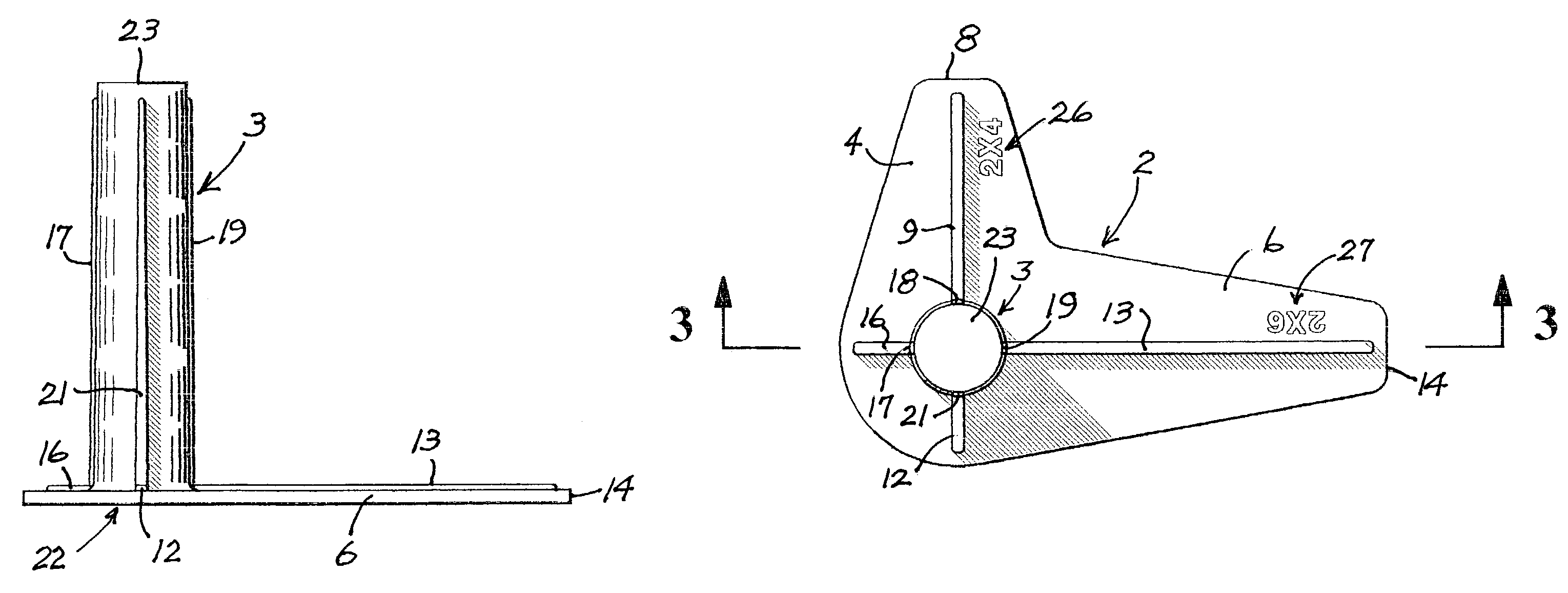
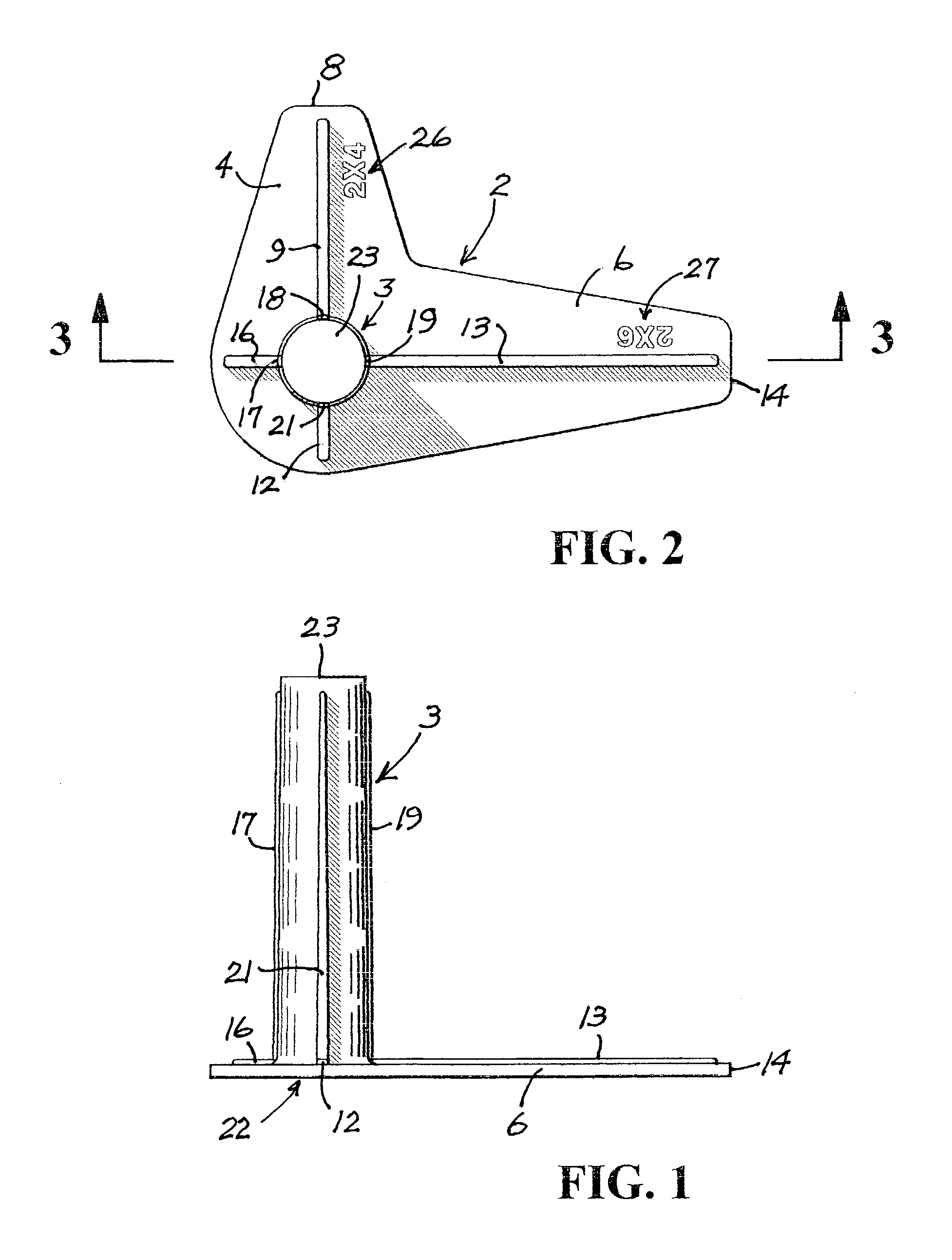
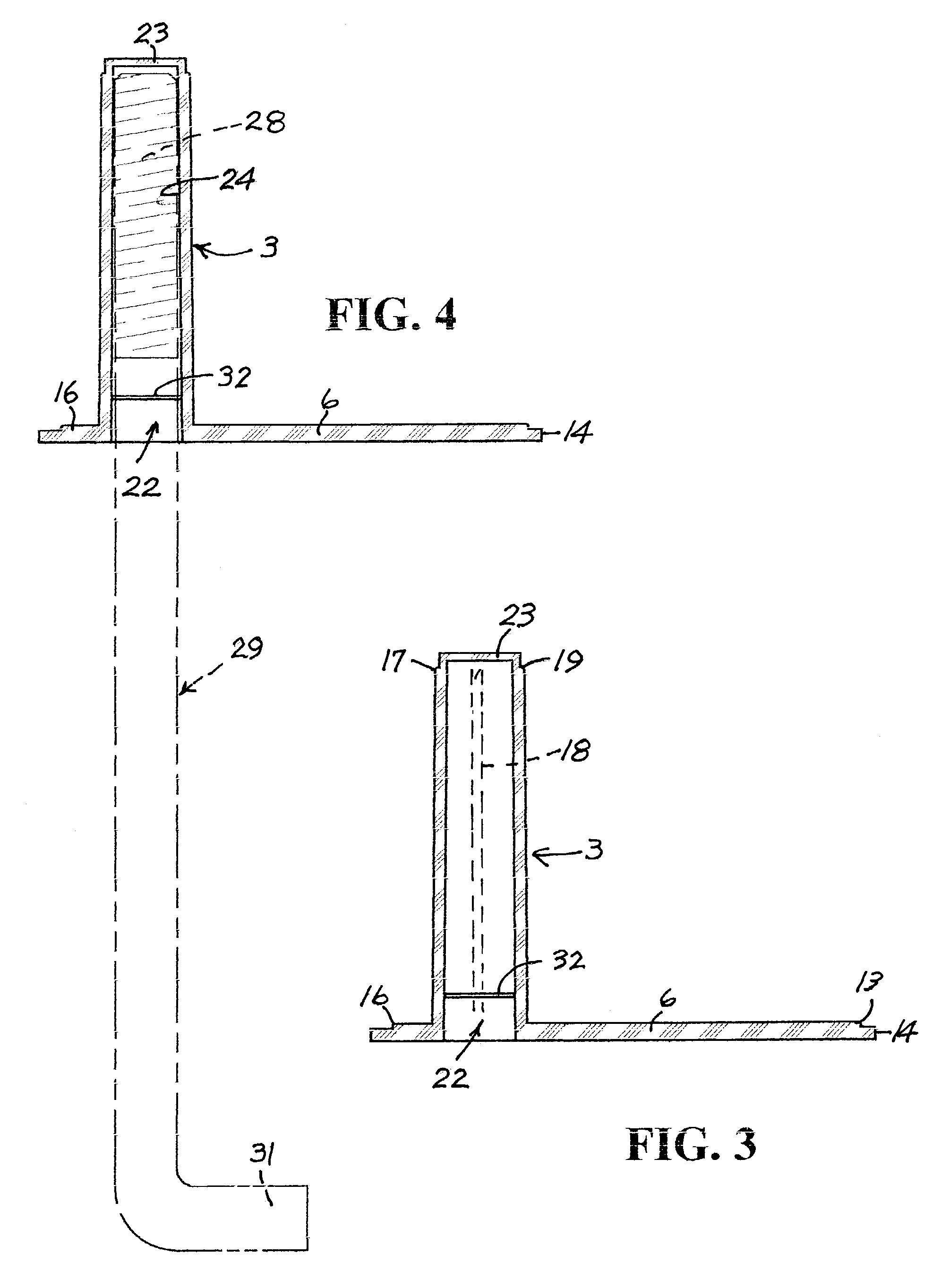
- A cost-efficient anchor bolt spacer with a central panel and foldable tabs that extend into the concrete to rigidly hold the spacer in position, providing a bearing surface and supplemental reinforcement to transfer loading from the anchor bolt into the concrete.


Anchor bolt placement and protection device
PatentInactiveUS7225589B1
Innovation
- A pre-manufactured anchor bolt placement device that frictionally engages the threaded end of the anchor bolt, providing lateral projections to ensure accurate spacing and depth placement, while preventing thread contamination and allowing for easy removal after concrete hardening, with indicia for proper mud sill dimensions and pre-drilled holes for temporary anchoring.

Structural Safety Codes and Anchor Bolt Regulations
Structural safety codes and anchor bolt regulations form the fundamental framework governing the optimization of anchor bolt spacing for stability across various construction applications. These regulatory standards have evolved significantly over the past decades, incorporating advanced engineering principles and lessons learned from structural failures to establish comprehensive guidelines for anchor bolt design and installation.
The International Building Code (IBC) and American Concrete Institute (ACI) 318 provide primary regulatory guidance for anchor bolt spacing requirements in North America. ACI 318 Chapter 17 specifically addresses anchoring to concrete, establishing minimum edge distances, spacing requirements, and load capacity calculations. The code mandates minimum spacing of 4 times the anchor diameter for cast-in-place anchors and 6 times the diameter for post-installed anchors to prevent concrete breakout failure modes.
European standards, particularly Eurocode 2 and the European Technical Assessment (ETA) guidelines, offer alternative approaches to anchor bolt optimization. These regulations emphasize characteristic resistance values and partial safety factors, requiring spacing calculations based on concrete breakout cone interactions and steel failure modes. The European approach typically allows for more refined analysis methods, including the use of finite element modeling for complex configurations.
AISC Steel Construction Manual and AWS D1.1 welding code complement concrete-focused regulations by addressing steel-to-steel connections and base plate design requirements. These standards specify minimum bolt spacing as 2.67 times the bolt diameter for standard holes, with increased spacing requirements for oversized and slotted holes to maintain structural integrity.
Seismic design codes, including ASCE 7 and regional seismic provisions, impose additional constraints on anchor bolt spacing optimization. These regulations require consideration of dynamic loading effects, ductility requirements, and special detailing provisions for high seismic zones. The codes mandate increased spacing and edge distances to accommodate seismic demand and prevent brittle failure modes during earthquake events.
Recent regulatory developments have incorporated performance-based design approaches, allowing engineers greater flexibility in anchor bolt spacing optimization while maintaining safety requirements. These provisions enable the use of advanced analysis methods and testing protocols to validate non-standard configurations, provided they demonstrate equivalent or superior performance to prescriptive code requirements.
The International Building Code (IBC) and American Concrete Institute (ACI) 318 provide primary regulatory guidance for anchor bolt spacing requirements in North America. ACI 318 Chapter 17 specifically addresses anchoring to concrete, establishing minimum edge distances, spacing requirements, and load capacity calculations. The code mandates minimum spacing of 4 times the anchor diameter for cast-in-place anchors and 6 times the diameter for post-installed anchors to prevent concrete breakout failure modes.
European standards, particularly Eurocode 2 and the European Technical Assessment (ETA) guidelines, offer alternative approaches to anchor bolt optimization. These regulations emphasize characteristic resistance values and partial safety factors, requiring spacing calculations based on concrete breakout cone interactions and steel failure modes. The European approach typically allows for more refined analysis methods, including the use of finite element modeling for complex configurations.
AISC Steel Construction Manual and AWS D1.1 welding code complement concrete-focused regulations by addressing steel-to-steel connections and base plate design requirements. These standards specify minimum bolt spacing as 2.67 times the bolt diameter for standard holes, with increased spacing requirements for oversized and slotted holes to maintain structural integrity.
Seismic design codes, including ASCE 7 and regional seismic provisions, impose additional constraints on anchor bolt spacing optimization. These regulations require consideration of dynamic loading effects, ductility requirements, and special detailing provisions for high seismic zones. The codes mandate increased spacing and edge distances to accommodate seismic demand and prevent brittle failure modes during earthquake events.
Recent regulatory developments have incorporated performance-based design approaches, allowing engineers greater flexibility in anchor bolt spacing optimization while maintaining safety requirements. These provisions enable the use of advanced analysis methods and testing protocols to validate non-standard configurations, provided they demonstrate equivalent or superior performance to prescriptive code requirements.
Environmental Impact of Anchor Bolt Materials
The environmental implications of anchor bolt materials represent a critical consideration in optimizing spacing strategies for structural stability. Material selection directly influences both the ecological footprint of construction projects and the long-term sustainability of anchoring systems. Traditional steel anchor bolts, while offering excellent mechanical properties, present significant environmental challenges through their carbon-intensive manufacturing processes and susceptibility to corrosion-induced degradation.
Carbon steel anchor bolts typically generate approximately 1.8-2.2 tons of CO2 equivalent per ton of material produced, contributing substantially to construction-related greenhouse gas emissions. The environmental burden extends beyond manufacturing, as corrosion necessitates frequent replacement cycles, multiplying the material consumption and associated environmental costs over the structure's lifespan. This degradation pattern particularly affects spacing optimization, as engineers must account for reduced load-bearing capacity over time.
Stainless steel alternatives, while offering superior corrosion resistance, carry an even higher environmental cost during production, generating up to 6.8 tons of CO2 equivalent per ton. However, their extended service life can offset initial environmental impacts through reduced replacement frequency and maintenance requirements. The enhanced durability allows for more aggressive spacing optimization without compromising long-term stability performance.
Emerging sustainable alternatives are reshaping environmental considerations in anchor bolt applications. Fiber-reinforced polymer composites demonstrate promising environmental profiles, with manufacturing processes generating 40-60% fewer emissions compared to steel production. These materials exhibit excellent corrosion resistance and strength-to-weight ratios, enabling innovative spacing configurations that minimize material usage while maintaining structural integrity.
Bio-based anchor bolt materials, incorporating recycled content or renewable feedstocks, represent the frontier of environmentally conscious anchoring solutions. These materials can reduce lifecycle carbon emissions by up to 70% compared to conventional steel systems. However, their mechanical properties and long-term performance characteristics require careful evaluation when determining optimal spacing parameters.
The environmental impact assessment must also consider end-of-life scenarios. Steel anchor bolts offer excellent recyclability, with recycling rates exceeding 85% in developed markets. This circular economy potential significantly reduces the net environmental impact when factored into spacing optimization calculations, as higher-density installations using recyclable materials may prove more sustainable than sparse configurations requiring non-recyclable alternatives.
Regional environmental regulations increasingly influence material selection and spacing strategies. Carbon pricing mechanisms and environmental impact disclosure requirements are driving adoption of lower-impact materials, even when initial costs exceed traditional alternatives. These regulatory frameworks necessitate integration of environmental metrics into spacing optimization algorithms, balancing structural performance with sustainability objectives.
Carbon steel anchor bolts typically generate approximately 1.8-2.2 tons of CO2 equivalent per ton of material produced, contributing substantially to construction-related greenhouse gas emissions. The environmental burden extends beyond manufacturing, as corrosion necessitates frequent replacement cycles, multiplying the material consumption and associated environmental costs over the structure's lifespan. This degradation pattern particularly affects spacing optimization, as engineers must account for reduced load-bearing capacity over time.
Stainless steel alternatives, while offering superior corrosion resistance, carry an even higher environmental cost during production, generating up to 6.8 tons of CO2 equivalent per ton. However, their extended service life can offset initial environmental impacts through reduced replacement frequency and maintenance requirements. The enhanced durability allows for more aggressive spacing optimization without compromising long-term stability performance.
Emerging sustainable alternatives are reshaping environmental considerations in anchor bolt applications. Fiber-reinforced polymer composites demonstrate promising environmental profiles, with manufacturing processes generating 40-60% fewer emissions compared to steel production. These materials exhibit excellent corrosion resistance and strength-to-weight ratios, enabling innovative spacing configurations that minimize material usage while maintaining structural integrity.
Bio-based anchor bolt materials, incorporating recycled content or renewable feedstocks, represent the frontier of environmentally conscious anchoring solutions. These materials can reduce lifecycle carbon emissions by up to 70% compared to conventional steel systems. However, their mechanical properties and long-term performance characteristics require careful evaluation when determining optimal spacing parameters.
The environmental impact assessment must also consider end-of-life scenarios. Steel anchor bolts offer excellent recyclability, with recycling rates exceeding 85% in developed markets. This circular economy potential significantly reduces the net environmental impact when factored into spacing optimization calculations, as higher-density installations using recyclable materials may prove more sustainable than sparse configurations requiring non-recyclable alternatives.
Regional environmental regulations increasingly influence material selection and spacing strategies. Carbon pricing mechanisms and environmental impact disclosure requirements are driving adoption of lower-impact materials, even when initial costs exceed traditional alternatives. These regulatory frameworks necessitate integration of environmental metrics into spacing optimization algorithms, balancing structural performance with sustainability objectives.
Unlock deeper insights with PatSnap Eureka Quick Research — get a full tech report to explore trends and direct your research. Try now!
Generate Your Research Report Instantly with AI Agent
Supercharge your innovation with PatSnap Eureka AI Agent Platform!