

How to Optimize Core Permeability for Ideal Transformer Performance
JUL 16, 20269 MIN READ
Generate Your Research Report Instantly with AI Agent
Patsnap Eureka helps you evaluate technical feasibility & market potential.
Magnetic Core Materials Evolution and Performance Targets
The evolution of magnetic core materials represents a century-long journey driven by the pursuit of enhanced transformer efficiency and performance. Early transformers relied on solid iron cores, which suffered from significant eddy current losses and limited operational frequencies. The breakthrough came with the introduction of silicon steel in the early 20th century, where the addition of 3-4% silicon substantially increased electrical resistivity and reduced core losses. This innovation established the foundation for modern power transformer design.
The mid-20th century witnessed the emergence of grain-oriented electrical steel, a revolutionary advancement that aligned the crystal structure along the rolling direction. This orientation exploited the magnetic anisotropy of iron, achieving permeability values exceeding 30,000 and dramatically reducing magnetization losses in the preferred direction. Subsequent developments in domain refinement techniques further enhanced performance by introducing controlled surface treatments that reduced anomalous losses at higher flux densities.
Amorphous and nanocrystalline materials emerged in the late 20th century as game-changing alternatives for specific applications. These materials, characterized by their disordered atomic structure, exhibit exceptionally low core losses at medium frequencies while maintaining adequate saturation flux density. Nanocrystalline alloys, particularly iron-based compositions with copper and niobium additions, achieve permeability values approaching 100,000 with minimal temperature dependence.
Contemporary performance targets reflect increasingly stringent efficiency standards and diverse application requirements. For power transformers operating at 50-60 Hz, the industry targets core loss densities below 0.9 W/kg at 1.7 Tesla, combined with permeability exceeding 40,000. High-frequency applications demand materials with permeability stability across temperature ranges and minimal losses at frequencies extending to several hundred kilohertz. The ongoing challenge involves balancing multiple parameters: maximizing permeability while maintaining adequate saturation flux density, minimizing losses across operational frequency ranges, ensuring thermal stability, and achieving cost-effectiveness for commercial viability. These targets continue to drive material science innovations in alloy composition, microstructure control, and surface engineering techniques.
The mid-20th century witnessed the emergence of grain-oriented electrical steel, a revolutionary advancement that aligned the crystal structure along the rolling direction. This orientation exploited the magnetic anisotropy of iron, achieving permeability values exceeding 30,000 and dramatically reducing magnetization losses in the preferred direction. Subsequent developments in domain refinement techniques further enhanced performance by introducing controlled surface treatments that reduced anomalous losses at higher flux densities.
Amorphous and nanocrystalline materials emerged in the late 20th century as game-changing alternatives for specific applications. These materials, characterized by their disordered atomic structure, exhibit exceptionally low core losses at medium frequencies while maintaining adequate saturation flux density. Nanocrystalline alloys, particularly iron-based compositions with copper and niobium additions, achieve permeability values approaching 100,000 with minimal temperature dependence.
Contemporary performance targets reflect increasingly stringent efficiency standards and diverse application requirements. For power transformers operating at 50-60 Hz, the industry targets core loss densities below 0.9 W/kg at 1.7 Tesla, combined with permeability exceeding 40,000. High-frequency applications demand materials with permeability stability across temperature ranges and minimal losses at frequencies extending to several hundred kilohertz. The ongoing challenge involves balancing multiple parameters: maximizing permeability while maintaining adequate saturation flux density, minimizing losses across operational frequency ranges, ensuring thermal stability, and achieving cost-effectiveness for commercial viability. These targets continue to drive material science innovations in alloy composition, microstructure control, and surface engineering techniques.
Market Demand for High-Efficiency Transformers
The global transformer market is experiencing robust growth driven by escalating electricity demand, infrastructure modernization, and the transition toward renewable energy systems. High-efficiency transformers have emerged as critical components in addressing energy conservation mandates and reducing operational costs across power generation, transmission, and distribution networks. Utilities and industrial operators increasingly prioritize equipment that minimizes energy losses, as even marginal efficiency improvements translate into substantial cost savings and reduced carbon footprints over the operational lifespan of transformers.
Regulatory frameworks worldwide are tightening efficiency standards for electrical equipment. International standards such as IEC 60076 and regional regulations including the U.S. Department of Energy efficiency mandates and the European Union's Ecodesign Directive establish minimum performance benchmarks that compel manufacturers to adopt advanced core materials and design optimization techniques. These regulations directly influence procurement decisions, with utilities and large-scale consumers favoring transformers that exceed baseline efficiency requirements to ensure compliance and future-proof their infrastructure investments.
The renewable energy sector represents a particularly dynamic demand driver for high-efficiency transformers. Wind farms, solar installations, and energy storage systems require specialized transformers capable of handling variable loads and maintaining efficiency across diverse operating conditions. Grid integration of distributed energy resources necessitates transformers with superior performance characteristics, including optimized core permeability that reduces hysteresis and eddy current losses. This segment is expanding rapidly as nations accelerate decarbonization efforts and invest heavily in clean energy infrastructure.
Industrial and commercial sectors also demonstrate strong demand for efficiency-optimized transformers. Data centers, manufacturing facilities, and transportation networks seek to minimize energy consumption and operational expenses while enhancing system reliability. The total cost of ownership perspective increasingly influences purchasing decisions, with buyers willing to invest in premium transformer technologies that deliver lower lifetime energy losses despite higher initial capital costs.
Emerging markets present significant growth opportunities as electrification rates increase and aging infrastructure undergoes replacement. Developing economies are adopting modern efficiency standards, creating demand for transformers incorporating advanced core materials and optimized magnetic circuit designs. This geographic expansion of efficiency requirements broadens the addressable market for manufacturers capable of delivering high-performance solutions at competitive price points.
Regulatory frameworks worldwide are tightening efficiency standards for electrical equipment. International standards such as IEC 60076 and regional regulations including the U.S. Department of Energy efficiency mandates and the European Union's Ecodesign Directive establish minimum performance benchmarks that compel manufacturers to adopt advanced core materials and design optimization techniques. These regulations directly influence procurement decisions, with utilities and large-scale consumers favoring transformers that exceed baseline efficiency requirements to ensure compliance and future-proof their infrastructure investments.
The renewable energy sector represents a particularly dynamic demand driver for high-efficiency transformers. Wind farms, solar installations, and energy storage systems require specialized transformers capable of handling variable loads and maintaining efficiency across diverse operating conditions. Grid integration of distributed energy resources necessitates transformers with superior performance characteristics, including optimized core permeability that reduces hysteresis and eddy current losses. This segment is expanding rapidly as nations accelerate decarbonization efforts and invest heavily in clean energy infrastructure.
Industrial and commercial sectors also demonstrate strong demand for efficiency-optimized transformers. Data centers, manufacturing facilities, and transportation networks seek to minimize energy consumption and operational expenses while enhancing system reliability. The total cost of ownership perspective increasingly influences purchasing decisions, with buyers willing to invest in premium transformer technologies that deliver lower lifetime energy losses despite higher initial capital costs.
Emerging markets present significant growth opportunities as electrification rates increase and aging infrastructure undergoes replacement. Developing economies are adopting modern efficiency standards, creating demand for transformers incorporating advanced core materials and optimized magnetic circuit designs. This geographic expansion of efficiency requirements broadens the addressable market for manufacturers capable of delivering high-performance solutions at competitive price points.
Current Permeability Challenges in Core Materials
Permeability optimization in transformer core materials faces multiple interconnected challenges that directly impact device efficiency and operational reliability. The fundamental difficulty lies in balancing high initial permeability with minimal core losses across varying frequency ranges and flux density levels. Traditional silicon steel and ferrite materials exhibit inherent trade-offs between saturation magnetization and permeability stability, creating constraints in achieving ideal performance parameters.
Temperature-dependent permeability degradation represents a critical challenge in modern transformer applications. Core materials experience significant permeability reduction at elevated operating temperatures, particularly beyond 80°C, leading to increased magnetizing current and reduced efficiency. This thermal sensitivity becomes especially problematic in high-power density applications where compact designs generate substantial heat accumulation. The Curie temperature proximity effect further complicates material selection, as operating temperatures approaching this threshold cause exponential permeability decline.
Frequency response limitations pose substantial obstacles in contemporary transformer design. Conventional grain-oriented electrical steels demonstrate excellent permeability at power frequencies but suffer from eddy current losses and permeability roll-off at frequencies exceeding several kilohertz. Conversely, ferrite materials maintain stable permeability at higher frequencies but offer lower saturation flux density, restricting power handling capability. This frequency-dependent behavior necessitates careful material selection based on specific application requirements.
Manufacturing-induced permeability variations present quality control challenges throughout production processes. Mechanical stress from cutting, punching, and stacking operations introduces localized magnetic anisotropy and domain wall pinning effects that degrade effective permeability. Heat treatment procedures require precise control to achieve optimal grain structure and minimize residual stress, yet process variations inevitably create batch-to-batch inconsistencies. Surface oxidation and insulation coating application further influence magnetic properties, adding complexity to achieving uniform permeability characteristics.
Magnetic domain structure instability under operational conditions creates dynamic permeability challenges. Applied DC bias currents, common in many transformer configurations, shift the operating point on the B-H curve and reduce incremental permeability. Harmonic distortion in AC waveforms introduces non-linear magnetization effects that alter effective permeability and increase losses. Additionally, long-term aging phenomena, including magnetic viscosity and structural relaxation, gradually modify permeability characteristics over the transformer's operational lifetime, complicating predictive performance modeling.
Temperature-dependent permeability degradation represents a critical challenge in modern transformer applications. Core materials experience significant permeability reduction at elevated operating temperatures, particularly beyond 80°C, leading to increased magnetizing current and reduced efficiency. This thermal sensitivity becomes especially problematic in high-power density applications where compact designs generate substantial heat accumulation. The Curie temperature proximity effect further complicates material selection, as operating temperatures approaching this threshold cause exponential permeability decline.
Frequency response limitations pose substantial obstacles in contemporary transformer design. Conventional grain-oriented electrical steels demonstrate excellent permeability at power frequencies but suffer from eddy current losses and permeability roll-off at frequencies exceeding several kilohertz. Conversely, ferrite materials maintain stable permeability at higher frequencies but offer lower saturation flux density, restricting power handling capability. This frequency-dependent behavior necessitates careful material selection based on specific application requirements.
Manufacturing-induced permeability variations present quality control challenges throughout production processes. Mechanical stress from cutting, punching, and stacking operations introduces localized magnetic anisotropy and domain wall pinning effects that degrade effective permeability. Heat treatment procedures require precise control to achieve optimal grain structure and minimize residual stress, yet process variations inevitably create batch-to-batch inconsistencies. Surface oxidation and insulation coating application further influence magnetic properties, adding complexity to achieving uniform permeability characteristics.
Magnetic domain structure instability under operational conditions creates dynamic permeability challenges. Applied DC bias currents, common in many transformer configurations, shift the operating point on the B-H curve and reduce incremental permeability. Harmonic distortion in AC waveforms introduces non-linear magnetization effects that alter effective permeability and increase losses. Additionally, long-term aging phenomena, including magnetic viscosity and structural relaxation, gradually modify permeability characteristics over the transformer's operational lifetime, complicating predictive performance modeling.
Mainstream Core Permeability Optimization Methods
01 High permeability magnetic core materials and alloys
Transformer cores can be manufactured using high permeability magnetic materials such as iron-based alloys, amorphous metals, and nanocrystalline materials. These materials exhibit superior magnetic properties including high initial permeability, low coercivity, and reduced core losses. The composition and heat treatment of these alloys are optimized to achieve maximum permeability for efficient transformer operation.- High permeability magnetic core materials and alloys: Transformer cores can be manufactured using high permeability magnetic materials such as iron-based alloys, amorphous metals, and nanocrystalline materials. These materials exhibit superior magnetic properties including high initial permeability, low coercivity, and reduced core losses. The composition and heat treatment of these alloys are optimized to achieve maximum permeability for efficient transformer operation.
- Core structure and lamination design: The physical structure and lamination configuration of transformer cores significantly affects permeability. Cores can be designed with specific geometries, grain orientations, and lamination thicknesses to optimize magnetic flux paths and minimize eddy current losses. Stacked laminations with insulating coatings between layers help maintain high effective permeability while reducing energy losses.
- Permeability measurement and testing methods: Various techniques and apparatus are employed to measure and characterize the permeability of transformer cores. These methods include AC and DC measurement systems, flux density analysis, and impedance testing under different operating conditions. Accurate permeability measurement is essential for quality control and performance prediction of transformer cores.
- Temperature and frequency dependent permeability: The permeability of transformer cores varies with operating temperature and frequency. Core materials are selected and designed to maintain stable permeability across the intended operating range. Special attention is given to minimizing permeability degradation at elevated temperatures and high frequencies, which is critical for power electronics and high-frequency transformer applications.
- Surface treatment and coating for permeability enhancement: Surface treatments and specialized coatings can be applied to transformer core materials to improve their magnetic permeability and reduce losses. These treatments may include annealing processes, insulating coatings, and surface modifications that optimize grain structure and reduce surface defects. Such treatments help achieve higher permeability while maintaining mechanical integrity and reducing inter-laminar losses.
02 Core structure and lamination design
The physical structure and lamination configuration of transformer cores significantly affects permeability. Thin laminated sheets reduce eddy current losses while maintaining high permeability. Core geometries including toroidal, E-I, and C-core designs are optimized to provide uniform magnetic flux distribution and minimize air gaps that would otherwise reduce effective permeability.Expand Specific Solutions03 Grain orientation and texture control
Grain-oriented electrical steels with controlled crystal orientation provide enhanced permeability in the rolling direction. Manufacturing processes including cold rolling, annealing, and domain refinement techniques are employed to align magnetic domains and improve permeability characteristics. Surface treatments and coatings further optimize magnetic properties.Expand Specific Solutions04 Permeability measurement and testing methods
Various measurement techniques are employed to characterize transformer core permeability including AC and DC testing methods, ring sample measurements, and single sheet testers. These methods evaluate initial permeability, maximum permeability, and permeability variation with frequency and temperature. Standardized testing protocols ensure accurate characterization of magnetic properties.Expand Specific Solutions05 Temperature stability and permeability optimization
Permeability characteristics vary with operating temperature, requiring careful material selection and thermal management. Advanced core materials maintain stable permeability across wide temperature ranges through controlled alloy composition and microstructure. Heat treatment processes and annealing techniques are optimized to achieve desired permeability-temperature profiles for specific applications.Expand Specific Solutions
Leading Manufacturers in Transformer Core Industry
The transformer core permeability optimization landscape represents a mature yet evolving technical domain characterized by intense competition among established industrial giants and specialized materials manufacturers. The market spans multiple sectors including power electronics, automotive, telecommunications, and renewable energy, with significant scale driven by electrification trends and energy efficiency demands. Technology maturity varies across applications, with companies like VACUUMSCHMELZE GmbH & Co. KG, TDK Corp., and Siemens AG leading in advanced magnetic materials development, while Sumida Corp., LG Innotek, and AMOSENSE focus on component-level innovations. Industrial conglomerates such as Robert Bosch GmbH and Midea Group drive automotive and consumer applications, whereas power infrastructure players including State Grid Corp. of China and China Southern Power Grid Research Institute advance grid-scale solutions. Academic institutions like Carnegie Mellon University and North Carolina State University contribute fundamental research, while emerging Chinese manufacturers like Suzhou Tianming Magnetic Industry expand production capacity, intensifying global competition in this strategically important technology area.
VACUUMSCHMELZE GmbH & Co. KG
Technical Solution: VACUUMSCHMELZE specializes in advanced soft magnetic materials and nanocrystalline cores for transformer applications. Their approach focuses on developing high-permeability materials with optimized grain structures through controlled annealing processes. The company employs proprietary alloy compositions combining iron, nickel, and cobalt to achieve permeability values exceeding 100,000 at low frequencies. Their VITROPERM and VITROVAC product lines utilize rapid solidification technology to create amorphous and nanocrystalline ribbons that are wound into toroidal cores. The optimization process involves precise temperature control during crystallization to achieve grain sizes between 10-20nm, which minimizes magnetic anisotropy and maximizes permeability. They also implement surface treatment techniques to reduce eddy current losses and improve frequency response characteristics for high-frequency transformer applications.
Strengths: Industry-leading permeability values, excellent thermal stability, low core losses at high frequencies. Weaknesses: Higher material costs compared to conventional silicon steel, complex manufacturing process requiring specialized equipment.
Sumida Corp.
Technical Solution: Sumida Corporation specializes in miniaturized transformer cores with optimized permeability for consumer electronics and telecommunications applications. Their technology focuses on thin-film magnetic materials and multilayer chip inductors with precisely controlled permeability characteristics. The company employs sputtering and electroplating techniques to deposit magnetic layers with thicknesses ranging from 0.1 to 10μm, enabling high-frequency operation up to several hundred MHz. Sumida optimizes permeability through composition control of CoFe, NiFe, and FeSiAl alloys, achieving values between 500 and 3,000 depending on application requirements. Their approach includes implementing magnetic anisotropy through applied magnetic fields during deposition to align magnetic domains in preferred directions. For planar transformers, they develop photolithography-patterned cores that minimize flux leakage and maximize effective permeability in confined spaces. The optimization process also addresses permeability-frequency dispersion through lamination of ultra-thin magnetic layers separated by insulating films, maintaining stable permeability characteristics across wide frequency ranges.
Strengths: Excellent miniaturization capability, superior high-frequency characteristics, precise permeability control through thin-film processes. Weaknesses: Limited to low-power applications, higher per-unit costs for small-volume production, thermal dissipation challenges in compact designs.
Key Patents in Advanced Core Material Design
Magnetically permeable core and transformer including the same
PatentWO2025003848A1
Innovation
- A magnetically permeable core with a multilayer film wound into concentric coil loops, featuring varying relative magnetic permeabilities along its length, ensuring a uniform magnetic flux distribution by modulating the permeability of the layers to prevent saturation and heat buildup.


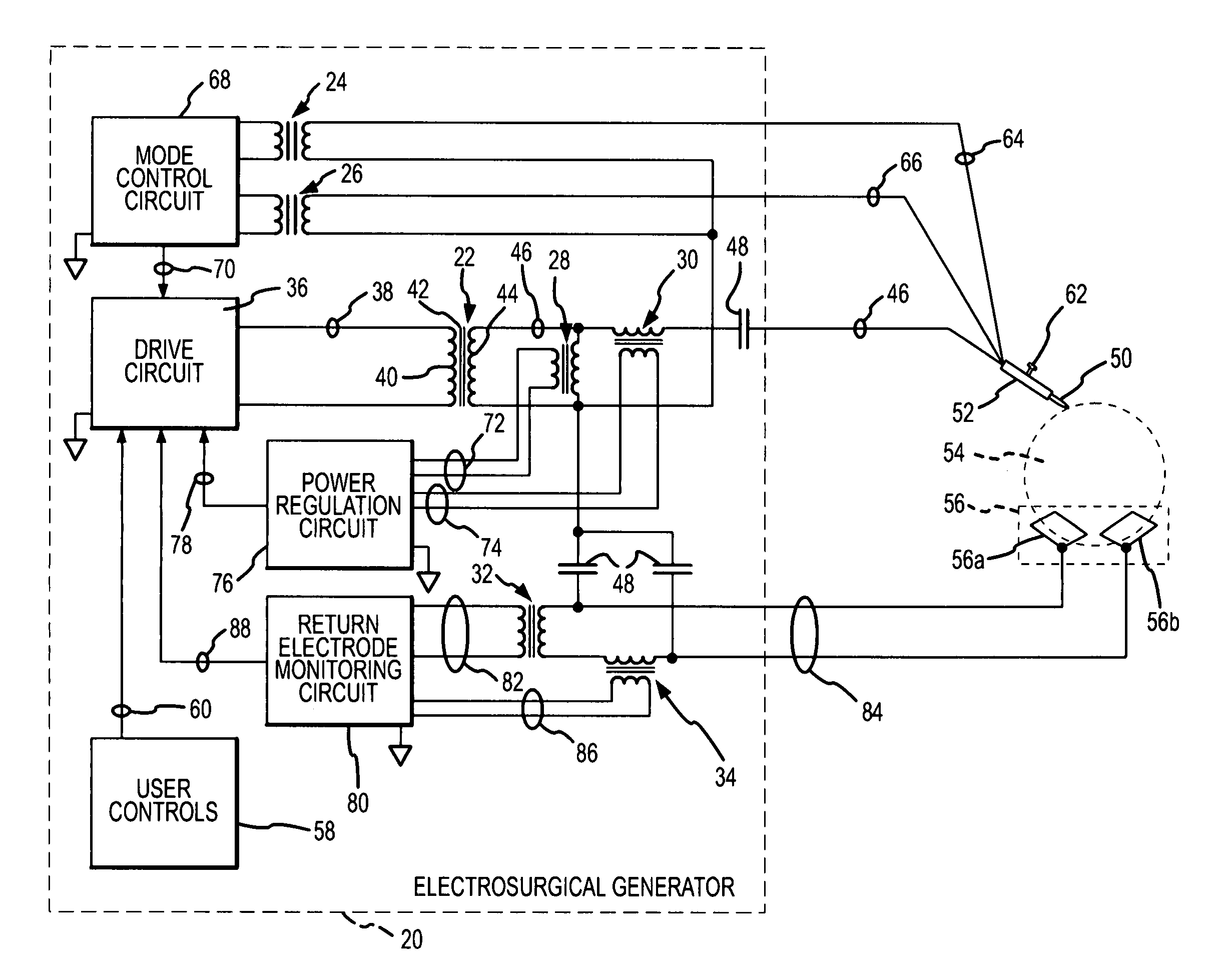
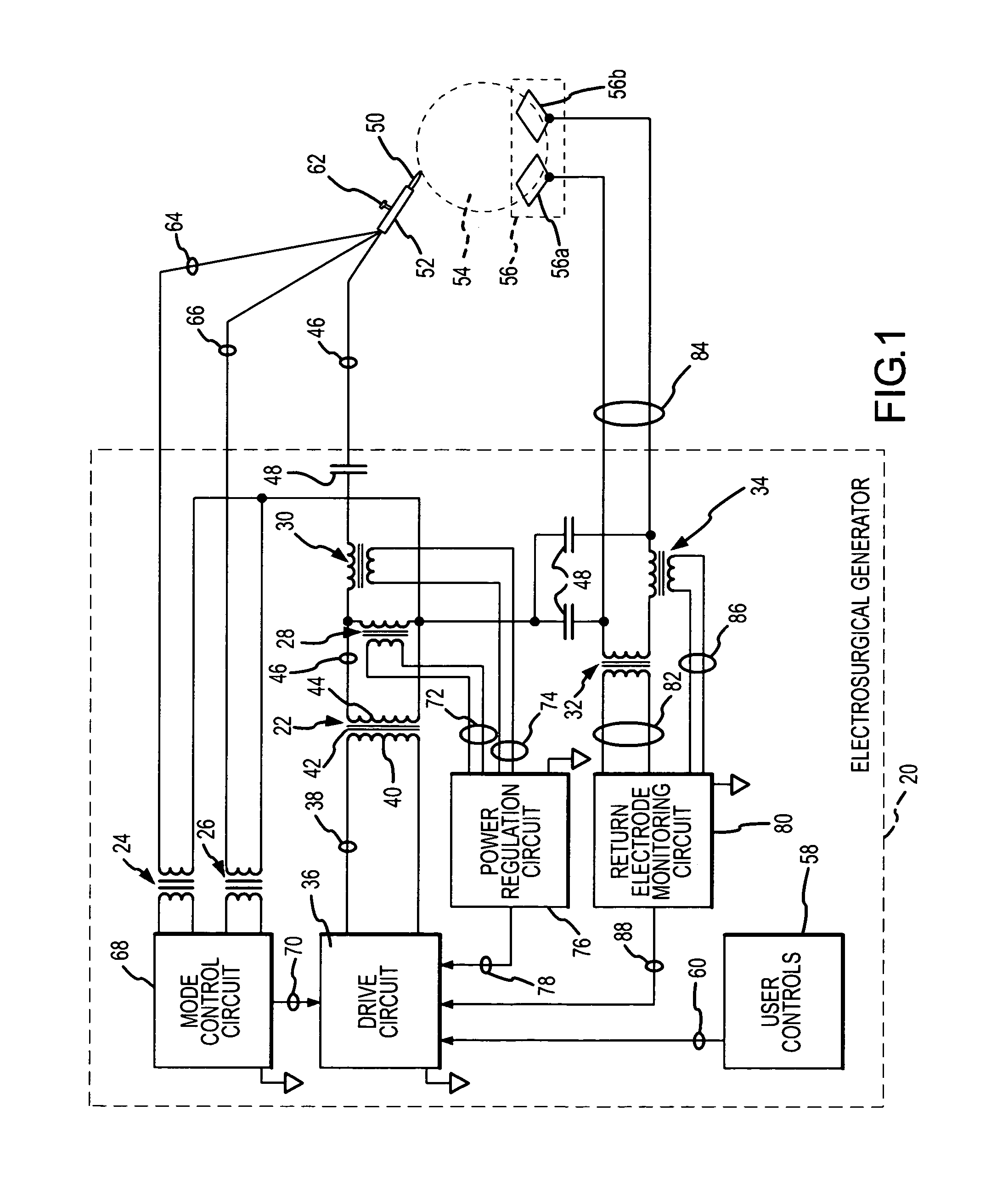
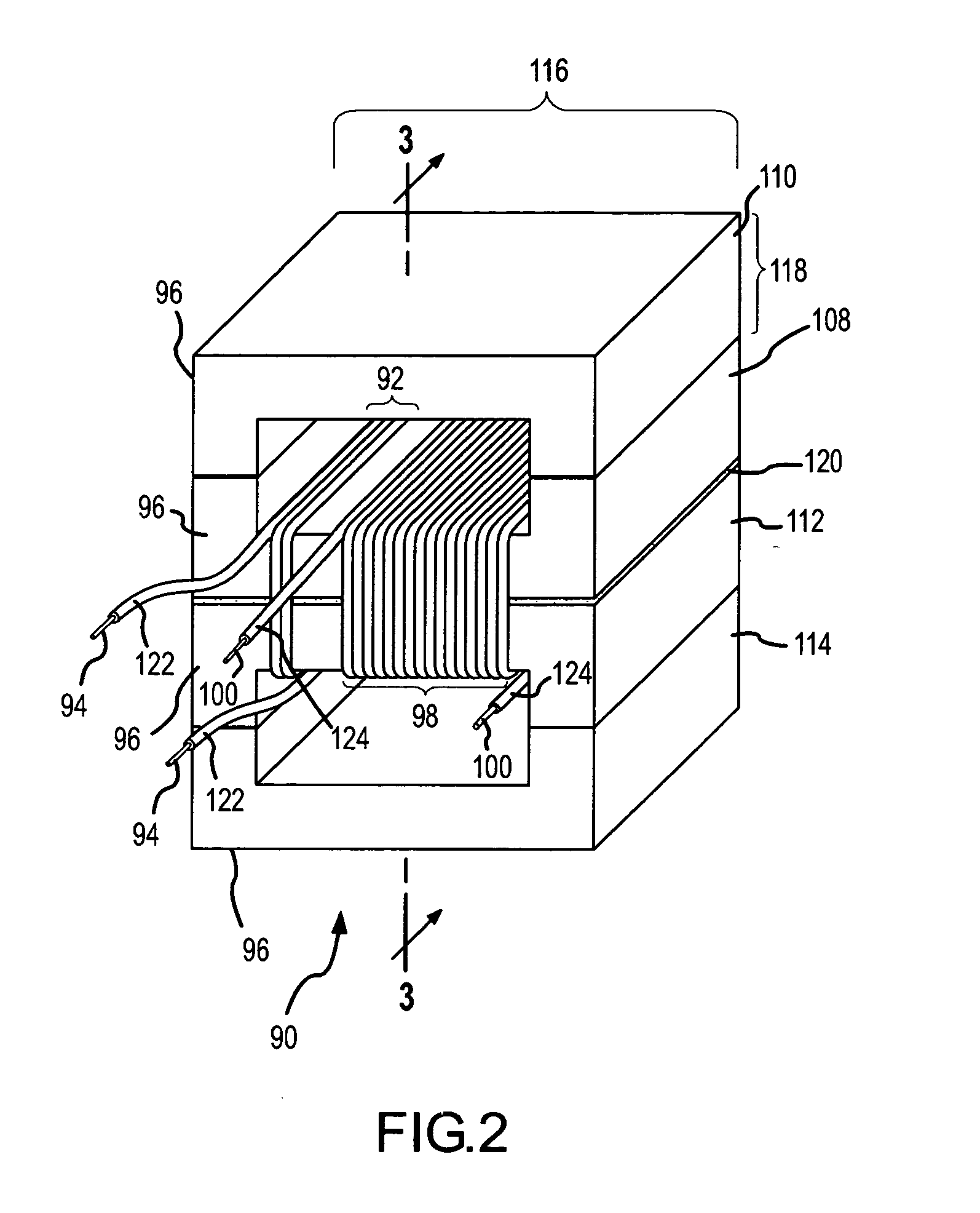
Electrosurgical generator and method using a high permeability, high resistivity transformer
PatentInactiveUS20080071260A1
Innovation
- The use of a transformer core with high permeability (500-2000) and high resistivity (90,000-1,000,000 ohm centimeters) characteristics, along with thin, high dielectric strength insulation, reduces parasitic capacitance and leakage current, enhancing energy conversion efficiency and manufacturing repeatability while supporting higher voltages without arcing or discharge.

Energy Efficiency Standards and Regulations
The optimization of core permeability in transformers operates within an increasingly stringent regulatory landscape that directly influences design parameters and material selection strategies. Global energy efficiency standards have evolved significantly over the past two decades, establishing minimum performance requirements that manufacturers must meet to access key markets. The International Electrotechnical Commission's IEC 60076 series and the U.S. Department of Energy's efficiency regulations for distribution transformers exemplify frameworks that mandate reduced no-load losses and load losses, both of which are fundamentally linked to core material properties and permeability characteristics.
Regional variations in regulatory approaches create complex compliance challenges for transformer manufacturers. The European Union's Ecodesign Directive 2009/125/EC, implemented through Commission Regulation (EU) No 548/2014, establishes tier-based efficiency requirements that progressively tighten over time. These regulations specifically target core loss reduction, compelling manufacturers to adopt advanced magnetic materials with optimized permeability profiles. Similarly, China's GB 20052 standard and India's BEE star rating system impose comparable requirements, though with different testing protocols and efficiency thresholds that necessitate region-specific optimization strategies.
The regulatory emphasis on total ownership cost rather than initial purchase price has fundamentally altered the economic calculus surrounding core material selection. Standards increasingly incorporate lifecycle assessment methodologies that account for operational losses over projected service lifetimes of 25-40 years. This shift incentivizes investment in premium core materials with superior permeability characteristics, even when such materials command higher upfront costs. Manufacturers pursuing optimal permeability must therefore balance material performance against regulatory compliance margins, ensuring designs exceed minimum requirements while maintaining commercial viability.
Emerging regulations addressing environmental sustainability introduce additional constraints on core optimization strategies. Restrictions on hazardous substances, recyclability requirements, and carbon footprint disclosure mandates influence both material composition and manufacturing processes. The RoHS Directive and REACH regulations in Europe, alongside similar frameworks in other jurisdictions, limit certain alloying elements traditionally used to enhance permeability, necessitating alternative metallurgical approaches that achieve comparable magnetic performance within tighter compositional constraints.
Regional variations in regulatory approaches create complex compliance challenges for transformer manufacturers. The European Union's Ecodesign Directive 2009/125/EC, implemented through Commission Regulation (EU) No 548/2014, establishes tier-based efficiency requirements that progressively tighten over time. These regulations specifically target core loss reduction, compelling manufacturers to adopt advanced magnetic materials with optimized permeability profiles. Similarly, China's GB 20052 standard and India's BEE star rating system impose comparable requirements, though with different testing protocols and efficiency thresholds that necessitate region-specific optimization strategies.
The regulatory emphasis on total ownership cost rather than initial purchase price has fundamentally altered the economic calculus surrounding core material selection. Standards increasingly incorporate lifecycle assessment methodologies that account for operational losses over projected service lifetimes of 25-40 years. This shift incentivizes investment in premium core materials with superior permeability characteristics, even when such materials command higher upfront costs. Manufacturers pursuing optimal permeability must therefore balance material performance against regulatory compliance margins, ensuring designs exceed minimum requirements while maintaining commercial viability.
Emerging regulations addressing environmental sustainability introduce additional constraints on core optimization strategies. Restrictions on hazardous substances, recyclability requirements, and carbon footprint disclosure mandates influence both material composition and manufacturing processes. The RoHS Directive and REACH regulations in Europe, alongside similar frameworks in other jurisdictions, limit certain alloying elements traditionally used to enhance permeability, necessitating alternative metallurgical approaches that achieve comparable magnetic performance within tighter compositional constraints.
Thermal Management in High-Permeability Cores
High-permeability core materials, while offering superior magnetic performance for transformers, present significant thermal management challenges that directly impact their operational efficiency and longevity. These materials typically exhibit higher core losses at elevated frequencies and flux densities, generating substantial heat that must be effectively dissipated to maintain optimal permeability characteristics and prevent performance degradation. The relationship between temperature and permeability is particularly critical, as excessive heating can lead to reduced magnetic properties, increased losses, and potential permanent damage to the core material structure.
The thermal conductivity of high-permeability materials such as nanocrystalline alloys and amorphous metals is generally lower compared to conventional silicon steel, creating localized hot spots that can compromise transformer performance. Heat accumulation within the core structure causes non-uniform temperature distribution, leading to variations in permeability across different core regions and resulting in unbalanced magnetic flux distribution. This thermal gradient effect becomes more pronounced in compact transformer designs where space constraints limit natural convection cooling capabilities.
Advanced cooling strategies are essential for maintaining stable operating temperatures in high-permeability cores. Forced air cooling systems with optimized airflow patterns can significantly enhance heat dissipation, while liquid cooling solutions offer superior thermal management for high-power applications. The integration of thermal interface materials between core laminations and heat sinks improves thermal coupling efficiency, facilitating more effective heat transfer from core to ambient environment.
Core geometry optimization plays a crucial role in thermal management, with design modifications such as increased surface area through finned structures or segmented core configurations promoting better heat dissipation. The selection of insulation materials with enhanced thermal conductivity while maintaining electrical isolation properties represents another critical consideration. Additionally, operating frequency and flux density must be carefully balanced against thermal constraints to prevent exceeding the material's thermal threshold, which typically ranges between 120°C to 150°C for most high-permeability alloys.
Thermal monitoring systems incorporating embedded temperature sensors enable real-time performance tracking and predictive maintenance strategies, allowing operators to adjust loading conditions before critical temperature limits are reached. This proactive approach ensures sustained optimal permeability performance while extending transformer service life and maintaining efficiency targets throughout operational cycles.
The thermal conductivity of high-permeability materials such as nanocrystalline alloys and amorphous metals is generally lower compared to conventional silicon steel, creating localized hot spots that can compromise transformer performance. Heat accumulation within the core structure causes non-uniform temperature distribution, leading to variations in permeability across different core regions and resulting in unbalanced magnetic flux distribution. This thermal gradient effect becomes more pronounced in compact transformer designs where space constraints limit natural convection cooling capabilities.
Advanced cooling strategies are essential for maintaining stable operating temperatures in high-permeability cores. Forced air cooling systems with optimized airflow patterns can significantly enhance heat dissipation, while liquid cooling solutions offer superior thermal management for high-power applications. The integration of thermal interface materials between core laminations and heat sinks improves thermal coupling efficiency, facilitating more effective heat transfer from core to ambient environment.
Core geometry optimization plays a crucial role in thermal management, with design modifications such as increased surface area through finned structures or segmented core configurations promoting better heat dissipation. The selection of insulation materials with enhanced thermal conductivity while maintaining electrical isolation properties represents another critical consideration. Additionally, operating frequency and flux density must be carefully balanced against thermal constraints to prevent exceeding the material's thermal threshold, which typically ranges between 120°C to 150°C for most high-permeability alloys.
Thermal monitoring systems incorporating embedded temperature sensors enable real-time performance tracking and predictive maintenance strategies, allowing operators to adjust loading conditions before critical temperature limits are reached. This proactive approach ensures sustained optimal permeability performance while extending transformer service life and maintaining efficiency targets throughout operational cycles.
Unlock deeper insights with Patsnap Eureka Quick Research — get a full tech report to explore trends and direct your research. Try now!
Generate Your Research Report Instantly with AI Agent
Supercharge your innovation with Patsnap Eureka AI Agent Platform!