

How to Optimize Galvanic Isolation for Energy Storage Applications
MAY 11, 20269 MIN READ
Generate Your Research Report Instantly with AI Agent
PatSnap Eureka helps you evaluate technical feasibility & market potential.
Galvanic Isolation in Energy Storage Background and Objectives
Galvanic isolation has emerged as a critical technology in modern energy storage systems, fundamentally addressing the need for electrical safety, signal integrity, and system reliability. This technology creates a barrier that prevents direct electrical connection between different circuit sections while allowing power or data transfer through electromagnetic, optical, or capacitive coupling methods. The evolution of galvanic isolation traces back to early transformer-based solutions in the 1960s, progressing through optocoupler developments in the 1970s, and advancing to today's sophisticated digital isolators and isolated power converters.
The rapid expansion of renewable energy infrastructure and electric vehicle adoption has intensified demands on energy storage systems, creating unprecedented challenges for isolation technologies. Traditional isolation methods, while proven reliable, often struggle with the high-frequency switching, wide temperature ranges, and compact form factors required in modern battery management systems and grid-tied storage applications. The integration of smart grid technologies and bidirectional power flow capabilities further complicates isolation requirements.
Current market drivers include stringent safety regulations such as IEC 62477 and UL 1998, which mandate specific isolation standards for energy storage applications. The growing emphasis on functional safety in automotive and industrial sectors has elevated isolation performance requirements beyond basic safety compliance to include enhanced reliability metrics and predictive failure analysis capabilities.
The primary technical objectives for optimizing galvanic isolation in energy storage applications center on achieving higher power density while maintaining safety margins. This involves developing isolation solutions capable of handling increased voltage levels, up to 1500V DC in some grid storage applications, while minimizing parasitic capacitance that can affect system efficiency. Enhanced bandwidth requirements for high-speed communication protocols in battery management systems demand isolation technologies with superior common-mode transient immunity, often exceeding 100 kV/μs.
Temperature performance optimization represents another crucial objective, as energy storage systems frequently operate in harsh environments ranging from -40°C to +125°C. Isolation components must maintain consistent performance across these temperature extremes while exhibiting minimal drift in key parameters such as propagation delay and power consumption.
Long-term reliability and predictable aging characteristics constitute essential objectives for energy storage applications, where system lifespans often exceed 20 years. This necessitates isolation technologies with enhanced resistance to thermal cycling, humidity exposure, and mechanical stress while providing diagnostic capabilities for condition monitoring and predictive maintenance strategies.
The rapid expansion of renewable energy infrastructure and electric vehicle adoption has intensified demands on energy storage systems, creating unprecedented challenges for isolation technologies. Traditional isolation methods, while proven reliable, often struggle with the high-frequency switching, wide temperature ranges, and compact form factors required in modern battery management systems and grid-tied storage applications. The integration of smart grid technologies and bidirectional power flow capabilities further complicates isolation requirements.
Current market drivers include stringent safety regulations such as IEC 62477 and UL 1998, which mandate specific isolation standards for energy storage applications. The growing emphasis on functional safety in automotive and industrial sectors has elevated isolation performance requirements beyond basic safety compliance to include enhanced reliability metrics and predictive failure analysis capabilities.
The primary technical objectives for optimizing galvanic isolation in energy storage applications center on achieving higher power density while maintaining safety margins. This involves developing isolation solutions capable of handling increased voltage levels, up to 1500V DC in some grid storage applications, while minimizing parasitic capacitance that can affect system efficiency. Enhanced bandwidth requirements for high-speed communication protocols in battery management systems demand isolation technologies with superior common-mode transient immunity, often exceeding 100 kV/μs.
Temperature performance optimization represents another crucial objective, as energy storage systems frequently operate in harsh environments ranging from -40°C to +125°C. Isolation components must maintain consistent performance across these temperature extremes while exhibiting minimal drift in key parameters such as propagation delay and power consumption.
Long-term reliability and predictable aging characteristics constitute essential objectives for energy storage applications, where system lifespans often exceed 20 years. This necessitates isolation technologies with enhanced resistance to thermal cycling, humidity exposure, and mechanical stress while providing diagnostic capabilities for condition monitoring and predictive maintenance strategies.
Market Demand for Isolated Energy Storage Systems
The global energy storage market is experiencing unprecedented growth driven by the accelerating transition toward renewable energy sources and the increasing need for grid stability solutions. Solar and wind power installations continue to expand rapidly worldwide, creating substantial demand for energy storage systems that can effectively manage intermittent power generation and ensure reliable energy delivery to end users.
Electric vehicle adoption represents another significant driver for isolated energy storage systems. As automotive manufacturers scale up production of battery electric vehicles and hybrid electric vehicles, the demand for sophisticated battery management systems with robust galvanic isolation capabilities continues to intensify. These applications require high-performance isolation solutions to ensure passenger safety while maintaining optimal battery performance and longevity.
Industrial and commercial sectors are increasingly adopting distributed energy storage solutions to reduce peak demand charges, improve power quality, and enhance energy security. Data centers, manufacturing facilities, and commercial buildings require reliable backup power systems with advanced isolation technologies to protect sensitive electronic equipment from electrical faults and ensure uninterrupted operations during grid disturbances.
The residential energy storage market is expanding significantly as homeowners seek greater energy independence and resilience against power outages. Home battery systems integrated with rooftop solar installations require effective galvanic isolation to meet safety standards and protect household electrical systems from potential ground faults and electrical surges.
Utility-scale energy storage deployments are growing to support grid modernization initiatives and renewable energy integration goals. These large-scale installations demand sophisticated isolation solutions capable of handling high voltage and current levels while maintaining system reliability and operational safety over extended periods.
Emerging applications in marine and aerospace sectors are creating specialized demand for compact, lightweight isolation solutions that can operate reliably in harsh environmental conditions. These niche markets require advanced isolation technologies that can withstand extreme temperatures, vibration, and electromagnetic interference while maintaining precise control over energy storage and distribution systems.
Regulatory frameworks worldwide are increasingly mandating stricter safety standards for energy storage installations, particularly regarding electrical isolation requirements. These evolving regulations are driving demand for more sophisticated isolation solutions that can meet enhanced safety criteria while maintaining cost-effectiveness and operational efficiency across diverse application scenarios.
Electric vehicle adoption represents another significant driver for isolated energy storage systems. As automotive manufacturers scale up production of battery electric vehicles and hybrid electric vehicles, the demand for sophisticated battery management systems with robust galvanic isolation capabilities continues to intensify. These applications require high-performance isolation solutions to ensure passenger safety while maintaining optimal battery performance and longevity.
Industrial and commercial sectors are increasingly adopting distributed energy storage solutions to reduce peak demand charges, improve power quality, and enhance energy security. Data centers, manufacturing facilities, and commercial buildings require reliable backup power systems with advanced isolation technologies to protect sensitive electronic equipment from electrical faults and ensure uninterrupted operations during grid disturbances.
The residential energy storage market is expanding significantly as homeowners seek greater energy independence and resilience against power outages. Home battery systems integrated with rooftop solar installations require effective galvanic isolation to meet safety standards and protect household electrical systems from potential ground faults and electrical surges.
Utility-scale energy storage deployments are growing to support grid modernization initiatives and renewable energy integration goals. These large-scale installations demand sophisticated isolation solutions capable of handling high voltage and current levels while maintaining system reliability and operational safety over extended periods.
Emerging applications in marine and aerospace sectors are creating specialized demand for compact, lightweight isolation solutions that can operate reliably in harsh environmental conditions. These niche markets require advanced isolation technologies that can withstand extreme temperatures, vibration, and electromagnetic interference while maintaining precise control over energy storage and distribution systems.
Regulatory frameworks worldwide are increasingly mandating stricter safety standards for energy storage installations, particularly regarding electrical isolation requirements. These evolving regulations are driving demand for more sophisticated isolation solutions that can meet enhanced safety criteria while maintaining cost-effectiveness and operational efficiency across diverse application scenarios.
Current Galvanic Isolation Challenges in Energy Applications
Galvanic isolation in energy storage applications faces significant technical challenges that directly impact system performance, safety, and reliability. The primary challenge stems from the increasing demand for higher power density and efficiency while maintaining robust electrical isolation between different voltage domains. Traditional isolation methods struggle to meet the stringent requirements of modern energy storage systems, particularly in applications involving high-frequency switching and wide bandgap semiconductors.
Voltage stress management represents a critical challenge in contemporary energy storage isolation designs. As battery voltages continue to increase, especially in electric vehicle and grid-scale applications, isolation barriers must withstand higher common-mode voltages and transient overvoltages. The breakdown voltage requirements often exceed 5kV, while simultaneously demanding minimal parasitic capacitance to reduce common-mode current flow. This creates a fundamental trade-off between isolation strength and electromagnetic interference performance.
Thermal management poses another substantial obstacle in galvanic isolation implementation. Energy storage systems generate significant heat during charging and discharging cycles, creating temperature gradients that affect isolation material properties. High-temperature operation degrades insulation materials, reduces breakdown voltage margins, and increases leakage currents. The challenge intensifies in compact designs where space constraints limit heat dissipation options, forcing engineers to balance thermal performance with isolation integrity.
Signal integrity degradation across isolation barriers significantly impacts control system performance in energy applications. High-frequency switching operations in modern power converters create electromagnetic interference that couples across isolation boundaries, corrupting control signals and feedback loops. The propagation delay variations and signal distortion introduced by isolation components can destabilize control algorithms, particularly in fast-responding battery management systems and grid-tie inverters.
Cost and size constraints further complicate galvanic isolation design in energy storage applications. Market pressures demand smaller, lighter, and more cost-effective solutions while maintaining safety standards. Traditional isolation transformers and optocouplers consume valuable board space and add material costs. The challenge intensifies in consumer applications where cost sensitivity is paramount, yet safety regulations mandate robust isolation performance.
Reliability and aging characteristics of isolation components present long-term challenges in energy storage systems. Battery systems require operational lifespans exceeding 10-15 years, during which isolation materials must maintain their dielectric properties despite repeated thermal cycling, humidity exposure, and electrical stress. Degradation mechanisms such as partial discharge, moisture ingress, and material fatigue can gradually compromise isolation effectiveness, potentially leading to safety hazards or system failures.
Voltage stress management represents a critical challenge in contemporary energy storage isolation designs. As battery voltages continue to increase, especially in electric vehicle and grid-scale applications, isolation barriers must withstand higher common-mode voltages and transient overvoltages. The breakdown voltage requirements often exceed 5kV, while simultaneously demanding minimal parasitic capacitance to reduce common-mode current flow. This creates a fundamental trade-off between isolation strength and electromagnetic interference performance.
Thermal management poses another substantial obstacle in galvanic isolation implementation. Energy storage systems generate significant heat during charging and discharging cycles, creating temperature gradients that affect isolation material properties. High-temperature operation degrades insulation materials, reduces breakdown voltage margins, and increases leakage currents. The challenge intensifies in compact designs where space constraints limit heat dissipation options, forcing engineers to balance thermal performance with isolation integrity.
Signal integrity degradation across isolation barriers significantly impacts control system performance in energy applications. High-frequency switching operations in modern power converters create electromagnetic interference that couples across isolation boundaries, corrupting control signals and feedback loops. The propagation delay variations and signal distortion introduced by isolation components can destabilize control algorithms, particularly in fast-responding battery management systems and grid-tie inverters.
Cost and size constraints further complicate galvanic isolation design in energy storage applications. Market pressures demand smaller, lighter, and more cost-effective solutions while maintaining safety standards. Traditional isolation transformers and optocouplers consume valuable board space and add material costs. The challenge intensifies in consumer applications where cost sensitivity is paramount, yet safety regulations mandate robust isolation performance.
Reliability and aging characteristics of isolation components present long-term challenges in energy storage systems. Battery systems require operational lifespans exceeding 10-15 years, during which isolation materials must maintain their dielectric properties despite repeated thermal cycling, humidity exposure, and electrical stress. Degradation mechanisms such as partial discharge, moisture ingress, and material fatigue can gradually compromise isolation effectiveness, potentially leading to safety hazards or system failures.
Existing Galvanic Isolation Solutions for Energy Systems
01 Digital isolation techniques for signal transmission
Digital isolation methods utilize various techniques to transmit digital signals across isolation barriers while maintaining electrical separation. These approaches include capacitive coupling, magnetic coupling, and optical coupling to achieve high-speed data transmission with minimal signal degradation. The optimization focuses on improving signal integrity, reducing propagation delays, and enhancing noise immunity in digital communication systems.- Digital isolation techniques for signal transmission: Digital isolation methods utilize capacitive or magnetic coupling to transmit digital signals across isolation barriers while maintaining electrical separation. These techniques employ specialized integrated circuits that can encode, transmit, and decode digital data without direct electrical connection. The isolation is achieved through transformers, capacitors, or optocouplers that provide high-speed data transmission while ensuring safety and noise immunity in various applications.
- Power transfer across isolation barriers: Isolated power transfer systems enable the delivery of electrical power across galvanic isolation boundaries using inductive or capacitive coupling methods. These systems typically employ resonant circuits, transformers, or wireless power transfer techniques to maintain power delivery while preserving electrical isolation. The optimization focuses on maximizing power transfer efficiency while minimizing losses and maintaining regulatory compliance for safety standards.
- Isolation barrier enhancement and protection: Advanced isolation barrier technologies focus on improving the robustness and reliability of galvanic isolation through enhanced dielectric materials, improved barrier construction, and protection mechanisms. These approaches include multi-layer isolation structures, reinforced insulation systems, and fault detection capabilities that ensure long-term isolation integrity under various environmental and operational conditions.
- Feedback and control system isolation: Isolated feedback and control systems maintain signal integrity while providing electrical separation between control circuits and power stages. These systems employ various isolation techniques to transmit control signals, voltage and current feedback, and protection signals across isolation boundaries. The optimization involves minimizing signal delay, reducing noise interference, and maintaining accurate signal reproduction for precise control applications.
- High-frequency isolation optimization: High-frequency isolation techniques address the challenges of maintaining effective galvanic isolation at elevated operating frequencies. These methods focus on minimizing parasitic capacitance, reducing electromagnetic interference, and optimizing isolation component design for high-speed applications. The optimization includes advanced circuit topologies, specialized materials, and layout techniques that preserve isolation effectiveness across wide frequency ranges.
02 Power transfer optimization across isolation barriers
Power isolation optimization involves improving the efficiency and reliability of power transmission across galvanic isolation boundaries. This includes techniques for wireless power transfer, transformer-based isolation, and energy harvesting methods that minimize power losses while maintaining safety standards. The focus is on maximizing power transfer efficiency, reducing electromagnetic interference, and ensuring stable power delivery under varying load conditions.Expand Specific Solutions03 Isolation barrier material and structure enhancement
Optimization of isolation barrier materials and physical structures to improve performance characteristics such as breakdown voltage, temperature stability, and long-term reliability. This involves the development of advanced dielectric materials, improved barrier geometries, and novel manufacturing processes that enhance the isolation properties while reducing size and cost. The emphasis is on achieving higher isolation ratings with better mechanical and thermal properties.Expand Specific Solutions04 Feedback and control system isolation
Specialized isolation techniques for feedback loops and control systems that require bidirectional communication while maintaining galvanic separation. These methods focus on preserving control accuracy, minimizing delay in feedback paths, and ensuring system stability across the isolation barrier. The optimization addresses challenges in closed-loop systems where precise timing and signal fidelity are critical for proper operation.Expand Specific Solutions05 High-frequency and high-voltage isolation optimization
Advanced isolation techniques specifically designed for high-frequency applications and high-voltage environments. These methods address the unique challenges of maintaining isolation performance at elevated frequencies and voltages, including parasitic effects, frequency response optimization, and voltage stress management. The focus is on developing isolation solutions that can operate reliably in demanding electrical environments while maintaining excellent performance characteristics.Expand Specific Solutions
Key Players in Isolation and Energy Storage Industry
The galvanic isolation optimization for energy storage applications represents a rapidly evolving market driven by increasing demand for grid-scale energy storage and electric vehicle infrastructure. The industry is in a growth phase with significant market expansion, particularly in Asia-Pacific regions where companies like Contemporary Amperex Technology Co., Ltd. and State Grid Corp. of China dominate large-scale deployments. Technology maturity varies across segments, with established players like Texas Instruments Incorporated and Schneider Electric providing mature semiconductor and power management solutions, while emerging companies such as Xiamen Hithium New Energy Technology Co., Ltd. focus on advanced battery management systems. The competitive landscape shows strong presence from European firms like Hitachi Energy Ltd. and Phoenix Contact, alongside Chinese manufacturers driving cost optimization and scale production innovations.
Contemporary Amperex Technology Co., Ltd.
Technical Solution: CATL employs sophisticated galvanic isolation techniques in their battery management systems using a combination of magnetic and capacitive isolation methods. Their Qilin battery technology incorporates isolated communication protocols with CAN bus isolation supporting up to 1Mbps data rates while maintaining 2.5kV isolation voltage. The company implements isolated power supplies for cell monitoring circuits with power transfer efficiency exceeding 85% and utilizes hall-effect current sensors with galvanic isolation for accurate current measurement up to 1000A. Their thermal management system includes isolated temperature monitoring with PT1000 sensors connected through isolated signal conditioning circuits, ensuring safe operation across temperature ranges from -30°C to 60°C while preventing ground loops and electrical interference.
Strengths: Integrated approach combining isolation with advanced thermal management and high current handling capability. Weaknesses: Proprietary technology limiting third-party integration and dependency on specific component suppliers.
Schneider Electric USA, Inc.
Technical Solution: Schneider Electric implements comprehensive galvanic isolation strategies across their energy storage portfolio through magnetic isolation transformers and optocouplers in their battery management systems. Their EcoStruxure Microgrid solution incorporates multi-level isolation architecture with primary isolation at 4kV AC test voltage and functional isolation for communication interfaces. The system utilizes isolated DC-DC converters with efficiency ratings above 95% and incorporates safety-rated isolation barriers compliant with IEC 61508 SIL 3 standards. Their approach includes isolated current and voltage sensing with accuracy better than 0.5% across temperature ranges, enabling precise state-of-charge monitoring while maintaining complete electrical separation between high-voltage battery packs and low-voltage control circuits.
Strengths: Comprehensive system-level integration and proven safety compliance with international standards. Weaknesses: Complex implementation requiring specialized expertise and higher initial investment costs.
Core Patents in Energy Storage Galvanic Isolation
Bi-directional optimizers for battery storage systems with galvanic isolation
PatentActiveUS20190372361A1
Innovation
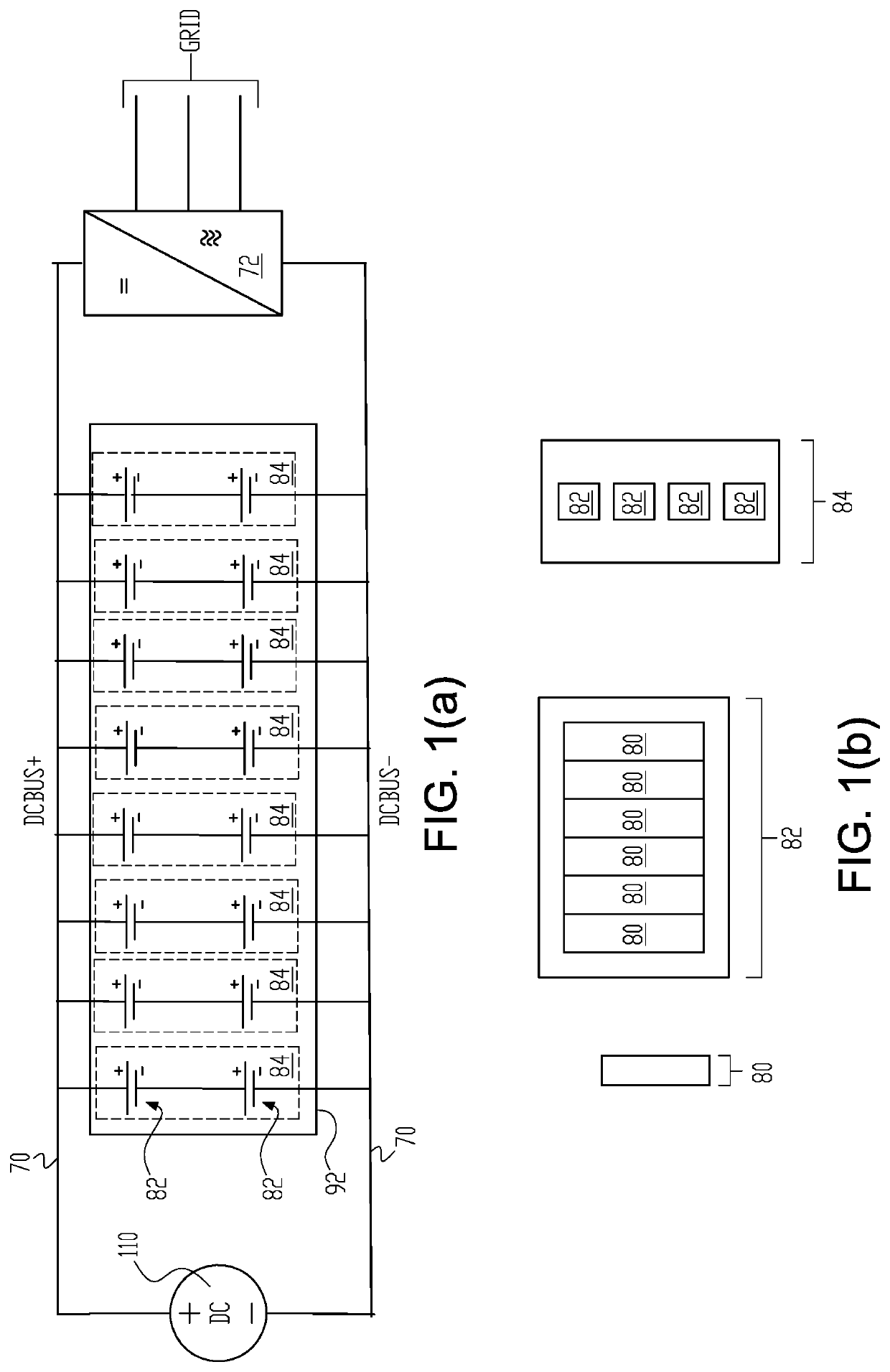
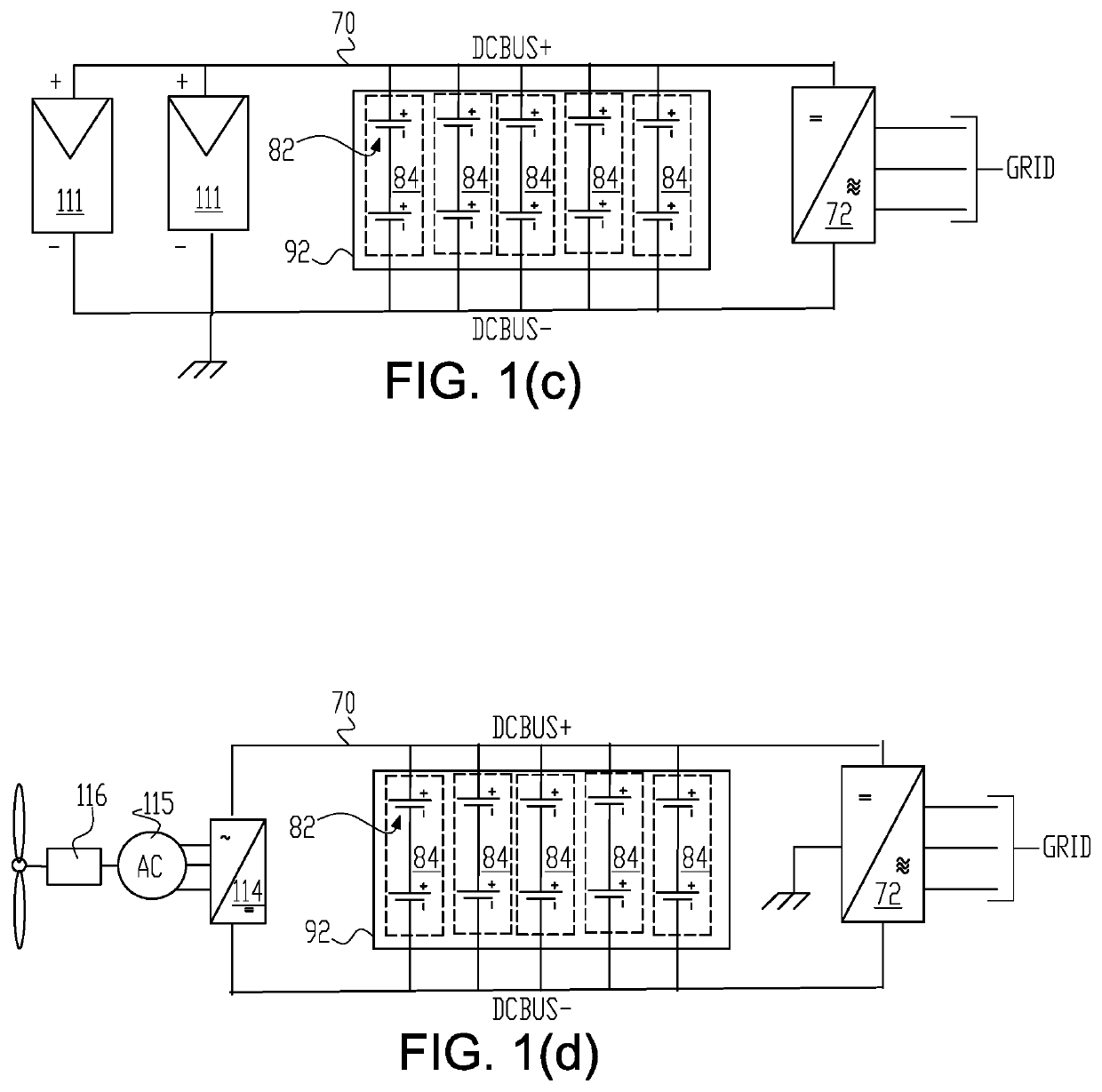
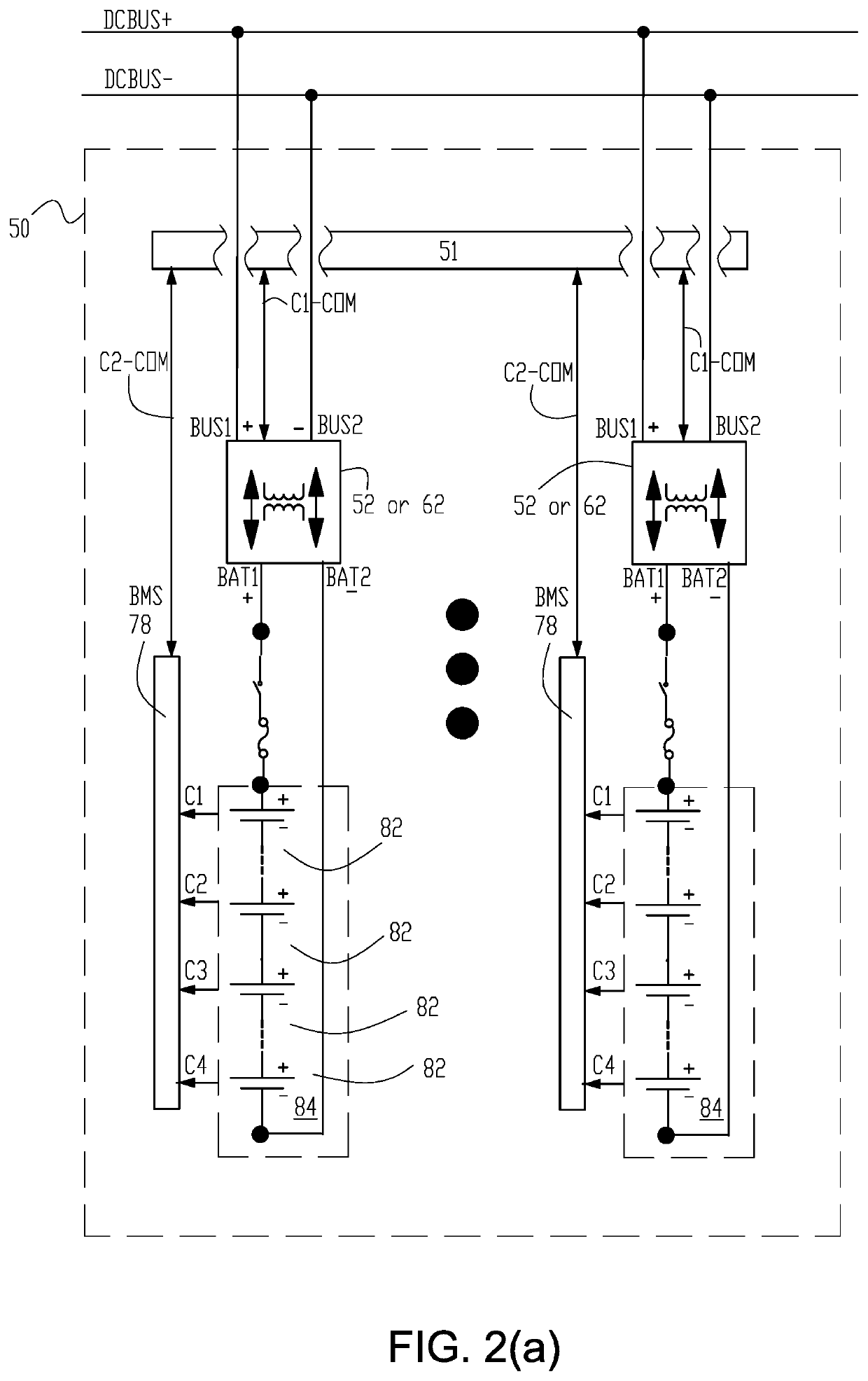
- Implementing a bi-directional optimizer system with galvanic isolation between battery racks and a common DC bus, allowing for independent charging and discharging control of each series-connected string of batteries, ensuring equal state of charge and minimizing fault currents.

Standalone high voltage galvanic isolation capacitors
PatentWO2022047350A1
Innovation
- The development of standalone galvanic isolation capacitors with asymmetric areas and optimized pre-metal dielectric (PMD) and inter-level dielectric (ILD) thickness ratios, allowing for integration into multi-chip modules (MCMs) with improved high-voltage isolation and reduced costs.


Safety Standards for Isolated Energy Storage Systems
Safety standards for isolated energy storage systems represent a critical framework that governs the design, implementation, and operation of galvanically isolated energy storage solutions. These standards have evolved significantly as energy storage technologies have matured, with regulatory bodies worldwide establishing comprehensive guidelines to ensure system reliability and personnel protection.
The International Electrotechnical Commission (IEC) has developed several key standards specifically addressing isolated energy storage systems, including IEC 62619 for lithium-ion batteries and IEC 61727 for photovoltaic systems with energy storage. These standards define minimum isolation requirements, typically mandating isolation voltages exceeding 4000V AC for one minute or equivalent DC levels, ensuring adequate protection against electrical faults and ground loops.
Underwriters Laboratories (UL) standards, particularly UL 1973 and UL 9540, establish rigorous testing protocols for energy storage system safety. These standards require galvanic isolation barriers to maintain integrity under various stress conditions, including temperature cycling, humidity exposure, and mechanical vibration. The standards also specify minimum creepage and clearance distances for isolation components, ensuring long-term reliability in diverse operating environments.
European safety standards, notably EN 50272 and EN 62109, focus on electromagnetic compatibility and functional safety aspects of isolated energy storage systems. These regulations mandate specific isolation monitoring techniques and require redundant safety measures for critical applications. The standards also address cybersecurity considerations for digitally controlled isolation systems, recognizing the increasing connectivity of modern energy storage installations.
Compliance verification involves comprehensive testing procedures, including partial discharge testing, insulation resistance measurements, and high-voltage withstand tests. These evaluations must be conducted by accredited testing laboratories and repeated periodically throughout the system lifecycle. Documentation requirements include detailed isolation system specifications, maintenance procedures, and failure mode analysis reports.
Recent updates to safety standards have incorporated emerging technologies such as solid-state isolation devices and advanced monitoring systems. These revisions reflect the industry's shift toward more sophisticated isolation architectures while maintaining stringent safety requirements. Future standard developments are expected to address grid-scale energy storage applications and integration with renewable energy systems.
The International Electrotechnical Commission (IEC) has developed several key standards specifically addressing isolated energy storage systems, including IEC 62619 for lithium-ion batteries and IEC 61727 for photovoltaic systems with energy storage. These standards define minimum isolation requirements, typically mandating isolation voltages exceeding 4000V AC for one minute or equivalent DC levels, ensuring adequate protection against electrical faults and ground loops.
Underwriters Laboratories (UL) standards, particularly UL 1973 and UL 9540, establish rigorous testing protocols for energy storage system safety. These standards require galvanic isolation barriers to maintain integrity under various stress conditions, including temperature cycling, humidity exposure, and mechanical vibration. The standards also specify minimum creepage and clearance distances for isolation components, ensuring long-term reliability in diverse operating environments.
European safety standards, notably EN 50272 and EN 62109, focus on electromagnetic compatibility and functional safety aspects of isolated energy storage systems. These regulations mandate specific isolation monitoring techniques and require redundant safety measures for critical applications. The standards also address cybersecurity considerations for digitally controlled isolation systems, recognizing the increasing connectivity of modern energy storage installations.
Compliance verification involves comprehensive testing procedures, including partial discharge testing, insulation resistance measurements, and high-voltage withstand tests. These evaluations must be conducted by accredited testing laboratories and repeated periodically throughout the system lifecycle. Documentation requirements include detailed isolation system specifications, maintenance procedures, and failure mode analysis reports.
Recent updates to safety standards have incorporated emerging technologies such as solid-state isolation devices and advanced monitoring systems. These revisions reflect the industry's shift toward more sophisticated isolation architectures while maintaining stringent safety requirements. Future standard developments are expected to address grid-scale energy storage applications and integration with renewable energy systems.
Thermal Management in Galvanic Isolation Design
Thermal management represents a critical design consideration in galvanic isolation systems for energy storage applications, directly impacting system reliability, efficiency, and operational lifespan. The inherent power losses in isolation components, particularly transformers and optocouplers, generate substantial heat that must be effectively dissipated to maintain optimal performance and prevent thermal degradation.
Power transformers used in isolated DC-DC converters typically exhibit efficiency ratings between 85-95%, with the remaining energy converted to heat. This thermal generation becomes particularly pronounced in high-power energy storage systems where isolation barriers must handle kilowatt-level power transfers. The temperature rise in magnetic cores can lead to increased losses, reduced permeability, and potential insulation breakdown if not properly managed.
Optocoupler-based isolation circuits face similar thermal challenges, where LED junction temperatures directly affect light output efficiency and photodetector sensitivity. Elevated temperatures can cause significant drift in current transfer ratios, compromising signal integrity and system stability. Modern digital isolators, while offering improved thermal performance, still require careful consideration of power dissipation across the isolation barrier.
Effective thermal management strategies encompass multiple approaches, including advanced heat sink designs, thermal interface materials, and intelligent component placement. Copper-filled thermal vias and dedicated thermal planes in PCB layouts facilitate heat conduction away from critical isolation components. Active cooling solutions, such as forced air convection or liquid cooling systems, become necessary in high-density energy storage applications.
Temperature monitoring and adaptive control mechanisms play increasingly important roles in modern isolation designs. Real-time thermal sensing enables dynamic adjustment of switching frequencies, duty cycles, and power levels to maintain components within safe operating temperatures. This approach not only prevents thermal damage but also optimizes system efficiency across varying environmental conditions.
The integration of wide-bandgap semiconductors, including silicon carbide and gallium nitride devices, offers promising solutions for reducing thermal stress in isolation circuits. These materials exhibit superior thermal conductivity and higher operating temperature tolerances, enabling more compact and efficient isolation barrier designs for next-generation energy storage systems.
Power transformers used in isolated DC-DC converters typically exhibit efficiency ratings between 85-95%, with the remaining energy converted to heat. This thermal generation becomes particularly pronounced in high-power energy storage systems where isolation barriers must handle kilowatt-level power transfers. The temperature rise in magnetic cores can lead to increased losses, reduced permeability, and potential insulation breakdown if not properly managed.
Optocoupler-based isolation circuits face similar thermal challenges, where LED junction temperatures directly affect light output efficiency and photodetector sensitivity. Elevated temperatures can cause significant drift in current transfer ratios, compromising signal integrity and system stability. Modern digital isolators, while offering improved thermal performance, still require careful consideration of power dissipation across the isolation barrier.
Effective thermal management strategies encompass multiple approaches, including advanced heat sink designs, thermal interface materials, and intelligent component placement. Copper-filled thermal vias and dedicated thermal planes in PCB layouts facilitate heat conduction away from critical isolation components. Active cooling solutions, such as forced air convection or liquid cooling systems, become necessary in high-density energy storage applications.
Temperature monitoring and adaptive control mechanisms play increasingly important roles in modern isolation designs. Real-time thermal sensing enables dynamic adjustment of switching frequencies, duty cycles, and power levels to maintain components within safe operating temperatures. This approach not only prevents thermal damage but also optimizes system efficiency across varying environmental conditions.
The integration of wide-bandgap semiconductors, including silicon carbide and gallium nitride devices, offers promising solutions for reducing thermal stress in isolation circuits. These materials exhibit superior thermal conductivity and higher operating temperature tolerances, enabling more compact and efficient isolation barrier designs for next-generation energy storage systems.
Unlock deeper insights with PatSnap Eureka Quick Research — get a full tech report to explore trends and direct your research. Try now!
Generate Your Research Report Instantly with AI Agent
Supercharge your innovation with PatSnap Eureka AI Agent Platform!