

How to Optimize Peristaltic Pump Use in Continuous Flow Reactions
MAR 13, 20268 MIN READ
Generate Your Research Report Instantly with AI Agent
PatSnap Eureka helps you evaluate technical feasibility & market potential.
Peristaltic Pump Flow Chemistry Background and Objectives
Peristaltic pumps have emerged as critical components in continuous flow chemistry systems, representing a significant evolution from traditional batch processing methods. The development of flow chemistry can be traced back to the early 20th century, but its widespread adoption accelerated in the 1990s with advances in microreactor technology and precision fluid handling equipment. Peristaltic pumps became particularly valuable due to their ability to provide pulsation-free, contamination-free fluid delivery without direct contact between the pumping mechanism and the chemical reagents.
The historical progression of peristaltic pump integration in flow chemistry reflects broader trends toward process intensification and continuous manufacturing. Early implementations focused primarily on simple liquid transfers, but modern applications encompass complex multi-phase reactions, precise stoichiometric control, and real-time process optimization. The technology has evolved from basic roller-based designs to sophisticated systems incorporating advanced materials, digital control systems, and integrated monitoring capabilities.
Current technological trends indicate a shift toward miniaturization and enhanced precision, driven by the pharmaceutical industry's demand for efficient synthesis of high-value compounds and the chemical industry's pursuit of sustainable manufacturing processes. The integration of artificial intelligence and machine learning algorithms for predictive maintenance and flow optimization represents the latest frontier in peristaltic pump technology development.
The primary objective of optimizing peristaltic pump utilization in continuous flow reactions centers on achieving superior process control, enhanced reaction efficiency, and improved product quality consistency. Key technical goals include minimizing flow pulsation effects that can disrupt reaction kinetics, reducing dead volume to prevent unwanted side reactions, and maximizing pump longevity under harsh chemical environments.
Strategic objectives encompass developing standardized protocols for pump selection based on specific reaction requirements, establishing predictive maintenance frameworks to minimize downtime, and creating integrated control systems that enable real-time adjustment of flow parameters. These objectives align with broader industry initiatives toward digitalization and Industry 4.0 implementation in chemical manufacturing processes.
The historical progression of peristaltic pump integration in flow chemistry reflects broader trends toward process intensification and continuous manufacturing. Early implementations focused primarily on simple liquid transfers, but modern applications encompass complex multi-phase reactions, precise stoichiometric control, and real-time process optimization. The technology has evolved from basic roller-based designs to sophisticated systems incorporating advanced materials, digital control systems, and integrated monitoring capabilities.
Current technological trends indicate a shift toward miniaturization and enhanced precision, driven by the pharmaceutical industry's demand for efficient synthesis of high-value compounds and the chemical industry's pursuit of sustainable manufacturing processes. The integration of artificial intelligence and machine learning algorithms for predictive maintenance and flow optimization represents the latest frontier in peristaltic pump technology development.
The primary objective of optimizing peristaltic pump utilization in continuous flow reactions centers on achieving superior process control, enhanced reaction efficiency, and improved product quality consistency. Key technical goals include minimizing flow pulsation effects that can disrupt reaction kinetics, reducing dead volume to prevent unwanted side reactions, and maximizing pump longevity under harsh chemical environments.
Strategic objectives encompass developing standardized protocols for pump selection based on specific reaction requirements, establishing predictive maintenance frameworks to minimize downtime, and creating integrated control systems that enable real-time adjustment of flow parameters. These objectives align with broader industry initiatives toward digitalization and Industry 4.0 implementation in chemical manufacturing processes.
Market Demand for Continuous Flow Reaction Systems
The pharmaceutical and chemical industries are experiencing unprecedented growth in demand for continuous flow reaction systems, driven by the need for more efficient, scalable, and sustainable manufacturing processes. This shift represents a fundamental departure from traditional batch processing methods, as companies seek to reduce production costs, improve product quality, and minimize environmental impact. The global pharmaceutical market's expansion, particularly in emerging economies, has intensified the pressure on manufacturers to adopt more efficient production technologies.
Regulatory agencies worldwide are increasingly favoring continuous manufacturing processes due to their enhanced process control capabilities and improved product consistency. The FDA's Quality by Design initiative and similar regulatory frameworks in Europe and Asia have created a favorable environment for continuous flow technologies. This regulatory support has accelerated adoption rates across pharmaceutical companies, from large multinational corporations to specialized contract manufacturing organizations.
The fine chemicals sector represents another significant growth driver for continuous flow systems. Specialty chemical manufacturers are leveraging these technologies to produce high-value intermediates and active pharmaceutical ingredients with improved selectivity and reduced waste generation. The ability to perform hazardous reactions under controlled conditions has opened new possibilities for synthetic routes previously considered too risky for large-scale production.
Market penetration varies significantly across different application areas. While pharmaceutical companies have been early adopters, particularly for API synthesis and process intensification, the adoption in commodity chemical production remains limited due to economic considerations. However, emerging applications in green chemistry and sustainable manufacturing are creating new market segments with substantial growth potential.
The academic and research sectors continue to drive innovation in continuous flow chemistry, with numerous universities and research institutions investing in flow chemistry capabilities. This academic interest translates into a steady pipeline of trained professionals and technological innovations that support commercial adoption. The growing number of specialized conferences, publications, and training programs reflects the expanding ecosystem around continuous flow technologies.
Geographic distribution of market demand shows concentration in established pharmaceutical hubs including North America, Western Europe, and parts of Asia-Pacific. However, emerging markets are demonstrating increasing interest as local pharmaceutical industries mature and seek competitive advantages through advanced manufacturing technologies.
Regulatory agencies worldwide are increasingly favoring continuous manufacturing processes due to their enhanced process control capabilities and improved product consistency. The FDA's Quality by Design initiative and similar regulatory frameworks in Europe and Asia have created a favorable environment for continuous flow technologies. This regulatory support has accelerated adoption rates across pharmaceutical companies, from large multinational corporations to specialized contract manufacturing organizations.
The fine chemicals sector represents another significant growth driver for continuous flow systems. Specialty chemical manufacturers are leveraging these technologies to produce high-value intermediates and active pharmaceutical ingredients with improved selectivity and reduced waste generation. The ability to perform hazardous reactions under controlled conditions has opened new possibilities for synthetic routes previously considered too risky for large-scale production.
Market penetration varies significantly across different application areas. While pharmaceutical companies have been early adopters, particularly for API synthesis and process intensification, the adoption in commodity chemical production remains limited due to economic considerations. However, emerging applications in green chemistry and sustainable manufacturing are creating new market segments with substantial growth potential.
The academic and research sectors continue to drive innovation in continuous flow chemistry, with numerous universities and research institutions investing in flow chemistry capabilities. This academic interest translates into a steady pipeline of trained professionals and technological innovations that support commercial adoption. The growing number of specialized conferences, publications, and training programs reflects the expanding ecosystem around continuous flow technologies.
Geographic distribution of market demand shows concentration in established pharmaceutical hubs including North America, Western Europe, and parts of Asia-Pacific. However, emerging markets are demonstrating increasing interest as local pharmaceutical industries mature and seek competitive advantages through advanced manufacturing technologies.
Current Peristaltic Pump Limitations in Flow Chemistry
Peristaltic pumps face several fundamental limitations when deployed in continuous flow chemistry applications that significantly impact their performance and reliability. The most prominent constraint is flow rate inconsistency, which manifests as pulsatile flow patterns inherent to the pump's mechanical operation. This pulsation creates periodic variations in reagent delivery rates, leading to non-uniform mixing ratios and residence time distributions within flow reactors, ultimately compromising reaction reproducibility and yield consistency.
Tubing degradation represents another critical limitation affecting long-term operational stability. The repetitive compression and relaxation cycles cause progressive wear of pump tubing, particularly when handling aggressive solvents or elevated temperatures common in organic synthesis. This degradation results in decreased pump efficiency, potential contamination from tubing particles, and unpredictable flow rate drift over extended operation periods.
Pressure limitations constitute a significant operational constraint, as peristaltic pumps typically operate effectively only within relatively low pressure ranges, generally below 2-3 bar. This restriction limits their applicability in flow systems requiring higher back-pressures, such as those incorporating packed bed reactors, high-temperature operations, or systems with significant flow resistance from inline analytical equipment.
Temperature sensitivity poses additional challenges, as both pump head materials and tubing exhibit performance degradation at elevated temperatures. Many flow chemistry applications require heating to accelerate reaction kinetics, but peristaltic pump components may soften, swell, or lose elasticity under these conditions, leading to reduced pumping efficiency and potential system failures.
Flow rate accuracy and precision limitations become particularly problematic when handling low-viscosity solvents or when precise stoichiometric control is required. The inherent slip between tubing and rollers, combined with tubing expansion under pressure, can result in flow rate deviations of 5-10% or higher, which is often unacceptable for sensitive chemical transformations requiring tight reagent ratios.
Chemical compatibility constraints further limit peristaltic pump applications, as tubing materials may be incompatible with certain solvents, reagents, or reaction products. Swelling, dissolution, or chemical attack of tubing materials can lead to contamination, flow rate changes, and potential safety hazards, particularly when handling halogenated solvents, strong acids, or organometallic compounds commonly used in flow chemistry.
Tubing degradation represents another critical limitation affecting long-term operational stability. The repetitive compression and relaxation cycles cause progressive wear of pump tubing, particularly when handling aggressive solvents or elevated temperatures common in organic synthesis. This degradation results in decreased pump efficiency, potential contamination from tubing particles, and unpredictable flow rate drift over extended operation periods.
Pressure limitations constitute a significant operational constraint, as peristaltic pumps typically operate effectively only within relatively low pressure ranges, generally below 2-3 bar. This restriction limits their applicability in flow systems requiring higher back-pressures, such as those incorporating packed bed reactors, high-temperature operations, or systems with significant flow resistance from inline analytical equipment.
Temperature sensitivity poses additional challenges, as both pump head materials and tubing exhibit performance degradation at elevated temperatures. Many flow chemistry applications require heating to accelerate reaction kinetics, but peristaltic pump components may soften, swell, or lose elasticity under these conditions, leading to reduced pumping efficiency and potential system failures.
Flow rate accuracy and precision limitations become particularly problematic when handling low-viscosity solvents or when precise stoichiometric control is required. The inherent slip between tubing and rollers, combined with tubing expansion under pressure, can result in flow rate deviations of 5-10% or higher, which is often unacceptable for sensitive chemical transformations requiring tight reagent ratios.
Chemical compatibility constraints further limit peristaltic pump applications, as tubing materials may be incompatible with certain solvents, reagents, or reaction products. Swelling, dissolution, or chemical attack of tubing materials can lead to contamination, flow rate changes, and potential safety hazards, particularly when handling halogenated solvents, strong acids, or organometallic compounds commonly used in flow chemistry.
Current Peristaltic Pump Optimization Solutions
01 Roller and tube configuration optimization
Optimization of peristaltic pumps through improved roller and tube configurations, including modifications to roller geometry, arrangement, and interaction with the flexible tubing. This involves optimizing the number of rollers, their shape, size, and positioning to enhance pumping efficiency, reduce tube wear, and improve flow characteristics. Advanced roller designs may incorporate specific surface treatments or materials to minimize friction and extend tube life.- Roller and tube configuration optimization: Optimization of peristaltic pumps through improved roller and tube configurations, including modifications to roller geometry, arrangement, and interaction with the flexible tubing. This involves optimizing the number of rollers, their shape, size, and positioning to enhance pumping efficiency, reduce tube wear, and improve flow characteristics. Advanced roller designs may incorporate specific surface treatments or materials to minimize friction and extend tube life.
- Flow control and precision mechanisms: Enhancement of peristaltic pump performance through advanced flow control systems and precision mechanisms. This includes the integration of sensors, feedback systems, and control algorithms to achieve accurate flow rate regulation, minimize pulsation, and ensure consistent fluid delivery. These improvements enable better process control and repeatability in applications requiring precise fluid handling.
- Motor drive and speed control systems: Optimization of motor drive systems and speed control mechanisms for peristaltic pumps. This encompasses improvements in motor selection, drive electronics, and control strategies to enhance operational efficiency, reduce energy consumption, and provide variable speed capabilities. Advanced drive systems may include features such as programmable speed profiles, torque optimization, and intelligent control algorithms for different operating conditions.
- Tube material and durability improvements: Development of enhanced tube materials and designs to improve durability and service life of peristaltic pumps. This includes the use of specialized elastomers, reinforced tube constructions, and innovative tube geometries that resist wear, chemical degradation, and fatigue. These improvements reduce maintenance requirements and extend the operational lifespan of the pump system.
- Compact design and integration features: Optimization of peristaltic pump designs for compact form factors and improved system integration. This involves miniaturization of components, efficient space utilization, and modular designs that facilitate easy installation and maintenance. Enhanced integration features may include standardized mounting interfaces, simplified tube loading mechanisms, and compact drive assemblies suitable for space-constrained applications.
02 Flow control and precision mechanisms
Enhancement of peristaltic pump performance through advanced flow control systems and precision mechanisms. This includes the integration of sensors, feedback systems, and control algorithms to achieve accurate flow rate regulation, minimize pulsation, and ensure consistent fluid delivery. These improvements enable better process control and repeatability in applications requiring precise fluid handling.Expand Specific Solutions03 Motor drive and power transmission optimization
Improvements in motor drive systems and power transmission mechanisms for peristaltic pumps. This encompasses optimized motor selection, gear train design, and drive coupling methods to enhance energy efficiency, reduce noise and vibration, and improve overall pump reliability. Advanced drive systems may include variable speed controls and intelligent power management features.Expand Specific Solutions04 Tube material and durability enhancement
Optimization focused on tube materials and construction methods to improve durability and service life. This includes the development of specialized tubing materials with enhanced chemical resistance, flexibility, and fatigue resistance. Innovations may involve multi-layer tube constructions, reinforced designs, or surface treatments that reduce wear and extend replacement intervals.Expand Specific Solutions05 Compact design and structural improvements
Structural and design optimizations aimed at creating more compact, lightweight, and efficient peristaltic pump configurations. This includes innovations in housing design, component integration, and space-efficient arrangements that reduce overall pump footprint while maintaining or improving performance. These improvements facilitate easier installation and integration into various systems and applications.Expand Specific Solutions
Key Players in Peristaltic Pump and Flow Chemistry
The peristaltic pump optimization market for continuous flow reactions is experiencing significant growth, driven by increasing demand in pharmaceutical manufacturing and biotechnology applications. The industry is in a mature development stage with established players like Baxter International, Fresenius Medical Care, and Roche Diagnostics dominating the medical device segment, while specialized manufacturers such as Baoding Longer Precision Pump and ZEVEX focus on precision pumping solutions. Technology maturity varies across segments, with companies like BioNTech and Genentech pushing advanced applications in biopharmaceutical production, while traditional players like Alcon and Maco Pharma maintain strong positions in established medical applications. The market shows robust consolidation with major healthcare conglomerates acquiring specialized pump manufacturers to enhance their continuous flow processing capabilities, indicating strong commercial viability and technological advancement potential.
Baxter International, Inc.
Technical Solution: Develops sophisticated peristaltic pump technologies primarily for medical applications but with significant crossover potential for continuous flow reactions. Their SIGMA Spectrum pumps incorporate advanced occlusion detection, air-in-line sensors, and precise flow rate control mechanisms. The technology features adaptive pressure monitoring that can detect downstream blockages or flow restrictions, automatically adjusting pump parameters to maintain consistent delivery. Their pumps utilize specialized elastomeric tubing designed to withstand repeated compression while maintaining flow accuracy. The systems include programmable flow profiles and can be integrated with automated control systems for complex multi-step continuous processes.
Strengths: Proven reliability in critical applications, excellent safety features, robust quality control. Weaknesses: Primarily designed for medical use, may require customization for chemical applications.
Fresenius Medical Care Holdings, Inc.
Technical Solution: Offers advanced peristaltic pump solutions with focus on precision fluid management and contamination prevention. Their technology incorporates dual-sensor flow monitoring systems that provide real-time feedback for flow rate optimization in continuous processes. The pumps feature specialized rotor designs that minimize shear stress on sensitive fluids while maintaining consistent flow patterns. Their systems include automated calibration routines and predictive maintenance algorithms that optimize pump performance over extended operation periods. The technology also incorporates temperature compensation mechanisms and pressure-independent flow control, making it suitable for continuous flow reactions requiring precise stoichiometric ratios.
Strengths: Excellent contamination control, precise flow measurement, automated maintenance features. Weaknesses: Higher complexity may require specialized training, primarily optimized for aqueous solutions.
Core Innovations in Peristaltic Pump Flow Control
Device and method for circulating liquids
PatentActiveUS20210332815A1
Innovation
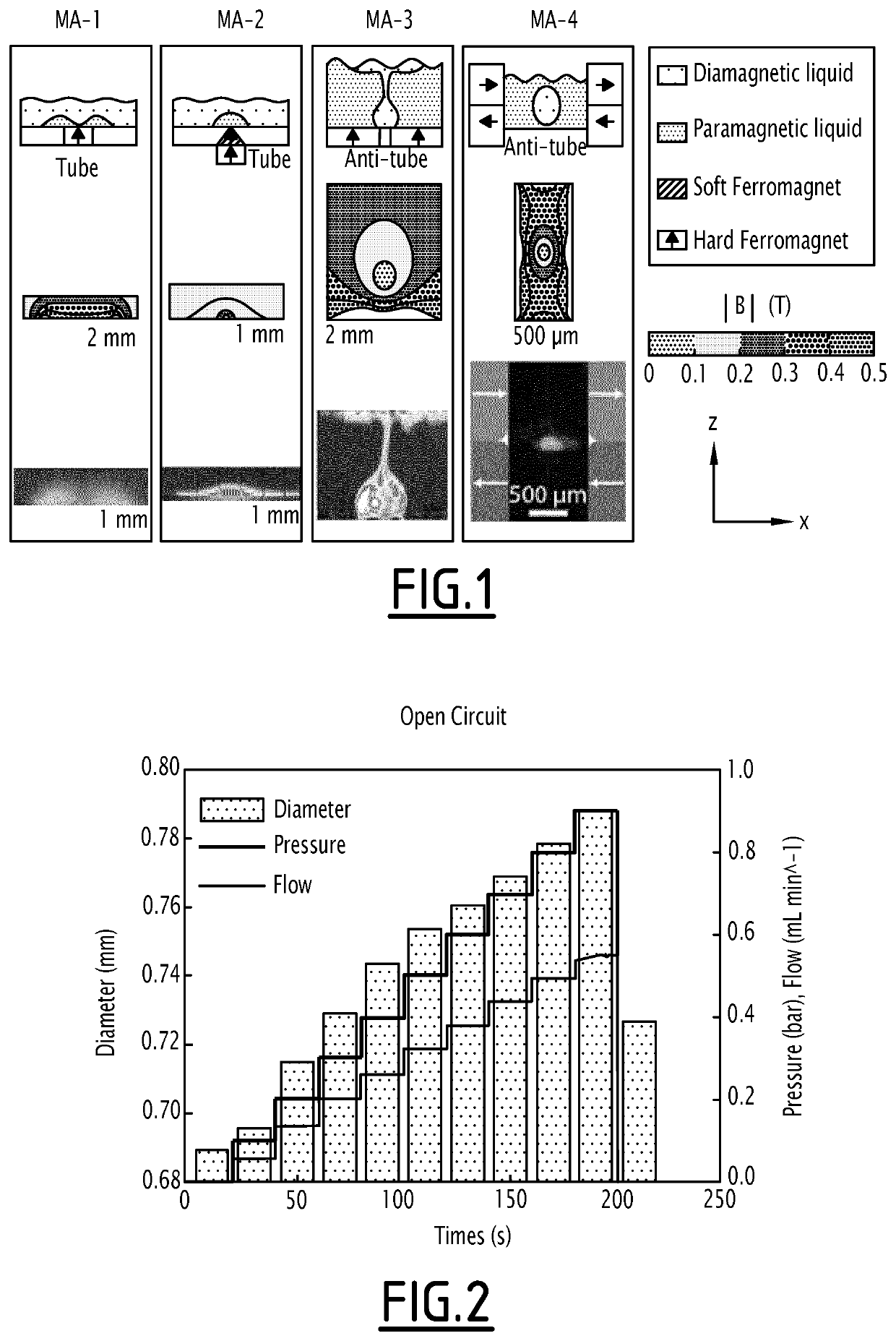
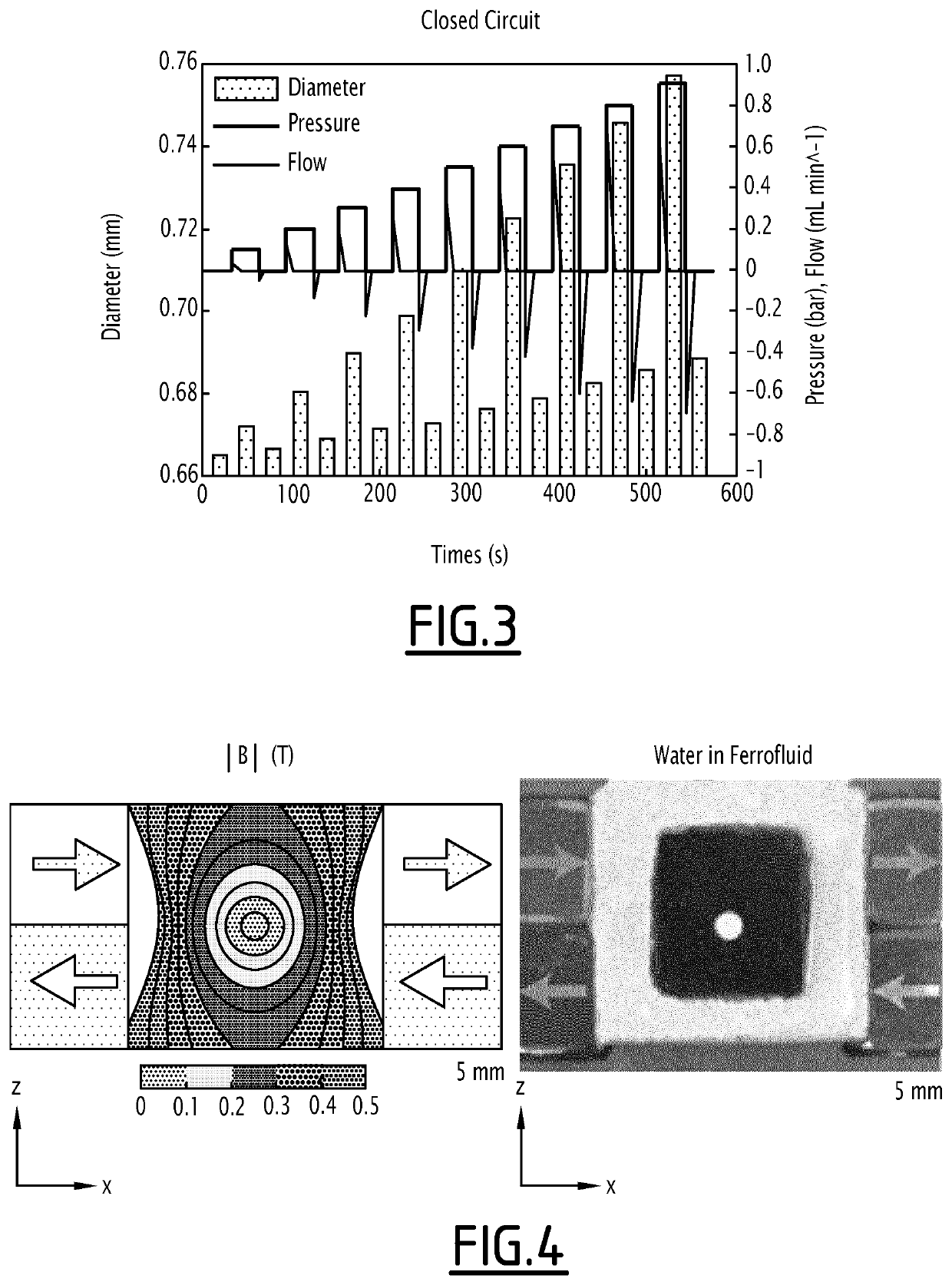
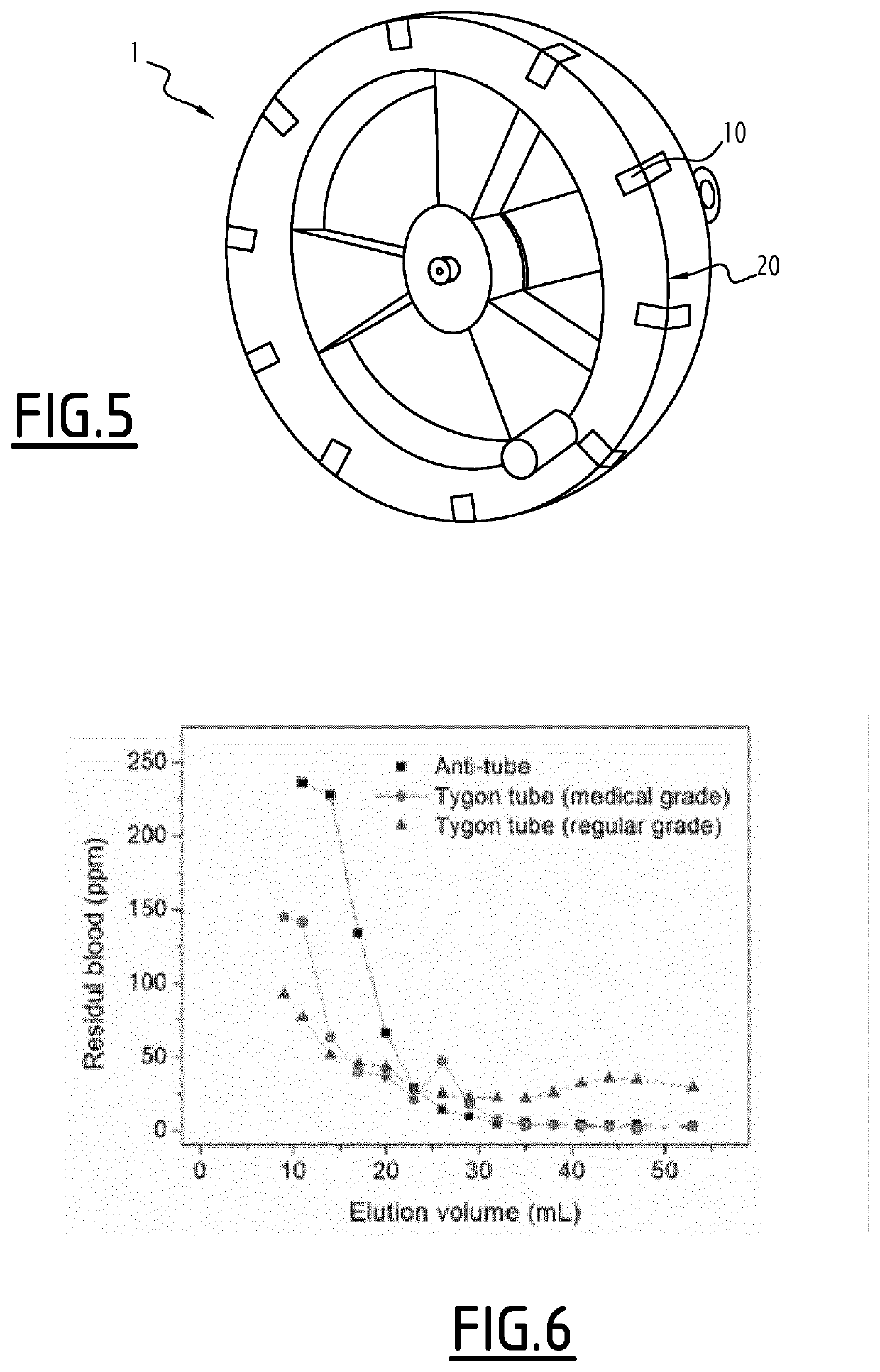
- A device and method utilizing a magnetic field to create a liquid-liquid interface where a less-paramagnetic liquid circulates within a more-paramagnetic liquid without contact with solid walls, using a combination of permanent and electromagnets to generate a magnetic field with varying strengths and orientations, allowing for stable and compact operation on a sub-millimeter scale.

Systems and methods for producing pharmaceutical compositions using peristaltic pumps and dampeners
PatentWO2022055867A2
Innovation
- Incorporating a dampener into the peristaltic pump system to reduce pulsations, allowing for consistent flow rates and improving the homogeneity of pharmaceutical compositions by using a tubing kit with a dampener connected to the pump heads, which can be configured for single-use, aseptic processing.


Safety Standards for Chemical Flow Systems
Safety standards for chemical flow systems incorporating peristaltic pumps represent a critical framework governing the design, operation, and maintenance of continuous flow reaction setups. These standards encompass multiple regulatory domains, including chemical handling protocols, equipment certification requirements, and operational safety procedures that directly impact peristaltic pump optimization strategies.
International safety standards such as ISO 14644 for cleanroom environments and ANSI/ISA-84.00.01 for safety instrumented systems establish baseline requirements for chemical processing equipment. These standards mandate specific material compatibility requirements, pressure rating certifications, and fail-safe mechanisms that influence peristaltic pump selection and configuration in continuous flow applications.
Chemical compatibility standards require comprehensive evaluation of tubing materials against process chemicals, with particular emphasis on permeation rates, chemical resistance, and degradation pathways. FDA 21 CFR Part 211 and European Pharmacopoeia guidelines specify acceptable materials for pharmaceutical applications, while ASTM D543 provides standardized testing methods for chemical resistance evaluation.
Pressure safety standards establish maximum operating pressures and require implementation of pressure relief systems. The ASME Boiler and Pressure Vessel Code Section VIII provides guidelines for pressure vessel design, while API 520 specifies relief valve sizing and installation requirements that affect system backpressure considerations in peristaltic pump applications.
Electrical safety standards including IEC 61010-1 for laboratory equipment and NFPA 70 for electrical installations govern motor specifications, control system design, and hazardous area classifications. These requirements directly influence pump motor selection, control interface design, and installation procedures in chemical processing environments.
Documentation and validation standards such as Good Manufacturing Practice guidelines require comprehensive qualification protocols including Installation Qualification, Operational Qualification, and Performance Qualification procedures. These standards mandate detailed documentation of pump performance characteristics, calibration procedures, and maintenance protocols essential for regulatory compliance in pharmaceutical and chemical manufacturing applications.
International safety standards such as ISO 14644 for cleanroom environments and ANSI/ISA-84.00.01 for safety instrumented systems establish baseline requirements for chemical processing equipment. These standards mandate specific material compatibility requirements, pressure rating certifications, and fail-safe mechanisms that influence peristaltic pump selection and configuration in continuous flow applications.
Chemical compatibility standards require comprehensive evaluation of tubing materials against process chemicals, with particular emphasis on permeation rates, chemical resistance, and degradation pathways. FDA 21 CFR Part 211 and European Pharmacopoeia guidelines specify acceptable materials for pharmaceutical applications, while ASTM D543 provides standardized testing methods for chemical resistance evaluation.
Pressure safety standards establish maximum operating pressures and require implementation of pressure relief systems. The ASME Boiler and Pressure Vessel Code Section VIII provides guidelines for pressure vessel design, while API 520 specifies relief valve sizing and installation requirements that affect system backpressure considerations in peristaltic pump applications.
Electrical safety standards including IEC 61010-1 for laboratory equipment and NFPA 70 for electrical installations govern motor specifications, control system design, and hazardous area classifications. These requirements directly influence pump motor selection, control interface design, and installation procedures in chemical processing environments.
Documentation and validation standards such as Good Manufacturing Practice guidelines require comprehensive qualification protocols including Installation Qualification, Operational Qualification, and Performance Qualification procedures. These standards mandate detailed documentation of pump performance characteristics, calibration procedures, and maintenance protocols essential for regulatory compliance in pharmaceutical and chemical manufacturing applications.
Cost-Benefit Analysis of Peristaltic Pump Systems
The economic evaluation of peristaltic pump systems in continuous flow reactions reveals significant cost advantages over traditional batch processing methods. Initial capital expenditure for peristaltic pump systems ranges from $5,000 to $50,000 depending on flow rate requirements and precision specifications. While this represents a substantial upfront investment, the operational cost savings typically justify the expenditure within 12-18 months of implementation.
Operating cost reductions stem primarily from decreased reagent consumption, with peristaltic pumps enabling precise flow control that minimizes waste by 15-30% compared to batch processes. Energy consumption is notably lower, as continuous flow systems operate at steady-state conditions without the heating and cooling cycles required in batch reactors. This translates to energy savings of approximately 20-40% for temperature-controlled reactions.
Labor cost benefits are substantial, as peristaltic pump systems enable automated operation with minimal supervision. A single operator can manage multiple continuous flow setups simultaneously, reducing labor requirements by up to 60% compared to equivalent batch operations. Additionally, the consistent product quality achieved through precise flow control reduces quality control costs and product rejection rates.
Maintenance costs for peristaltic pumps are relatively low, with tubing replacement being the primary recurring expense. High-quality tubing typically costs $50-200 per pump and requires replacement every 200-1000 hours of operation, depending on chemical compatibility and operating conditions. The absence of valves and seals in peristaltic designs significantly reduces maintenance complexity compared to other pump types.
Return on investment calculations demonstrate favorable economics, particularly for high-volume production scenarios. Companies implementing peristaltic pump systems for continuous flow synthesis report ROI periods of 8-24 months, with annual cost savings ranging from 25-45% of the initial system investment. The scalability of peristaltic systems further enhances their economic attractiveness, as production increases can be achieved through numbering-up rather than costly scale-up procedures.
Operating cost reductions stem primarily from decreased reagent consumption, with peristaltic pumps enabling precise flow control that minimizes waste by 15-30% compared to batch processes. Energy consumption is notably lower, as continuous flow systems operate at steady-state conditions without the heating and cooling cycles required in batch reactors. This translates to energy savings of approximately 20-40% for temperature-controlled reactions.
Labor cost benefits are substantial, as peristaltic pump systems enable automated operation with minimal supervision. A single operator can manage multiple continuous flow setups simultaneously, reducing labor requirements by up to 60% compared to equivalent batch operations. Additionally, the consistent product quality achieved through precise flow control reduces quality control costs and product rejection rates.
Maintenance costs for peristaltic pumps are relatively low, with tubing replacement being the primary recurring expense. High-quality tubing typically costs $50-200 per pump and requires replacement every 200-1000 hours of operation, depending on chemical compatibility and operating conditions. The absence of valves and seals in peristaltic designs significantly reduces maintenance complexity compared to other pump types.
Return on investment calculations demonstrate favorable economics, particularly for high-volume production scenarios. Companies implementing peristaltic pump systems for continuous flow synthesis report ROI periods of 8-24 months, with annual cost savings ranging from 25-45% of the initial system investment. The scalability of peristaltic systems further enhances their economic attractiveness, as production increases can be achieved through numbering-up rather than costly scale-up procedures.
Unlock deeper insights with PatSnap Eureka Quick Research — get a full tech report to explore trends and direct your research. Try now!
Generate Your Research Report Instantly with AI Agent
Supercharge your innovation with PatSnap Eureka AI Agent Platform!