

How to Optimize Reactive Sputtering Parameters for High Yield
MAY 19, 20269 MIN READ
Generate Your Research Report Instantly with AI Agent
Patsnap Eureka helps you evaluate technical feasibility & market potential.
Reactive Sputtering Technology Background and Optimization Goals
Reactive sputtering technology emerged in the 1960s as an advanced physical vapor deposition technique that combines the benefits of conventional sputtering with controlled chemical reactions during the deposition process. This method involves introducing reactive gases such as oxygen, nitrogen, or hydrogen into the sputtering chamber, where they react with sputtered target atoms to form compound thin films directly on the substrate surface.
The evolution of reactive sputtering has been driven by the semiconductor industry's demand for high-quality dielectric, conductive, and optical coatings. Early developments focused on basic oxide and nitride formation, but technological advancement has expanded applications to include complex multi-component materials, transparent conductive oxides, and advanced functional coatings for electronics, optics, and energy storage devices.
Modern reactive sputtering systems incorporate sophisticated process control mechanisms, including real-time monitoring of plasma composition, substrate temperature regulation, and precise gas flow management. The integration of magnetron sputtering with reactive gas injection has significantly improved deposition rates and film uniformity, making the technology commercially viable for large-scale manufacturing applications.
The primary optimization goal centers on achieving maximum process yield while maintaining consistent film quality and properties. This involves establishing stable plasma conditions that prevent target poisoning, a phenomenon where excessive reactive gas coverage on the target surface dramatically reduces sputtering efficiency and causes process instability.
Key performance targets include maintaining deposition rates above 80% of metallic mode rates, achieving film thickness uniformity within ±3% across substrate areas, and ensuring reproducible stoichiometry control with minimal batch-to-batch variation. Additionally, optimizing reactive sputtering parameters aims to minimize substrate heating effects, reduce particle generation, and extend target lifetime to improve overall process economics.
Advanced optimization strategies focus on implementing closed-loop control systems that dynamically adjust reactive gas flow rates, RF/DC power levels, and chamber pressure based on real-time plasma emission spectroscopy feedback. These systems enable precise control of the transition zone between metallic and compound sputtering modes, maximizing both deposition rate and film quality simultaneously.
The evolution of reactive sputtering has been driven by the semiconductor industry's demand for high-quality dielectric, conductive, and optical coatings. Early developments focused on basic oxide and nitride formation, but technological advancement has expanded applications to include complex multi-component materials, transparent conductive oxides, and advanced functional coatings for electronics, optics, and energy storage devices.
Modern reactive sputtering systems incorporate sophisticated process control mechanisms, including real-time monitoring of plasma composition, substrate temperature regulation, and precise gas flow management. The integration of magnetron sputtering with reactive gas injection has significantly improved deposition rates and film uniformity, making the technology commercially viable for large-scale manufacturing applications.
The primary optimization goal centers on achieving maximum process yield while maintaining consistent film quality and properties. This involves establishing stable plasma conditions that prevent target poisoning, a phenomenon where excessive reactive gas coverage on the target surface dramatically reduces sputtering efficiency and causes process instability.
Key performance targets include maintaining deposition rates above 80% of metallic mode rates, achieving film thickness uniformity within ±3% across substrate areas, and ensuring reproducible stoichiometry control with minimal batch-to-batch variation. Additionally, optimizing reactive sputtering parameters aims to minimize substrate heating effects, reduce particle generation, and extend target lifetime to improve overall process economics.
Advanced optimization strategies focus on implementing closed-loop control systems that dynamically adjust reactive gas flow rates, RF/DC power levels, and chamber pressure based on real-time plasma emission spectroscopy feedback. These systems enable precise control of the transition zone between metallic and compound sputtering modes, maximizing both deposition rate and film quality simultaneously.
Market Demand for High-Yield Sputtering Solutions
The semiconductor industry represents the largest market segment driving demand for high-yield reactive sputtering solutions. Advanced semiconductor manufacturing requires precise deposition of thin films with exceptional uniformity and minimal defect rates. As device geometries continue to shrink and three-dimensional architectures become more complex, manufacturers face increasing pressure to optimize sputtering parameters that can deliver consistent high yields while maintaining cost-effectiveness.
Display technology manufacturers constitute another significant market segment seeking optimized reactive sputtering solutions. The production of flat panel displays, OLED screens, and emerging micro-LED technologies demands large-area coating capabilities with superior uniformity. Market pressures for higher resolution displays and flexible form factors have intensified the need for sputtering processes that can achieve high material utilization rates while minimizing waste and rework.
The photovoltaic industry presents substantial opportunities for high-yield sputtering optimization. Solar cell manufacturers require cost-effective deposition processes for transparent conductive oxides, barrier layers, and back reflectors. With increasing global emphasis on renewable energy adoption, manufacturers seek sputtering solutions that maximize throughput while reducing material consumption and energy usage per unit area processed.
Automotive electronics and sensors represent rapidly growing market segments demanding reliable thin film deposition. The proliferation of electric vehicles, autonomous driving systems, and advanced driver assistance technologies has created new requirements for robust coating processes. These applications often require specialized material properties achieved through precisely controlled reactive sputtering parameters.
The optical coatings market drives demand for high-precision sputtering solutions capable of producing multilayer structures with exact thickness control. Applications ranging from architectural glass to precision optics require consistent optical properties across large substrates, necessitating optimized parameter sets that ensure reproducible results.
Medical device manufacturing increasingly relies on biocompatible coatings deposited through reactive sputtering. The growing medical implant market and diagnostic equipment sector require processes that can deliver consistent coating properties while meeting stringent regulatory requirements for material purity and performance consistency.
Display technology manufacturers constitute another significant market segment seeking optimized reactive sputtering solutions. The production of flat panel displays, OLED screens, and emerging micro-LED technologies demands large-area coating capabilities with superior uniformity. Market pressures for higher resolution displays and flexible form factors have intensified the need for sputtering processes that can achieve high material utilization rates while minimizing waste and rework.
The photovoltaic industry presents substantial opportunities for high-yield sputtering optimization. Solar cell manufacturers require cost-effective deposition processes for transparent conductive oxides, barrier layers, and back reflectors. With increasing global emphasis on renewable energy adoption, manufacturers seek sputtering solutions that maximize throughput while reducing material consumption and energy usage per unit area processed.
Automotive electronics and sensors represent rapidly growing market segments demanding reliable thin film deposition. The proliferation of electric vehicles, autonomous driving systems, and advanced driver assistance technologies has created new requirements for robust coating processes. These applications often require specialized material properties achieved through precisely controlled reactive sputtering parameters.
The optical coatings market drives demand for high-precision sputtering solutions capable of producing multilayer structures with exact thickness control. Applications ranging from architectural glass to precision optics require consistent optical properties across large substrates, necessitating optimized parameter sets that ensure reproducible results.
Medical device manufacturing increasingly relies on biocompatible coatings deposited through reactive sputtering. The growing medical implant market and diagnostic equipment sector require processes that can deliver consistent coating properties while meeting stringent regulatory requirements for material purity and performance consistency.
Current State and Challenges in Reactive Sputtering Parameters
Reactive sputtering technology has reached a mature stage in industrial applications, yet significant challenges persist in achieving consistent high-yield production. Current industry practices demonstrate considerable variation in parameter optimization approaches, with many manufacturers relying on empirical methods rather than systematic scientific frameworks. The complexity of reactive sputtering processes, involving multiple interdependent variables such as reactive gas flow rates, target power density, substrate temperature, and chamber pressure, creates a multidimensional optimization challenge that traditional trial-and-error methods struggle to address efficiently.
The primary technical challenge lies in maintaining stable reactive gas partial pressure control during deposition. Fluctuations in oxygen or nitrogen flow rates can cause rapid transitions between metallic and compound sputtering modes, leading to process instability and yield variations. Advanced process control systems have been implemented in leading facilities, incorporating real-time optical emission spectroscopy and mass spectrometry feedback loops, yet these solutions remain expensive and require specialized expertise for optimal operation.
Target poisoning represents another critical constraint affecting production yields. When reactive gases interact with sputtering targets, compound layer formation on target surfaces significantly alters sputtering rates and film stoichiometry. Current mitigation strategies include pulsed power supplies and target cleaning protocols, but these approaches often compromise deposition rates or introduce additional process complexity. The semiconductor and optical coating industries report yield losses of 15-30% attributed to target poisoning effects alone.
Substrate heating uniformity presents ongoing challenges, particularly for large-area applications. Temperature gradients across substrate surfaces directly impact film stress, adhesion, and optical properties. While advanced heating systems with multiple zone control have been developed, achieving temperature uniformity within ±2°C across 300mm substrates remains technically demanding and economically challenging for many manufacturers.
Process monitoring and control capabilities vary significantly across the industry. Leading manufacturers have invested in sophisticated in-situ monitoring systems incorporating ellipsometry, quartz crystal microbalances, and plasma diagnostics. However, smaller manufacturers often operate with limited real-time feedback, relying primarily on post-deposition characterization for quality control. This reactive approach to quality management inherently limits yield optimization potential and increases production costs through rework and material waste.
Geographical distribution of advanced reactive sputtering capabilities shows concentration in established semiconductor manufacturing regions, including Taiwan, South Korea, Japan, and selected facilities in North America and Europe. Emerging manufacturing regions often lack the technical infrastructure and expertise necessary for implementing advanced parameter optimization strategies, creating global disparities in achievable production yields and product quality standards.
The primary technical challenge lies in maintaining stable reactive gas partial pressure control during deposition. Fluctuations in oxygen or nitrogen flow rates can cause rapid transitions between metallic and compound sputtering modes, leading to process instability and yield variations. Advanced process control systems have been implemented in leading facilities, incorporating real-time optical emission spectroscopy and mass spectrometry feedback loops, yet these solutions remain expensive and require specialized expertise for optimal operation.
Target poisoning represents another critical constraint affecting production yields. When reactive gases interact with sputtering targets, compound layer formation on target surfaces significantly alters sputtering rates and film stoichiometry. Current mitigation strategies include pulsed power supplies and target cleaning protocols, but these approaches often compromise deposition rates or introduce additional process complexity. The semiconductor and optical coating industries report yield losses of 15-30% attributed to target poisoning effects alone.
Substrate heating uniformity presents ongoing challenges, particularly for large-area applications. Temperature gradients across substrate surfaces directly impact film stress, adhesion, and optical properties. While advanced heating systems with multiple zone control have been developed, achieving temperature uniformity within ±2°C across 300mm substrates remains technically demanding and economically challenging for many manufacturers.
Process monitoring and control capabilities vary significantly across the industry. Leading manufacturers have invested in sophisticated in-situ monitoring systems incorporating ellipsometry, quartz crystal microbalances, and plasma diagnostics. However, smaller manufacturers often operate with limited real-time feedback, relying primarily on post-deposition characterization for quality control. This reactive approach to quality management inherently limits yield optimization potential and increases production costs through rework and material waste.
Geographical distribution of advanced reactive sputtering capabilities shows concentration in established semiconductor manufacturing regions, including Taiwan, South Korea, Japan, and selected facilities in North America and Europe. Emerging manufacturing regions often lack the technical infrastructure and expertise necessary for implementing advanced parameter optimization strategies, creating global disparities in achievable production yields and product quality standards.
Existing Parameter Optimization Solutions
01 Reactive gas flow control and optimization
Control of reactive gas flow rates and partial pressures is crucial for optimizing sputtering yield in reactive sputtering processes. The flow rate of reactive gases such as oxygen or nitrogen directly affects the formation of compound films and the sputtering rate. Proper gas flow management helps maintain stable plasma conditions and prevents target poisoning while maximizing deposition rates.- Reactive gas flow control and optimization: Control of reactive gas flow rates and partial pressures is crucial for optimizing sputtering yield in reactive sputtering processes. The flow rate of reactive gases such as oxygen or nitrogen directly affects the formation of compound films and the sputtering rate. Proper gas flow management helps maintain stable plasma conditions and prevents target poisoning while maximizing deposition rates.
- Target material composition and structure: The composition and microstructure of sputtering targets significantly influence reactive sputtering yield. Different target materials exhibit varying reactivity with process gases, affecting both the sputtering rate and film properties. Target design considerations include grain size, density, and chemical homogeneity to achieve consistent and high sputtering yields.
- Power supply and plasma control methods: Advanced power supply techniques and plasma control methods enhance reactive sputtering yield by maintaining stable discharge conditions. Pulsed power, dual magnetron configurations, and feedback control systems help optimize the balance between target sputtering and reactive gas incorporation while minimizing arcing and target poisoning effects.
- Process parameter optimization and monitoring: Systematic optimization of process parameters including substrate temperature, chamber pressure, and electrode configuration is essential for maximizing reactive sputtering yield. Real-time monitoring systems track deposition rates, film composition, and plasma characteristics to maintain optimal conditions throughout the sputtering process.
- Substrate preparation and film nucleation enhancement: Proper substrate preparation and surface treatment techniques improve film nucleation and growth, leading to enhanced effective sputtering yield. Surface cleaning, bias application, and interface layer formation contribute to better adhesion and more efficient material utilization during reactive sputtering processes.
02 Target material composition and structure optimization
The composition and microstructure of sputtering targets significantly influence reactive sputtering yield. Target materials with specific grain structures, alloy compositions, or composite designs can enhance sputtering efficiency and film quality. Surface treatments and target preparation methods also play important roles in achieving consistent and high sputtering yields.Expand Specific Solutions03 Power supply and plasma parameter control
Optimization of power delivery methods including pulsed power, RF power, and DC power significantly affects reactive sputtering yield. Control of plasma parameters such as voltage, current density, and frequency helps maintain stable discharge conditions and improves material removal rates. Advanced power supply techniques can prevent arcing and enhance process stability.Expand Specific Solutions04 Process monitoring and feedback control systems
Real-time monitoring of process parameters and implementation of feedback control systems are essential for maintaining optimal reactive sputtering yield. Monitoring techniques include optical emission spectroscopy, mass spectrometry, and electrical parameter tracking. Automated control systems can adjust process conditions dynamically to maintain consistent sputtering performance and prevent process drift.Expand Specific Solutions05 Chamber design and magnetic field configuration
Sputtering chamber geometry and magnetic field arrangements significantly impact reactive sputtering yield through their effects on plasma confinement and ion bombardment patterns. Magnetron configurations, target-to-substrate distances, and chamber pressure optimization contribute to enhanced sputtering efficiency. Proper magnetic field design helps focus ion bombardment and improves material utilization.Expand Specific Solutions
Key Players in Sputtering Equipment and Process Industry
The reactive sputtering parameter optimization market represents a mature industrial segment within the broader thin film deposition industry, currently valued at several billion dollars globally. The technology has reached commercial maturity, evidenced by established players like Applied Materials, ULVAC, and ASML Netherlands BV dominating equipment manufacturing, while material suppliers such as Mitsui Kinzoku and Sumitomo Chemical provide specialized sputtering targets. Research institutions including Fraunhofer-Gesellschaft, Southeast University, and Northwestern Polytechnical University continue advancing process optimization methodologies. The competitive landscape shows consolidation among equipment manufacturers like Evatec AG and Oerlikon Surface Solutions AG, while companies such as Sony Group and Cardinal CG Co. represent major end-users driving demand for higher yield processes. The market exhibits steady growth driven by semiconductor, display, and solar panel industries requiring precise thin film properties through optimized reactive sputtering parameters.
Applied Materials, Inc.
Technical Solution: Applied Materials has developed advanced reactive sputtering systems with real-time process control capabilities. Their technology incorporates plasma emission monitoring (PEM) and optical emission spectroscopy (OES) to maintain precise stoichiometry control during reactive deposition. The company's Endura platform features multi-chamber architecture that enables independent optimization of nucleation and bulk film growth phases. Their reactive gas flow control systems utilize feedback loops that can adjust oxygen or nitrogen flow rates within milliseconds to prevent target poisoning while maintaining high deposition rates. The technology achieves deposition rate stability within ±2% and film thickness uniformity better than ±1.5% across 300mm wafers.
Strengths: Industry-leading process control accuracy, proven scalability for high-volume manufacturing, comprehensive in-situ monitoring capabilities. Weaknesses: High capital equipment costs, complex system integration requirements, limited flexibility for research applications.
ULVAC, Inc.
Technical Solution: ULVAC has developed proprietary reactive sputtering technology focusing on dual magnetron configurations with advanced target utilization optimization. Their systems employ pulsed DC power supplies combined with mid-frequency AC power to minimize arcing and achieve stable plasma conditions. The company's reactive process control utilizes partial pressure control (PPC) methodology, maintaining constant reactive gas partial pressure regardless of pumping speed variations. Their technology includes plasma impedance monitoring systems that can detect target surface condition changes and automatically adjust process parameters. ULVAC's approach achieves target utilization rates exceeding 85% while maintaining film quality consistency through advanced cathode design and magnetic field optimization.
Strengths: Excellent target utilization efficiency, robust plasma stability control, strong expertise in Asian markets. Weaknesses: Limited global service network compared to competitors, higher maintenance complexity for advanced systems.
Core Innovations in Reactive Sputtering Control
Stable high rate reactive sputtering
PatentInactiveUS6537428B1
Innovation
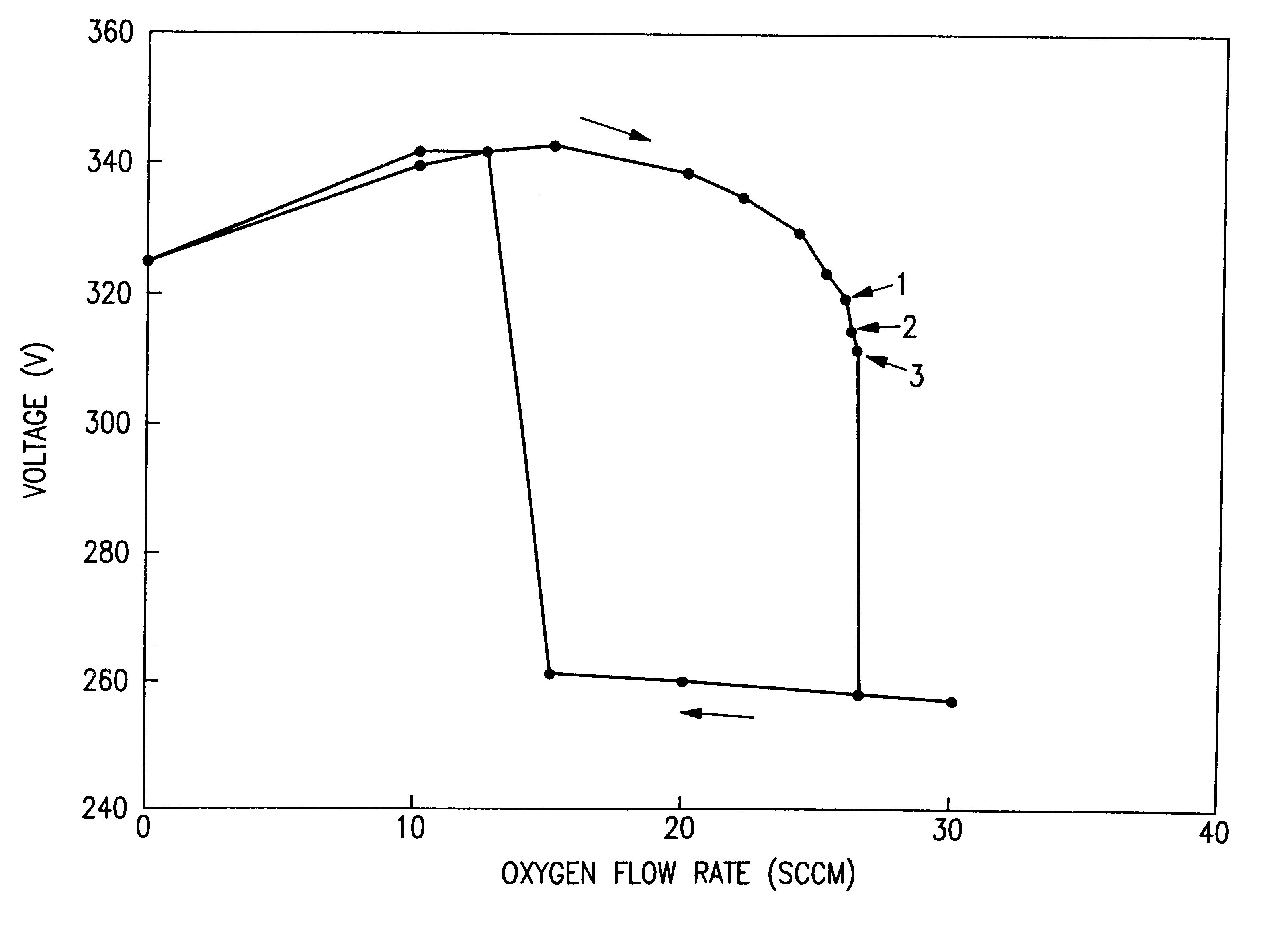
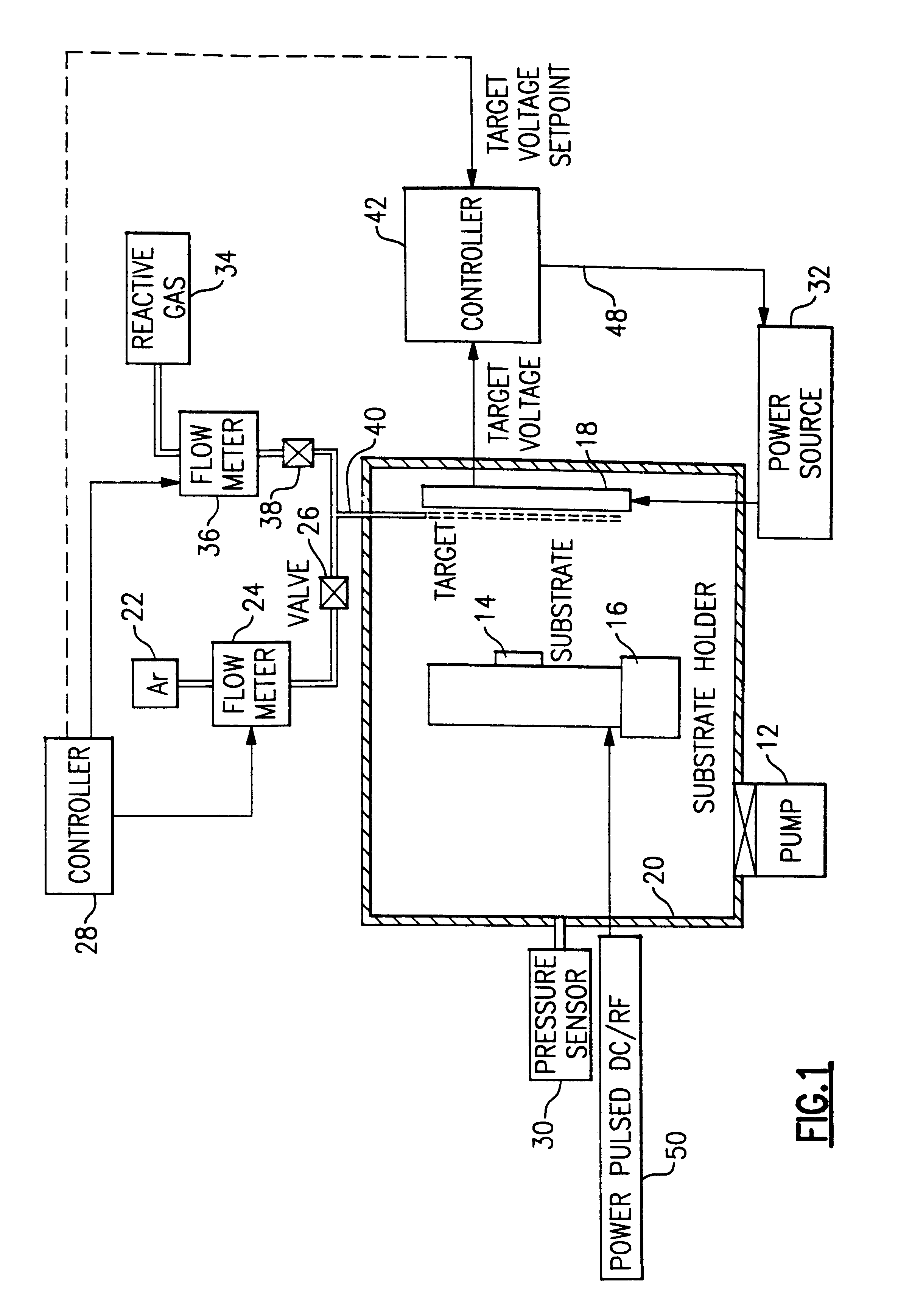
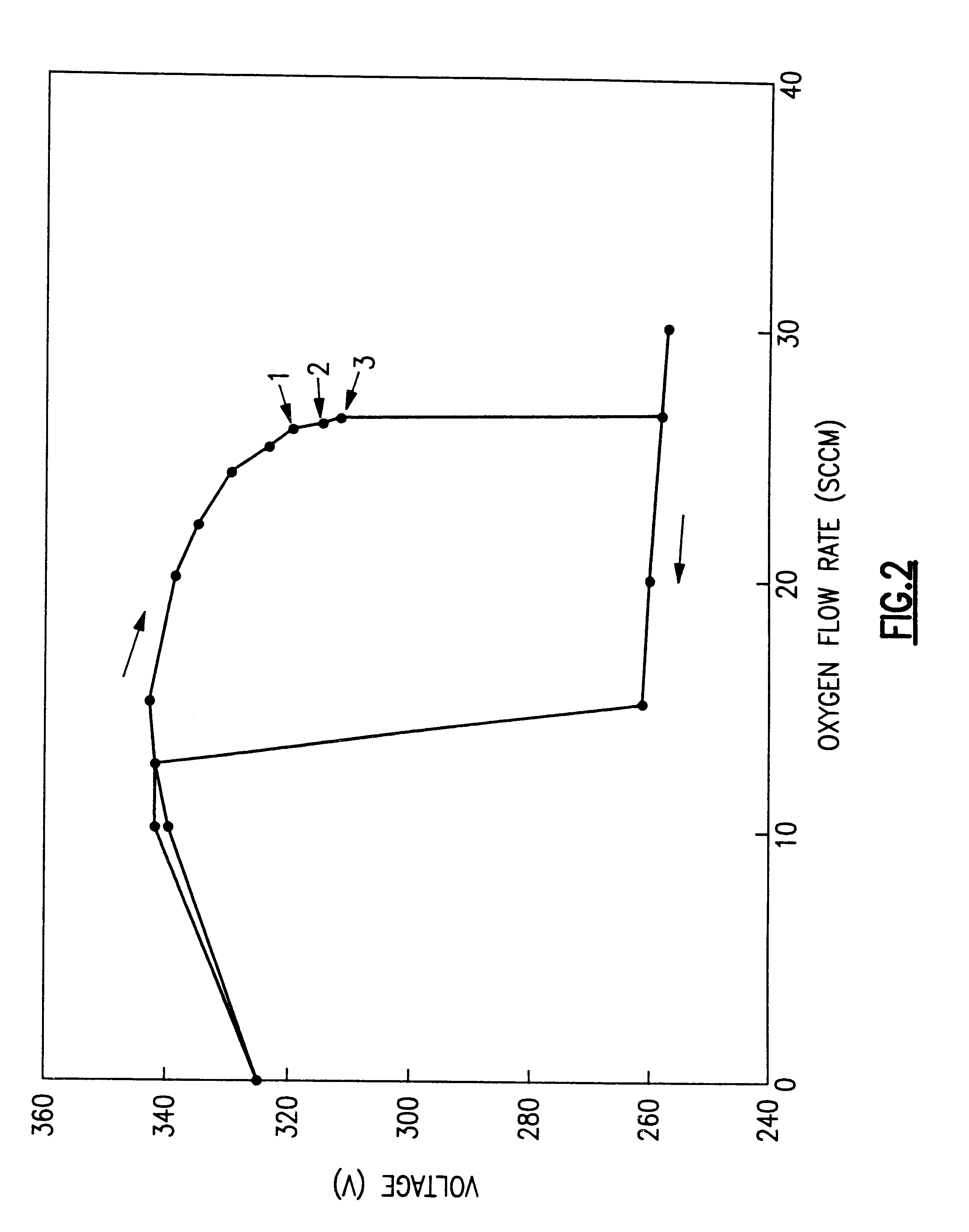
- A reactive sputtering system that controls the power supplied to the cathode to stabilize the cathode voltage, balancing the arrival and removal rates of reactive species by adjusting power based on measured cathode voltage and reactive gas flow rates, using a hysteresis curve to maintain operation near the high-rate deposition edge.

High-rate reactive sputtering of dielectric stoichiometric films
PatentInactiveKR1020200071144A
Innovation
- A method and apparatus that control the pulsed reactive gas flow rate into a vacuum chamber at a constant target voltage, using selected process parameters to stabilize the deposition in the transition region between metallic and covered modes, minimizing arcing and ensuring high deposition rates.


Process Control Algorithm Development
The development of advanced process control algorithms represents a critical frontier in optimizing reactive sputtering parameters for achieving high yield manufacturing. Modern control systems must integrate real-time monitoring capabilities with predictive modeling to maintain optimal deposition conditions throughout the entire sputtering process. These algorithms serve as the intelligent backbone that translates sensor data into actionable parameter adjustments, ensuring consistent film quality and maximizing production efficiency.
Machine learning-based control algorithms have emerged as particularly promising solutions for reactive sputtering optimization. Neural networks and deep learning models can process vast amounts of historical process data to identify complex relationships between input parameters and output quality metrics. These algorithms excel at recognizing subtle patterns in multi-dimensional parameter spaces that traditional control methods might overlook, enabling more precise prediction of optimal operating conditions.
Adaptive control strategies represent another significant advancement in process control algorithm development. These systems continuously learn from process variations and automatically adjust control parameters to maintain target performance levels. Fuzzy logic controllers and genetic algorithms have shown particular effectiveness in handling the non-linear dynamics inherent in reactive sputtering processes, where small parameter changes can lead to dramatic shifts in deposition behavior.
Real-time feedback control algorithms must address the challenge of processing multiple sensor inputs simultaneously while maintaining system stability. Advanced filtering techniques and state estimation algorithms help distinguish between meaningful process variations and measurement noise, ensuring that control actions are based on accurate process state information. Kalman filters and particle filters have proven effective in this context, providing robust state estimation even under uncertain operating conditions.
The integration of predictive maintenance algorithms within process control systems offers additional opportunities for yield optimization. These algorithms analyze equipment performance trends and predict potential failures before they impact production quality. By incorporating equipment health monitoring into the overall control strategy, manufacturers can proactively adjust process parameters to compensate for gradual equipment degradation, maintaining consistent output quality throughout equipment lifecycles.
Model predictive control algorithms specifically designed for reactive sputtering applications must account for the complex interactions between gas flow rates, power levels, and substrate conditions. These algorithms use mathematical models of the sputtering process to predict future system behavior and optimize control actions over extended time horizons, resulting in more stable and efficient operation compared to traditional reactive control approaches.
Machine learning-based control algorithms have emerged as particularly promising solutions for reactive sputtering optimization. Neural networks and deep learning models can process vast amounts of historical process data to identify complex relationships between input parameters and output quality metrics. These algorithms excel at recognizing subtle patterns in multi-dimensional parameter spaces that traditional control methods might overlook, enabling more precise prediction of optimal operating conditions.
Adaptive control strategies represent another significant advancement in process control algorithm development. These systems continuously learn from process variations and automatically adjust control parameters to maintain target performance levels. Fuzzy logic controllers and genetic algorithms have shown particular effectiveness in handling the non-linear dynamics inherent in reactive sputtering processes, where small parameter changes can lead to dramatic shifts in deposition behavior.
Real-time feedback control algorithms must address the challenge of processing multiple sensor inputs simultaneously while maintaining system stability. Advanced filtering techniques and state estimation algorithms help distinguish between meaningful process variations and measurement noise, ensuring that control actions are based on accurate process state information. Kalman filters and particle filters have proven effective in this context, providing robust state estimation even under uncertain operating conditions.
The integration of predictive maintenance algorithms within process control systems offers additional opportunities for yield optimization. These algorithms analyze equipment performance trends and predict potential failures before they impact production quality. By incorporating equipment health monitoring into the overall control strategy, manufacturers can proactively adjust process parameters to compensate for gradual equipment degradation, maintaining consistent output quality throughout equipment lifecycles.
Model predictive control algorithms specifically designed for reactive sputtering applications must account for the complex interactions between gas flow rates, power levels, and substrate conditions. These algorithms use mathematical models of the sputtering process to predict future system behavior and optimize control actions over extended time horizons, resulting in more stable and efficient operation compared to traditional reactive control approaches.
Equipment Integration and Automation Strategies
Equipment integration and automation strategies represent critical enablers for optimizing reactive sputtering parameters and achieving high yield manufacturing. Modern reactive sputtering systems require sophisticated integration of multiple subsystems including gas flow controllers, power supplies, substrate handling mechanisms, and real-time monitoring sensors. The complexity of managing numerous interdependent parameters simultaneously necessitates advanced automation frameworks that can respond to process variations faster than human operators.
Contemporary equipment integration approaches focus on creating unified control architectures that consolidate previously isolated subsystems. Advanced process control systems now incorporate predictive algorithms that can anticipate parameter drift and implement corrective actions before yield degradation occurs. These systems typically integrate plasma emission monitoring, target voltage feedback, and substrate temperature control into cohesive feedback loops that maintain optimal deposition conditions.
Automation strategies for reactive sputtering have evolved from simple recipe-based control to adaptive learning systems. Machine learning algorithms analyze historical process data to identify optimal parameter combinations for specific target materials and substrate configurations. These intelligent systems can automatically adjust reactive gas flow rates, power levels, and pressure settings based on real-time process feedback, significantly reducing the need for manual intervention and minimizing human error.
The implementation of digital twin technologies has emerged as a transformative approach for equipment integration. Digital twins create virtual replicas of the physical sputtering system, enabling predictive maintenance scheduling and process optimization through simulation. This technology allows operators to test parameter modifications virtually before implementing changes on production equipment, reducing experimental costs and minimizing production disruptions.
Future automation strategies are increasingly incorporating edge computing capabilities that enable real-time decision making at the equipment level. These distributed intelligence systems can process sensor data locally and implement immediate corrections without relying on centralized control systems, thereby reducing response times and improving overall system reliability for high-yield reactive sputtering operations.
Contemporary equipment integration approaches focus on creating unified control architectures that consolidate previously isolated subsystems. Advanced process control systems now incorporate predictive algorithms that can anticipate parameter drift and implement corrective actions before yield degradation occurs. These systems typically integrate plasma emission monitoring, target voltage feedback, and substrate temperature control into cohesive feedback loops that maintain optimal deposition conditions.
Automation strategies for reactive sputtering have evolved from simple recipe-based control to adaptive learning systems. Machine learning algorithms analyze historical process data to identify optimal parameter combinations for specific target materials and substrate configurations. These intelligent systems can automatically adjust reactive gas flow rates, power levels, and pressure settings based on real-time process feedback, significantly reducing the need for manual intervention and minimizing human error.
The implementation of digital twin technologies has emerged as a transformative approach for equipment integration. Digital twins create virtual replicas of the physical sputtering system, enabling predictive maintenance scheduling and process optimization through simulation. This technology allows operators to test parameter modifications virtually before implementing changes on production equipment, reducing experimental costs and minimizing production disruptions.
Future automation strategies are increasingly incorporating edge computing capabilities that enable real-time decision making at the equipment level. These distributed intelligence systems can process sensor data locally and implement immediate corrections without relying on centralized control systems, thereby reducing response times and improving overall system reliability for high-yield reactive sputtering operations.
Unlock deeper insights with Patsnap Eureka Quick Research — get a full tech report to explore trends and direct your research. Try now!
Generate Your Research Report Instantly with AI Agent
Supercharge your innovation with Patsnap Eureka AI Agent Platform!