

How to Optimize Voltage Thresholds in Electrolyte Gated Devices
MAY 13, 20269 MIN READ
Generate Your Research Report Instantly with AI Agent
PatSnap Eureka helps you evaluate technical feasibility & market potential.
Electrolyte Gated Device Voltage Optimization Background and Goals
Electrolyte gated devices represent a revolutionary paradigm in electronic device engineering, emerging from the convergence of electrochemistry and solid-state electronics. These devices utilize ionic conductors or electrolytes as gating media, enabling unprecedented control over charge carrier density and transport properties in semiconductor channels. The fundamental principle involves the formation of electric double layers at electrolyte-semiconductor interfaces, creating capacitive coupling that can modulate device conductance across several orders of magnitude.
The historical development of electrolyte gating traces back to early electrochemical transistor concepts in the 1980s, but gained significant momentum with advances in ionic liquid technology and organic electronics in the 2000s. This evolution has been driven by the quest for low-power electronics, neuromorphic computing applications, and bioelectronics interfaces. The technology has progressed from simple proof-of-concept demonstrations to sophisticated multi-functional devices capable of mimicking biological synapses and enabling brain-machine interfaces.
Current technological objectives center on achieving precise voltage threshold optimization to enhance device performance, reliability, and energy efficiency. The primary goal involves establishing predictable and stable threshold voltages that enable consistent switching behavior while minimizing power consumption. This optimization is crucial for applications requiring ultra-low power operation, such as implantable medical devices, environmental sensors, and portable electronics.
The voltage threshold optimization challenge encompasses multiple interconnected objectives. First, achieving symmetric and stable threshold voltages for both positive and negative gate biases ensures reliable bidirectional operation. Second, minimizing threshold voltage drift over time and under varying environmental conditions is essential for long-term device stability. Third, reducing the absolute magnitude of threshold voltages enables operation at lower supply voltages, directly impacting power consumption and battery life.
Advanced optimization targets include developing adaptive threshold mechanisms that can self-adjust based on operating conditions, implementing multi-level threshold states for neuromorphic applications, and achieving sub-millivolt precision in threshold control. These objectives align with broader industry trends toward edge computing, Internet of Things applications, and sustainable electronics that demand minimal energy consumption while maintaining high performance standards.
The historical development of electrolyte gating traces back to early electrochemical transistor concepts in the 1980s, but gained significant momentum with advances in ionic liquid technology and organic electronics in the 2000s. This evolution has been driven by the quest for low-power electronics, neuromorphic computing applications, and bioelectronics interfaces. The technology has progressed from simple proof-of-concept demonstrations to sophisticated multi-functional devices capable of mimicking biological synapses and enabling brain-machine interfaces.
Current technological objectives center on achieving precise voltage threshold optimization to enhance device performance, reliability, and energy efficiency. The primary goal involves establishing predictable and stable threshold voltages that enable consistent switching behavior while minimizing power consumption. This optimization is crucial for applications requiring ultra-low power operation, such as implantable medical devices, environmental sensors, and portable electronics.
The voltage threshold optimization challenge encompasses multiple interconnected objectives. First, achieving symmetric and stable threshold voltages for both positive and negative gate biases ensures reliable bidirectional operation. Second, minimizing threshold voltage drift over time and under varying environmental conditions is essential for long-term device stability. Third, reducing the absolute magnitude of threshold voltages enables operation at lower supply voltages, directly impacting power consumption and battery life.
Advanced optimization targets include developing adaptive threshold mechanisms that can self-adjust based on operating conditions, implementing multi-level threshold states for neuromorphic applications, and achieving sub-millivolt precision in threshold control. These objectives align with broader industry trends toward edge computing, Internet of Things applications, and sustainable electronics that demand minimal energy consumption while maintaining high performance standards.
Market Demand for High-Performance Electrolyte Gated Systems
The global market for electrolyte gated devices is experiencing unprecedented growth driven by the convergence of multiple technological trends and application demands. The increasing miniaturization of electronic components, coupled with the growing need for low-power consumption devices, has created substantial market opportunities for advanced electrolyte gated systems that can operate at optimized voltage thresholds.
Neuromorphic computing represents one of the most significant demand drivers, as researchers and technology companies seek to develop brain-inspired computing architectures that can process information more efficiently than traditional digital systems. Electrolyte gated devices with precisely controlled voltage thresholds are essential for creating artificial synapses and neurons that can mimic biological neural networks. The demand in this sector is particularly strong from artificial intelligence hardware manufacturers and research institutions developing next-generation computing paradigms.
The bioelectronics and medical device sectors constitute another major market segment driving demand for high-performance electrolyte gated systems. Implantable medical devices, biosensors, and neural interfaces require components that can operate reliably at biological voltage levels while maintaining excellent biocompatibility. The aging global population and increasing prevalence of chronic diseases are fueling investments in advanced medical technologies that rely on optimized electrolyte gated devices.
Flexible and wearable electronics markets are experiencing rapid expansion, creating substantial demand for electrolyte gated devices that can maintain stable voltage thresholds under mechanical stress and environmental variations. Consumer electronics manufacturers are increasingly incorporating these devices into smartwatches, fitness trackers, and health monitoring systems that require both flexibility and reliable low-voltage operation.
The Internet of Things ecosystem presents enormous market potential, as billions of connected devices require ultra-low-power components with precise voltage control capabilities. Edge computing applications particularly benefit from electrolyte gated devices that can perform local processing while minimizing energy consumption, making them attractive for smart city infrastructure, industrial automation, and environmental monitoring systems.
Emerging applications in quantum computing interfaces and hybrid classical-quantum systems are creating new market niches for specialized electrolyte gated devices. These applications demand extremely precise voltage threshold control and exceptional stability, driving demand for advanced optimization techniques and high-performance materials.
The market demand is further amplified by increasing environmental consciousness and energy efficiency regulations, pushing manufacturers to adopt technologies that can significantly reduce power consumption while maintaining or improving performance characteristics.
Neuromorphic computing represents one of the most significant demand drivers, as researchers and technology companies seek to develop brain-inspired computing architectures that can process information more efficiently than traditional digital systems. Electrolyte gated devices with precisely controlled voltage thresholds are essential for creating artificial synapses and neurons that can mimic biological neural networks. The demand in this sector is particularly strong from artificial intelligence hardware manufacturers and research institutions developing next-generation computing paradigms.
The bioelectronics and medical device sectors constitute another major market segment driving demand for high-performance electrolyte gated systems. Implantable medical devices, biosensors, and neural interfaces require components that can operate reliably at biological voltage levels while maintaining excellent biocompatibility. The aging global population and increasing prevalence of chronic diseases are fueling investments in advanced medical technologies that rely on optimized electrolyte gated devices.
Flexible and wearable electronics markets are experiencing rapid expansion, creating substantial demand for electrolyte gated devices that can maintain stable voltage thresholds under mechanical stress and environmental variations. Consumer electronics manufacturers are increasingly incorporating these devices into smartwatches, fitness trackers, and health monitoring systems that require both flexibility and reliable low-voltage operation.
The Internet of Things ecosystem presents enormous market potential, as billions of connected devices require ultra-low-power components with precise voltage control capabilities. Edge computing applications particularly benefit from electrolyte gated devices that can perform local processing while minimizing energy consumption, making them attractive for smart city infrastructure, industrial automation, and environmental monitoring systems.
Emerging applications in quantum computing interfaces and hybrid classical-quantum systems are creating new market niches for specialized electrolyte gated devices. These applications demand extremely precise voltage threshold control and exceptional stability, driving demand for advanced optimization techniques and high-performance materials.
The market demand is further amplified by increasing environmental consciousness and energy efficiency regulations, pushing manufacturers to adopt technologies that can significantly reduce power consumption while maintaining or improving performance characteristics.
Current Voltage Threshold Challenges in Electrolyte Gating
Electrolyte gated devices face significant voltage threshold challenges that fundamentally limit their performance and practical applications. The primary issue stems from the complex electrochemical processes occurring at the electrolyte-semiconductor interface, where ion accumulation and depletion create unpredictable threshold variations. These variations manifest as device-to-device inconsistencies, temporal drift, and environmental sensitivity that compromise reliable operation.
The double-layer formation at the gate interface represents a critical bottleneck in achieving stable voltage thresholds. Unlike conventional dielectric-gated devices, electrolyte gating involves dynamic ion redistribution that creates capacitance variations dependent on applied voltage, frequency, and ionic concentration. This results in threshold voltages that shift unpredictably during operation, making it extremely difficult to maintain consistent switching characteristics across device arrays.
Hysteresis effects pose another substantial challenge, where the threshold voltage depends on the voltage sweep direction and history. This memory effect arises from slow ion migration kinetics and trapped charge states at the interface, leading to operational windows that vary significantly based on previous electrical stress. The hysteresis can span several volts, severely limiting the precision control required for advanced electronic applications.
Temperature dependence further complicates voltage threshold optimization, as ionic conductivity and mobility exhibit strong thermal activation. Operating temperature variations cause threshold shifts that can exceed the desired operational margins, particularly problematic for applications requiring stable performance across wide temperature ranges. The Arrhenius-type temperature dependence of ionic processes creates exponential sensitivity that is difficult to compensate.
Electrolyte composition and purity present additional constraints, where trace impurities or concentration gradients can dramatically alter threshold characteristics. Ion-specific effects, including different mobilities and interaction strengths with the semiconductor surface, create complex multi-parameter optimization challenges. The electrochemical stability window of the electrolyte also limits the achievable threshold range without causing irreversible reactions.
Scaling challenges emerge when attempting to miniaturize electrolyte gated devices, as the characteristic lengths for ion redistribution become comparable to device dimensions. This leads to non-uniform electric fields and threshold variations across the channel, particularly problematic for achieving the sharp switching characteristics required for digital applications.
The double-layer formation at the gate interface represents a critical bottleneck in achieving stable voltage thresholds. Unlike conventional dielectric-gated devices, electrolyte gating involves dynamic ion redistribution that creates capacitance variations dependent on applied voltage, frequency, and ionic concentration. This results in threshold voltages that shift unpredictably during operation, making it extremely difficult to maintain consistent switching characteristics across device arrays.
Hysteresis effects pose another substantial challenge, where the threshold voltage depends on the voltage sweep direction and history. This memory effect arises from slow ion migration kinetics and trapped charge states at the interface, leading to operational windows that vary significantly based on previous electrical stress. The hysteresis can span several volts, severely limiting the precision control required for advanced electronic applications.
Temperature dependence further complicates voltage threshold optimization, as ionic conductivity and mobility exhibit strong thermal activation. Operating temperature variations cause threshold shifts that can exceed the desired operational margins, particularly problematic for applications requiring stable performance across wide temperature ranges. The Arrhenius-type temperature dependence of ionic processes creates exponential sensitivity that is difficult to compensate.
Electrolyte composition and purity present additional constraints, where trace impurities or concentration gradients can dramatically alter threshold characteristics. Ion-specific effects, including different mobilities and interaction strengths with the semiconductor surface, create complex multi-parameter optimization challenges. The electrochemical stability window of the electrolyte also limits the achievable threshold range without causing irreversible reactions.
Scaling challenges emerge when attempting to miniaturize electrolyte gated devices, as the characteristic lengths for ion redistribution become comparable to device dimensions. This leads to non-uniform electric fields and threshold variations across the channel, particularly problematic for achieving the sharp switching characteristics required for digital applications.
Existing Voltage Threshold Optimization Solutions
01 Threshold voltage control in electrolyte-gated transistors
Methods and structures for controlling the threshold voltage in electrolyte-gated devices through material selection and device architecture. The threshold voltage can be adjusted by modifying the gate dielectric properties, channel material composition, and interface characteristics between the electrolyte and semiconductor. Various techniques include doping concentration optimization and work function engineering to achieve desired switching characteristics.- Threshold voltage control in electrolyte-gated transistors: Methods and structures for controlling the threshold voltage in electrolyte-gated devices through material selection, doping concentration, and gate electrode design. The threshold voltage can be adjusted by modifying the electrolyte composition, semiconductor channel properties, and interface characteristics to achieve desired switching behavior.
- Ion concentration effects on device switching characteristics: Techniques for optimizing ion concentration in electrolyte solutions to control voltage thresholds in gated devices. The ionic strength and mobility within the electrolyte directly influence the electric double layer formation and subsequent threshold voltage behavior, enabling precise control of device switching parameters.
- Gate dielectric and electrolyte interface optimization: Approaches for engineering the interface between gate dielectrics and electrolyte materials to achieve specific voltage threshold characteristics. Interface modification techniques include surface treatments, barrier layer insertion, and material composition adjustments to control charge accumulation and depletion behavior.
- Temperature and environmental stability of threshold voltages: Methods for maintaining stable threshold voltage performance in electrolyte-gated devices across varying temperature and environmental conditions. Compensation techniques and material selection strategies ensure consistent device operation despite changes in electrolyte conductivity and ion mobility with temperature variations.
- Multi-gate and array device threshold management: Techniques for managing threshold voltages in multi-gate electrolyte device architectures and device arrays. Methods include individual gate control, shared electrolyte optimization, and cross-talk minimization to ensure uniform threshold behavior across multiple devices while maintaining independent operation capabilities.
02 Ion concentration effects on device switching behavior
The relationship between electrolyte ion concentration and the voltage thresholds required for device operation. Higher ion concentrations typically lead to lower threshold voltages due to enhanced electrostatic coupling and improved charge carrier modulation. The ionic strength and mobility within the electrolyte directly influence the electric double layer formation and subsequent device switching characteristics.Expand Specific Solutions03 Temperature-dependent threshold voltage variations
Investigation of how temperature changes affect the threshold voltage stability in electrolyte-gated devices. Temperature variations influence ionic mobility, electrolyte conductivity, and semiconductor properties, leading to shifts in operating voltages. Compensation techniques and temperature-stable materials are employed to maintain consistent device performance across different operating conditions.Expand Specific Solutions04 Gate voltage optimization for low-power operation
Strategies for minimizing the gate voltage requirements while maintaining reliable device switching. This involves optimizing the electrolyte composition, gate electrode materials, and device geometry to reduce power consumption. Advanced electrolyte formulations and novel gate structures enable operation at reduced voltages without compromising device performance or reliability.Expand Specific Solutions05 Hysteresis and threshold voltage stability mechanisms
Analysis of hysteresis effects and long-term threshold voltage stability in electrolyte-gated devices. Factors affecting voltage threshold consistency include ion migration, interface trap states, and electrochemical reactions at the electrode-electrolyte interface. Various approaches are developed to minimize hysteresis and improve device reliability through material engineering and operational protocols.Expand Specific Solutions
Key Players in Electrolyte Gated Device Industry
The electrolyte gated device voltage threshold optimization field represents an emerging technology sector in the early development stage, with significant growth potential driven by applications in neuromorphic computing and low-power electronics. The market remains relatively nascent but shows promising expansion as demand for energy-efficient devices increases. Technology maturity varies considerably across market participants, with established semiconductor giants like Taiwan Semiconductor Manufacturing Co., IBM, and Texas Instruments leveraging their advanced fabrication capabilities and extensive R&D resources to explore electrolyte gating applications. Specialized companies such as Cambridge GaN Devices and Transphorm Technology focus on novel materials and device architectures, while research institutions including University College Cork and Delft University of Technology contribute fundamental breakthroughs in threshold optimization techniques. The competitive landscape features a mix of foundries like GlobalFoundries and SMIC providing manufacturing infrastructure, alongside materials specialists and academic institutions driving innovation in electrolyte formulations and device physics understanding.
Taiwan Semiconductor Manufacturing Co., Ltd.
Technical Solution: TSMC develops advanced voltage threshold optimization techniques for electrolyte gated devices through precise process control and material engineering. Their approach focuses on controlling the electrolyte-semiconductor interface properties by optimizing ion concentration gradients and implementing multi-level voltage stepping algorithms. The company utilizes specialized fabrication processes that enable fine-tuning of threshold voltages through controlled electrolyte composition and gate geometry modifications. Their technology incorporates real-time feedback mechanisms to dynamically adjust operating voltages based on device performance metrics, ensuring optimal power efficiency and switching characteristics across different operating conditions.
Strengths: Industry-leading manufacturing precision and extensive process optimization experience. Weaknesses: High development costs and complex integration requirements for specialized electrolyte materials.
International Business Machines Corp.
Technical Solution: IBM's voltage threshold optimization strategy for electrolyte gated devices centers on advanced materials research and computational modeling approaches. They employ machine learning algorithms to predict optimal voltage thresholds based on device geometry, electrolyte properties, and environmental conditions. Their solution integrates novel electrolyte formulations with proprietary gate architectures to achieve precise threshold control. The company's approach includes developing adaptive voltage control circuits that can automatically adjust thresholds in real-time based on performance feedback, utilizing their expertise in neuromorphic computing and brain-inspired architectures to create self-optimizing systems.
Strengths: Strong research capabilities in advanced materials and AI-driven optimization algorithms. Weaknesses: Limited manufacturing scale compared to dedicated semiconductor foundries.
Core Innovations in Electrolyte Interface Engineering
Tined gate to control threshold voltage in a device formed of materials having piezoelectric properties
PatentWO2017112657A1
Innovation
- A field effect transistor design featuring a tined gate structure with a dielectric layer having segments separated by gaps, where the gate has a main body and tines that cover these segments and gaps, allowing for a shift in threshold voltage by modifying the mask set used in fabrication.


Compensation of process and voltage variability in multi-threshold dynamic voltage scaling circuits
PatentInactiveUS7525373B1
Innovation
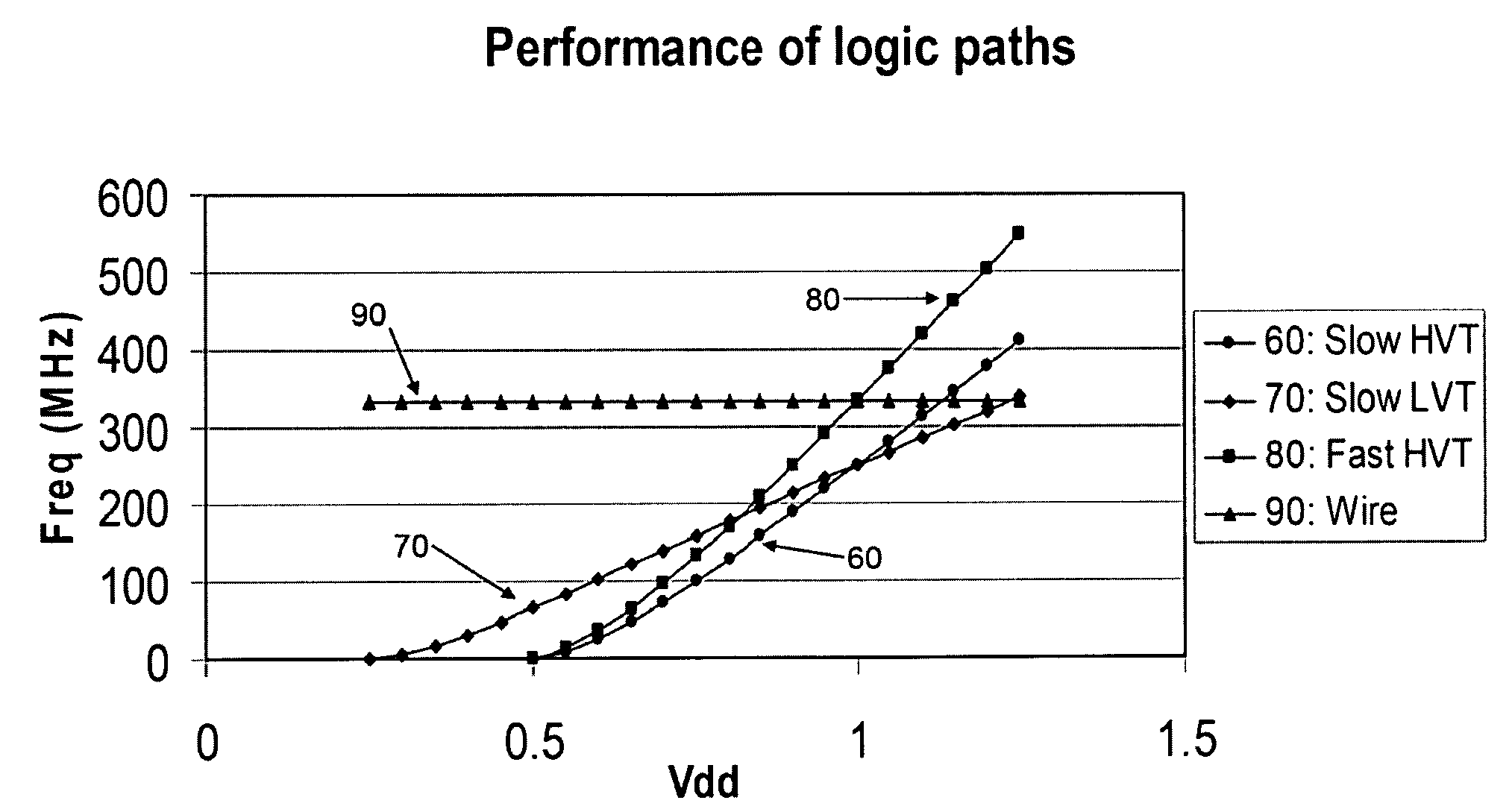
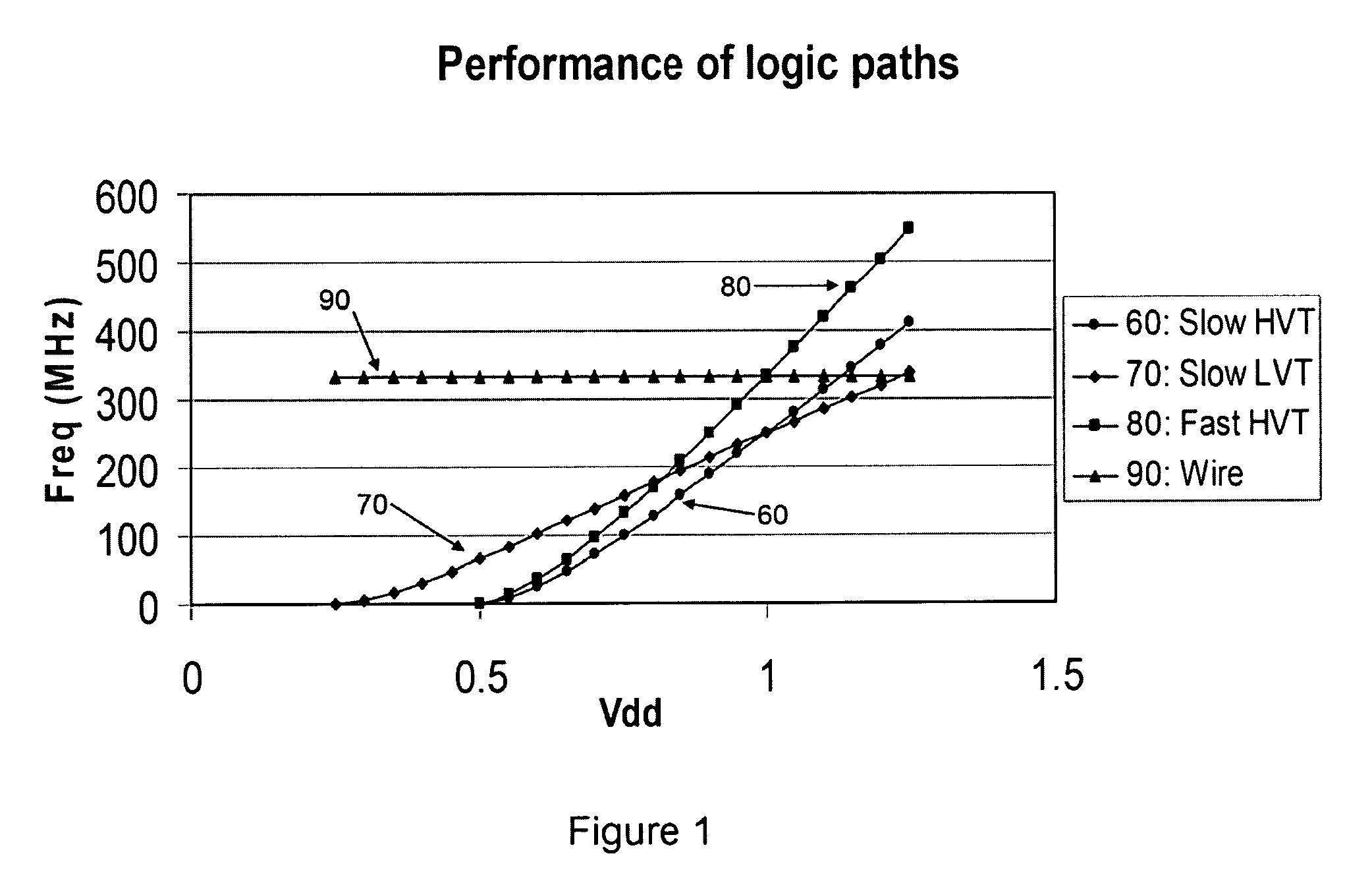
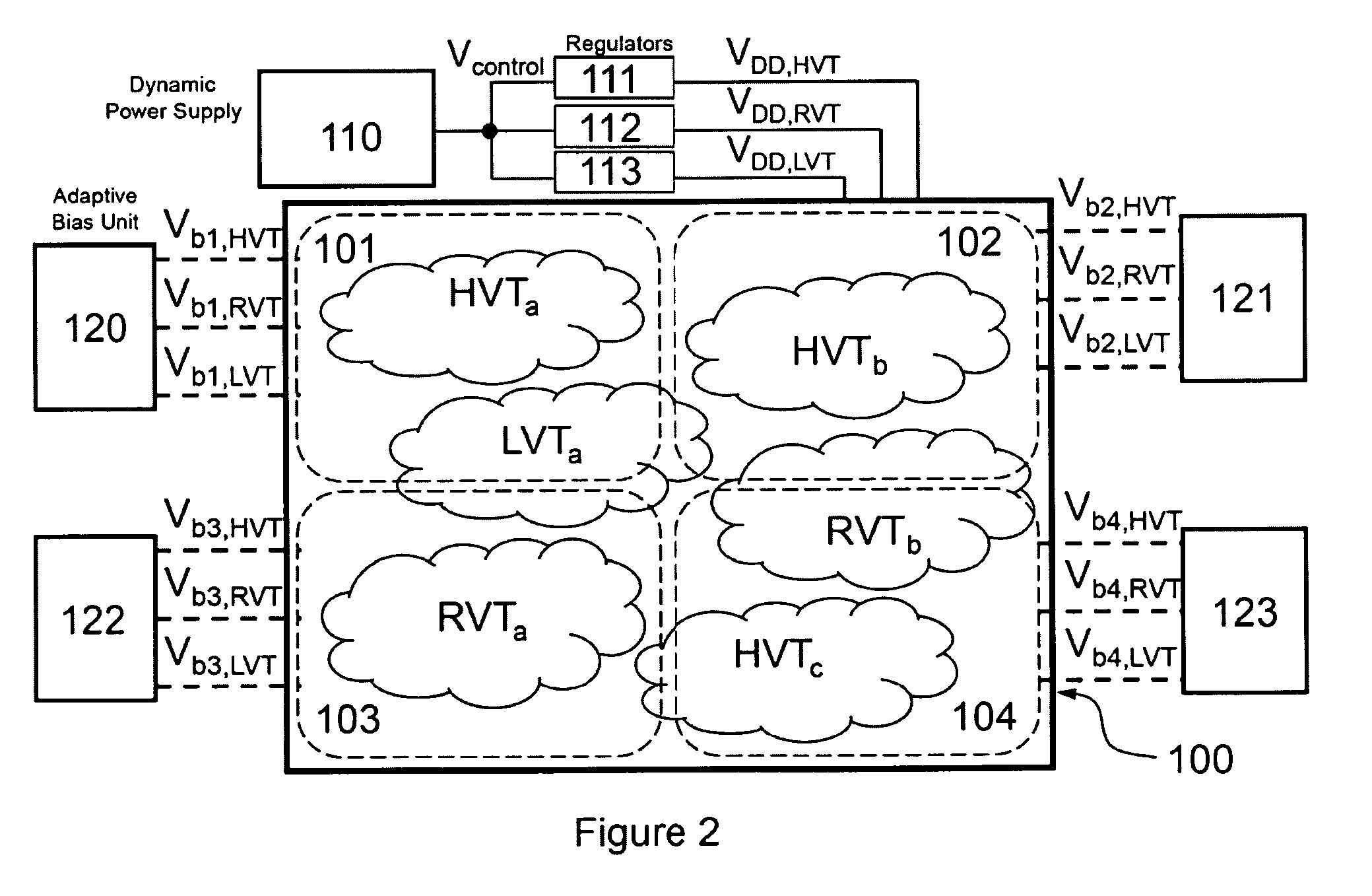
- The method involves grouping cells by their threshold voltage types and connecting them to separate supply voltages, with adaptive body bias and dynamic power supply adjustments to minimize delay variation and ensure correct functionality across varying conditions, using local voltage distribution networks and separate adaptive bias units for each region.

Material Selection Impact on Voltage Performance
The selection of electrolyte materials fundamentally determines the voltage performance characteristics of electrolyte gated devices. Ionic conductivity serves as the primary criterion, where materials with higher ionic mobility enable more efficient charge accumulation at lower operating voltages. Liquid electrolytes typically demonstrate superior ionic conductivity compared to solid-state alternatives, but introduce stability and leakage concerns that can compromise long-term voltage performance.
Electrochemical stability window represents another critical material parameter directly impacting voltage thresholds. Materials with wider stability windows allow for higher operating voltages without degradation, while narrow windows limit the achievable voltage range and may cause irreversible electrochemical reactions. Polymer electrolytes often provide balanced performance between ionic conductivity and electrochemical stability, making them attractive for applications requiring moderate voltage operation.
The dielectric constant of electrolyte materials significantly influences the electric field distribution and capacitive coupling efficiency. High dielectric constant materials enhance the electrostatic coupling between the gate electrode and the channel, reducing the voltage required for effective charge modulation. However, materials with excessively high dielectric constants may introduce unwanted parasitic effects that degrade device performance.
Interface compatibility between electrolyte and semiconductor materials plays a crucial role in voltage performance optimization. Poor interfacial properties can create additional voltage drops and increase threshold voltages beyond desired levels. Surface treatment and interface engineering become essential when selecting electrolyte materials to ensure optimal voltage transfer efficiency.
Temperature stability of electrolyte materials directly affects voltage performance consistency across operating conditions. Materials exhibiting strong temperature dependence in ionic conductivity or electrochemical properties may require compensation mechanisms or limit the operational temperature range. Solid polymer electrolytes generally offer better temperature stability compared to liquid electrolytes, though often at the cost of reduced ionic conductivity.
The concentration and mobility of charge carriers within the electrolyte material determine the speed and efficiency of voltage response. Higher carrier concentrations typically enable faster switching and lower threshold voltages, but may also increase leakage currents and power consumption. Optimizing carrier concentration requires careful balance between performance and power efficiency requirements for specific applications.
Electrochemical stability window represents another critical material parameter directly impacting voltage thresholds. Materials with wider stability windows allow for higher operating voltages without degradation, while narrow windows limit the achievable voltage range and may cause irreversible electrochemical reactions. Polymer electrolytes often provide balanced performance between ionic conductivity and electrochemical stability, making them attractive for applications requiring moderate voltage operation.
The dielectric constant of electrolyte materials significantly influences the electric field distribution and capacitive coupling efficiency. High dielectric constant materials enhance the electrostatic coupling between the gate electrode and the channel, reducing the voltage required for effective charge modulation. However, materials with excessively high dielectric constants may introduce unwanted parasitic effects that degrade device performance.
Interface compatibility between electrolyte and semiconductor materials plays a crucial role in voltage performance optimization. Poor interfacial properties can create additional voltage drops and increase threshold voltages beyond desired levels. Surface treatment and interface engineering become essential when selecting electrolyte materials to ensure optimal voltage transfer efficiency.
Temperature stability of electrolyte materials directly affects voltage performance consistency across operating conditions. Materials exhibiting strong temperature dependence in ionic conductivity or electrochemical properties may require compensation mechanisms or limit the operational temperature range. Solid polymer electrolytes generally offer better temperature stability compared to liquid electrolytes, though often at the cost of reduced ionic conductivity.
The concentration and mobility of charge carriers within the electrolyte material determine the speed and efficiency of voltage response. Higher carrier concentrations typically enable faster switching and lower threshold voltages, but may also increase leakage currents and power consumption. Optimizing carrier concentration requires careful balance between performance and power efficiency requirements for specific applications.
Device Reliability and Stability Considerations
Device reliability and stability represent critical performance metrics that directly influence the commercial viability and long-term deployment of electrolyte gated devices. The optimization of voltage thresholds must account for degradation mechanisms that can compromise device functionality over extended operational periods. Electrolyte-semiconductor interfaces are particularly susceptible to electrochemical reactions, ion migration, and material corrosion when subjected to inappropriate voltage ranges.
Threshold voltage drift constitutes a primary reliability concern in electrolyte gated systems. Prolonged exposure to high gate voltages can induce irreversible changes in the electrolyte composition and interfacial properties, leading to gradual shifts in device characteristics. This phenomenon is exacerbated by the presence of mobile ions within the electrolyte, which can accumulate at interfaces and create permanent charge distributions that alter the effective threshold voltage.
Temperature cycling and environmental stress significantly impact device stability, particularly when voltage thresholds are not properly optimized for varying operational conditions. Thermal expansion mismatches between electrolyte and semiconductor materials can create mechanical stress that affects electrical performance. Additionally, temperature-dependent ion mobility changes can cause threshold voltage variations that compromise device consistency across different operating environments.
Electrochemical stability windows define the safe operational voltage ranges for electrolyte gated devices. Operating beyond these limits can trigger unwanted redox reactions, gas evolution, or electrolyte decomposition, all of which degrade device performance and reduce operational lifetime. Proper threshold optimization requires careful consideration of these electrochemical constraints to ensure stable long-term operation.
Bias stress testing protocols have emerged as essential tools for evaluating device reliability under optimized voltage conditions. These tests reveal potential failure modes and help establish safe operating margins that balance performance requirements with longevity expectations. Understanding the relationship between threshold voltage settings and stress-induced degradation enables more robust device design and improved reliability predictions for practical applications.
Threshold voltage drift constitutes a primary reliability concern in electrolyte gated systems. Prolonged exposure to high gate voltages can induce irreversible changes in the electrolyte composition and interfacial properties, leading to gradual shifts in device characteristics. This phenomenon is exacerbated by the presence of mobile ions within the electrolyte, which can accumulate at interfaces and create permanent charge distributions that alter the effective threshold voltage.
Temperature cycling and environmental stress significantly impact device stability, particularly when voltage thresholds are not properly optimized for varying operational conditions. Thermal expansion mismatches between electrolyte and semiconductor materials can create mechanical stress that affects electrical performance. Additionally, temperature-dependent ion mobility changes can cause threshold voltage variations that compromise device consistency across different operating environments.
Electrochemical stability windows define the safe operational voltage ranges for electrolyte gated devices. Operating beyond these limits can trigger unwanted redox reactions, gas evolution, or electrolyte decomposition, all of which degrade device performance and reduce operational lifetime. Proper threshold optimization requires careful consideration of these electrochemical constraints to ensure stable long-term operation.
Bias stress testing protocols have emerged as essential tools for evaluating device reliability under optimized voltage conditions. These tests reveal potential failure modes and help establish safe operating margins that balance performance requirements with longevity expectations. Understanding the relationship between threshold voltage settings and stress-induced degradation enables more robust device design and improved reliability predictions for practical applications.
Unlock deeper insights with PatSnap Eureka Quick Research — get a full tech report to explore trends and direct your research. Try now!
Generate Your Research Report Instantly with AI Agent
Supercharge your innovation with PatSnap Eureka AI Agent Platform!