

How to Optimize Wire Feed Rate for Overhead Welding Position
JUL 17, 20268 MIN READ
Generate Your Research Report Instantly with AI Agent
Patsnap Eureka helps you evaluate technical feasibility & market potential.
Overhead Welding Wire Feed Optimization Background and Objectives
Overhead welding, classified as the 4G position in welding nomenclature, represents one of the most technically demanding welding orientations in modern fabrication processes. This position requires the welder to work beneath the joint, with molten metal deposited against gravitational forces. The inherent challenges of overhead welding have historically resulted in higher defect rates, reduced productivity, and increased safety concerns compared to flat or horizontal positions. Wire feed rate optimization emerges as a critical parameter directly influencing weld quality, penetration depth, bead geometry, and overall process stability in this challenging configuration.
The evolution of welding technology has progressed from manual electrode manipulation to semi-automated and fully automated systems, yet overhead welding continues to present unique obstacles. Excessive wire feed rates in overhead positions lead to molten pool instability, resulting in sagging, spatter generation, and incomplete fusion. Conversely, insufficient feed rates produce inadequate deposition, poor penetration, and potential lack of fusion defects. The narrow operational window for optimal wire feed rate in overhead welding necessitates precise control strategies that account for material properties, shielding gas composition, electrode extension, and travel speed interactions.
Current industrial demands for higher productivity, improved weld quality consistency, and reduced rework costs have intensified the need for systematic wire feed rate optimization methodologies. The primary objective of this technical investigation is to establish comprehensive guidelines and predictive models for determining optimal wire feed rates specific to overhead welding applications. This includes identifying the relationship between wire feed rate and critical output parameters such as weld bead profile, mechanical properties, and defect formation tendencies.
Secondary objectives encompass developing adaptive control strategies that can compensate for positional variations, evaluating the impact of different wire compositions and diameters on optimal feed rate ranges, and establishing quality assurance protocols for real-time monitoring. The ultimate goal is to provide actionable technical solutions that enhance overhead welding process reliability while maintaining economic viability across diverse industrial applications including shipbuilding, pipeline construction, and structural steel fabrication.
The evolution of welding technology has progressed from manual electrode manipulation to semi-automated and fully automated systems, yet overhead welding continues to present unique obstacles. Excessive wire feed rates in overhead positions lead to molten pool instability, resulting in sagging, spatter generation, and incomplete fusion. Conversely, insufficient feed rates produce inadequate deposition, poor penetration, and potential lack of fusion defects. The narrow operational window for optimal wire feed rate in overhead welding necessitates precise control strategies that account for material properties, shielding gas composition, electrode extension, and travel speed interactions.
Current industrial demands for higher productivity, improved weld quality consistency, and reduced rework costs have intensified the need for systematic wire feed rate optimization methodologies. The primary objective of this technical investigation is to establish comprehensive guidelines and predictive models for determining optimal wire feed rates specific to overhead welding applications. This includes identifying the relationship between wire feed rate and critical output parameters such as weld bead profile, mechanical properties, and defect formation tendencies.
Secondary objectives encompass developing adaptive control strategies that can compensate for positional variations, evaluating the impact of different wire compositions and diameters on optimal feed rate ranges, and establishing quality assurance protocols for real-time monitoring. The ultimate goal is to provide actionable technical solutions that enhance overhead welding process reliability while maintaining economic viability across diverse industrial applications including shipbuilding, pipeline construction, and structural steel fabrication.
Market Demand for Overhead Welding Solutions
The global welding industry is experiencing sustained growth driven by infrastructure development, shipbuilding expansion, and increasing demand for fabricated metal products across multiple sectors. Overhead welding, representing one of the most challenging welding positions, accounts for a substantial portion of structural steel construction, pipeline installation, and heavy equipment manufacturing operations. The complexity inherent in overhead welding creates persistent demand for technological solutions that enhance productivity, quality, and operator safety.
Manufacturing sectors including construction, oil and gas, automotive, and aerospace consistently require overhead welding capabilities for critical structural components. The construction industry particularly relies on overhead welding for building frameworks, bridge construction, and infrastructure projects where joint integrity directly impacts structural safety. Similarly, shipbuilding operations demand reliable overhead welding solutions for hull assembly and deck construction, where weld quality must meet stringent maritime standards.
Current market dynamics reveal growing pressure to reduce welding defects and rework costs associated with overhead position welding. Defects such as excessive spatter, poor penetration, and weld bead sagging significantly impact project timelines and material costs. Industries are actively seeking optimized welding parameters that minimize these issues while maintaining high deposition rates. The economic impact of welding inefficiencies has intensified focus on parameter optimization as a cost-reduction strategy.
The skilled welder shortage affecting developed economies further amplifies demand for welding solutions that reduce operator dependency and learning curves. Optimized wire feed rate parameters that accommodate varying skill levels enable broader workforce participation while maintaining quality standards. This demographic challenge drives investment in welding technologies that simplify overhead position welding through improved process control.
Emerging markets in Asia-Pacific and Middle Eastern regions are expanding their industrial infrastructure, creating substantial demand for efficient overhead welding solutions. These regions prioritize technologies that accelerate project completion while meeting international quality certifications. The convergence of infrastructure investment and quality requirements positions wire feed rate optimization as a critical enabler for market competitiveness and operational efficiency across diverse industrial applications.
Manufacturing sectors including construction, oil and gas, automotive, and aerospace consistently require overhead welding capabilities for critical structural components. The construction industry particularly relies on overhead welding for building frameworks, bridge construction, and infrastructure projects where joint integrity directly impacts structural safety. Similarly, shipbuilding operations demand reliable overhead welding solutions for hull assembly and deck construction, where weld quality must meet stringent maritime standards.
Current market dynamics reveal growing pressure to reduce welding defects and rework costs associated with overhead position welding. Defects such as excessive spatter, poor penetration, and weld bead sagging significantly impact project timelines and material costs. Industries are actively seeking optimized welding parameters that minimize these issues while maintaining high deposition rates. The economic impact of welding inefficiencies has intensified focus on parameter optimization as a cost-reduction strategy.
The skilled welder shortage affecting developed economies further amplifies demand for welding solutions that reduce operator dependency and learning curves. Optimized wire feed rate parameters that accommodate varying skill levels enable broader workforce participation while maintaining quality standards. This demographic challenge drives investment in welding technologies that simplify overhead position welding through improved process control.
Emerging markets in Asia-Pacific and Middle Eastern regions are expanding their industrial infrastructure, creating substantial demand for efficient overhead welding solutions. These regions prioritize technologies that accelerate project completion while meeting international quality certifications. The convergence of infrastructure investment and quality requirements positions wire feed rate optimization as a critical enabler for market competitiveness and operational efficiency across diverse industrial applications.
Current Challenges in Overhead Position Wire Feeding
Overhead welding position presents unique challenges in wire feeding that significantly impact weld quality and operational efficiency. The primary difficulty stems from gravity's adverse effect on molten metal behavior, where the weld pool tends to sag or drip downward, creating defects such as excessive spatter, incomplete fusion, and irregular bead formation. This gravitational force requires precise control of wire feed rate to maintain stable arc characteristics and prevent metal overflow.
The relationship between wire feed rate and heat input becomes critically sensitive in overhead applications. Excessive feed rates generate surplus molten metal that cannot be adequately supported by surface tension, leading to weld pool collapse and dangerous droplet formation. Conversely, insufficient feed rates result in inadequate deposition, causing burn-through and weak joint penetration. This narrow operational window demands sophisticated control mechanisms that current systems struggle to maintain consistently.
Equipment limitations further compound these challenges. Traditional wire feeding systems lack real-time adaptive capabilities to compensate for positional variations and environmental factors. Mechanical friction in the feeding mechanism increases when working overhead, causing inconsistent wire delivery speeds that disrupt arc stability. Cable routing configurations in overhead positions often create additional resistance, making it difficult to maintain uniform feeding pressure throughout the welding process.
Operator skill dependency represents another significant constraint. Manual adjustment of wire feed rates during overhead welding requires extensive experience and continuous attention, as operators must simultaneously manage torch angle, travel speed, and weaving patterns. This multitasking complexity increases fatigue and reduces productivity, particularly during extended overhead welding operations. The lack of standardized protocols for different material thicknesses and joint configurations further complicates the optimization process.
Material-specific considerations add another layer of complexity. Different base metals and filler materials exhibit varying fluidity characteristics in the molten state, requiring distinct wire feed rate parameters. Aluminum alloys, for instance, demand significantly different feeding strategies compared to carbon steel due to their lower surface tension and higher thermal conductivity. Current feeding systems often lack the flexibility to accommodate these material-specific requirements efficiently in overhead positions.
The relationship between wire feed rate and heat input becomes critically sensitive in overhead applications. Excessive feed rates generate surplus molten metal that cannot be adequately supported by surface tension, leading to weld pool collapse and dangerous droplet formation. Conversely, insufficient feed rates result in inadequate deposition, causing burn-through and weak joint penetration. This narrow operational window demands sophisticated control mechanisms that current systems struggle to maintain consistently.
Equipment limitations further compound these challenges. Traditional wire feeding systems lack real-time adaptive capabilities to compensate for positional variations and environmental factors. Mechanical friction in the feeding mechanism increases when working overhead, causing inconsistent wire delivery speeds that disrupt arc stability. Cable routing configurations in overhead positions often create additional resistance, making it difficult to maintain uniform feeding pressure throughout the welding process.
Operator skill dependency represents another significant constraint. Manual adjustment of wire feed rates during overhead welding requires extensive experience and continuous attention, as operators must simultaneously manage torch angle, travel speed, and weaving patterns. This multitasking complexity increases fatigue and reduces productivity, particularly during extended overhead welding operations. The lack of standardized protocols for different material thicknesses and joint configurations further complicates the optimization process.
Material-specific considerations add another layer of complexity. Different base metals and filler materials exhibit varying fluidity characteristics in the molten state, requiring distinct wire feed rate parameters. Aluminum alloys, for instance, demand significantly different feeding strategies compared to carbon steel due to their lower surface tension and higher thermal conductivity. Current feeding systems often lack the flexibility to accommodate these material-specific requirements efficiently in overhead positions.
Current Wire Feed Rate Control Solutions
01 Automatic wire feed rate control systems
Systems that automatically adjust and control the wire feed rate during welding processes based on various parameters such as arc voltage, current, and welding conditions. These systems use feedback mechanisms and sensors to maintain optimal wire feed rates, ensuring consistent weld quality and reducing operator intervention. The automatic control can be achieved through electronic controllers, servo motors, or adaptive algorithms that respond to real-time welding conditions.- Automatic wire feed rate control systems: Systems that automatically adjust and control the wire feed rate during welding processes based on various parameters such as arc voltage, current, and welding conditions. These systems use feedback mechanisms and sensors to maintain optimal wire feed rates, ensuring consistent weld quality and reducing operator intervention. The automatic control can respond to changes in real-time, compensating for variations in the welding process.
- Wire feed rate monitoring and measurement methods: Techniques and devices for monitoring and measuring wire feed rates during welding operations. These methods involve the use of sensors, encoders, and detection systems to accurately measure the speed at which wire is fed through the welding equipment. The monitoring systems can provide real-time data and alerts when feed rates deviate from preset parameters, enabling quality control and process optimization.
- Variable wire feed rate mechanisms: Mechanical systems and drive mechanisms that enable variable control of wire feed rates in welding equipment. These mechanisms typically include adjustable motors, gear systems, and drive rollers that can be modified to achieve different feed speeds. The variable control allows operators to adapt the wire feed rate to different materials, thicknesses, and welding techniques, providing flexibility in manufacturing processes.
- Wire feed rate synchronization with welding parameters: Methods for synchronizing wire feed rates with other welding parameters such as travel speed, arc length, and power output. This synchronization ensures optimal deposition rates and weld bead characteristics. The coordination between wire feed rate and other parameters helps prevent defects such as porosity, incomplete fusion, and excessive spatter, while maximizing productivity and material efficiency.
- Wire feed rate optimization for specific applications: Specialized techniques for optimizing wire feed rates for particular welding applications, materials, or joint configurations. These optimizations consider factors such as material composition, joint geometry, position, and desired mechanical properties. The optimization may involve predetermined feed rate schedules, adaptive algorithms, or empirically derived settings that enhance weld quality, reduce defects, and improve overall process efficiency for specific use cases.
02 Wire feed rate monitoring and measurement devices
Devices and methods for monitoring and measuring the actual wire feed rate during welding operations. These systems employ various sensing technologies including optical sensors, encoders, or mechanical measurement devices to accurately determine the speed at which wire is being fed. The measurement data can be used for quality control, process optimization, and feedback to control systems to ensure the wire feed rate matches the desired settings.Expand Specific Solutions03 Variable wire feed rate mechanisms
Mechanical systems and drive mechanisms that enable variable control of wire feed rates in welding equipment. These mechanisms typically include adjustable motor drives, gear systems, or roller assemblies that can be modified to change the speed of wire delivery. The variable rate capability allows operators to adapt to different welding applications, material thicknesses, and joint configurations by selecting appropriate feed speeds.Expand Specific Solutions04 Wire feed rate synchronization with welding parameters
Methods for synchronizing wire feed rate with other welding parameters such as travel speed, arc power, and shielding gas flow. This coordination ensures optimal deposition rates and weld bead characteristics. The synchronization can be achieved through integrated control systems that adjust multiple parameters simultaneously or through preset programs that maintain specific ratios between wire feed rate and other process variables.Expand Specific Solutions05 Wire feed rate optimization for specific applications
Techniques and methods for optimizing wire feed rates for specific welding applications, materials, or joint configurations. This includes determining ideal feed rates for different wire diameters, base metal types, welding positions, and desired penetration depths. Optimization may involve experimental testing, computational modeling, or database-driven selection systems that recommend appropriate feed rates based on application requirements.Expand Specific Solutions
Major Players in Welding Equipment Industry
The overhead welding wire feed rate optimization technology operates in a mature industrial market dominated by established equipment manufacturers and emerging research institutions. The competitive landscape is characterized by strong presence from major welding equipment producers including Illinois Tool Works Inc., Lincoln Global Inc., Fronius International GmbH, ESAB AB, and Daihen Corp., who collectively drive technological advancement through sophisticated automation and control systems. Diversified industrial conglomerates like Siemens AG and Kobe Steel Ltd. leverage their broader technological capabilities to enhance welding process optimization. The market demonstrates significant maturity with proven solutions, yet continues evolving through contributions from research organizations such as Fraunhofer-Gesellschaft and leading Chinese universities including Harbin Institute of Technology, Shanghai Jiao Tong University, and Tianjin University, which focus on advanced process modeling and adaptive control algorithms for challenging welding positions.
Illinois Tool Works Inc.
Technical Solution: ITW's welding division has engineered sophisticated wire feed optimization solutions for overhead welding through their Miller brand products. Their technology employs a dual-stage wire feed mechanism with independent drive rolls that maintain consistent wire delivery even under variable contact tip-to-work distance conditions common in overhead welding. The system utilizes predictive algorithms that pre-adjust wire feed rates based on joint configuration and welding position sensors, typically operating at 10-25% reduced speeds for overhead applications compared to horizontal welding. Their RMD (Regulated Metal Deposition) process specifically addresses overhead challenges by synchronizing wire feed rate with current pulsing patterns, achieving feed rates of 180-320 inches per minute while maintaining controlled metal transfer. The integrated monitoring system tracks wire feed motor current and arc voltage in real-time, implementing micro-adjustments every 50 milliseconds to compensate for gravitational effects on the weld pool and prevent wire stubbing or burnback issues.
Strengths: Highly responsive feedback control system with millisecond-level adjustment capability; comprehensive integration with various welding processes including MIG, flux-cored and metal-cored applications. Weaknesses: Complex system architecture may require specialized maintenance; optimal performance depends on proper initial setup and calibration.
Fronius International GmbH
Technical Solution: Fronius has developed their CMT (Cold Metal Transfer) technology with specific optimization parameters for overhead welding positions. The system features a digitally controlled wire feed mechanism that reverses wire movement during the short-circuit phase, significantly reducing heat input which is critical for overhead applications where gravity affects weld pool behavior. For overhead welding, their solution implements reduced wire feed rates ranging from 120-250 inches per minute with synchronized retraction movements that occur 70-90 times per second. The technology incorporates position-sensing capabilities that automatically detect overhead welding orientation and adjust wire feed characteristics accordingly, reducing feed speed by approximately 18-22% while increasing pulse frequency to maintain deposition rates. Their digital twin simulation software allows pre-optimization of wire feed parameters based on material type, thickness, and joint geometry before actual welding begins. The system's closed-loop control monitors arc length through voltage feedback and adjusts wire feed motor speed within 20-millisecond intervals to maintain optimal standoff distance.
Strengths: Exceptional low-heat input characteristics ideal for thin materials in overhead positions; highly precise digital control enabling consistent weld quality. Weaknesses: Premium pricing compared to conventional systems; CMT process may have slower travel speeds affecting productivity in some applications.
Key Patents in Overhead Welding Wire Feed
Welding process
PatentInactiveUS3906184A
Innovation
- The method involves automatically controlling welding current based on the actual wire feed rate, using a system that includes a tachometer to sense wire feed rate and generate a signal for a welding current control signal, preventing burnbacks and allowing for crater filling by gradually reducing electrode feed rate and current, especially suitable for constant current power sources.


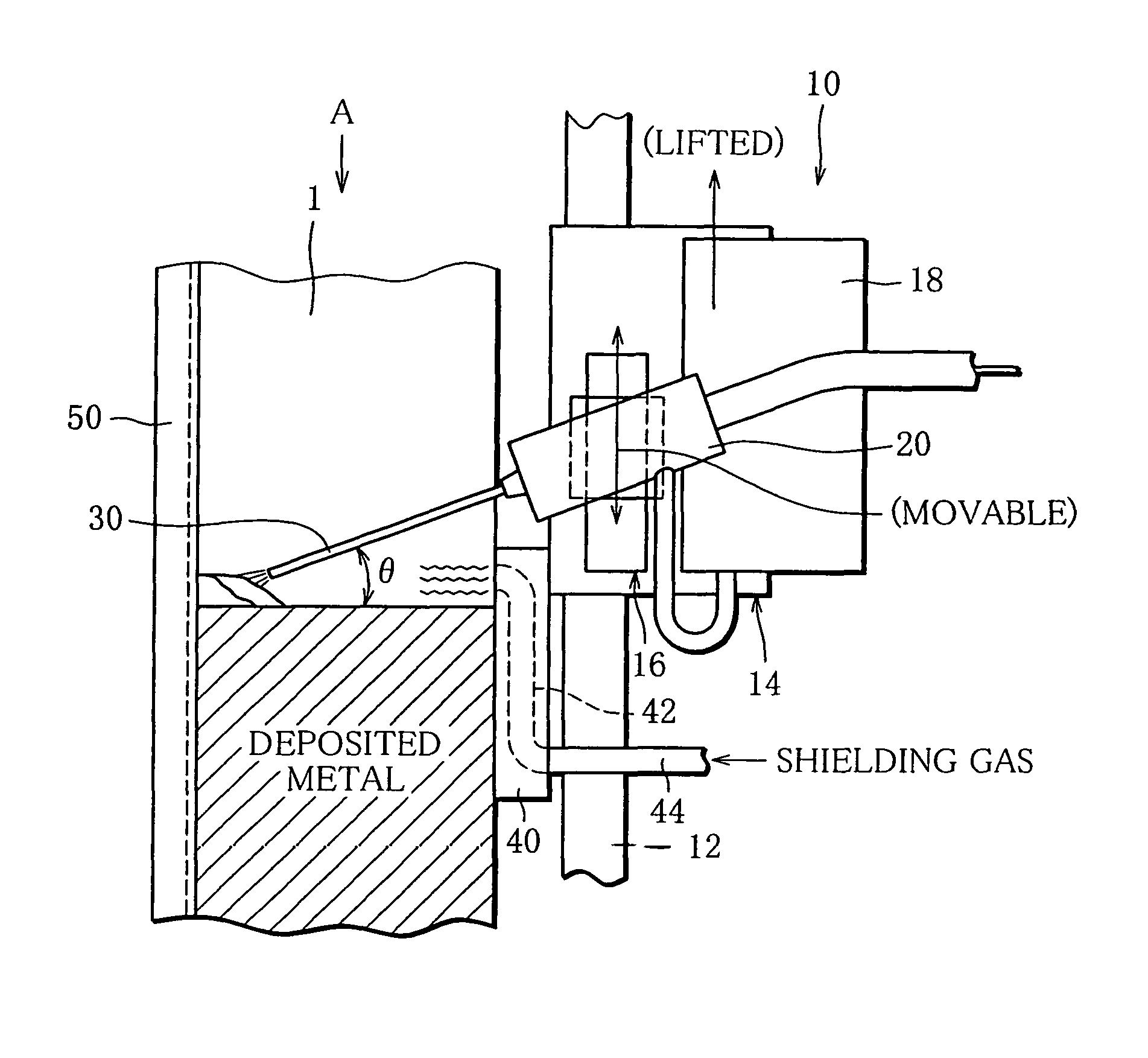
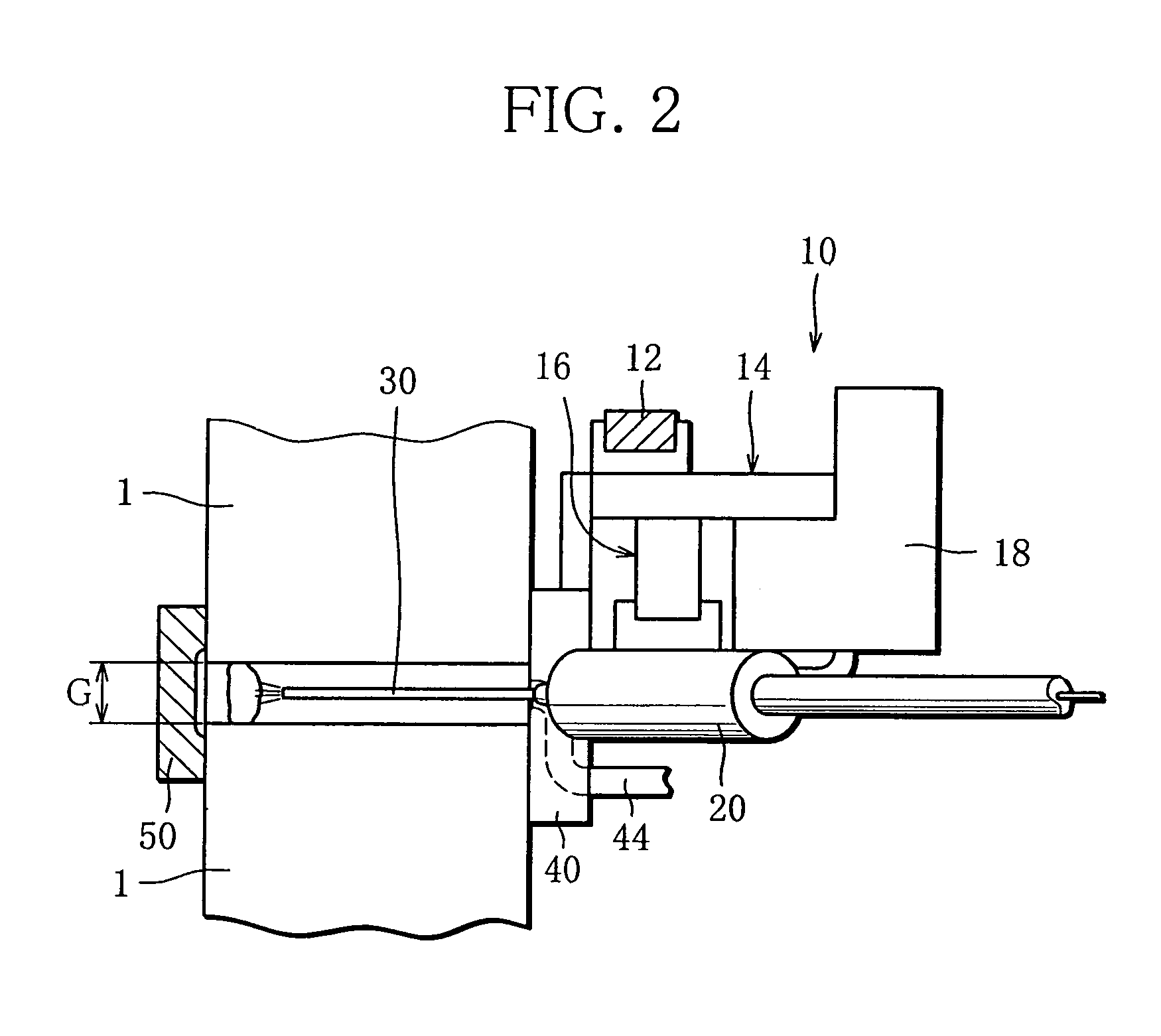
Vertical-position welding method
PatentInactiveUS8884190B2
Innovation
- A vertical-position welding method using an arc welding unit with constant voltage characteristics, where an I-groove is formed between steel plates, and the welding wire is inserted obliquely, allowing for up-and-down movement with varying wire feed rates to maintain a constant welding current, reducing heat input and preventing arc length fluctuations.

Welding Safety Standards and Regulations
Overhead welding operations present unique safety challenges that necessitate strict adherence to established standards and regulations. The American Welding Society (AWS) provides comprehensive guidelines through AWS D1.1 Structural Welding Code and AWS D3.6 Underwater Welding Code, which address position-specific welding requirements. These standards mandate proper equipment setup, including wire feed rate parameters that ensure both weld quality and operator safety. The Occupational Safety and Health Administration (OSHA) enforces regulations under 29 CFR 1910 Subpart Q, specifically addressing welding hazards associated with overhead positions, including requirements for protective equipment and workspace configuration.
International standards such as ISO 3834 and EN 1090 establish quality requirements for fusion welding of metallic materials, emphasizing the importance of controlled welding parameters in overhead applications. These regulations require documented procedures for wire feed rate optimization that account for gravitational effects and spatter control. Compliance with these standards is mandatory for industries including construction, shipbuilding, and pressure vessel fabrication, where overhead welding is frequently performed.
Personal protective equipment requirements are particularly stringent for overhead welding operations. Standards mandate flame-resistant clothing, specialized helmets with appropriate shade ratings, and respiratory protection to guard against fume exposure in confined overhead spaces. The wire feed rate directly impacts spatter generation and fume production, making its optimization a regulatory concern rather than merely a technical consideration.
Documentation and traceability requirements under ISO 9001 and industry-specific standards necessitate recording of welding parameters, including wire feed rates used in overhead positions. Welding procedure specifications must be qualified through testing that demonstrates compliance with mechanical property requirements while maintaining safe operating conditions. Regular equipment calibration and maintenance protocols are mandated to ensure consistent wire feed delivery, preventing safety incidents caused by parameter deviation.
Training and certification requirements under AWS QC1 and equivalent international standards require welders to demonstrate proficiency in overhead position welding with optimized parameters. Regulatory frameworks increasingly emphasize the relationship between proper parameter selection, including wire feed rate, and overall workplace safety outcomes.
International standards such as ISO 3834 and EN 1090 establish quality requirements for fusion welding of metallic materials, emphasizing the importance of controlled welding parameters in overhead applications. These regulations require documented procedures for wire feed rate optimization that account for gravitational effects and spatter control. Compliance with these standards is mandatory for industries including construction, shipbuilding, and pressure vessel fabrication, where overhead welding is frequently performed.
Personal protective equipment requirements are particularly stringent for overhead welding operations. Standards mandate flame-resistant clothing, specialized helmets with appropriate shade ratings, and respiratory protection to guard against fume exposure in confined overhead spaces. The wire feed rate directly impacts spatter generation and fume production, making its optimization a regulatory concern rather than merely a technical consideration.
Documentation and traceability requirements under ISO 9001 and industry-specific standards necessitate recording of welding parameters, including wire feed rates used in overhead positions. Welding procedure specifications must be qualified through testing that demonstrates compliance with mechanical property requirements while maintaining safe operating conditions. Regular equipment calibration and maintenance protocols are mandated to ensure consistent wire feed delivery, preventing safety incidents caused by parameter deviation.
Training and certification requirements under AWS QC1 and equivalent international standards require welders to demonstrate proficiency in overhead position welding with optimized parameters. Regulatory frameworks increasingly emphasize the relationship between proper parameter selection, including wire feed rate, and overall workplace safety outcomes.
Gravity Compensation Mechanisms for Overhead Welding
Gravity compensation mechanisms represent a critical technological approach to addressing the inherent challenges of overhead welding positions. When welding in overhead configurations, gravitational forces act directly against the molten weld pool and wire feed direction, creating significant process instabilities. The molten metal tends to sag or drip downward, while the wire feed system must overcome gravitational resistance to maintain consistent material deposition. These physical constraints necessitate specialized compensation strategies that can dynamically adjust wire feed parameters to counteract gravity's adverse effects.
The fundamental principle behind gravity compensation involves real-time adjustment of wire feed rates based on torch orientation and position. Advanced systems employ multi-axis sensors and accelerometers to detect the precise welding angle, enabling automated calculation of gravitational force vectors acting on the wire and weld pool. This positional data feeds into control algorithms that modify wire feed speed, typically increasing rates by 15-25% for overhead positions compared to flat welding. The compensation mechanism must account for both the wire's mechanical resistance and the altered metal transfer characteristics under gravitational stress.
Modern gravity compensation systems integrate with adaptive control architectures that monitor arc voltage, current fluctuations, and wire extension length. These parameters serve as feedback signals to fine-tune compensation levels continuously throughout the welding process. Some implementations utilize predictive models based on material properties, wire diameter, and shielding gas composition to pre-calculate optimal compensation factors. The most sophisticated approaches combine feedforward control with closed-loop feedback, enabling rapid response to disturbances while maintaining stable arc conditions.
Mechanical compensation methods complement electronic control strategies through specialized wire feeding mechanisms. Spring-loaded tensioners and variable-friction guides help maintain consistent wire delivery pressure regardless of gravitational orientation. Certain systems employ dual-motor configurations where secondary actuators provide additional pushing force specifically activated during overhead operations. These hybrid mechanical-electronic solutions demonstrate superior performance in maintaining wire feed stability across varying welding positions, particularly during transitions between different spatial orientations where gravitational effects change dynamically.
The fundamental principle behind gravity compensation involves real-time adjustment of wire feed rates based on torch orientation and position. Advanced systems employ multi-axis sensors and accelerometers to detect the precise welding angle, enabling automated calculation of gravitational force vectors acting on the wire and weld pool. This positional data feeds into control algorithms that modify wire feed speed, typically increasing rates by 15-25% for overhead positions compared to flat welding. The compensation mechanism must account for both the wire's mechanical resistance and the altered metal transfer characteristics under gravitational stress.
Modern gravity compensation systems integrate with adaptive control architectures that monitor arc voltage, current fluctuations, and wire extension length. These parameters serve as feedback signals to fine-tune compensation levels continuously throughout the welding process. Some implementations utilize predictive models based on material properties, wire diameter, and shielding gas composition to pre-calculate optimal compensation factors. The most sophisticated approaches combine feedforward control with closed-loop feedback, enabling rapid response to disturbances while maintaining stable arc conditions.
Mechanical compensation methods complement electronic control strategies through specialized wire feeding mechanisms. Spring-loaded tensioners and variable-friction guides help maintain consistent wire delivery pressure regardless of gravitational orientation. Certain systems employ dual-motor configurations where secondary actuators provide additional pushing force specifically activated during overhead operations. These hybrid mechanical-electronic solutions demonstrate superior performance in maintaining wire feed stability across varying welding positions, particularly during transitions between different spatial orientations where gravitational effects change dynamically.
Unlock deeper insights with Patsnap Eureka Quick Research — get a full tech report to explore trends and direct your research. Try now!
Generate Your Research Report Instantly with AI Agent
Supercharge your innovation with Patsnap Eureka AI Agent Platform!