

How to Quantify Battery Failure Prediction in Management Systems
MAR 20, 20269 MIN READ
Generate Your Research Report Instantly with AI Agent
PatSnap Eureka helps you evaluate technical feasibility & market potential.
Battery Failure Prediction Technology Background and Objectives
Battery failure prediction technology has emerged as a critical component in modern energy storage systems, driven by the exponential growth of electric vehicles, renewable energy storage, and portable electronic devices. The increasing reliance on lithium-ion batteries across various industries has highlighted the urgent need for accurate failure prediction mechanisms to prevent catastrophic failures, optimize performance, and extend operational lifespan.
The evolution of battery management systems has progressed from basic voltage and temperature monitoring to sophisticated predictive analytics incorporating machine learning algorithms and advanced signal processing techniques. Early systems focused primarily on state-of-charge estimation and thermal management, but contemporary approaches emphasize prognostics and health management through comprehensive data analysis and pattern recognition.
Current technological development trends indicate a shift toward multi-modal sensing approaches that combine electrochemical impedance spectroscopy, thermal imaging, acoustic emission monitoring, and electrochemical parameter analysis. These integrated methodologies enable more comprehensive battery health assessment by capturing diverse failure mechanisms including capacity fade, power fade, thermal runaway precursors, and mechanical degradation indicators.
The primary objective of quantifying battery failure prediction involves developing robust mathematical models and algorithms capable of accurately estimating remaining useful life, predicting failure modes, and providing early warning systems for potential safety hazards. This requires establishing standardized metrics for failure quantification, including confidence intervals, prediction accuracy measures, and time-to-failure estimations.
Advanced objectives encompass the integration of physics-based models with data-driven approaches to create hybrid prediction frameworks that can adapt to various battery chemistries, operating conditions, and application scenarios. The technology aims to achieve real-time processing capabilities while maintaining high prediction accuracy across diverse environmental conditions and usage patterns.
The ultimate goal involves creating autonomous battery management systems capable of self-diagnosis, predictive maintenance scheduling, and adaptive control strategies that can dynamically adjust operating parameters to maximize battery lifespan while ensuring safety and performance requirements are consistently met throughout the operational lifecycle.
The evolution of battery management systems has progressed from basic voltage and temperature monitoring to sophisticated predictive analytics incorporating machine learning algorithms and advanced signal processing techniques. Early systems focused primarily on state-of-charge estimation and thermal management, but contemporary approaches emphasize prognostics and health management through comprehensive data analysis and pattern recognition.
Current technological development trends indicate a shift toward multi-modal sensing approaches that combine electrochemical impedance spectroscopy, thermal imaging, acoustic emission monitoring, and electrochemical parameter analysis. These integrated methodologies enable more comprehensive battery health assessment by capturing diverse failure mechanisms including capacity fade, power fade, thermal runaway precursors, and mechanical degradation indicators.
The primary objective of quantifying battery failure prediction involves developing robust mathematical models and algorithms capable of accurately estimating remaining useful life, predicting failure modes, and providing early warning systems for potential safety hazards. This requires establishing standardized metrics for failure quantification, including confidence intervals, prediction accuracy measures, and time-to-failure estimations.
Advanced objectives encompass the integration of physics-based models with data-driven approaches to create hybrid prediction frameworks that can adapt to various battery chemistries, operating conditions, and application scenarios. The technology aims to achieve real-time processing capabilities while maintaining high prediction accuracy across diverse environmental conditions and usage patterns.
The ultimate goal involves creating autonomous battery management systems capable of self-diagnosis, predictive maintenance scheduling, and adaptive control strategies that can dynamically adjust operating parameters to maximize battery lifespan while ensuring safety and performance requirements are consistently met throughout the operational lifecycle.
Market Demand for Battery Management System Failure Prediction
The global battery management system market is experiencing unprecedented growth driven by the rapid expansion of electric vehicles, energy storage systems, and portable electronics. This surge has created substantial demand for advanced failure prediction capabilities within battery management systems, as stakeholders increasingly recognize that battery failures can result in significant safety hazards, operational disruptions, and financial losses.
Electric vehicle manufacturers represent the largest segment driving demand for sophisticated battery failure prediction technologies. Automotive companies are under intense pressure to deliver reliable, long-lasting battery systems that can maintain performance throughout vehicle lifecycles. The need for quantifiable failure prediction has become critical as manufacturers seek to optimize warranty strategies, reduce recall risks, and enhance consumer confidence in electric vehicle reliability.
Energy storage system operators constitute another major market segment with growing requirements for predictive battery management capabilities. Grid-scale storage facilities, residential solar installations, and commercial energy storage systems all depend on accurate failure prediction to maintain operational continuity and prevent costly system downtime. These applications particularly value quantitative prediction models that can provide specific timeframes and probability assessments for potential battery failures.
The consumer electronics industry continues to drive demand for miniaturized yet intelligent battery management solutions. Smartphone manufacturers, laptop producers, and wearable device companies increasingly require battery management systems capable of predicting failures before they impact user experience. This market segment emphasizes real-time monitoring and prediction capabilities that can extend device lifespan while maintaining optimal performance.
Industrial applications across manufacturing, telecommunications, and healthcare sectors are emerging as significant demand drivers for battery failure prediction technologies. These sectors require highly reliable backup power systems where unexpected battery failures can result in production losses, communication disruptions, or critical system failures. The quantitative nature of failure prediction becomes essential for maintenance scheduling and risk management in these mission-critical applications.
Market demand is further amplified by regulatory pressures and safety standards that increasingly require demonstrable battery monitoring and failure prevention capabilities. Insurance companies and regulatory bodies are beginning to mandate specific levels of battery management sophistication, particularly in applications where failures could pose safety risks or environmental hazards.
Electric vehicle manufacturers represent the largest segment driving demand for sophisticated battery failure prediction technologies. Automotive companies are under intense pressure to deliver reliable, long-lasting battery systems that can maintain performance throughout vehicle lifecycles. The need for quantifiable failure prediction has become critical as manufacturers seek to optimize warranty strategies, reduce recall risks, and enhance consumer confidence in electric vehicle reliability.
Energy storage system operators constitute another major market segment with growing requirements for predictive battery management capabilities. Grid-scale storage facilities, residential solar installations, and commercial energy storage systems all depend on accurate failure prediction to maintain operational continuity and prevent costly system downtime. These applications particularly value quantitative prediction models that can provide specific timeframes and probability assessments for potential battery failures.
The consumer electronics industry continues to drive demand for miniaturized yet intelligent battery management solutions. Smartphone manufacturers, laptop producers, and wearable device companies increasingly require battery management systems capable of predicting failures before they impact user experience. This market segment emphasizes real-time monitoring and prediction capabilities that can extend device lifespan while maintaining optimal performance.
Industrial applications across manufacturing, telecommunications, and healthcare sectors are emerging as significant demand drivers for battery failure prediction technologies. These sectors require highly reliable backup power systems where unexpected battery failures can result in production losses, communication disruptions, or critical system failures. The quantitative nature of failure prediction becomes essential for maintenance scheduling and risk management in these mission-critical applications.
Market demand is further amplified by regulatory pressures and safety standards that increasingly require demonstrable battery monitoring and failure prevention capabilities. Insurance companies and regulatory bodies are beginning to mandate specific levels of battery management sophistication, particularly in applications where failures could pose safety risks or environmental hazards.
Current State and Challenges in Battery Failure Quantification
Battery failure quantification in management systems currently operates through multiple technological approaches, each with distinct capabilities and limitations. State-of-health (SOH) estimation represents the most widely adopted methodology, utilizing electrochemical impedance spectroscopy, coulomb counting, and voltage-based algorithms to assess battery degradation. However, these methods often struggle with accuracy under dynamic operating conditions and varying environmental factors.
Machine learning approaches have gained significant traction in recent years, employing neural networks, support vector machines, and ensemble methods to predict battery failure patterns. While these techniques demonstrate improved accuracy in controlled environments, they face substantial challenges in real-world applications due to data quality issues and the need for extensive training datasets. The black-box nature of many ML models also creates difficulties in understanding failure mechanisms.
Model-based approaches utilizing equivalent circuit models and electrochemical models provide theoretical foundations for failure prediction. These methods offer interpretability and physical meaning but are computationally intensive and require precise parameter identification. The complexity increases significantly when accounting for aging mechanisms, temperature variations, and usage patterns across different battery chemistries.
Current quantification methods face several critical challenges that limit their practical implementation. Data availability and quality remain primary obstacles, as battery management systems often lack comprehensive historical data or suffer from sensor drift and measurement uncertainties. The heterogeneous nature of battery degradation, where individual cells within a pack may exhibit different aging characteristics, complicates system-level failure prediction.
Standardization issues present another significant barrier, as different manufacturers employ varying metrics and methodologies for failure quantification. The absence of universally accepted benchmarks makes it difficult to compare and validate different approaches across platforms and applications.
Real-time processing constraints in embedded battery management systems limit the complexity of algorithms that can be implemented. Many sophisticated prediction models require computational resources that exceed the capabilities of typical BMS hardware, forcing compromises between accuracy and practicality.
Temperature dependency and environmental factors significantly impact prediction accuracy, as most current methods struggle to maintain consistent performance across wide operating ranges. The interaction between multiple degradation mechanisms, including calendar aging, cycle aging, and abuse conditions, creates complex failure patterns that are difficult to quantify accurately.
Uncertainty quantification remains an underdeveloped area, with most current approaches providing point estimates rather than confidence intervals or probability distributions for failure predictions. This limitation reduces the practical utility of predictions for maintenance planning and risk assessment applications.
Machine learning approaches have gained significant traction in recent years, employing neural networks, support vector machines, and ensemble methods to predict battery failure patterns. While these techniques demonstrate improved accuracy in controlled environments, they face substantial challenges in real-world applications due to data quality issues and the need for extensive training datasets. The black-box nature of many ML models also creates difficulties in understanding failure mechanisms.
Model-based approaches utilizing equivalent circuit models and electrochemical models provide theoretical foundations for failure prediction. These methods offer interpretability and physical meaning but are computationally intensive and require precise parameter identification. The complexity increases significantly when accounting for aging mechanisms, temperature variations, and usage patterns across different battery chemistries.
Current quantification methods face several critical challenges that limit their practical implementation. Data availability and quality remain primary obstacles, as battery management systems often lack comprehensive historical data or suffer from sensor drift and measurement uncertainties. The heterogeneous nature of battery degradation, where individual cells within a pack may exhibit different aging characteristics, complicates system-level failure prediction.
Standardization issues present another significant barrier, as different manufacturers employ varying metrics and methodologies for failure quantification. The absence of universally accepted benchmarks makes it difficult to compare and validate different approaches across platforms and applications.
Real-time processing constraints in embedded battery management systems limit the complexity of algorithms that can be implemented. Many sophisticated prediction models require computational resources that exceed the capabilities of typical BMS hardware, forcing compromises between accuracy and practicality.
Temperature dependency and environmental factors significantly impact prediction accuracy, as most current methods struggle to maintain consistent performance across wide operating ranges. The interaction between multiple degradation mechanisms, including calendar aging, cycle aging, and abuse conditions, creates complex failure patterns that are difficult to quantify accurately.
Uncertainty quantification remains an underdeveloped area, with most current approaches providing point estimates rather than confidence intervals or probability distributions for failure predictions. This limitation reduces the practical utility of predictions for maintenance planning and risk assessment applications.
Current Quantification Solutions for Battery Failure Prediction
01 Machine learning and AI-based prediction models for battery failure
Advanced machine learning algorithms and artificial intelligence techniques are employed to predict battery management system failures. These methods analyze historical data, operational patterns, and battery performance metrics to identify potential failure modes before they occur. Neural networks, deep learning models, and predictive analytics are utilized to quantify the probability of system failures and provide early warning indicators.- Machine learning and AI-based prediction models for battery failure: Advanced machine learning algorithms and artificial intelligence techniques are employed to predict battery management system failures. These methods analyze historical data, operational patterns, and battery performance metrics to identify potential failure modes before they occur. Neural networks, deep learning models, and predictive analytics are utilized to quantify the probability of system failures and provide early warning indicators.
- State of health (SOH) and state of charge (SOC) monitoring for failure prediction: Battery management systems incorporate sophisticated monitoring techniques to track state of health and state of charge parameters as key indicators for failure prediction. These systems continuously measure battery degradation, capacity fade, and charging characteristics to quantify the likelihood of system failures. Real-time data collection and analysis enable accurate prediction of battery lifespan and potential failure points.
- Thermal management and temperature-based failure quantification: Temperature monitoring and thermal management play a critical role in predicting battery system failures. Systems measure thermal patterns, heat distribution, and temperature anomalies to quantify failure risks. Thermal runaway detection, overheating prediction, and temperature-based degradation models are implemented to assess the probability of catastrophic failures and provide quantitative risk assessments.
- Impedance spectroscopy and electrochemical analysis for failure detection: Electrochemical impedance spectroscopy and related analytical techniques are used to quantify battery degradation and predict system failures. These methods measure internal resistance changes, impedance variations, and electrochemical characteristics to identify early signs of battery deterioration. Quantitative metrics derived from impedance data enable precise failure prediction and remaining useful life estimation.
- Data-driven diagnostic systems with fault classification and quantification: Comprehensive diagnostic systems utilize data-driven approaches to classify and quantify various failure modes in battery management systems. These systems integrate multiple sensor inputs, perform fault detection algorithms, and provide quantitative assessments of failure severity and probability. Statistical analysis, pattern recognition, and anomaly detection techniques are combined to create robust failure prediction frameworks with measurable confidence levels.
02 State of health (SOH) and state of charge (SOC) monitoring for failure prediction
Battery management systems incorporate sophisticated monitoring techniques to track state of health and state of charge parameters. These measurements serve as key indicators for predicting potential failures by identifying degradation patterns and anomalies in battery performance. Continuous monitoring of voltage, current, temperature, and impedance enables quantitative assessment of failure risks and remaining useful life estimation.Expand Specific Solutions03 Thermal management and temperature-based failure prediction
Temperature monitoring and thermal management play critical roles in predicting battery system failures. Thermal sensors and modeling techniques are used to detect abnormal heat generation patterns that may indicate impending failures. Quantification methods assess thermal runaway risks, overheating conditions, and temperature distribution anomalies to provide failure probability metrics.Expand Specific Solutions04 Impedance spectroscopy and electrochemical analysis for failure quantification
Electrochemical impedance spectroscopy and related analytical techniques are utilized to quantify battery degradation and predict failures. These methods measure internal resistance changes, capacity fade, and electrochemical behavior to assess battery health. Quantitative metrics derived from impedance measurements enable precise failure prediction and remaining useful life calculations.Expand Specific Solutions05 Diagnostic algorithms and fault detection systems
Comprehensive diagnostic algorithms are implemented to detect and quantify various failure modes in battery management systems. These systems employ fault detection logic, anomaly detection techniques, and statistical analysis to identify deviations from normal operation. Quantification methods assign probability scores to different failure scenarios, enabling proactive maintenance and risk mitigation strategies.Expand Specific Solutions
Key Players in Battery Management and Predictive Analytics
The battery failure prediction quantification market represents a rapidly evolving sector within the broader battery management systems landscape, currently in its growth phase with significant technological advancement opportunities. The market encompasses diverse players ranging from established automotive giants like Samsung SDI, LG Energy Solution, and Contemporary Amperex Technology leading in battery manufacturing, to technology innovators such as IBM, Apple, and Bosch driving predictive analytics solutions. Traditional automotive manufacturers including Hyundai, Kia, and component specialists like DENSO are integrating these systems into vehicle platforms. The technology maturity varies significantly across segments, with basic monitoring systems reaching commercial deployment while advanced AI-driven predictive algorithms remain in development phases. Research institutions like University of Michigan and Xi'an Jiaotong University contribute foundational research, while companies like Zebra Technologies and Honeywell provide industrial implementation expertise, creating a competitive ecosystem spanning hardware, software, and integrated solutions.
Robert Bosch GmbH
Technical Solution: Bosch has developed a comprehensive battery failure prediction framework based on their Battery in the Cloud technology, which combines edge computing with centralized analytics. Their quantification methodology employs Kalman filtering techniques for state estimation and uses support vector machines for anomaly detection. The system continuously monitors key performance indicators including capacity retention, power fade, and impedance growth to build probabilistic failure models. Bosch's approach integrates physics-based models with data-driven machine learning algorithms, enabling accurate prediction of battery degradation trajectories. Their solution provides quantified confidence intervals for failure predictions and supports multiple battery chemistries through adaptive parameterization, making it suitable for diverse automotive and industrial applications with prediction horizons extending up to 2 years.
Strengths: Strong automotive industry partnerships, robust edge-cloud hybrid architecture, excellent integration with existing vehicle systems. Weaknesses: Higher initial implementation costs, requires significant historical data for optimal performance.
LG Energy Solution Ltd.
Technical Solution: LG Energy Solution has developed advanced battery management systems incorporating machine learning algorithms for state-of-health (SOH) estimation and remaining useful life (RUL) prediction. Their approach combines electrochemical impedance spectroscopy (EIS) data with thermal modeling to quantify battery degradation patterns. The system utilizes real-time voltage, current, and temperature measurements to build predictive models that can forecast battery failure with up to 95% accuracy. Their BMS architecture includes cloud connectivity for fleet-level analytics and implements adaptive algorithms that continuously refine failure prediction models based on operational data from millions of battery cells deployed across various applications including electric vehicles and energy storage systems.
Strengths: Extensive real-world data from deployed battery systems, strong integration with automotive OEMs, proven scalability across different battery chemistries. Weaknesses: High computational requirements for complex algorithms, dependency on cloud connectivity for advanced features.
Core Technologies in Battery State Estimation and Prognostics
Systems, methods and circuits for determining potential battery failure based on a rate of change of internal impedance
PatentActiveUS7856328B2
Innovation
- The implementation of a battery monitoring system that includes an embedded processor and a computer-readable medium to measure characteristics such as voltage, current, and temperature, calculate the rate of change of internal impedance, and determine potential failure conditions by comparing this rate against threshold values, allowing for early detection and disconnection of the battery before a catastrophic event.


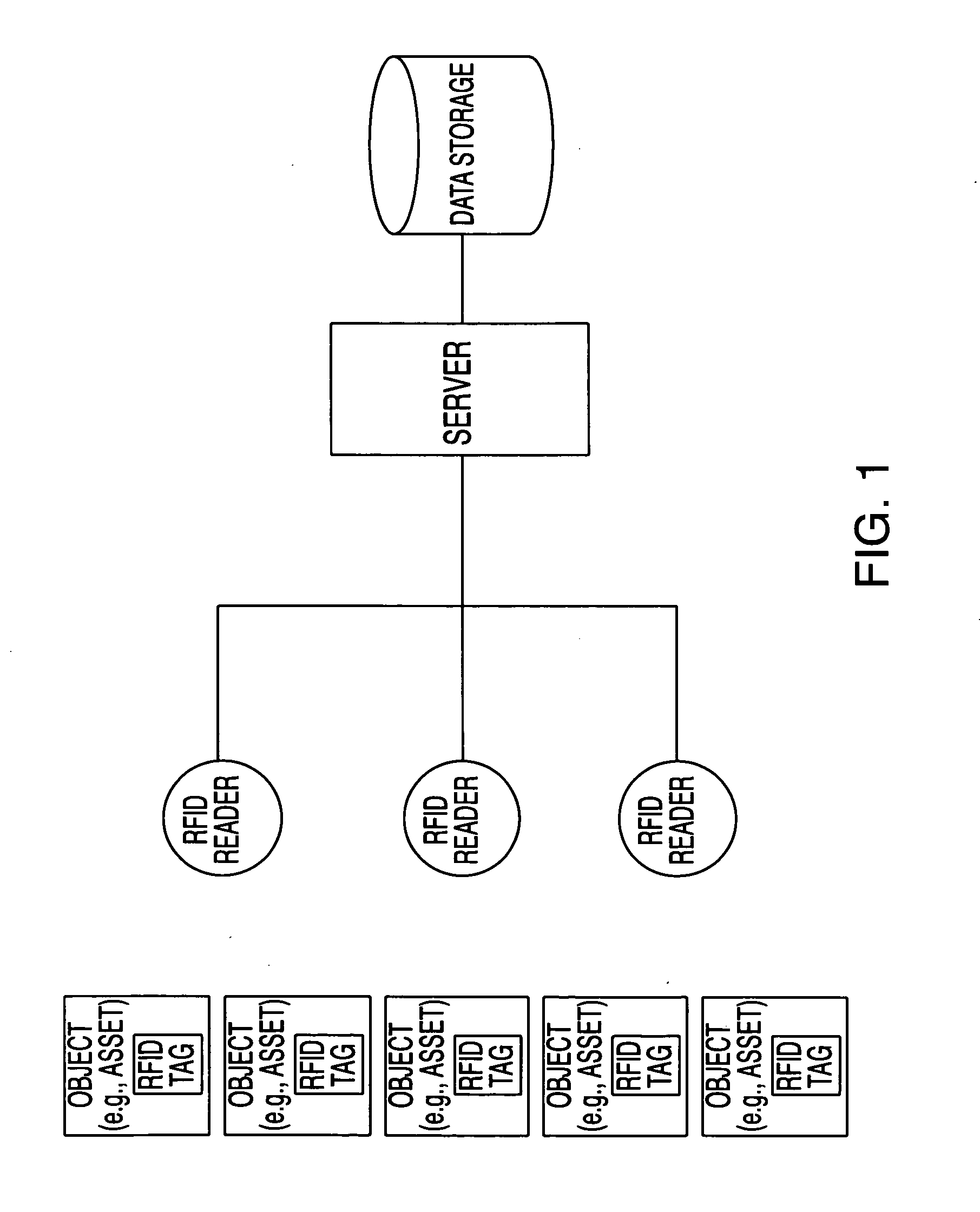
Battery management system with predictive failure analysis
PatentInactiveUS20060284619A1
Innovation
- A comprehensive system using Mega-Tags, battery testing devices, and web-based software for predictive battery failure analysis, which estimates the useful life of batteries by measuring impedance, conductance, or resistance, and applying statistical analysis to project future health based on monthly factors derived from previous tests, enabling accurate end-of-life prediction and proactive replacement planning.
Safety Standards and Regulations for Battery Management Systems
The regulatory landscape for battery management systems has evolved significantly to address the critical need for quantifying battery failure prediction capabilities. International standards such as IEC 62619 and UL 1973 establish fundamental safety requirements for lithium-ion battery systems, mandating specific monitoring and diagnostic functions that directly support failure prediction methodologies. These standards require BMS implementations to incorporate real-time parameter monitoring, fault detection algorithms, and predictive analytics capabilities.
ISO 26262 functional safety standard plays a pivotal role in automotive applications, defining safety integrity levels (ASIL) that dictate the reliability requirements for battery failure prediction systems. The standard mandates systematic hazard analysis and risk assessment procedures, establishing quantitative metrics for acceptable failure rates and diagnostic coverage. This framework directly influences how battery failure prediction algorithms must be validated and certified for deployment in safety-critical applications.
Regional regulatory bodies have implemented complementary frameworks that enhance safety requirements. The European Union's Battery Regulation (EU) 2023/1542 introduces comprehensive lifecycle management requirements, including mandatory battery health monitoring and end-of-life prediction capabilities. Similarly, the US Department of Transportation's hazardous materials regulations (49 CFR) specify performance criteria for battery monitoring systems in transportation applications.
Emerging regulatory trends focus on standardizing failure prediction metrics and validation methodologies. The IEEE 2686 standard for battery management systems specifically addresses prognostic health management requirements, establishing protocols for state-of-health estimation accuracy and remaining useful life prediction confidence intervals. These standards define minimum performance thresholds for prediction algorithms and specify testing procedures for validation.
Compliance frameworks increasingly emphasize data integrity and traceability requirements for failure prediction systems. Regulations mandate comprehensive documentation of prediction model development, validation datasets, and performance metrics. This regulatory emphasis on transparency and accountability drives the adoption of standardized quantification methods for battery failure prediction, ensuring consistent safety performance across different manufacturers and applications while facilitating regulatory approval processes.
ISO 26262 functional safety standard plays a pivotal role in automotive applications, defining safety integrity levels (ASIL) that dictate the reliability requirements for battery failure prediction systems. The standard mandates systematic hazard analysis and risk assessment procedures, establishing quantitative metrics for acceptable failure rates and diagnostic coverage. This framework directly influences how battery failure prediction algorithms must be validated and certified for deployment in safety-critical applications.
Regional regulatory bodies have implemented complementary frameworks that enhance safety requirements. The European Union's Battery Regulation (EU) 2023/1542 introduces comprehensive lifecycle management requirements, including mandatory battery health monitoring and end-of-life prediction capabilities. Similarly, the US Department of Transportation's hazardous materials regulations (49 CFR) specify performance criteria for battery monitoring systems in transportation applications.
Emerging regulatory trends focus on standardizing failure prediction metrics and validation methodologies. The IEEE 2686 standard for battery management systems specifically addresses prognostic health management requirements, establishing protocols for state-of-health estimation accuracy and remaining useful life prediction confidence intervals. These standards define minimum performance thresholds for prediction algorithms and specify testing procedures for validation.
Compliance frameworks increasingly emphasize data integrity and traceability requirements for failure prediction systems. Regulations mandate comprehensive documentation of prediction model development, validation datasets, and performance metrics. This regulatory emphasis on transparency and accountability drives the adoption of standardized quantification methods for battery failure prediction, ensuring consistent safety performance across different manufacturers and applications while facilitating regulatory approval processes.
Data Privacy and Security in Battery Monitoring Systems
Data privacy and security represent critical considerations in battery monitoring systems, particularly as these systems increasingly rely on cloud-based analytics and interconnected IoT architectures for failure prediction. The collection, transmission, and storage of battery performance data create multiple vulnerability points that require comprehensive protection strategies to maintain system integrity and user trust.
Battery monitoring systems typically collect extensive datasets including voltage patterns, temperature profiles, charge-discharge cycles, and operational metadata. This information, while essential for accurate failure prediction algorithms, contains sensitive operational intelligence that could reveal usage patterns, location data, and performance characteristics. The granular nature of this data collection creates privacy concerns, especially in consumer applications where battery systems are integrated into personal devices or residential energy storage systems.
Encryption protocols form the foundation of secure data transmission in battery monitoring networks. Advanced Encryption Standard (AES) with 256-bit keys is commonly implemented for data in transit, while Transport Layer Security (TLS) 1.3 provides secure communication channels between monitoring devices and central management systems. End-to-end encryption ensures that sensitive battery performance data remains protected throughout the entire data pipeline, from sensor collection to analytical processing.
Authentication and access control mechanisms are essential for preventing unauthorized system access. Multi-factor authentication systems, combined with role-based access controls, ensure that only authorized personnel can access critical battery management functions. Certificate-based authentication for device-to-system communications helps prevent spoofing attacks and maintains the integrity of data collection networks.
Edge computing architectures are increasingly adopted to minimize data exposure risks by processing sensitive information locally rather than transmitting raw data to external servers. This approach enables real-time failure prediction while reducing the attack surface and maintaining data sovereignty. Local processing capabilities allow for immediate response to critical battery conditions while selectively sharing only aggregated or anonymized data for broader analytical purposes.
Compliance with data protection regulations such as GDPR and CCPA requires implementing privacy-by-design principles in battery monitoring systems. This includes data minimization strategies, explicit consent mechanisms, and the ability to provide data portability and deletion capabilities. Regular security audits and penetration testing ensure ongoing protection against evolving cyber threats targeting battery management infrastructure.
Battery monitoring systems typically collect extensive datasets including voltage patterns, temperature profiles, charge-discharge cycles, and operational metadata. This information, while essential for accurate failure prediction algorithms, contains sensitive operational intelligence that could reveal usage patterns, location data, and performance characteristics. The granular nature of this data collection creates privacy concerns, especially in consumer applications where battery systems are integrated into personal devices or residential energy storage systems.
Encryption protocols form the foundation of secure data transmission in battery monitoring networks. Advanced Encryption Standard (AES) with 256-bit keys is commonly implemented for data in transit, while Transport Layer Security (TLS) 1.3 provides secure communication channels between monitoring devices and central management systems. End-to-end encryption ensures that sensitive battery performance data remains protected throughout the entire data pipeline, from sensor collection to analytical processing.
Authentication and access control mechanisms are essential for preventing unauthorized system access. Multi-factor authentication systems, combined with role-based access controls, ensure that only authorized personnel can access critical battery management functions. Certificate-based authentication for device-to-system communications helps prevent spoofing attacks and maintains the integrity of data collection networks.
Edge computing architectures are increasingly adopted to minimize data exposure risks by processing sensitive information locally rather than transmitting raw data to external servers. This approach enables real-time failure prediction while reducing the attack surface and maintaining data sovereignty. Local processing capabilities allow for immediate response to critical battery conditions while selectively sharing only aggregated or anonymized data for broader analytical purposes.
Compliance with data protection regulations such as GDPR and CCPA requires implementing privacy-by-design principles in battery monitoring systems. This includes data minimization strategies, explicit consent mechanisms, and the ability to provide data portability and deletion capabilities. Regular security audits and penetration testing ensure ongoing protection against evolving cyber threats targeting battery management infrastructure.
Unlock deeper insights with PatSnap Eureka Quick Research — get a full tech report to explore trends and direct your research. Try now!
Generate Your Research Report Instantly with AI Agent
Supercharge your innovation with PatSnap Eureka AI Agent Platform!