How to Quantify Glass Core Substrates' Thermal Conductivity
APR 9, 20269 MIN READ
Generate Your Research Report Instantly with AI Agent
PatSnap Eureka helps you evaluate technical feasibility & market potential.
Glass Core Substrate Thermal Properties Background and Objectives
Glass core substrates have emerged as a critical component in advanced electronic packaging applications, particularly in high-performance computing, artificial intelligence processors, and next-generation semiconductor devices. These substrates offer superior dimensional stability, excellent electrical properties, and enhanced thermal management capabilities compared to traditional organic substrates. As electronic devices continue to miniaturize while demanding higher power densities, the thermal management properties of glass core substrates have become increasingly crucial for maintaining device reliability and performance.
The evolution of glass core substrate technology has been driven by the semiconductor industry's relentless pursuit of higher integration densities and improved thermal dissipation. Early glass substrates were primarily used in display applications, but recent advances in glass composition, processing techniques, and surface treatments have enabled their adoption in high-end electronic packaging. The transition from organic to glass-based substrates represents a significant technological shift, necessitating comprehensive understanding of their thermal characteristics.
Thermal conductivity quantification has become a paramount concern as glass core substrates are increasingly deployed in thermally demanding applications. Unlike traditional materials where thermal properties are well-established, glass substrates exhibit complex thermal behavior influenced by their composition, microstructure, and processing history. The heterogeneous nature of these materials, combined with their thin-film architectures and multi-layered structures, presents unique challenges in accurate thermal property measurement and characterization.
Current industry trends indicate a growing demand for precise thermal conductivity data to support advanced thermal simulation models and design optimization processes. Electronic system designers require reliable thermal property databases to predict junction temperatures, optimize heat sink designs, and ensure long-term device reliability. The lack of standardized measurement protocols and the variability in glass substrate compositions have created significant gaps in available thermal property data.
The primary objective of developing robust thermal conductivity quantification methods is to establish standardized measurement protocols that can accurately characterize glass core substrates across different compositions, thicknesses, and processing conditions. This includes developing measurement techniques suitable for thin substrates, accounting for anisotropic thermal properties, and establishing correlations between material composition and thermal performance. Additionally, the goal encompasses creating comprehensive thermal property databases that can support advanced packaging design methodologies and enable predictive thermal modeling for next-generation electronic systems.
The evolution of glass core substrate technology has been driven by the semiconductor industry's relentless pursuit of higher integration densities and improved thermal dissipation. Early glass substrates were primarily used in display applications, but recent advances in glass composition, processing techniques, and surface treatments have enabled their adoption in high-end electronic packaging. The transition from organic to glass-based substrates represents a significant technological shift, necessitating comprehensive understanding of their thermal characteristics.
Thermal conductivity quantification has become a paramount concern as glass core substrates are increasingly deployed in thermally demanding applications. Unlike traditional materials where thermal properties are well-established, glass substrates exhibit complex thermal behavior influenced by their composition, microstructure, and processing history. The heterogeneous nature of these materials, combined with their thin-film architectures and multi-layered structures, presents unique challenges in accurate thermal property measurement and characterization.
Current industry trends indicate a growing demand for precise thermal conductivity data to support advanced thermal simulation models and design optimization processes. Electronic system designers require reliable thermal property databases to predict junction temperatures, optimize heat sink designs, and ensure long-term device reliability. The lack of standardized measurement protocols and the variability in glass substrate compositions have created significant gaps in available thermal property data.
The primary objective of developing robust thermal conductivity quantification methods is to establish standardized measurement protocols that can accurately characterize glass core substrates across different compositions, thicknesses, and processing conditions. This includes developing measurement techniques suitable for thin substrates, accounting for anisotropic thermal properties, and establishing correlations between material composition and thermal performance. Additionally, the goal encompasses creating comprehensive thermal property databases that can support advanced packaging design methodologies and enable predictive thermal modeling for next-generation electronic systems.
Market Demand for High-Performance Glass Core Substrates
The semiconductor industry's relentless pursuit of miniaturization and enhanced performance has created unprecedented demand for high-performance glass core substrates with superior thermal management capabilities. As electronic devices become increasingly compact while requiring greater processing power, the ability to efficiently dissipate heat through substrate materials has emerged as a critical design parameter. This demand is particularly pronounced in advanced packaging applications where traditional organic substrates reach their thermal limitations.
Data centers and cloud computing infrastructure represent the largest growth segment driving demand for thermally conductive glass substrates. The exponential increase in computational workloads requires server processors and memory modules that can operate at higher frequencies without thermal throttling. Glass core substrates with quantified thermal conductivity properties enable more precise thermal modeling and system design, allowing engineers to optimize heat dissipation pathways and reduce cooling costs.
The automotive electronics sector has become another significant demand driver, especially with the proliferation of electric vehicles and autonomous driving systems. Power electronics modules, battery management systems, and advanced driver assistance systems generate substantial heat loads that must be managed within confined spaces. Glass substrates with well-characterized thermal properties provide automotive manufacturers with the reliability and performance predictability required for safety-critical applications.
Consumer electronics manufacturers increasingly specify glass core substrates for flagship smartphones, tablets, and wearable devices. The trend toward thinner form factors while maintaining high-performance processors creates thermal challenges that conventional materials cannot adequately address. Quantified thermal conductivity data enables product designers to make informed material selection decisions and optimize thermal interface designs.
The telecommunications infrastructure market, particularly for base stations and network equipment, demands substrates capable of handling high-power RF applications. The deployment of advanced wireless technologies requires components that can dissipate heat efficiently while maintaining signal integrity. Glass substrates with precisely characterized thermal properties allow equipment manufacturers to design more compact and reliable systems.
Emerging applications in artificial intelligence accelerators, quantum computing peripherals, and advanced sensor systems are creating new market segments with specific thermal management requirements. These applications often operate under extreme conditions where accurate thermal modeling based on quantified substrate properties becomes essential for system reliability and performance optimization.
Data centers and cloud computing infrastructure represent the largest growth segment driving demand for thermally conductive glass substrates. The exponential increase in computational workloads requires server processors and memory modules that can operate at higher frequencies without thermal throttling. Glass core substrates with quantified thermal conductivity properties enable more precise thermal modeling and system design, allowing engineers to optimize heat dissipation pathways and reduce cooling costs.
The automotive electronics sector has become another significant demand driver, especially with the proliferation of electric vehicles and autonomous driving systems. Power electronics modules, battery management systems, and advanced driver assistance systems generate substantial heat loads that must be managed within confined spaces. Glass substrates with well-characterized thermal properties provide automotive manufacturers with the reliability and performance predictability required for safety-critical applications.
Consumer electronics manufacturers increasingly specify glass core substrates for flagship smartphones, tablets, and wearable devices. The trend toward thinner form factors while maintaining high-performance processors creates thermal challenges that conventional materials cannot adequately address. Quantified thermal conductivity data enables product designers to make informed material selection decisions and optimize thermal interface designs.
The telecommunications infrastructure market, particularly for base stations and network equipment, demands substrates capable of handling high-power RF applications. The deployment of advanced wireless technologies requires components that can dissipate heat efficiently while maintaining signal integrity. Glass substrates with precisely characterized thermal properties allow equipment manufacturers to design more compact and reliable systems.
Emerging applications in artificial intelligence accelerators, quantum computing peripherals, and advanced sensor systems are creating new market segments with specific thermal management requirements. These applications often operate under extreme conditions where accurate thermal modeling based on quantified substrate properties becomes essential for system reliability and performance optimization.
Current Thermal Conductivity Measurement Challenges
The measurement of thermal conductivity in glass core substrates faces significant methodological challenges that stem from the unique material properties and structural characteristics of these advanced electronic components. Traditional thermal conductivity measurement techniques, originally developed for bulk materials, encounter substantial limitations when applied to thin glass substrates with complex multilayer architectures.
One of the primary challenges lies in the dimensional constraints of glass core substrates. These materials typically possess thicknesses ranging from 50 to 200 micrometers, which falls below the optimal sample size requirements for conventional steady-state measurement methods. The thin geometry creates difficulties in establishing uniform temperature gradients and maintaining accurate temperature measurements across the substrate thickness.
Sample preparation presents another critical obstacle in thermal conductivity quantification. Glass core substrates often contain embedded conductive traces, vias, and multiple dielectric layers that create heterogeneous thermal pathways. The presence of these features makes it challenging to obtain representative bulk thermal conductivity values, as localized measurements may not accurately reflect the overall substrate performance.
Temperature-dependent measurement accuracy represents a significant technical hurdle. Glass materials exhibit non-linear thermal behavior across different temperature ranges, particularly near glass transition temperatures. Existing measurement equipment often lacks the precision required to capture subtle thermal property variations that occur within the narrow temperature windows relevant to electronic applications.
Interface thermal resistance introduces additional complexity to measurement protocols. The boundary conditions between measurement probes and glass substrates can significantly influence heat transfer characteristics, leading to systematic errors in thermal conductivity determination. Surface roughness, contact pressure, and thermal interface materials all contribute to measurement uncertainties.
Transient measurement techniques, while potentially suitable for thin samples, face challenges related to data interpretation and signal-to-noise ratios. The rapid thermal response of thin glass substrates requires high-frequency data acquisition systems and sophisticated mathematical modeling to extract accurate thermal property values from transient temperature profiles.
Standardization gaps further complicate the measurement landscape. Current industry standards primarily address bulk glass materials or thick ceramic substrates, leaving a void in standardized protocols specifically designed for glass core substrate geometries. This absence of standardized methods creates inconsistencies in measurement approaches across different research institutions and manufacturing facilities.
Environmental control during measurements poses additional challenges, as glass substrates are sensitive to humidity, atmospheric composition, and mechanical stress. These factors can influence thermal conductivity values and introduce variability in measurement results, making it difficult to establish reliable baseline thermal properties for design and manufacturing purposes.
One of the primary challenges lies in the dimensional constraints of glass core substrates. These materials typically possess thicknesses ranging from 50 to 200 micrometers, which falls below the optimal sample size requirements for conventional steady-state measurement methods. The thin geometry creates difficulties in establishing uniform temperature gradients and maintaining accurate temperature measurements across the substrate thickness.
Sample preparation presents another critical obstacle in thermal conductivity quantification. Glass core substrates often contain embedded conductive traces, vias, and multiple dielectric layers that create heterogeneous thermal pathways. The presence of these features makes it challenging to obtain representative bulk thermal conductivity values, as localized measurements may not accurately reflect the overall substrate performance.
Temperature-dependent measurement accuracy represents a significant technical hurdle. Glass materials exhibit non-linear thermal behavior across different temperature ranges, particularly near glass transition temperatures. Existing measurement equipment often lacks the precision required to capture subtle thermal property variations that occur within the narrow temperature windows relevant to electronic applications.
Interface thermal resistance introduces additional complexity to measurement protocols. The boundary conditions between measurement probes and glass substrates can significantly influence heat transfer characteristics, leading to systematic errors in thermal conductivity determination. Surface roughness, contact pressure, and thermal interface materials all contribute to measurement uncertainties.
Transient measurement techniques, while potentially suitable for thin samples, face challenges related to data interpretation and signal-to-noise ratios. The rapid thermal response of thin glass substrates requires high-frequency data acquisition systems and sophisticated mathematical modeling to extract accurate thermal property values from transient temperature profiles.
Standardization gaps further complicate the measurement landscape. Current industry standards primarily address bulk glass materials or thick ceramic substrates, leaving a void in standardized protocols specifically designed for glass core substrate geometries. This absence of standardized methods creates inconsistencies in measurement approaches across different research institutions and manufacturing facilities.
Environmental control during measurements poses additional challenges, as glass substrates are sensitive to humidity, atmospheric composition, and mechanical stress. These factors can influence thermal conductivity values and introduce variability in measurement results, making it difficult to establish reliable baseline thermal properties for design and manufacturing purposes.
Existing Thermal Conductivity Quantification Solutions
01 Glass composition optimization for enhanced thermal conductivity
The thermal conductivity of glass core substrates can be improved by optimizing the glass composition, including the selection and proportion of various oxides and additives. Specific glass formulations with controlled ratios of silica, alumina, and other components can achieve desired thermal properties while maintaining mechanical strength and electrical insulation characteristics. The incorporation of specific crystalline phases or controlled crystallization processes can further enhance thermal conductivity performance.- Glass composition optimization for enhanced thermal conductivity: Glass core substrates can be formulated with specific glass compositions to improve thermal conductivity. This involves selecting appropriate base glass materials and adjusting the ratios of constituent oxides such as silica, alumina, and boron oxide. The glass composition can be tailored to achieve desired thermal properties while maintaining mechanical strength and electrical insulation characteristics. Specific glass formulations can significantly impact the heat dissipation capabilities of the substrate.
- Incorporation of thermally conductive fillers and additives: The thermal conductivity of glass core substrates can be enhanced by incorporating thermally conductive fillers or additives into the glass matrix. These materials may include ceramic particles, metal oxides, or other high thermal conductivity compounds that are dispersed throughout the glass structure. The selection of filler type, particle size, and concentration affects the overall thermal performance while considering factors such as compatibility with the glass matrix and impact on other substrate properties.
- Multi-layer structure design for thermal management: Glass core substrates can be designed with multi-layer structures to optimize thermal conductivity. This approach involves creating layered configurations where different layers may have varying thermal properties, thicknesses, or compositions. The multi-layer design allows for strategic placement of thermally conductive layers or interfaces to facilitate efficient heat transfer pathways. This structural approach can balance thermal management requirements with other functional needs such as electrical performance and mechanical stability.
- Surface treatment and coating technologies: Surface modifications and coating applications can improve the thermal conductivity characteristics of glass core substrates. These treatments may involve applying thermally conductive coatings, creating surface textures, or implementing interface layers that enhance heat transfer between the substrate and adjacent components. Surface engineering techniques can also improve thermal contact and reduce thermal resistance at critical interfaces without significantly altering the bulk properties of the glass core.
- Manufacturing process control for thermal property optimization: The thermal conductivity of glass core substrates can be influenced by manufacturing process parameters such as sintering temperature, cooling rate, and pressure conditions. Precise control of these processing conditions affects the microstructure, density, and crystallinity of the glass material, which in turn impacts thermal conductivity. Advanced manufacturing techniques including controlled atmosphere processing and specific thermal treatment cycles can be employed to achieve desired thermal performance characteristics while ensuring dimensional stability and reliability.
02 Incorporation of thermally conductive fillers and particles
Thermal conductivity of glass core substrates can be significantly enhanced by incorporating thermally conductive fillers such as ceramic particles, metal oxides, or carbon-based materials. These fillers create conductive pathways within the glass matrix, improving heat dissipation capabilities. The size, distribution, and volume fraction of these particles are critical parameters that affect the overall thermal performance of the substrate while maintaining other essential properties.Expand Specific Solutions03 Multi-layer structure design for thermal management
Glass core substrates can be designed with multi-layer structures where different layers have varying thermal conductivity properties to optimize heat dissipation. This approach involves combining glass layers with thermally conductive interlayers or coatings to create a composite structure with enhanced thermal management capabilities. The layer thickness, interface properties, and material selection for each layer are engineered to achieve optimal thermal performance.Expand Specific Solutions04 Surface treatment and coating technologies
Surface modifications and specialized coatings can be applied to glass core substrates to improve thermal conductivity and heat transfer characteristics. These treatments may include metallization, deposition of thermally conductive thin films, or surface texturing to increase effective surface area for heat dissipation. The coating materials and application methods are selected to ensure good adhesion and compatibility with the glass substrate while providing enhanced thermal properties.Expand Specific Solutions05 Manufacturing process control for thermal property enhancement
The thermal conductivity of glass core substrates can be controlled through specific manufacturing processes including controlled cooling rates, annealing procedures, and sintering conditions. Process parameters such as temperature profiles, atmosphere control, and pressure conditions during fabrication significantly influence the microstructure and resulting thermal properties. Advanced manufacturing techniques enable precise control over glass density, porosity, and crystalline structure to achieve desired thermal conductivity values.Expand Specific Solutions
Key Players in Glass Core Substrate Manufacturing
The glass core substrates thermal conductivity quantification market represents an emerging yet rapidly evolving sector within the advanced materials industry. Currently in its growth phase, the market is driven by increasing demand for high-performance electronic packaging solutions, particularly in semiconductor and telecommunications applications. Market size remains relatively niche but expanding, with significant potential in 5G infrastructure and advanced computing systems. Technology maturity varies considerably among key players, with established glass manufacturers like Corning, AGC, and SCHOTT AG leading in fundamental glass science and thermal characterization capabilities. Japanese companies including Nippon Electric Glass, Murata Manufacturing, and Sumitomo demonstrate strong expertise in precision measurement techniques and electronic materials integration. The competitive landscape shows a mix of mature glass technology providers and specialized materials companies, indicating moderate technological maturity with ongoing innovation in measurement methodologies and substrate optimization for enhanced thermal management applications.
AGC, Inc. (Japan)
Technical Solution: AGC implements xenon flash method thermal diffusivity measurements combined with specific heat capacity analysis to determine thermal conductivity of glass substrates. Their system utilizes infrared detection with sub-millisecond response times, enabling measurements on substrates as thin as 25μm. The methodology incorporates finite pulse time corrections and radiative heat loss compensation for accurate thermal conductivity quantification ranging from 0.7-1.6 W/mK depending on glass composition and processing conditions used in their semiconductor-grade substrates.
Strengths: Ultra-thin substrate measurement capability, rapid measurement cycles, advanced correction algorithms. Weaknesses: Requires specialized sample preparation, sensitive to surface conditions, limited to specific glass compositions.
Nippon Electric Glass Co., Ltd.
Technical Solution: Nippon Electric Glass employs steady-state comparative method using guarded hot plate apparatus for thermal conductivity quantification of glass core substrates. Their measurement system maintains temperature gradients across substrate samples while monitoring heat flow through calibrated thermal sensors. The methodology follows ASTM C177 standards with modifications for thin glass substrates, achieving thermal conductivity measurements with uncertainty below ±5% for substrates used in high-frequency electronic applications requiring precise thermal management characteristics.
Strengths: Steady-state accuracy, ASTM standard compliance, suitable for production quality control. Weaknesses: Longer measurement times, limited thin substrate capability, requires larger sample sizes.
Core Innovations in Glass Thermal Property Measurement
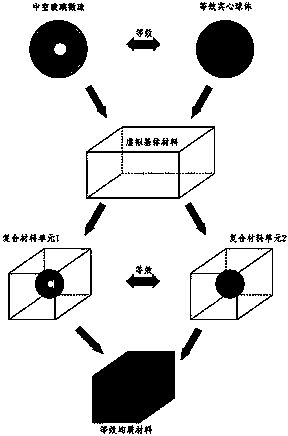
Method for calculating equivalent thermal conductivity coefficients of hollow glass beads
PatentInactiveCN108760800A
Innovation
- By establishing two periodic composite material systems, hollow glass beads and their equivalent solid spheres are embedded in virtual matrix materials respectively, applying different temperature boundary conditions, using the finite element method to calculate the heat flow distribution, and homogenizing it through the composite material Method: Determine the equivalent thermal conductivity, draw the thermal conductivity change curve, and find the intersection point to determine the equivalent thermal conductivity of the hollow glass beads.



Method of measuring structural glass heat transmission coefficient
PatentInactiveKR1020150071148A
Innovation
- A method involving a heat source, thermocouple, and specific glass placement to calculate thermal transmittance by measuring the average glass temperature and ambient temperature, using a formula to determine Uglass accurately.


Industry Standards for Glass Substrate Testing
The quantification of thermal conductivity in glass core substrates requires adherence to established industry standards that ensure measurement accuracy, reproducibility, and comparability across different testing facilities. These standards provide the foundation for reliable characterization of thermal properties essential for electronic packaging applications.
ASTM E1461 serves as the primary standard for measuring thermal diffusivity of solid materials using the flash method. This standard specifically addresses glass substrates by defining specimen preparation requirements, including surface treatment protocols and dimensional specifications. The standard mandates that glass samples maintain uniform thickness within ±2% tolerance and requires surface coating with graphite or similar absorbing materials to ensure proper laser energy absorption during testing.
ISO 22007-4 complements ASTM standards by providing guidelines for transient plane source methods, particularly relevant for thin glass substrates where traditional methods may introduce significant measurement errors. This standard establishes protocols for contact thermal conductivity measurements and defines acceptable probe configurations for glass materials with varying surface roughness characteristics.
IEC 62047-22 addresses thermal property measurements specifically for MEMS and microsystem applications, where glass substrates often serve as foundational elements. This standard incorporates correction factors for substrate thickness effects and provides guidance on temperature-dependent measurements crucial for understanding thermal behavior across operational temperature ranges.
SEMI standards, particularly SEMI G85, focus on semiconductor-grade glass substrates and establish requirements for thermal property documentation in manufacturing specifications. These standards mandate reporting of thermal conductivity values at standardized temperature points and define acceptable measurement uncertainties for production quality control.
JIS R1611 provides additional framework for ceramic and glass materials, establishing sample preparation protocols that minimize measurement artifacts. This standard emphasizes the importance of annealing procedures to eliminate residual stress effects that could influence thermal property measurements.
The integration of these standards creates a comprehensive testing framework that addresses various measurement methodologies, from steady-state techniques to transient methods, ensuring that thermal conductivity quantification meets both research and industrial requirements for glass core substrate applications.
ASTM E1461 serves as the primary standard for measuring thermal diffusivity of solid materials using the flash method. This standard specifically addresses glass substrates by defining specimen preparation requirements, including surface treatment protocols and dimensional specifications. The standard mandates that glass samples maintain uniform thickness within ±2% tolerance and requires surface coating with graphite or similar absorbing materials to ensure proper laser energy absorption during testing.
ISO 22007-4 complements ASTM standards by providing guidelines for transient plane source methods, particularly relevant for thin glass substrates where traditional methods may introduce significant measurement errors. This standard establishes protocols for contact thermal conductivity measurements and defines acceptable probe configurations for glass materials with varying surface roughness characteristics.
IEC 62047-22 addresses thermal property measurements specifically for MEMS and microsystem applications, where glass substrates often serve as foundational elements. This standard incorporates correction factors for substrate thickness effects and provides guidance on temperature-dependent measurements crucial for understanding thermal behavior across operational temperature ranges.
SEMI standards, particularly SEMI G85, focus on semiconductor-grade glass substrates and establish requirements for thermal property documentation in manufacturing specifications. These standards mandate reporting of thermal conductivity values at standardized temperature points and define acceptable measurement uncertainties for production quality control.
JIS R1611 provides additional framework for ceramic and glass materials, establishing sample preparation protocols that minimize measurement artifacts. This standard emphasizes the importance of annealing procedures to eliminate residual stress effects that could influence thermal property measurements.
The integration of these standards creates a comprehensive testing framework that addresses various measurement methodologies, from steady-state techniques to transient methods, ensuring that thermal conductivity quantification meets both research and industrial requirements for glass core substrate applications.
Quality Control Framework for Glass Core Properties
A comprehensive quality control framework for glass core properties requires systematic measurement protocols, standardized testing procedures, and robust data validation mechanisms to ensure consistent thermal conductivity quantification across manufacturing processes.
The foundation of effective quality control lies in establishing standardized measurement environments with controlled temperature and humidity conditions. Testing facilities must maintain ambient temperatures within ±1°C and relative humidity below 50% to minimize environmental interference during thermal conductivity measurements. Calibrated reference standards should be regularly verified against certified materials to ensure measurement traceability and accuracy.
Sample preparation protocols constitute a critical component of the quality framework. Glass core substrates must undergo standardized cleaning procedures using ultrasonic baths with deionized water and isopropanol solutions. Surface roughness should be controlled within specified tolerances, typically Ra < 0.1 μm, to ensure consistent thermal contact during measurements. Sample dimensions must be verified using precision measurement tools with uncertainties below 0.01 mm.
Statistical process control methods enable real-time monitoring of thermal conductivity variations during production. Control charts tracking measurement data help identify systematic deviations and process drift before they impact product quality. Upper and lower control limits should be established based on historical data analysis and customer specifications, typically set at ±3σ from the process mean.
Measurement uncertainty analysis forms an integral part of the quality framework. All contributing factors including instrument calibration, environmental conditions, sample preparation, and operator variability must be quantified according to ISO/IEC 17025 guidelines. Combined standard uncertainties should be calculated and reported with all thermal conductivity measurements to ensure data reliability.
Documentation and traceability systems ensure complete records of all quality control activities. Electronic data management systems should capture measurement results, environmental conditions, equipment calibration status, and operator information. Automated data validation algorithms can flag outliers and inconsistencies for further investigation, maintaining data integrity throughout the quality control process.
Regular proficiency testing and inter-laboratory comparisons validate measurement capabilities and identify potential systematic errors. Participation in round-robin testing programs with certified reference materials helps benchmark measurement performance against industry standards and continuously improve quality control procedures.
The foundation of effective quality control lies in establishing standardized measurement environments with controlled temperature and humidity conditions. Testing facilities must maintain ambient temperatures within ±1°C and relative humidity below 50% to minimize environmental interference during thermal conductivity measurements. Calibrated reference standards should be regularly verified against certified materials to ensure measurement traceability and accuracy.
Sample preparation protocols constitute a critical component of the quality framework. Glass core substrates must undergo standardized cleaning procedures using ultrasonic baths with deionized water and isopropanol solutions. Surface roughness should be controlled within specified tolerances, typically Ra < 0.1 μm, to ensure consistent thermal contact during measurements. Sample dimensions must be verified using precision measurement tools with uncertainties below 0.01 mm.
Statistical process control methods enable real-time monitoring of thermal conductivity variations during production. Control charts tracking measurement data help identify systematic deviations and process drift before they impact product quality. Upper and lower control limits should be established based on historical data analysis and customer specifications, typically set at ±3σ from the process mean.
Measurement uncertainty analysis forms an integral part of the quality framework. All contributing factors including instrument calibration, environmental conditions, sample preparation, and operator variability must be quantified according to ISO/IEC 17025 guidelines. Combined standard uncertainties should be calculated and reported with all thermal conductivity measurements to ensure data reliability.
Documentation and traceability systems ensure complete records of all quality control activities. Electronic data management systems should capture measurement results, environmental conditions, equipment calibration status, and operator information. Automated data validation algorithms can flag outliers and inconsistencies for further investigation, maintaining data integrity throughout the quality control process.
Regular proficiency testing and inter-laboratory comparisons validate measurement capabilities and identify potential systematic errors. Participation in round-robin testing programs with certified reference materials helps benchmark measurement performance against industry standards and continuously improve quality control procedures.
Unlock deeper insights with PatSnap Eureka Quick Research — get a full tech report to explore trends and direct your research. Try now!
Generate Your Research Report Instantly with AI Agent
Supercharge your innovation with PatSnap Eureka AI Agent Platform!