

How to Reduce Electropermanent Magnet Stray Torque (N·m)
MAY 8, 20269 MIN READ
Generate Your Research Report Instantly with AI Agent
Patsnap Eureka helps you evaluate technical feasibility & market potential.
Electropermanent Magnet Technology Background and Torque Control Goals
Electropermanent magnets represent a revolutionary advancement in magnetic technology, combining the energy efficiency of permanent magnets with the controllability of electromagnets. This hybrid technology emerged from the need to overcome limitations inherent in traditional magnetic systems, where permanent magnets provide constant magnetic fields but lack controllability, while electromagnets offer control at the expense of continuous power consumption.
The fundamental principle of electropermanent magnets involves the strategic combination of hard and soft magnetic materials, typically utilizing rare-earth permanent magnets alongside electromagnetically controlled components. This configuration enables the magnetic field to be switched on or off through brief electrical pulses, maintaining the desired magnetic state without continuous power input. The technology has found applications across diverse sectors including industrial automation, robotics, magnetic levitation systems, and precision manufacturing equipment.
However, the practical implementation of electropermanent magnet systems faces significant challenges, particularly regarding stray torque generation. Stray torque manifests as unwanted rotational forces that occur due to magnetic field asymmetries, manufacturing tolerances, material inhomogeneities, and electromagnetic interference. These parasitic torques can severely compromise system performance, leading to positioning errors, increased energy consumption, mechanical wear, and reduced operational precision.
The primary goal of torque control in electropermanent magnet systems centers on minimizing or eliminating stray torque while maintaining optimal magnetic performance. This objective encompasses several critical aspects: achieving uniform magnetic field distribution, implementing precise control algorithms, optimizing magnetic circuit design, and developing advanced materials with superior magnetic properties. The challenge lies in balancing these requirements while ensuring cost-effectiveness and manufacturing feasibility.
Current research efforts focus on developing sophisticated control strategies that can predict and compensate for stray torque in real-time. These approaches include adaptive control algorithms, machine learning-based prediction models, and advanced sensor integration for continuous monitoring of magnetic field variations. Additionally, material science innovations aim to create more homogeneous magnetic materials with reduced coercivity variations and improved temperature stability.
The ultimate technological target involves creating electropermanent magnet systems capable of achieving sub-micron positioning accuracy with minimal stray torque interference, enabling next-generation applications in precision manufacturing, medical devices, and advanced robotics where exceptional control precision is paramount.
The fundamental principle of electropermanent magnets involves the strategic combination of hard and soft magnetic materials, typically utilizing rare-earth permanent magnets alongside electromagnetically controlled components. This configuration enables the magnetic field to be switched on or off through brief electrical pulses, maintaining the desired magnetic state without continuous power input. The technology has found applications across diverse sectors including industrial automation, robotics, magnetic levitation systems, and precision manufacturing equipment.
However, the practical implementation of electropermanent magnet systems faces significant challenges, particularly regarding stray torque generation. Stray torque manifests as unwanted rotational forces that occur due to magnetic field asymmetries, manufacturing tolerances, material inhomogeneities, and electromagnetic interference. These parasitic torques can severely compromise system performance, leading to positioning errors, increased energy consumption, mechanical wear, and reduced operational precision.
The primary goal of torque control in electropermanent magnet systems centers on minimizing or eliminating stray torque while maintaining optimal magnetic performance. This objective encompasses several critical aspects: achieving uniform magnetic field distribution, implementing precise control algorithms, optimizing magnetic circuit design, and developing advanced materials with superior magnetic properties. The challenge lies in balancing these requirements while ensuring cost-effectiveness and manufacturing feasibility.
Current research efforts focus on developing sophisticated control strategies that can predict and compensate for stray torque in real-time. These approaches include adaptive control algorithms, machine learning-based prediction models, and advanced sensor integration for continuous monitoring of magnetic field variations. Additionally, material science innovations aim to create more homogeneous magnetic materials with reduced coercivity variations and improved temperature stability.
The ultimate technological target involves creating electropermanent magnet systems capable of achieving sub-micron positioning accuracy with minimal stray torque interference, enabling next-generation applications in precision manufacturing, medical devices, and advanced robotics where exceptional control precision is paramount.
Market Demand for High-Precision Electropermanent Magnet Systems
The global market for high-precision electropermanent magnet systems is experiencing robust growth driven by increasing demands for accuracy and reliability across multiple industrial sectors. Manufacturing automation, robotics, and precision machining applications require magnetic holding systems that can maintain exact positioning while minimizing unwanted torque effects that compromise operational precision.
Semiconductor manufacturing represents a particularly demanding market segment where even minimal stray torque can result in significant yield losses. The industry's transition toward smaller node processes and larger wafer sizes has intensified requirements for ultra-stable magnetic positioning systems. Clean room environments further necessitate contactless magnetic solutions that eliminate particle generation associated with mechanical clamping methods.
Aerospace and defense applications constitute another high-value market segment where precision electropermanent magnet systems are increasingly deployed in satellite positioning mechanisms, guidance systems, and precision instrumentation. These applications demand exceptional reliability and minimal electromagnetic interference, making stray torque reduction a critical performance parameter.
The automotive industry's evolution toward electric vehicles and autonomous driving systems has created new market opportunities for precision magnetic systems. Electric motor manufacturing requires highly accurate magnetic positioning during assembly processes, while advanced driver assistance systems rely on precise sensor positioning that can be compromised by magnetic interference.
Medical device manufacturing represents an emerging high-growth segment where precision magnetic systems enable accurate positioning of delicate components during assembly. Surgical robotics and diagnostic equipment manufacturing particularly benefit from reduced stray torque characteristics that ensure consistent performance in life-critical applications.
Industrial automation trends toward lights-out manufacturing and Industry 4.0 implementations are driving demand for more sophisticated magnetic holding systems. These environments require extended operational periods without human intervention, making reliability and precision consistency essential market requirements.
The market landscape indicates strong preference for systems offering programmable magnetic field control combined with minimal stray torque generation. End users increasingly prioritize total cost of ownership considerations, including energy efficiency and maintenance requirements, alongside core performance specifications.
Regional market analysis reveals concentrated demand in advanced manufacturing hubs across North America, Europe, and Asia-Pacific regions, with particular strength in countries with established semiconductor, aerospace, and precision manufacturing industries.
Semiconductor manufacturing represents a particularly demanding market segment where even minimal stray torque can result in significant yield losses. The industry's transition toward smaller node processes and larger wafer sizes has intensified requirements for ultra-stable magnetic positioning systems. Clean room environments further necessitate contactless magnetic solutions that eliminate particle generation associated with mechanical clamping methods.
Aerospace and defense applications constitute another high-value market segment where precision electropermanent magnet systems are increasingly deployed in satellite positioning mechanisms, guidance systems, and precision instrumentation. These applications demand exceptional reliability and minimal electromagnetic interference, making stray torque reduction a critical performance parameter.
The automotive industry's evolution toward electric vehicles and autonomous driving systems has created new market opportunities for precision magnetic systems. Electric motor manufacturing requires highly accurate magnetic positioning during assembly processes, while advanced driver assistance systems rely on precise sensor positioning that can be compromised by magnetic interference.
Medical device manufacturing represents an emerging high-growth segment where precision magnetic systems enable accurate positioning of delicate components during assembly. Surgical robotics and diagnostic equipment manufacturing particularly benefit from reduced stray torque characteristics that ensure consistent performance in life-critical applications.
Industrial automation trends toward lights-out manufacturing and Industry 4.0 implementations are driving demand for more sophisticated magnetic holding systems. These environments require extended operational periods without human intervention, making reliability and precision consistency essential market requirements.
The market landscape indicates strong preference for systems offering programmable magnetic field control combined with minimal stray torque generation. End users increasingly prioritize total cost of ownership considerations, including energy efficiency and maintenance requirements, alongside core performance specifications.
Regional market analysis reveals concentrated demand in advanced manufacturing hubs across North America, Europe, and Asia-Pacific regions, with particular strength in countries with established semiconductor, aerospace, and precision manufacturing industries.
Current State and Stray Torque Challenges in EPM Technology
Electropermanent magnets represent a hybrid magnetic technology that combines the controllability of electromagnets with the energy efficiency of permanent magnets. Current EPM systems utilize a combination of permanent magnetic materials, typically neodymium or ferrite magnets, alongside controllable electromagnetic coils to achieve switchable magnetic states. The technology has gained significant traction in industrial automation, robotics, and material handling applications due to its ability to provide strong holding forces while consuming power only during state transitions.
The fundamental operating principle involves using electromagnetic pulses to either reinforce or oppose the permanent magnetic field, effectively switching the magnet between "on" and "off" states. However, this dual-field architecture inherently introduces complexities in magnetic field distribution and control precision. Modern EPM systems typically achieve magnetic flux densities ranging from 0.1 to 1.5 Tesla, with switching times between 10 to 100 milliseconds depending on the application requirements.
Stray torque represents one of the most significant technical challenges limiting EPM technology advancement and broader adoption. This phenomenon manifests as unintended rotational forces that occur when EPM systems are positioned near ferromagnetic objects or other magnetic sources. The stray torque primarily originates from magnetic field asymmetries, edge effects at magnet boundaries, and interactions between the permanent and electromagnetic field components during switching operations.
Current EPM implementations face several critical stray torque challenges. Magnetic field non-uniformity across the magnet surface creates localized force variations that translate into unwanted rotational moments. The switching process itself introduces transient magnetic field fluctuations that can generate temporary but significant stray torques, potentially affecting precision positioning applications. Additionally, manufacturing tolerances in magnet alignment and electromagnetic coil positioning contribute to systematic field asymmetries.
Temperature variations present another substantial challenge, as different magnetic materials exhibit varying thermal coefficients. This thermal sensitivity leads to dynamic changes in magnetic field distribution, resulting in temperature-dependent stray torque characteristics that are difficult to predict and compensate. The interaction between multiple EPM units in close proximity further complicates the stray torque landscape, creating complex field interference patterns.
Existing mitigation approaches include mechanical design modifications, such as symmetric magnet arrangements and specialized pole piece geometries, but these solutions often compromise magnetic efficiency or increase system complexity. Advanced control algorithms attempt to minimize stray torque through optimized switching sequences, yet they require sophisticated sensing systems and computational resources that may not be feasible in all applications.
The fundamental operating principle involves using electromagnetic pulses to either reinforce or oppose the permanent magnetic field, effectively switching the magnet between "on" and "off" states. However, this dual-field architecture inherently introduces complexities in magnetic field distribution and control precision. Modern EPM systems typically achieve magnetic flux densities ranging from 0.1 to 1.5 Tesla, with switching times between 10 to 100 milliseconds depending on the application requirements.
Stray torque represents one of the most significant technical challenges limiting EPM technology advancement and broader adoption. This phenomenon manifests as unintended rotational forces that occur when EPM systems are positioned near ferromagnetic objects or other magnetic sources. The stray torque primarily originates from magnetic field asymmetries, edge effects at magnet boundaries, and interactions between the permanent and electromagnetic field components during switching operations.
Current EPM implementations face several critical stray torque challenges. Magnetic field non-uniformity across the magnet surface creates localized force variations that translate into unwanted rotational moments. The switching process itself introduces transient magnetic field fluctuations that can generate temporary but significant stray torques, potentially affecting precision positioning applications. Additionally, manufacturing tolerances in magnet alignment and electromagnetic coil positioning contribute to systematic field asymmetries.
Temperature variations present another substantial challenge, as different magnetic materials exhibit varying thermal coefficients. This thermal sensitivity leads to dynamic changes in magnetic field distribution, resulting in temperature-dependent stray torque characteristics that are difficult to predict and compensate. The interaction between multiple EPM units in close proximity further complicates the stray torque landscape, creating complex field interference patterns.
Existing mitigation approaches include mechanical design modifications, such as symmetric magnet arrangements and specialized pole piece geometries, but these solutions often compromise magnetic efficiency or increase system complexity. Advanced control algorithms attempt to minimize stray torque through optimized switching sequences, yet they require sophisticated sensing systems and computational resources that may not be feasible in all applications.
Existing Solutions for Minimizing EPM Stray Torque
01 Magnetic field compensation and shielding techniques
Methods for reducing stray magnetic fields in electropermanent magnet systems through the use of compensation coils, magnetic shielding materials, and field cancellation techniques. These approaches help minimize unwanted torque effects by controlling the magnetic field distribution and preventing interference with surrounding components or systems.- Magnetic field compensation and shielding techniques: Methods for reducing stray magnetic fields in electropermanent magnet systems through the use of compensation coils, magnetic shielding materials, and field cancellation techniques. These approaches help minimize unwanted torque effects by controlling the magnetic field distribution and preventing interference with surrounding components.
- Magnet configuration and pole arrangement optimization: Design strategies for optimizing the arrangement and configuration of magnetic poles in electropermanent magnet assemblies to reduce stray torque. This includes specific geometric arrangements, pole spacing, and magnetic circuit designs that minimize unwanted rotational forces while maintaining desired magnetic performance.
- Control algorithms and feedback systems: Advanced control methods and feedback mechanisms for actively compensating stray torque in electropermanent magnet systems. These systems monitor magnetic field variations and apply corrective measures through electronic control circuits to maintain stable operation and reduce unwanted rotational effects.
- Mechanical stabilization and mounting solutions: Physical design approaches for mechanically stabilizing electropermanent magnet systems against stray torque effects. This includes specialized mounting structures, bearing systems, and mechanical constraints that prevent unwanted rotation while allowing desired magnetic functionality.
- Material selection and magnetic circuit design: Optimization of magnetic materials and circuit topology to inherently reduce stray torque generation in electropermanent magnet systems. This involves careful selection of permanent magnet materials, soft magnetic components, and overall magnetic circuit architecture to minimize parasitic magnetic effects.
02 Magnet configuration and pole arrangement optimization
Design strategies for optimizing the arrangement and configuration of magnetic poles in electropermanent magnet assemblies to reduce stray torque. This includes specific geometric arrangements, pole spacing, and magnetic circuit designs that minimize unwanted rotational forces while maintaining desired magnetic performance.Expand Specific Solutions03 Control systems for torque minimization
Electronic control methods and algorithms designed to actively monitor and compensate for stray torque in electropermanent magnet systems. These systems use feedback mechanisms, current control, and timing optimization to reduce unwanted rotational effects during operation.Expand Specific Solutions04 Mechanical stabilization and mounting solutions
Physical design approaches for mechanically stabilizing electropermanent magnet systems to counteract stray torque effects. This includes specialized mounting structures, bearing systems, and mechanical constraints that prevent unwanted rotation while allowing desired magnetic functionality.Expand Specific Solutions05 Material selection and magnetic circuit design
Approaches involving the selection of specific magnetic materials and the design of magnetic circuits to inherently reduce stray torque generation. This includes the use of particular permanent magnet materials, soft magnetic components, and circuit topologies that minimize unwanted magnetic interactions and resulting torque effects.Expand Specific Solutions
Key Players in Electropermanent Magnet and Precision Control Industry
The electropermanent magnet stray torque reduction technology represents an emerging field within the broader magnetic systems industry, currently in its early development stage with significant growth potential. The market remains relatively niche but is expanding rapidly due to increasing demand for precision control in automotive, industrial automation, and aerospace applications. Technology maturity varies considerably across market participants, with established industrial giants like Mitsubishi Electric Corp., DENSO Corp., and Siemens demonstrating advanced capabilities through their extensive R&D investments and manufacturing expertise. Automotive leaders including Ford Global Technologies and GM Global Technology Operations are driving innovation in electric vehicle applications, while specialized companies like Everspin Technologies focus on magnetoresistive solutions. Japanese manufacturers such as Shin-Etsu Chemical and Sanyo Denki leverage their materials science expertise, whereas European players like Robert Bosch and Schaeffler Technologies contribute automotive integration knowledge. The competitive landscape shows a mix of mature corporations with established magnetic technology portfolios and emerging specialists developing targeted solutions for stray torque mitigation.
Mitsubishi Electric Corp.
Technical Solution: Mitsubishi Electric has developed advanced magnetic field analysis and control technologies for electropermanent magnet systems. Their approach focuses on optimizing magnet pole configurations and implementing sophisticated control algorithms to minimize unwanted magnetic interactions. The company utilizes finite element analysis (FEA) modeling to predict and reduce stray magnetic fields by up to 40% in motor applications. Their proprietary magnetic shielding techniques and precise current control methods help maintain stable magnetic states while reducing parasitic torque effects. The technology incorporates real-time feedback systems that continuously monitor and adjust magnetic field distributions to prevent stray torque generation during operation.
Strengths: Strong expertise in magnetic field modeling and industrial motor applications with proven track record. Weaknesses: Solutions may be complex and costly for smaller scale applications.
DENSO Corp.
Technical Solution: DENSO has developed electropermanent magnet control systems specifically for automotive applications, focusing on reducing stray torque through advanced switching algorithms and magnetic field optimization. Their technology employs precise timing control of electromagnetic pulses to minimize residual magnetic effects that cause unwanted torque. The company's approach includes temperature compensation mechanisms and adaptive control strategies that account for varying operating conditions in automotive environments. DENSO's solution integrates sensor feedback systems that detect stray magnetic fields and automatically adjust control parameters to maintain optimal performance. Their research shows significant improvements in system efficiency and reduced electromagnetic interference in vehicle electrical systems.
Strengths: Specialized automotive expertise with robust environmental adaptation capabilities. Weaknesses: Technology primarily optimized for automotive use cases, limiting broader industrial applications.
Core Innovations in Stray Torque Reduction Techniques
Method to reduce torque ripple of permanent magnet synchronous motor
PatentActiveUS10530278B1
Innovation
- A method involving magnet shifting, where the rotor and magnets are modularized to form repeating units with consistent torque waveforms and phases, allowing for the calculation of shifting angles to reduce torque ripple by weakening the effects of cogging and reluctance torque, while maintaining torque density.
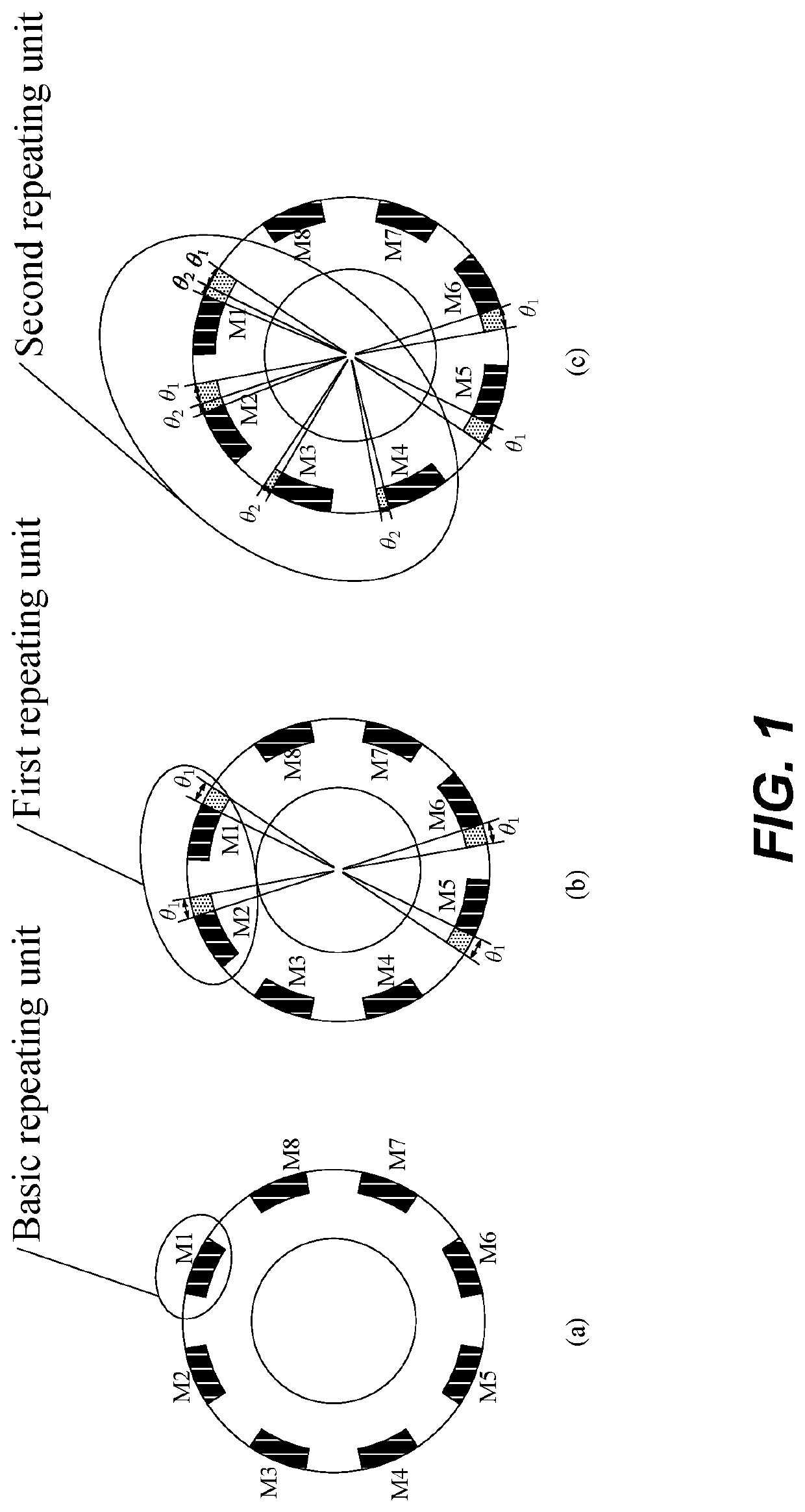
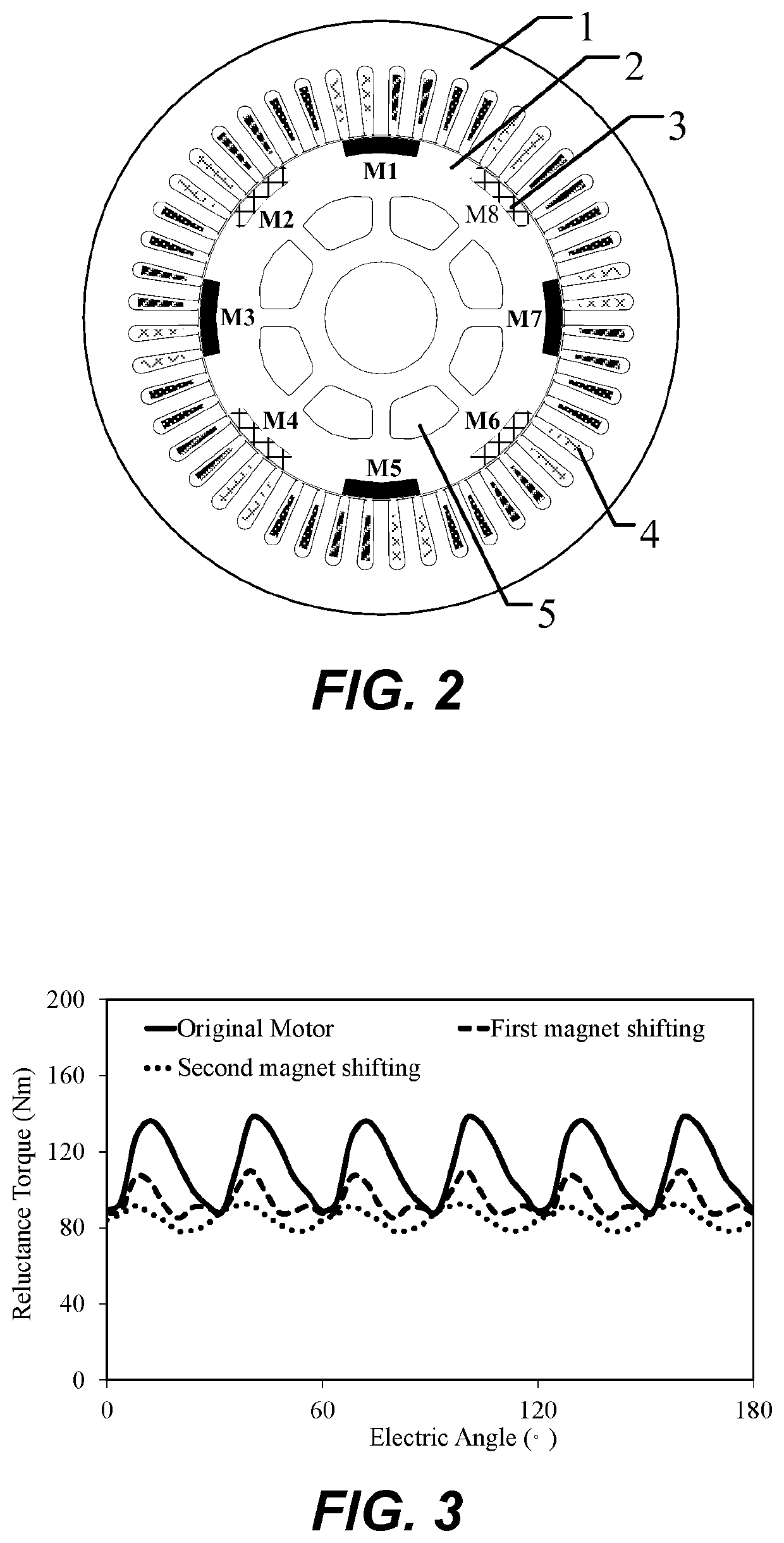
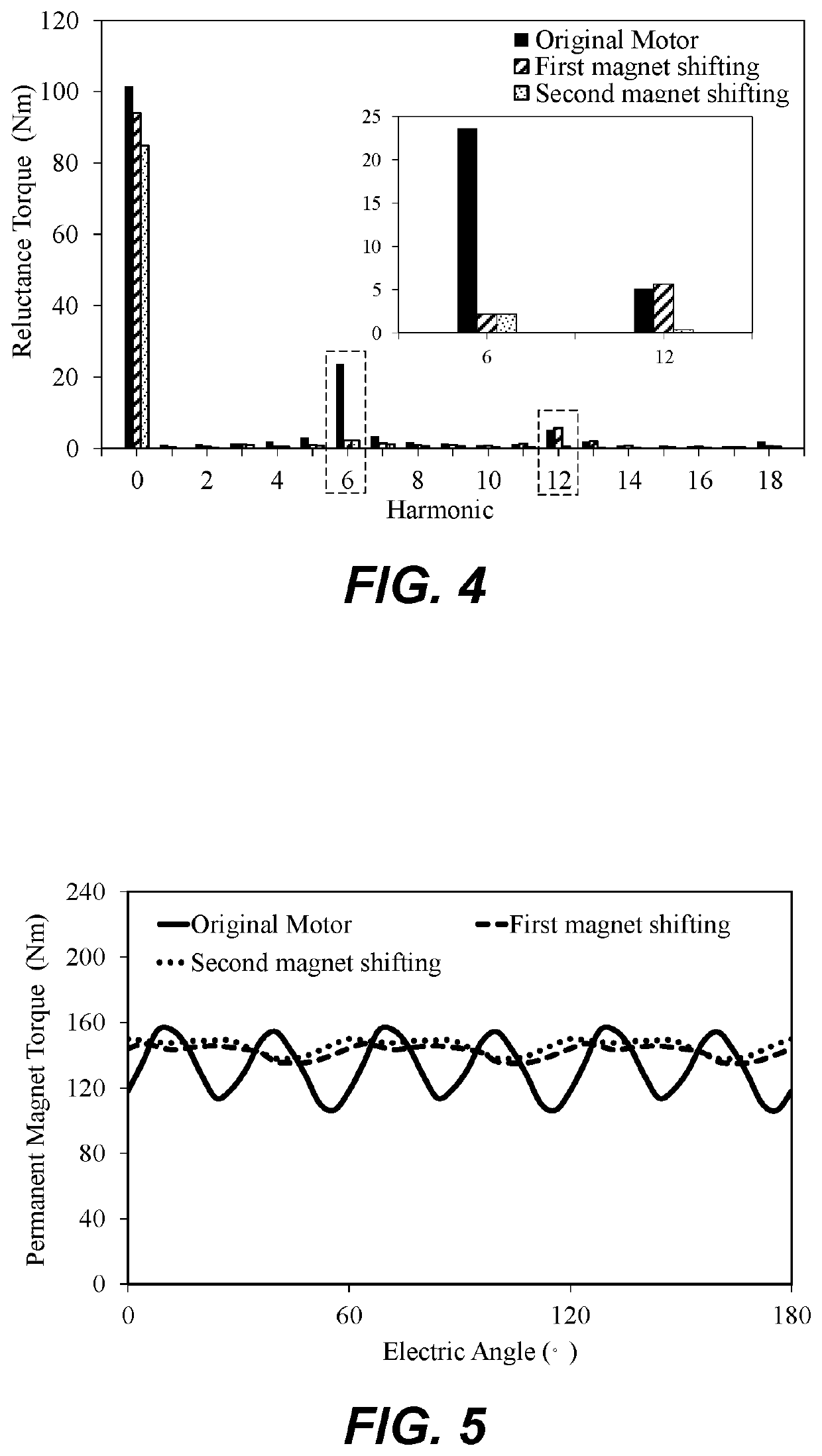

Method for reducing a magnetic stray vector field of a rotary unit with a magnetic bearing comprising permanent magnets by providing a compensating magnet, rotary unit and vacuum pump
PatentActiveEP3150872A1
Innovation
- A method that measures the overall magnetic stray vector field at a reference point and adjusts the compensation magnet's field to reduce or compensate for the resulting stray field, eliminating the need for individual magnet measurements and allowing for reduced or eliminated disturbing magnetic influences.


Advanced Control Algorithms for EPM Torque Optimization
Advanced control algorithms represent the cornerstone of modern electropermanent magnet (EPM) torque optimization strategies, offering sophisticated approaches to minimize stray torque through intelligent system management. These algorithms leverage real-time feedback mechanisms and predictive modeling to dynamically adjust EPM operational parameters, ensuring optimal magnetic field distribution and torque output characteristics.
Model Predictive Control (MPC) algorithms have emerged as particularly effective solutions for EPM torque optimization. These systems utilize mathematical models of the EPM behavior to predict future torque variations and proactively adjust control inputs. By incorporating constraints on magnetic field strength, switching frequency, and thermal limitations, MPC algorithms can minimize stray torque while maintaining desired performance levels. The predictive nature allows for anticipatory corrections before significant torque deviations occur.
Adaptive control strategies demonstrate exceptional capability in handling EPM system uncertainties and parameter variations. These algorithms continuously update their control parameters based on observed system behavior, compensating for factors such as temperature-induced magnetic property changes, mechanical wear, and aging effects. Machine learning-enhanced adaptive controllers can identify complex patterns in stray torque generation and develop increasingly refined compensation strategies over time.
Fuzzy logic control systems provide robust solutions for EPM torque optimization in environments with imprecise or incomplete information. These algorithms excel at handling the nonlinear relationships inherent in EPM systems, utilizing linguistic rules and membership functions to translate expert knowledge into control actions. The inherent robustness of fuzzy controllers makes them particularly suitable for applications where precise mathematical models are difficult to establish.
Neural network-based control algorithms offer unprecedented capability for complex pattern recognition and nonlinear system control in EPM applications. Deep learning architectures can process multiple sensor inputs simultaneously, identifying subtle correlations between operational parameters and stray torque generation. These systems continuously improve their performance through training on operational data, developing increasingly sophisticated torque optimization strategies that surpass traditional control methods in both accuracy and adaptability.
Model Predictive Control (MPC) algorithms have emerged as particularly effective solutions for EPM torque optimization. These systems utilize mathematical models of the EPM behavior to predict future torque variations and proactively adjust control inputs. By incorporating constraints on magnetic field strength, switching frequency, and thermal limitations, MPC algorithms can minimize stray torque while maintaining desired performance levels. The predictive nature allows for anticipatory corrections before significant torque deviations occur.
Adaptive control strategies demonstrate exceptional capability in handling EPM system uncertainties and parameter variations. These algorithms continuously update their control parameters based on observed system behavior, compensating for factors such as temperature-induced magnetic property changes, mechanical wear, and aging effects. Machine learning-enhanced adaptive controllers can identify complex patterns in stray torque generation and develop increasingly refined compensation strategies over time.
Fuzzy logic control systems provide robust solutions for EPM torque optimization in environments with imprecise or incomplete information. These algorithms excel at handling the nonlinear relationships inherent in EPM systems, utilizing linguistic rules and membership functions to translate expert knowledge into control actions. The inherent robustness of fuzzy controllers makes them particularly suitable for applications where precise mathematical models are difficult to establish.
Neural network-based control algorithms offer unprecedented capability for complex pattern recognition and nonlinear system control in EPM applications. Deep learning architectures can process multiple sensor inputs simultaneously, identifying subtle correlations between operational parameters and stray torque generation. These systems continuously improve their performance through training on operational data, developing increasingly sophisticated torque optimization strategies that surpass traditional control methods in both accuracy and adaptability.
Material Science Innovations in EPM Design
Advanced magnetic materials represent the cornerstone of next-generation electropermanent magnet design, offering unprecedented opportunities to minimize stray torque through strategic material selection and engineering. Recent breakthroughs in rare-earth-free permanent magnet compositions have demonstrated significant potential for reducing unwanted magnetic field interactions while maintaining operational efficiency.
High-performance soft magnetic materials, particularly nanocrystalline alloys and amorphous ribbons, have emerged as critical components for flux concentration and field shaping applications. These materials exhibit exceptional permeability characteristics that enable precise magnetic field confinement, effectively reducing stray field propagation beyond the intended operational zones. The integration of these materials into EPM housing structures has shown measurable improvements in torque stability.
Magnetic shielding innovations utilizing high-permeability mu-metal alloys and supermalloy compositions provide effective barriers against unwanted magnetic coupling. These materials demonstrate superior magnetic flux redirection capabilities, channeling stray fields away from sensitive components and reducing parasitic torque generation. Advanced multilayer shielding configurations have proven particularly effective in complex EPM assemblies.
Composite magnetic materials incorporating ferrite particles within polymer matrices offer unique advantages for stray torque mitigation. These engineered composites provide tunable magnetic properties while maintaining structural flexibility, enabling integration into complex geometries where traditional magnetic materials cannot be effectively deployed. The ability to customize magnetic permeability and saturation characteristics allows for optimized field management.
Smart magnetic materials, including magnetostrictive alloys and shape-memory magnetic materials, present emerging opportunities for adaptive stray torque compensation. These materials can dynamically adjust their magnetic properties in response to operational conditions, providing real-time optimization of magnetic field distribution and minimizing unwanted torque variations during EPM operation cycles.
Nanoscale magnetic materials, particularly magnetic nanoparticles and thin-film structures, enable precise control over magnetic domain behavior and field localization. These materials facilitate the development of gradient magnetic field structures that naturally suppress stray field propagation while enhancing primary magnetic circuit performance.
High-performance soft magnetic materials, particularly nanocrystalline alloys and amorphous ribbons, have emerged as critical components for flux concentration and field shaping applications. These materials exhibit exceptional permeability characteristics that enable precise magnetic field confinement, effectively reducing stray field propagation beyond the intended operational zones. The integration of these materials into EPM housing structures has shown measurable improvements in torque stability.
Magnetic shielding innovations utilizing high-permeability mu-metal alloys and supermalloy compositions provide effective barriers against unwanted magnetic coupling. These materials demonstrate superior magnetic flux redirection capabilities, channeling stray fields away from sensitive components and reducing parasitic torque generation. Advanced multilayer shielding configurations have proven particularly effective in complex EPM assemblies.
Composite magnetic materials incorporating ferrite particles within polymer matrices offer unique advantages for stray torque mitigation. These engineered composites provide tunable magnetic properties while maintaining structural flexibility, enabling integration into complex geometries where traditional magnetic materials cannot be effectively deployed. The ability to customize magnetic permeability and saturation characteristics allows for optimized field management.
Smart magnetic materials, including magnetostrictive alloys and shape-memory magnetic materials, present emerging opportunities for adaptive stray torque compensation. These materials can dynamically adjust their magnetic properties in response to operational conditions, providing real-time optimization of magnetic field distribution and minimizing unwanted torque variations during EPM operation cycles.
Nanoscale magnetic materials, particularly magnetic nanoparticles and thin-film structures, enable precise control over magnetic domain behavior and field localization. These materials facilitate the development of gradient magnetic field structures that naturally suppress stray field propagation while enhancing primary magnetic circuit performance.
Unlock deeper insights with Patsnap Eureka Quick Research — get a full tech report to explore trends and direct your research. Try now!
Generate Your Research Report Instantly with AI Agent
Supercharge your innovation with Patsnap Eureka AI Agent Platform!