

How to reduce optical engine speckle below 2% contrast
MAY 9, 20269 MIN READ
Generate Your Research Report Instantly with AI Agent
Patsnap Eureka helps you evaluate technical feasibility & market potential.
Optical Engine Speckle Reduction Background and Goals
Optical speckle represents one of the most persistent challenges in modern display and projection technologies, particularly affecting laser-based optical engines used in projectors, head-up displays, and augmented reality systems. This coherent interference phenomenon manifests as a granular pattern of bright and dark spots that significantly degrades image quality and user experience. The speckle effect occurs when coherent light from laser sources reflects off optically rough surfaces, creating random interference patterns that appear as unwanted noise overlaying the intended image content.
The severity of speckle is quantified through speckle contrast measurement, defined as the ratio of standard deviation to mean intensity of the speckle pattern. Current commercial laser projectors typically exhibit speckle contrast levels ranging from 4% to 15%, which remains visibly objectionable to human observers. Industry research indicates that speckle contrast must be reduced below 2% to achieve imperceptible levels for most viewing conditions and content types.
The technological imperative for achieving sub-2% speckle contrast stems from the growing adoption of laser-based display systems across multiple sectors. Consumer electronics manufacturers are increasingly integrating laser projectors into smartphones, tablets, and portable devices, where image quality expectations continue to rise. Automotive applications demand exceptional visual clarity for safety-critical head-up displays and dashboard projections. Enterprise and education markets require professional-grade image quality for presentation systems and interactive displays.
The 2% contrast threshold represents a critical technical milestone that would enable widespread commercial adoption of laser projection technology. Achieving this target requires addressing fundamental physics limitations while maintaining other essential system parameters including brightness, color gamut, power efficiency, and cost effectiveness. Current technological approaches show promise but have not yet consistently achieved this performance level across all operating conditions.
The primary technical goal involves developing comprehensive speckle reduction methodologies that can reliably achieve sub-2% contrast levels while preserving system performance, reliability, and manufacturability. This encompasses both hardware-based solutions including advanced optical designs, beam shaping techniques, and novel laser architectures, as well as software-based approaches involving real-time image processing and adaptive control algorithms.
Secondary objectives include establishing standardized measurement protocols for speckle characterization, developing cost-effective implementation strategies suitable for mass production, and ensuring compatibility with existing optical engine architectures. The ultimate vision encompasses creating next-generation laser display systems that deliver superior image quality while maintaining competitive advantages in brightness, color reproduction, and energy efficiency compared to traditional lamp-based and LED technologies.
The severity of speckle is quantified through speckle contrast measurement, defined as the ratio of standard deviation to mean intensity of the speckle pattern. Current commercial laser projectors typically exhibit speckle contrast levels ranging from 4% to 15%, which remains visibly objectionable to human observers. Industry research indicates that speckle contrast must be reduced below 2% to achieve imperceptible levels for most viewing conditions and content types.
The technological imperative for achieving sub-2% speckle contrast stems from the growing adoption of laser-based display systems across multiple sectors. Consumer electronics manufacturers are increasingly integrating laser projectors into smartphones, tablets, and portable devices, where image quality expectations continue to rise. Automotive applications demand exceptional visual clarity for safety-critical head-up displays and dashboard projections. Enterprise and education markets require professional-grade image quality for presentation systems and interactive displays.
The 2% contrast threshold represents a critical technical milestone that would enable widespread commercial adoption of laser projection technology. Achieving this target requires addressing fundamental physics limitations while maintaining other essential system parameters including brightness, color gamut, power efficiency, and cost effectiveness. Current technological approaches show promise but have not yet consistently achieved this performance level across all operating conditions.
The primary technical goal involves developing comprehensive speckle reduction methodologies that can reliably achieve sub-2% contrast levels while preserving system performance, reliability, and manufacturability. This encompasses both hardware-based solutions including advanced optical designs, beam shaping techniques, and novel laser architectures, as well as software-based approaches involving real-time image processing and adaptive control algorithms.
Secondary objectives include establishing standardized measurement protocols for speckle characterization, developing cost-effective implementation strategies suitable for mass production, and ensuring compatibility with existing optical engine architectures. The ultimate vision encompasses creating next-generation laser display systems that deliver superior image quality while maintaining competitive advantages in brightness, color reproduction, and energy efficiency compared to traditional lamp-based and LED technologies.
Market Demand for Low-Speckle Optical Systems
The market demand for low-speckle optical systems has experienced substantial growth across multiple industries, driven by the increasing requirements for high-quality visual displays and precision optical applications. Consumer electronics manufacturers are particularly focused on achieving speckle contrast levels below 2% to meet stringent display quality standards for smartphones, tablets, and emerging augmented reality devices.
Projection display systems represent one of the largest market segments demanding ultra-low speckle solutions. Home theater projectors, business presentation equipment, and digital cinema systems require exceptional image quality where speckle artifacts significantly impact user experience. The transition toward laser-based projection technologies has intensified this demand, as laser light sources inherently produce more coherent light that generates visible speckle patterns.
Automotive applications constitute a rapidly expanding market segment, particularly with the advancement of head-up displays and automotive lighting systems. Modern vehicles increasingly incorporate laser-based lighting and display technologies where speckle reduction is critical for driver safety and comfort. The automotive industry's stringent quality requirements have established speckle contrast reduction as a mandatory specification rather than an optional enhancement.
Medical and scientific instrumentation markets demand extremely low speckle levels for accurate imaging and measurement applications. Optical coherence tomography systems, laser scanning microscopes, and surgical laser equipment require speckle-free operation to ensure diagnostic accuracy and treatment precision. These applications often necessitate speckle contrast levels well below 2% to meet regulatory standards and clinical requirements.
Industrial manufacturing sectors utilizing laser-based measurement and inspection systems also drive significant demand for low-speckle optical engines. Quality control systems, dimensional measurement equipment, and surface inspection technologies require stable, speckle-free illumination to achieve reliable measurement accuracy and repeatability.
The emerging virtual and augmented reality markets present substantial growth opportunities for low-speckle optical systems. These applications demand exceptional visual quality to prevent user discomfort and ensure immersive experiences. The compact form factors required for wearable devices further challenge engineers to achieve low speckle performance within stringent size and power constraints.
Market growth is additionally fueled by increasing consumer awareness of display quality differences and the competitive advantage that superior visual performance provides to manufacturers across various product categories.
Projection display systems represent one of the largest market segments demanding ultra-low speckle solutions. Home theater projectors, business presentation equipment, and digital cinema systems require exceptional image quality where speckle artifacts significantly impact user experience. The transition toward laser-based projection technologies has intensified this demand, as laser light sources inherently produce more coherent light that generates visible speckle patterns.
Automotive applications constitute a rapidly expanding market segment, particularly with the advancement of head-up displays and automotive lighting systems. Modern vehicles increasingly incorporate laser-based lighting and display technologies where speckle reduction is critical for driver safety and comfort. The automotive industry's stringent quality requirements have established speckle contrast reduction as a mandatory specification rather than an optional enhancement.
Medical and scientific instrumentation markets demand extremely low speckle levels for accurate imaging and measurement applications. Optical coherence tomography systems, laser scanning microscopes, and surgical laser equipment require speckle-free operation to ensure diagnostic accuracy and treatment precision. These applications often necessitate speckle contrast levels well below 2% to meet regulatory standards and clinical requirements.
Industrial manufacturing sectors utilizing laser-based measurement and inspection systems also drive significant demand for low-speckle optical engines. Quality control systems, dimensional measurement equipment, and surface inspection technologies require stable, speckle-free illumination to achieve reliable measurement accuracy and repeatability.
The emerging virtual and augmented reality markets present substantial growth opportunities for low-speckle optical systems. These applications demand exceptional visual quality to prevent user discomfort and ensure immersive experiences. The compact form factors required for wearable devices further challenge engineers to achieve low speckle performance within stringent size and power constraints.
Market growth is additionally fueled by increasing consumer awareness of display quality differences and the competitive advantage that superior visual performance provides to manufacturers across various product categories.
Current Speckle Challenges in Optical Engine Technologies
Speckle noise represents one of the most persistent and challenging optical phenomena in modern display and projection systems, particularly affecting laser-based optical engines where coherent light sources are employed. The fundamental nature of speckle arises from the interference patterns created when coherent light reflects off optically rough surfaces or passes through diffusing elements, resulting in a granular intensity distribution that significantly degrades image quality and user experience.
Current optical engine technologies face substantial technical barriers in achieving speckle contrast levels below 2%, a threshold considered necessary for high-quality visual applications. The coherence length of laser sources, typically ranging from several millimeters to centimeters, creates interference patterns that manifest as visible speckle with contrast ratios often exceeding 10-15% in conventional systems. This level of speckle noise is particularly problematic in projection displays, head-up displays, and augmented reality systems where image clarity is paramount.
Manufacturing constraints present additional challenges in speckle reduction implementation. Traditional approaches such as rotating diffusers, vibrating screens, and multi-mode fiber coupling require precise mechanical control systems that increase complexity, power consumption, and potential failure points. The integration of these mechanical solutions often conflicts with miniaturization requirements in portable devices and automotive applications, where space and reliability constraints are critical factors.
Thermal management issues compound the speckle reduction challenge, as many current solutions generate additional heat that must be dissipated without affecting optical performance. Dynamic speckle reduction techniques that rely on temporal averaging require high-frequency modulation systems, which can introduce electromagnetic interference and increase power consumption beyond acceptable limits for battery-operated devices.
Cost considerations significantly impact the adoption of advanced speckle reduction technologies. Current high-performance solutions often require specialized optical components, precision manufacturing processes, and complex control electronics that substantially increase system costs. The economic pressure to maintain competitive pricing while achieving sub-2% speckle contrast creates a fundamental tension between performance requirements and market viability.
Wavelength-specific challenges emerge in multi-color laser systems, where different wavelengths exhibit varying speckle characteristics due to their distinct coherence properties. Green laser diodes, in particular, demonstrate higher speckle contrast compared to red and blue counterparts, necessitating wavelength-specific optimization strategies that complicate system design and increase development complexity.
Current optical engine technologies face substantial technical barriers in achieving speckle contrast levels below 2%, a threshold considered necessary for high-quality visual applications. The coherence length of laser sources, typically ranging from several millimeters to centimeters, creates interference patterns that manifest as visible speckle with contrast ratios often exceeding 10-15% in conventional systems. This level of speckle noise is particularly problematic in projection displays, head-up displays, and augmented reality systems where image clarity is paramount.
Manufacturing constraints present additional challenges in speckle reduction implementation. Traditional approaches such as rotating diffusers, vibrating screens, and multi-mode fiber coupling require precise mechanical control systems that increase complexity, power consumption, and potential failure points. The integration of these mechanical solutions often conflicts with miniaturization requirements in portable devices and automotive applications, where space and reliability constraints are critical factors.
Thermal management issues compound the speckle reduction challenge, as many current solutions generate additional heat that must be dissipated without affecting optical performance. Dynamic speckle reduction techniques that rely on temporal averaging require high-frequency modulation systems, which can introduce electromagnetic interference and increase power consumption beyond acceptable limits for battery-operated devices.
Cost considerations significantly impact the adoption of advanced speckle reduction technologies. Current high-performance solutions often require specialized optical components, precision manufacturing processes, and complex control electronics that substantially increase system costs. The economic pressure to maintain competitive pricing while achieving sub-2% speckle contrast creates a fundamental tension between performance requirements and market viability.
Wavelength-specific challenges emerge in multi-color laser systems, where different wavelengths exhibit varying speckle characteristics due to their distinct coherence properties. Green laser diodes, in particular, demonstrate higher speckle contrast compared to red and blue counterparts, necessitating wavelength-specific optimization strategies that complicate system design and increase development complexity.
Existing Speckle Mitigation Solutions and Methods
01 Laser speckle reduction techniques in optical engines
Various methods are employed to reduce laser speckle in optical engines, including the use of rotating diffusers, vibrating screens, and time-varying optical elements. These techniques work by creating temporal and spatial variations in the coherent light patterns, effectively averaging out the speckle noise over time. The reduction of speckle contrast is achieved through controlled randomization of the optical path differences and phase relationships in the laser beam.- Laser speckle reduction techniques in optical engines: Various methods are employed to reduce laser speckle in optical engines, including the use of rotating diffusers, vibrating screens, and time-varying optical elements. These techniques work by creating temporal and spatial averaging of speckle patterns, effectively reducing the visibility of speckle noise in projected images. The reduction is achieved through rapid modulation of the coherent light properties.
- Optical element design for speckle contrast improvement: Specialized optical components such as microlens arrays, holographic diffusers, and structured surfaces are designed to modify the coherence properties of laser light. These elements introduce controlled phase variations and beam shaping to distribute speckle patterns more uniformly, thereby improving overall image quality and reducing perceived speckle contrast in display applications.
- Multi-wavelength and multi-mode laser systems: Implementation of multiple laser wavelengths or modes within optical engines helps reduce speckle contrast through spectral diversity. By combining different coherent sources or utilizing broad-spectrum laser sources, the speckle patterns from different wavelengths average out, resulting in smoother illumination and reduced speckle visibility in the final projected image.
- Dynamic speckle suppression methods: Active control systems that dynamically adjust optical parameters in real-time to minimize speckle formation. These methods include electronically controlled phase modulators, adaptive optics systems, and feedback-controlled speckle reduction mechanisms that continuously monitor and adjust the optical path to maintain low speckle contrast throughout operation.
- Illumination uniformity enhancement techniques: Methods focused on improving the spatial uniformity of illumination while simultaneously reducing speckle contrast. These approaches include beam homogenization techniques, light pipe systems, and integrating sphere configurations that redistribute light energy more evenly across the illuminated area, resulting in both improved uniformity and reduced speckle visibility.
02 Multi-mode fiber and beam homogenization for speckle contrast reduction
Multi-mode optical fibers and beam homogenization systems are utilized to reduce speckle contrast by breaking the spatial coherence of laser light. These systems create multiple propagation modes that interfere incoherently, resulting in improved beam uniformity and reduced speckle patterns. The technique is particularly effective in projection systems where uniform illumination is critical for image quality.Expand Specific Solutions03 Wavelength diversity and spectral broadening methods
Speckle contrast reduction is achieved through wavelength diversity techniques that involve using multiple laser wavelengths or broadening the spectral width of the laser source. These methods reduce the temporal coherence of the light, leading to incoherent averaging of speckle patterns from different wavelengths. The approach is effective in both scanning and non-scanning optical systems.Expand Specific Solutions04 Mechanical vibration and oscillation systems for speckle mitigation
Mechanical systems incorporating vibrating or oscillating optical elements are employed to dynamically alter the speckle patterns in real-time. These systems use piezoelectric actuators, rotating mirrors, or oscillating lenses to continuously change the optical path and create temporal averaging effects. The mechanical motion introduces controlled phase variations that effectively reduce the visibility of speckle patterns.Expand Specific Solutions05 Digital signal processing and electronic speckle control
Electronic and digital methods for speckle contrast reduction involve real-time processing of optical signals and adaptive control systems. These techniques include electronic phase modulation, digital image processing algorithms, and feedback control systems that monitor and adjust optical parameters to minimize speckle contrast. The methods often combine hardware and software approaches for optimal speckle reduction performance.Expand Specific Solutions
Key Players in Optical Engine and Laser Display Industry
The optical engine speckle reduction market is in a mature development stage, driven by increasing demand for high-quality display systems across consumer electronics, automotive, and professional projection applications. The market demonstrates significant scale with established players spanning semiconductor manufacturing, optical components, and display technologies. Technology maturity varies considerably across the competitive landscape. Industry leaders like ASML Netherlands BV and Applied Materials represent advanced semiconductor lithography solutions, while Corning and HOYA Corp provide sophisticated optical materials and substrates. Display-focused companies including Appotronics Corp, Young Optics, and DigiLens offer specialized laser projection and waveguide technologies. Component manufacturers such as ams-Osram International, Lumileds Singapore, and LARGAN Precision contribute essential optical elements. The fragmented competitive structure indicates ongoing innovation opportunities, with companies pursuing diverse technical approaches from advanced materials and coatings to MEMS-based solutions and holographic technologies to achieve sub-2% speckle contrast requirements.
ASML Netherlands BV
Technical Solution: ASML implements sophisticated speckle reduction techniques in their advanced lithography systems through precision optical control and coherence management. Their approach utilizes advanced illumination systems with carefully designed pupil shaping and coherence control mechanisms. The company employs multi-mode fiber delivery systems combined with integrating rods and fly-eye lens arrays to achieve uniform illumination with minimal speckle artifacts. Their systems incorporate active feedback control to maintain speckle contrast below critical thresholds while ensuring precise pattern fidelity required for semiconductor manufacturing processes.
Strengths: Cutting-edge precision optics technology with proven performance in demanding applications. Weaknesses: Extremely high cost and complexity, primarily suited for specialized industrial applications.
Koninklijke Philips NV
Technical Solution: Philips develops speckle reduction solutions through their advanced optical design capabilities, focusing on beam homogenization and coherence breaking techniques. Their approach involves sophisticated diffuser designs combined with micro-lens arrays to scatter coherent light effectively. The company implements angular diversity methods using rotating polygon mirrors and oscillating elements to create time-averaged speckle patterns that fall below the 2% contrast threshold. Their systems also incorporate wavelength multiplexing and polarization diversity to further enhance speckle suppression performance.
Strengths: Strong R&D capabilities and extensive experience in medical and consumer optics. Weaknesses: Solutions may be cost-prohibitive for mass market applications.
Core Patents in Sub-2% Speckle Contrast Technologies
Projection apparatus providing reduced speckle artifacts
PatentInactiveIN392DELNP2013A
Innovation
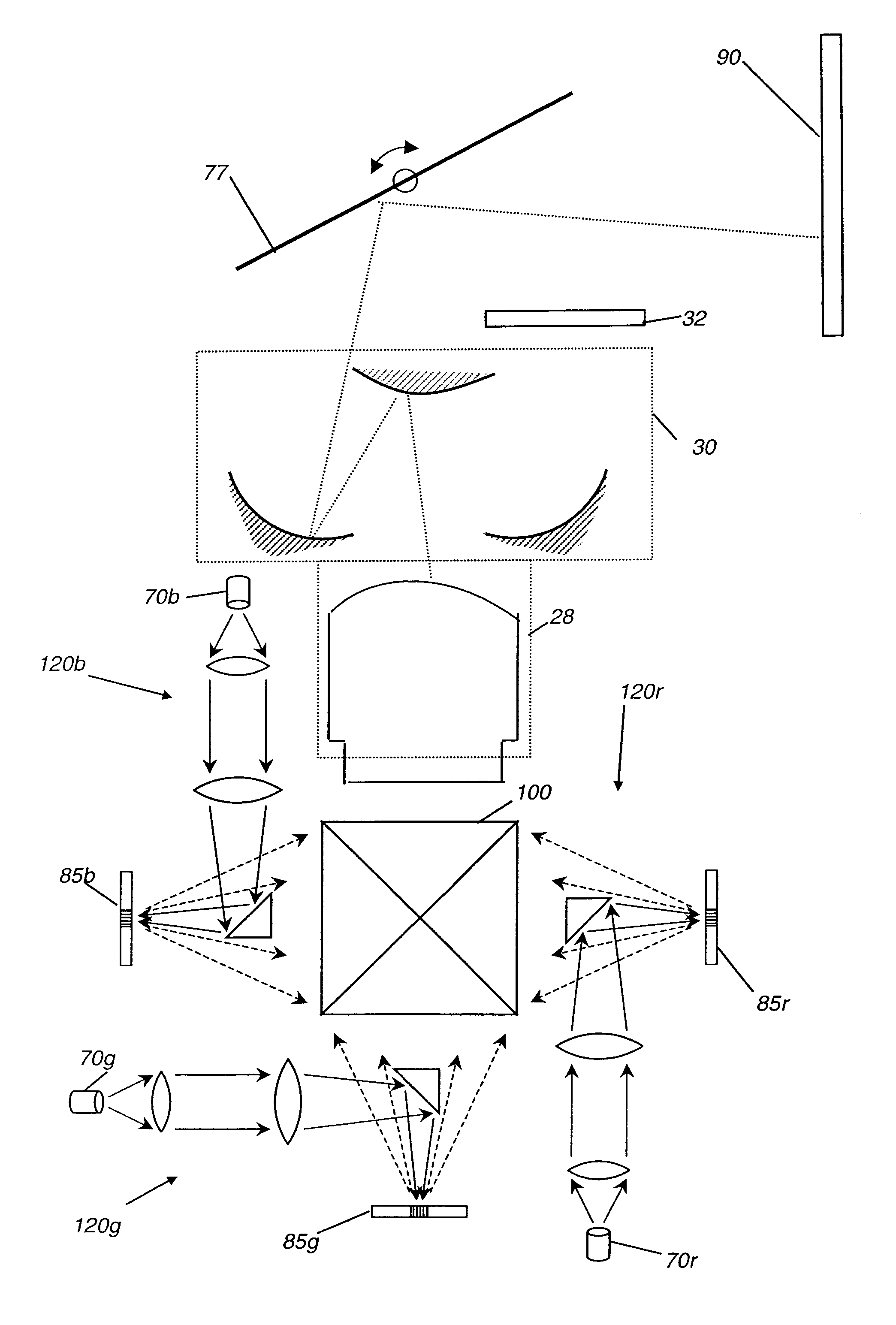
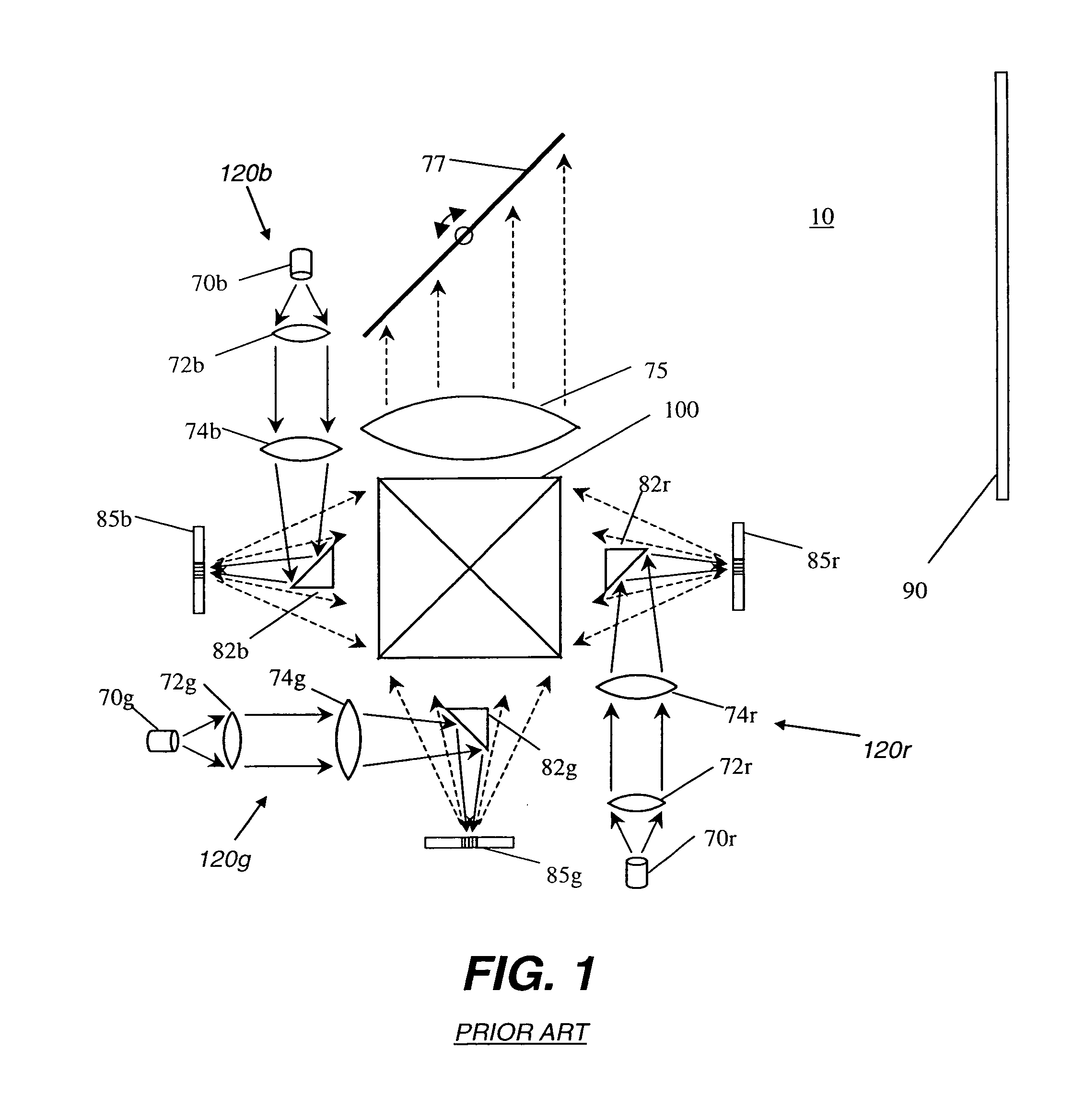
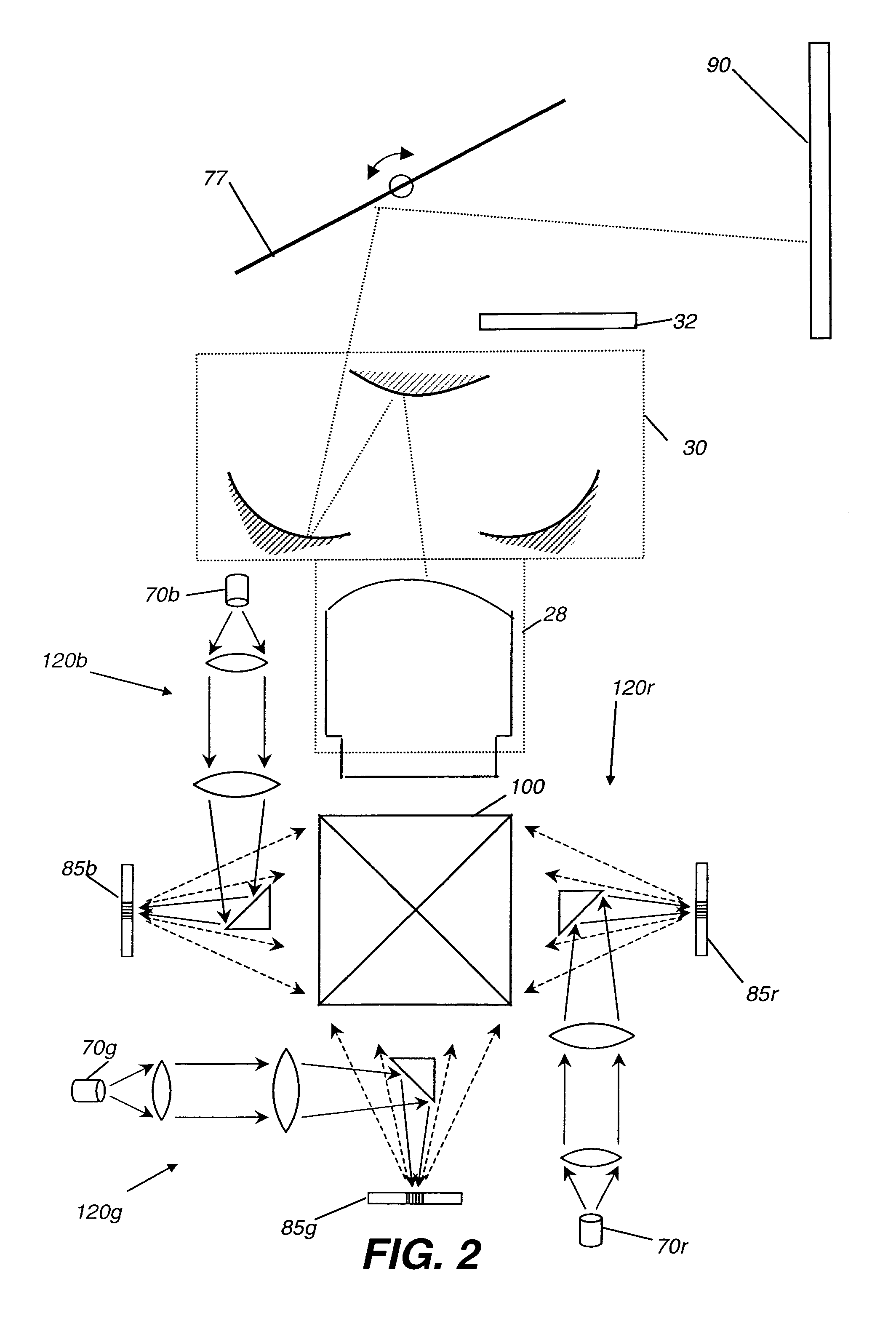
- A projection display surface with a substrate and a reflective layer coated with a fluorescent agent that absorbs a fraction of the incident light and emits light in a wider emissive wavelength band, reducing speckle artifacts through spectral broadening, applicable to various projection technologies without adding cost or complexity.


Speckle reduction for display system with electromechanical grating
PatentInactiveUS7046446B1
Innovation
- The use of a linear light modulator with multiple diffracted orders of light, where the intensity of first-order diffracted light is less than or equal to the summed intensity of second and higher orders, and anamorphic distortion to reshape the image line, effectively reducing speckle by increasing the angle and number of diffracted orders.

Optical Safety Standards for Laser-Based Engines
Laser-based optical engines operating with speckle reduction requirements below 2% contrast must comply with comprehensive safety standards to ensure both performance optimization and user protection. The International Electrotechnical Commission (IEC) 60825 series provides the fundamental framework for laser safety classification, establishing exposure limits and safety measures that directly impact speckle reduction system design.
Class 1 laser systems, which are considered safe under all conditions of normal use, represent the preferred classification for consumer optical engines. However, achieving sub-2% speckle contrast often requires higher optical power densities that may push systems into Class 1M or Class 2 categories, necessitating additional safety considerations and protective measures.
The American National Standards Institute (ANSI) Z136.1 standard complements IEC requirements by defining administrative and engineering controls for laser systems. For speckle reduction applications, these standards mandate specific beam containment protocols, particularly relevant when implementing dynamic speckle mitigation techniques that involve beam steering or modulation.
Optical safety standards specifically address temporal and spatial coherence modifications used in speckle reduction. The maximum permissible exposure (MPE) calculations must account for wavelength diversity techniques, where multiple laser sources operate simultaneously. Standards require that the combined exposure from all wavelengths remains within safe limits, often constraining the power budget available for speckle reduction algorithms.
Eye safety considerations become particularly critical when implementing angle diversity or pupil plane modulation techniques. Standards mandate that any optical system component failure must not result in hazardous exposure levels. This requirement influences the design of speckle reduction mechanisms, often necessitating fail-safe beam shutters or power limiting circuits.
International standards also address electromagnetic compatibility (EMC) requirements for laser driving electronics used in speckle reduction systems. High-frequency modulation techniques employed for temporal speckle averaging must comply with electromagnetic emission limits while maintaining the precise timing control necessary for effective speckle suppression.
Certification processes require comprehensive documentation of speckle reduction methodologies and their safety implications. Testing protocols must demonstrate that speckle mitigation techniques do not compromise the inherent safety classification of the optical engine, ensuring regulatory compliance across different market regions.
Class 1 laser systems, which are considered safe under all conditions of normal use, represent the preferred classification for consumer optical engines. However, achieving sub-2% speckle contrast often requires higher optical power densities that may push systems into Class 1M or Class 2 categories, necessitating additional safety considerations and protective measures.
The American National Standards Institute (ANSI) Z136.1 standard complements IEC requirements by defining administrative and engineering controls for laser systems. For speckle reduction applications, these standards mandate specific beam containment protocols, particularly relevant when implementing dynamic speckle mitigation techniques that involve beam steering or modulation.
Optical safety standards specifically address temporal and spatial coherence modifications used in speckle reduction. The maximum permissible exposure (MPE) calculations must account for wavelength diversity techniques, where multiple laser sources operate simultaneously. Standards require that the combined exposure from all wavelengths remains within safe limits, often constraining the power budget available for speckle reduction algorithms.
Eye safety considerations become particularly critical when implementing angle diversity or pupil plane modulation techniques. Standards mandate that any optical system component failure must not result in hazardous exposure levels. This requirement influences the design of speckle reduction mechanisms, often necessitating fail-safe beam shutters or power limiting circuits.
International standards also address electromagnetic compatibility (EMC) requirements for laser driving electronics used in speckle reduction systems. High-frequency modulation techniques employed for temporal speckle averaging must comply with electromagnetic emission limits while maintaining the precise timing control necessary for effective speckle suppression.
Certification processes require comprehensive documentation of speckle reduction methodologies and their safety implications. Testing protocols must demonstrate that speckle mitigation techniques do not compromise the inherent safety classification of the optical engine, ensuring regulatory compliance across different market regions.
Cost-Performance Trade-offs in Speckle Reduction
The pursuit of speckle reduction below 2% contrast in optical engines presents a complex optimization challenge where performance gains must be carefully balanced against implementation costs. Different speckle reduction techniques exhibit varying cost-performance profiles, requiring strategic evaluation to determine the most economically viable approach for specific applications.
Hardware-based solutions such as rotating diffusers and vibrating screens offer reliable speckle reduction performance but introduce significant mechanical complexity and associated costs. These systems require precision motors, control electronics, and robust mechanical assemblies that can withstand continuous operation. While capable of achieving sub-2% contrast levels, the total cost of ownership includes initial hardware investment, power consumption, and maintenance requirements over the product lifecycle.
Optical approaches utilizing wavelength diversity or angular diversity present different trade-off characteristics. Multi-wavelength laser systems can effectively reduce speckle through temporal averaging but require multiple laser sources, increasing both component costs and thermal management complexity. The performance scaling is generally predictable, with each additional wavelength contributing incrementally to speckle reduction, allowing for targeted cost optimization based on specific contrast requirements.
Digital processing methods represent an increasingly attractive cost-performance option, leveraging computational resources rather than additional hardware components. Advanced algorithms can achieve significant speckle reduction through image processing techniques, with implementation costs primarily concentrated in processing power and algorithm development. As computational capabilities continue to improve while costs decrease, digital solutions become more competitive, particularly for applications where real-time processing constraints can be accommodated.
Hybrid approaches combining multiple techniques often provide optimal cost-performance ratios by leveraging the strengths of different methods while minimizing individual system requirements. For instance, combining modest mechanical diffusion with digital processing can achieve target performance levels at lower overall system cost than either approach alone.
The economic analysis must also consider production volume effects, as high-volume applications can amortize development costs across larger quantities, potentially justifying more sophisticated but initially expensive solutions. Market positioning and competitive requirements further influence the acceptable cost-performance envelope for speckle reduction implementations.
Hardware-based solutions such as rotating diffusers and vibrating screens offer reliable speckle reduction performance but introduce significant mechanical complexity and associated costs. These systems require precision motors, control electronics, and robust mechanical assemblies that can withstand continuous operation. While capable of achieving sub-2% contrast levels, the total cost of ownership includes initial hardware investment, power consumption, and maintenance requirements over the product lifecycle.
Optical approaches utilizing wavelength diversity or angular diversity present different trade-off characteristics. Multi-wavelength laser systems can effectively reduce speckle through temporal averaging but require multiple laser sources, increasing both component costs and thermal management complexity. The performance scaling is generally predictable, with each additional wavelength contributing incrementally to speckle reduction, allowing for targeted cost optimization based on specific contrast requirements.
Digital processing methods represent an increasingly attractive cost-performance option, leveraging computational resources rather than additional hardware components. Advanced algorithms can achieve significant speckle reduction through image processing techniques, with implementation costs primarily concentrated in processing power and algorithm development. As computational capabilities continue to improve while costs decrease, digital solutions become more competitive, particularly for applications where real-time processing constraints can be accommodated.
Hybrid approaches combining multiple techniques often provide optimal cost-performance ratios by leveraging the strengths of different methods while minimizing individual system requirements. For instance, combining modest mechanical diffusion with digital processing can achieve target performance levels at lower overall system cost than either approach alone.
The economic analysis must also consider production volume effects, as high-volume applications can amortize development costs across larger quantities, potentially justifying more sophisticated but initially expensive solutions. Market positioning and competitive requirements further influence the acceptable cost-performance envelope for speckle reduction implementations.
Unlock deeper insights with Patsnap Eureka Quick Research — get a full tech report to explore trends and direct your research. Try now!
Generate Your Research Report Instantly with AI Agent
Supercharge your innovation with Patsnap Eureka AI Agent Platform!