

How to Select Plate Heat Exchanger for Cryogenic Applications
MAR 10, 20269 MIN READ
Generate Your Research Report Instantly with AI Agent
Patsnap Eureka helps you evaluate technical feasibility & market potential.
Cryogenic Heat Exchanger Technology Background and Objectives
Cryogenic heat exchangers represent a critical technology in the processing and handling of extremely low-temperature fluids, typically operating below -150°C (-238°F). These specialized thermal management systems have evolved from basic shell-and-tube configurations to sophisticated plate-type designs that offer superior performance in demanding cryogenic environments. The fundamental challenge lies in maintaining efficient heat transfer while managing the extreme thermal stresses, material brittleness, and phase change phenomena that occur at cryogenic temperatures.
The development of plate heat exchangers for cryogenic applications emerged from the need to overcome limitations of traditional heat exchanger designs. Conventional systems often suffered from thermal shock, inadequate sealing at extreme temperatures, and inefficient heat transfer coefficients when handling liquefied gases such as nitrogen, oxygen, hydrogen, and natural gas. The plate configuration offers distinct advantages including compact design, enhanced heat transfer surface area, and improved thermal efficiency through optimized flow patterns.
Modern cryogenic plate heat exchangers must address multiple technical objectives simultaneously. Primary among these is achieving maximum thermal efficiency while minimizing pressure drop across the system. The design must accommodate significant temperature differentials, often exceeding 200°C between inlet and outlet streams, while maintaining structural integrity under thermal cycling conditions. Material selection becomes paramount, requiring alloys that retain ductility and strength at cryogenic temperatures while resisting embrittlement and thermal fatigue.
The technology aims to optimize heat recovery in cryogenic processes, particularly in liquefied natural gas facilities, air separation units, and hydrogen liquefaction plants. Energy efficiency targets typically seek to achieve effectiveness ratings above 95% while maintaining operational reliability over extended service periods. Advanced designs incorporate features such as distributed flow channels, enhanced surface geometries, and specialized gasket materials capable of maintaining seal integrity at extreme temperatures.
Contemporary objectives also focus on modular design approaches that enable scalable capacity and simplified maintenance procedures. The integration of advanced materials, including austenitic stainless steels and specialized aluminum alloys, supports these performance targets while addressing the economic constraints of cryogenic processing facilities. These technological foundations establish the framework for selecting optimal plate heat exchanger configurations for specific cryogenic applications.
Market Demand for Cryogenic Plate Heat Exchangers
The global cryogenic industry has experienced substantial growth driven by expanding applications in liquefied natural gas (LNG), industrial gas production, aerospace, and emerging hydrogen economy sectors. This growth trajectory has created significant demand for specialized heat exchange equipment capable of operating reliably at extremely low temperatures, typically below -150°C.
LNG infrastructure development represents the largest market segment for cryogenic plate heat exchangers. The ongoing global energy transition and increasing demand for cleaner fossil fuels have accelerated LNG terminal construction worldwide. These facilities require efficient heat exchangers for regasification processes, liquefaction cycles, and temperature management systems. The compact design and high thermal efficiency of plate heat exchangers make them particularly attractive for space-constrained marine applications and floating LNG platforms.
Industrial gas production facilities constitute another major demand driver. Air separation units producing oxygen, nitrogen, and argon rely heavily on cryogenic heat exchange technology. The semiconductor industry's expansion has intensified demand for ultra-pure industrial gases, necessitating more sophisticated cryogenic processing equipment. Similarly, the growing medical gas market requires reliable cryogenic systems for oxygen and nitrogen production and storage.
The emerging hydrogen economy presents substantial future market opportunities. Hydrogen liquefaction and storage systems require specialized heat exchangers capable of handling temperatures approaching absolute zero. As governments worldwide implement hydrogen strategies and invest in infrastructure development, demand for cryogenic heat exchange equipment is expected to accelerate significantly.
Aerospace and space exploration applications continue driving demand for high-performance cryogenic heat exchangers. Rocket propulsion systems using liquid oxygen and liquid hydrogen require compact, lightweight heat exchange solutions. The commercial space industry's rapid expansion has created additional market opportunities beyond traditional government aerospace programs.
Regional market dynamics vary considerably, with Asia-Pacific leading demand growth due to rapid industrialization and LNG import infrastructure development. North America and Europe maintain strong demand driven by industrial gas applications and hydrogen economy investments. The market exhibits strong correlation with energy infrastructure spending and industrial capacity expansion cycles.
Current Status and Challenges in Cryogenic PHE Selection
The selection of plate heat exchangers (PHEs) for cryogenic applications represents a complex engineering challenge that has gained significant attention in recent decades. Current industry practices rely heavily on conventional selection methodologies originally developed for standard temperature applications, which often prove inadequate when dealing with extreme low-temperature conditions ranging from -50°C to -196°C.
Modern cryogenic PHE selection processes typically involve multi-criteria evaluation frameworks that consider thermal performance, mechanical integrity, and material compatibility simultaneously. However, existing selection tools demonstrate notable limitations in accurately predicting performance under cryogenic conditions, particularly regarding thermal stress distribution and material behavior at ultra-low temperatures.
The primary technical challenge lies in the accurate prediction of heat transfer coefficients and pressure drop characteristics under cryogenic conditions. Traditional correlations developed for ambient temperature applications often overestimate or underestimate performance parameters by 15-30% when applied to cryogenic fluids. This discrepancy stems from the significant changes in fluid properties, including viscosity, density, and thermal conductivity, which exhibit non-linear behavior at extremely low temperatures.
Material selection presents another critical challenge, as conventional stainless steel grades may experience brittleness and reduced ductility at cryogenic temperatures. The lack of comprehensive material property databases for PHE-specific applications at ultra-low temperatures complicates the selection process. Current industry standards provide limited guidance on material compatibility with various cryogenic fluids, particularly for mixed refrigerant systems.
Thermal stress analysis remains inadequately addressed in existing selection methodologies. The significant temperature gradients inherent in cryogenic applications can induce substantial thermal stresses that may lead to plate deformation or gasket failure. Current computational tools often lack the sophistication to accurately model these complex thermal-mechanical interactions during the selection phase.
Furthermore, the integration of safety considerations specific to cryogenic applications into the selection process remains inconsistent across the industry. Issues such as auto-refrigeration effects, potential for brittle fracture, and emergency warming scenarios are often inadequately considered during the initial selection phase, leading to operational challenges and safety concerns in deployed systems.
Current Selection Methods for Cryogenic PHE
01 Plate heat exchanger structural design and assembly
Innovations in the structural design and assembly methods of plate heat exchangers focus on improving the arrangement and connection of heat exchange plates. This includes optimized plate configurations, gasket arrangements, and frame structures that enhance mechanical stability and ease of assembly. Advanced designs may incorporate modular components and improved sealing mechanisms to facilitate maintenance and reduce installation time.- Plate heat exchanger structural design and assembly: Innovations in the structural design and assembly methods of plate heat exchangers focus on improving the arrangement and connection of heat exchange plates. This includes optimized plate configurations, gasket arrangements, and frame structures that enhance mechanical stability and ease of assembly. Advanced designs may incorporate modular components and improved sealing mechanisms to facilitate maintenance and reduce assembly time while ensuring reliable operation under various pressure and temperature conditions.
- Enhanced heat transfer efficiency through plate geometry: Improvements in heat transfer performance are achieved through innovative plate geometries and surface patterns. These designs include corrugated patterns, dimpled surfaces, and specialized channel configurations that promote turbulent flow and increase the effective heat transfer area. The optimized geometry reduces thermal resistance and enhances overall heat exchange efficiency while maintaining acceptable pressure drop characteristics across the heat exchanger.
- Material selection and corrosion resistance: Advanced material technologies for plate heat exchangers focus on selecting appropriate materials that provide superior corrosion resistance and durability in harsh operating environments. This includes the use of specialized alloys, coatings, and surface treatments that extend service life and maintain heat transfer performance. Material innovations also address compatibility with various fluids and operating conditions, ensuring long-term reliability and reduced maintenance requirements.
- Compact and high-capacity heat exchanger designs: Development of compact plate heat exchangers with increased heat transfer capacity focuses on maximizing performance within limited space constraints. These designs incorporate high-density plate arrangements, optimized flow distribution systems, and advanced manufacturing techniques to achieve superior heat transfer rates per unit volume. The compact configurations are particularly suitable for applications where space is limited while high thermal performance is required.
- Sealing and leak prevention technologies: Innovations in sealing systems for plate heat exchangers address the critical challenge of preventing fluid leakage between plates and to the external environment. Advanced gasket materials, sealing configurations, and compression mechanisms ensure reliable sealing performance across wide temperature and pressure ranges. These technologies also facilitate easier maintenance and gasket replacement while maintaining the integrity of the heat exchanger system throughout its operational life.
02 Enhanced heat transfer efficiency through plate geometry
Improvements in heat transfer performance are achieved through specialized plate geometries and surface patterns. These include corrugated designs, dimpled surfaces, and optimized flow channel configurations that increase turbulence and heat transfer coefficients. The geometric modifications aim to maximize thermal efficiency while minimizing pressure drop across the heat exchanger.Expand Specific Solutions03 Material selection and corrosion resistance
Advanced material technologies for plate heat exchangers focus on selecting appropriate metals and coatings that provide superior corrosion resistance and durability. This includes the use of stainless steel alloys, titanium, and specialized surface treatments that extend service life in aggressive chemical environments and high-temperature applications. Material innovations also address compatibility with various fluids and operating conditions.Expand Specific Solutions04 Compact and high-capacity designs
Development of compact plate heat exchanger designs that maximize heat transfer capacity within minimal space requirements. These innovations include high-density plate stacking arrangements, optimized port configurations, and advanced flow distribution systems. The compact designs are particularly suitable for applications with space constraints while maintaining or improving thermal performance.Expand Specific Solutions05 Sealing and gasket technologies
Advancements in sealing systems and gasket technologies that ensure leak-proof operation and facilitate easy maintenance. This includes the development of elastomeric gaskets with improved temperature and chemical resistance, adhesive-free gasket attachment methods, and innovative sealing configurations that accommodate thermal expansion. Enhanced sealing solutions contribute to operational reliability and reduced maintenance requirements.Expand Specific Solutions
Major Players in Cryogenic Heat Exchanger Industry
The cryogenic plate heat exchanger market represents a mature yet specialized segment within the broader heat transfer equipment industry, characterized by high technical barriers and concentrated expertise among established players. The market demonstrates steady growth driven by expanding LNG infrastructure, industrial gas applications, and emerging hydrogen economy demands. Technology maturity varies significantly across applications, with companies like Alfa Laval Corporate AB and SWEP International AB leading in conventional brazed plate technologies, while Air Liquide SA and Topsoe A/S drive innovation in specialized cryogenic processes. Industrial giants such as Danfoss A/S contribute advanced control systems integration, while emerging players like Chinese manufacturers Gree Electric and BYD represent growing regional capabilities. The competitive landscape reflects a consolidation trend among tier-one suppliers, with differentiation increasingly focused on material science innovations, enhanced thermal efficiency, and integrated system solutions rather than basic heat transfer performance.
Air Liquide SA
Technical Solution: Air Liquide employs custom-designed plate heat exchangers for cryogenic gas separation and liquefaction processes, utilizing advanced materials selection including aluminum alloys and specialized stainless steel grades optimized for low-temperature service. Their selection criteria emphasize thermal shock resistance and compatibility with oxygen-rich environments. The company integrates plate heat exchangers into complete cryogenic systems, employing multi-stream configurations for simultaneous heating and cooling of different process streams. Their design approach incorporates extensive safety protocols for handling flammable cryogenic gases and includes specialized insulation systems to minimize heat ingress and prevent ice formation on external surfaces.
Strengths: Comprehensive cryogenic system integration expertise and strong safety protocols. Weaknesses: Focus on large-scale industrial applications limits flexibility for smaller projects.
Alfa Laval Corporate AB
Technical Solution: Alfa Laval develops specialized plate heat exchangers for cryogenic applications using advanced brazing technology and corrosion-resistant materials like stainless steel 316L and specialized alloys. Their AlfaNova series features compact brazed plate heat exchangers designed to handle extreme temperature differentials from -196°C to ambient conditions. The company employs proprietary plate patterns and gasket-free designs to ensure thermal efficiency while maintaining structural integrity under cryogenic thermal stress. Their selection methodology incorporates computational fluid dynamics modeling to optimize heat transfer coefficients and minimize pressure drops in liquid nitrogen, oxygen, and argon applications.
Strengths: Market leader with extensive cryogenic experience and proven reliability. Weaknesses: Higher cost compared to standard heat exchangers and limited customization options.
Key Technologies in Low Temperature PHE Design
Apparatus for exchanging heat and material
PatentWO2020174169A1
Innovation
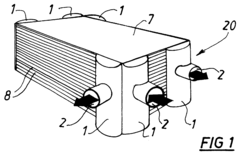
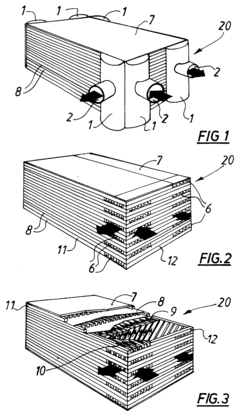
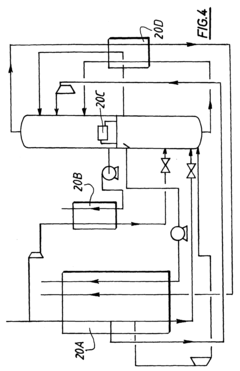
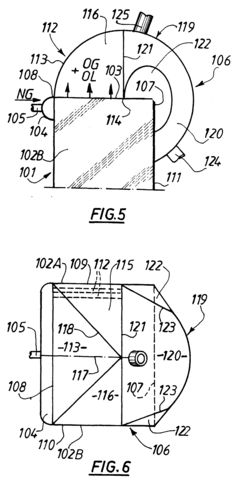
- A device comprising a stack of solid metal plates separated by hollow metal columns with integrated packing for direct heat and material exchange, allowing for adjustable configurations and easy adaptation to operating conditions, with a separate zone for indirect heat exchange, and using readily available materials like aluminum, stainless steel, or titanium for enhanced efficiency and mechanical strength.


Heat exchanger, more particularly plate-like heat exchanger for air separating apparatus
PatentInactiveEP1026468A1
Innovation
- A plate heat exchanger featuring copper or copper alloy plates with increased separation between corrugations, typically greater than 6 mm, and copper waves, optimized with specific dimensions and configurations to enhance thermal conductivity and reduce the number of plates, while maintaining a leak-tight structure.
Safety Standards for Cryogenic Equipment
Safety standards for cryogenic equipment represent a critical framework governing the design, manufacturing, installation, and operation of heat exchangers operating at extremely low temperatures. These standards have evolved significantly over the past decades, driven by increasing industrial applications and enhanced understanding of cryogenic hazards. The primary regulatory bodies include ASME, API, NIST, and various international organizations such as ISO and IEC, each contributing specialized guidelines for different aspects of cryogenic operations.
The fundamental safety considerations for plate heat exchangers in cryogenic applications center around material compatibility, thermal stress management, and leak prevention. Materials must demonstrate adequate fracture toughness at operating temperatures, typically requiring impact testing at temperatures well below the intended service conditions. Austenitic stainless steels, aluminum alloys, and specialized nickel-based materials are commonly specified, with strict requirements for material certification and traceability.
Pressure vessel codes such as ASME Section VIII provide the foundational requirements for cryogenic heat exchanger design. These standards mandate specific design factors, inspection procedures, and testing protocols that account for the unique challenges of low-temperature operation. The codes address critical aspects including minimum design metal temperature (MDMT), brittle fracture considerations, and thermal shock resistance.
Fire safety and emergency response protocols constitute another essential component of cryogenic safety standards. These include requirements for proper ventilation systems, oxygen deficiency monitoring, and emergency shutdown procedures. The standards specify minimum distances from ignition sources, proper grounding techniques, and specialized fire suppression systems suitable for cryogenic environments.
Personnel safety standards encompass comprehensive training requirements, personal protective equipment specifications, and exposure limit guidelines. Workers must be trained in cryogenic hazard recognition, proper handling procedures, and emergency response protocols. The standards also define requirements for safety systems including pressure relief devices, rupture discs, and automated monitoring systems that can detect abnormal operating conditions and initiate protective actions.
Regular inspection and maintenance standards ensure continued safe operation throughout the equipment lifecycle. These include periodic pressure testing, non-destructive examination requirements, and documentation protocols that maintain traceability of all safety-critical components and modifications.
Material Science Advances in Cryogenic Applications
The development of advanced materials for cryogenic applications has undergone significant transformation over the past decades, driven by the demanding requirements of plate heat exchangers operating at extremely low temperatures. Traditional materials often exhibit brittleness, thermal stress cracking, and reduced mechanical properties when exposed to cryogenic conditions, necessitating the development of specialized material solutions.
Recent breakthroughs in metallurgical engineering have led to the creation of austenitic stainless steel alloys with enhanced low-temperature performance. These materials maintain superior ductility and fracture toughness at temperatures as low as -196°C, making them ideal candidates for cryogenic plate heat exchanger construction. Advanced 316LN and 304LN grades demonstrate exceptional resistance to thermal cycling fatigue, a critical factor in applications involving frequent temperature fluctuations.
Aluminum alloys have emerged as promising alternatives, particularly the 5000 and 6000 series, which exhibit improved strength-to-weight ratios and thermal conductivity at cryogenic temperatures. The development of precipitation-hardened aluminum alloys has addressed previous concerns regarding mechanical stability, offering enhanced yield strength while maintaining adequate ductility for plate forming operations.
Innovative surface treatment technologies have revolutionized material performance in cryogenic environments. Advanced coating systems, including ceramic-matrix composites and nanostructured surface modifications, provide enhanced corrosion resistance and thermal barrier properties. These treatments significantly extend operational lifespan while reducing maintenance requirements in harsh cryogenic applications.
Composite materials represent the frontier of cryogenic material science, with carbon fiber reinforced polymers and metal matrix composites showing exceptional promise. These materials offer tailored thermal expansion coefficients, enabling better thermal stress management and improved dimensional stability during temperature cycling operations.
The integration of computational materials science has accelerated the development of next-generation cryogenic materials. Machine learning algorithms now predict material behavior under extreme conditions, enabling the design of optimized alloy compositions before physical testing. This approach has reduced development timelines while improving material performance characteristics for specialized cryogenic applications.
Unlock deeper insights with Patsnap Eureka Quick Research — get a full tech report to explore trends and direct your research. Try now!
Generate Your Research Report Instantly with AI Agent
Supercharge your innovation with Patsnap Eureka AI Agent Platform!