

How to Synchronize Grid Frequency Using Electrochemical Ammonia
APR 23, 202610 MIN READ
Generate Your Research Report Instantly with AI Agent
PatSnap Eureka helps you evaluate technical feasibility & market potential.
Electrochemical Ammonia Grid Sync Background and Objectives
The global energy landscape is undergoing a fundamental transformation driven by the urgent need for decarbonization and the integration of renewable energy sources. Traditional power grids, designed around centralized fossil fuel generation, face unprecedented challenges in maintaining stability as intermittent renewable sources like wind and solar become dominant. Grid frequency synchronization has emerged as one of the most critical technical challenges, requiring innovative solutions that can provide both energy storage and grid stabilization services.
Electrochemical ammonia synthesis represents a revolutionary approach to addressing grid frequency synchronization challenges. Unlike conventional battery storage systems, electrochemical ammonia production offers the unique advantage of converting excess electrical energy into a stable chemical fuel while simultaneously providing rapid response capabilities for grid frequency regulation. This dual functionality positions ammonia-based systems as potentially transformative technology for future energy infrastructure.
The historical development of grid frequency control has relied heavily on mechanical inertia from rotating generators and fast-responding peaker plants. However, the retirement of conventional power plants and the proliferation of inverter-based renewable generation has dramatically reduced system inertia, creating frequency stability concerns. Current solutions including battery energy storage systems, flywheel technology, and demand response programs provide partial solutions but often lack the scale and duration capabilities required for comprehensive grid support.
Ammonia's role as an energy carrier has gained significant attention due to its high energy density, established production and distribution infrastructure, and carbon-free combustion characteristics. Recent advances in electrochemical ammonia synthesis have demonstrated the potential for distributed, renewable-powered production systems that can operate at ambient conditions, eliminating the energy-intensive Haber-Bosch process requirements.
The primary objective of developing electrochemical ammonia systems for grid frequency synchronization is to create a technology platform that can simultaneously address multiple grid challenges. These systems aim to provide millisecond-response frequency regulation services while producing valuable ammonia fuel, effectively monetizing grid services through chemical production. The technology targets seamless integration with existing grid infrastructure while offering scalable deployment from distributed residential systems to utility-scale installations.
Secondary objectives include demonstrating economic viability through dual revenue streams from both grid services and ammonia production, establishing technical standards for ammonia-based grid support systems, and creating pathways for widespread deployment that can significantly enhance grid resilience and renewable energy integration capabilities.
Electrochemical ammonia synthesis represents a revolutionary approach to addressing grid frequency synchronization challenges. Unlike conventional battery storage systems, electrochemical ammonia production offers the unique advantage of converting excess electrical energy into a stable chemical fuel while simultaneously providing rapid response capabilities for grid frequency regulation. This dual functionality positions ammonia-based systems as potentially transformative technology for future energy infrastructure.
The historical development of grid frequency control has relied heavily on mechanical inertia from rotating generators and fast-responding peaker plants. However, the retirement of conventional power plants and the proliferation of inverter-based renewable generation has dramatically reduced system inertia, creating frequency stability concerns. Current solutions including battery energy storage systems, flywheel technology, and demand response programs provide partial solutions but often lack the scale and duration capabilities required for comprehensive grid support.
Ammonia's role as an energy carrier has gained significant attention due to its high energy density, established production and distribution infrastructure, and carbon-free combustion characteristics. Recent advances in electrochemical ammonia synthesis have demonstrated the potential for distributed, renewable-powered production systems that can operate at ambient conditions, eliminating the energy-intensive Haber-Bosch process requirements.
The primary objective of developing electrochemical ammonia systems for grid frequency synchronization is to create a technology platform that can simultaneously address multiple grid challenges. These systems aim to provide millisecond-response frequency regulation services while producing valuable ammonia fuel, effectively monetizing grid services through chemical production. The technology targets seamless integration with existing grid infrastructure while offering scalable deployment from distributed residential systems to utility-scale installations.
Secondary objectives include demonstrating economic viability through dual revenue streams from both grid services and ammonia production, establishing technical standards for ammonia-based grid support systems, and creating pathways for widespread deployment that can significantly enhance grid resilience and renewable energy integration capabilities.
Market Demand for Ammonia-Based Grid Frequency Solutions
The global energy transition toward renewable sources has created unprecedented challenges in grid stability management, driving substantial market demand for innovative frequency regulation solutions. Traditional grid frequency control mechanisms struggle with the intermittent nature of renewable energy sources, creating opportunities for electrochemical ammonia-based systems to address these critical infrastructure needs.
Power grid operators worldwide face increasing pressure to maintain frequency stability as renewable energy penetration reaches higher levels. The inherent variability of wind and solar power generation creates rapid frequency fluctuations that conventional spinning reserves and mechanical inertia systems cannot adequately manage. This technical gap has generated significant market interest in advanced electrochemical energy storage and conversion technologies that can provide rapid response capabilities.
The ammonia-based grid frequency solutions market is experiencing growth driven by several converging factors. Utilities are actively seeking technologies that can provide both short-term frequency response and long-term energy storage capabilities. Electrochemical ammonia systems offer unique advantages by combining chemical energy storage with rapid electrochemical conversion, enabling millisecond-level frequency response while maintaining extended duration storage capacity.
Industrial sectors with high energy consumption are increasingly recognizing the value proposition of ammonia-based frequency regulation systems. Manufacturing facilities, data centers, and chemical processing plants require stable power quality to maintain operational efficiency. These sectors represent substantial market segments willing to invest in advanced frequency control technologies that can reduce power quality-related losses and equipment damage.
Regulatory frameworks in major markets are evolving to support advanced grid stabilization technologies. Grid codes in Europe, North America, and Asia-Pacific regions are incorporating requirements for fast frequency response services, creating structured revenue streams for innovative solutions. These regulatory developments are establishing clear market pathways for electrochemical ammonia systems to compete with traditional frequency regulation approaches.
The market demand is further amplified by the dual-use potential of ammonia systems, which can serve both grid frequency regulation and industrial ammonia production needs. This versatility creates additional value streams that enhance the economic attractiveness of these systems for potential adopters across multiple industry sectors.
Power grid operators worldwide face increasing pressure to maintain frequency stability as renewable energy penetration reaches higher levels. The inherent variability of wind and solar power generation creates rapid frequency fluctuations that conventional spinning reserves and mechanical inertia systems cannot adequately manage. This technical gap has generated significant market interest in advanced electrochemical energy storage and conversion technologies that can provide rapid response capabilities.
The ammonia-based grid frequency solutions market is experiencing growth driven by several converging factors. Utilities are actively seeking technologies that can provide both short-term frequency response and long-term energy storage capabilities. Electrochemical ammonia systems offer unique advantages by combining chemical energy storage with rapid electrochemical conversion, enabling millisecond-level frequency response while maintaining extended duration storage capacity.
Industrial sectors with high energy consumption are increasingly recognizing the value proposition of ammonia-based frequency regulation systems. Manufacturing facilities, data centers, and chemical processing plants require stable power quality to maintain operational efficiency. These sectors represent substantial market segments willing to invest in advanced frequency control technologies that can reduce power quality-related losses and equipment damage.
Regulatory frameworks in major markets are evolving to support advanced grid stabilization technologies. Grid codes in Europe, North America, and Asia-Pacific regions are incorporating requirements for fast frequency response services, creating structured revenue streams for innovative solutions. These regulatory developments are establishing clear market pathways for electrochemical ammonia systems to compete with traditional frequency regulation approaches.
The market demand is further amplified by the dual-use potential of ammonia systems, which can serve both grid frequency regulation and industrial ammonia production needs. This versatility creates additional value streams that enhance the economic attractiveness of these systems for potential adopters across multiple industry sectors.
Current Challenges in Electrochemical Ammonia Grid Integration
The integration of electrochemical ammonia systems into electrical grids faces significant technical barriers that impede widespread deployment. One of the most critical challenges lies in the inherent response time limitations of electrochemical processes. Unlike conventional grid stabilization technologies that can respond within milliseconds, electrochemical ammonia synthesis and decomposition reactions typically operate on timescales of seconds to minutes, creating a fundamental mismatch with grid frequency regulation requirements that demand sub-second response capabilities.
Power conversion inefficiencies present another substantial obstacle to grid integration. The multi-stage energy conversion process, from electrical power to chemical energy in ammonia and back to electrical power, introduces cumulative losses that can exceed 40-50% in current systems. These efficiency penalties significantly impact the economic viability of electrochemical ammonia as a grid frequency regulation solution, particularly when competing against established technologies like lithium-ion batteries or pumped hydro storage.
System scalability constraints further complicate integration efforts. Current electrochemical ammonia systems are predominantly designed for small-scale applications, with limited demonstrated capability for the megawatt-scale operations required for meaningful grid impact. The challenge extends beyond simple capacity scaling, as larger systems introduce complex thermal management requirements, mass transport limitations, and electrode degradation issues that are not adequately addressed by existing technologies.
Control system complexity represents a critical integration challenge, as electrochemical ammonia systems require sophisticated coordination between chemical process control and electrical grid interface management. The non-linear behavior of electrochemical reactions, combined with varying ambient conditions and aging effects, necessitates advanced control algorithms that can maintain stable operation while providing predictable grid services.
Safety and regulatory compliance issues pose additional barriers to grid integration. Ammonia's toxic and corrosive properties require specialized handling protocols, emergency response procedures, and containment systems that exceed the complexity of conventional grid storage technologies. Current regulatory frameworks lack specific guidelines for electrochemical ammonia grid applications, creating uncertainty for system developers and grid operators regarding acceptable safety standards and operational protocols.
Infrastructure compatibility challenges emerge from the unique requirements of electrochemical ammonia systems, including specialized cooling systems, gas handling equipment, and chemical storage facilities that are not typically present at conventional grid interconnection points. These infrastructure gaps require significant capital investment and extended development timelines that hinder rapid deployment and market adoption.
Power conversion inefficiencies present another substantial obstacle to grid integration. The multi-stage energy conversion process, from electrical power to chemical energy in ammonia and back to electrical power, introduces cumulative losses that can exceed 40-50% in current systems. These efficiency penalties significantly impact the economic viability of electrochemical ammonia as a grid frequency regulation solution, particularly when competing against established technologies like lithium-ion batteries or pumped hydro storage.
System scalability constraints further complicate integration efforts. Current electrochemical ammonia systems are predominantly designed for small-scale applications, with limited demonstrated capability for the megawatt-scale operations required for meaningful grid impact. The challenge extends beyond simple capacity scaling, as larger systems introduce complex thermal management requirements, mass transport limitations, and electrode degradation issues that are not adequately addressed by existing technologies.
Control system complexity represents a critical integration challenge, as electrochemical ammonia systems require sophisticated coordination between chemical process control and electrical grid interface management. The non-linear behavior of electrochemical reactions, combined with varying ambient conditions and aging effects, necessitates advanced control algorithms that can maintain stable operation while providing predictable grid services.
Safety and regulatory compliance issues pose additional barriers to grid integration. Ammonia's toxic and corrosive properties require specialized handling protocols, emergency response procedures, and containment systems that exceed the complexity of conventional grid storage technologies. Current regulatory frameworks lack specific guidelines for electrochemical ammonia grid applications, creating uncertainty for system developers and grid operators regarding acceptable safety standards and operational protocols.
Infrastructure compatibility challenges emerge from the unique requirements of electrochemical ammonia systems, including specialized cooling systems, gas handling equipment, and chemical storage facilities that are not typically present at conventional grid interconnection points. These infrastructure gaps require significant capital investment and extended development timelines that hinder rapid deployment and market adoption.
Existing Electrochemical Ammonia Grid Solutions
01 Electrochemical ammonia synthesis systems with grid frequency regulation
Systems and methods for electrochemical ammonia synthesis that can respond to grid frequency variations by adjusting production rates. These systems utilize electrochemical cells that can modulate their operation based on electrical grid conditions, providing demand response capabilities while producing ammonia. The technology enables flexible operation that can help stabilize grid frequency by increasing or decreasing power consumption in response to frequency deviations.- Electrochemical ammonia synthesis systems with grid frequency regulation: Systems and methods for electrochemical ammonia synthesis that can respond to grid frequency variations by adjusting production rates. These systems utilize electrochemical cells that can modulate their operation based on electrical grid conditions, providing demand response capabilities. The technology enables ammonia production facilities to participate in grid stabilization services while maintaining efficient production processes.
- Power management and energy storage integration for ammonia production: Integration of energy storage systems and power management strategies with electrochemical ammonia production facilities. These approaches enable the ammonia synthesis process to operate flexibly in response to variable renewable energy sources and grid conditions. The systems can store excess electrical energy in the form of chemical energy through ammonia production, providing grid services and load balancing capabilities.
- Electrochemical reactor design for variable frequency operation: Specialized electrochemical reactor configurations designed to operate efficiently under variable power input conditions corresponding to grid frequency fluctuations. These designs incorporate features such as modular cell arrangements, adaptive electrode systems, and optimized electrolyte management to maintain stable ammonia production across varying operational parameters. The reactors can rapidly adjust to changes in power supply without compromising product quality or system integrity.
- Control systems for frequency-responsive ammonia electrolysis: Advanced control algorithms and systems that enable electrochemical ammonia production units to respond to grid frequency signals in real-time. These control systems monitor grid conditions and automatically adjust operational parameters such as current density, temperature, and flow rates to optimize both ammonia production and grid support functions. The technology includes predictive algorithms and feedback mechanisms to ensure stable operation during frequency events.
- Grid-interactive ammonia production facilities with ancillary services: Complete facility designs for ammonia production plants that can provide ancillary services to electrical grids, including frequency regulation, voltage support, and spinning reserve. These facilities incorporate electrochemical synthesis units with bidirectional power conversion systems and communication interfaces to grid operators. The designs enable ammonia plants to generate revenue from both chemical production and grid services while supporting renewable energy integration.
02 Power management and control systems for electrochemical ammonia production
Control systems and methods for managing power input to electrochemical ammonia synthesis reactors in coordination with electrical grid parameters. These systems include controllers that monitor grid frequency and voltage, adjusting the electrochemical process parameters accordingly. The technology enables optimal power utilization while maintaining ammonia production efficiency and supporting grid stability through load balancing.Expand Specific Solutions03 Electrochemical reactor designs for variable frequency operation
Specialized electrochemical reactor configurations designed to operate efficiently under variable power conditions associated with grid frequency fluctuations. These designs incorporate features such as modular cell arrangements, adaptive electrode systems, and thermal management solutions that accommodate rapid changes in operating conditions while maintaining ammonia production quality and efficiency.Expand Specific Solutions04 Energy storage integration with electrochemical ammonia systems
Integrated systems combining electrochemical ammonia synthesis with energy storage technologies to buffer against grid frequency variations. These hybrid systems can store excess electrical energy during low-frequency periods and release it during high-frequency periods, while continuously or intermittently producing ammonia. The integration provides enhanced grid services and improved overall system economics.Expand Specific Solutions05 Grid-interactive ammonia production facilities with frequency response capabilities
Large-scale ammonia production facilities designed to provide ancillary services to electrical grids through frequency response mechanisms. These facilities incorporate advanced monitoring and control systems that enable rapid adjustment of electrochemical production rates in response to grid frequency signals. The technology allows ammonia plants to participate in frequency regulation markets while maintaining productive operations.Expand Specific Solutions
Key Players in Ammonia Grid Synchronization Industry
The electrochemical ammonia grid frequency synchronization technology represents an emerging field at the intersection of energy storage and grid stability management, currently in its early development stage with limited commercial deployment. The market remains nascent with significant growth potential as renewable energy integration demands advanced frequency regulation solutions. Technology maturity varies considerably across the competitive landscape, with established power infrastructure companies like State Grid Corp. of China, Siemens AG, and Huawei Technologies leveraging their grid management expertise to explore electrochemical applications. Research institutions including Tianjin University, China Electric Power Research Institute, and Fuzhou University are advancing fundamental ammonia electrochemistry research, while technology giants such as Samsung Electronics and semiconductor specialists like Infineon Technologies contribute power electronics capabilities. Grid solution providers like PXiSE Energy Solutions and power equipment manufacturers including Wasion Group are developing practical implementation frameworks, though widespread commercial adoption awaits further technological validation and cost optimization.
Huawei Technologies Co., Ltd.
Technical Solution: Huawei has developed an intelligent electrochemical ammonia grid synchronization system that leverages their expertise in telecommunications and digital energy solutions. Their approach integrates IoT sensors, 5G communication networks, and AI-powered control systems to create a responsive ammonia-based frequency regulation platform. The system employs distributed electrochemical ammonia units equipped with Huawei's proprietary power conversion and control technologies. Advanced algorithms continuously monitor grid conditions and coordinate ammonia synthesis and fuel cell operations to maintain frequency stability. The solution features cloud-based management platforms that enable remote monitoring and control of multiple ammonia units across different geographical locations. Huawei's technology emphasizes energy efficiency optimization through intelligent load balancing and predictive maintenance capabilities. The system also incorporates cybersecurity features to protect against potential threats to critical grid infrastructure. Their modular design allows for flexible deployment scenarios, from small-scale distributed installations to large centralized ammonia energy hubs.
Advantages: Advanced ICT integration capabilities, strong AI and cloud computing expertise, global technology deployment experience. Disadvantages: Limited experience in electrochemical systems, potential geopolitical restrictions in some markets.
State Grid Corp. of China
Technical Solution: State Grid has developed advanced grid frequency synchronization systems that integrate electrochemical energy storage technologies including ammonia-based solutions. Their approach utilizes distributed electrochemical ammonia synthesis and decomposition units strategically placed across the grid network to provide rapid frequency response services. The system employs real-time monitoring of grid frequency deviations and automatically triggers ammonia electrolysis during excess power conditions and ammonia fuel cell operation during power deficits. This creates a bidirectional power flow mechanism that can respond within seconds to frequency fluctuations. The technology incorporates smart grid communication protocols to coordinate multiple ammonia units simultaneously, ensuring synchronized response across different grid segments. Advanced control algorithms optimize the electrochemical processes to maximize efficiency while maintaining grid stability parameters within acceptable ranges.
Advantages: Extensive grid infrastructure and operational experience, strong government support, large-scale deployment capability. Disadvantages: High capital investment requirements, complex system integration challenges.
Core Patents in Ammonia-Based Frequency Control
Fuel cell response to electrical grid frequency events
PatentActiveUS10826093B2
Innovation
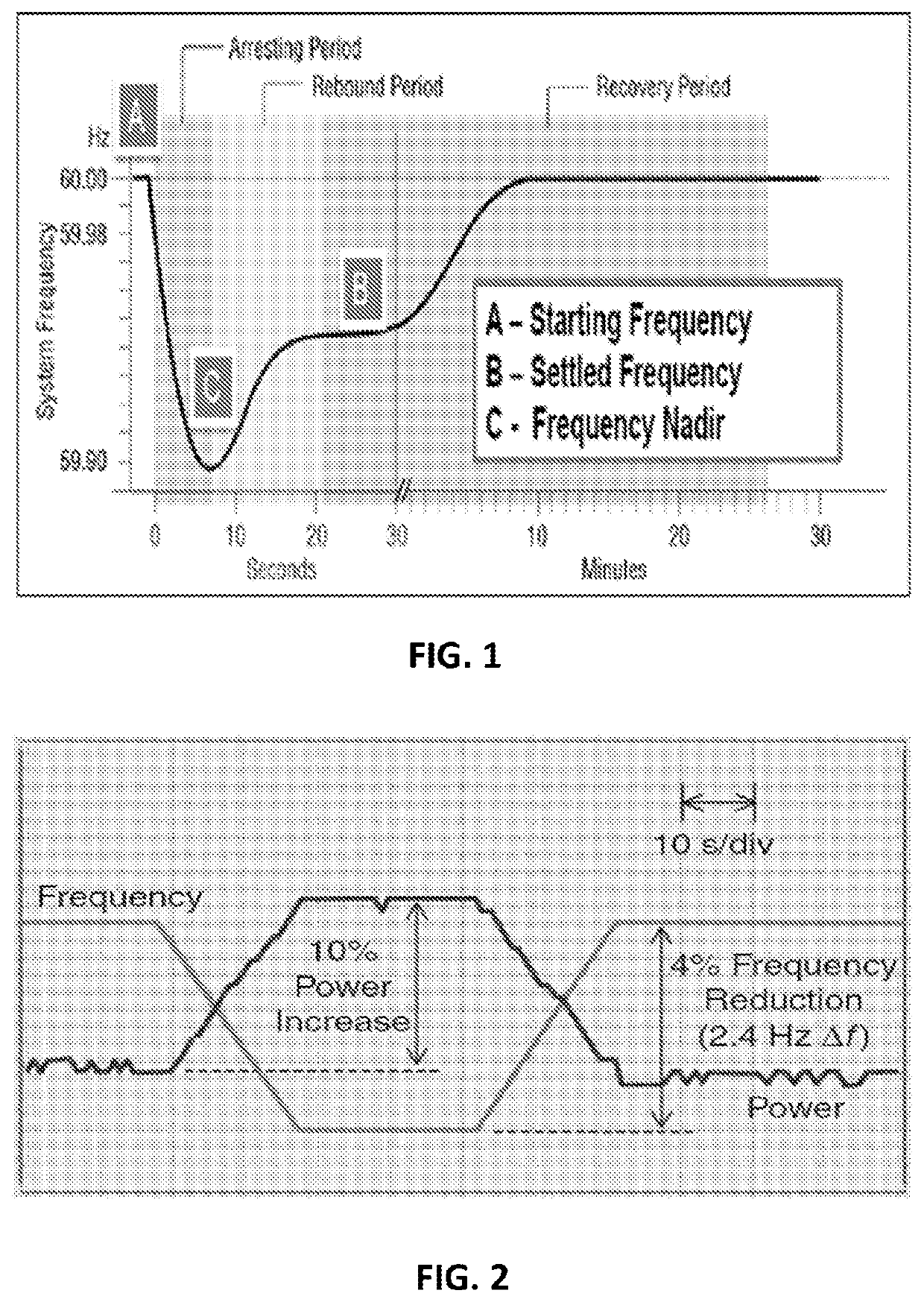
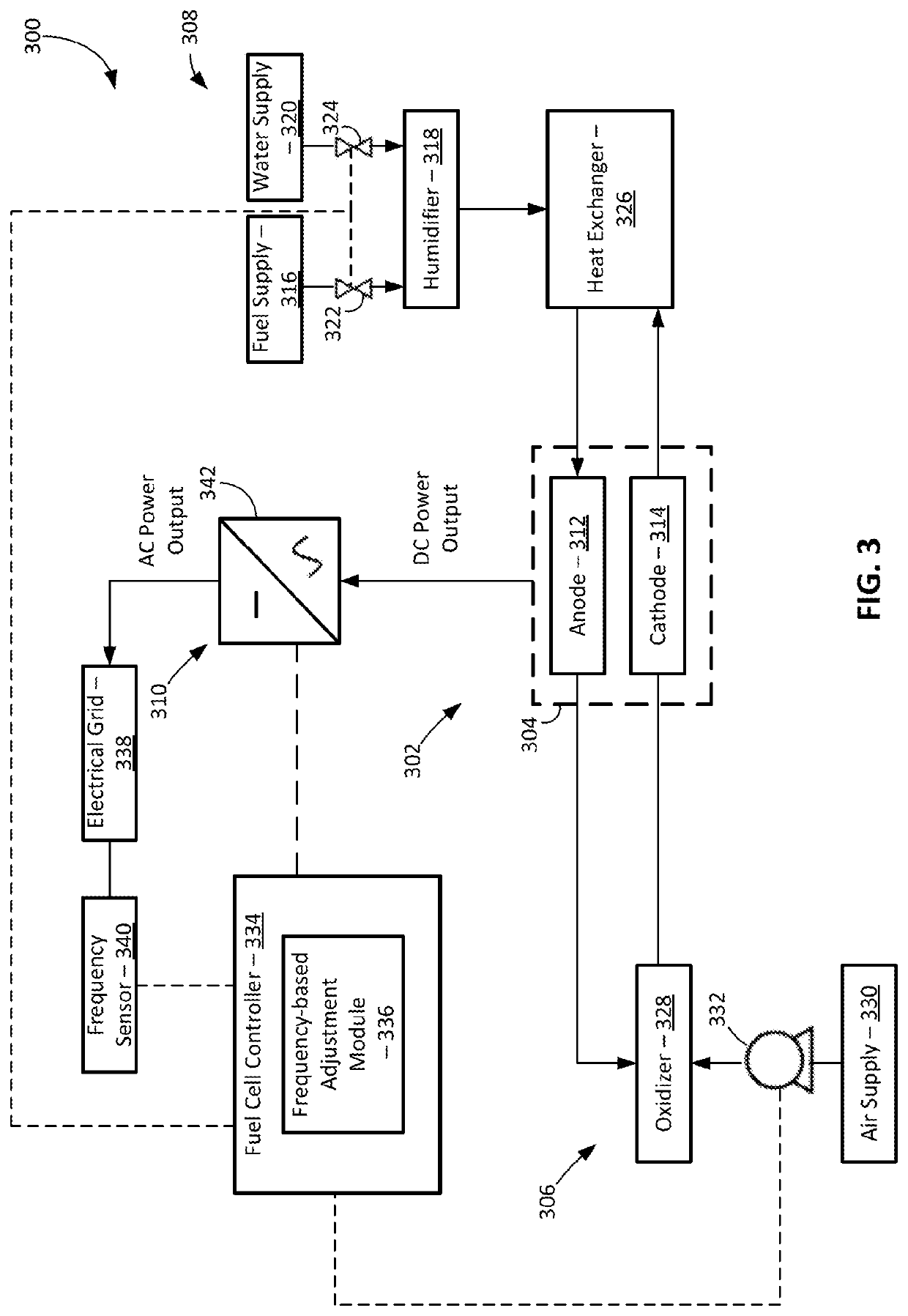
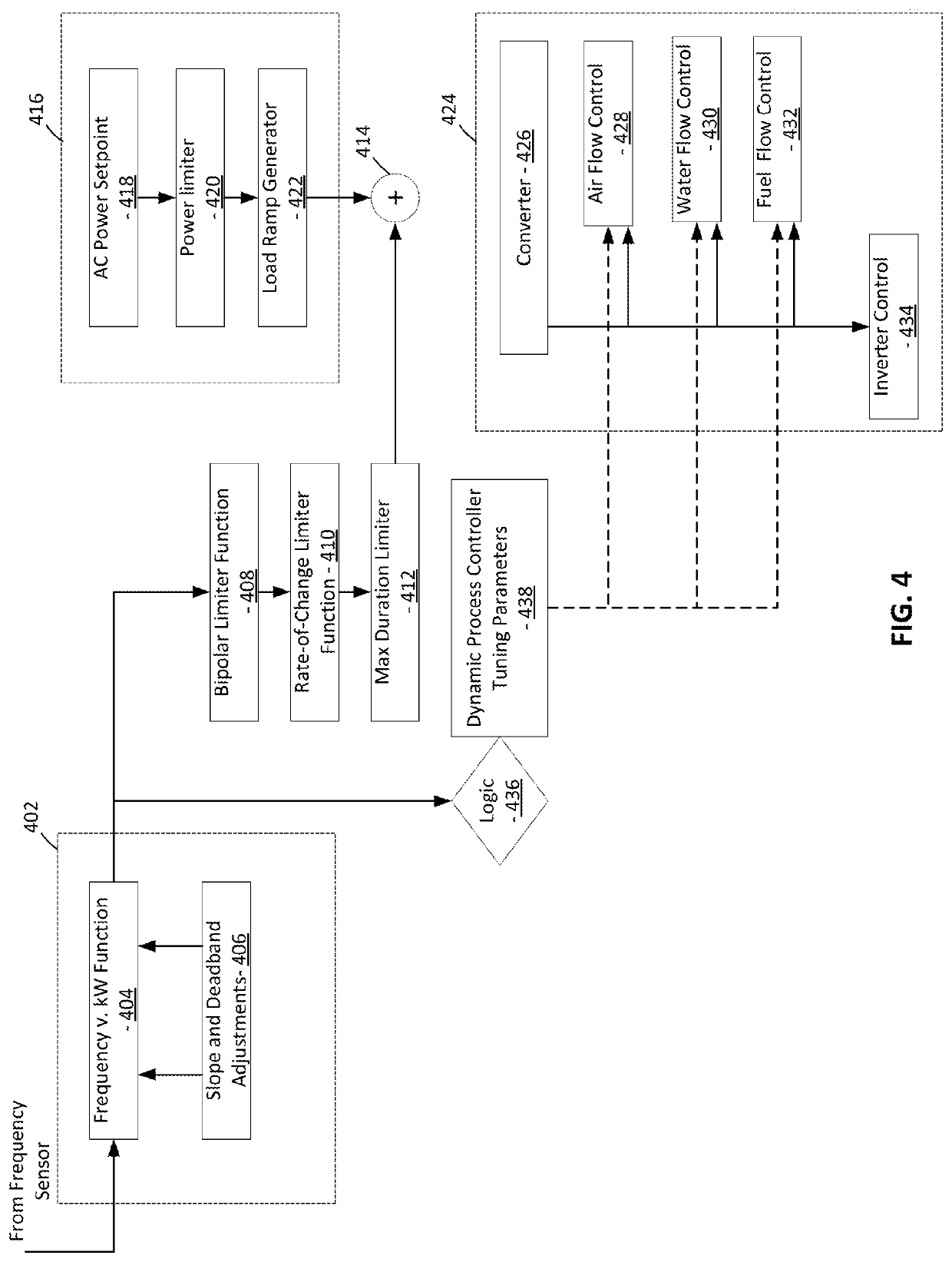
- A fuel cell system with a frequency sensor and controller that measures grid frequency deviations, applies magnitude, rate-of-change, and duration limits to adjust power output, enabling a frequency-adjusted power setpoint that emulates the inertial response of synchronous generators without requiring additional hardware or energy storage systems.

Electrolysis device having a converter and method for providing instantaneous reserve power for an ac voltage grid
PatentPendingUS20250207279A1
Innovation
- Operating an electrolysis device with a converter in a voltage-impressing manner, allowing immediate changes in AC active power drawn from the grid in response to frequency changes, which are then transferred to the electrolyzer, enabling instantaneous reserve power without requiring fast changes in electrolyzer operation.


Grid Code Compliance for Ammonia Energy Systems
Grid code compliance represents a critical regulatory framework that electrochemical ammonia energy systems must navigate to achieve successful grid integration. These codes establish mandatory technical requirements for power generation and storage systems, encompassing voltage regulation, frequency response, fault ride-through capabilities, and power quality standards. For ammonia-based energy systems, compliance becomes particularly complex due to the unique operational characteristics of electrochemical conversion processes and their inherent response dynamics.
The regulatory landscape for ammonia energy systems varies significantly across different jurisdictions, with established grid codes in Europe, North America, and Asia-Pacific regions presenting distinct requirements. European grid codes, such as those defined by ENTSO-E, emphasize stringent frequency response requirements and voltage support capabilities. North American standards, governed by NERC and regional transmission organizations, focus heavily on reliability and cybersecurity aspects. These regional variations necessitate adaptive compliance strategies for ammonia energy system deployments.
Frequency synchronization requirements under grid codes typically mandate specific response times and accuracy levels that challenge conventional ammonia electrochemical systems. Most grid codes require primary frequency response within seconds and sustained frequency support over extended periods. The electrochemical nature of ammonia conversion introduces inherent time constants that may conflict with rapid grid response requirements, necessitating sophisticated control algorithms and potentially hybrid system architectures.
Voltage regulation compliance presents another significant challenge for ammonia energy systems. Grid codes typically require reactive power support capabilities and voltage ride-through performance during grid disturbances. Electrochemical ammonia systems must demonstrate their ability to maintain stable operation during voltage excursions while providing necessary grid support services. This often requires additional power electronics and control systems beyond the core electrochemical conversion equipment.
Power quality standards within grid codes address harmonic distortion, flicker, and other electrical characteristics that ammonia energy systems must meet. The switching nature of power electronics in electrochemical systems can generate harmonics that require careful filtering and control. Compliance testing and certification processes for these systems involve extensive validation of power quality performance under various operating conditions.
Emerging grid code modifications specifically addressing energy storage and alternative energy systems are beginning to accommodate the unique characteristics of ammonia-based technologies. These evolving standards recognize the potential benefits of ammonia systems while establishing appropriate technical requirements for safe and reliable grid operation.
The regulatory landscape for ammonia energy systems varies significantly across different jurisdictions, with established grid codes in Europe, North America, and Asia-Pacific regions presenting distinct requirements. European grid codes, such as those defined by ENTSO-E, emphasize stringent frequency response requirements and voltage support capabilities. North American standards, governed by NERC and regional transmission organizations, focus heavily on reliability and cybersecurity aspects. These regional variations necessitate adaptive compliance strategies for ammonia energy system deployments.
Frequency synchronization requirements under grid codes typically mandate specific response times and accuracy levels that challenge conventional ammonia electrochemical systems. Most grid codes require primary frequency response within seconds and sustained frequency support over extended periods. The electrochemical nature of ammonia conversion introduces inherent time constants that may conflict with rapid grid response requirements, necessitating sophisticated control algorithms and potentially hybrid system architectures.
Voltage regulation compliance presents another significant challenge for ammonia energy systems. Grid codes typically require reactive power support capabilities and voltage ride-through performance during grid disturbances. Electrochemical ammonia systems must demonstrate their ability to maintain stable operation during voltage excursions while providing necessary grid support services. This often requires additional power electronics and control systems beyond the core electrochemical conversion equipment.
Power quality standards within grid codes address harmonic distortion, flicker, and other electrical characteristics that ammonia energy systems must meet. The switching nature of power electronics in electrochemical systems can generate harmonics that require careful filtering and control. Compliance testing and certification processes for these systems involve extensive validation of power quality performance under various operating conditions.
Emerging grid code modifications specifically addressing energy storage and alternative energy systems are beginning to accommodate the unique characteristics of ammonia-based technologies. These evolving standards recognize the potential benefits of ammonia systems while establishing appropriate technical requirements for safe and reliable grid operation.
Environmental Impact of Ammonia Grid Technologies
The integration of electrochemical ammonia technologies into grid frequency synchronization systems presents both significant environmental opportunities and challenges that require careful evaluation. These technologies fundamentally alter the environmental footprint of grid stabilization compared to traditional fossil fuel-based peaking plants and battery storage systems.
Electrochemical ammonia synthesis and utilization for grid applications offers substantial carbon footprint reduction potential. Unlike conventional Haber-Bosch ammonia production, which accounts for approximately 1.8% of global CO2 emissions, electrochemical processes can achieve near-zero carbon emissions when powered by renewable electricity. The technology enables direct conversion of nitrogen and water into ammonia using clean energy, eliminating the need for natural gas feedstock and high-temperature, high-pressure industrial processes.
The lifecycle environmental assessment reveals mixed impacts across different phases. During operation, electrochemical ammonia systems produce minimal direct emissions, with primary environmental concerns centered on electricity consumption efficiency. Current electrochemical synthesis processes achieve energy efficiencies of 15-25%, significantly lower than optimized Haber-Bosch plants, potentially offsetting carbon benefits if grid electricity contains fossil fuel components.
Water consumption represents another critical environmental consideration. Electrochemical ammonia production requires substantial water inputs for both synthesis reactions and cooling systems. Grid-scale implementations could strain local water resources, particularly in arid regions where renewable energy generation is often concentrated. Additionally, the production of pure nitrogen feedstock through air separation units introduces additional energy penalties and environmental impacts.
Waste heat generation and management present both challenges and opportunities. Electrochemical processes generate significant thermal byproducts that require effective heat dissipation systems. However, this waste heat can be captured for district heating applications or industrial processes, improving overall system efficiency and environmental performance.
The environmental impact of supporting infrastructure cannot be overlooked. Electrochemical ammonia systems require specialized materials including platinum group metals for catalysts, advanced membrane materials, and corrosion-resistant components. The mining, processing, and eventual disposal of these materials introduce upstream and downstream environmental burdens that must be factored into comprehensive impact assessments.
End-of-life considerations reveal both recycling opportunities and disposal challenges. While many system components can be recovered and recycled, specialized membranes and catalyst materials may require dedicated waste management approaches to prevent environmental contamination and recover valuable materials for future use.
Electrochemical ammonia synthesis and utilization for grid applications offers substantial carbon footprint reduction potential. Unlike conventional Haber-Bosch ammonia production, which accounts for approximately 1.8% of global CO2 emissions, electrochemical processes can achieve near-zero carbon emissions when powered by renewable electricity. The technology enables direct conversion of nitrogen and water into ammonia using clean energy, eliminating the need for natural gas feedstock and high-temperature, high-pressure industrial processes.
The lifecycle environmental assessment reveals mixed impacts across different phases. During operation, electrochemical ammonia systems produce minimal direct emissions, with primary environmental concerns centered on electricity consumption efficiency. Current electrochemical synthesis processes achieve energy efficiencies of 15-25%, significantly lower than optimized Haber-Bosch plants, potentially offsetting carbon benefits if grid electricity contains fossil fuel components.
Water consumption represents another critical environmental consideration. Electrochemical ammonia production requires substantial water inputs for both synthesis reactions and cooling systems. Grid-scale implementations could strain local water resources, particularly in arid regions where renewable energy generation is often concentrated. Additionally, the production of pure nitrogen feedstock through air separation units introduces additional energy penalties and environmental impacts.
Waste heat generation and management present both challenges and opportunities. Electrochemical processes generate significant thermal byproducts that require effective heat dissipation systems. However, this waste heat can be captured for district heating applications or industrial processes, improving overall system efficiency and environmental performance.
The environmental impact of supporting infrastructure cannot be overlooked. Electrochemical ammonia systems require specialized materials including platinum group metals for catalysts, advanced membrane materials, and corrosion-resistant components. The mining, processing, and eventual disposal of these materials introduce upstream and downstream environmental burdens that must be factored into comprehensive impact assessments.
End-of-life considerations reveal both recycling opportunities and disposal challenges. While many system components can be recovered and recycled, specialized membranes and catalyst materials may require dedicated waste management approaches to prevent environmental contamination and recover valuable materials for future use.
Unlock deeper insights with PatSnap Eureka Quick Research — get a full tech report to explore trends and direct your research. Try now!
Generate Your Research Report Instantly with AI Agent
Supercharge your innovation with PatSnap Eureka AI Agent Platform!