

How to Utilize Microtransfer Printing for Biocompatible Devices
APR 23, 20269 MIN READ
Generate Your Research Report Instantly with AI Agent
PatSnap Eureka helps you evaluate technical feasibility & market potential.
Microtransfer Printing for Biomedical Applications Background
Microtransfer printing has emerged as a transformative manufacturing technique that bridges the gap between traditional semiconductor fabrication and biomedical device development. This technology enables the precise transfer of microscale and nanoscale materials from donor substrates to receiver substrates, offering unprecedented control over device architecture and material placement. The technique originated from the semiconductor industry's need for heterogeneous integration but has found remarkable applications in creating biocompatible devices that interface directly with biological systems.
The fundamental principle of microtransfer printing relies on controlled adhesion and release mechanisms, typically employing elastomeric stamps to selectively pick up and place materials with high precision. This approach allows for the integration of diverse materials, including inorganic semiconductors, metals, and polymers, onto flexible and biocompatible substrates such as silk, parylene, or biodegradable polymers. The ability to combine materials with vastly different properties while maintaining their individual characteristics represents a significant advancement in biomedical device fabrication.
The evolution of microtransfer printing for biomedical applications has been driven by the increasing demand for minimally invasive medical devices, implantable electronics, and diagnostic tools that can seamlessly integrate with biological tissues. Traditional fabrication methods often require high-temperature processing or harsh chemical environments that are incompatible with biological materials or flexible substrates. Microtransfer printing circumvents these limitations by enabling room-temperature processing and the use of biocompatible materials throughout the manufacturing process.
Recent developments have focused on expanding the range of printable materials to include bioactive compounds, living cells, and biodegradable electronics. This expansion has opened new possibilities for creating smart implants, drug delivery systems, and tissue engineering scaffolds that can actively monitor and respond to physiological conditions. The technology's ability to create ultra-thin, flexible devices that conform to curved biological surfaces has proven particularly valuable for neural interfaces, cardiac monitoring systems, and wound healing applications.
The convergence of microtransfer printing with advances in materials science, particularly in the development of biocompatible and biodegradable electronic materials, has established a foundation for next-generation biomedical devices. These devices promise to revolutionize healthcare by providing continuous monitoring capabilities, targeted therapeutic interventions, and enhanced diagnostic accuracy while minimizing patient discomfort and reducing the risk of adverse biological reactions.
The fundamental principle of microtransfer printing relies on controlled adhesion and release mechanisms, typically employing elastomeric stamps to selectively pick up and place materials with high precision. This approach allows for the integration of diverse materials, including inorganic semiconductors, metals, and polymers, onto flexible and biocompatible substrates such as silk, parylene, or biodegradable polymers. The ability to combine materials with vastly different properties while maintaining their individual characteristics represents a significant advancement in biomedical device fabrication.
The evolution of microtransfer printing for biomedical applications has been driven by the increasing demand for minimally invasive medical devices, implantable electronics, and diagnostic tools that can seamlessly integrate with biological tissues. Traditional fabrication methods often require high-temperature processing or harsh chemical environments that are incompatible with biological materials or flexible substrates. Microtransfer printing circumvents these limitations by enabling room-temperature processing and the use of biocompatible materials throughout the manufacturing process.
Recent developments have focused on expanding the range of printable materials to include bioactive compounds, living cells, and biodegradable electronics. This expansion has opened new possibilities for creating smart implants, drug delivery systems, and tissue engineering scaffolds that can actively monitor and respond to physiological conditions. The technology's ability to create ultra-thin, flexible devices that conform to curved biological surfaces has proven particularly valuable for neural interfaces, cardiac monitoring systems, and wound healing applications.
The convergence of microtransfer printing with advances in materials science, particularly in the development of biocompatible and biodegradable electronic materials, has established a foundation for next-generation biomedical devices. These devices promise to revolutionize healthcare by providing continuous monitoring capabilities, targeted therapeutic interventions, and enhanced diagnostic accuracy while minimizing patient discomfort and reducing the risk of adverse biological reactions.
Market Demand for Biocompatible Microtransfer Devices
The global biomedical device market is experiencing unprecedented growth driven by aging populations, increasing prevalence of chronic diseases, and rising demand for minimally invasive medical procedures. Biocompatible microtransfer devices represent a critical segment within this expanding market, addressing the need for precise, miniaturized medical components that can safely interact with biological systems without causing adverse reactions.
Healthcare providers are increasingly seeking advanced solutions for drug delivery systems, implantable sensors, and diagnostic devices that require microscale precision. The demand for biocompatible microtransfer devices is particularly strong in applications such as continuous glucose monitoring, neural interfaces, cardiac pacemakers, and targeted drug delivery systems. These applications require devices that can maintain functionality while ensuring long-term biocompatibility and minimal tissue response.
The market demand is further amplified by the growing trend toward personalized medicine and point-of-care diagnostics. Medical professionals require devices capable of handling minute biological samples and delivering precise therapeutic doses, driving the need for sophisticated microtransfer printing technologies that can produce biocompatible components at scale.
Regulatory frameworks worldwide are evolving to accommodate innovative biomedical technologies, creating clearer pathways for market entry of novel biocompatible devices. This regulatory clarity is encouraging increased investment in research and development, subsequently driving market demand for advanced manufacturing techniques like microtransfer printing.
The pharmaceutical industry represents another significant demand driver, particularly for drug delivery applications requiring precise dosing mechanisms and biocompatible materials. Companies are actively seeking manufacturing solutions that can produce complex microstructures while maintaining strict biocompatibility standards and ensuring reproducible quality across large production volumes.
Emerging applications in regenerative medicine and tissue engineering are creating new market opportunities for biocompatible microtransfer devices. These fields require sophisticated scaffolds and delivery systems that can support cellular growth while gradually integrating with natural tissue, necessitating advanced manufacturing capabilities that microtransfer printing can provide.
The market potential extends beyond traditional medical applications into areas such as cosmetic medicine, veterinary care, and biotechnology research, where biocompatible microdevices are increasingly essential for advancing scientific understanding and therapeutic interventions.
Healthcare providers are increasingly seeking advanced solutions for drug delivery systems, implantable sensors, and diagnostic devices that require microscale precision. The demand for biocompatible microtransfer devices is particularly strong in applications such as continuous glucose monitoring, neural interfaces, cardiac pacemakers, and targeted drug delivery systems. These applications require devices that can maintain functionality while ensuring long-term biocompatibility and minimal tissue response.
The market demand is further amplified by the growing trend toward personalized medicine and point-of-care diagnostics. Medical professionals require devices capable of handling minute biological samples and delivering precise therapeutic doses, driving the need for sophisticated microtransfer printing technologies that can produce biocompatible components at scale.
Regulatory frameworks worldwide are evolving to accommodate innovative biomedical technologies, creating clearer pathways for market entry of novel biocompatible devices. This regulatory clarity is encouraging increased investment in research and development, subsequently driving market demand for advanced manufacturing techniques like microtransfer printing.
The pharmaceutical industry represents another significant demand driver, particularly for drug delivery applications requiring precise dosing mechanisms and biocompatible materials. Companies are actively seeking manufacturing solutions that can produce complex microstructures while maintaining strict biocompatibility standards and ensuring reproducible quality across large production volumes.
Emerging applications in regenerative medicine and tissue engineering are creating new market opportunities for biocompatible microtransfer devices. These fields require sophisticated scaffolds and delivery systems that can support cellular growth while gradually integrating with natural tissue, necessitating advanced manufacturing capabilities that microtransfer printing can provide.
The market potential extends beyond traditional medical applications into areas such as cosmetic medicine, veterinary care, and biotechnology research, where biocompatible microdevices are increasingly essential for advancing scientific understanding and therapeutic interventions.
Current State of Microtransfer Printing Biocompatibility
Microtransfer printing has emerged as a promising fabrication technique for biocompatible devices, yet its current biocompatibility status presents both opportunities and significant challenges. The technology enables precise transfer of microscale materials and structures onto various substrates, making it particularly attractive for medical device manufacturing and biological applications.
Current biocompatibility assessments reveal that the primary concern lies in the materials used throughout the printing process. Traditional elastomeric stamps, typically composed of polydimethylsiloxane (PDMS), demonstrate generally favorable biocompatibility profiles. However, the inks and transfer materials often contain components that may elicit adverse biological responses, including heavy metals, organic solvents, and synthetic polymers that have not undergone comprehensive biocompatibility testing.
The printing process itself introduces additional biocompatibility considerations. Residual chemicals from stamp fabrication, incomplete curing of transfer materials, and potential contamination during the printing procedure can compromise the biological safety of final devices. Surface roughness and morphological changes induced by the printing process may also affect cellular interactions and tissue responses.
Recent studies indicate that biocompatibility varies significantly depending on the intended application and exposure duration. Short-term biocompatibility for external medical devices shows more promising results compared to long-term implantable applications. Cytotoxicity assessments have revealed that certain printing formulations exhibit acceptable cell viability rates above 80%, while others demonstrate concerning inflammatory responses.
Regulatory compliance remains a critical challenge, as current microtransfer printing processes often lack standardized biocompatibility testing protocols. The FDA and ISO standards for medical devices require extensive biological evaluation, including cytotoxicity, sensitization, and systemic toxicity testing, which many microtransfer printing materials have not yet completed.
The geographical distribution of biocompatibility research shows concentrated efforts in North America and Europe, with limited comprehensive studies in other regions. This creates gaps in understanding how different populations might respond to microtransfer printed biocompatible devices, highlighting the need for more diverse and extensive biocompatibility validation studies.
Current biocompatibility assessments reveal that the primary concern lies in the materials used throughout the printing process. Traditional elastomeric stamps, typically composed of polydimethylsiloxane (PDMS), demonstrate generally favorable biocompatibility profiles. However, the inks and transfer materials often contain components that may elicit adverse biological responses, including heavy metals, organic solvents, and synthetic polymers that have not undergone comprehensive biocompatibility testing.
The printing process itself introduces additional biocompatibility considerations. Residual chemicals from stamp fabrication, incomplete curing of transfer materials, and potential contamination during the printing procedure can compromise the biological safety of final devices. Surface roughness and morphological changes induced by the printing process may also affect cellular interactions and tissue responses.
Recent studies indicate that biocompatibility varies significantly depending on the intended application and exposure duration. Short-term biocompatibility for external medical devices shows more promising results compared to long-term implantable applications. Cytotoxicity assessments have revealed that certain printing formulations exhibit acceptable cell viability rates above 80%, while others demonstrate concerning inflammatory responses.
Regulatory compliance remains a critical challenge, as current microtransfer printing processes often lack standardized biocompatibility testing protocols. The FDA and ISO standards for medical devices require extensive biological evaluation, including cytotoxicity, sensitization, and systemic toxicity testing, which many microtransfer printing materials have not yet completed.
The geographical distribution of biocompatibility research shows concentrated efforts in North America and Europe, with limited comprehensive studies in other regions. This creates gaps in understanding how different populations might respond to microtransfer printed biocompatible devices, highlighting the need for more diverse and extensive biocompatibility validation studies.
Existing Biocompatible Microtransfer Solutions
01 Stamp-based transfer printing methods
Methods utilizing elastomeric stamps or molds to transfer micro-scale materials from a donor substrate to a receiver substrate. The stamp makes conformal contact with the material to be transferred, allowing selective pickup and placement of microscale structures. This approach enables precise positioning and patterning of materials including semiconductors, metals, and dielectrics onto various substrates.- Stamp-based transfer printing methods: Transfer printing techniques utilizing elastomeric stamps or molds to pick up and transfer micro-scale materials or structures from a donor substrate to a receiver substrate. The stamp makes conformal contact with the materials, enabling selective transfer through controlled adhesion and release mechanisms. This approach is particularly useful for transferring thin films, patterns, or device components with high precision and repeatability.
- Ink formulations for microtransfer printing: Specialized ink compositions designed for microtransfer printing applications, including conductive inks, semiconductor inks, and functional material inks. These formulations are optimized for properties such as viscosity, adhesion, curing characteristics, and compatibility with stamp materials. The inks enable the printing of electronic circuits, sensors, and other functional devices on various substrates through transfer printing processes.
- Alignment and registration systems: Precision alignment mechanisms and registration techniques for ensuring accurate positioning during microtransfer printing operations. These systems incorporate optical detection, mechanical alignment features, or automated positioning controls to achieve high-resolution pattern transfer with minimal misalignment. The technology enables multi-layer printing and complex device fabrication with tight tolerances.
- Substrate preparation and surface treatment: Methods for preparing and treating substrate surfaces to optimize adhesion and transfer efficiency in microtransfer printing. This includes surface cleaning, chemical modification, plasma treatment, or application of adhesion-promoting layers. Proper substrate preparation ensures reliable material transfer, prevents defects, and improves the quality of printed features on diverse substrate materials including flexible and rigid surfaces.
- Applications in electronic device fabrication: Implementation of microtransfer printing for manufacturing electronic devices such as displays, transistors, sensors, and integrated circuits. The technology enables heterogeneous integration of different materials, fabrication of flexible electronics, and cost-effective production of micro and nano-scale devices. This approach offers advantages in terms of material utilization, processing temperature, and compatibility with unconventional substrates.
02 Kinetically controlled transfer printing
Transfer printing techniques that control adhesion through rate-dependent mechanisms. By varying the speed of stamp separation or contact, the adhesion between the stamp and transferred material can be modulated to enable selective pickup and release. This kinetic control allows for deterministic transfer without requiring additional release layers or chemical treatments.Expand Specific Solutions03 Laser-assisted transfer printing
Methods employing laser radiation to facilitate the transfer of materials in microtransfer printing processes. The laser energy can be used to selectively release materials from a donor substrate or to enhance adhesion to a receiver substrate. This approach provides non-contact, localized energy delivery for controlled transfer of sensitive materials and enables high-speed processing.Expand Specific Solutions04 Adhesive layer optimization for transfer printing
Techniques involving specialized adhesive layers or surface treatments to control interfacial adhesion during transfer printing. The adhesive properties can be tuned through material selection, thickness control, or surface modification to achieve reliable pickup and release of microscale elements. These methods enable transfer of fragile structures and improve yield in manufacturing processes.Expand Specific Solutions05 Applications in electronic device fabrication
Implementation of microtransfer printing for manufacturing electronic components and displays. The technology enables heterogeneous integration of different materials and devices, including LEDs, transistors, and sensors, onto flexible or rigid substrates. This approach facilitates the production of advanced electronic systems with improved performance and novel form factors.Expand Specific Solutions
Key Players in Microtransfer Printing Industry
The microtransfer printing technology for biocompatible devices represents an emerging field at the intersection of advanced manufacturing and biomedical applications. The industry is in its early-to-growth stage, with significant market potential driven by increasing demand for precision medical devices and bioprinting applications. The market encompasses both established technology giants and specialized biotechnology companies, indicating substantial commercial interest. Technology maturity varies significantly across players: X Display Co. Technology Ltd. leads with proven μTP platforms, while companies like Poietis SAS advance bioprinting applications. Major corporations including Apple, IBM, and Philips demonstrate the technology's broad applicability, while research institutions like University of Illinois and Johns Hopkins University continue fundamental development. The competitive landscape suggests a technology transitioning from research to commercial viability, with diverse applications spanning electronics integration, regenerative medicine, and precision manufacturing.
Koninklijke Philips NV
Technical Solution: Implements microtransfer printing for biocompatible medical device manufacturing, focusing on flexible sensor arrays and implantable electronics. Their technology combines selective laser release mechanisms with pressure-sensitive adhesive transfer to place electronic components onto biocompatible substrates. The process utilizes temperature-controlled transfer heads and specialized biocompatible adhesives that maintain sterility requirements. Philips has developed applications for continuous glucose monitoring patches and neural interface devices, where microtransfer printing enables the integration of silicon-based sensors with flexible biocompatible materials while maintaining electrical performance and biological safety standards.
Strengths: Strong medical device expertise and regulatory compliance knowledge for biocompatible applications. Weaknesses: Technology primarily focused on specific medical applications rather than general-purpose solutions.
Poietis SAS
Technical Solution: Specializes in laser-assisted microtransfer printing for bioprinting applications, utilizing their proprietary laser-induced forward transfer (LIFT) technology. Their approach enables precise transfer of living cells and biomaterials onto biocompatible scaffolds with cellular-level resolution. The technology uses pulsed laser energy to propel cell-containing bioinks from donor substrates to receiving biocompatible materials, maintaining cell viability during transfer. Poietis has demonstrated successful printing of hepatocytes, skin cells, and other biological materials onto collagen-based and synthetic biocompatible substrates for tissue engineering applications, achieving transfer accuracies below 10 micrometers while preserving cellular function.
Strengths: Specialized expertise in biological material transfer with proven cell viability maintenance. Weaknesses: Limited to biological applications and requires complex laser systems for operation.
Core Patents in Biocompatible Microtransfer Printing
Transient Devices Designed to Undergo Programmable Transformations
PatentActiveUS20180175158A1
Innovation
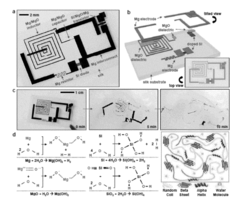
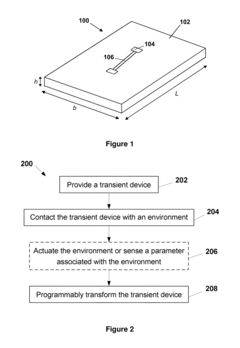
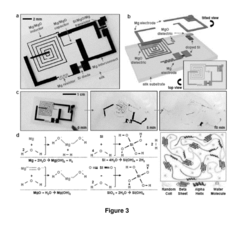
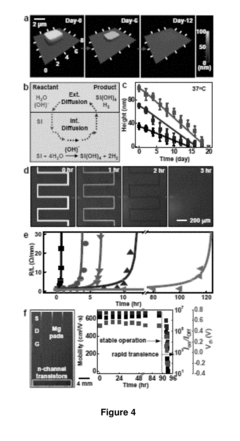
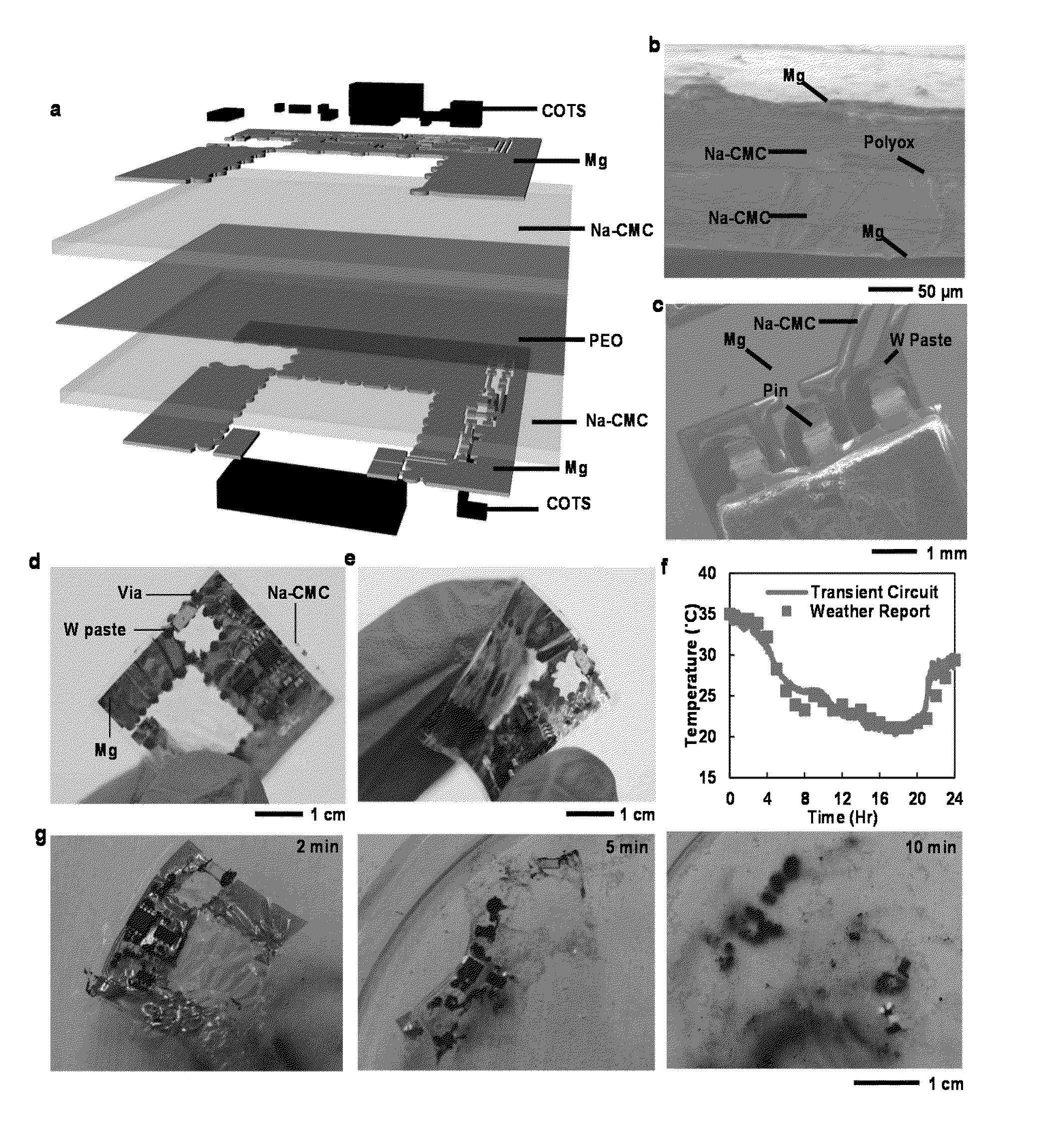
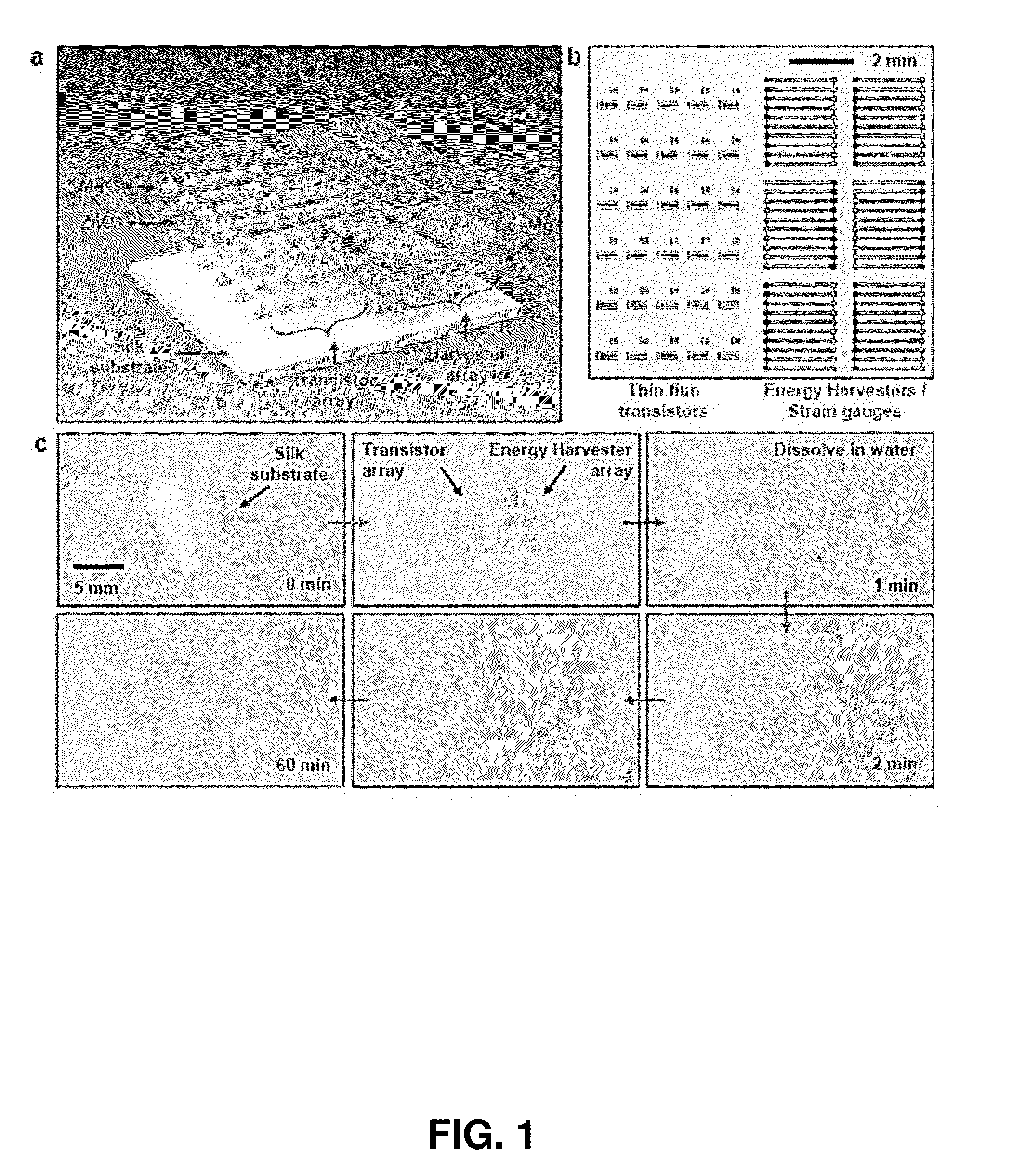
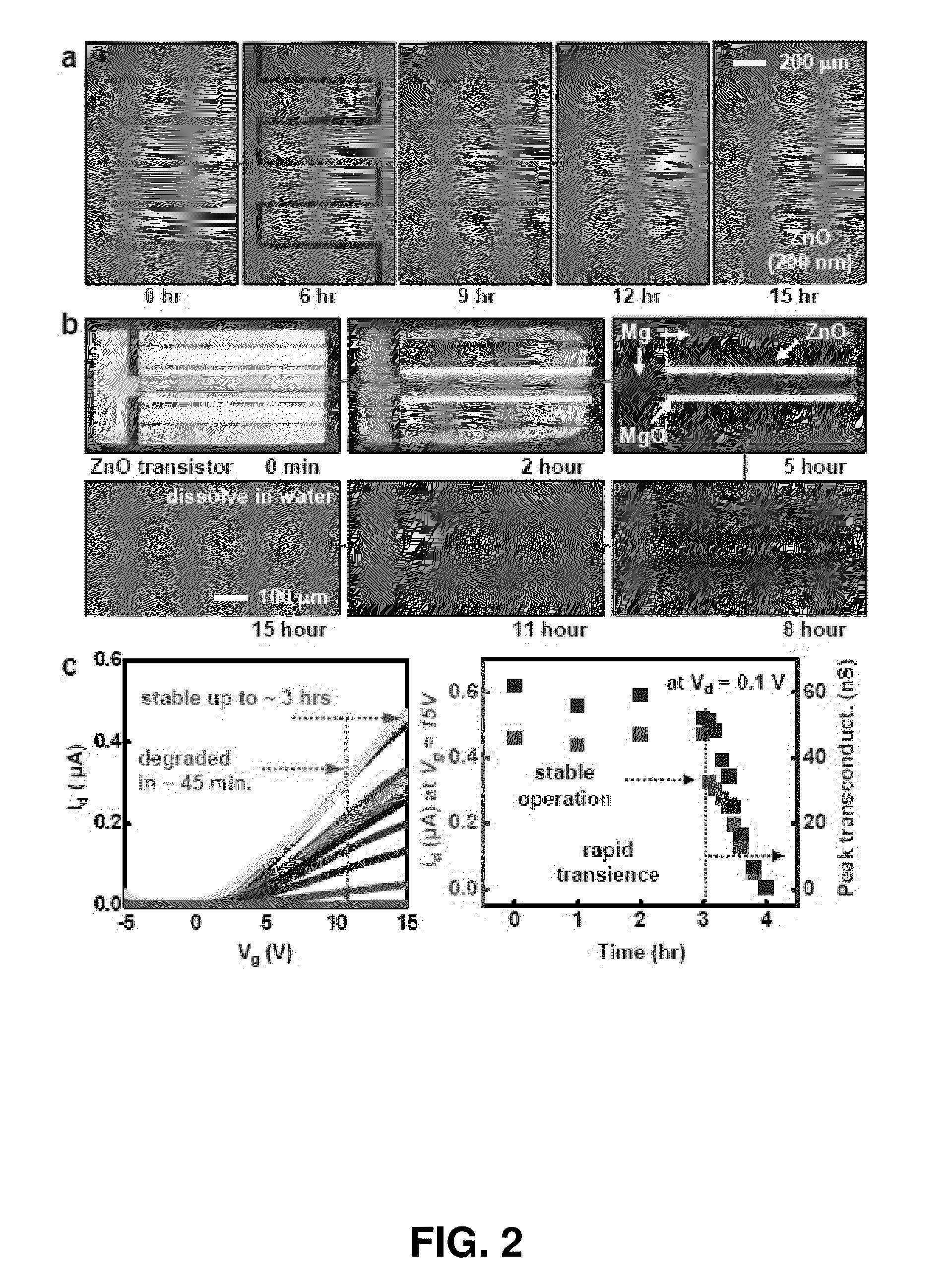
- Development of transient electronic devices using degradable silicon components and substrates with selectively transformable materials, allowing for controlled transformation through stimuli such as bioresorption, hydrolysis, or chemical changes, enabling programmable changes in device function over time.
Biodegradable materials for multilayer transient printed circuit boards
PatentActiveUS20160050750A1
Innovation
- Development of transient electronic devices that incorporate degradable materials and substrates, allowing for controlled transformation upon internal or external stimuli, such as silicon-based technology that can dissolve or degrade in a programmed manner, enabling applications like bio-resorbable medical implants or eco-resorbable environmental monitors.
FDA Regulatory Framework for Biocompatible Devices
The FDA regulatory framework for biocompatible devices utilizing microtransfer printing technology operates under a comprehensive classification system that determines the level of regulatory scrutiny required. Medical devices incorporating microtransfer printing components are typically classified as Class II or Class III devices, depending on their intended use and risk profile. Class II devices generally require 510(k) premarket notification, while Class III devices necessitate premarket approval (PMA) with extensive clinical data.
Biocompatibility assessment forms the cornerstone of FDA evaluation for microtransfer printed devices. The agency mandates compliance with ISO 10993 standards, which outline biological evaluation protocols for medical devices. These standards require comprehensive testing including cytotoxicity, sensitization, irritation, and systemic toxicity assessments. For microtransfer printing applications, particular attention is given to the biocompatibility of substrate materials, transfer inks, and any residual processing chemicals that may remain on the device surface.
The FDA's Quality System Regulation (QSR) under 21 CFR Part 820 establishes manufacturing requirements that directly impact microtransfer printing processes. These regulations mandate validated manufacturing processes, comprehensive documentation, and robust quality control systems. For microtransfer printing, this includes validation of printing parameters, substrate preparation protocols, and post-processing procedures to ensure consistent device performance and safety.
Premarket submission requirements vary based on device classification but universally demand detailed documentation of materials used in microtransfer printing processes. Manufacturers must provide comprehensive chemical characterization of all components, including elastomeric stamps, transfer materials, and substrate surfaces. The FDA requires detailed process descriptions, including printing conditions, curing parameters, and sterilization methods that may affect biocompatibility.
Post-market surveillance obligations require manufacturers to maintain vigilant monitoring of device performance and adverse events. The FDA mandates Medical Device Reporting (MDR) for any incidents potentially related to biocompatibility issues. For microtransfer printed devices, this includes monitoring for unexpected biological responses, material degradation, or performance failures that could compromise patient safety.
Recent FDA guidance documents have begun addressing advanced manufacturing technologies, including microtransfer printing applications. These evolving guidelines emphasize risk-based approaches to regulatory compliance, encouraging manufacturers to demonstrate thorough understanding of their printing processes and their impact on final device biocompatibility and performance characteristics.
Biocompatibility assessment forms the cornerstone of FDA evaluation for microtransfer printed devices. The agency mandates compliance with ISO 10993 standards, which outline biological evaluation protocols for medical devices. These standards require comprehensive testing including cytotoxicity, sensitization, irritation, and systemic toxicity assessments. For microtransfer printing applications, particular attention is given to the biocompatibility of substrate materials, transfer inks, and any residual processing chemicals that may remain on the device surface.
The FDA's Quality System Regulation (QSR) under 21 CFR Part 820 establishes manufacturing requirements that directly impact microtransfer printing processes. These regulations mandate validated manufacturing processes, comprehensive documentation, and robust quality control systems. For microtransfer printing, this includes validation of printing parameters, substrate preparation protocols, and post-processing procedures to ensure consistent device performance and safety.
Premarket submission requirements vary based on device classification but universally demand detailed documentation of materials used in microtransfer printing processes. Manufacturers must provide comprehensive chemical characterization of all components, including elastomeric stamps, transfer materials, and substrate surfaces. The FDA requires detailed process descriptions, including printing conditions, curing parameters, and sterilization methods that may affect biocompatibility.
Post-market surveillance obligations require manufacturers to maintain vigilant monitoring of device performance and adverse events. The FDA mandates Medical Device Reporting (MDR) for any incidents potentially related to biocompatibility issues. For microtransfer printed devices, this includes monitoring for unexpected biological responses, material degradation, or performance failures that could compromise patient safety.
Recent FDA guidance documents have begun addressing advanced manufacturing technologies, including microtransfer printing applications. These evolving guidelines emphasize risk-based approaches to regulatory compliance, encouraging manufacturers to demonstrate thorough understanding of their printing processes and their impact on final device biocompatibility and performance characteristics.
Biocompatibility Testing Standards and Protocols
Biocompatibility testing for microtransfer printed devices requires adherence to internationally recognized standards that ensure patient safety and regulatory compliance. The ISO 10993 series serves as the primary framework, providing comprehensive guidelines for biological evaluation of medical devices. This standard encompasses cytotoxicity testing, sensitization assessment, irritation evaluation, and systemic toxicity analysis, all critical for devices intended for human contact.
The FDA's guidance documents complement ISO standards by establishing specific requirements for different device classifications. Class II and Class III devices utilizing microtransfer printing technology must undergo rigorous testing protocols that evaluate both the base materials and the printed components. The testing scope depends on the nature and duration of patient contact, ranging from limited contact devices requiring basic cytotoxicity testing to permanent implants necessitating comprehensive biocompatibility evaluation.
Material characterization protocols focus on the unique aspects of microtransfer printed structures. Testing must address the potential for particle release from printed layers, interface stability between different materials, and the biocompatibility of any residual printing materials or solvents. Extractables and leachables studies become particularly important given the multi-layered nature of these devices and the potential for chemical migration between layers.
In vitro testing protocols typically begin with cytotoxicity assessment using standardized cell lines such as L929 mouse fibroblasts or human primary cells relevant to the intended application site. Genotoxicity testing evaluates potential DNA damage, while hemolysis testing assesses blood compatibility for devices with circulatory system contact. These tests must account for the specific surface properties and chemical composition resulting from the microtransfer printing process.
In vivo testing requirements vary based on device classification and intended use. Short-term implantation studies evaluate local tissue response, while long-term studies assess chronic effects and device integration. Special attention must be paid to the mechanical properties of printed structures and their stability under physiological conditions, as delamination or structural failure could introduce additional biocompatibility concerns.
Sterilization validation represents another critical aspect, as microtransfer printed devices may contain materials sensitive to traditional sterilization methods. Testing protocols must verify that chosen sterilization processes maintain device integrity while achieving required sterility assurance levels. This often requires development of specialized sterilization cycles and comprehensive validation studies to ensure both efficacy and material compatibility.
The FDA's guidance documents complement ISO standards by establishing specific requirements for different device classifications. Class II and Class III devices utilizing microtransfer printing technology must undergo rigorous testing protocols that evaluate both the base materials and the printed components. The testing scope depends on the nature and duration of patient contact, ranging from limited contact devices requiring basic cytotoxicity testing to permanent implants necessitating comprehensive biocompatibility evaluation.
Material characterization protocols focus on the unique aspects of microtransfer printed structures. Testing must address the potential for particle release from printed layers, interface stability between different materials, and the biocompatibility of any residual printing materials or solvents. Extractables and leachables studies become particularly important given the multi-layered nature of these devices and the potential for chemical migration between layers.
In vitro testing protocols typically begin with cytotoxicity assessment using standardized cell lines such as L929 mouse fibroblasts or human primary cells relevant to the intended application site. Genotoxicity testing evaluates potential DNA damage, while hemolysis testing assesses blood compatibility for devices with circulatory system contact. These tests must account for the specific surface properties and chemical composition resulting from the microtransfer printing process.
In vivo testing requirements vary based on device classification and intended use. Short-term implantation studies evaluate local tissue response, while long-term studies assess chronic effects and device integration. Special attention must be paid to the mechanical properties of printed structures and their stability under physiological conditions, as delamination or structural failure could introduce additional biocompatibility concerns.
Sterilization validation represents another critical aspect, as microtransfer printed devices may contain materials sensitive to traditional sterilization methods. Testing protocols must verify that chosen sterilization processes maintain device integrity while achieving required sterility assurance levels. This often requires development of specialized sterilization cycles and comprehensive validation studies to ensure both efficacy and material compatibility.
Unlock deeper insights with PatSnap Eureka Quick Research — get a full tech report to explore trends and direct your research. Try now!
Generate Your Research Report Instantly with AI Agent
Supercharge your innovation with PatSnap Eureka AI Agent Platform!