How to Utilize Simulation Models for Car Suspension Testing
MAR 10, 20269 MIN READ
Generate Your Research Report Instantly with AI Agent
PatSnap Eureka helps you evaluate technical feasibility & market potential.
Car Suspension Simulation Background and Testing Goals
Car suspension systems have evolved significantly since the early days of automotive engineering, transitioning from simple leaf springs to sophisticated multi-link configurations with active and semi-active control capabilities. This evolution has been driven by increasing demands for vehicle comfort, safety, and performance across diverse driving conditions. Modern suspension systems must balance conflicting requirements including ride comfort, handling precision, road holding, and durability while accommodating varying load conditions and road surfaces.
The development of suspension technology has progressed through several distinct phases, beginning with passive mechanical systems in the early 20th century, advancing to hydraulic damping solutions in the mid-century, and culminating in today's electronically controlled adaptive systems. Each phase has brought new challenges in terms of design optimization, requiring increasingly sophisticated analysis methods to predict and validate system behavior under complex operating conditions.
Traditional physical testing methods, while essential for final validation, present significant limitations in terms of cost, time, and the range of conditions that can be practically evaluated. Physical prototypes are expensive to manufacture and modify, testing facilities require substantial infrastructure investments, and the scope of testable scenarios is constrained by safety considerations and equipment capabilities. These limitations have created a compelling need for advanced simulation methodologies that can complement and enhance traditional testing approaches.
The primary objective of utilizing simulation models in car suspension testing is to establish a comprehensive virtual development environment that enables rapid design iteration, extensive parameter optimization, and thorough performance evaluation across a broad spectrum of operating conditions. This approach aims to reduce development time and costs while improving the quality and robustness of suspension system designs before physical prototyping begins.
Simulation-based testing seeks to achieve several key technical goals including accurate prediction of suspension kinematics and compliance characteristics, precise modeling of dynamic responses under various road inputs, optimization of component sizing and material selection, and evaluation of system performance across different vehicle configurations and loading conditions. Additionally, simulation models enable investigation of extreme operating scenarios that would be impractical or unsafe to test physically, such as severe impact conditions or component failure modes.
The ultimate goal is to create a validated virtual testing framework that can reliably predict real-world suspension performance, enabling engineers to make informed design decisions early in the development process and significantly reducing the reliance on expensive physical testing while maintaining or improving final product quality and performance standards.
The development of suspension technology has progressed through several distinct phases, beginning with passive mechanical systems in the early 20th century, advancing to hydraulic damping solutions in the mid-century, and culminating in today's electronically controlled adaptive systems. Each phase has brought new challenges in terms of design optimization, requiring increasingly sophisticated analysis methods to predict and validate system behavior under complex operating conditions.
Traditional physical testing methods, while essential for final validation, present significant limitations in terms of cost, time, and the range of conditions that can be practically evaluated. Physical prototypes are expensive to manufacture and modify, testing facilities require substantial infrastructure investments, and the scope of testable scenarios is constrained by safety considerations and equipment capabilities. These limitations have created a compelling need for advanced simulation methodologies that can complement and enhance traditional testing approaches.
The primary objective of utilizing simulation models in car suspension testing is to establish a comprehensive virtual development environment that enables rapid design iteration, extensive parameter optimization, and thorough performance evaluation across a broad spectrum of operating conditions. This approach aims to reduce development time and costs while improving the quality and robustness of suspension system designs before physical prototyping begins.
Simulation-based testing seeks to achieve several key technical goals including accurate prediction of suspension kinematics and compliance characteristics, precise modeling of dynamic responses under various road inputs, optimization of component sizing and material selection, and evaluation of system performance across different vehicle configurations and loading conditions. Additionally, simulation models enable investigation of extreme operating scenarios that would be impractical or unsafe to test physically, such as severe impact conditions or component failure modes.
The ultimate goal is to create a validated virtual testing framework that can reliably predict real-world suspension performance, enabling engineers to make informed design decisions early in the development process and significantly reducing the reliance on expensive physical testing while maintaining or improving final product quality and performance standards.
Market Demand for Virtual Suspension Testing Solutions
The automotive industry is experiencing unprecedented demand for virtual suspension testing solutions, driven by the convergence of technological advancement and market pressures. Traditional physical testing methods, while reliable, are increasingly viewed as time-consuming and cost-prohibitive in today's fast-paced development cycles. Automotive manufacturers are seeking simulation-based alternatives that can deliver comparable accuracy while significantly reducing development timelines and costs.
Electric vehicle manufacturers represent a particularly strong market segment for virtual suspension testing solutions. The unique weight distribution characteristics of battery-powered vehicles, combined with different noise, vibration, and harshness requirements, create distinct testing challenges that simulation models can address more efficiently than conventional methods. These manufacturers often lack the extensive physical testing infrastructure of traditional automakers, making virtual testing solutions particularly attractive.
The luxury automotive segment demonstrates substantial appetite for advanced suspension simulation capabilities. Premium vehicle manufacturers require sophisticated suspension systems that deliver exceptional ride quality and handling performance. Virtual testing enables these companies to explore complex multi-link suspension geometries and adaptive damping systems without the substantial costs associated with building multiple physical prototypes.
Commercial vehicle manufacturers constitute another significant market driver. Heavy-duty trucks, buses, and specialized vehicles operate under diverse loading conditions and terrain types that are challenging to replicate in traditional test environments. Simulation models offer the flexibility to evaluate suspension performance across extensive operational scenarios without the logistical complexities of comprehensive physical testing programs.
Regulatory compliance requirements are intensifying market demand for virtual testing solutions. Safety standards and environmental regulations necessitate extensive validation of suspension systems under various conditions. Simulation models enable manufacturers to demonstrate compliance more efficiently while maintaining comprehensive documentation trails required by regulatory bodies.
The aftermarket suspension industry presents emerging opportunities for virtual testing solutions. Performance suspension manufacturers and tuning companies require cost-effective methods to validate their products across diverse vehicle platforms. Simulation tools democratize advanced testing capabilities, enabling smaller companies to compete with larger manufacturers in product development sophistication.
Geographical market dynamics reveal strong demand concentration in established automotive manufacturing regions. European manufacturers emphasize simulation solutions that support their focus on handling precision and ride comfort. Asian markets prioritize cost-effective virtual testing approaches that accelerate time-to-market for high-volume vehicle programs.
The integration of artificial intelligence and machine learning technologies is expanding market demand beyond traditional automotive applications. Simulation models enhanced with predictive analytics capabilities attract interest from mobility service providers and autonomous vehicle developers who require extensive validation of suspension performance under diverse operational conditions.
Electric vehicle manufacturers represent a particularly strong market segment for virtual suspension testing solutions. The unique weight distribution characteristics of battery-powered vehicles, combined with different noise, vibration, and harshness requirements, create distinct testing challenges that simulation models can address more efficiently than conventional methods. These manufacturers often lack the extensive physical testing infrastructure of traditional automakers, making virtual testing solutions particularly attractive.
The luxury automotive segment demonstrates substantial appetite for advanced suspension simulation capabilities. Premium vehicle manufacturers require sophisticated suspension systems that deliver exceptional ride quality and handling performance. Virtual testing enables these companies to explore complex multi-link suspension geometries and adaptive damping systems without the substantial costs associated with building multiple physical prototypes.
Commercial vehicle manufacturers constitute another significant market driver. Heavy-duty trucks, buses, and specialized vehicles operate under diverse loading conditions and terrain types that are challenging to replicate in traditional test environments. Simulation models offer the flexibility to evaluate suspension performance across extensive operational scenarios without the logistical complexities of comprehensive physical testing programs.
Regulatory compliance requirements are intensifying market demand for virtual testing solutions. Safety standards and environmental regulations necessitate extensive validation of suspension systems under various conditions. Simulation models enable manufacturers to demonstrate compliance more efficiently while maintaining comprehensive documentation trails required by regulatory bodies.
The aftermarket suspension industry presents emerging opportunities for virtual testing solutions. Performance suspension manufacturers and tuning companies require cost-effective methods to validate their products across diverse vehicle platforms. Simulation tools democratize advanced testing capabilities, enabling smaller companies to compete with larger manufacturers in product development sophistication.
Geographical market dynamics reveal strong demand concentration in established automotive manufacturing regions. European manufacturers emphasize simulation solutions that support their focus on handling precision and ride comfort. Asian markets prioritize cost-effective virtual testing approaches that accelerate time-to-market for high-volume vehicle programs.
The integration of artificial intelligence and machine learning technologies is expanding market demand beyond traditional automotive applications. Simulation models enhanced with predictive analytics capabilities attract interest from mobility service providers and autonomous vehicle developers who require extensive validation of suspension performance under diverse operational conditions.
Current State of Suspension Simulation Technologies
The automotive industry has witnessed significant advancement in suspension simulation technologies over the past decade, driven by increasing demands for vehicle comfort, safety, and performance optimization. Current simulation capabilities encompass multi-body dynamics modeling, finite element analysis, and real-time hardware-in-the-loop systems that enable comprehensive virtual testing environments before physical prototyping.
Multi-body dynamics simulation represents the most widely adopted approach for suspension system analysis. Leading software platforms such as ADAMS, CarSim, and IPG CarMaker provide sophisticated modeling capabilities that accurately represent suspension kinematics and dynamics. These tools incorporate detailed geometric representations of suspension components, including control arms, springs, dampers, and anti-roll bars, enabling engineers to analyze wheel motion, force transmission, and vehicle handling characteristics under various driving conditions.
Finite element analysis has become increasingly integrated with suspension testing workflows, particularly for component-level stress analysis and durability assessment. Modern FEA tools like ANSYS, Abaqus, and Altair OptiStruct offer specialized automotive modules that facilitate detailed analysis of suspension components under dynamic loading conditions. These platforms enable prediction of fatigue life, identification of stress concentrations, and optimization of component geometry for weight reduction while maintaining structural integrity.
Real-time simulation technologies have emerged as a critical component in modern suspension development processes. Hardware-in-the-loop systems combine physical suspension components with virtual vehicle models, enabling testing of actual dampers, springs, and control systems within simulated driving environments. Companies like dSPACE, National Instruments, and Concurrent Real-Time have developed specialized platforms that achieve millisecond-level simulation timesteps necessary for accurate suspension dynamics representation.
Advanced co-simulation frameworks now enable integration of multiple simulation domains, combining ride comfort analysis, handling dynamics, and durability assessment within unified testing environments. These integrated approaches facilitate comprehensive evaluation of suspension design trade-offs, enabling engineers to optimize performance across multiple criteria simultaneously while reducing development time and costs compared to traditional physical testing methods.
Multi-body dynamics simulation represents the most widely adopted approach for suspension system analysis. Leading software platforms such as ADAMS, CarSim, and IPG CarMaker provide sophisticated modeling capabilities that accurately represent suspension kinematics and dynamics. These tools incorporate detailed geometric representations of suspension components, including control arms, springs, dampers, and anti-roll bars, enabling engineers to analyze wheel motion, force transmission, and vehicle handling characteristics under various driving conditions.
Finite element analysis has become increasingly integrated with suspension testing workflows, particularly for component-level stress analysis and durability assessment. Modern FEA tools like ANSYS, Abaqus, and Altair OptiStruct offer specialized automotive modules that facilitate detailed analysis of suspension components under dynamic loading conditions. These platforms enable prediction of fatigue life, identification of stress concentrations, and optimization of component geometry for weight reduction while maintaining structural integrity.
Real-time simulation technologies have emerged as a critical component in modern suspension development processes. Hardware-in-the-loop systems combine physical suspension components with virtual vehicle models, enabling testing of actual dampers, springs, and control systems within simulated driving environments. Companies like dSPACE, National Instruments, and Concurrent Real-Time have developed specialized platforms that achieve millisecond-level simulation timesteps necessary for accurate suspension dynamics representation.
Advanced co-simulation frameworks now enable integration of multiple simulation domains, combining ride comfort analysis, handling dynamics, and durability assessment within unified testing environments. These integrated approaches facilitate comprehensive evaluation of suspension design trade-offs, enabling engineers to optimize performance across multiple criteria simultaneously while reducing development time and costs compared to traditional physical testing methods.
Existing Suspension Simulation Models and Approaches
01 Computational simulation models for system analysis
Simulation models can be developed using computational methods to analyze complex systems and predict their behavior. These models utilize mathematical algorithms and data processing techniques to create virtual representations of real-world scenarios. The models can incorporate various parameters and variables to simulate different conditions and outcomes, enabling researchers to test hypotheses and optimize system performance without physical experimentation.- Computational simulation models for system analysis and optimization: Simulation models can be developed to analyze and optimize complex systems by creating computational representations of real-world processes. These models enable users to test various scenarios, predict outcomes, and evaluate system performance without physical implementation. The models can incorporate mathematical algorithms, data processing techniques, and visualization tools to provide insights into system behavior and facilitate decision-making processes.
- Dynamic simulation models for real-time process monitoring: Dynamic simulation models can be implemented to monitor and control processes in real-time by continuously updating model parameters based on incoming data. These models can adapt to changing conditions and provide immediate feedback for process adjustments. The simulation framework can integrate sensor data, historical information, and predictive algorithms to maintain accurate representations of ongoing operations and enable proactive management.
- Predictive simulation models using machine learning techniques: Simulation models can incorporate machine learning algorithms to enhance predictive capabilities and improve accuracy over time. These models can learn from historical data patterns, identify correlations, and generate forecasts for future system states. The integration of artificial intelligence techniques enables the models to handle complex, non-linear relationships and adapt to evolving conditions without explicit reprogramming.
- Multi-scale simulation models for hierarchical system representation: Multi-scale simulation approaches can be employed to represent systems at different levels of detail and granularity. These models can capture interactions between microscopic and macroscopic phenomena, enabling comprehensive analysis across various temporal and spatial scales. The hierarchical modeling framework allows for efficient computation while maintaining accuracy in critical areas of interest.
- Interactive simulation models with user interface integration: Simulation models can be designed with interactive user interfaces that allow operators to manipulate parameters, visualize results, and explore different scenarios in an intuitive manner. These interfaces can provide graphical representations, control panels, and feedback mechanisms that make complex simulations accessible to users with varying levels of technical expertise. The integration of visualization tools enhances understanding and facilitates collaborative analysis.
02 Machine learning-based simulation frameworks
Advanced simulation models can integrate machine learning algorithms to improve prediction accuracy and adaptability. These frameworks can learn from historical data and adjust simulation parameters automatically to better reflect real-world conditions. The integration of artificial intelligence enables the models to identify patterns and relationships that may not be apparent through traditional modeling approaches, resulting in more robust and reliable simulations.Expand Specific Solutions03 Multi-scale and multi-physics simulation approaches
Simulation models can be designed to handle multiple scales and physical phenomena simultaneously. These comprehensive models can bridge different temporal and spatial scales, allowing for the analysis of interactions between microscopic and macroscopic behaviors. The multi-physics approach enables the coupling of different physical domains such as thermal, mechanical, and electromagnetic effects within a single simulation framework.Expand Specific Solutions04 Real-time simulation and dynamic modeling systems
Real-time simulation models provide immediate feedback and can adapt to changing conditions during operation. These dynamic systems are capable of processing input data continuously and updating simulation results in real-time, making them suitable for applications requiring immediate decision-making. The models can incorporate feedback loops and control mechanisms to simulate interactive and responsive systems.Expand Specific Solutions05 Validation and calibration methods for simulation accuracy
Effective simulation models require robust validation and calibration techniques to ensure accuracy and reliability. These methods involve comparing simulation outputs with experimental or observational data to verify model performance. Calibration processes adjust model parameters to minimize discrepancies between simulated and actual results, while validation techniques assess the model's ability to predict outcomes under different conditions.Expand Specific Solutions
Key Players in Automotive Simulation Software Industry
The car suspension testing simulation market represents a mature technological domain within the broader automotive testing ecosystem, currently experiencing steady growth driven by increasing vehicle complexity and safety regulations. The industry has evolved from traditional physical testing to sophisticated simulation-driven approaches, with market expansion fueled by electric vehicle development and autonomous driving requirements. Technology maturity varies significantly across market participants, with established automotive manufacturers like Guangzhou Automobile Group, Zhejiang Geely Holding Group, China FAW, and Chery Automobile demonstrating advanced in-house simulation capabilities integrated with their R&D processes. Specialized testing equipment providers such as ONO SOKKI and Amphenol Systems GmbH offer mature commercial solutions, while research institutions like Harbin Institute of Technology and Tianjin University contribute fundamental research advancements. Joint ventures including SAIC Volkswagen and SAIC General Motors leverage combined expertise to develop sophisticated testing methodologies, positioning the market in a consolidation phase where technological differentiation increasingly determines competitive advantage.
Zhejiang Geely Holding Group Co., Ltd.
Technical Solution: Geely utilizes advanced finite element analysis (FEA) and multi-body dynamics simulation for suspension system development and testing. Their simulation framework incorporates detailed vehicle models with sophisticated suspension geometries, enabling virtual testing of ride comfort, handling characteristics, and component durability. The company employs integrated simulation platforms that combine structural analysis with dynamic performance evaluation, allowing engineers to optimize suspension parameters such as spring stiffness, damper characteristics, and bushing properties through iterative virtual testing cycles before physical validation.
Strengths: Strong integration capabilities with manufacturing processes and cost-effective development approach. Weaknesses: Limited global validation experience compared to established international automotive suppliers.
Chongqing Changan Automobile Co. Ltd.
Technical Solution: Changan Automobile implements comprehensive suspension simulation models using integrated CAE (Computer-Aided Engineering) platforms that combine multi-body dynamics with finite element analysis for complete suspension system evaluation. Their simulation approach encompasses ride comfort analysis, handling performance prediction, and durability assessment through virtual road testing scenarios. The company utilizes advanced simulation tools to optimize suspension geometry, component sizing, and tuning parameters while incorporating real vehicle data for model validation and calibration, enabling efficient development cycles and reduced physical testing requirements.
Strengths: Established automotive manufacturer with practical application experience and integration with production processes. Weaknesses: Technology development capabilities may lag behind specialized simulation technology companies and international automotive leaders.
Core Innovations in Virtual Suspension Testing
Dynamic vehicle suspension system testing and simulation
PatentInactiveUS20070260372A1
Innovation
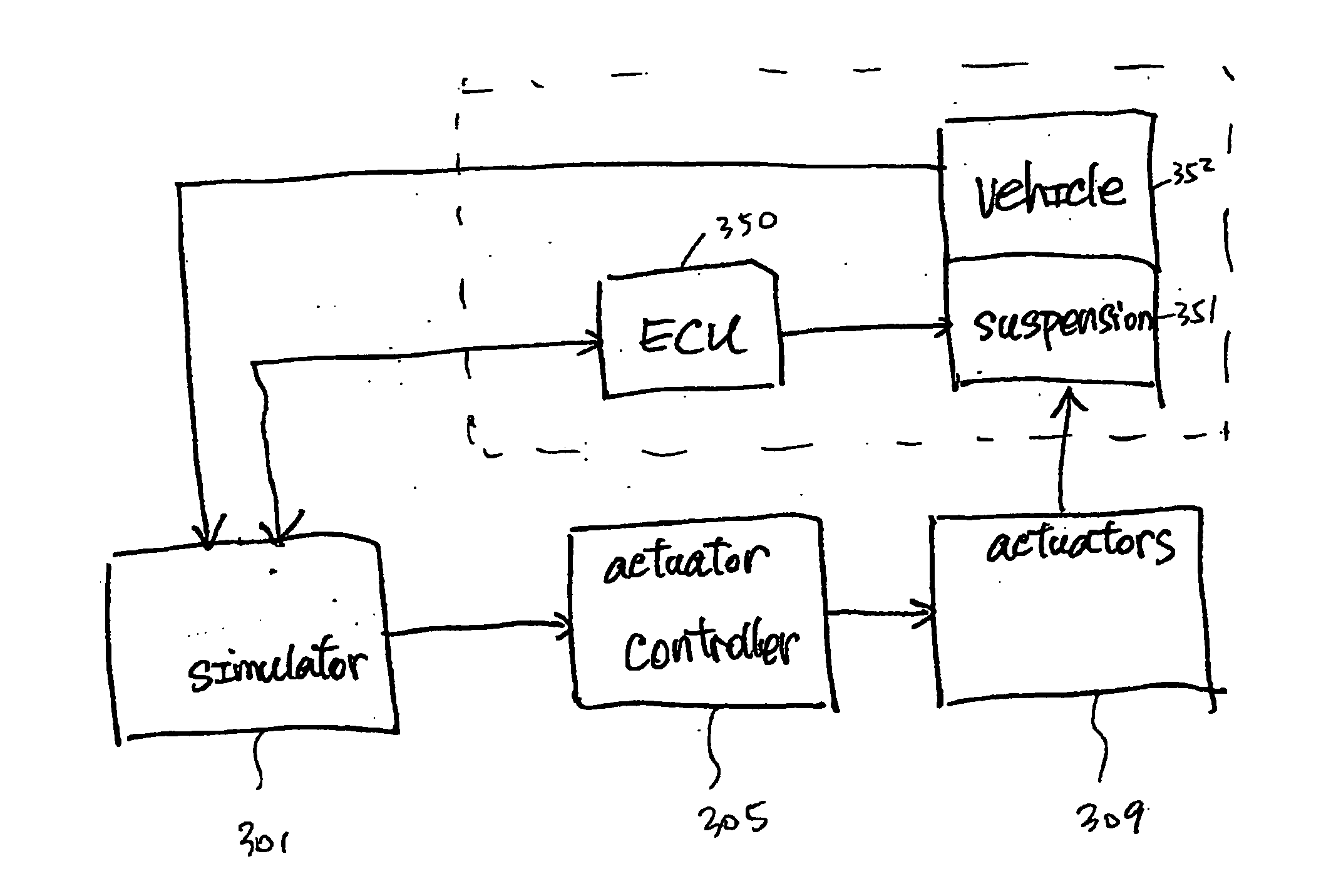
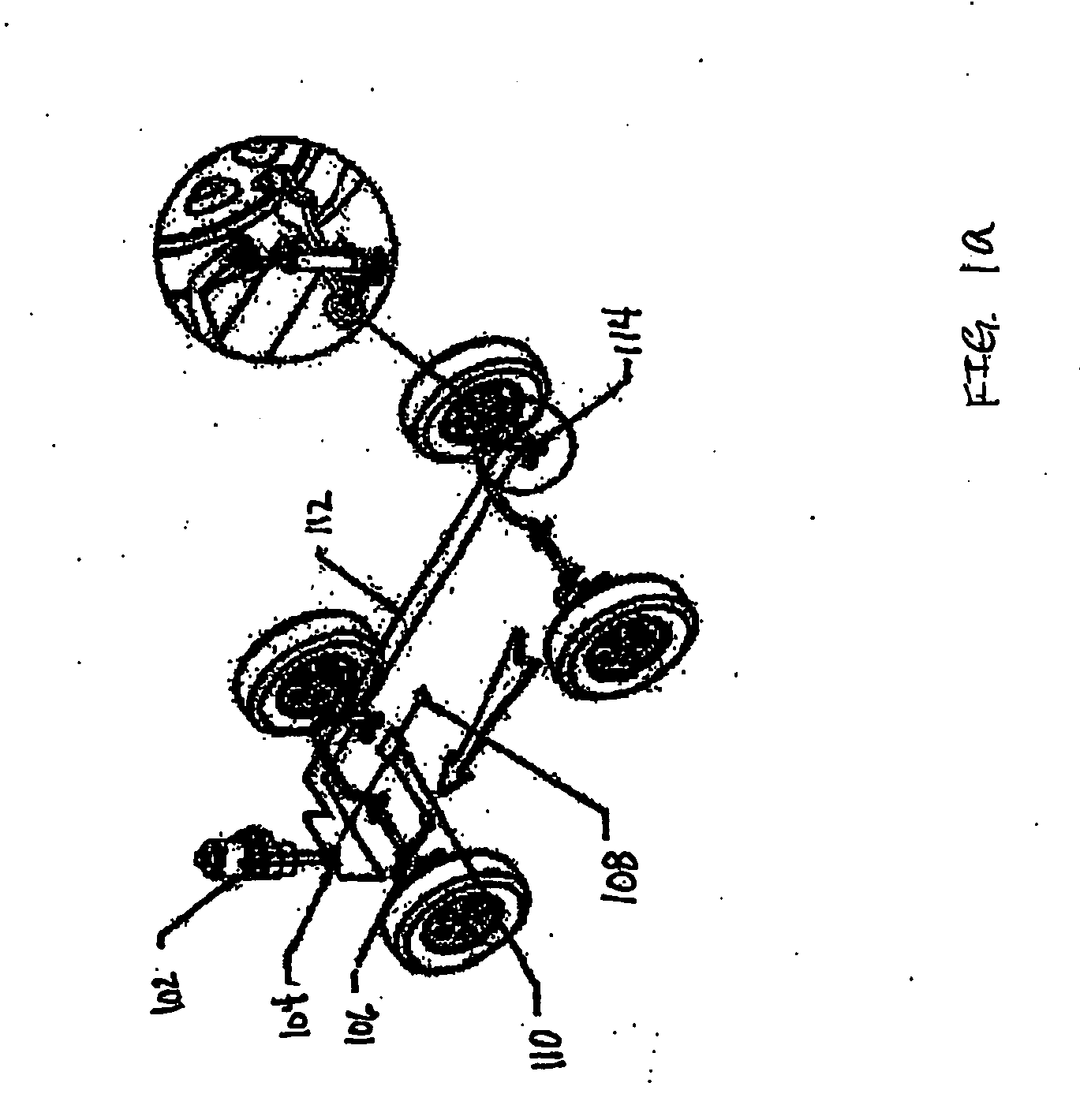
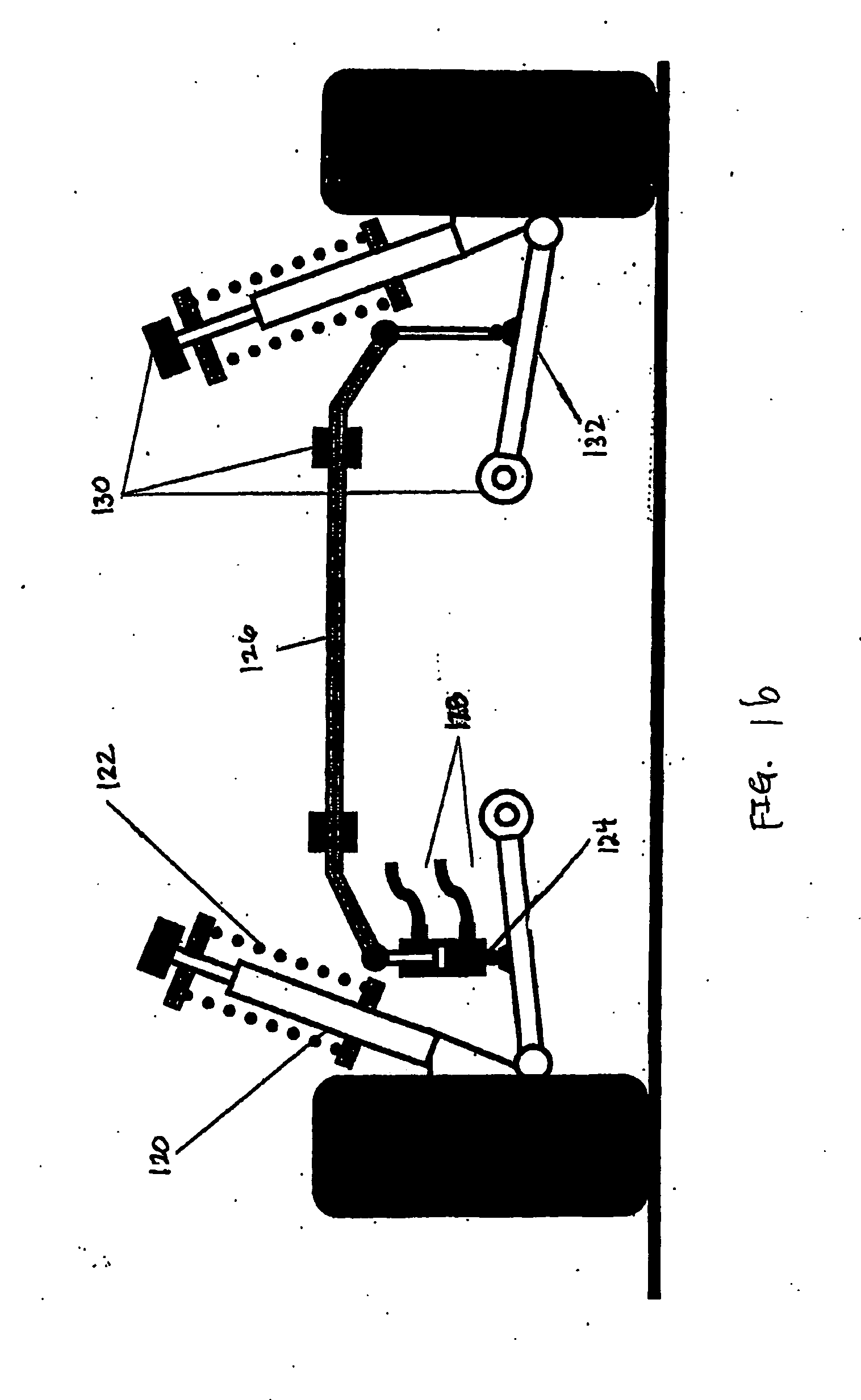
- An integrated vehicle simulation and testing system that includes a data processing system with test rig actuators and sensors to apply and measure test conditions, using a simulation model to generate and modify test signals based on response signals from the suspension system, allowing for dynamic evaluation of both passive and actively controlled suspension systems.

Safety Standards for Automotive Simulation Testing
The automotive industry has established comprehensive safety standards for simulation testing to ensure the reliability and accuracy of virtual suspension system evaluations. These standards serve as critical frameworks that govern how simulation models must be validated, verified, and implemented in automotive development processes.
ISO 26262 represents the fundamental functional safety standard for automotive systems, providing specific guidelines for simulation-based testing methodologies. This standard mandates that simulation models used for suspension testing must demonstrate traceability between virtual test results and real-world performance outcomes. The standard requires comprehensive documentation of model assumptions, boundary conditions, and validation procedures to ensure simulation accuracy meets automotive safety requirements.
The Society of Automotive Engineers has developed SAE J2570 and SAE J1939 standards that specifically address simulation testing protocols for vehicle dynamics and suspension systems. These standards define minimum requirements for model fidelity, including specifications for tire-road interaction modeling, damping coefficient accuracy, and spring rate validation. Compliance with these standards ensures that simulation results can be reliably used for safety-critical design decisions.
European automotive safety regulations, particularly ECE R13 and ECE R90, establish mandatory testing procedures that increasingly incorporate simulation-based validation methods. These regulations specify that virtual testing must complement physical testing rather than replace it entirely, requiring correlation studies between simulated and measured suspension performance data.
ASME V&V 40 provides verification and validation guidelines specifically for computational fluid dynamics and structural mechanics simulations used in automotive applications. This standard outlines systematic approaches for quantifying simulation uncertainty and establishing confidence levels in virtual test results, which is particularly crucial for suspension system safety assessments.
Industry-specific safety standards also mandate that simulation models undergo rigorous peer review processes and independent validation studies. These requirements ensure that virtual suspension testing maintains the same level of scrutiny and reliability as traditional physical testing methods, supporting regulatory compliance and consumer safety objectives.
ISO 26262 represents the fundamental functional safety standard for automotive systems, providing specific guidelines for simulation-based testing methodologies. This standard mandates that simulation models used for suspension testing must demonstrate traceability between virtual test results and real-world performance outcomes. The standard requires comprehensive documentation of model assumptions, boundary conditions, and validation procedures to ensure simulation accuracy meets automotive safety requirements.
The Society of Automotive Engineers has developed SAE J2570 and SAE J1939 standards that specifically address simulation testing protocols for vehicle dynamics and suspension systems. These standards define minimum requirements for model fidelity, including specifications for tire-road interaction modeling, damping coefficient accuracy, and spring rate validation. Compliance with these standards ensures that simulation results can be reliably used for safety-critical design decisions.
European automotive safety regulations, particularly ECE R13 and ECE R90, establish mandatory testing procedures that increasingly incorporate simulation-based validation methods. These regulations specify that virtual testing must complement physical testing rather than replace it entirely, requiring correlation studies between simulated and measured suspension performance data.
ASME V&V 40 provides verification and validation guidelines specifically for computational fluid dynamics and structural mechanics simulations used in automotive applications. This standard outlines systematic approaches for quantifying simulation uncertainty and establishing confidence levels in virtual test results, which is particularly crucial for suspension system safety assessments.
Industry-specific safety standards also mandate that simulation models undergo rigorous peer review processes and independent validation studies. These requirements ensure that virtual suspension testing maintains the same level of scrutiny and reliability as traditional physical testing methods, supporting regulatory compliance and consumer safety objectives.
Cost-Benefit Analysis of Virtual vs Physical Testing
The economic evaluation of virtual versus physical testing methodologies in automotive suspension development reveals significant disparities in both initial investments and long-term operational costs. Virtual testing environments require substantial upfront capital for high-performance computing infrastructure, specialized simulation software licenses, and skilled personnel training. However, these initial expenditures are typically offset within 18-24 months through reduced material costs, eliminated prototype manufacturing expenses, and accelerated development cycles.
Physical testing infrastructure demands considerable ongoing investments in test equipment maintenance, facility operations, and consumable materials. Each physical prototype can cost between $50,000 to $200,000 depending on complexity, while virtual models require only computational resources once developed. The iterative nature of suspension optimization means physical testing costs escalate exponentially with each design modification, whereas virtual iterations incur minimal additional expenses.
Time-to-market advantages represent a critical economic factor favoring simulation-based approaches. Virtual testing enables parallel development processes and rapid design iterations, potentially reducing development timelines by 30-40%. This acceleration translates to significant competitive advantages and earlier revenue generation, often justifying simulation investments through improved market positioning alone.
Risk mitigation costs further differentiate these approaches. Physical testing carries inherent risks of equipment damage, safety incidents, and project delays due to hardware failures. Virtual environments eliminate these risks while providing comprehensive failure analysis capabilities without physical consequences. Insurance and safety compliance costs are substantially lower for simulation-based testing programs.
Resource utilization efficiency strongly favors virtual methodologies. A single simulation workstation can operate continuously, testing multiple design variants simultaneously, while physical test rigs require sequential testing with significant setup and teardown periods. This efficiency translates to higher throughput and better resource allocation across development programs.
The scalability economics of virtual testing become increasingly favorable as organizations expand their testing requirements. Additional virtual test scenarios require minimal incremental investment, while scaling physical testing capabilities demands proportional increases in equipment, facilities, and personnel. This scalability advantage becomes particularly pronounced for organizations managing multiple vehicle platforms or conducting extensive parametric studies.
Physical testing infrastructure demands considerable ongoing investments in test equipment maintenance, facility operations, and consumable materials. Each physical prototype can cost between $50,000 to $200,000 depending on complexity, while virtual models require only computational resources once developed. The iterative nature of suspension optimization means physical testing costs escalate exponentially with each design modification, whereas virtual iterations incur minimal additional expenses.
Time-to-market advantages represent a critical economic factor favoring simulation-based approaches. Virtual testing enables parallel development processes and rapid design iterations, potentially reducing development timelines by 30-40%. This acceleration translates to significant competitive advantages and earlier revenue generation, often justifying simulation investments through improved market positioning alone.
Risk mitigation costs further differentiate these approaches. Physical testing carries inherent risks of equipment damage, safety incidents, and project delays due to hardware failures. Virtual environments eliminate these risks while providing comprehensive failure analysis capabilities without physical consequences. Insurance and safety compliance costs are substantially lower for simulation-based testing programs.
Resource utilization efficiency strongly favors virtual methodologies. A single simulation workstation can operate continuously, testing multiple design variants simultaneously, while physical test rigs require sequential testing with significant setup and teardown periods. This efficiency translates to higher throughput and better resource allocation across development programs.
The scalability economics of virtual testing become increasingly favorable as organizations expand their testing requirements. Additional virtual test scenarios require minimal incremental investment, while scaling physical testing capabilities demands proportional increases in equipment, facilities, and personnel. This scalability advantage becomes particularly pronounced for organizations managing multiple vehicle platforms or conducting extensive parametric studies.
Unlock deeper insights with PatSnap Eureka Quick Research — get a full tech report to explore trends and direct your research. Try now!
Generate Your Research Report Instantly with AI Agent
Supercharge your innovation with PatSnap Eureka AI Agent Platform!