

How to Utilize Sine Waves for Controlling Vibrations
FEB 9, 20269 MIN READ
Generate Your Research Report Instantly with AI Agent
PatSnap Eureka helps you evaluate technical feasibility & market potential.
Sine Wave Vibration Control Background and Objectives
Vibration control represents a critical challenge across numerous engineering domains, from aerospace and automotive industries to civil infrastructure and precision manufacturing. Uncontrolled vibrations can lead to structural fatigue, reduced operational efficiency, noise pollution, and premature equipment failure. Traditional passive damping methods, while effective in certain scenarios, often lack adaptability to varying operational conditions and frequency ranges. This limitation has driven the evolution toward active vibration control strategies that can dynamically respond to changing vibration patterns.
Sine wave-based vibration control has emerged as a sophisticated approach within active control methodologies, leveraging the fundamental principles of wave superposition and destructive interference. The technique exploits the periodic nature of sine waves to generate counteracting forces that neutralize unwanted vibrations. By precisely matching the frequency, amplitude, and phase characteristics of disturbing vibrations, sine wave control systems can achieve significant attenuation across targeted frequency bands. This approach has gained particular prominence in applications requiring high precision and real-time adaptability.
The historical development of sine wave vibration control traces back to early acoustic noise cancellation research in the mid-20th century, which established foundational principles of wave interference. Subsequent decades witnessed progressive refinement through advances in digital signal processing, sensor technology, and computational capabilities. The integration of adaptive algorithms and machine learning techniques has further enhanced the responsiveness and effectiveness of these systems, enabling them to handle complex, multi-frequency vibration environments.
The primary objective of contemporary sine wave vibration control research centers on achieving maximum vibration suppression while minimizing energy consumption and system complexity. Key technical goals include reducing response latency to enable real-time control, expanding the operational bandwidth to address broader frequency spectra, and improving robustness against environmental variations and system uncertainties. Additionally, there is growing emphasis on developing cost-effective implementation strategies that can be scaled across diverse industrial applications, from micro-electromechanical systems to large-scale structural installations.
Advanced objectives also encompass the integration of predictive capabilities, where systems anticipate vibration patterns before they fully develop, and the development of hybrid approaches that synergistically combine sine wave control with other damping technologies to achieve superior performance across multiple operational scenarios.
Sine wave-based vibration control has emerged as a sophisticated approach within active control methodologies, leveraging the fundamental principles of wave superposition and destructive interference. The technique exploits the periodic nature of sine waves to generate counteracting forces that neutralize unwanted vibrations. By precisely matching the frequency, amplitude, and phase characteristics of disturbing vibrations, sine wave control systems can achieve significant attenuation across targeted frequency bands. This approach has gained particular prominence in applications requiring high precision and real-time adaptability.
The historical development of sine wave vibration control traces back to early acoustic noise cancellation research in the mid-20th century, which established foundational principles of wave interference. Subsequent decades witnessed progressive refinement through advances in digital signal processing, sensor technology, and computational capabilities. The integration of adaptive algorithms and machine learning techniques has further enhanced the responsiveness and effectiveness of these systems, enabling them to handle complex, multi-frequency vibration environments.
The primary objective of contemporary sine wave vibration control research centers on achieving maximum vibration suppression while minimizing energy consumption and system complexity. Key technical goals include reducing response latency to enable real-time control, expanding the operational bandwidth to address broader frequency spectra, and improving robustness against environmental variations and system uncertainties. Additionally, there is growing emphasis on developing cost-effective implementation strategies that can be scaled across diverse industrial applications, from micro-electromechanical systems to large-scale structural installations.
Advanced objectives also encompass the integration of predictive capabilities, where systems anticipate vibration patterns before they fully develop, and the development of hybrid approaches that synergistically combine sine wave control with other damping technologies to achieve superior performance across multiple operational scenarios.
Market Demand for Precision Vibration Control Systems
The market demand for precision vibration control systems has experienced substantial growth across multiple industrial sectors, driven by increasing requirements for operational accuracy, equipment longevity, and product quality enhancement. Manufacturing industries, particularly semiconductor fabrication, precision machining, and optical equipment production, represent primary demand drivers where even microscopic vibrations can compromise product specifications and yield rates. These sectors require advanced vibration control solutions capable of mitigating disturbances across broad frequency ranges while maintaining system stability.
Aerospace and defense applications constitute another significant demand segment, where precision vibration control is critical for satellite stabilization, inertial navigation systems, and sensitive instrumentation protection. The growing deployment of space-based assets and unmanned aerial vehicles has intensified requirements for lightweight, energy-efficient vibration suppression systems that can operate reliably in extreme environments. Similarly, the medical device industry demonstrates increasing demand, particularly in high-resolution imaging equipment, surgical robotics, and diagnostic instruments where vibration interference directly impacts clinical outcomes.
The automotive sector has emerged as a rapidly expanding market, driven by electric vehicle proliferation and autonomous driving technology development. Electric powertrains generate distinct vibration profiles requiring sophisticated control strategies, while autonomous vehicles demand enhanced sensor stability for reliable environmental perception. Consumer electronics manufacturing also contributes significantly to market demand, as miniaturization trends and performance expectations necessitate precise vibration management during assembly and testing processes.
Infrastructure applications, including high-rise buildings, bridges, and industrial facilities, represent a growing market segment where structural vibration control enhances safety, comfort, and operational efficiency. Seismic protection systems and wind-induced vibration mitigation solutions are increasingly adopted in construction projects worldwide. The renewable energy sector, particularly wind turbine installations, requires robust vibration control to optimize energy capture and extend equipment lifespan.
Market growth is further accelerated by regulatory pressures regarding workplace safety, environmental standards, and product quality certifications. Industries face stringent compliance requirements that mandate effective vibration control implementation. Additionally, the integration of smart manufacturing principles and Industry 4.0 initiatives drives demand for intelligent vibration control systems featuring real-time monitoring, adaptive response capabilities, and predictive maintenance functionalities. This convergence of technological advancement and regulatory requirements positions precision vibration control as an essential component across diverse industrial applications.
Aerospace and defense applications constitute another significant demand segment, where precision vibration control is critical for satellite stabilization, inertial navigation systems, and sensitive instrumentation protection. The growing deployment of space-based assets and unmanned aerial vehicles has intensified requirements for lightweight, energy-efficient vibration suppression systems that can operate reliably in extreme environments. Similarly, the medical device industry demonstrates increasing demand, particularly in high-resolution imaging equipment, surgical robotics, and diagnostic instruments where vibration interference directly impacts clinical outcomes.
The automotive sector has emerged as a rapidly expanding market, driven by electric vehicle proliferation and autonomous driving technology development. Electric powertrains generate distinct vibration profiles requiring sophisticated control strategies, while autonomous vehicles demand enhanced sensor stability for reliable environmental perception. Consumer electronics manufacturing also contributes significantly to market demand, as miniaturization trends and performance expectations necessitate precise vibration management during assembly and testing processes.
Infrastructure applications, including high-rise buildings, bridges, and industrial facilities, represent a growing market segment where structural vibration control enhances safety, comfort, and operational efficiency. Seismic protection systems and wind-induced vibration mitigation solutions are increasingly adopted in construction projects worldwide. The renewable energy sector, particularly wind turbine installations, requires robust vibration control to optimize energy capture and extend equipment lifespan.
Market growth is further accelerated by regulatory pressures regarding workplace safety, environmental standards, and product quality certifications. Industries face stringent compliance requirements that mandate effective vibration control implementation. Additionally, the integration of smart manufacturing principles and Industry 4.0 initiatives drives demand for intelligent vibration control systems featuring real-time monitoring, adaptive response capabilities, and predictive maintenance functionalities. This convergence of technological advancement and regulatory requirements positions precision vibration control as an essential component across diverse industrial applications.
Current Status and Challenges in Sine Wave Vibration Control
Sine wave-based vibration control has emerged as a sophisticated approach in modern engineering, leveraging the predictable and mathematically defined characteristics of sinusoidal signals to mitigate unwanted oscillations. Current implementations span diverse sectors including aerospace, automotive, precision manufacturing, and structural engineering. Active vibration control systems predominantly employ sine wave generation through piezoelectric actuators, electromagnetic shakers, and adaptive algorithms that synthesize counter-phase signals to achieve destructive interference. Advanced digital signal processors enable real-time frequency tracking and amplitude modulation, allowing systems to respond dynamically to varying vibration profiles.
Despite significant progress, several technical challenges persist in achieving optimal performance. Frequency bandwidth limitations remain a critical constraint, as most systems struggle to simultaneously address multiple vibration frequencies across wide spectral ranges. The computational complexity of real-time sine wave synthesis and phase synchronization demands substantial processing resources, particularly in multi-axis control scenarios. Sensor accuracy and placement optimization continue to challenge practitioners, since precise vibration measurement is fundamental to generating effective cancellation signals.
Time delay issues present another substantial obstacle, as the latency between vibration detection and actuator response can compromise control effectiveness, especially at higher frequencies. Nonlinear system dynamics and time-varying structural properties further complicate control algorithm design, requiring adaptive strategies that can accommodate changing operational conditions. Energy efficiency concerns also emerge in continuous operation scenarios, where sustained sine wave generation imposes significant power requirements.
Geographic distribution of technological advancement shows concentration in developed regions, with leading research institutions in North America, Europe, and East Asia driving innovation. Industrial implementation remains uneven, with aerospace and semiconductor manufacturing sectors demonstrating more mature adoption compared to construction and consumer applications. The integration of machine learning algorithms for predictive vibration modeling represents an emerging frontier, though practical deployment faces validation and reliability challenges in safety-critical applications.
Despite significant progress, several technical challenges persist in achieving optimal performance. Frequency bandwidth limitations remain a critical constraint, as most systems struggle to simultaneously address multiple vibration frequencies across wide spectral ranges. The computational complexity of real-time sine wave synthesis and phase synchronization demands substantial processing resources, particularly in multi-axis control scenarios. Sensor accuracy and placement optimization continue to challenge practitioners, since precise vibration measurement is fundamental to generating effective cancellation signals.
Time delay issues present another substantial obstacle, as the latency between vibration detection and actuator response can compromise control effectiveness, especially at higher frequencies. Nonlinear system dynamics and time-varying structural properties further complicate control algorithm design, requiring adaptive strategies that can accommodate changing operational conditions. Energy efficiency concerns also emerge in continuous operation scenarios, where sustained sine wave generation imposes significant power requirements.
Geographic distribution of technological advancement shows concentration in developed regions, with leading research institutions in North America, Europe, and East Asia driving innovation. Industrial implementation remains uneven, with aerospace and semiconductor manufacturing sectors demonstrating more mature adoption compared to construction and consumer applications. The integration of machine learning algorithms for predictive vibration modeling represents an emerging frontier, though practical deployment faces validation and reliability challenges in safety-critical applications.
Existing Sine Wave Vibration Control Solutions
01 Sine wave generation and control circuits
Technologies for generating and controlling sine wave signals through electronic circuits, including oscillators, signal generators, and waveform synthesis methods. These systems utilize various circuit configurations to produce stable and accurate sine wave outputs with controllable frequency and amplitude characteristics.- Sine wave generation and control circuits: Technologies for generating and controlling sine wave signals through electronic circuits, including oscillators, signal generators, and waveform synthesis methods. These systems utilize various circuit configurations to produce stable and accurate sine wave outputs with controllable frequency and amplitude characteristics.
- Sine wave vibration testing apparatus: Equipment and devices designed to generate sine wave vibrations for testing purposes, including vibration tables, shakers, and testing platforms. These apparatus are used to simulate real-world vibration conditions and evaluate the performance and durability of products under controlled sine wave vibration environments.
- Sine wave motor drive and control systems: Drive systems that utilize sine wave signals to control motor operation, providing smooth and efficient motor performance. These systems employ sine wave modulation techniques to reduce noise, vibration, and harmonic distortion in motor applications, improving overall system efficiency and reliability.
- Sine wave vibration isolation and damping devices: Mechanical devices and structures designed to isolate or dampen sine wave vibrations, protecting sensitive equipment and reducing unwanted oscillations. These solutions include vibration isolators, dampers, and suspension systems that effectively attenuate sine wave vibrations across specific frequency ranges.
- Sine wave measurement and analysis instruments: Instruments and methods for measuring, analyzing, and characterizing sine wave vibrations, including sensors, analyzers, and signal processing techniques. These tools enable accurate detection and evaluation of sine wave parameters such as frequency, amplitude, phase, and harmonic content for various applications.
02 Sine wave vibration testing apparatus
Equipment and devices designed to generate sine wave vibrations for testing purposes, including vibration tables, shakers, and testing platforms. These apparatus are used to simulate real-world vibration conditions and evaluate the performance and durability of products under controlled sine wave vibration environments.Expand Specific Solutions03 Sine wave motor drive and control systems
Drive systems that utilize sine wave signals to control motor operation, providing smooth and efficient motor performance. These systems employ sine wave modulation techniques to reduce noise, vibration, and harmonic distortion in motor applications, improving overall system efficiency and reliability.Expand Specific Solutions04 Sine wave vibration damping and isolation
Methods and devices for reducing or isolating sine wave vibrations in mechanical systems and structures. These technologies include vibration dampers, isolators, and absorption mechanisms that minimize the transmission of sine wave vibrations to protect sensitive equipment and improve system stability.Expand Specific Solutions05 Sine wave measurement and analysis instruments
Instruments and systems for measuring, analyzing, and monitoring sine wave vibrations and signals. These tools include sensors, analyzers, and diagnostic equipment that capture vibration data, perform frequency analysis, and provide detailed characterization of sine wave patterns for quality control and research applications.Expand Specific Solutions
Key Players in Vibration Control and Actuator Industry
The vibration control technology utilizing sine waves is in a mature development stage, with applications spanning automotive, industrial machinery, consumer electronics, and precision manufacturing sectors. The global market demonstrates substantial scale driven by automotive anti-vibration systems and industrial automation demands. Technology maturity varies significantly across players: established manufacturers like Sumitomo Riko, DENSO Corp., Hitachi Ltd., and Nissan Motor lead in automotive applications with advanced active vibration control systems, while Samsung Electronics and LG Electronics excel in consumer device implementations. Academic institutions including Yanshan University, Southeast University, and Keio University contribute fundamental research in sine wave-based control algorithms. Industrial equipment specialists such as FANUC Corp., Crystal Instruments, and Russell Finex demonstrate mature solutions for manufacturing environments. The competitive landscape shows convergence between traditional mechanical damping approaches and emerging active electronic control systems, with Japanese manufacturers maintaining strong positions alongside growing Chinese institutional research capabilities and European aerospace applications through Airbus Defence & Space.
Samsung Electronics Co., Ltd.
Technical Solution: Samsung has implemented sine wave-based vibration control in their consumer electronics and semiconductor manufacturing equipment. Their technology uses MEMS-based actuators controlled by digitally synthesized sine waves to counteract vibrations in precision assembly lines and optical image stabilization systems. The approach employs feedforward control algorithms that predict vibration patterns and generate compensatory sine waves with sub-millisecond latency. In smartphone camera modules, this technology achieves vibration suppression of up to 5 degrees of angular displacement using electromagnetic actuators driven by multi-frequency sine wave superposition, enabling stable image capture even during hand tremor[3][12].
Strengths: High-precision control suitable for miniaturized devices with fast response times and multi-axis compensation capability. Weaknesses: Power consumption constraints in battery-operated devices and sensitivity to electromagnetic interference.
DENSO Corp.
Technical Solution: DENSO has developed advanced active vibration control systems utilizing sine wave generation and phase-controlled cancellation techniques for automotive applications. Their technology employs piezoelectric actuators driven by precisely tuned sinusoidal signals to counteract engine and road-induced vibrations in real-time. The system analyzes vibration frequencies through accelerometers and generates anti-phase sine waves at matching frequencies to achieve destructive interference, reducing cabin noise by up to 10dB in the 50-200Hz range. This approach is integrated into engine mounts and suspension components, providing adaptive damping that adjusts sine wave amplitude and phase based on driving conditions[8][15].
Strengths: Proven automotive integration with real-time adaptive control and significant noise reduction performance. Weaknesses: Limited to specific frequency ranges and requires complex sensor networks for optimal performance.
Core Technologies in Sine Wave Signal Processing
Method for actuating active vibration insulators
PatentActiveUS7409268B2
Innovation
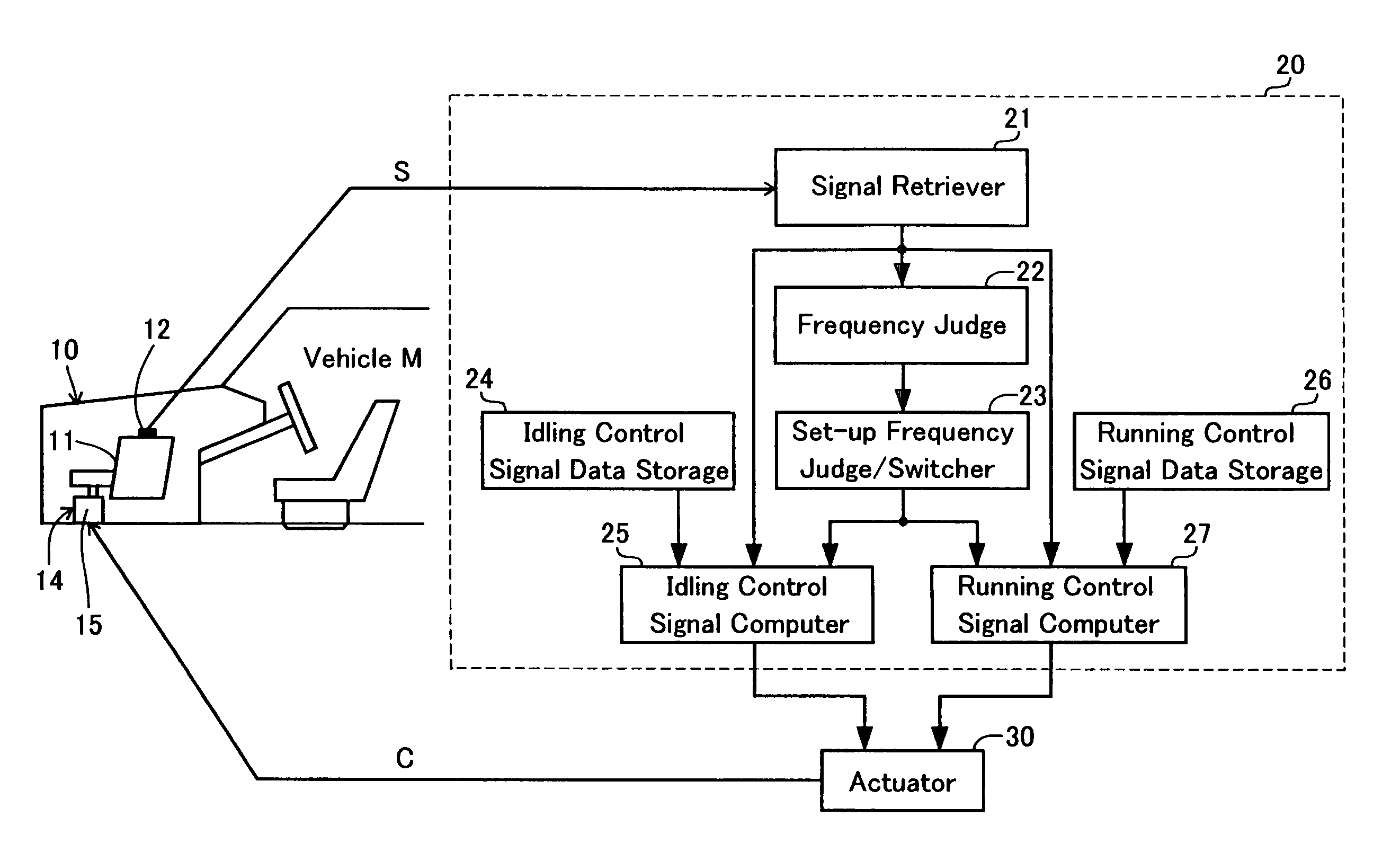
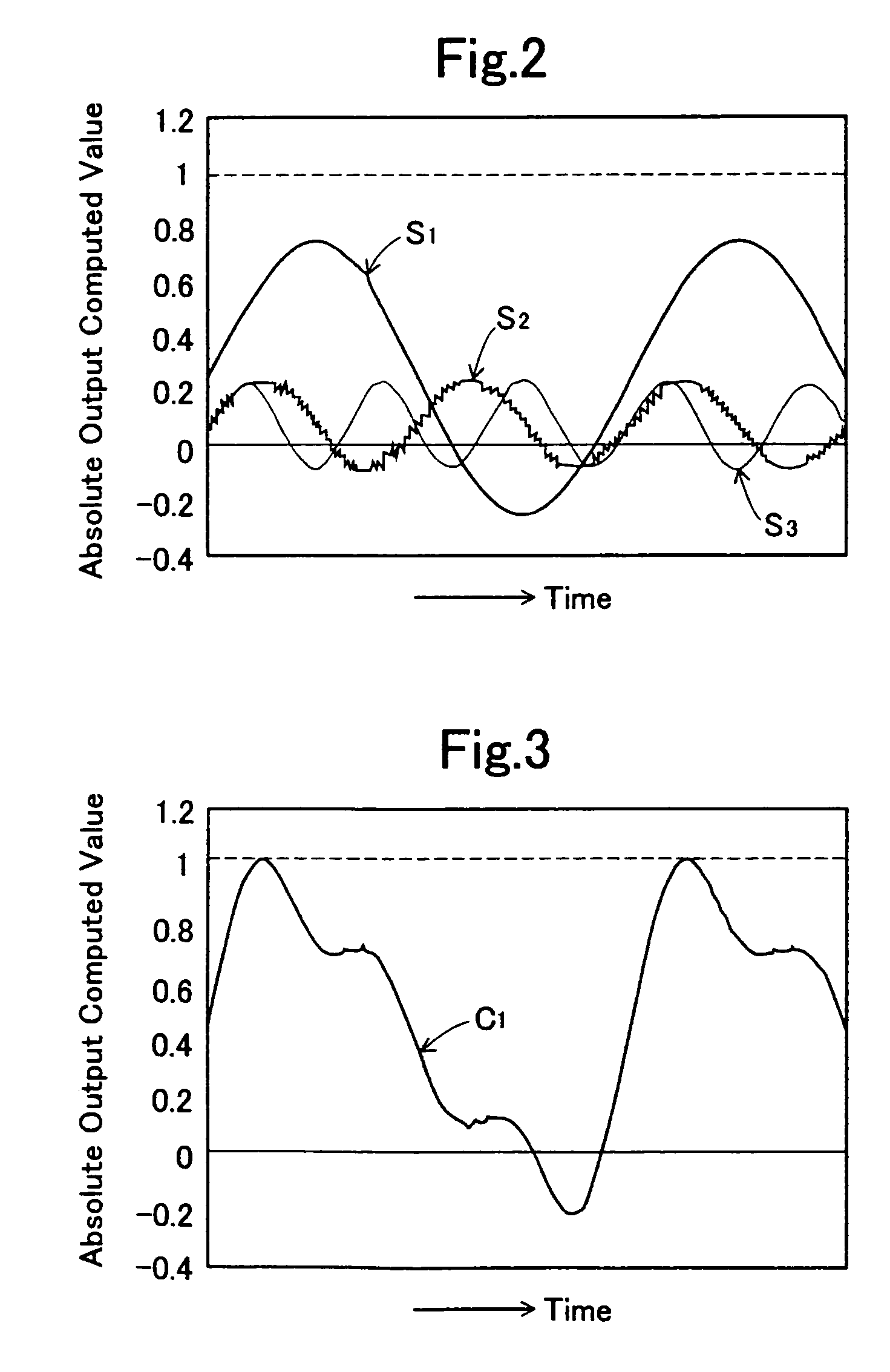
- A method involving the generation of idling and running control signals, where the idling control signal includes a higher order harmonic component added to the fundamental-wave signal component, and the running control signal is a rectangle-shaped wave, is used to actuate electromagnetic actuators, effectively damping vibrations and reducing noise without the need for high-cost actuators.

Driving apparatus, vibration generating apparatus, electronic apparatus, and driving method
PatentActiveUS20210162458A1
Innovation
- A driving apparatus that uses a low-frequency signal wave (10 Hz to 250 Hz) as a modulating wave to modulate the amplitude of a high-frequency sine wave (20 kHz to 40 kHz) driving signal for a piezoelectric actuator, reducing power consumption and heat generation while preventing noise.


Noise and Vibration Regulation Standards
The regulation of noise and vibration has become increasingly critical across industrial, transportation, and residential sectors as awareness of environmental and occupational health impacts grows. International and regional standards have been established to define acceptable exposure limits and measurement methodologies, providing a framework within which vibration control technologies must operate. These standards serve as both compliance benchmarks and design targets for engineers developing active vibration control systems utilizing sine wave-based approaches.
At the international level, ISO 2631 series standards address human exposure to whole-body vibration, specifying frequency-weighted acceleration limits for different exposure durations and postures. ISO 5349 focuses on hand-transmitted vibration, particularly relevant for power tool operators and machinery workers. These standards establish frequency-dependent thresholds that directly inform the design parameters of sine wave cancellation systems, as control algorithms must target specific frequency bands where regulatory limits are most stringent.
In the United States, OSHA regulations provide occupational exposure limits, while the EPA establishes community noise guidelines that indirectly constrain vibration transmission through structures. The European Union enforces Directive 2002/44/EC on minimum health and safety requirements regarding worker exposure to vibration risks, mandating exposure action values and limit values that employers must not exceed. These regulatory frameworks create clear performance targets for active vibration control systems employing sine wave interference principles.
Industry-specific standards further refine these requirements. The automotive sector follows ISO 10326 for laboratory measurement of vehicle vibration, while aerospace applications adhere to MIL-STD-810 for equipment environmental testing. Railway systems comply with ISO 14837 standards for mechanical vibration and shock, and building construction follows ISO 10137 for serviceability of structures against vibration. Each standard defines distinct frequency ranges, amplitude thresholds, and measurement protocols that shape the technical specifications for sine wave-based control solutions.
Compliance verification requires standardized measurement equipment and procedures, typically involving accelerometers, frequency analyzers, and data acquisition systems calibrated to traceable standards. The effectiveness of sine wave vibration control technologies is ultimately validated against these regulatory benchmarks, making thorough understanding of applicable standards essential for successful technology deployment and market acceptance.
At the international level, ISO 2631 series standards address human exposure to whole-body vibration, specifying frequency-weighted acceleration limits for different exposure durations and postures. ISO 5349 focuses on hand-transmitted vibration, particularly relevant for power tool operators and machinery workers. These standards establish frequency-dependent thresholds that directly inform the design parameters of sine wave cancellation systems, as control algorithms must target specific frequency bands where regulatory limits are most stringent.
In the United States, OSHA regulations provide occupational exposure limits, while the EPA establishes community noise guidelines that indirectly constrain vibration transmission through structures. The European Union enforces Directive 2002/44/EC on minimum health and safety requirements regarding worker exposure to vibration risks, mandating exposure action values and limit values that employers must not exceed. These regulatory frameworks create clear performance targets for active vibration control systems employing sine wave interference principles.
Industry-specific standards further refine these requirements. The automotive sector follows ISO 10326 for laboratory measurement of vehicle vibration, while aerospace applications adhere to MIL-STD-810 for equipment environmental testing. Railway systems comply with ISO 14837 standards for mechanical vibration and shock, and building construction follows ISO 10137 for serviceability of structures against vibration. Each standard defines distinct frequency ranges, amplitude thresholds, and measurement protocols that shape the technical specifications for sine wave-based control solutions.
Compliance verification requires standardized measurement equipment and procedures, typically involving accelerometers, frequency analyzers, and data acquisition systems calibrated to traceable standards. The effectiveness of sine wave vibration control technologies is ultimately validated against these regulatory benchmarks, making thorough understanding of applicable standards essential for successful technology deployment and market acceptance.
Energy Efficiency in Sine Wave Vibration Systems
Energy efficiency represents a critical performance metric in sine wave vibration control systems, directly impacting operational costs, thermal management requirements, and overall system sustainability. The conversion of electrical energy into mechanical vibration through sine wave actuation inherently involves energy losses across multiple stages, including power electronics, electromagnetic transduction, and mechanical transmission. Understanding and optimizing these energy pathways is essential for developing commercially viable and environmentally responsible vibration control solutions.
The primary energy consumption in sine wave vibration systems occurs within the power amplification stage, where electrical signals are conditioned and amplified to drive actuators. Class D amplifiers have emerged as preferred solutions due to their switching-mode operation, achieving efficiencies exceeding 90% compared to 50-70% for traditional linear amplifiers. However, the generation of pure sine waves from pulse-width modulated signals requires sophisticated filtering, which introduces additional losses. Advanced topologies employing resonant switching and soft-switching techniques minimize these losses while maintaining signal fidelity.
Actuator selection significantly influences system efficiency, with electromagnetic and piezoelectric devices exhibiting distinct energy characteristics. Piezoelectric actuators demonstrate superior efficiency at higher frequencies due to their capacitive nature, requiring primarily reactive power that can be partially recovered through energy harvesting circuits. Electromagnetic actuators, while less efficient at high frequencies, offer better performance in low-frequency applications and benefit from impedance matching techniques that optimize power transfer.
Regenerative energy recovery presents substantial opportunities for efficiency improvement, particularly in systems with bidirectional energy flow. When vibration control involves both energy injection and extraction, implementing active rectification and energy storage systems can recapture up to 40% of otherwise dissipated energy. Supercapacitors and advanced battery systems serve as effective storage media, enabling this recovered energy to be reused during subsequent actuation cycles.
System-level optimization through adaptive control algorithms further enhances energy efficiency by dynamically adjusting actuation parameters based on real-time performance requirements. Predictive algorithms minimize unnecessary actuation by anticipating vibration patterns, while variable-frequency operation ensures actuators operate near their resonant frequencies where efficiency peaks. These intelligent control strategies, combined with hardware improvements, establish a comprehensive framework for achieving energy-efficient sine wave vibration control systems suitable for sustainable industrial deployment.
The primary energy consumption in sine wave vibration systems occurs within the power amplification stage, where electrical signals are conditioned and amplified to drive actuators. Class D amplifiers have emerged as preferred solutions due to their switching-mode operation, achieving efficiencies exceeding 90% compared to 50-70% for traditional linear amplifiers. However, the generation of pure sine waves from pulse-width modulated signals requires sophisticated filtering, which introduces additional losses. Advanced topologies employing resonant switching and soft-switching techniques minimize these losses while maintaining signal fidelity.
Actuator selection significantly influences system efficiency, with electromagnetic and piezoelectric devices exhibiting distinct energy characteristics. Piezoelectric actuators demonstrate superior efficiency at higher frequencies due to their capacitive nature, requiring primarily reactive power that can be partially recovered through energy harvesting circuits. Electromagnetic actuators, while less efficient at high frequencies, offer better performance in low-frequency applications and benefit from impedance matching techniques that optimize power transfer.
Regenerative energy recovery presents substantial opportunities for efficiency improvement, particularly in systems with bidirectional energy flow. When vibration control involves both energy injection and extraction, implementing active rectification and energy storage systems can recapture up to 40% of otherwise dissipated energy. Supercapacitors and advanced battery systems serve as effective storage media, enabling this recovered energy to be reused during subsequent actuation cycles.
System-level optimization through adaptive control algorithms further enhances energy efficiency by dynamically adjusting actuation parameters based on real-time performance requirements. Predictive algorithms minimize unnecessary actuation by anticipating vibration patterns, while variable-frequency operation ensures actuators operate near their resonant frequencies where efficiency peaks. These intelligent control strategies, combined with hardware improvements, establish a comprehensive framework for achieving energy-efficient sine wave vibration control systems suitable for sustainable industrial deployment.
Unlock deeper insights with PatSnap Eureka Quick Research — get a full tech report to explore trends and direct your research. Try now!
Generate Your Research Report Instantly with AI Agent
Supercharge your innovation with PatSnap Eureka AI Agent Platform!