
Hydrogen Compression vs Gasification: Economic Impact
APR 7, 20269 MIN READ
Generate Your Research Report Instantly with AI Agent
Patsnap Eureka helps you evaluate technical feasibility & market potential.
Hydrogen Processing Technologies Background and Objectives
Hydrogen processing technologies have emerged as critical components in the global transition toward sustainable energy systems, with compression and gasification representing two fundamental yet distinct technological pathways that significantly impact economic viability and industrial scalability. The evolution of these technologies spans over a century, beginning with early industrial hydrogen production methods in the 1900s and advancing through successive waves of innovation driven by energy security concerns, environmental regulations, and economic optimization requirements.
Hydrogen compression technology has developed from basic mechanical systems to sophisticated multi-stage compression units capable of achieving pressures exceeding 700 bar for various applications including fuel cell vehicles, industrial processes, and energy storage systems. This technological pathway focuses on physical densification of hydrogen gas to reduce storage volume and enable efficient transportation, with recent advances incorporating advanced materials, smart control systems, and energy recovery mechanisms to minimize operational costs.
Gasification technology represents an alternative approach that converts various feedstocks including biomass, coal, and waste materials into hydrogen-rich syngas through thermochemical processes at elevated temperatures. This pathway has evolved from simple coal gasification plants to integrated gasification combined cycle systems and advanced plasma gasification technologies, offering potential advantages in feedstock flexibility and carbon utilization efficiency.
The primary objective of comparing these technologies centers on understanding their respective economic impacts across the entire value chain, from capital expenditure requirements and operational costs to market competitiveness and long-term sustainability. Key performance indicators include energy efficiency ratios, production costs per kilogram of hydrogen, infrastructure investment requirements, and lifecycle economic returns under various market scenarios.
Current research objectives focus on optimizing both pathways through advanced process integration, waste heat recovery, and hybrid system configurations that potentially combine compression and gasification elements. The economic evaluation framework must consider factors including feedstock availability and pricing, energy input costs, regulatory compliance expenses, and market demand dynamics across different industrial sectors and geographical regions.
Hydrogen compression technology has developed from basic mechanical systems to sophisticated multi-stage compression units capable of achieving pressures exceeding 700 bar for various applications including fuel cell vehicles, industrial processes, and energy storage systems. This technological pathway focuses on physical densification of hydrogen gas to reduce storage volume and enable efficient transportation, with recent advances incorporating advanced materials, smart control systems, and energy recovery mechanisms to minimize operational costs.
Gasification technology represents an alternative approach that converts various feedstocks including biomass, coal, and waste materials into hydrogen-rich syngas through thermochemical processes at elevated temperatures. This pathway has evolved from simple coal gasification plants to integrated gasification combined cycle systems and advanced plasma gasification technologies, offering potential advantages in feedstock flexibility and carbon utilization efficiency.
The primary objective of comparing these technologies centers on understanding their respective economic impacts across the entire value chain, from capital expenditure requirements and operational costs to market competitiveness and long-term sustainability. Key performance indicators include energy efficiency ratios, production costs per kilogram of hydrogen, infrastructure investment requirements, and lifecycle economic returns under various market scenarios.
Current research objectives focus on optimizing both pathways through advanced process integration, waste heat recovery, and hybrid system configurations that potentially combine compression and gasification elements. The economic evaluation framework must consider factors including feedstock availability and pricing, energy input costs, regulatory compliance expenses, and market demand dynamics across different industrial sectors and geographical regions.
Market Demand Analysis for Hydrogen Compression and Gasification
The global hydrogen market is experiencing unprecedented growth driven by the urgent need for decarbonization across multiple industrial sectors. Both hydrogen compression and gasification technologies are witnessing substantial demand increases as governments worldwide implement stringent carbon reduction policies and industries seek cleaner energy alternatives.
The transportation sector represents one of the most significant demand drivers for hydrogen compression technologies. Heavy-duty trucking, maritime shipping, and aviation industries are increasingly adopting hydrogen fuel cell systems, creating substantial requirements for efficient compression solutions. These applications demand high-pressure hydrogen storage systems, typically operating at pressures ranging from 350 to 700 bar, necessitating advanced compression infrastructure.
Industrial applications constitute another major demand segment for both technologies. Steel production, chemical manufacturing, and refining operations are transitioning toward hydrogen-based processes to reduce carbon emissions. Gasification technology particularly benefits from this trend, as industries seek to convert various feedstocks including biomass, municipal solid waste, and coal into clean hydrogen while managing waste streams effectively.
The power generation sector is emerging as a critical market for hydrogen technologies. Grid-scale energy storage applications require large-volume hydrogen compression systems to store renewable energy during peak production periods. Gasification technologies are simultaneously gaining traction for converting organic waste materials into hydrogen for power generation, creating circular economy opportunities.
Regional demand patterns reveal significant variations in technology preferences. European markets demonstrate strong preference for compression technologies due to established renewable energy infrastructure and hydrogen mobility initiatives. Asian markets, particularly China and Japan, show balanced demand for both compression and gasification technologies, driven by diverse industrial applications and waste-to-energy programs.
The residential and commercial heating sectors are creating emerging demand for both technologies. Hydrogen compression systems support fuel cell heating applications, while gasification technologies enable distributed hydrogen production from organic waste materials. This trend is particularly pronounced in regions with ambitious residential decarbonization targets.
Market forecasts indicate sustained growth across both technology segments, with compression technologies expected to dominate near-term demand due to immediate transportation and industrial applications, while gasification technologies show strong long-term potential driven by waste management and circular economy initiatives.
The transportation sector represents one of the most significant demand drivers for hydrogen compression technologies. Heavy-duty trucking, maritime shipping, and aviation industries are increasingly adopting hydrogen fuel cell systems, creating substantial requirements for efficient compression solutions. These applications demand high-pressure hydrogen storage systems, typically operating at pressures ranging from 350 to 700 bar, necessitating advanced compression infrastructure.
Industrial applications constitute another major demand segment for both technologies. Steel production, chemical manufacturing, and refining operations are transitioning toward hydrogen-based processes to reduce carbon emissions. Gasification technology particularly benefits from this trend, as industries seek to convert various feedstocks including biomass, municipal solid waste, and coal into clean hydrogen while managing waste streams effectively.
The power generation sector is emerging as a critical market for hydrogen technologies. Grid-scale energy storage applications require large-volume hydrogen compression systems to store renewable energy during peak production periods. Gasification technologies are simultaneously gaining traction for converting organic waste materials into hydrogen for power generation, creating circular economy opportunities.
Regional demand patterns reveal significant variations in technology preferences. European markets demonstrate strong preference for compression technologies due to established renewable energy infrastructure and hydrogen mobility initiatives. Asian markets, particularly China and Japan, show balanced demand for both compression and gasification technologies, driven by diverse industrial applications and waste-to-energy programs.
The residential and commercial heating sectors are creating emerging demand for both technologies. Hydrogen compression systems support fuel cell heating applications, while gasification technologies enable distributed hydrogen production from organic waste materials. This trend is particularly pronounced in regions with ambitious residential decarbonization targets.
Market forecasts indicate sustained growth across both technology segments, with compression technologies expected to dominate near-term demand due to immediate transportation and industrial applications, while gasification technologies show strong long-term potential driven by waste management and circular economy initiatives.
Current Status and Economic Challenges in Hydrogen Processing
The global hydrogen processing industry currently operates within a complex economic landscape where compression and gasification technologies compete for market dominance. Hydrogen compression, primarily used for storage and transportation applications, faces significant capital expenditure challenges with compression systems typically requiring investments ranging from $1,000 to $3,000 per kilogram of daily capacity. The technology demonstrates relatively mature operational characteristics but struggles with energy efficiency losses of 10-15% during the compression process.
Gasification technologies present a different economic profile, particularly in hydrogen production from biomass and waste materials. Current gasification plants require substantial upfront investments of $50-150 million for commercial-scale facilities, yet offer potential cost advantages through feedstock flexibility and integrated energy recovery systems. The technology achieves hydrogen production costs of $2-4 per kilogram, depending on feedstock availability and plant utilization rates.
Infrastructure development represents a critical economic bottleneck for both technologies. Compression-based hydrogen distribution networks require extensive pipeline systems and storage facilities, with estimated infrastructure costs exceeding $200 billion globally for comprehensive deployment. Gasification facilities face different challenges, including feedstock supply chain establishment and waste heat utilization optimization, which significantly impact overall economic viability.
Market dynamics reveal distinct regional preferences influenced by local energy policies and resource availability. European markets favor compression technologies due to established natural gas infrastructure compatibility, while Asian markets increasingly invest in gasification systems leveraging abundant biomass resources. North American markets demonstrate mixed adoption patterns, with compression dominating transportation applications and gasification gaining traction in industrial sectors.
Current economic challenges include volatile energy prices affecting operational costs, regulatory uncertainties impacting long-term investment decisions, and technology standardization issues limiting economies of scale. Both compression and gasification technologies face pressure to reduce costs by 30-50% to achieve widespread commercial viability and compete effectively with conventional energy storage and production methods.
Gasification technologies present a different economic profile, particularly in hydrogen production from biomass and waste materials. Current gasification plants require substantial upfront investments of $50-150 million for commercial-scale facilities, yet offer potential cost advantages through feedstock flexibility and integrated energy recovery systems. The technology achieves hydrogen production costs of $2-4 per kilogram, depending on feedstock availability and plant utilization rates.
Infrastructure development represents a critical economic bottleneck for both technologies. Compression-based hydrogen distribution networks require extensive pipeline systems and storage facilities, with estimated infrastructure costs exceeding $200 billion globally for comprehensive deployment. Gasification facilities face different challenges, including feedstock supply chain establishment and waste heat utilization optimization, which significantly impact overall economic viability.
Market dynamics reveal distinct regional preferences influenced by local energy policies and resource availability. European markets favor compression technologies due to established natural gas infrastructure compatibility, while Asian markets increasingly invest in gasification systems leveraging abundant biomass resources. North American markets demonstrate mixed adoption patterns, with compression dominating transportation applications and gasification gaining traction in industrial sectors.
Current economic challenges include volatile energy prices affecting operational costs, regulatory uncertainties impacting long-term investment decisions, and technology standardization issues limiting economies of scale. Both compression and gasification technologies face pressure to reduce costs by 30-50% to achieve widespread commercial viability and compete effectively with conventional energy storage and production methods.
Current Technical Solutions for Hydrogen Processing Economics
01 Hydrogen compression systems and methods for cost reduction
Various compression technologies and system configurations are designed to reduce the capital and operational costs of hydrogen compression. These include multi-stage compression systems, optimized compressor designs, and energy recovery mechanisms that minimize power consumption. Advanced compression methods focus on improving efficiency while reducing equipment costs and maintenance requirements, making hydrogen compression more economically viable for industrial applications.- Hydrogen compression systems and methods for cost reduction: Technologies focused on improving hydrogen compression efficiency through advanced compressor designs, multi-stage compression systems, and energy recovery mechanisms. These innovations aim to reduce operational costs and energy consumption in hydrogen production and distribution facilities. Methods include optimized compression cycles, reduced maintenance requirements, and improved component durability to lower overall system costs.
- Integrated gasification and hydrogen production systems: Combined systems that integrate gasification processes with hydrogen generation to improve overall economic efficiency. These systems utilize syngas from gasification as feedstock for hydrogen production, optimizing energy utilization and reducing capital expenditure. The integration allows for better heat management, reduced equipment requirements, and improved process economics through shared infrastructure and utilities.
- Economic optimization of hydrogen storage and transportation: Technologies addressing the economic challenges of hydrogen storage and transportation through improved compression ratios, storage vessel designs, and distribution networks. Innovations include high-pressure storage systems, liquefaction methods, and pipeline infrastructure that reduce per-unit transportation costs. These solutions focus on minimizing energy losses and maximizing delivery efficiency to improve overall economic viability.
- Gasification process efficiency and cost analysis: Advanced gasification technologies that improve conversion efficiency and reduce operational costs through optimized reactor designs, catalyst systems, and process control methods. These innovations focus on maximizing syngas yield, reducing tar formation, and improving feedstock flexibility. Economic benefits include lower feedstock costs, reduced waste disposal expenses, and improved product quality leading to higher market value.
- Economic modeling and lifecycle cost assessment for hydrogen systems: Methodologies and systems for evaluating the economic impact of hydrogen production, compression, and gasification facilities over their operational lifetime. These approaches consider capital costs, operational expenses, maintenance requirements, and revenue streams to provide comprehensive economic assessments. Tools include cost-benefit analysis frameworks, financial modeling systems, and optimization algorithms for investment decision-making.
02 Integrated gasification and compression systems
Integration of gasification processes with hydrogen compression systems provides economic benefits through improved overall system efficiency. These integrated approaches combine hydrogen production from gasification with optimized compression stages, reducing energy losses and infrastructure costs. The synergistic design allows for heat integration and waste energy recovery, improving the economic feasibility of hydrogen production and distribution systems.Expand Specific Solutions03 Economic optimization through process control and monitoring
Advanced control systems and monitoring technologies enable economic optimization of hydrogen compression and gasification operations. These systems utilize sensors, data analytics, and automated control strategies to optimize operating parameters, reduce energy consumption, and minimize downtime. Real-time monitoring and predictive maintenance capabilities help reduce operational costs and improve system reliability, contributing to better economic performance.Expand Specific Solutions04 Novel compression equipment and component designs
Innovative compressor designs and component configurations aim to reduce manufacturing costs and improve operational efficiency. These include novel seal designs, improved materials, compact configurations, and modular systems that reduce initial investment and maintenance costs. The development of more durable and efficient compression equipment directly impacts the economic viability of hydrogen infrastructure by lowering lifecycle costs.Expand Specific Solutions05 Economic analysis and optimization models for hydrogen systems
Comprehensive economic models and analysis methods evaluate the financial impact of different hydrogen compression and gasification configurations. These approaches consider capital costs, operating expenses, energy efficiency, and system integration to identify optimal designs. Economic optimization frameworks help stakeholders make informed decisions about technology selection, system sizing, and operational strategies to maximize return on investment and minimize total cost of ownership.Expand Specific Solutions
Major Players in Hydrogen Processing Industry
The hydrogen compression versus gasification economic impact represents a rapidly evolving competitive landscape within the broader energy transition sector. The industry is currently in a growth phase, driven by increasing demand for clean energy solutions and substantial government investments in hydrogen infrastructure. Market participants span from established energy giants like Saudi Arabian Oil Co., Exxon Mobil, and Equinor Energy AS, to specialized industrial gas companies including Air Liquide SA and Air Products & Chemicals Inc. Technology maturity varies significantly across players, with automotive manufacturers like Toyota Motor Corp. and Hyundai Motor Co. advancing fuel cell applications, while engineering firms such as Siemens Energy Global and Nuovo Pignone Tecnologie focus on compression technologies. Research institutions including MIT and Caltech contribute fundamental innovations, while emerging companies like GRZ Technologies develop novel storage solutions, creating a diverse ecosystem with varying technological readiness levels.
Saudi Arabian Oil Co.
Technical Solution: Saudi Aramco develops hydrogen production through steam methane reforming and partial oxidation of heavy hydrocarbons, with compression systems designed for large-scale operations up to 1000 bar. Their economic strategy leverages low-cost feedstock availability, achieving hydrogen production costs below $1.5/kg. The company's compression technology focuses on centrifugal compressors for high-volume applications and reciprocating compressors for high-pressure storage. Their integrated refinery-hydrogen facilities demonstrate 25-30% cost advantages through economies of scale and feedstock integration.
Strengths: Low-cost feedstock access, large-scale production capabilities, integrated refinery operations. Weaknesses: High carbon footprint, dependence on fossil fuel feedstock, significant infrastructure investment requirements.
Air Liquide SA
Technical Solution: Air Liquide has developed comprehensive hydrogen compression technologies including multi-stage reciprocating compressors and ionic compressors for various pressure levels up to 900 bar. Their economic model focuses on reducing CAPEX through modular designs and minimizing OPEX via energy-efficient compression cycles. The company also invests in hydrogen gasification through steam methane reforming and electrolysis, with cost optimization strategies targeting $2-3/kg hydrogen production. Their integrated approach combines compression and production to maximize economic efficiency across the hydrogen value chain.
Strengths: Global infrastructure, proven compression technology, integrated value chain approach. Weaknesses: High capital investment requirements, energy-intensive processes, dependence on electricity costs for electrolysis.
Core Economic Optimization Patents in Hydrogen Processing
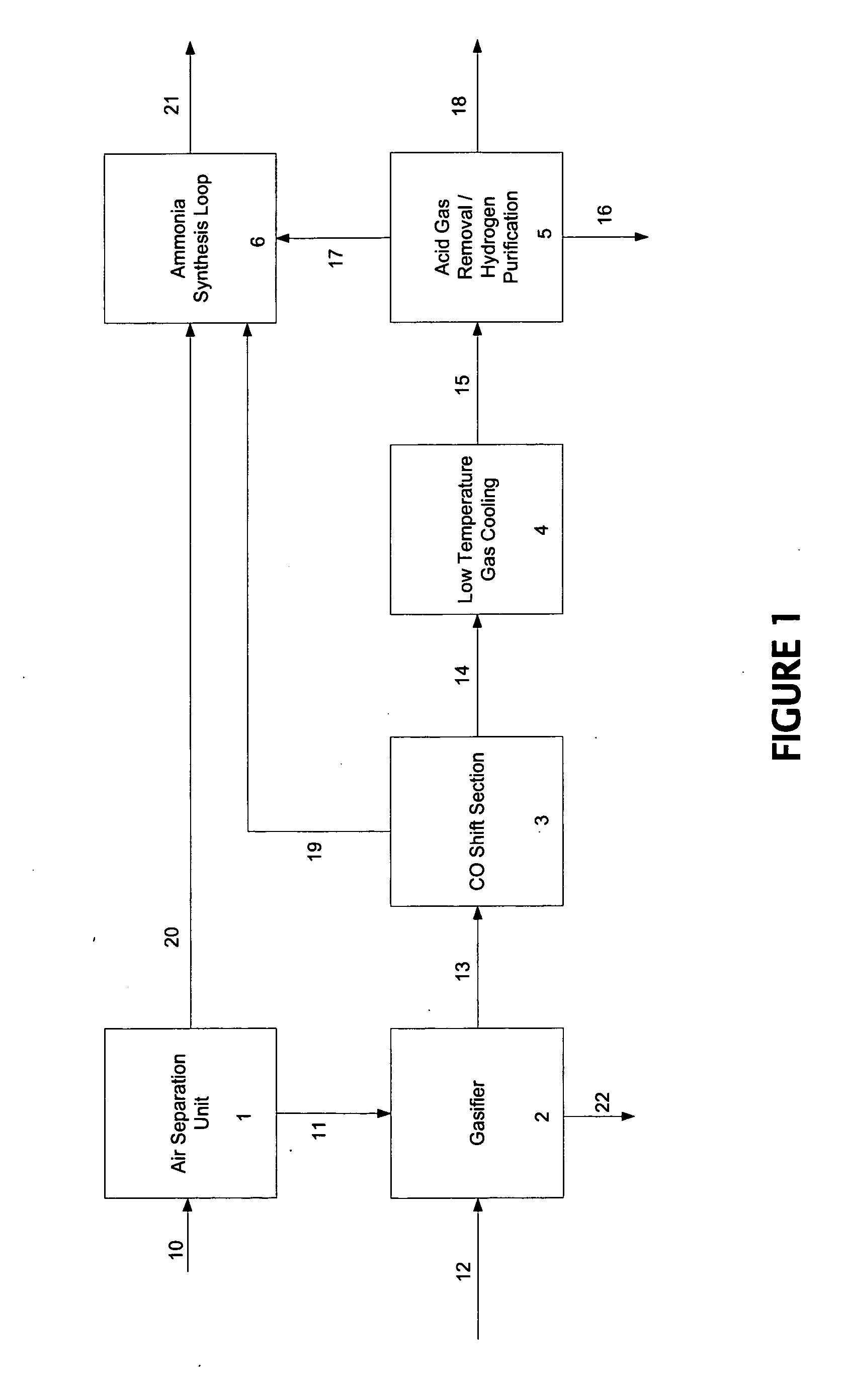
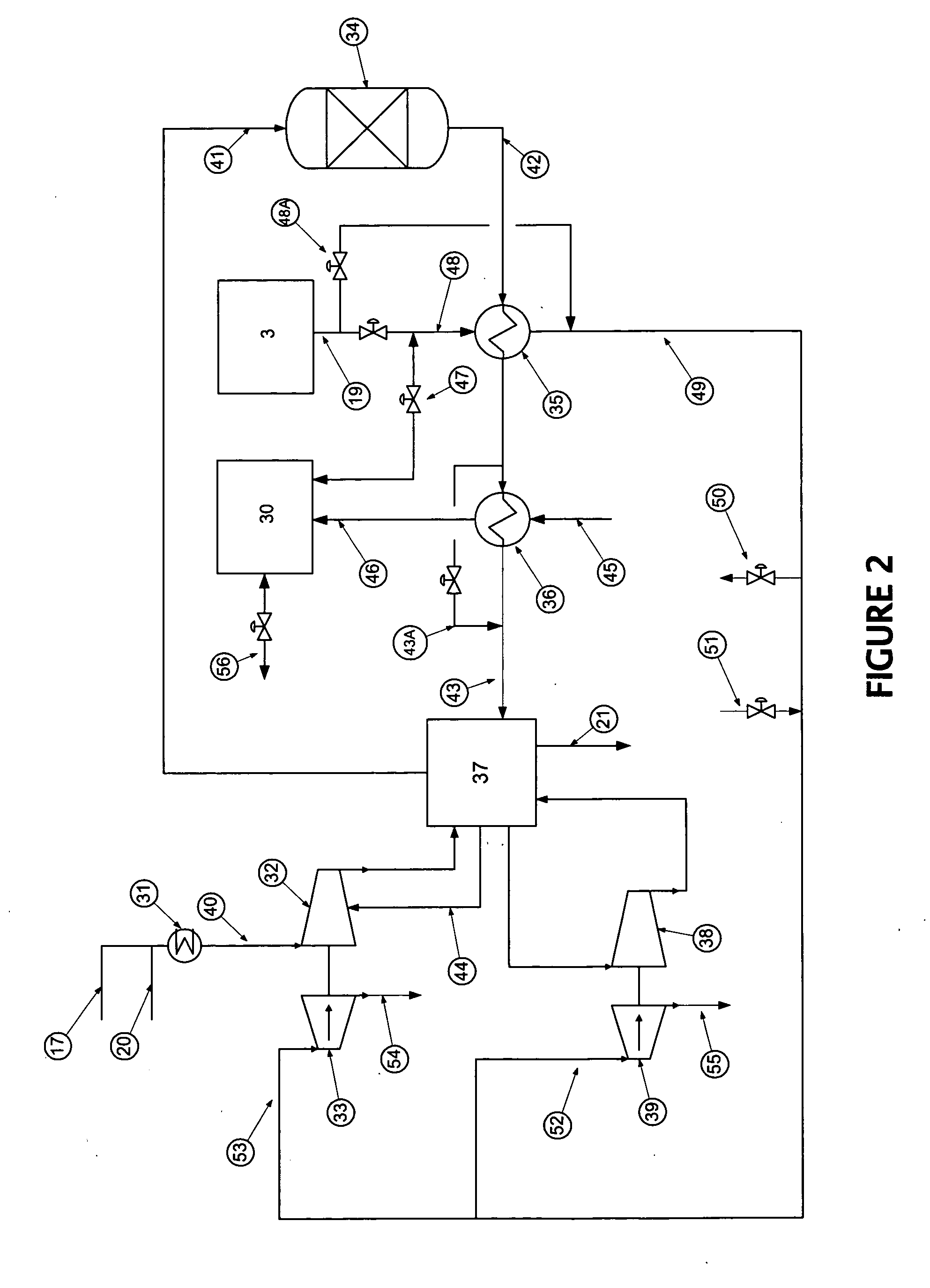
Integration of gasification and ammonia production
PatentInactiveUS20060228284A1
Innovation
- A method that integrates gasification processes to produce high-pressure hydrogen and steam for ammonia synthesis, where carbonaceous materials are gasified with oxygen to produce synthesis gas, which is then shifted to generate high-pressure saturated steam, and heat-exchanged with the ammonia product stream to produce superheated steam for driving steam turbines, reducing the need for electric motors.
Method and system for efficient hydrogen compression
PatentWO2024017496A1
Innovation
- A hydrogen compression system that mixes hydrogen with an additional gaseous component of higher molecular weight, compresses the mixture, separates the components, and recovers energy through expansion to reduce power consumption and improve efficiency, using an energy recovery arrangement that converts thermal or mechanical energy into electric energy or uses it directly to drive the compressor.


Policy Framework Impact on Hydrogen Processing Economics
Government policy frameworks significantly influence the economic viability of hydrogen processing technologies, creating distinct cost structures for compression versus gasification pathways. Carbon pricing mechanisms represent the most direct policy intervention, where higher carbon taxes favor gasification processes that can utilize waste biomass or capture CO2, while compression of green hydrogen benefits from renewable energy subsidies. The European Union's Emissions Trading System exemplifies how regulatory frameworks can shift economic advantages between these technologies.
Subsidy structures and tax incentives create substantial variations in project economics across different jurisdictions. Countries like Germany and Japan offer preferential feed-in tariffs for renewable hydrogen production, reducing the operational costs of compression systems powered by clean electricity. Conversely, nations with abundant biomass resources, such as Finland and Canada, provide tax credits for gasification projects that convert organic waste into hydrogen, fundamentally altering the cost-benefit analysis between these approaches.
Regulatory standards for hydrogen purity and safety impose varying compliance costs on different processing methods. Compression systems typically require fewer purification steps for electrolytic hydrogen but face stringent pressure vessel regulations that increase capital expenditure. Gasification processes must invest heavily in gas cleaning technologies to meet fuel cell grade specifications, yet benefit from more lenient storage regulations due to lower operating pressures.
Infrastructure development policies significantly impact the economic landscape through public investment priorities. Government funding for high-pressure pipeline networks favors compression technologies by reducing distribution costs, while investment in distributed energy systems supports smaller-scale gasification units. The United States' Infrastructure Investment and Jobs Act allocates billions toward hydrogen hubs, with funding criteria that influence technology selection based on regional resource availability and policy objectives.
International trade policies and import tariffs on hydrogen equipment create regional cost disparities that affect technology competitiveness. Export credit agencies in manufacturing countries like South Korea and China provide favorable financing for their domestic electrolyzer and gasification technologies, influencing global project economics. Additionally, emerging hydrogen certification schemes and renewable energy certificates create new revenue streams that differentially benefit compression and gasification pathways depending on their carbon intensity and sustainability credentials.
Subsidy structures and tax incentives create substantial variations in project economics across different jurisdictions. Countries like Germany and Japan offer preferential feed-in tariffs for renewable hydrogen production, reducing the operational costs of compression systems powered by clean electricity. Conversely, nations with abundant biomass resources, such as Finland and Canada, provide tax credits for gasification projects that convert organic waste into hydrogen, fundamentally altering the cost-benefit analysis between these approaches.
Regulatory standards for hydrogen purity and safety impose varying compliance costs on different processing methods. Compression systems typically require fewer purification steps for electrolytic hydrogen but face stringent pressure vessel regulations that increase capital expenditure. Gasification processes must invest heavily in gas cleaning technologies to meet fuel cell grade specifications, yet benefit from more lenient storage regulations due to lower operating pressures.
Infrastructure development policies significantly impact the economic landscape through public investment priorities. Government funding for high-pressure pipeline networks favors compression technologies by reducing distribution costs, while investment in distributed energy systems supports smaller-scale gasification units. The United States' Infrastructure Investment and Jobs Act allocates billions toward hydrogen hubs, with funding criteria that influence technology selection based on regional resource availability and policy objectives.
International trade policies and import tariffs on hydrogen equipment create regional cost disparities that affect technology competitiveness. Export credit agencies in manufacturing countries like South Korea and China provide favorable financing for their domestic electrolyzer and gasification technologies, influencing global project economics. Additionally, emerging hydrogen certification schemes and renewable energy certificates create new revenue streams that differentially benefit compression and gasification pathways depending on their carbon intensity and sustainability credentials.
Environmental Cost-Benefit Analysis of Hydrogen Technologies
The environmental cost-benefit analysis of hydrogen compression versus gasification technologies reveals significant differences in their ecological footprints and long-term sustainability implications. Both pathways present distinct environmental trade-offs that must be carefully evaluated against their economic benefits to determine optimal deployment strategies.
Hydrogen compression technologies demonstrate relatively lower direct environmental impacts during operation, primarily consuming electrical energy for mechanical compression processes. The environmental burden largely depends on the electricity grid's carbon intensity, with renewable-powered compression systems achieving near-zero operational emissions. However, the manufacturing of high-pressure storage vessels and compression equipment involves energy-intensive steel production and specialized materials, contributing to embodied carbon emissions.
Gasification processes present more complex environmental profiles due to their thermochemical nature. Steam methane reforming, the dominant gasification method, generates substantial CO2 emissions as a byproduct, typically producing 9-12 kg of CO2 per kg of hydrogen. While carbon capture and storage technologies can mitigate these emissions, they introduce additional energy penalties and infrastructure requirements. Biomass gasification offers improved carbon neutrality potential but raises concerns about land use changes and feedstock sustainability.
Water consumption patterns differ significantly between these technologies. Compression systems require minimal water input, primarily for cooling applications. Conversely, gasification processes demand substantial water resources for steam generation and cooling, with steam methane reforming consuming approximately 9-15 liters of water per kg of hydrogen produced. This disparity becomes critical in water-stressed regions where resource allocation must be optimized.
Air quality impacts vary considerably across technologies. Compression systems generate negligible local air pollutants when powered by clean electricity. Gasification facilities, particularly those processing fossil feedstocks, can emit nitrogen oxides, particulate matter, and trace contaminants requiring sophisticated emission control systems. These localized impacts disproportionately affect surrounding communities and ecosystems.
The lifecycle environmental assessment reveals that compression technologies generally exhibit lower overall environmental burdens when coupled with renewable energy sources. Gasification pathways show potential for environmental benefits when utilizing waste biomass or incorporating carbon utilization technologies, but require careful management of process emissions and resource consumption to achieve net positive environmental outcomes.
Hydrogen compression technologies demonstrate relatively lower direct environmental impacts during operation, primarily consuming electrical energy for mechanical compression processes. The environmental burden largely depends on the electricity grid's carbon intensity, with renewable-powered compression systems achieving near-zero operational emissions. However, the manufacturing of high-pressure storage vessels and compression equipment involves energy-intensive steel production and specialized materials, contributing to embodied carbon emissions.
Gasification processes present more complex environmental profiles due to their thermochemical nature. Steam methane reforming, the dominant gasification method, generates substantial CO2 emissions as a byproduct, typically producing 9-12 kg of CO2 per kg of hydrogen. While carbon capture and storage technologies can mitigate these emissions, they introduce additional energy penalties and infrastructure requirements. Biomass gasification offers improved carbon neutrality potential but raises concerns about land use changes and feedstock sustainability.
Water consumption patterns differ significantly between these technologies. Compression systems require minimal water input, primarily for cooling applications. Conversely, gasification processes demand substantial water resources for steam generation and cooling, with steam methane reforming consuming approximately 9-15 liters of water per kg of hydrogen produced. This disparity becomes critical in water-stressed regions where resource allocation must be optimized.
Air quality impacts vary considerably across technologies. Compression systems generate negligible local air pollutants when powered by clean electricity. Gasification facilities, particularly those processing fossil feedstocks, can emit nitrogen oxides, particulate matter, and trace contaminants requiring sophisticated emission control systems. These localized impacts disproportionately affect surrounding communities and ecosystems.
The lifecycle environmental assessment reveals that compression technologies generally exhibit lower overall environmental burdens when coupled with renewable energy sources. Gasification pathways show potential for environmental benefits when utilizing waste biomass or incorporating carbon utilization technologies, but require careful management of process emissions and resource consumption to achieve net positive environmental outcomes.
Unlock deeper insights with Patsnap Eureka Quick Research — get a full tech report to explore trends and direct your research. Try now!
Generate Your Research Report Instantly with AI Agent
Supercharge your innovation with Patsnap Eureka AI Agent Platform!