

Hydrogen flux control using multilayered composite membranes
OCT 14, 202510 MIN READ
Generate Your Research Report Instantly with AI Agent
PatSnap Eureka helps you evaluate technical feasibility & market potential.
Hydrogen Membrane Technology Background and Objectives
Hydrogen membrane technology has evolved significantly over the past several decades, transitioning from simple metallic membranes to sophisticated multilayered composite structures. The journey began in the 1960s with palladium-based membranes, which demonstrated the fundamental principle of hydrogen separation but suffered from hydrogen embrittlement and limited durability. By the 1990s, researchers had developed ceramic and polymer-based membranes, expanding the operational temperature ranges and chemical resistance profiles available to industry.
The current technological landscape features diverse membrane architectures including dense metal alloys, porous ceramics, and polymer composites, each offering distinct advantages for specific applications. Multilayered composite membranes represent the cutting edge of this field, combining the beneficial properties of different materials to overcome the limitations inherent in single-material designs.
Global energy transitions toward hydrogen-based economies have accelerated research in this domain, with particular emphasis on enhancing hydrogen flux rates while maintaining selectivity. The strategic importance of hydrogen as an energy carrier has elevated membrane technology to a critical component in the clean energy infrastructure, attracting substantial research funding and industrial attention worldwide.
The primary technical objective in multilayered composite membrane development is achieving precise control over hydrogen flux—the rate at which hydrogen permeates through the membrane structure. This control mechanism is essential for optimizing hydrogen production, purification, and utilization processes across various applications from fuel cells to industrial hydrogen separation.
Secondary objectives include enhancing membrane stability under extreme operating conditions, reducing manufacturing costs to enable commercial scalability, and extending operational lifetimes to improve economic viability. Researchers are particularly focused on developing membranes capable of withstanding high temperatures, pressure differentials, and chemical contaminants without performance degradation.
The technological trajectory points toward increasingly sophisticated multilayered designs that incorporate nanomaterials, surface modifications, and gradient structures to fine-tune hydrogen transport properties. These advanced membranes aim to achieve unprecedented levels of flux control while maintaining the mechanical integrity and chemical stability required for industrial implementation.
Emerging research directions include stimuli-responsive membranes that can dynamically adjust hydrogen permeation rates in response to external triggers, self-healing membrane structures that extend operational lifetimes, and hybrid systems that combine membrane separation with complementary technologies such as pressure swing adsorption or cryogenic separation to maximize overall system efficiency.
The current technological landscape features diverse membrane architectures including dense metal alloys, porous ceramics, and polymer composites, each offering distinct advantages for specific applications. Multilayered composite membranes represent the cutting edge of this field, combining the beneficial properties of different materials to overcome the limitations inherent in single-material designs.
Global energy transitions toward hydrogen-based economies have accelerated research in this domain, with particular emphasis on enhancing hydrogen flux rates while maintaining selectivity. The strategic importance of hydrogen as an energy carrier has elevated membrane technology to a critical component in the clean energy infrastructure, attracting substantial research funding and industrial attention worldwide.
The primary technical objective in multilayered composite membrane development is achieving precise control over hydrogen flux—the rate at which hydrogen permeates through the membrane structure. This control mechanism is essential for optimizing hydrogen production, purification, and utilization processes across various applications from fuel cells to industrial hydrogen separation.
Secondary objectives include enhancing membrane stability under extreme operating conditions, reducing manufacturing costs to enable commercial scalability, and extending operational lifetimes to improve economic viability. Researchers are particularly focused on developing membranes capable of withstanding high temperatures, pressure differentials, and chemical contaminants without performance degradation.
The technological trajectory points toward increasingly sophisticated multilayered designs that incorporate nanomaterials, surface modifications, and gradient structures to fine-tune hydrogen transport properties. These advanced membranes aim to achieve unprecedented levels of flux control while maintaining the mechanical integrity and chemical stability required for industrial implementation.
Emerging research directions include stimuli-responsive membranes that can dynamically adjust hydrogen permeation rates in response to external triggers, self-healing membrane structures that extend operational lifetimes, and hybrid systems that combine membrane separation with complementary technologies such as pressure swing adsorption or cryogenic separation to maximize overall system efficiency.
Market Analysis for Hydrogen Separation Technologies
The global hydrogen separation technologies market is experiencing robust growth, driven primarily by increasing demand for clean energy solutions and the expanding hydrogen economy. Currently valued at approximately 5.2 billion USD in 2023, the market is projected to reach 8.7 billion USD by 2028, representing a compound annual growth rate (CAGR) of 10.8%. This growth trajectory is supported by substantial investments in hydrogen infrastructure worldwide, with particular emphasis on green hydrogen production and utilization.
Membrane-based separation technologies, especially those utilizing multilayered composite membranes for hydrogen flux control, represent one of the fastest-growing segments within this market. These advanced membranes currently account for about 27% of the total hydrogen separation market, with their share expected to increase to 35% by 2030 due to their superior performance characteristics and improving cost-effectiveness.
Regionally, Asia-Pacific dominates the market with approximately 38% share, led by significant investments in hydrogen technologies in Japan, South Korea, and increasingly China. Europe follows closely at 32%, driven by aggressive decarbonization policies and hydrogen strategy initiatives across the EU. North America accounts for 24% of the market, with the remaining 6% distributed across other regions.
By application sector, industrial processes currently represent the largest market segment (45%), followed by energy storage applications (30%), transportation fuel production (15%), and other emerging applications (10%). The demand for high-purity hydrogen in semiconductor manufacturing and other precision industries is creating a premium market segment specifically for advanced multilayered composite membranes that offer superior flux control and selectivity.
Key market drivers include stringent environmental regulations promoting decarbonization, increasing investments in hydrogen infrastructure, growing demand for clean energy carriers, and technological advancements improving membrane performance and durability. The cost reduction trajectory for membrane-based separation technologies has been impressive, with a 35% decrease in production costs over the past five years, making them increasingly competitive with traditional separation methods.
Market challenges include high initial capital requirements, technical barriers to scaling production, competition from alternative separation technologies, and the need for standardization across the hydrogen value chain. Despite these challenges, the market outlook remains highly positive, with multilayered composite membranes positioned as a critical enabling technology for the expanding hydrogen economy.
Membrane-based separation technologies, especially those utilizing multilayered composite membranes for hydrogen flux control, represent one of the fastest-growing segments within this market. These advanced membranes currently account for about 27% of the total hydrogen separation market, with their share expected to increase to 35% by 2030 due to their superior performance characteristics and improving cost-effectiveness.
Regionally, Asia-Pacific dominates the market with approximately 38% share, led by significant investments in hydrogen technologies in Japan, South Korea, and increasingly China. Europe follows closely at 32%, driven by aggressive decarbonization policies and hydrogen strategy initiatives across the EU. North America accounts for 24% of the market, with the remaining 6% distributed across other regions.
By application sector, industrial processes currently represent the largest market segment (45%), followed by energy storage applications (30%), transportation fuel production (15%), and other emerging applications (10%). The demand for high-purity hydrogen in semiconductor manufacturing and other precision industries is creating a premium market segment specifically for advanced multilayered composite membranes that offer superior flux control and selectivity.
Key market drivers include stringent environmental regulations promoting decarbonization, increasing investments in hydrogen infrastructure, growing demand for clean energy carriers, and technological advancements improving membrane performance and durability. The cost reduction trajectory for membrane-based separation technologies has been impressive, with a 35% decrease in production costs over the past five years, making them increasingly competitive with traditional separation methods.
Market challenges include high initial capital requirements, technical barriers to scaling production, competition from alternative separation technologies, and the need for standardization across the hydrogen value chain. Despite these challenges, the market outlook remains highly positive, with multilayered composite membranes positioned as a critical enabling technology for the expanding hydrogen economy.
Current Status and Challenges in Multilayered Membrane Development
Multilayered composite membranes for hydrogen flux control have witnessed significant advancements globally, yet several technical challenges persist. Current state-of-the-art membranes typically employ palladium-based alloys as the primary selective layer, supported by porous ceramic or metallic substrates. These membranes demonstrate hydrogen permeability in the range of 1.0-5.0 × 10^-7 mol·m^-2·s^-1·Pa^-1, with selectivity factors exceeding 1000 for H2/N2 separation under optimal conditions.
The development landscape is characterized by a geographical concentration in North America, Europe, and East Asia, with notable research clusters in the United States, Germany, Japan, and China. Academic institutions contribute approximately 65% of published research, while industrial R&D accounts for the remaining 35%, indicating a technology still transitioning from laboratory to commercial application.
A significant challenge facing multilayered membrane technology is the trade-off between permeability and selectivity. As membrane thickness decreases to enhance flux rates, defects and pinholes become more prevalent, compromising selectivity. Current manufacturing techniques struggle to consistently produce defect-free ultra-thin selective layers below 5 μm while maintaining mechanical integrity across large surface areas.
Thermal and chemical stability represent another critical hurdle. Under industrial operating conditions (300-600°C and 10-50 bar pressure), membrane performance deteriorates due to interdiffusion between layers, phase transformations, and poisoning by trace contaminants like H2S and CO. Most current membranes demonstrate stability for only 1,000-3,000 hours, falling short of the 40,000+ hours required for industrial viability.
Mechanical robustness presents additional challenges, particularly at the interfaces between dissimilar materials in multilayered structures. Thermal expansion coefficient mismatches induce stress during thermal cycling, leading to delamination and crack formation. Current interfacial engineering approaches provide only partial solutions to this fundamental materials science challenge.
Cost remains a significant barrier to widespread adoption. Palladium-based membranes typically cost $3,000-10,000/m², with noble metals accounting for 60-80% of material expenses. Alternative materials like vanadium alloys and ceramic-metallic composites show promise but currently deliver inferior performance metrics compared to palladium systems.
Scalable manufacturing represents perhaps the most pressing challenge. Laboratory-scale fabrication techniques like magnetron sputtering and electroless deposition have not translated effectively to industrial-scale production. Current manufacturing capabilities limit membrane dimensions to approximately 0.1-0.5 m², whereas industrial applications require modules with effective areas of 5-50 m².
The development landscape is characterized by a geographical concentration in North America, Europe, and East Asia, with notable research clusters in the United States, Germany, Japan, and China. Academic institutions contribute approximately 65% of published research, while industrial R&D accounts for the remaining 35%, indicating a technology still transitioning from laboratory to commercial application.
A significant challenge facing multilayered membrane technology is the trade-off between permeability and selectivity. As membrane thickness decreases to enhance flux rates, defects and pinholes become more prevalent, compromising selectivity. Current manufacturing techniques struggle to consistently produce defect-free ultra-thin selective layers below 5 μm while maintaining mechanical integrity across large surface areas.
Thermal and chemical stability represent another critical hurdle. Under industrial operating conditions (300-600°C and 10-50 bar pressure), membrane performance deteriorates due to interdiffusion between layers, phase transformations, and poisoning by trace contaminants like H2S and CO. Most current membranes demonstrate stability for only 1,000-3,000 hours, falling short of the 40,000+ hours required for industrial viability.
Mechanical robustness presents additional challenges, particularly at the interfaces between dissimilar materials in multilayered structures. Thermal expansion coefficient mismatches induce stress during thermal cycling, leading to delamination and crack formation. Current interfacial engineering approaches provide only partial solutions to this fundamental materials science challenge.
Cost remains a significant barrier to widespread adoption. Palladium-based membranes typically cost $3,000-10,000/m², with noble metals accounting for 60-80% of material expenses. Alternative materials like vanadium alloys and ceramic-metallic composites show promise but currently deliver inferior performance metrics compared to palladium systems.
Scalable manufacturing represents perhaps the most pressing challenge. Laboratory-scale fabrication techniques like magnetron sputtering and electroless deposition have not translated effectively to industrial-scale production. Current manufacturing capabilities limit membrane dimensions to approximately 0.1-0.5 m², whereas industrial applications require modules with effective areas of 5-50 m².
Current Multilayered Composite Membrane Solutions
01 Palladium-based multilayer membranes for hydrogen separation
Palladium and palladium alloy-based multilayer membranes are widely used for hydrogen separation and purification due to their excellent hydrogen permeability and selectivity. These membranes typically consist of a thin palladium or palladium alloy layer deposited on a porous support structure. The thin palladium layer allows for high hydrogen flux while maintaining selectivity, and the support provides mechanical strength. Various deposition techniques such as electroless plating, physical vapor deposition, and chemical vapor deposition are used to create these multilayer structures.- Palladium-based multilayer membranes for hydrogen separation: Palladium and palladium alloy-based multilayer membranes are widely used for hydrogen separation and purification due to their excellent hydrogen permeability and selectivity. These membranes typically consist of a thin palladium or palladium alloy layer deposited on a porous support structure. The thin palladium layer allows for high hydrogen flux while maintaining selectivity, and the support provides mechanical strength. Various deposition techniques such as electroless plating, physical vapor deposition, and chemical vapor deposition are used to create these multilayered structures.
- Ceramic-metal composite membranes for hydrogen purification: Ceramic-metal composite membranes combine the thermal stability and mechanical strength of ceramic materials with the hydrogen permeability of metals. These multilayered structures typically consist of a ceramic support layer (such as alumina, zirconia, or silica) with a metallic hydrogen-permeable layer. The ceramic support provides mechanical integrity at high temperatures and pressures, while the metallic layer (often palladium or its alloys) enables hydrogen transport. These composites demonstrate enhanced hydrogen flux and improved resistance to thermal cycling and mechanical stress compared to single-material membranes.
- Polymer-based composite membranes for hydrogen separation: Polymer-based multilayered composite membranes utilize different polymer materials arranged in layers to achieve optimal hydrogen separation performance. These membranes often incorporate hydrogen-selective polymers such as polyimides, polybenzimidazoles, or perfluorinated polymers. The multilayer structure allows for the combination of different polymer properties - one layer may provide high hydrogen permeability while another offers mechanical strength or chemical resistance. Some designs include thin-film composite structures where an ultrathin selective layer is supported on a more porous substrate, maximizing hydrogen flux while maintaining structural integrity.
- Surface modification techniques for enhanced hydrogen flux: Various surface modification techniques are employed to enhance hydrogen flux through multilayered composite membranes. These include the application of catalytic layers to facilitate hydrogen dissociation and recombination, surface roughening to increase effective surface area, and the deposition of protective coatings to prevent contamination or poisoning. Nanostructured surface modifications, such as the incorporation of nanoparticles or the creation of nanoporous structures, can significantly improve hydrogen permeation rates by providing additional pathways for hydrogen transport while maintaining selectivity against other gases.
- Novel material combinations for high-temperature hydrogen separation: Advanced material combinations are being developed for high-temperature hydrogen separation applications, particularly for use in harsh environments such as pre-combustion carbon capture, syngas processing, and hydrogen production from fossil fuels. These multilayered composite membranes often incorporate refractory metals, intermetallic compounds, or advanced ceramics that maintain structural integrity and hydrogen permeability at elevated temperatures (>500°C). Some designs utilize gradient structures with compositional variation across the membrane thickness to optimize both hydrogen flux and thermal-mechanical stability under extreme operating conditions.
02 Ceramic and metal composite membranes for hydrogen purification
Composite membranes combining ceramic and metallic materials offer enhanced performance for hydrogen separation. These membranes typically feature a ceramic support layer that provides mechanical stability and a metallic layer that facilitates hydrogen permeation. The ceramic components often include alumina, zirconia, or silica, while the metallic components may include various transition metals or their alloys. This combination results in membranes with improved thermal stability, mechanical strength, and resistance to embrittlement while maintaining high hydrogen flux.Expand Specific Solutions03 Polymer-based composite membranes for hydrogen separation
Polymer-based multilayer composite membranes offer advantages for hydrogen separation including lower cost, ease of fabrication, and flexibility. These membranes typically consist of polymer layers with different functionalities, such as a selective layer for hydrogen permeation and support layers for mechanical strength. Various polymers including polyimides, polysulfones, and fluoropolymers are used in these composites. Some designs incorporate inorganic fillers or metal nanoparticles to enhance hydrogen flux and selectivity while maintaining the beneficial properties of polymers.Expand Specific Solutions04 Surface modification techniques for enhanced hydrogen flux
Various surface modification techniques are employed to enhance hydrogen flux in multilayered composite membranes. These include surface activation treatments, deposition of catalytic layers, and creation of nanostructured surfaces. Surface modifications can reduce the energy barrier for hydrogen dissociation, improve hydrogen diffusion pathways, and enhance membrane durability. Techniques such as plasma treatment, chemical etching, and deposition of catalytic nanoparticles are commonly used to optimize the surface properties of hydrogen separation membranes.Expand Specific Solutions05 Novel material combinations for high-temperature hydrogen separation
Advanced material combinations are being developed for high-temperature hydrogen separation applications. These multilayered composite membranes incorporate refractory metals, ceramics, and specialized alloys that maintain structural integrity and separation performance at elevated temperatures. Some designs feature gradient structures with compositional variations across layers to optimize both hydrogen permeability and thermal stability. These membranes are particularly important for applications in hydrogen production from fossil fuels, nuclear hydrogen production, and high-temperature fuel cells.Expand Specific Solutions
Leading Companies and Research Institutions in Hydrogen Membrane Field
The hydrogen flux control market using multilayered composite membranes is currently in an early growth phase, characterized by significant R&D investment but limited commercial deployment. The global market size is estimated at approximately $2-3 billion, with projected annual growth of 15-20% driven by increasing hydrogen economy initiatives. From a technical maturity perspective, companies demonstrate varying capabilities: FUJIFILM Manufacturing Europe and NGK Insulators lead with advanced commercial membrane solutions, while Nitto Denko and Kuraray possess strong polymer expertise. BYD and Ohmium are advancing integration into energy storage applications, with academic institutions like McMaster University and The University of Manchester providing fundamental research breakthroughs. Kurita Water Industries and Asahi Kasei Fiber contribute specialized membrane technologies, creating a competitive landscape balanced between established materials companies and emerging technology specialists.
NGK Insulators, Ltd.
Technical Solution: NGK Insulators has developed advanced ceramic-based multilayered composite membranes for hydrogen flux control. Their technology utilizes proprietary ceramic materials with precisely engineered microstructures to create membranes with controlled porosity and selectivity. The company's approach involves alternating layers of different ceramic compositions to create a gradient structure that optimizes hydrogen permeation while blocking other gases. NGK's membranes incorporate specialized catalytic layers that enhance hydrogen dissociation and recombination at the membrane surfaces, significantly improving flux rates. Their manufacturing process employs unique sintering techniques that maintain nanoscale features critical for membrane performance while ensuring mechanical durability under high-temperature and high-pressure operating conditions[1]. The membranes demonstrate exceptional thermal stability up to 900°C and can withstand pressure differentials exceeding 3 MPa, making them suitable for industrial hydrogen separation applications.
Strengths: Exceptional thermal and chemical stability allowing operation in harsh industrial environments; superior mechanical strength compared to polymer-based alternatives; long operational lifetime exceeding 40,000 hours. Weaknesses: Higher manufacturing costs compared to polymer membranes; relatively complex fabrication process requiring specialized equipment; limited flexibility in membrane configuration compared to some competing technologies.
The University of Manchester
Technical Solution: The University of Manchester has developed cutting-edge graphene-based multilayered composite membranes for hydrogen flux control. Their technology leverages the unique properties of two-dimensional materials to create membranes with unprecedented hydrogen permeability and selectivity. The membrane structure consists of alternating layers of functionalized graphene oxide and specialized polymer interlayers that create precisely controlled nanochannels for hydrogen transport. Their fabrication approach utilizes a layer-by-layer assembly technique that enables precise control over membrane thickness and composition at the nanometer scale[5]. The research team has pioneered methods to create controlled defects and pores in the graphene layers that are sized specifically to allow hydrogen molecules to pass while blocking larger gas molecules. Their membranes incorporate catalytic metal nanoparticles strategically positioned at the interlayer regions to enhance hydrogen dissociation and recombination kinetics. Recent advancements include the development of self-healing mechanisms within the membrane structure that address the challenge of maintaining long-term performance stability. The university's research has demonstrated that these graphene-based membranes can achieve hydrogen flux rates up to 5 times higher than conventional palladium membranes while operating at lower temperatures.
Strengths: Exceptionally high hydrogen permeability due to the atomically thin selective layers; excellent mechanical flexibility allowing application in various configurations; potential for operation at lower temperatures than conventional membranes; relatively low material costs for large-scale production. Weaknesses: Challenges in manufacturing defect-free membranes at industrial scale; potential for performance degradation in the presence of certain contaminants; relatively early stage of technology development compared to established alternatives.
Key Patents and Technical Innovations in Hydrogen Flux Control
Dense, layered membranes for hydrogen separation
PatentInactiveUS7001446B2
Innovation
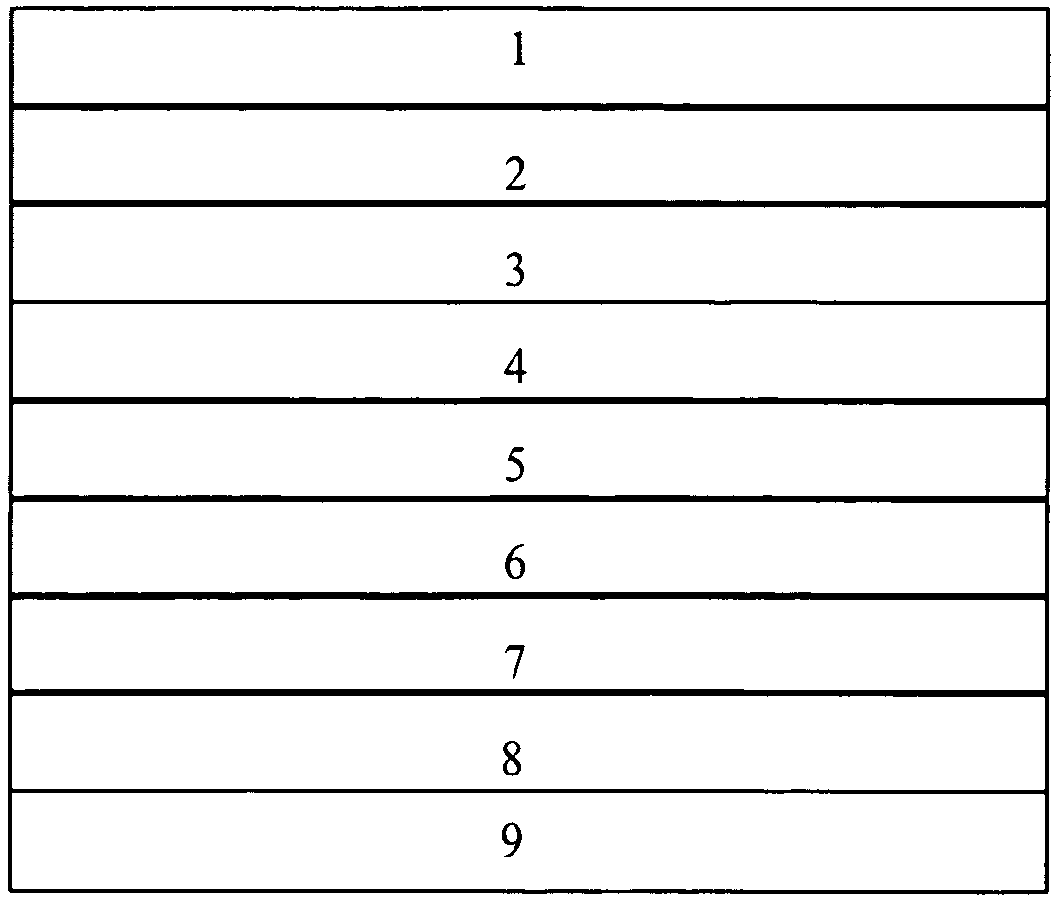
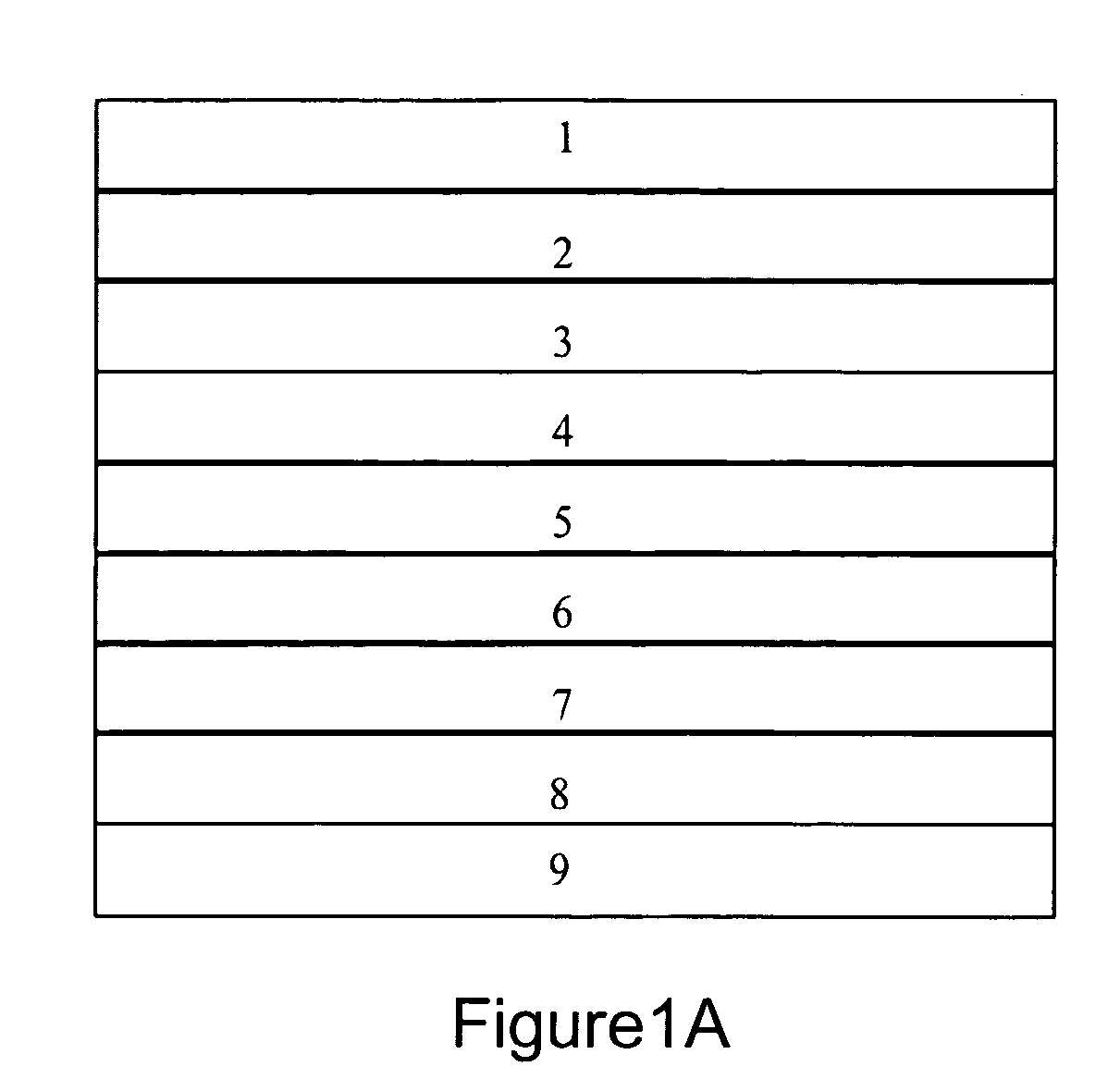
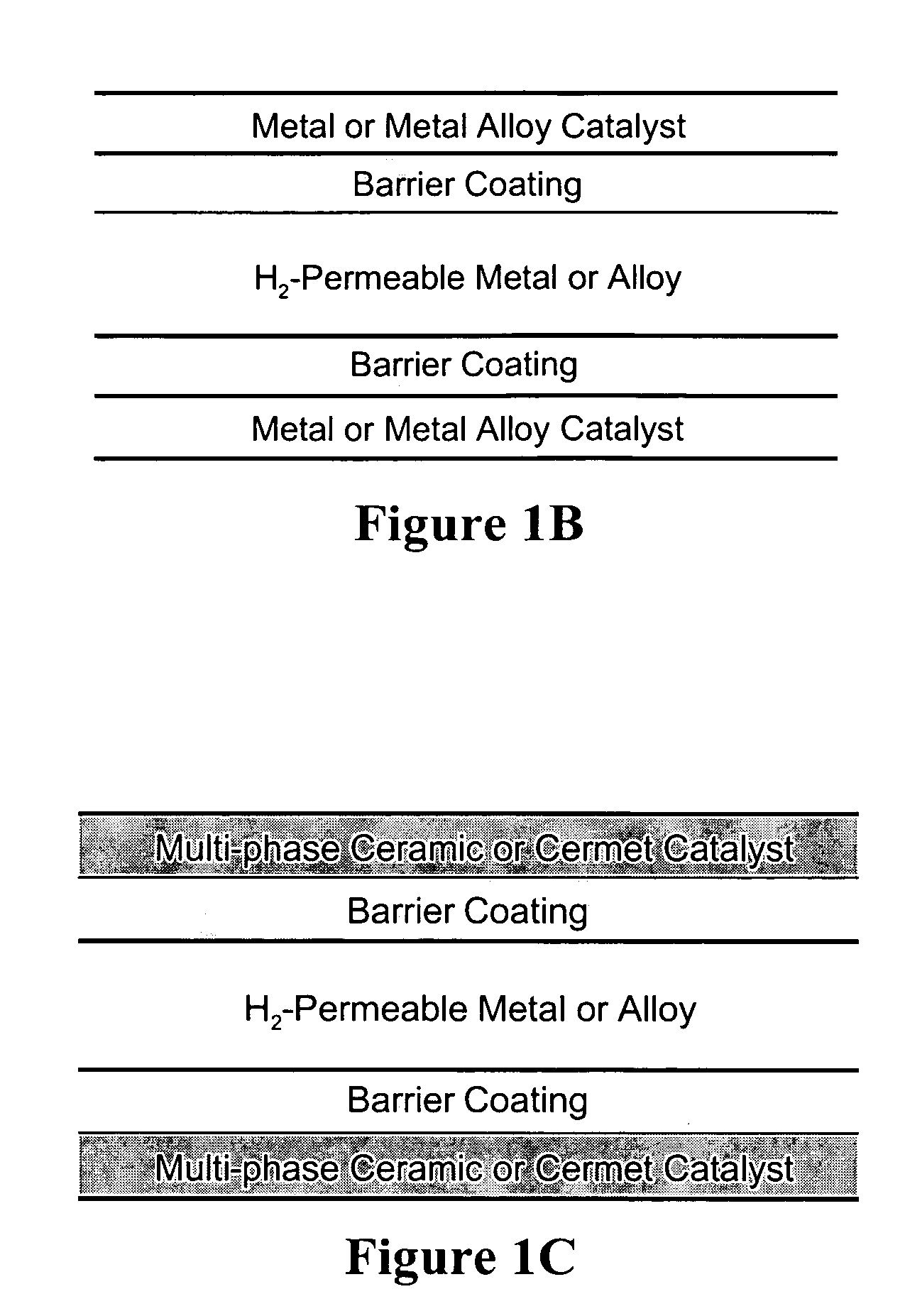
- The development of multilayer membranes with a non-porous central layer selectively permeable to hydrogen, accompanied by catalyst and barrier layers, provides mechanical stability, resistance to poisoning, and minimizes embrittlement, allowing for efficient hydrogen separation without the need for an external current.

Stable catalyst layers for hydrogen permeable composite membranes
PatentInactiveUS8623121B2
Innovation
- Development of nanoporous, composite metal carbide or metal sulfide membranes that operate over a broad temperature range without the need for platinum group metals, utilizing molybdenum or tungsten carbides as catalysts for hydrogen dissociation and diffusion, applied through methods like chemical vapor deposition or sputtering.


Environmental Impact and Sustainability Considerations
The environmental implications of hydrogen flux control technologies using multilayered composite membranes extend far beyond their immediate technical applications. These advanced membrane systems offer significant potential for reducing the carbon footprint associated with hydrogen production and utilization processes. By enabling more efficient hydrogen separation and purification, these membranes can substantially decrease energy consumption compared to conventional methods such as pressure swing adsorption or cryogenic separation, which typically require intensive energy inputs and generate considerable greenhouse gas emissions.
The sustainability profile of multilayered composite membranes is particularly noteworthy when considering their material composition and lifecycle. Most contemporary membrane designs incorporate palladium and its alloys, which present sustainability challenges due to the scarcity and energy-intensive mining processes associated with these precious metals. However, recent innovations in membrane engineering have focused on reducing the palladium content through the development of ultrathin selective layers supported on porous substrates, thereby minimizing resource utilization while maintaining performance integrity.
Water consumption represents another critical environmental consideration in hydrogen membrane technologies. Traditional hydrogen production methods often require substantial water resources, but membrane-based systems can be designed to operate with closed-loop water recycling, significantly reducing freshwater demands. This aspect becomes increasingly important as water scarcity intensifies in many regions globally, positioning these technologies as potentially valuable contributors to water conservation efforts.
The durability and operational lifespan of multilayered composite membranes directly impact their environmental sustainability. Membranes with extended service lives reduce waste generation and resource consumption associated with frequent replacements. Recent advancements in membrane stability under varying temperature and pressure conditions have yielded promising results, with some systems demonstrating operational integrity for thousands of hours under industrial conditions.
When integrated into broader hydrogen energy systems, these membrane technologies can facilitate the transition toward renewable hydrogen production pathways. By enabling more efficient water electrolysis processes or enhancing hydrogen recovery from biomass gasification, multilayered composite membranes can support the development of truly sustainable hydrogen economies. This potential becomes particularly significant when considering hydrogen's role as an energy carrier in decarbonizing sectors that have proven difficult to electrify directly.
End-of-life management presents both challenges and opportunities for membrane technology sustainability. While current recycling processes for composite materials containing precious metals remain complex, the high value of palladium and similar components creates strong economic incentives for developing effective recovery methods. Research into designing membranes with recyclability considerations from the outset represents a promising frontier for further enhancing the environmental credentials of these technologies.
The sustainability profile of multilayered composite membranes is particularly noteworthy when considering their material composition and lifecycle. Most contemporary membrane designs incorporate palladium and its alloys, which present sustainability challenges due to the scarcity and energy-intensive mining processes associated with these precious metals. However, recent innovations in membrane engineering have focused on reducing the palladium content through the development of ultrathin selective layers supported on porous substrates, thereby minimizing resource utilization while maintaining performance integrity.
Water consumption represents another critical environmental consideration in hydrogen membrane technologies. Traditional hydrogen production methods often require substantial water resources, but membrane-based systems can be designed to operate with closed-loop water recycling, significantly reducing freshwater demands. This aspect becomes increasingly important as water scarcity intensifies in many regions globally, positioning these technologies as potentially valuable contributors to water conservation efforts.
The durability and operational lifespan of multilayered composite membranes directly impact their environmental sustainability. Membranes with extended service lives reduce waste generation and resource consumption associated with frequent replacements. Recent advancements in membrane stability under varying temperature and pressure conditions have yielded promising results, with some systems demonstrating operational integrity for thousands of hours under industrial conditions.
When integrated into broader hydrogen energy systems, these membrane technologies can facilitate the transition toward renewable hydrogen production pathways. By enabling more efficient water electrolysis processes or enhancing hydrogen recovery from biomass gasification, multilayered composite membranes can support the development of truly sustainable hydrogen economies. This potential becomes particularly significant when considering hydrogen's role as an energy carrier in decarbonizing sectors that have proven difficult to electrify directly.
End-of-life management presents both challenges and opportunities for membrane technology sustainability. While current recycling processes for composite materials containing precious metals remain complex, the high value of palladium and similar components creates strong economic incentives for developing effective recovery methods. Research into designing membranes with recyclability considerations from the outset represents a promising frontier for further enhancing the environmental credentials of these technologies.
Scalability and Industrial Implementation Challenges
The scaling of multilayered composite membrane technology from laboratory to industrial scale presents significant challenges that must be addressed for successful commercial implementation. Current laboratory-scale membranes typically range from 1-10 cm² in area, while industrial applications require membrane areas of several square meters. This substantial scale-up introduces manufacturing complexities related to maintaining uniform layer thickness, interface quality, and structural integrity across larger dimensions.
Manufacturing consistency becomes a critical concern when transitioning to industrial production. The precise deposition of multiple layers with nanometer to micrometer thickness tolerances must be achieved uniformly across large surface areas. Current deposition techniques such as physical vapor deposition, electroplating, and solution-based methods face limitations when scaled to industrial dimensions, often resulting in thickness variations that compromise hydrogen flux performance.
Material cost considerations significantly impact commercial viability. Many high-performance multilayered membranes incorporate precious metals like palladium or specialized alloys that contribute substantially to overall system economics. The development of manufacturing processes that minimize material waste while maintaining performance specifications represents a key challenge for industrial implementation.
Mechanical stability under industrial operating conditions poses another significant hurdle. Large-format membranes must withstand thermal cycling, pressure differentials, and mechanical stresses without delamination or crack formation. The coefficient of thermal expansion mismatch between different membrane layers becomes more problematic at larger scales, potentially leading to mechanical failure during operation.
Integration with existing hydrogen production or utilization infrastructure requires standardized connection interfaces and module designs. Current industrial systems are typically designed around conventional separation technologies, necessitating adaptation for multilayered membrane implementation. This includes considerations for gas flow distribution, pressure management, and thermal control across large membrane areas.
Long-term durability under industrial conditions remains inadequately demonstrated. While laboratory tests may show promising stability over hundreds or thousands of hours, industrial applications require operational lifetimes of several years. Accelerated aging tests often fail to accurately predict real-world degradation mechanisms that emerge only after extended operation in industrial environments containing trace contaminants.
Regulatory compliance and safety standards present additional implementation barriers, particularly for hydrogen applications where safety concerns are paramount. New membrane technologies must undergo extensive certification processes before industrial deployment, adding time and cost to commercialization efforts.
Manufacturing consistency becomes a critical concern when transitioning to industrial production. The precise deposition of multiple layers with nanometer to micrometer thickness tolerances must be achieved uniformly across large surface areas. Current deposition techniques such as physical vapor deposition, electroplating, and solution-based methods face limitations when scaled to industrial dimensions, often resulting in thickness variations that compromise hydrogen flux performance.
Material cost considerations significantly impact commercial viability. Many high-performance multilayered membranes incorporate precious metals like palladium or specialized alloys that contribute substantially to overall system economics. The development of manufacturing processes that minimize material waste while maintaining performance specifications represents a key challenge for industrial implementation.
Mechanical stability under industrial operating conditions poses another significant hurdle. Large-format membranes must withstand thermal cycling, pressure differentials, and mechanical stresses without delamination or crack formation. The coefficient of thermal expansion mismatch between different membrane layers becomes more problematic at larger scales, potentially leading to mechanical failure during operation.
Integration with existing hydrogen production or utilization infrastructure requires standardized connection interfaces and module designs. Current industrial systems are typically designed around conventional separation technologies, necessitating adaptation for multilayered membrane implementation. This includes considerations for gas flow distribution, pressure management, and thermal control across large membrane areas.
Long-term durability under industrial conditions remains inadequately demonstrated. While laboratory tests may show promising stability over hundreds or thousands of hours, industrial applications require operational lifetimes of several years. Accelerated aging tests often fail to accurately predict real-world degradation mechanisms that emerge only after extended operation in industrial environments containing trace contaminants.
Regulatory compliance and safety standards present additional implementation barriers, particularly for hydrogen applications where safety concerns are paramount. New membrane technologies must undergo extensive certification processes before industrial deployment, adding time and cost to commercialization efforts.
Unlock deeper insights with PatSnap Eureka Quick Research — get a full tech report to explore trends and direct your research. Try now!
Generate Your Research Report Instantly with AI Agent
Supercharge your innovation with PatSnap Eureka AI Agent Platform!