Hydrogen Fuel Cell Efficiency Standards and Compliance
OCT 24, 20259 MIN READ
Generate Your Research Report Instantly with AI Agent
PatSnap Eureka helps you evaluate technical feasibility & market potential.
Hydrogen Fuel Cell Technology Evolution and Objectives
Hydrogen fuel cell technology has evolved significantly since its inception in the early 19th century when Sir William Grove first demonstrated the principle in 1839. However, meaningful commercial development only began in the 1960s with NASA's space program utilizing fuel cells for spacecraft power generation. The technology remained largely confined to specialized applications until the late 1990s, when environmental concerns and energy security issues prompted renewed interest in hydrogen as a clean energy carrier.
The evolution of hydrogen fuel cell technology has been characterized by progressive improvements in efficiency, durability, and cost reduction. Early fuel cells operated at efficiencies below 40%, whereas modern proton exchange membrane fuel cells (PEMFCs) can achieve electrical efficiencies of 60% in transportation applications and over 85% in combined heat and power systems. This remarkable improvement has been driven by advances in catalyst technology, membrane materials, and system integration.
Material innovations have been particularly crucial in this evolution. The transition from platinum-loaded catalysts (4-8 mg/cm² in the 1960s) to today's ultra-low platinum catalysts (0.125-0.25 mg/cm²) represents a significant breakthrough in cost reduction while maintaining performance. Similarly, membrane technology has evolved from early Nafion membranes with limited temperature ranges to advanced composite membranes capable of operating under more extreme conditions.
The primary technical objectives in hydrogen fuel cell development now focus on four key areas: efficiency improvement, durability enhancement, cost reduction, and standardization of compliance metrics. Current targets set by the U.S. Department of Energy include achieving 65% peak electrical efficiency for transportation applications, 40,000 hours durability for stationary applications, and system costs below $40/kW for mass production by 2025.
Efficiency standards have evolved from simple measurements of electrical output to comprehensive well-to-wheels efficiency metrics that consider the entire hydrogen value chain. This holistic approach has become essential as the industry matures and integrates with broader energy systems. The International Organization for Standardization (ISO) has developed over 15 standards specifically addressing hydrogen fuel cell efficiency measurement and reporting protocols.
Looking forward, the technology roadmap aims to achieve further breakthroughs in non-precious metal catalysts, high-temperature membranes, and advanced manufacturing techniques. These innovations are expected to enable fuel cells to reach cost parity with conventional technologies while offering superior environmental performance and operational flexibility, thus supporting the transition to a hydrogen-based economy.
The evolution of hydrogen fuel cell technology has been characterized by progressive improvements in efficiency, durability, and cost reduction. Early fuel cells operated at efficiencies below 40%, whereas modern proton exchange membrane fuel cells (PEMFCs) can achieve electrical efficiencies of 60% in transportation applications and over 85% in combined heat and power systems. This remarkable improvement has been driven by advances in catalyst technology, membrane materials, and system integration.
Material innovations have been particularly crucial in this evolution. The transition from platinum-loaded catalysts (4-8 mg/cm² in the 1960s) to today's ultra-low platinum catalysts (0.125-0.25 mg/cm²) represents a significant breakthrough in cost reduction while maintaining performance. Similarly, membrane technology has evolved from early Nafion membranes with limited temperature ranges to advanced composite membranes capable of operating under more extreme conditions.
The primary technical objectives in hydrogen fuel cell development now focus on four key areas: efficiency improvement, durability enhancement, cost reduction, and standardization of compliance metrics. Current targets set by the U.S. Department of Energy include achieving 65% peak electrical efficiency for transportation applications, 40,000 hours durability for stationary applications, and system costs below $40/kW for mass production by 2025.
Efficiency standards have evolved from simple measurements of electrical output to comprehensive well-to-wheels efficiency metrics that consider the entire hydrogen value chain. This holistic approach has become essential as the industry matures and integrates with broader energy systems. The International Organization for Standardization (ISO) has developed over 15 standards specifically addressing hydrogen fuel cell efficiency measurement and reporting protocols.
Looking forward, the technology roadmap aims to achieve further breakthroughs in non-precious metal catalysts, high-temperature membranes, and advanced manufacturing techniques. These innovations are expected to enable fuel cells to reach cost parity with conventional technologies while offering superior environmental performance and operational flexibility, thus supporting the transition to a hydrogen-based economy.
Market Analysis for Hydrogen Fuel Cell Applications
The hydrogen fuel cell market is experiencing significant growth across multiple sectors, driven by increasing environmental concerns and the global push for decarbonization. The transportation sector represents the largest application area, with passenger vehicles, buses, trucks, and material handling equipment leading adoption. According to recent market analyses, the global hydrogen fuel cell vehicle market is projected to reach $42 billion by 2026, growing at a compound annual growth rate (CAGR) of 66.9% from 2019.
Stationary power generation constitutes the second-largest application segment, with fuel cells increasingly deployed for primary power, backup power, and combined heat and power (CHP) systems. This sector has shown particular strength in regions with unreliable grid infrastructure or high electricity costs, with market value expected to reach $4.5 billion by 2025.
Portable applications represent a smaller but rapidly growing segment, particularly in military applications, emergency response equipment, and consumer electronics. This segment is projected to grow at a CAGR of 32.4% through 2027, reaching a market value of $1.12 billion.
Geographically, Asia Pacific dominates the hydrogen fuel cell market, with Japan and South Korea leading in technology development and commercial deployment. North America follows closely, with significant investments in California's hydrogen infrastructure. Europe is rapidly accelerating adoption through ambitious hydrogen strategies, particularly in Germany, France, and the UK.
Industry-specific adoption patterns reveal interesting trends. The automotive sector has seen major investments from Toyota, Hyundai, and Honda, with commercial vehicles showing stronger growth than passenger vehicles due to more predictable usage patterns and centralized refueling. The logistics and warehouse sector has embraced fuel cell forklifts, with over 40,000 units deployed globally, offering advantages in operational efficiency and space utilization compared to battery alternatives.
Market barriers remain significant, including high initial costs, limited hydrogen infrastructure, and competition from rapidly improving battery technologies. The levelized cost of hydrogen fuel cell systems remains 1.5-3 times higher than conventional alternatives in most applications, though this gap is narrowing through economies of scale and technological improvements.
Customer adoption analysis indicates that total cost of ownership (TCO), rather than initial purchase price, drives decision-making in commercial applications. Organizations with sustainability commitments, operations in emission-restricted zones, or heavy-duty cycle requirements represent the most promising early adopters.
Stationary power generation constitutes the second-largest application segment, with fuel cells increasingly deployed for primary power, backup power, and combined heat and power (CHP) systems. This sector has shown particular strength in regions with unreliable grid infrastructure or high electricity costs, with market value expected to reach $4.5 billion by 2025.
Portable applications represent a smaller but rapidly growing segment, particularly in military applications, emergency response equipment, and consumer electronics. This segment is projected to grow at a CAGR of 32.4% through 2027, reaching a market value of $1.12 billion.
Geographically, Asia Pacific dominates the hydrogen fuel cell market, with Japan and South Korea leading in technology development and commercial deployment. North America follows closely, with significant investments in California's hydrogen infrastructure. Europe is rapidly accelerating adoption through ambitious hydrogen strategies, particularly in Germany, France, and the UK.
Industry-specific adoption patterns reveal interesting trends. The automotive sector has seen major investments from Toyota, Hyundai, and Honda, with commercial vehicles showing stronger growth than passenger vehicles due to more predictable usage patterns and centralized refueling. The logistics and warehouse sector has embraced fuel cell forklifts, with over 40,000 units deployed globally, offering advantages in operational efficiency and space utilization compared to battery alternatives.
Market barriers remain significant, including high initial costs, limited hydrogen infrastructure, and competition from rapidly improving battery technologies. The levelized cost of hydrogen fuel cell systems remains 1.5-3 times higher than conventional alternatives in most applications, though this gap is narrowing through economies of scale and technological improvements.
Customer adoption analysis indicates that total cost of ownership (TCO), rather than initial purchase price, drives decision-making in commercial applications. Organizations with sustainability commitments, operations in emission-restricted zones, or heavy-duty cycle requirements represent the most promising early adopters.
Current Efficiency Challenges and Technical Limitations
Despite significant advancements in hydrogen fuel cell technology, several critical efficiency challenges and technical limitations continue to impede widespread adoption. The current state-of-the-art proton exchange membrane fuel cells (PEMFCs) typically achieve 40-60% electrical efficiency, falling short of the U.S. Department of Energy's target of 65% for transportation applications and 70% for stationary applications by 2025. This efficiency gap represents a substantial barrier to commercial viability.
Material degradation remains one of the most persistent challenges. Platinum catalysts, essential for the oxygen reduction reaction at the cathode, suffer from degradation mechanisms including dissolution, agglomeration, and carbon support corrosion. These processes accelerate during start-stop cycles and load fluctuations, reducing cell performance and longevity. Current catalyst loadings of approximately 0.2-0.4 mg/cm² still exceed cost-effective targets by 2-4 times.
Water management presents another significant technical hurdle. The delicate balance between membrane hydration and flooding significantly impacts cell performance. At low temperatures, excess water accumulation blocks gas diffusion channels, while at high temperatures, membrane dehydration increases ohmic resistance. Current membrane materials struggle to maintain optimal hydration across the wide operating temperature range (-30°C to 80°C) required for automotive applications.
Thermal management limitations further constrain efficiency. Heat rejection becomes particularly challenging in high-power applications, where temperature gradients within the stack can cause uneven performance and accelerated degradation. Current cooling systems add considerable weight and complexity, reducing overall system efficiency by 2-5%.
Hydrogen storage and delivery systems introduce additional efficiency losses. Compression, liquefaction, or chemical storage methods consume 10-30% of the hydrogen's energy content before it reaches the fuel cell. On-board storage systems currently achieve only 4-5 wt% hydrogen capacity, below the 6.5 wt% target for practical driving ranges.
Manufacturing variability and quality control issues further impact performance consistency. Current production techniques struggle to maintain uniform membrane electrode assembly characteristics, resulting in efficiency variations of up to 15% between nominally identical cells. This variability complicates system design and control strategies.
Regulatory compliance adds another layer of complexity. Meeting diverse international standards for safety, emissions, and performance requires sophisticated control systems that can reduce overall system efficiency by 3-8%. The lack of harmonized global standards creates market fragmentation and increases compliance costs.
Material degradation remains one of the most persistent challenges. Platinum catalysts, essential for the oxygen reduction reaction at the cathode, suffer from degradation mechanisms including dissolution, agglomeration, and carbon support corrosion. These processes accelerate during start-stop cycles and load fluctuations, reducing cell performance and longevity. Current catalyst loadings of approximately 0.2-0.4 mg/cm² still exceed cost-effective targets by 2-4 times.
Water management presents another significant technical hurdle. The delicate balance between membrane hydration and flooding significantly impacts cell performance. At low temperatures, excess water accumulation blocks gas diffusion channels, while at high temperatures, membrane dehydration increases ohmic resistance. Current membrane materials struggle to maintain optimal hydration across the wide operating temperature range (-30°C to 80°C) required for automotive applications.
Thermal management limitations further constrain efficiency. Heat rejection becomes particularly challenging in high-power applications, where temperature gradients within the stack can cause uneven performance and accelerated degradation. Current cooling systems add considerable weight and complexity, reducing overall system efficiency by 2-5%.
Hydrogen storage and delivery systems introduce additional efficiency losses. Compression, liquefaction, or chemical storage methods consume 10-30% of the hydrogen's energy content before it reaches the fuel cell. On-board storage systems currently achieve only 4-5 wt% hydrogen capacity, below the 6.5 wt% target for practical driving ranges.
Manufacturing variability and quality control issues further impact performance consistency. Current production techniques struggle to maintain uniform membrane electrode assembly characteristics, resulting in efficiency variations of up to 15% between nominally identical cells. This variability complicates system design and control strategies.
Regulatory compliance adds another layer of complexity. Meeting diverse international standards for safety, emissions, and performance requires sophisticated control systems that can reduce overall system efficiency by 3-8%. The lack of harmonized global standards creates market fragmentation and increases compliance costs.
Current Efficiency Standards and Testing Protocols
01 Catalyst optimization for improved fuel cell efficiency
Optimizing catalysts in hydrogen fuel cells can significantly enhance their efficiency. This includes developing novel catalyst materials, improving catalyst structures, and reducing catalyst loading while maintaining performance. Advanced catalysts can lower activation energy for electrochemical reactions, increase reaction rates, and improve overall energy conversion efficiency. These innovations help address key challenges in fuel cell technology by enhancing durability and reducing costs while maximizing power output.- Catalyst optimization for improved fuel cell efficiency: Optimizing catalysts in hydrogen fuel cells significantly enhances their efficiency. Advanced catalyst materials, such as platinum-based alloys and non-precious metal catalysts, can reduce activation energy requirements and improve electrochemical reactions. These catalysts facilitate faster hydrogen oxidation at the anode and oxygen reduction at the cathode, resulting in higher power output and overall system efficiency. Innovative catalyst structures and compositions also help minimize degradation and extend the operational lifespan of fuel cells.
- Membrane electrode assembly (MEA) design improvements: Advancements in membrane electrode assembly design play a crucial role in enhancing hydrogen fuel cell efficiency. Optimized MEA configurations improve proton conductivity while reducing electrical resistance and mass transport limitations. Innovations include thinner membranes with higher conductivity, improved electrode structures with optimized porosity, and better integration between components. These design improvements facilitate more efficient ion transport, better water management, and reduced ohmic losses, resulting in higher power density and improved overall fuel cell performance.
- Thermal management and operating condition optimization: Effective thermal management systems and optimized operating conditions significantly impact hydrogen fuel cell efficiency. Advanced cooling strategies help maintain optimal operating temperatures, preventing performance degradation from overheating or freezing. Innovations include integrated heat exchangers, advanced cooling channels, and intelligent temperature control systems. Additionally, optimizing operating parameters such as humidity levels, gas flow rates, and pressure differentials ensures peak performance across varying load conditions, maximizing energy conversion efficiency and extending fuel cell lifespan.
- Hydrogen production and storage integration: Integrating efficient hydrogen production and storage systems with fuel cells creates more effective overall energy solutions. Advanced hydrogen generation methods, including improved electrolysis and reforming processes, provide purer hydrogen with lower energy input. Innovative storage technologies, such as metal hydrides and advanced composite materials, enable higher hydrogen density storage with reduced weight and volume. These integrated systems optimize hydrogen availability and purity, reducing losses in the fuel supply chain and enhancing the overall efficiency of hydrogen fuel cell applications.
- System-level integration and control strategies: Advanced system integration and control strategies optimize hydrogen fuel cell efficiency through intelligent power management. Sophisticated control algorithms dynamically adjust operating parameters based on real-time conditions and power demands. Hybrid configurations combining fuel cells with batteries or supercapacitors enable optimal load sharing and energy recovery. Additionally, integrated sensors and diagnostic systems provide continuous monitoring and fault detection, allowing preventive maintenance and performance optimization. These system-level approaches maximize efficiency across varying operational conditions while extending component lifespans.
02 Membrane electrode assembly (MEA) design improvements
Innovations in membrane electrode assembly design are crucial for hydrogen fuel cell efficiency. These improvements focus on optimizing the interface between electrodes and the proton exchange membrane, enhancing proton conductivity, and reducing internal resistance. Advanced MEA designs incorporate better water management systems, improved gas diffusion layers, and optimized membrane thickness. These enhancements result in more efficient ion transport, better reactant distribution, and ultimately higher power density and overall system efficiency.Expand Specific Solutions03 Thermal management and operating condition optimization
Effective thermal management and operating condition optimization are essential for maximizing hydrogen fuel cell efficiency. This includes developing advanced cooling systems, optimizing operating temperatures, and implementing precise control of humidity levels. Proper thermal management prevents performance degradation due to overheating or freezing, while maintaining optimal operating conditions ensures efficient electrochemical reactions. These approaches extend fuel cell lifespan, improve startup performance, and maintain high efficiency across varying load conditions.Expand Specific Solutions04 Novel materials for fuel cell components
The development of novel materials for fuel cell components significantly impacts overall efficiency. These innovations include advanced electrolyte materials with higher ionic conductivity, corrosion-resistant bipolar plates, and durable electrode materials. New composite materials and nanomaterials offer improved durability, conductivity, and catalytic activity. By replacing traditional materials with these advanced alternatives, fuel cells can achieve higher power density, longer operational lifetimes, and improved resistance to degradation mechanisms, all contributing to enhanced system efficiency.Expand Specific Solutions05 System integration and balance of plant optimization
Optimizing system integration and balance of plant components is critical for maximizing hydrogen fuel cell efficiency. This approach focuses on improving auxiliary systems such as hydrogen supply, air management, water management, and power conditioning. Advanced control strategies, efficient pumps and compressors, and integrated heat recovery systems all contribute to reduced parasitic power losses. By optimizing the entire fuel cell system rather than just the stack itself, overall system efficiency can be significantly improved, resulting in better fuel utilization and higher net power output.Expand Specific Solutions
Leading Manufacturers and Research Institutions
The hydrogen fuel cell efficiency standards and compliance landscape is currently in a growth phase, with the market expected to expand significantly due to increasing focus on clean energy solutions. Major automotive manufacturers including Toyota, Hyundai, Honda, and Kia are leading technological advancement in this sector, with Toyota demonstrating particular maturity in commercial fuel cell vehicle deployment. Companies like FuelCell Energy, Doosan Enerbility, and HyAxiom are advancing stationary power applications, while research institutions such as KIST and CEA are driving fundamental innovations. The competitive environment is intensifying as traditional energy companies like Shell enter the market, indicating the technology's transition from early adoption to broader commercial viability, though standardization challenges remain across international markets.
Toyota Motor Corp.
Technical Solution: Toyota has pioneered hydrogen fuel cell technology through its Mirai vehicle platform, achieving industry-leading efficiency standards. Their latest generation fuel cell system achieves 43% tank-to-wheel efficiency[1], significantly higher than earlier models. Toyota's approach focuses on optimizing the catalyst layer with reduced platinum loading (down to approximately 0.2 mg/cm²)[3] while maintaining performance. Their proprietary membrane electrode assembly (MEA) design incorporates 3D fine mesh flow channels that improve water management and gas diffusion. Toyota has also developed comprehensive compliance testing protocols that exceed regulatory requirements, including accelerated durability testing simulating 200,000+ km of real-world driving conditions[5]. Their fuel cell stacks maintain over 90% of initial performance after this testing, demonstrating exceptional longevity and reliability.
Strengths: Industry-leading efficiency metrics, extensive durability testing, and reduced platinum catalyst loading. Toyota's vertical integration allows for optimized system design from components to vehicle integration. Weaknesses: Higher production costs compared to conventional powertrains, limited refueling infrastructure compatibility, and proprietary technology that limits industry standardization efforts.
Hyundai Motor Co., Ltd.
Technical Solution: Hyundai has developed the NEXO fuel cell system with a focus on cold-weather operation and efficiency standards compliance. Their latest generation system achieves approximately 60% fuel cell stack efficiency and system efficiency of 55-60%[2]. Hyundai's technical approach includes a unique bipolar plate design with optimized flow field patterns that enhance reactant distribution while minimizing pressure drop. Their compliance strategy incorporates a comprehensive testing regime including altitude simulation (up to 4,000m), temperature extremes (-30°C to +50°C), and accelerated stress testing protocols[4]. Hyundai has pioneered membrane humidification systems that maintain optimal water content across varying operating conditions, contributing to their industry-leading cold start capability (operational from -30°C within 30 seconds)[6]. Their NEXO platform also features advanced power electronics with 95% conversion efficiency, further enhancing overall system performance while meeting international standards for electromagnetic compatibility.
Strengths: Superior cold-weather performance, high system integration efficiency, and comprehensive compliance testing across extreme operating conditions. Weaknesses: Higher system complexity increases maintenance challenges, and their proprietary stack design limits cross-compatibility with other manufacturers' components.
Key Patents and Breakthroughs in Efficiency Enhancement
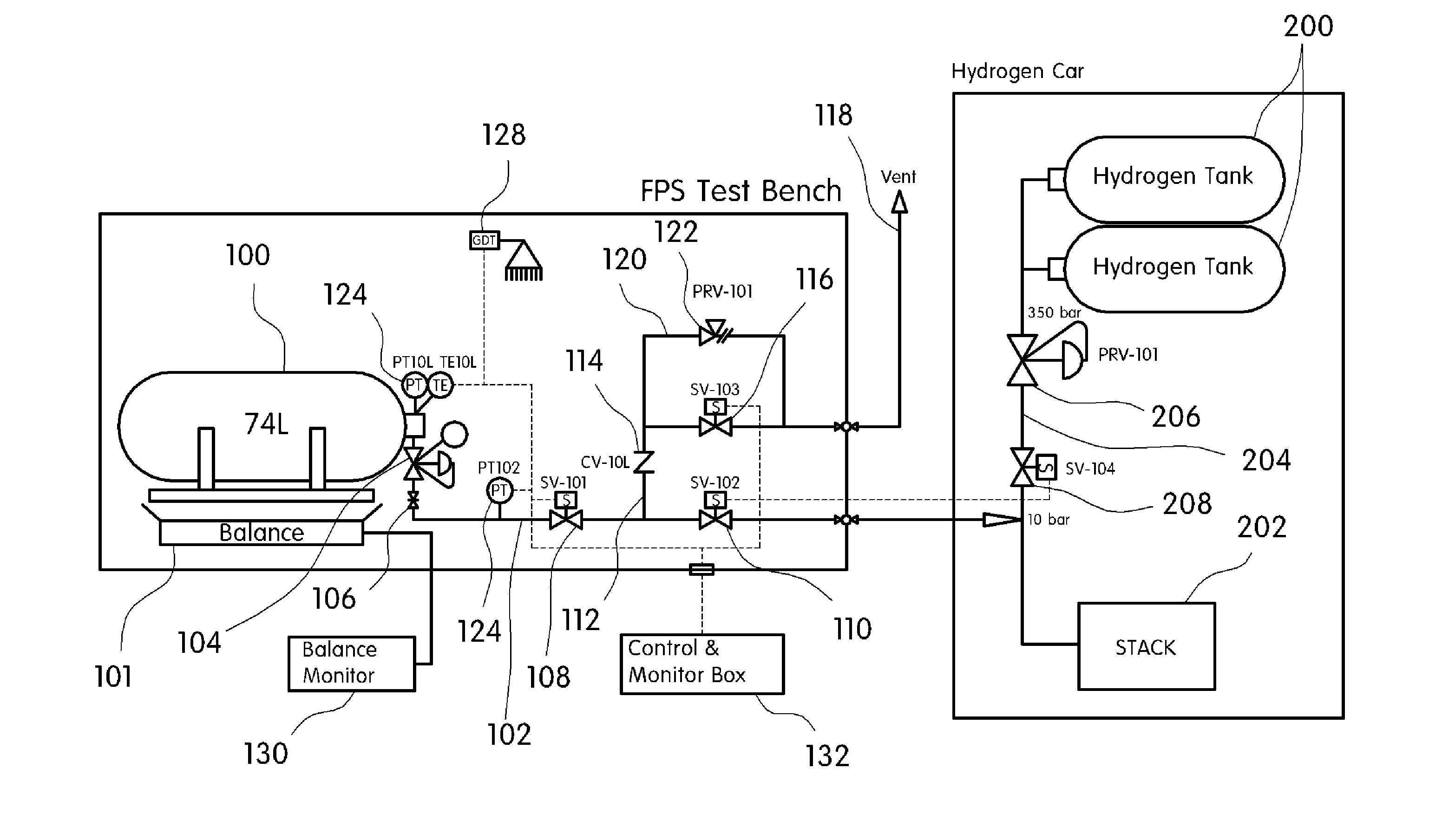
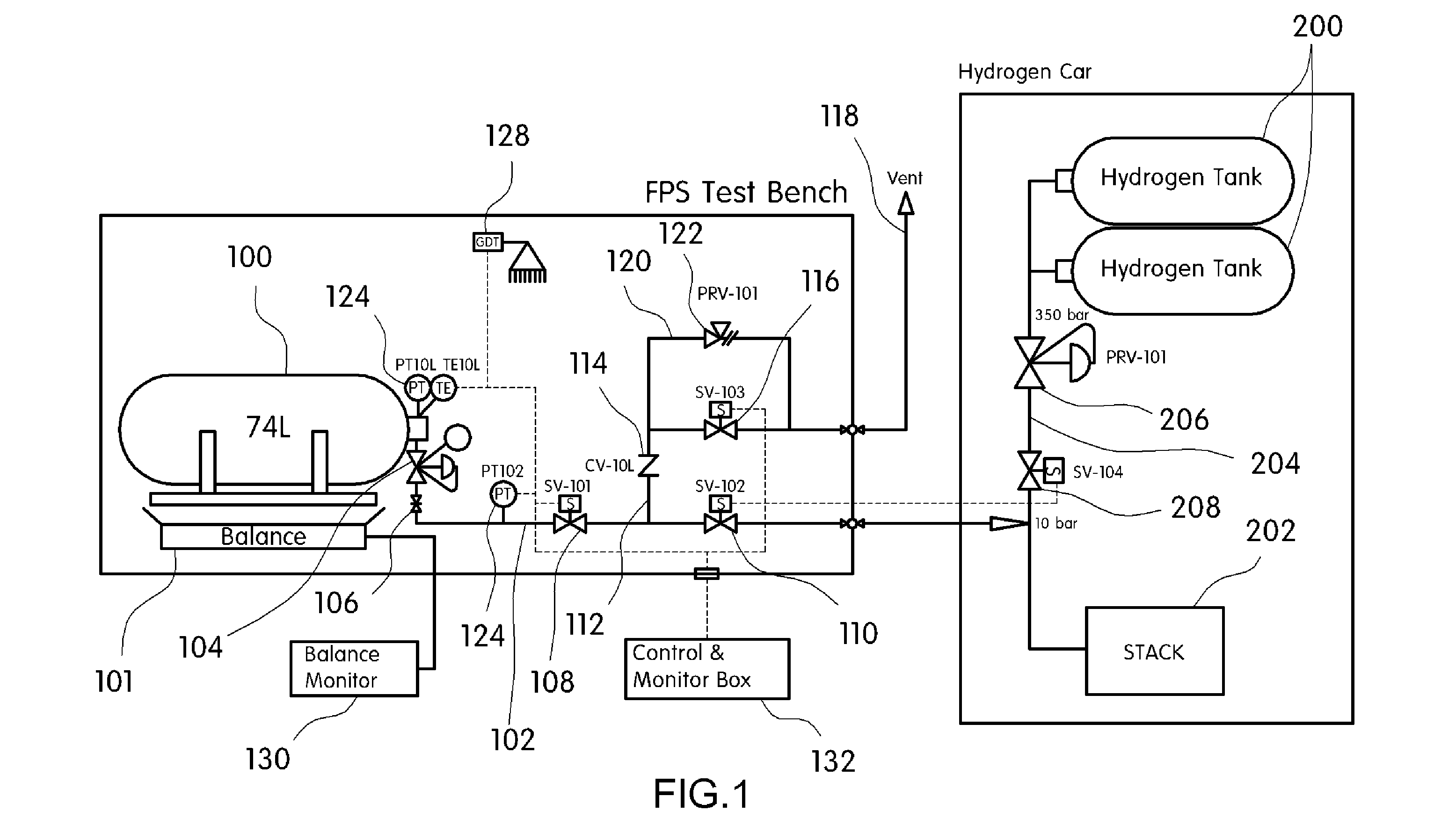
Fuel efficiency measurement system and method for fuel cell vehicle
PatentActiveUS8190354B2
Innovation
- A fuel efficiency measurement system that includes a fuel supply tank with an electronic balance to measure weight changes, a high pressure regulator, and a system control unit that calculates fuel efficiency based on vehicle driving distance and weight differences before and after driving, using hydrogen from an external tank instead of the vehicle's hydrogen tank during measurement.


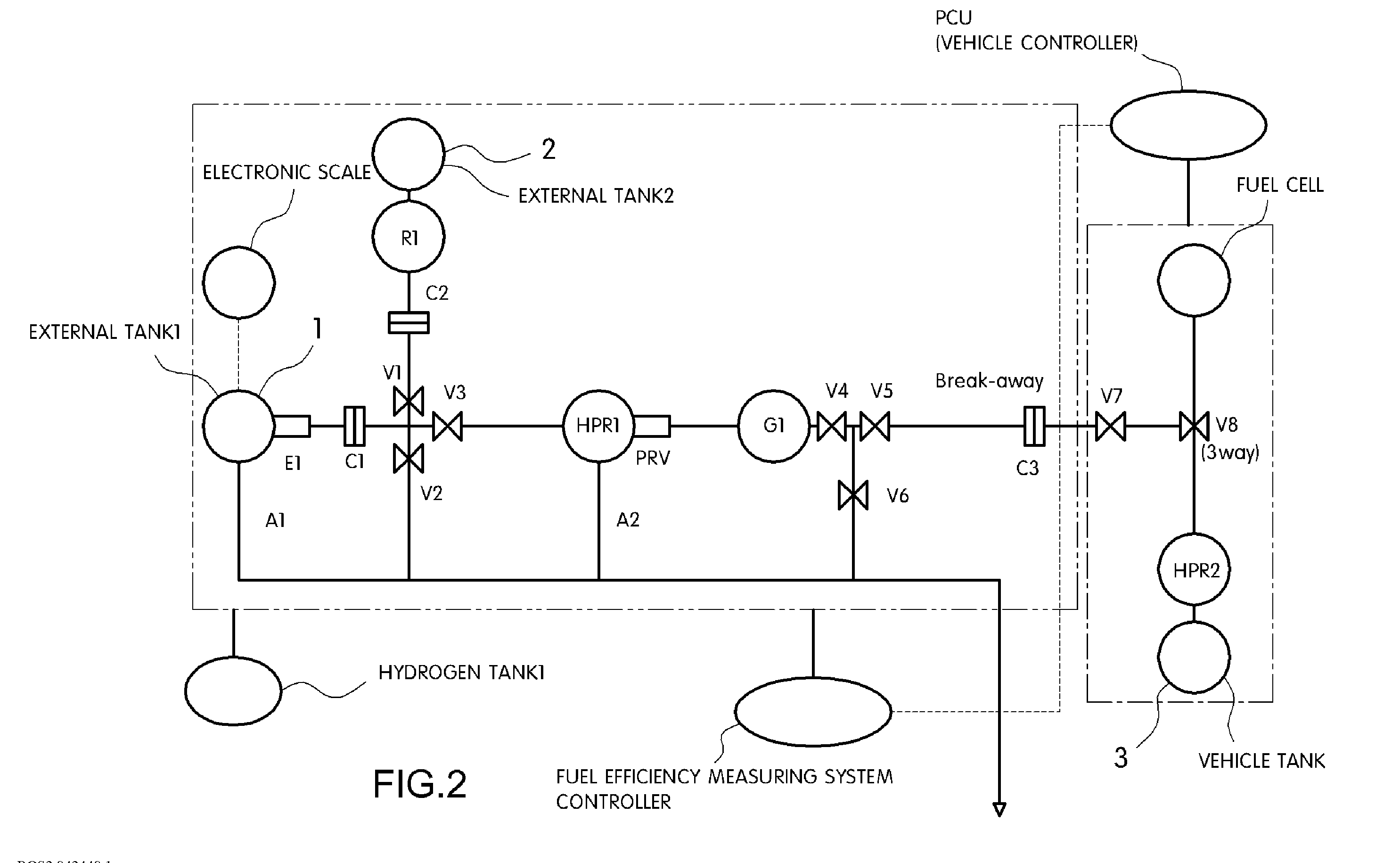
Fuel efficiency measuring system for fuel cell vehicle
PatentActiveUS20120131991A1
Innovation
- The system simplifies hydrogen supply lines by removing the purging hydrogen tank and eliminating the high-cost break-away coupler, using a vehicle-side hydrogen tank to remove residual air and reducing hydrogen pressure through a high pressure regulator, thereby simplifying valves and reducing manufacturing costs.
Regulatory Framework and Certification Requirements
The regulatory landscape for hydrogen fuel cell technologies is characterized by a complex matrix of international, national, and regional standards that govern efficiency metrics, safety protocols, and environmental compliance. At the international level, the International Organization for Standardization (ISO) has established ISO 14687, which specifies hydrogen fuel quality requirements for fuel cell vehicles, and ISO 22734 for water electrolysis applications. These standards provide the foundational framework upon which national regulations are often built.
In the United States, the Department of Energy (DOE) has implemented the Hydrogen Program, which includes specific efficiency targets for fuel cell systems. The DOE's technical targets mandate that stationary fuel cell systems achieve electrical efficiencies of at least 60% and combined heat and power efficiencies exceeding 80%. Additionally, the Environmental Protection Agency (EPA) enforces emissions standards that indirectly impact fuel cell design and operation through the Clean Air Act provisions.
The European Union has developed a comprehensive regulatory framework through its Fuel Cells and Hydrogen Joint Undertaking (FCH JU), which coordinates research, development, and deployment activities. The EU's Renewable Energy Directive (RED II) includes specific provisions for hydrogen produced from renewable sources, establishing sustainability criteria that fuel cell technologies must meet to qualify for incentives and subsidies.
Certification requirements vary significantly across jurisdictions but typically involve third-party verification of performance claims. In Japan, the High Pressure Gas Safety Act governs hydrogen storage and handling, while the JIS (Japanese Industrial Standards) provides specific technical requirements for fuel cell systems. South Korea has implemented the K-FCEV 2040 Plan, which includes stringent efficiency standards aligned with their national carbon reduction goals.
The certification process generally involves laboratory testing under standardized conditions, field demonstrations, and ongoing compliance monitoring. Key performance indicators include electrical efficiency, thermal efficiency, durability metrics (measured in operating hours), and emissions profiles. Many jurisdictions have adopted a tiered certification approach, with different standards applying to various applications such as transportation, stationary power generation, and portable devices.
Emerging economies are increasingly developing their own regulatory frameworks, often adapting international standards to local conditions. China's Hydrogen Fuel Cell Vehicle Technology Roadmap outlines efficiency targets and certification protocols specific to their market conditions, while India's National Hydrogen Energy Mission is establishing standards aligned with their renewable energy transition goals.
In the United States, the Department of Energy (DOE) has implemented the Hydrogen Program, which includes specific efficiency targets for fuel cell systems. The DOE's technical targets mandate that stationary fuel cell systems achieve electrical efficiencies of at least 60% and combined heat and power efficiencies exceeding 80%. Additionally, the Environmental Protection Agency (EPA) enforces emissions standards that indirectly impact fuel cell design and operation through the Clean Air Act provisions.
The European Union has developed a comprehensive regulatory framework through its Fuel Cells and Hydrogen Joint Undertaking (FCH JU), which coordinates research, development, and deployment activities. The EU's Renewable Energy Directive (RED II) includes specific provisions for hydrogen produced from renewable sources, establishing sustainability criteria that fuel cell technologies must meet to qualify for incentives and subsidies.
Certification requirements vary significantly across jurisdictions but typically involve third-party verification of performance claims. In Japan, the High Pressure Gas Safety Act governs hydrogen storage and handling, while the JIS (Japanese Industrial Standards) provides specific technical requirements for fuel cell systems. South Korea has implemented the K-FCEV 2040 Plan, which includes stringent efficiency standards aligned with their national carbon reduction goals.
The certification process generally involves laboratory testing under standardized conditions, field demonstrations, and ongoing compliance monitoring. Key performance indicators include electrical efficiency, thermal efficiency, durability metrics (measured in operating hours), and emissions profiles. Many jurisdictions have adopted a tiered certification approach, with different standards applying to various applications such as transportation, stationary power generation, and portable devices.
Emerging economies are increasingly developing their own regulatory frameworks, often adapting international standards to local conditions. China's Hydrogen Fuel Cell Vehicle Technology Roadmap outlines efficiency targets and certification protocols specific to their market conditions, while India's National Hydrogen Energy Mission is establishing standards aligned with their renewable energy transition goals.
Environmental Impact and Sustainability Metrics
Hydrogen fuel cells represent a significant advancement in clean energy technology, with their environmental impact and sustainability metrics serving as critical evaluation parameters. The primary environmental benefit of hydrogen fuel cells is their zero-emission operation at the point of use, producing only water vapor and heat as byproducts. This characteristic positions them as a potentially transformative technology for reducing greenhouse gas emissions across transportation, stationary power, and industrial sectors.
Life Cycle Assessment (LCA) studies indicate that the environmental footprint of hydrogen fuel cells varies significantly based on hydrogen production methods. Green hydrogen, produced through electrolysis powered by renewable energy, demonstrates the lowest carbon intensity at approximately 0.5-2 kg CO2e/kg H2, compared to grey hydrogen from natural gas reforming at 9-12 kg CO2e/kg H2. These metrics are increasingly standardized through frameworks like ISO 14040/14044 for comprehensive environmental assessment.
Water consumption represents another crucial sustainability metric, with fuel cell vehicles requiring approximately 2.8-3.5 gallons of water per 100 miles when accounting for hydrogen production. This compares favorably to some biofuel pathways but requires careful management in water-stressed regions. Additionally, resource efficiency metrics track critical materials used in fuel cell manufacturing, particularly platinum group metals (PGMs) which currently average 0.125-0.25 mg/cm² of catalyst loading in automotive applications.
Circular economy principles are increasingly integrated into fuel cell sustainability assessments, with end-of-life recovery rates for PGMs now reaching 95% in established recycling systems. Industry leaders have established targets to reduce PGM content by 50-75% by 2030 through advanced catalyst designs and manufacturing techniques, enhancing long-term sustainability.
Standardization bodies including ISO, SAE International, and the International Partnership for Hydrogen and Fuel Cells in the Economy (IPHE) are developing harmonized methodologies for quantifying environmental impacts. The Hydrogen Council's "Hydrogen Decarbonization Pathways" framework provides standardized carbon intensity benchmarks across the hydrogen value chain, while the EU's CertifHy program establishes certification schemes for renewable hydrogen with specific greenhouse gas reduction thresholds.
These sustainability metrics are increasingly incorporated into regulatory frameworks and corporate reporting requirements, with the EU Taxonomy for Sustainable Activities and emerging carbon border adjustment mechanisms directly referencing hydrogen production pathways and their associated environmental impacts. As hydrogen economies scale globally, these metrics will play a decisive role in determining market access and competitive positioning for fuel cell technologies.
Life Cycle Assessment (LCA) studies indicate that the environmental footprint of hydrogen fuel cells varies significantly based on hydrogen production methods. Green hydrogen, produced through electrolysis powered by renewable energy, demonstrates the lowest carbon intensity at approximately 0.5-2 kg CO2e/kg H2, compared to grey hydrogen from natural gas reforming at 9-12 kg CO2e/kg H2. These metrics are increasingly standardized through frameworks like ISO 14040/14044 for comprehensive environmental assessment.
Water consumption represents another crucial sustainability metric, with fuel cell vehicles requiring approximately 2.8-3.5 gallons of water per 100 miles when accounting for hydrogen production. This compares favorably to some biofuel pathways but requires careful management in water-stressed regions. Additionally, resource efficiency metrics track critical materials used in fuel cell manufacturing, particularly platinum group metals (PGMs) which currently average 0.125-0.25 mg/cm² of catalyst loading in automotive applications.
Circular economy principles are increasingly integrated into fuel cell sustainability assessments, with end-of-life recovery rates for PGMs now reaching 95% in established recycling systems. Industry leaders have established targets to reduce PGM content by 50-75% by 2030 through advanced catalyst designs and manufacturing techniques, enhancing long-term sustainability.
Standardization bodies including ISO, SAE International, and the International Partnership for Hydrogen and Fuel Cells in the Economy (IPHE) are developing harmonized methodologies for quantifying environmental impacts. The Hydrogen Council's "Hydrogen Decarbonization Pathways" framework provides standardized carbon intensity benchmarks across the hydrogen value chain, while the EU's CertifHy program establishes certification schemes for renewable hydrogen with specific greenhouse gas reduction thresholds.
These sustainability metrics are increasingly incorporated into regulatory frameworks and corporate reporting requirements, with the EU Taxonomy for Sustainable Activities and emerging carbon border adjustment mechanisms directly referencing hydrogen production pathways and their associated environmental impacts. As hydrogen economies scale globally, these metrics will play a decisive role in determining market access and competitive positioning for fuel cell technologies.
Unlock deeper insights with PatSnap Eureka Quick Research — get a full tech report to explore trends and direct your research. Try now!
Generate Your Research Report Instantly with AI Agent
Supercharge your innovation with PatSnap Eureka AI Agent Platform!