

Immersion Cooling vs Closed-Loop Liquid Cooling: Case Performance
JUN 14, 20269 MIN READ
Generate Your Research Report Instantly with AI Agent
PatSnap Eureka helps you evaluate technical feasibility & market potential.
Immersion vs Liquid Cooling Background and Objectives
The evolution of data center cooling technologies has been driven by the exponential growth in computational demands and the corresponding increase in heat generation from high-performance computing systems. Traditional air cooling methods have reached their thermal limits, particularly in applications involving high-density server configurations, artificial intelligence workloads, and cryptocurrency mining operations. This thermal bottleneck has necessitated the development of more efficient liquid-based cooling solutions.
Immersion cooling represents a paradigm shift from conventional cooling approaches, where electronic components are directly submerged in dielectric fluids. This technology emerged from specialized applications in supercomputing and has gradually expanded into mainstream data center operations. The technique leverages the superior thermal conductivity of liquids compared to air, enabling direct heat extraction from heat-generating components.
Closed-loop liquid cooling systems have evolved as an intermediate solution between traditional air cooling and full immersion systems. These systems utilize liquid coolants circulated through dedicated channels, cold plates, or heat exchangers while maintaining physical separation between the coolant and electronic components. This approach has gained traction due to its compatibility with existing infrastructure and reduced implementation complexity.
The primary objective of comparing these cooling methodologies centers on evaluating their thermal performance characteristics, particularly in terms of heat dissipation efficiency, temperature uniformity, and thermal response dynamics. Understanding the performance differential between immersion and closed-loop liquid cooling systems is crucial for determining optimal cooling strategies for specific applications and operational requirements.
Energy efficiency optimization represents another critical objective, as cooling systems typically account for 30-40% of total data center energy consumption. The comparative analysis aims to quantify the power consumption differences, cooling effectiveness ratios, and overall system efficiency metrics between these two approaches. This evaluation directly impacts operational costs and environmental sustainability considerations.
System reliability and maintenance requirements constitute additional evaluation objectives. The comparison seeks to assess the long-term operational stability, component longevity, and maintenance complexity associated with each cooling approach. These factors significantly influence total cost of ownership and operational feasibility in enterprise environments.
The investigation also targets scalability and implementation flexibility as key evaluation criteria. Understanding how each cooling solution adapts to varying computational loads, different hardware configurations, and diverse deployment scenarios is essential for strategic technology adoption decisions in rapidly evolving computing environments.
Immersion cooling represents a paradigm shift from conventional cooling approaches, where electronic components are directly submerged in dielectric fluids. This technology emerged from specialized applications in supercomputing and has gradually expanded into mainstream data center operations. The technique leverages the superior thermal conductivity of liquids compared to air, enabling direct heat extraction from heat-generating components.
Closed-loop liquid cooling systems have evolved as an intermediate solution between traditional air cooling and full immersion systems. These systems utilize liquid coolants circulated through dedicated channels, cold plates, or heat exchangers while maintaining physical separation between the coolant and electronic components. This approach has gained traction due to its compatibility with existing infrastructure and reduced implementation complexity.
The primary objective of comparing these cooling methodologies centers on evaluating their thermal performance characteristics, particularly in terms of heat dissipation efficiency, temperature uniformity, and thermal response dynamics. Understanding the performance differential between immersion and closed-loop liquid cooling systems is crucial for determining optimal cooling strategies for specific applications and operational requirements.
Energy efficiency optimization represents another critical objective, as cooling systems typically account for 30-40% of total data center energy consumption. The comparative analysis aims to quantify the power consumption differences, cooling effectiveness ratios, and overall system efficiency metrics between these two approaches. This evaluation directly impacts operational costs and environmental sustainability considerations.
System reliability and maintenance requirements constitute additional evaluation objectives. The comparison seeks to assess the long-term operational stability, component longevity, and maintenance complexity associated with each cooling approach. These factors significantly influence total cost of ownership and operational feasibility in enterprise environments.
The investigation also targets scalability and implementation flexibility as key evaluation criteria. Understanding how each cooling solution adapts to varying computational loads, different hardware configurations, and diverse deployment scenarios is essential for strategic technology adoption decisions in rapidly evolving computing environments.
Market Demand for Advanced Data Center Cooling Solutions
The global data center cooling market is experiencing unprecedented growth driven by the exponential expansion of digital infrastructure and cloud computing services. Traditional air-cooling systems are increasingly inadequate for managing the thermal loads generated by high-density server configurations, creating substantial demand for advanced liquid cooling technologies. This shift represents a fundamental transformation in how data centers approach thermal management challenges.
Enterprise adoption of artificial intelligence, machine learning, and high-performance computing workloads has intensified heat generation within server racks, often exceeding the capabilities of conventional cooling methods. Organizations are actively seeking cooling solutions that can handle thermal densities above 20kW per rack while maintaining operational efficiency and reliability standards.
The market demand is particularly pronounced in hyperscale data centers operated by major cloud service providers, where cooling efficiency directly impacts operational expenditure and environmental sustainability goals. These facilities require cooling systems capable of supporting continuous expansion while minimizing energy consumption and water usage. Immersion cooling and closed-loop liquid cooling technologies have emerged as primary candidates to address these requirements.
Financial institutions, research organizations, and cryptocurrency mining operations represent additional market segments driving demand for advanced cooling solutions. These sectors operate compute-intensive applications that generate significant thermal loads, necessitating cooling systems with superior heat removal capabilities compared to traditional air-cooling infrastructure.
Geographic market dynamics reveal strong demand concentration in regions with established data center ecosystems, including North America, Europe, and Asia-Pacific markets. Regulatory pressures regarding energy efficiency and carbon emissions are accelerating adoption timelines, as organizations seek cooling technologies that align with sustainability mandates and operational cost reduction objectives.
The market is also responding to space constraints in urban data center locations, where real estate costs favor high-density deployments. Advanced liquid cooling solutions enable organizations to maximize computing capacity within limited physical footprints, creating additional economic incentives for technology adoption beyond pure thermal management considerations.
Enterprise adoption of artificial intelligence, machine learning, and high-performance computing workloads has intensified heat generation within server racks, often exceeding the capabilities of conventional cooling methods. Organizations are actively seeking cooling solutions that can handle thermal densities above 20kW per rack while maintaining operational efficiency and reliability standards.
The market demand is particularly pronounced in hyperscale data centers operated by major cloud service providers, where cooling efficiency directly impacts operational expenditure and environmental sustainability goals. These facilities require cooling systems capable of supporting continuous expansion while minimizing energy consumption and water usage. Immersion cooling and closed-loop liquid cooling technologies have emerged as primary candidates to address these requirements.
Financial institutions, research organizations, and cryptocurrency mining operations represent additional market segments driving demand for advanced cooling solutions. These sectors operate compute-intensive applications that generate significant thermal loads, necessitating cooling systems with superior heat removal capabilities compared to traditional air-cooling infrastructure.
Geographic market dynamics reveal strong demand concentration in regions with established data center ecosystems, including North America, Europe, and Asia-Pacific markets. Regulatory pressures regarding energy efficiency and carbon emissions are accelerating adoption timelines, as organizations seek cooling technologies that align with sustainability mandates and operational cost reduction objectives.
The market is also responding to space constraints in urban data center locations, where real estate costs favor high-density deployments. Advanced liquid cooling solutions enable organizations to maximize computing capacity within limited physical footprints, creating additional economic incentives for technology adoption beyond pure thermal management considerations.
Current State and Challenges of Cooling Technologies
The contemporary data center cooling landscape is experiencing unprecedented challenges as computational demands continue to escalate exponentially. Traditional air-cooling systems, which have dominated the industry for decades, are increasingly inadequate for managing the thermal loads generated by modern high-performance computing infrastructure, artificial intelligence workloads, and cryptocurrency mining operations. The limitations of air-based cooling have become particularly evident in high-density server deployments where power consumption can exceed 50kW per rack.
Immersion cooling technology has emerged as a revolutionary approach, utilizing dielectric fluids to directly submerge electronic components. This method offers superior heat transfer coefficients compared to air cooling, with some implementations achieving thermal resistance reductions of up to 90%. However, the technology faces significant adoption barriers including high initial capital investment, concerns about component accessibility for maintenance, and limited standardization across different dielectric fluid formulations. Material compatibility issues remain a persistent challenge, as prolonged exposure to dielectric fluids can affect certain electronic components and sealing materials.
Closed-loop liquid cooling systems represent a more evolutionary approach, building upon established liquid cooling principles while addressing many reliability concerns associated with direct liquid contact. These systems typically employ water or specialized coolants circulated through sealed loops with cold plates or heat exchangers. The technology has gained substantial traction in enterprise environments due to its compatibility with existing infrastructure and maintenance procedures. Nevertheless, closed-loop systems face challenges related to pump reliability, potential leak risks, and thermal interface optimization between cooling plates and processors.
Both cooling methodologies encounter common industry-wide obstacles including the lack of comprehensive performance standards, limited long-term reliability data, and integration complexities with existing data center infrastructure. The absence of universally accepted benchmarking protocols makes objective performance comparisons difficult, hindering informed decision-making processes. Additionally, the rapid evolution of processor architectures and increasing power densities continue to outpace cooling technology development, creating a persistent performance gap.
Geographic distribution of cooling technology adoption reveals significant regional variations, with immersion cooling seeing higher acceptance in regions with extreme ambient temperatures or stringent energy efficiency regulations. Closed-loop systems maintain broader global adoption due to their incremental implementation approach and lower barrier to entry for existing facilities seeking thermal management improvements.
Immersion cooling technology has emerged as a revolutionary approach, utilizing dielectric fluids to directly submerge electronic components. This method offers superior heat transfer coefficients compared to air cooling, with some implementations achieving thermal resistance reductions of up to 90%. However, the technology faces significant adoption barriers including high initial capital investment, concerns about component accessibility for maintenance, and limited standardization across different dielectric fluid formulations. Material compatibility issues remain a persistent challenge, as prolonged exposure to dielectric fluids can affect certain electronic components and sealing materials.
Closed-loop liquid cooling systems represent a more evolutionary approach, building upon established liquid cooling principles while addressing many reliability concerns associated with direct liquid contact. These systems typically employ water or specialized coolants circulated through sealed loops with cold plates or heat exchangers. The technology has gained substantial traction in enterprise environments due to its compatibility with existing infrastructure and maintenance procedures. Nevertheless, closed-loop systems face challenges related to pump reliability, potential leak risks, and thermal interface optimization between cooling plates and processors.
Both cooling methodologies encounter common industry-wide obstacles including the lack of comprehensive performance standards, limited long-term reliability data, and integration complexities with existing data center infrastructure. The absence of universally accepted benchmarking protocols makes objective performance comparisons difficult, hindering informed decision-making processes. Additionally, the rapid evolution of processor architectures and increasing power densities continue to outpace cooling technology development, creating a persistent performance gap.
Geographic distribution of cooling technology adoption reveals significant regional variations, with immersion cooling seeing higher acceptance in regions with extreme ambient temperatures or stringent energy efficiency regulations. Closed-loop systems maintain broader global adoption due to their incremental implementation approach and lower barrier to entry for existing facilities seeking thermal management improvements.
Existing Cooling Solutions Performance Comparison
01 Immersion cooling system design and architecture
Systems designed for direct immersion cooling where electronic components are submerged in dielectric fluids. These systems focus on optimizing fluid circulation, component placement, and thermal management through direct contact between cooling medium and heat-generating components. The architecture includes considerations for fluid containment, component accessibility, and maintenance procedures.- Immersion cooling system design and architecture: Systems designed for direct immersion cooling where electronic components are submerged in dielectric fluids. These systems focus on optimizing the cooling architecture, fluid circulation patterns, and component placement to maximize heat dissipation efficiency. The design considerations include fluid selection, component compatibility, and thermal management strategies for high-performance computing applications.
- Closed-loop liquid cooling mechanisms: Cooling systems that utilize closed-loop configurations to circulate coolant through dedicated pathways. These mechanisms involve pumps, heat exchangers, and circulation channels that maintain continuous fluid flow while preventing contamination. The systems are designed to provide consistent cooling performance while minimizing maintenance requirements and ensuring reliable operation.
- Heat transfer enhancement techniques: Methods and technologies for improving heat transfer efficiency in liquid cooling systems. These techniques include surface modifications, flow optimization, thermal interface materials, and advanced heat exchanger designs. The focus is on maximizing thermal conductivity and heat dissipation rates while maintaining system stability and performance.
- Cooling fluid management and circulation: Systems for managing coolant properties, flow rates, and circulation patterns in liquid cooling applications. This includes fluid conditioning, temperature regulation, pressure management, and contamination prevention. The technology ensures optimal fluid performance throughout the cooling cycle while maintaining system efficiency and component protection.
- Performance monitoring and control systems: Technologies for monitoring, controlling, and optimizing cooling system performance in real-time. These systems include sensors, feedback mechanisms, automated controls, and performance analytics that ensure optimal cooling efficiency. The focus is on maintaining target temperatures, preventing overheating, and adapting to varying thermal loads dynamically.
02 Closed-loop liquid cooling performance optimization
Performance enhancement techniques for closed-loop liquid cooling systems that circulate coolant through dedicated channels or heat exchangers. These methods focus on improving heat transfer efficiency, reducing thermal resistance, and optimizing flow rates. The systems typically involve pumps, radiators, and heat exchangers to maintain optimal operating temperatures.Expand Specific Solutions03 Thermal interface materials and heat transfer enhancement
Advanced materials and techniques used to improve thermal conductivity and heat transfer between components and cooling systems. This includes specialized thermal interface compounds, enhanced surface treatments, and innovative heat spreader designs that maximize thermal coupling efficiency in both immersion and closed-loop systems.Expand Specific Solutions04 Fluid management and circulation systems
Technologies focused on optimizing fluid flow, circulation patterns, and fluid properties in cooling systems. This encompasses pump design, flow control mechanisms, fluid filtration, and circulation optimization to ensure consistent cooling performance. The systems address challenges related to fluid degradation, contamination control, and flow distribution.Expand Specific Solutions05 Temperature monitoring and control systems
Integrated monitoring and control technologies that regulate cooling system performance through real-time temperature sensing, automated flow adjustment, and predictive thermal management. These systems include sensors, control algorithms, and feedback mechanisms to maintain optimal operating conditions and prevent thermal issues.Expand Specific Solutions
Key Players in Immersion and Liquid Cooling Industry
The immersion cooling versus closed-loop liquid cooling market represents a rapidly evolving segment within the data center thermal management industry, currently in its growth phase with significant technological differentiation emerging. The market is experiencing substantial expansion driven by increasing demand for high-performance computing, AI workloads, and energy-efficient cooling solutions. Technology maturity varies considerably across market players, with established companies like Intel, Microsoft, and Huawei leveraging their extensive R&D capabilities to advance cooling innovations, while specialized firms such as LiquidStack and JETCOOL Technologies focus specifically on liquid cooling solutions. Traditional hardware manufacturers including Quanta Computer, Wistron, and Inventec are integrating advanced cooling technologies into their server designs, demonstrating the industry's shift toward more sophisticated thermal management approaches. The competitive landscape shows a blend of semiconductor giants, ODM manufacturers, and specialized cooling technology providers, indicating a maturing ecosystem where both immersion and closed-loop solutions are finding distinct application niches based on performance requirements and operational constraints.
Intel Corp.
Technical Solution: Intel has developed advanced thermal solutions for their processors including support for both immersion and closed-loop liquid cooling systems. Their thermal design guidelines specify optimal operating parameters for liquid cooling implementations, with closed-loop systems maintaining CPU temperatures within 65-75°C range while immersion cooling can achieve even lower temperatures of 45-55°C. Intel's validation testing shows that immersion cooling can improve processor performance by 10-15% due to better thermal management, while closed-loop systems offer more predictable thermal behavior with easier integration into existing infrastructure. Their thermal interface materials are optimized for both cooling methods.
Strengths: Comprehensive thermal design support, validated performance metrics, broad compatibility. Weaknesses: Limited to processor-level solutions, requires system-level integration expertise.
Huawei Technologies Co., Ltd.
Technical Solution: Huawei has developed comprehensive liquid cooling solutions for their telecommunications and computing equipment, including both immersion and closed-loop technologies. Their FusionServer series supports closed-loop liquid cooling with custom cold plates that achieve thermal resistance below 0.1°C/W, enabling CPU temperatures to remain under 70°C at full load. For high-density applications, Huawei implements immersion cooling using synthetic dielectric fluids that provide cooling capacity up to 200kW per rack. Their intelligent thermal management system automatically adjusts cooling parameters based on workload demands, optimizing energy efficiency while maintaining component reliability. The solution reduces datacenter cooling energy consumption by up to 40% compared to traditional air cooling methods.
Strengths: Integrated hardware-software optimization, high cooling capacity, intelligent thermal management. Weaknesses: Proprietary system requirements, limited third-party hardware compatibility.
Core Technologies in Advanced Cooling Systems
Immersion cooling system and related immersion cooling method
PatentPendingUS20240365509A1
Innovation
- The implementation of a dual-control chip management module system within the immersion cooling system, where two control chips (a main and a backup) monitor each other's heartbeat signals and operational status, allowing for seamless switching between them in case of failure, and providing a flexible backup scheme that can be configured based on application needs.
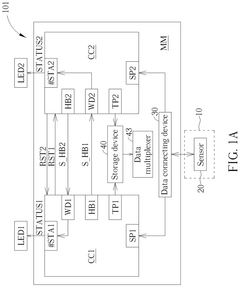
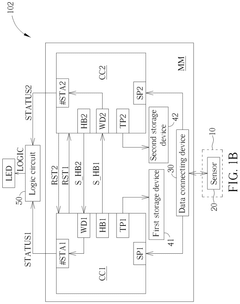
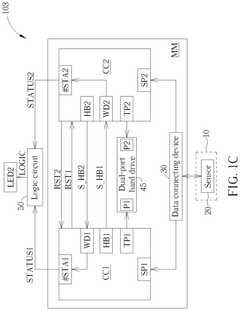
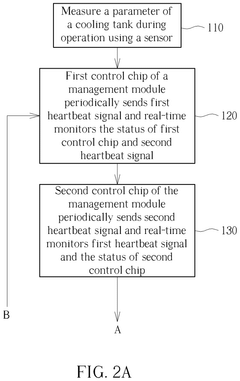
Apparatus for liquid immersion cooling, system for liquid immersion cooling, and method of cooling electronic device
PatentActiveUS10888032B2
Innovation
- A system that uses a casing filled with a coolant for components with low calorific values and a water cooling jacket for high calorific components, with a pump and cooling device to efficiently transfer heat, allowing for effective cooling of both types of components with a reduced amount of coolant and maintaining device accessibility.


Environmental Impact and Sustainability Considerations
The environmental implications of cooling technologies have become increasingly critical as data centers consume approximately 1-2% of global electricity. Immersion cooling demonstrates superior environmental performance through significantly reduced energy consumption, with Power Usage Effectiveness (PUE) ratios as low as 1.03 compared to 1.15-1.25 for closed-loop liquid cooling systems. This efficiency translates to substantial carbon footprint reduction, particularly when considering the elimination of traditional air conditioning infrastructure and associated refrigerants.
Water consumption represents another crucial sustainability factor. Closed-loop liquid cooling systems typically require substantial water usage for heat rejection through cooling towers, consuming 1.8-2.5 liters per kWh of IT load. Immersion cooling eliminates this dependency entirely, utilizing dielectric fluids that operate in completely sealed systems without evaporative losses. This advantage becomes particularly significant in water-scarce regions where data center operations face increasing regulatory scrutiny.
The lifecycle environmental impact varies considerably between technologies. Immersion cooling fluids, while requiring higher initial material investment, demonstrate exceptional longevity with replacement cycles extending 5-7 years compared to annual coolant maintenance in closed-loop systems. However, dielectric fluid disposal requires specialized handling procedures, though many modern formulations achieve biodegradability ratings exceeding 90% within standard testing protocols.
Manufacturing and infrastructure considerations reveal complex trade-offs. Closed-loop systems demand extensive piping, pumps, and heat exchangers, resulting in higher embodied carbon during production. Conversely, immersion cooling requires specialized tank construction and fluid production, though overall material requirements remain lower due to simplified infrastructure needs.
Regulatory compliance increasingly favors low-impact cooling solutions. The European Union's Energy Efficiency Directive and similar regulations worldwide are driving adoption of technologies with demonstrable environmental benefits. Immersion cooling's inherent efficiency advantages position it favorably under emerging carbon pricing mechanisms and sustainability reporting requirements.
Future sustainability trajectories indicate growing importance of circular economy principles. Immersion cooling systems demonstrate superior recyclability potential, with dielectric fluids increasingly sourced from renewable feedstocks. Closed-loop systems face challenges from refrigerant phase-out schedules and water usage restrictions, potentially limiting long-term viability in environmentally sensitive deployments.
Water consumption represents another crucial sustainability factor. Closed-loop liquid cooling systems typically require substantial water usage for heat rejection through cooling towers, consuming 1.8-2.5 liters per kWh of IT load. Immersion cooling eliminates this dependency entirely, utilizing dielectric fluids that operate in completely sealed systems without evaporative losses. This advantage becomes particularly significant in water-scarce regions where data center operations face increasing regulatory scrutiny.
The lifecycle environmental impact varies considerably between technologies. Immersion cooling fluids, while requiring higher initial material investment, demonstrate exceptional longevity with replacement cycles extending 5-7 years compared to annual coolant maintenance in closed-loop systems. However, dielectric fluid disposal requires specialized handling procedures, though many modern formulations achieve biodegradability ratings exceeding 90% within standard testing protocols.
Manufacturing and infrastructure considerations reveal complex trade-offs. Closed-loop systems demand extensive piping, pumps, and heat exchangers, resulting in higher embodied carbon during production. Conversely, immersion cooling requires specialized tank construction and fluid production, though overall material requirements remain lower due to simplified infrastructure needs.
Regulatory compliance increasingly favors low-impact cooling solutions. The European Union's Energy Efficiency Directive and similar regulations worldwide are driving adoption of technologies with demonstrable environmental benefits. Immersion cooling's inherent efficiency advantages position it favorably under emerging carbon pricing mechanisms and sustainability reporting requirements.
Future sustainability trajectories indicate growing importance of circular economy principles. Immersion cooling systems demonstrate superior recyclability potential, with dielectric fluids increasingly sourced from renewable feedstocks. Closed-loop systems face challenges from refrigerant phase-out schedules and water usage restrictions, potentially limiting long-term viability in environmentally sensitive deployments.
Cost-Benefit Analysis of Cooling Technology Deployment
The deployment of advanced cooling technologies in data centers requires comprehensive financial evaluation to determine optimal investment strategies. Initial capital expenditure analysis reveals significant differences between immersion cooling and closed-loop liquid cooling systems. Immersion cooling typically demands higher upfront investments, ranging from $150,000 to $300,000 per rack, primarily due to specialized dielectric fluids, custom-designed tanks, and modified server hardware. Conversely, closed-loop liquid cooling systems present more moderate initial costs, approximately $50,000 to $120,000 per rack, benefiting from established supply chains and standardized components.
Operational expenditure patterns demonstrate contrasting long-term financial implications. Immersion cooling systems exhibit superior operational efficiency with reduced energy consumption of 20-30% compared to traditional air cooling, translating to substantial electricity cost savings over the system lifecycle. However, dielectric fluid replacement and specialized maintenance requirements contribute to elevated operational costs. Closed-loop systems offer balanced operational expenses with moderate energy savings of 15-25% while maintaining compatibility with existing infrastructure and standard maintenance protocols.
Total cost of ownership calculations over a five-year deployment period reveal nuanced financial outcomes dependent on deployment scale and operational intensity. Large-scale implementations favor immersion cooling due to economies of scale and cumulative energy savings, achieving break-even points within 18-24 months. Medium-scale deployments often benefit from closed-loop solutions, which provide acceptable performance improvements with lower financial risk and faster implementation timelines.
Return on investment metrics indicate that immersion cooling delivers superior long-term value for high-density computing environments exceeding 50kW per rack, with ROI reaching 25-35% annually after the initial deployment phase. Closed-loop systems demonstrate consistent ROI of 15-20% across various deployment scenarios, offering predictable financial returns with reduced implementation complexity. Risk assessment factors including technology maturity, vendor ecosystem stability, and operational expertise requirements significantly influence the overall cost-benefit equation for enterprise decision-making processes.
Operational expenditure patterns demonstrate contrasting long-term financial implications. Immersion cooling systems exhibit superior operational efficiency with reduced energy consumption of 20-30% compared to traditional air cooling, translating to substantial electricity cost savings over the system lifecycle. However, dielectric fluid replacement and specialized maintenance requirements contribute to elevated operational costs. Closed-loop systems offer balanced operational expenses with moderate energy savings of 15-25% while maintaining compatibility with existing infrastructure and standard maintenance protocols.
Total cost of ownership calculations over a five-year deployment period reveal nuanced financial outcomes dependent on deployment scale and operational intensity. Large-scale implementations favor immersion cooling due to economies of scale and cumulative energy savings, achieving break-even points within 18-24 months. Medium-scale deployments often benefit from closed-loop solutions, which provide acceptable performance improvements with lower financial risk and faster implementation timelines.
Return on investment metrics indicate that immersion cooling delivers superior long-term value for high-density computing environments exceeding 50kW per rack, with ROI reaching 25-35% annually after the initial deployment phase. Closed-loop systems demonstrate consistent ROI of 15-20% across various deployment scenarios, offering predictable financial returns with reduced implementation complexity. Risk assessment factors including technology maturity, vendor ecosystem stability, and operational expertise requirements significantly influence the overall cost-benefit equation for enterprise decision-making processes.
Unlock deeper insights with PatSnap Eureka Quick Research — get a full tech report to explore trends and direct your research. Try now!
Generate Your Research Report Instantly with AI Agent
Supercharge your innovation with PatSnap Eureka AI Agent Platform!