

Improving Conductivity in Anode-Free Electrolyte-Electrode Matches
MAY 22, 20269 MIN READ
Generate Your Research Report Instantly with AI Agent
PatSnap Eureka helps you evaluate technical feasibility & market potential.
Anode-Free Battery Technology Background and Objectives
Anode-free battery technology represents a paradigm shift in lithium-ion battery design, emerging from the fundamental challenge of achieving higher energy densities while maintaining safety and cycle life. This innovative approach eliminates the traditional graphite or silicon anode, instead relying on in-situ lithium metal plating during the first charge cycle. The concept originated from research into lithium metal batteries in the 1970s but has gained renewed attention due to advances in electrolyte chemistry and electrode engineering.
The historical development of anode-free systems traces back to early lithium metal battery research, where dendrite formation and safety concerns initially limited commercial viability. However, recent breakthroughs in solid-state electrolytes, advanced separators, and surface modification techniques have revitalized interest in this technology. The evolution has been driven by the automotive industry's demand for batteries with energy densities exceeding 400 Wh/kg, which conventional lithium-ion systems struggle to achieve.
Current technological trends indicate a convergence toward hybrid approaches that combine anode-free architectures with advanced electrolyte formulations. Research institutions and battery manufacturers are increasingly focusing on interfacial engineering, recognizing that the electrolyte-electrode interface governs both performance and longevity. The development trajectory shows particular emphasis on solid polymer electrolytes, ceramic-polymer composites, and novel liquid electrolyte additives.
The primary technical objective centers on achieving stable lithium metal deposition and stripping while maintaining high ionic conductivity throughout the battery's operational life. This requires addressing the fundamental challenge of lithium dendrite growth, which can cause capacity fade, impedance rise, and safety hazards. Secondary objectives include optimizing the current collector surface properties, developing compatible cathode materials, and establishing manufacturing processes scalable for commercial production.
Performance targets for anode-free systems include achieving energy densities of 350-450 Wh/kg at the cell level, maintaining 80% capacity retention after 1000 cycles, and operating safely across temperature ranges from -20°C to 60°C. These ambitious goals necessitate breakthrough innovations in electrolyte conductivity, particularly at the critical electrolyte-electrode interface where lithium nucleation and growth occur.
The historical development of anode-free systems traces back to early lithium metal battery research, where dendrite formation and safety concerns initially limited commercial viability. However, recent breakthroughs in solid-state electrolytes, advanced separators, and surface modification techniques have revitalized interest in this technology. The evolution has been driven by the automotive industry's demand for batteries with energy densities exceeding 400 Wh/kg, which conventional lithium-ion systems struggle to achieve.
Current technological trends indicate a convergence toward hybrid approaches that combine anode-free architectures with advanced electrolyte formulations. Research institutions and battery manufacturers are increasingly focusing on interfacial engineering, recognizing that the electrolyte-electrode interface governs both performance and longevity. The development trajectory shows particular emphasis on solid polymer electrolytes, ceramic-polymer composites, and novel liquid electrolyte additives.
The primary technical objective centers on achieving stable lithium metal deposition and stripping while maintaining high ionic conductivity throughout the battery's operational life. This requires addressing the fundamental challenge of lithium dendrite growth, which can cause capacity fade, impedance rise, and safety hazards. Secondary objectives include optimizing the current collector surface properties, developing compatible cathode materials, and establishing manufacturing processes scalable for commercial production.
Performance targets for anode-free systems include achieving energy densities of 350-450 Wh/kg at the cell level, maintaining 80% capacity retention after 1000 cycles, and operating safely across temperature ranges from -20°C to 60°C. These ambitious goals necessitate breakthrough innovations in electrolyte conductivity, particularly at the critical electrolyte-electrode interface where lithium nucleation and growth occur.
Market Demand for High-Performance Anode-Free Batteries
The global battery market is experiencing unprecedented growth driven by the accelerating transition to electric vehicles and renewable energy storage systems. Traditional lithium-ion batteries with graphite anodes face inherent limitations in energy density, which has created substantial market demand for next-generation battery technologies that can deliver superior performance characteristics.
Anode-free battery technology represents a paradigm shift in energy storage, offering theoretical energy densities that exceed conventional lithium-ion systems by eliminating the graphite anode entirely. This approach allows lithium metal to plate directly onto the current collector during charging, potentially increasing cell-level energy density while reducing manufacturing costs and material complexity.
The electric vehicle sector serves as the primary driver for high-performance anode-free battery demand. Automotive manufacturers are actively seeking battery solutions that can extend driving range beyond current limitations while maintaining fast charging capabilities and long cycle life. The aerospace and defense industries also present significant opportunities, where weight reduction and energy density improvements translate directly to enhanced mission capabilities and operational efficiency.
Consumer electronics manufacturers face increasing pressure to develop thinner, lighter devices with extended battery life. Anode-free batteries could enable breakthrough form factors in smartphones, laptops, and wearable devices by providing higher energy density in smaller packages. The technology's potential to reduce manufacturing complexity also appeals to cost-conscious consumer electronics applications.
Grid-scale energy storage represents an emerging market segment where anode-free batteries could provide competitive advantages. As renewable energy deployment accelerates globally, utilities require large-scale storage solutions that offer high energy density, long cycle life, and cost-effectiveness. The simplified manufacturing process of anode-free batteries could reduce capital expenditure requirements for grid storage installations.
Market research indicates strong investor interest in advanced battery technologies, with venture capital and corporate investments flowing toward companies developing anode-free solutions. Government initiatives supporting clean energy transitions further amplify market demand through policy incentives and research funding programs targeting next-generation energy storage technologies.
However, current market adoption remains limited due to technical challenges, particularly regarding electrolyte-electrode interface optimization and conductivity improvements. Successful resolution of these technical barriers could unlock substantial market opportunities across multiple industry segments, positioning anode-free batteries as a transformative technology in the global energy storage landscape.
Anode-free battery technology represents a paradigm shift in energy storage, offering theoretical energy densities that exceed conventional lithium-ion systems by eliminating the graphite anode entirely. This approach allows lithium metal to plate directly onto the current collector during charging, potentially increasing cell-level energy density while reducing manufacturing costs and material complexity.
The electric vehicle sector serves as the primary driver for high-performance anode-free battery demand. Automotive manufacturers are actively seeking battery solutions that can extend driving range beyond current limitations while maintaining fast charging capabilities and long cycle life. The aerospace and defense industries also present significant opportunities, where weight reduction and energy density improvements translate directly to enhanced mission capabilities and operational efficiency.
Consumer electronics manufacturers face increasing pressure to develop thinner, lighter devices with extended battery life. Anode-free batteries could enable breakthrough form factors in smartphones, laptops, and wearable devices by providing higher energy density in smaller packages. The technology's potential to reduce manufacturing complexity also appeals to cost-conscious consumer electronics applications.
Grid-scale energy storage represents an emerging market segment where anode-free batteries could provide competitive advantages. As renewable energy deployment accelerates globally, utilities require large-scale storage solutions that offer high energy density, long cycle life, and cost-effectiveness. The simplified manufacturing process of anode-free batteries could reduce capital expenditure requirements for grid storage installations.
Market research indicates strong investor interest in advanced battery technologies, with venture capital and corporate investments flowing toward companies developing anode-free solutions. Government initiatives supporting clean energy transitions further amplify market demand through policy incentives and research funding programs targeting next-generation energy storage technologies.
However, current market adoption remains limited due to technical challenges, particularly regarding electrolyte-electrode interface optimization and conductivity improvements. Successful resolution of these technical barriers could unlock substantial market opportunities across multiple industry segments, positioning anode-free batteries as a transformative technology in the global energy storage landscape.
Current Conductivity Challenges in Anode-Free Systems
Anode-free battery systems face significant conductivity challenges that fundamentally limit their commercial viability and performance optimization. The absence of a pre-formed anode creates unique electrochemical environments where traditional conductivity mechanisms become inadequate, leading to substantial impedance increases during cycling operations.
The primary conductivity bottleneck occurs at the current collector-electrolyte interface, where lithium metal must nucleate and grow directly on copper substrates. This process generates heterogeneous surface conditions with varying local conductivity, creating hotspots and dead zones that compromise overall system performance. The interfacial resistance can increase by 200-400% compared to conventional lithium-ion systems.
Electrolyte decomposition presents another critical challenge, as the highly reactive lithium metal surface catalyzes unwanted side reactions. These reactions form resistive solid electrolyte interphase layers that continuously thicken during cycling, progressively degrading ionic conductivity. The dynamic nature of this interface makes conductivity prediction and control extremely difficult.
Dendrite formation exacerbates conductivity issues by creating tortuous current pathways and non-uniform current distribution. As lithium deposits unevenly, local current densities vary dramatically, leading to further dendrite growth in a self-reinforcing cycle. This phenomenon not only reduces effective conductivity but also poses safety risks through potential separator penetration.
Temperature sensitivity compounds these challenges, as anode-free systems exhibit more pronounced conductivity variations across operating temperature ranges. Low-temperature performance particularly suffers, with ionic conductivity dropping significantly below optimal levels, while elevated temperatures accelerate degradation mechanisms.
The lack of established manufacturing standards for anode-free systems creates additional conductivity-related uncertainties. Current collector surface treatments, electrolyte formulations, and cell assembly processes all significantly impact conductivity performance, yet optimization protocols remain largely empirical rather than systematically developed.
These interconnected challenges necessitate comprehensive solutions addressing interface engineering, electrolyte chemistry, and system-level design considerations to achieve commercially viable conductivity performance in anode-free battery technologies.
The primary conductivity bottleneck occurs at the current collector-electrolyte interface, where lithium metal must nucleate and grow directly on copper substrates. This process generates heterogeneous surface conditions with varying local conductivity, creating hotspots and dead zones that compromise overall system performance. The interfacial resistance can increase by 200-400% compared to conventional lithium-ion systems.
Electrolyte decomposition presents another critical challenge, as the highly reactive lithium metal surface catalyzes unwanted side reactions. These reactions form resistive solid electrolyte interphase layers that continuously thicken during cycling, progressively degrading ionic conductivity. The dynamic nature of this interface makes conductivity prediction and control extremely difficult.
Dendrite formation exacerbates conductivity issues by creating tortuous current pathways and non-uniform current distribution. As lithium deposits unevenly, local current densities vary dramatically, leading to further dendrite growth in a self-reinforcing cycle. This phenomenon not only reduces effective conductivity but also poses safety risks through potential separator penetration.
Temperature sensitivity compounds these challenges, as anode-free systems exhibit more pronounced conductivity variations across operating temperature ranges. Low-temperature performance particularly suffers, with ionic conductivity dropping significantly below optimal levels, while elevated temperatures accelerate degradation mechanisms.
The lack of established manufacturing standards for anode-free systems creates additional conductivity-related uncertainties. Current collector surface treatments, electrolyte formulations, and cell assembly processes all significantly impact conductivity performance, yet optimization protocols remain largely empirical rather than systematically developed.
These interconnected challenges necessitate comprehensive solutions addressing interface engineering, electrolyte chemistry, and system-level design considerations to achieve commercially viable conductivity performance in anode-free battery technologies.
Current Solutions for Electrolyte-Electrode Conductivity
01 Electrolyte composition optimization for anode-free batteries
Development of specialized electrolyte formulations that enhance ionic conductivity in anode-free battery systems. These electrolytes are designed to facilitate uniform metal deposition and improve overall battery performance by optimizing salt concentration, solvent selection, and additive incorporation to achieve better ion transport properties.- Electrolyte composition optimization for anode-free batteries: Advanced electrolyte formulations are developed to enhance ionic conductivity in anode-free battery systems. These compositions include specific salt concentrations, additives, and solvents that improve ion transport while maintaining electrochemical stability. The optimization focuses on creating electrolytes that can support efficient lithium plating and stripping processes without traditional anode materials.
- Electrode interface engineering for improved conductivity: Surface modifications and interface treatments are employed to enhance the conductivity between electrolyte and electrode materials in anode-free configurations. These approaches involve creating conductive layers, surface coatings, or interface stabilization techniques that reduce resistance and improve charge transfer kinetics at the electrode-electrolyte boundary.
- Solid electrolyte systems for anode-free applications: Solid-state electrolyte materials are designed to provide high ionic conductivity while eliminating the need for traditional anode structures. These systems focus on ceramic, polymer, or composite electrolytes that can facilitate direct metal plating on current collectors while maintaining excellent ionic transport properties and mechanical stability.
- Conductive additives and enhancement materials: Specialized conductive additives are incorporated into electrode formulations to improve overall conductivity in anode-free battery designs. These materials include carbon-based conductors, metallic particles, or conductive polymers that create enhanced electron pathways and reduce internal resistance throughout the electrode structure.
- Current collector modifications for anode-free systems: Current collector surfaces are engineered with specific treatments, coatings, or structural modifications to optimize conductivity in anode-free battery configurations. These modifications create favorable nucleation sites for metal deposition while maintaining excellent electrical contact and minimizing interfacial resistance between the collector and active materials.
02 Electrode interface engineering for conductivity enhancement
Techniques for modifying electrode surfaces and interfaces to improve electrical conductivity and reduce resistance in anode-free configurations. This includes surface treatments, coating applications, and interface layer optimization to ensure better electron transfer and reduced impedance at the electrode-electrolyte boundary.Expand Specific Solutions03 Conductive additive integration in electrode materials
Incorporation of conductive materials and additives into electrode structures to enhance overall electrical conductivity. This approach focuses on creating conductive networks within the electrode matrix using carbon-based materials, metallic particles, or other conductive agents to improve charge transport efficiency.Expand Specific Solutions04 Solid electrolyte conductivity matching strategies
Methods for achieving optimal conductivity matching between solid electrolytes and electrodes in anode-free systems. This involves designing electrolyte materials with specific ionic conductivity properties that complement electrode characteristics, ensuring efficient ion transport and minimal interfacial resistance.Expand Specific Solutions05 Temperature-dependent conductivity optimization
Approaches for maintaining and optimizing electrical and ionic conductivity across different temperature ranges in anode-free battery systems. This includes developing temperature-stable electrolyte formulations and electrode materials that maintain consistent performance and conductivity characteristics under varying thermal conditions.Expand Specific Solutions
Key Players in Anode-Free Battery Development
The anode-free electrolyte-electrode conductivity improvement technology represents an emerging segment within the rapidly evolving battery industry, currently in its early development stage with significant growth potential. The global battery market, valued at over $120 billion, is driving substantial investment in next-generation technologies. Technology maturity varies significantly across key players, with established automotive manufacturers like Honda Motor Co., Toyota Motor Corp., and GM Global Technology Operations leveraging their R&D capabilities alongside specialized battery companies such as LG Energy Solution, Panasonic Energy, EVE Energy, and Northvolt AB. Leading research institutions including California Institute of Technology, Cornell University, and University of Chicago Argonne are advancing fundamental research, while companies like Sony Group Corp. and Semiconductor Energy Laboratory contribute materials expertise. The competitive landscape shows a convergence of traditional automotive OEMs, battery specialists, and academic institutions, indicating the technology's strategic importance for future energy storage applications.
LG Energy Solution Ltd.
Technical Solution: LG Energy Solution has developed advanced electrolyte formulations specifically for anode-free battery architectures, focusing on lithium metal plating optimization. Their approach involves using high-concentration electrolytes with specialized additives like fluoroethylene carbonate (FEC) and lithium bis(fluorosulfonyl)imide (LiFSI) to enhance ionic conductivity while forming stable solid electrolyte interphase (SEI) layers. The company has implemented gradient concentration electrolyte systems that maintain conductivity above 10 mS/cm at room temperature while preventing dendrite formation through controlled lithium deposition mechanisms.
Strengths: Proven manufacturing scalability, extensive patent portfolio in electrolyte chemistry, strong market presence. Weaknesses: Higher production costs due to specialized additives, limited cycle life compared to conventional anodes.
Toyota Motor Corp.
Technical Solution: Toyota has pioneered solid-state electrolyte technology for anode-free configurations, utilizing sulfide-based superionic conductors with conductivities reaching 25 mS/cm. Their proprietary approach combines Li6PS5Cl electrolytes with surface modification techniques using lithium phosphorus oxynitride (LiPON) interlayers to improve electrode-electrolyte interface conductivity. The technology incorporates pressure-assisted assembly methods and temperature-controlled processing to minimize interfacial resistance, achieving stable cycling performance through engineered contact interfaces that maintain conductivity under mechanical stress and thermal variations.
Strengths: Solid-state technology leadership, robust manufacturing capabilities, excellent safety profile. Weaknesses: High processing temperatures required, complex manufacturing processes, limited flexibility in cell designs.
Core Innovations in Interface Conductivity Enhancement
Anode-free solid-state battery and use thereof
PatentWO2025103689A1
Innovation
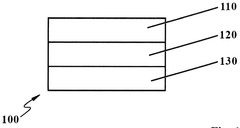
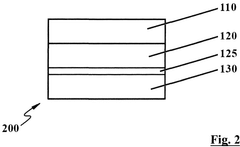
- Incorporating an additional solid-state electrolyte layer between the solid-state electrolyte separator and the conductor improves deformability and maintains contact between the components during charging cycles.
Electrode material, electrode, and battery
PatentInactiveUS20240322151A1
Innovation
- The use of a composite electrode material comprising a first solid electrolyte containing I and a second solid electrolyte free of I, with a volume ratio between the two ranging from 1% to 49%, specifically optimized to enhance ionic conductivity by incorporating compounds like Li3YBr2Cl4 and Li3YBr6, and a binder such as a thermoplastic elastomer to improve binding properties.


Safety Standards for Advanced Battery Technologies
The development of anode-free battery technologies has necessitated the establishment of comprehensive safety standards to address unique risks associated with improved conductivity in electrolyte-electrode interfaces. Current safety frameworks primarily focus on conventional lithium-ion batteries, creating regulatory gaps for advanced anode-free systems that exhibit different failure modes and thermal behaviors.
International standardization bodies including IEC, UL, and ISO are actively developing specific protocols for anode-free battery architectures. These emerging standards address critical safety parameters such as thermal runaway propagation rates, electrolyte stability under high conductivity conditions, and interface degradation monitoring. The enhanced ionic conductivity in optimized electrolyte-electrode matches introduces new safety considerations, particularly regarding rapid energy release scenarios and localized heating effects.
Key safety requirements focus on electrolyte formulation constraints, mandating specific additive concentrations and purity levels to maintain stable high-conductivity interfaces. Temperature monitoring protocols have been refined to detect early signs of interface degradation, with stricter thermal gradient limits compared to traditional battery systems. Cell-level safety testing now incorporates conductivity decay assessments and interface impedance monitoring as mandatory evaluation criteria.
Manufacturing safety standards emphasize controlled atmosphere processing and enhanced quality control measures for electrolyte preparation and electrode surface treatments. These protocols ensure consistent conductivity performance while minimizing safety risks associated with reactive electrolyte components and surface modification chemicals.
Certification processes for anode-free batteries require extended cycling tests under various temperature and humidity conditions, with specific focus on conductivity retention and interface stability. Emergency response protocols have been updated to address the unique characteristics of anode-free battery failures, including modified fire suppression techniques and specialized handling procedures for compromised cells.
The regulatory landscape continues evolving as more experimental data becomes available, with anticipated updates to existing standards expected within the next two years to fully accommodate the safety requirements of commercially viable anode-free battery technologies.
International standardization bodies including IEC, UL, and ISO are actively developing specific protocols for anode-free battery architectures. These emerging standards address critical safety parameters such as thermal runaway propagation rates, electrolyte stability under high conductivity conditions, and interface degradation monitoring. The enhanced ionic conductivity in optimized electrolyte-electrode matches introduces new safety considerations, particularly regarding rapid energy release scenarios and localized heating effects.
Key safety requirements focus on electrolyte formulation constraints, mandating specific additive concentrations and purity levels to maintain stable high-conductivity interfaces. Temperature monitoring protocols have been refined to detect early signs of interface degradation, with stricter thermal gradient limits compared to traditional battery systems. Cell-level safety testing now incorporates conductivity decay assessments and interface impedance monitoring as mandatory evaluation criteria.
Manufacturing safety standards emphasize controlled atmosphere processing and enhanced quality control measures for electrolyte preparation and electrode surface treatments. These protocols ensure consistent conductivity performance while minimizing safety risks associated with reactive electrolyte components and surface modification chemicals.
Certification processes for anode-free batteries require extended cycling tests under various temperature and humidity conditions, with specific focus on conductivity retention and interface stability. Emergency response protocols have been updated to address the unique characteristics of anode-free battery failures, including modified fire suppression techniques and specialized handling procedures for compromised cells.
The regulatory landscape continues evolving as more experimental data becomes available, with anticipated updates to existing standards expected within the next two years to fully accommodate the safety requirements of commercially viable anode-free battery technologies.
Environmental Impact of Anode-Free Battery Materials
The environmental implications of anode-free battery materials represent a critical consideration in the development of next-generation energy storage systems. Unlike conventional lithium-ion batteries that rely on graphite or silicon-based anodes, anode-free configurations eliminate the need for these materials entirely, potentially reducing the overall environmental footprint of battery production. This approach significantly decreases the mining requirements for graphite and silicon, which traditionally involve energy-intensive extraction and purification processes.
The manufacturing phase of anode-free batteries demonstrates notable environmental advantages through simplified production workflows. The absence of anode active materials eliminates several chemical processing steps, including binder preparation, slurry coating, and thermal treatment procedures typically required for conventional anode fabrication. This streamlined manufacturing process translates to reduced energy consumption, lower chemical waste generation, and decreased water usage during production.
Material sourcing for anode-free systems primarily focuses on lithium metal and advanced electrolyte formulations. While lithium extraction remains environmentally challenging, the overall material intensity is reduced compared to traditional battery architectures. The elimination of graphite sourcing particularly benefits environmental sustainability, as natural graphite mining often involves significant ecological disruption and synthetic graphite production requires substantial energy input.
End-of-life considerations reveal mixed environmental impacts for anode-free battery materials. The simplified material composition facilitates more efficient recycling processes, as fewer material separation steps are required. Lithium recovery from anode-free systems can be more straightforward due to the absence of complex anode composites. However, the specialized electrolyte formulations used in these systems may introduce new challenges for recycling infrastructure.
The carbon footprint analysis of anode-free batteries shows promising results throughout their lifecycle. Reduced manufacturing complexity contributes to lower production-phase emissions, while the potential for higher energy density may decrease the overall material requirements per unit of energy storage capacity. These factors collectively position anode-free battery technology as an environmentally favorable alternative to conventional battery systems, supporting sustainable energy storage deployment.
The manufacturing phase of anode-free batteries demonstrates notable environmental advantages through simplified production workflows. The absence of anode active materials eliminates several chemical processing steps, including binder preparation, slurry coating, and thermal treatment procedures typically required for conventional anode fabrication. This streamlined manufacturing process translates to reduced energy consumption, lower chemical waste generation, and decreased water usage during production.
Material sourcing for anode-free systems primarily focuses on lithium metal and advanced electrolyte formulations. While lithium extraction remains environmentally challenging, the overall material intensity is reduced compared to traditional battery architectures. The elimination of graphite sourcing particularly benefits environmental sustainability, as natural graphite mining often involves significant ecological disruption and synthetic graphite production requires substantial energy input.
End-of-life considerations reveal mixed environmental impacts for anode-free battery materials. The simplified material composition facilitates more efficient recycling processes, as fewer material separation steps are required. Lithium recovery from anode-free systems can be more straightforward due to the absence of complex anode composites. However, the specialized electrolyte formulations used in these systems may introduce new challenges for recycling infrastructure.
The carbon footprint analysis of anode-free batteries shows promising results throughout their lifecycle. Reduced manufacturing complexity contributes to lower production-phase emissions, while the potential for higher energy density may decrease the overall material requirements per unit of energy storage capacity. These factors collectively position anode-free battery technology as an environmentally favorable alternative to conventional battery systems, supporting sustainable energy storage deployment.
Unlock deeper insights with PatSnap Eureka Quick Research — get a full tech report to explore trends and direct your research. Try now!
Generate Your Research Report Instantly with AI Agent
Supercharge your innovation with PatSnap Eureka AI Agent Platform!