

Improving Valve Reliability in High-Debris Coolant Environments
JUN 1, 20269 MIN READ
Generate Your Research Report Instantly with AI Agent
Patsnap Eureka helps you evaluate technical feasibility & market potential.
Valve Reliability Challenges in High-Debris Coolant Systems
Valve reliability in high-debris coolant systems faces multifaceted challenges that significantly impact operational efficiency and system longevity. The primary concern stems from particulate contamination, where debris particles ranging from microscopic sediments to larger metallic fragments can interfere with valve sealing mechanisms. These contaminants accumulate at critical sealing interfaces, causing premature wear of valve seats and compromising the tight shut-off capabilities essential for system control.
Erosion represents another critical challenge, particularly affecting valve internals exposed to high-velocity coolant flows carrying abrasive particles. The continuous bombardment of debris against valve components leads to material degradation, dimensional changes, and eventual failure of critical surfaces. This erosion phenomenon is especially pronounced in throttling applications where flow velocities are elevated and turbulence increases particle impact frequency.
Corrosion acceleration occurs when debris particles create localized galvanic cells or act as catalysts for electrochemical reactions. The combination of metallic debris, coolant chemistry, and temperature variations establishes conditions conducive to accelerated material degradation. This challenge is compounded when different metallic debris types create multiple corrosion mechanisms simultaneously.
Mechanical jamming presents operational risks when larger debris particles become lodged in valve actuator mechanisms or between moving components. Such incidents can result in valve seizure, incomplete closure, or excessive operating torque requirements that may damage actuator systems. The unpredictable nature of debris size distribution makes this challenge particularly difficult to mitigate through conventional filtration methods.
Flow disruption caused by debris accumulation affects valve performance characteristics, altering pressure drop relationships and flow coefficients. This phenomenon can lead to system instability, reduced heat transfer efficiency, and compromised process control accuracy. The gradual nature of debris buildup often masks performance degradation until critical operational thresholds are exceeded.
Temperature cycling in debris-laden environments exacerbates thermal stress on valve components, particularly when debris particles create uneven heat distribution patterns. The differential expansion and contraction of contaminated surfaces can accelerate fatigue failure mechanisms and compromise long-term reliability. These thermal effects are particularly challenging in applications with frequent startup and shutdown cycles.
Erosion represents another critical challenge, particularly affecting valve internals exposed to high-velocity coolant flows carrying abrasive particles. The continuous bombardment of debris against valve components leads to material degradation, dimensional changes, and eventual failure of critical surfaces. This erosion phenomenon is especially pronounced in throttling applications where flow velocities are elevated and turbulence increases particle impact frequency.
Corrosion acceleration occurs when debris particles create localized galvanic cells or act as catalysts for electrochemical reactions. The combination of metallic debris, coolant chemistry, and temperature variations establishes conditions conducive to accelerated material degradation. This challenge is compounded when different metallic debris types create multiple corrosion mechanisms simultaneously.
Mechanical jamming presents operational risks when larger debris particles become lodged in valve actuator mechanisms or between moving components. Such incidents can result in valve seizure, incomplete closure, or excessive operating torque requirements that may damage actuator systems. The unpredictable nature of debris size distribution makes this challenge particularly difficult to mitigate through conventional filtration methods.
Flow disruption caused by debris accumulation affects valve performance characteristics, altering pressure drop relationships and flow coefficients. This phenomenon can lead to system instability, reduced heat transfer efficiency, and compromised process control accuracy. The gradual nature of debris buildup often masks performance degradation until critical operational thresholds are exceeded.
Temperature cycling in debris-laden environments exacerbates thermal stress on valve components, particularly when debris particles create uneven heat distribution patterns. The differential expansion and contraction of contaminated surfaces can accelerate fatigue failure mechanisms and compromise long-term reliability. These thermal effects are particularly challenging in applications with frequent startup and shutdown cycles.
Market Demand for Robust Coolant System Valves
The global coolant system valve market is experiencing unprecedented growth driven by increasing demands for enhanced reliability in harsh operating environments. Industrial sectors including nuclear power generation, chemical processing, automotive manufacturing, and heavy machinery operations are actively seeking valve solutions capable of maintaining consistent performance in high-debris coolant environments. This demand surge reflects the critical role these components play in preventing catastrophic system failures and ensuring operational continuity.
Nuclear power facilities represent the most demanding application segment, where valve failures in debris-laden coolant systems can result in severe safety incidents and regulatory violations. The industry's shift toward extended operational cycles and higher thermal efficiency requirements has intensified the need for valves that can withstand prolonged exposure to particulate matter, corrosive coolants, and extreme temperature fluctuations. Emergency core cooling systems particularly require valves with exceptional debris tolerance capabilities.
Chemical processing industries face similar challenges with coolant systems contaminated by process byproducts, scale formation, and foreign particles. Manufacturing facilities operating continuous production lines cannot afford unplanned shutdowns due to valve malfunctions, driving demand for robust solutions that maintain sealing integrity and flow control precision despite debris accumulation. The economic impact of production interruptions often justifies premium pricing for superior valve technologies.
Automotive and heavy equipment manufacturers are increasingly incorporating advanced cooling systems that operate in dusty, contaminated environments. Construction equipment, mining machinery, and agricultural vehicles require coolant valves capable of functioning reliably despite exposure to dirt, metal particles, and environmental contaminants. The trend toward higher-performance engines with tighter thermal management requirements has elevated valve reliability expectations.
The marine industry presents another significant market segment, where seawater cooling systems introduce unique challenges including biological fouling, sand particles, and corrosive salt deposits. Offshore platforms and naval vessels require valve solutions that maintain operational integrity in these demanding conditions while minimizing maintenance requirements in remote locations.
Market drivers include stringent safety regulations, increasing automation requirements, and the growing emphasis on predictive maintenance strategies. Industries are transitioning from reactive maintenance approaches toward proactive reliability management, creating demand for valves with enhanced monitoring capabilities and extended service intervals in debris-prone environments.
Nuclear power facilities represent the most demanding application segment, where valve failures in debris-laden coolant systems can result in severe safety incidents and regulatory violations. The industry's shift toward extended operational cycles and higher thermal efficiency requirements has intensified the need for valves that can withstand prolonged exposure to particulate matter, corrosive coolants, and extreme temperature fluctuations. Emergency core cooling systems particularly require valves with exceptional debris tolerance capabilities.
Chemical processing industries face similar challenges with coolant systems contaminated by process byproducts, scale formation, and foreign particles. Manufacturing facilities operating continuous production lines cannot afford unplanned shutdowns due to valve malfunctions, driving demand for robust solutions that maintain sealing integrity and flow control precision despite debris accumulation. The economic impact of production interruptions often justifies premium pricing for superior valve technologies.
Automotive and heavy equipment manufacturers are increasingly incorporating advanced cooling systems that operate in dusty, contaminated environments. Construction equipment, mining machinery, and agricultural vehicles require coolant valves capable of functioning reliably despite exposure to dirt, metal particles, and environmental contaminants. The trend toward higher-performance engines with tighter thermal management requirements has elevated valve reliability expectations.
The marine industry presents another significant market segment, where seawater cooling systems introduce unique challenges including biological fouling, sand particles, and corrosive salt deposits. Offshore platforms and naval vessels require valve solutions that maintain operational integrity in these demanding conditions while minimizing maintenance requirements in remote locations.
Market drivers include stringent safety regulations, increasing automation requirements, and the growing emphasis on predictive maintenance strategies. Industries are transitioning from reactive maintenance approaches toward proactive reliability management, creating demand for valves with enhanced monitoring capabilities and extended service intervals in debris-prone environments.
Current Valve Performance Issues in Debris-Rich Environments
Valve performance in debris-rich coolant environments faces significant operational challenges that directly impact system reliability and maintenance costs. Traditional valve designs encounter multiple failure modes when exposed to high concentrations of particulate matter, including sand, metal shavings, corrosion products, and other contaminants commonly found in industrial cooling systems.
Seat leakage represents the most prevalent performance issue, occurring when debris particles become trapped between valve seats and closure elements. This contamination prevents proper sealing, leading to internal leakage rates that can exceed acceptable operational thresholds by 200-300%. The problem is particularly acute in ball valves and gate valves, where tight metal-to-metal or soft-seat contact is essential for effective shut-off capability.
Actuator binding and increased operating torque constitute another critical concern. Debris accumulation in valve stems, packing areas, and actuator mechanisms creates excessive friction that can overwhelm standard actuator capacity. Field data indicates that operating torque requirements can increase by 150-400% in high-debris environments, leading to actuator motor burnout and mechanical component failure.
Erosion-induced wear accelerates significantly under debris-laden conditions. High-velocity coolant flow carrying abrasive particles causes material loss on valve internals, particularly at flow restriction points such as seat rings, trim components, and flow passages. This erosive wear not only compromises sealing surfaces but also alters flow characteristics, reducing valve controllability and precision.
Packing degradation occurs more rapidly when debris infiltrates the stem sealing area. Abrasive particles act as cutting agents, accelerating packing wear and creating leak paths that compromise both environmental containment and system pressure integrity. Standard packing materials show service life reductions of 60-80% in debris-rich applications compared to clean coolant environments.
Flow coefficient degradation represents an often-overlooked performance issue. Debris accumulation in valve bodies and trim areas reduces effective flow area, increasing pressure drop and reducing system efficiency. This phenomenon is particularly problematic in control valves where precise flow modulation is required for optimal system performance.
Current maintenance practices reveal that valve replacement frequency increases by 300-500% in high-debris environments, with emergency repairs accounting for approximately 40% of all valve interventions. These statistics underscore the urgent need for improved valve technologies specifically engineered to withstand debris-rich coolant conditions while maintaining reliable long-term performance.
Seat leakage represents the most prevalent performance issue, occurring when debris particles become trapped between valve seats and closure elements. This contamination prevents proper sealing, leading to internal leakage rates that can exceed acceptable operational thresholds by 200-300%. The problem is particularly acute in ball valves and gate valves, where tight metal-to-metal or soft-seat contact is essential for effective shut-off capability.
Actuator binding and increased operating torque constitute another critical concern. Debris accumulation in valve stems, packing areas, and actuator mechanisms creates excessive friction that can overwhelm standard actuator capacity. Field data indicates that operating torque requirements can increase by 150-400% in high-debris environments, leading to actuator motor burnout and mechanical component failure.
Erosion-induced wear accelerates significantly under debris-laden conditions. High-velocity coolant flow carrying abrasive particles causes material loss on valve internals, particularly at flow restriction points such as seat rings, trim components, and flow passages. This erosive wear not only compromises sealing surfaces but also alters flow characteristics, reducing valve controllability and precision.
Packing degradation occurs more rapidly when debris infiltrates the stem sealing area. Abrasive particles act as cutting agents, accelerating packing wear and creating leak paths that compromise both environmental containment and system pressure integrity. Standard packing materials show service life reductions of 60-80% in debris-rich applications compared to clean coolant environments.
Flow coefficient degradation represents an often-overlooked performance issue. Debris accumulation in valve bodies and trim areas reduces effective flow area, increasing pressure drop and reducing system efficiency. This phenomenon is particularly problematic in control valves where precise flow modulation is required for optimal system performance.
Current maintenance practices reveal that valve replacement frequency increases by 300-500% in high-debris environments, with emergency repairs accounting for approximately 40% of all valve interventions. These statistics underscore the urgent need for improved valve technologies specifically engineered to withstand debris-rich coolant conditions while maintaining reliable long-term performance.
Existing Solutions for Debris-Tolerant Valve Design
01 Valve sealing and leakage prevention mechanisms
Advanced sealing technologies and materials are employed to prevent valve leakage and ensure long-term reliability. These mechanisms include improved gasket designs, enhanced sealing surfaces, and specialized coating materials that maintain integrity under various operating conditions. The focus is on preventing internal and external leakage while maintaining consistent performance over extended periods.- Valve structure design and optimization: Improvements in valve structural components and design configurations to enhance overall reliability and performance. This includes optimized valve body geometries, improved sealing mechanisms, and enhanced structural integrity through better material distribution and component arrangement.
- Sealing technology and leak prevention: Advanced sealing solutions and leak prevention mechanisms to ensure long-term valve reliability. This encompasses innovative sealing materials, improved gasket designs, and enhanced sealing surface treatments that maintain integrity under various operating conditions.
- Control systems and automation integration: Integration of intelligent control systems and automated monitoring capabilities to improve valve reliability through real-time performance tracking and predictive maintenance. This includes sensor integration, feedback control mechanisms, and automated adjustment systems.
- Material enhancement and durability improvements: Development of advanced materials and surface treatments to increase valve longevity and resistance to wear, corrosion, and environmental factors. This includes specialized coatings, improved alloy compositions, and enhanced manufacturing processes for critical valve components.
- Testing and quality assurance methods: Comprehensive testing methodologies and quality control systems to ensure valve reliability throughout the product lifecycle. This includes performance validation procedures, reliability assessment techniques, and standardized testing protocols for various operating conditions.
02 Valve structural design optimization
Structural improvements focus on enhancing valve body strength, optimizing flow paths, and reducing stress concentrations. These designs incorporate reinforced components, improved material distribution, and geometric modifications that increase durability and operational reliability. The structural enhancements help valves withstand higher pressures and temperatures while maintaining consistent performance.Expand Specific Solutions03 Valve monitoring and diagnostic systems
Integrated monitoring systems provide real-time assessment of valve performance and health status. These systems utilize sensors, data acquisition methods, and diagnostic algorithms to detect potential failures before they occur. The monitoring capabilities enable predictive maintenance and help optimize valve operation for maximum reliability and service life.Expand Specific Solutions04 Valve actuator and control mechanisms
Enhanced actuator designs and control systems improve valve response time, positioning accuracy, and operational consistency. These mechanisms include advanced motor designs, improved gear systems, and sophisticated control algorithms that ensure precise valve operation under varying conditions. The focus is on maintaining reliable actuation performance throughout the valve's service life.Expand Specific Solutions05 Valve material and surface treatment technologies
Advanced materials and surface treatments enhance valve resistance to corrosion, wear, and environmental degradation. These technologies include specialized alloys, protective coatings, and surface modification techniques that extend valve service life and maintain performance in harsh operating environments. The material improvements focus on reducing maintenance requirements and increasing overall system reliability.Expand Specific Solutions
Key Players in Industrial Valve and Coolant System Markets
The valve reliability improvement in high-debris coolant environments represents a mature industrial sector experiencing steady growth driven by increasing demands from nuclear, automotive, and industrial applications. The market demonstrates significant scale with established players spanning multiple geographic regions and technological approaches. Technology maturity varies considerably across the competitive landscape, with traditional industrial giants like Siemens AG, ABB Ltd., and Robert Bosch GmbH leveraging decades of engineering expertise in fluid control systems, while specialized valve manufacturers such as Mokveld Valves BV and Baker Hughes Pressure Control LP focus on niche high-performance applications. Nuclear-specific expertise is concentrated among players like Hitachi-GE Nuclear Energy Ltd. and Toshiba Corp., who bring advanced materials science and precision engineering capabilities. The automotive sector contributors including BMW AG, Porsche AG, and Vitesco Technologies GmbH are driving innovation in compact, high-efficiency valve designs. Emerging technologies are being developed by companies like Group14 Technologies with advanced materials solutions, while established service providers like Halliburton Energy Services and Schlumberger Technologies bring field-tested reliability expertise from harsh operating environments.
Robert Bosch GmbH
Technical Solution: Bosch has leveraged their automotive cooling system expertise to develop valve solutions for high-debris coolant environments, focusing on compact, reliable designs suitable for space-constrained applications. Their technology incorporates magnetic debris separation upstream of valve components, combined with precision-machined sealing surfaces that maintain effectiveness despite particle contamination. The company's electronic valve control systems provide precise flow regulation while monitoring debris levels through integrated sensors, enabling proactive maintenance scheduling and system optimization for maximum reliability in contaminated coolant applications.
Strengths: Advanced electronic control systems, compact design expertise, cost-effective manufacturing capabilities. Weaknesses: Limited experience with large-scale industrial applications, primarily automotive-focused development approach.
Siemens AG
Technical Solution: Siemens has engineered robust valve solutions for debris-laden coolant applications using their proprietary ceramic-metal composite materials and advanced surface treatments. Their valve designs incorporate streamlined flow paths that minimize debris accumulation points, combined with pneumatic purging systems that can clear particles during operation. The company's digital twin technology enables predictive maintenance by modeling debris impact on valve performance, while their modular valve construction allows for rapid component replacement in high-wear applications without complete system shutdown.
Strengths: Strong digitalization capabilities, modular design flexibility, extensive industrial automation experience. Weaknesses: Limited specialization in nuclear applications, dependency on external suppliers for specialized materials.
Core Innovations in Anti-Fouling Valve Technologies
Debris tolerant valve
PatentActiveUS11226045B1
Innovation
- A debris-tolerant valve design featuring a cylindrical sleeve with angled openings and elastomeric seals in half dovetail grooves, where the valve element rotates unidirectionally to minimize contact with debris and reduce unswept volumes, using corrosion-resistant materials and Teflon coatings to prevent damage.


Pressure-reducing control valve for severe service conditions
PatentInactiveUS6926032B2
Innovation
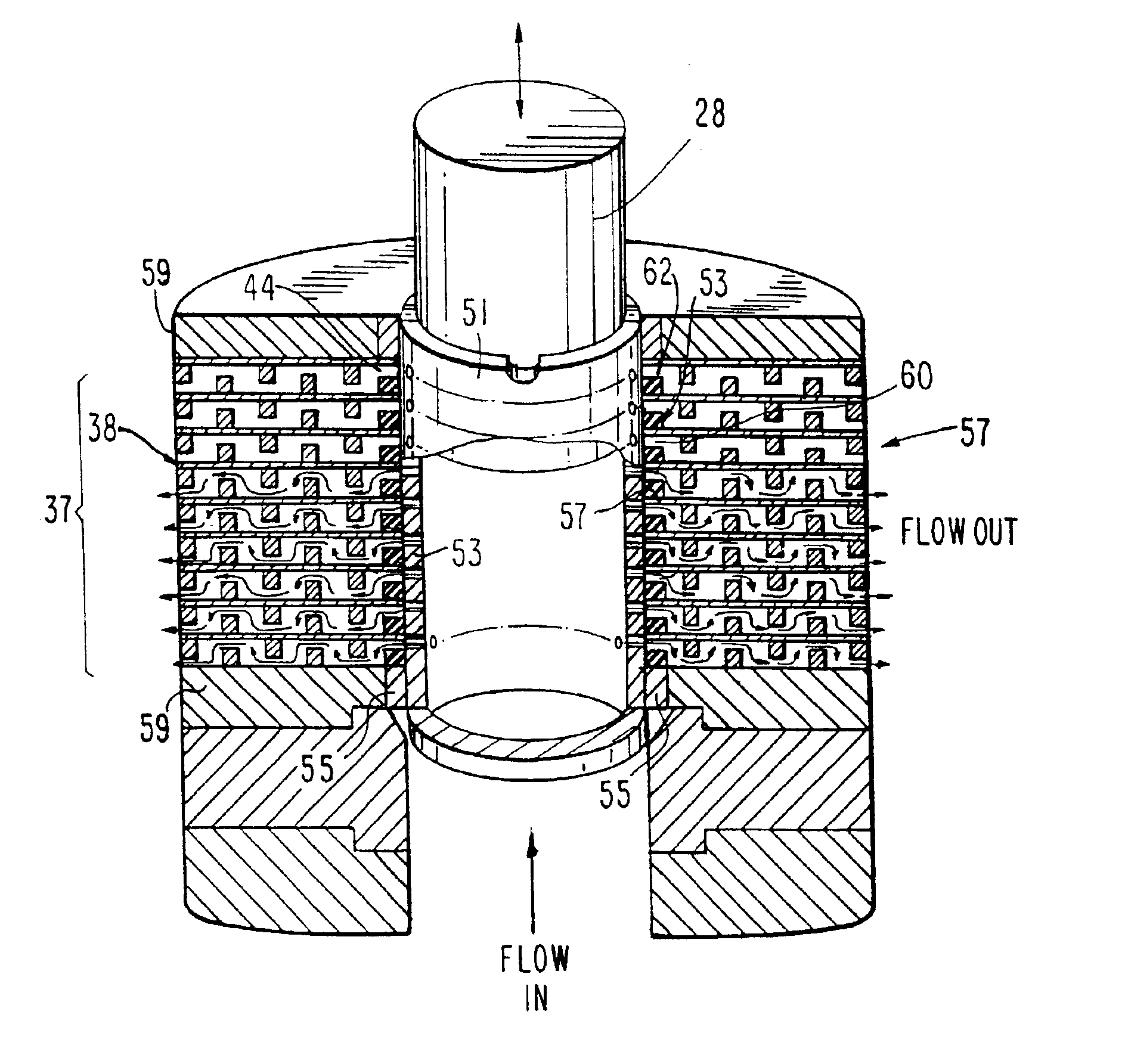
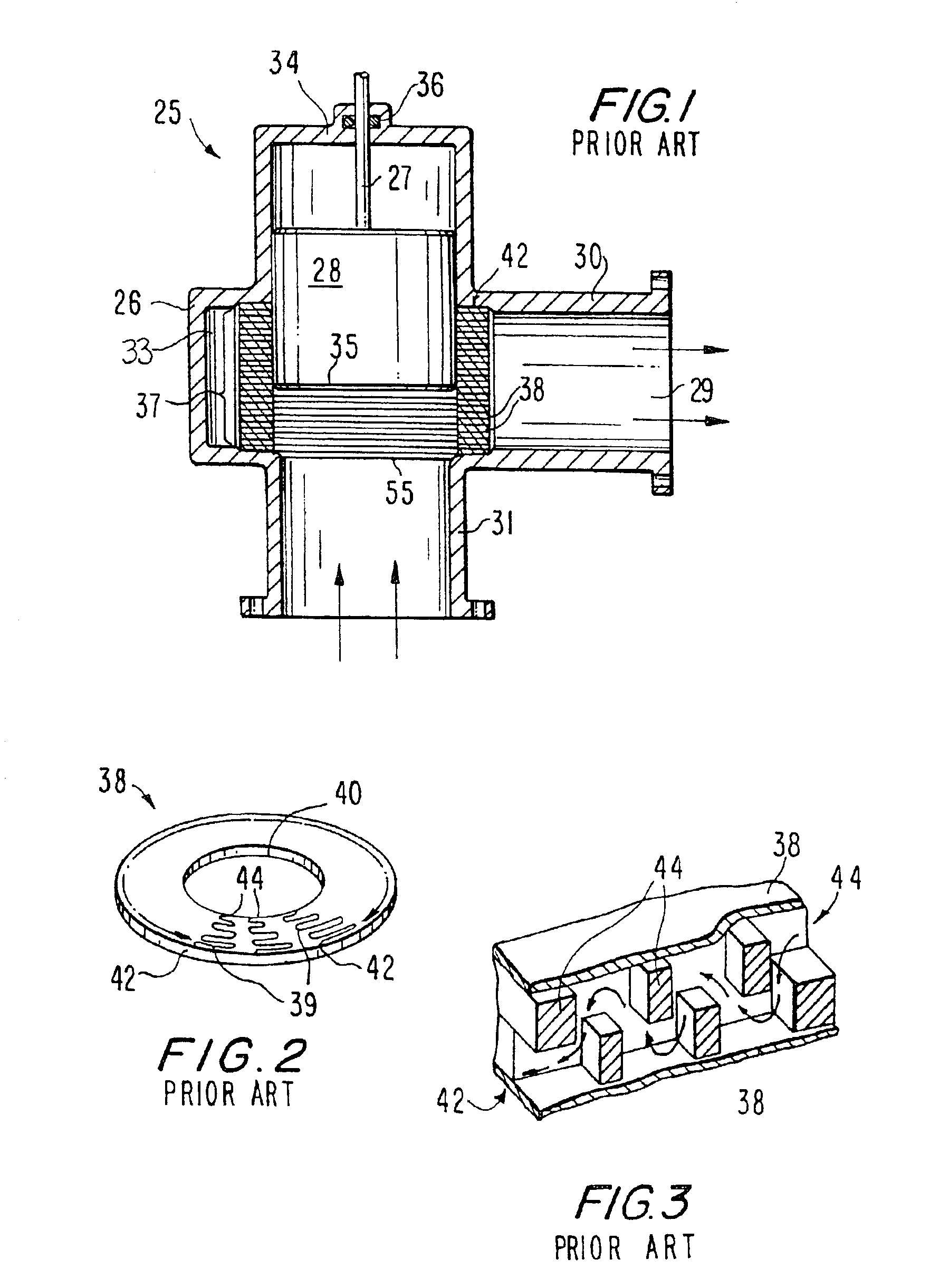
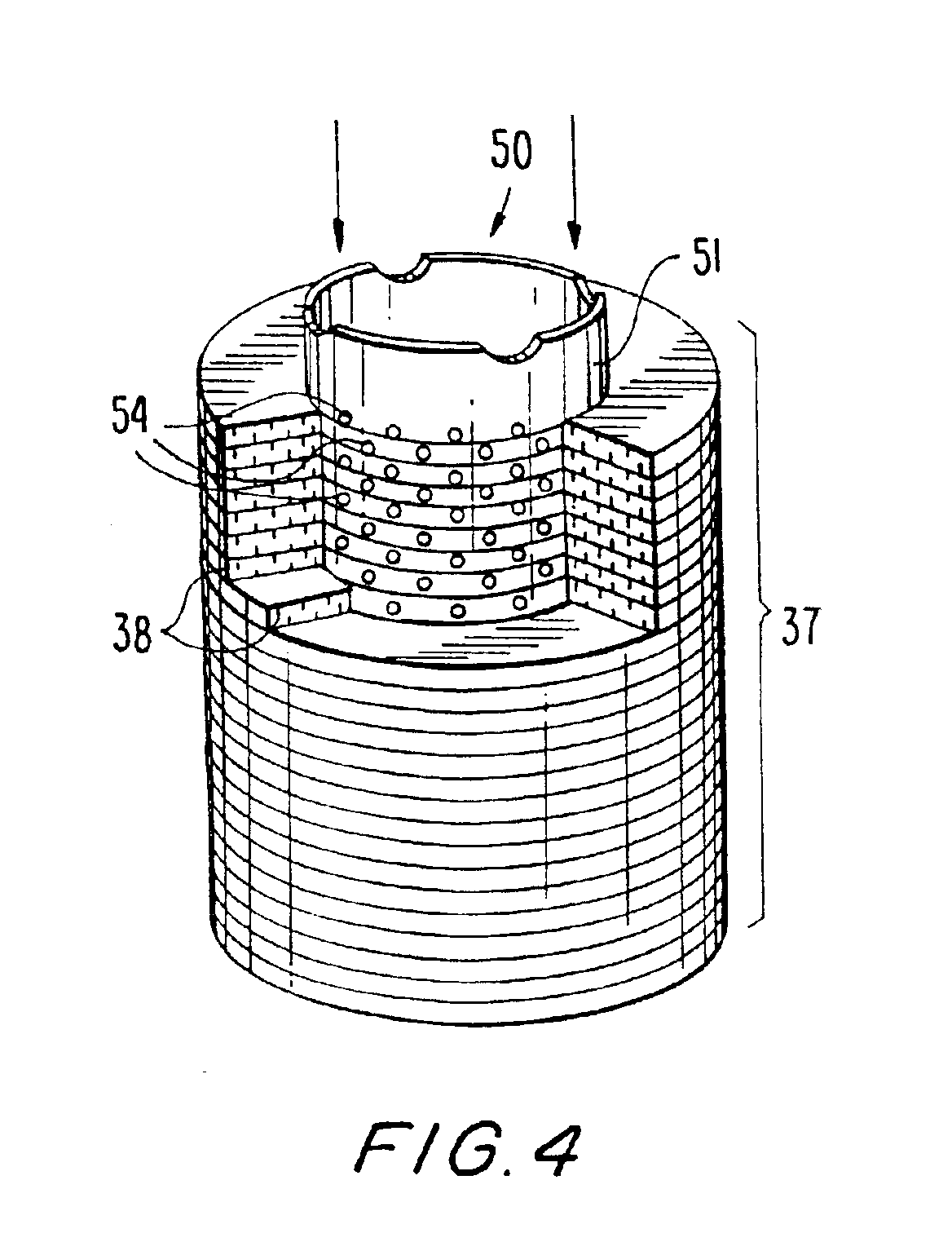
- A pressure-reducing valve design featuring a first-stage annular sleeve with radial openings aligned with a stacked disk valve, providing a hardened metal barrier and improved debris tolerance, constructed from materials like stainless steel or Inconel alloys, with a sealing mechanism to prevent axial fluid flow and allow for easy maintenance and replacement.

Environmental Standards for Industrial Coolant Systems
Industrial coolant systems operating in high-debris environments must adhere to stringent environmental standards that directly impact valve performance and reliability. These standards encompass multiple regulatory frameworks, including ISO 14001 environmental management systems, EPA guidelines for industrial fluid handling, and sector-specific regulations such as OSHA's Process Safety Management standards. The complexity of debris-laden coolant environments necessitates compliance with particulate emission controls, fluid disposal protocols, and contamination prevention measures.
Current environmental standards mandate maximum allowable debris concentrations in coolant systems, typically ranging from 10-50 mg/L depending on the industrial application. These thresholds are established to minimize environmental discharge while maintaining operational efficiency. Standards also specify filtration requirements, with minimum efficiency ratings of 99.5% for particles larger than 10 micrometers in critical applications. The implementation of these standards directly influences valve design specifications and material selection criteria.
Regulatory compliance frameworks require comprehensive monitoring systems that track coolant quality parameters including pH levels, conductivity, and debris content. Environmental standards dictate that coolant systems must incorporate real-time monitoring capabilities with automated shutdown protocols when contamination exceeds predetermined thresholds. These requirements have driven the development of smart valve technologies equipped with integrated sensors and predictive maintenance capabilities.
International standards such as ASTM D6304 and ISO 12944 establish corrosion protection requirements for valve components exposed to contaminated coolants. These standards specify coating thickness, material compatibility, and testing protocols that ensure long-term environmental compliance. Additionally, emerging regulations focus on lifecycle environmental impact, requiring manufacturers to demonstrate sustainable material sourcing and end-of-life recyclability for valve components.
The convergence of environmental standards with operational requirements has created a regulatory landscape that prioritizes both performance and sustainability. Future standard developments are expected to incorporate stricter debris management protocols and enhanced environmental monitoring requirements, driving continued innovation in valve technology for high-debris coolant applications.
Current environmental standards mandate maximum allowable debris concentrations in coolant systems, typically ranging from 10-50 mg/L depending on the industrial application. These thresholds are established to minimize environmental discharge while maintaining operational efficiency. Standards also specify filtration requirements, with minimum efficiency ratings of 99.5% for particles larger than 10 micrometers in critical applications. The implementation of these standards directly influences valve design specifications and material selection criteria.
Regulatory compliance frameworks require comprehensive monitoring systems that track coolant quality parameters including pH levels, conductivity, and debris content. Environmental standards dictate that coolant systems must incorporate real-time monitoring capabilities with automated shutdown protocols when contamination exceeds predetermined thresholds. These requirements have driven the development of smart valve technologies equipped with integrated sensors and predictive maintenance capabilities.
International standards such as ASTM D6304 and ISO 12944 establish corrosion protection requirements for valve components exposed to contaminated coolants. These standards specify coating thickness, material compatibility, and testing protocols that ensure long-term environmental compliance. Additionally, emerging regulations focus on lifecycle environmental impact, requiring manufacturers to demonstrate sustainable material sourcing and end-of-life recyclability for valve components.
The convergence of environmental standards with operational requirements has created a regulatory landscape that prioritizes both performance and sustainability. Future standard developments are expected to incorporate stricter debris management protocols and enhanced environmental monitoring requirements, driving continued innovation in valve technology for high-debris coolant applications.
Maintenance Cost Analysis for High-Debris Applications
Maintenance costs in high-debris coolant environments represent a significant operational burden for industrial facilities, with valve-related failures accounting for approximately 35-45% of total cooling system maintenance expenditures. Traditional maintenance approaches in these challenging conditions typically result in costs ranging from $150,000 to $500,000 annually per facility, depending on system complexity and debris concentration levels.
Unplanned downtime costs constitute the most substantial financial impact, often exceeding direct repair expenses by a factor of three to five. When valves fail unexpectedly in high-debris applications, facilities face immediate production losses averaging $25,000 to $75,000 per day, coupled with emergency repair costs that can reach 200-300% of planned maintenance rates due to expedited parts procurement and overtime labor requirements.
Preventive maintenance strategies in debris-laden environments demand significantly higher resource allocation compared to standard applications. Inspection frequencies typically increase by 150-200%, while component replacement intervals decrease by 40-60%. This intensified maintenance schedule translates to labor cost increases of approximately $80,000 to $120,000 annually for medium-scale operations, not including the elevated material costs associated with more frequent component replacements.
Component lifecycle costs reveal substantial variations between valve technologies in high-debris applications. Standard gate valves demonstrate 60-80% shorter service lives, while specialized debris-resistant designs, despite higher initial capital investment, often achieve 40-50% lower total cost of ownership over five-year operational periods. The premium for debris-resistant valve solutions typically ranges from 180-250% of standard valve costs, but this investment is generally recovered within 18-24 months through reduced maintenance requirements.
Labor efficiency metrics show marked deterioration in high-debris environments, with maintenance tasks requiring 30-50% additional time due to increased cleaning requirements, component accessibility challenges, and safety protocols. Specialized training requirements for technicians working in these conditions add approximately $15,000-25,000 annually in workforce development costs per facility, while the need for specialized tools and equipment contributes an additional $40,000-60,000 in capital expenditure over typical three-year replacement cycles.
Unplanned downtime costs constitute the most substantial financial impact, often exceeding direct repair expenses by a factor of three to five. When valves fail unexpectedly in high-debris applications, facilities face immediate production losses averaging $25,000 to $75,000 per day, coupled with emergency repair costs that can reach 200-300% of planned maintenance rates due to expedited parts procurement and overtime labor requirements.
Preventive maintenance strategies in debris-laden environments demand significantly higher resource allocation compared to standard applications. Inspection frequencies typically increase by 150-200%, while component replacement intervals decrease by 40-60%. This intensified maintenance schedule translates to labor cost increases of approximately $80,000 to $120,000 annually for medium-scale operations, not including the elevated material costs associated with more frequent component replacements.
Component lifecycle costs reveal substantial variations between valve technologies in high-debris applications. Standard gate valves demonstrate 60-80% shorter service lives, while specialized debris-resistant designs, despite higher initial capital investment, often achieve 40-50% lower total cost of ownership over five-year operational periods. The premium for debris-resistant valve solutions typically ranges from 180-250% of standard valve costs, but this investment is generally recovered within 18-24 months through reduced maintenance requirements.
Labor efficiency metrics show marked deterioration in high-debris environments, with maintenance tasks requiring 30-50% additional time due to increased cleaning requirements, component accessibility challenges, and safety protocols. Specialized training requirements for technicians working in these conditions add approximately $15,000-25,000 annually in workforce development costs per facility, while the need for specialized tools and equipment contributes an additional $40,000-60,000 in capital expenditure over typical three-year replacement cycles.
Unlock deeper insights with Patsnap Eureka Quick Research — get a full tech report to explore trends and direct your research. Try now!
Generate Your Research Report Instantly with AI Agent
Supercharge your innovation with Patsnap Eureka AI Agent Platform!