
Infrared Light vs Raman Spectroscopy: Sensitivity Comparison
FEB 27, 20269 MIN READ
Generate Your Research Report Instantly with AI Agent
Patsnap Eureka helps you evaluate technical feasibility & market potential.
IR and Raman Spectroscopy Background and Objectives
Infrared (IR) and Raman spectroscopy represent two fundamental vibrational spectroscopic techniques that have evolved significantly since their inception in the early 20th century. IR spectroscopy, first developed in the 1940s, relies on the absorption of infrared radiation by molecular vibrations, while Raman spectroscopy, discovered by C.V. Raman in 1928, exploits the inelastic scattering of monochromatic light. Both techniques have undergone substantial technological advancement, transitioning from dispersive instruments to modern Fourier-transform systems and sophisticated laser-based configurations.
The historical development of these spectroscopic methods has been driven by continuous improvements in detector sensitivity, light source stability, and computational capabilities. IR spectroscopy benefited from the introduction of interferometric techniques and thermal detectors, while Raman spectroscopy experienced revolutionary progress with the advent of laser technology and charge-coupled device detectors. These advancements have progressively enhanced the sensitivity and analytical capabilities of both techniques.
Current technological trends indicate a convergence toward portable, miniaturized instruments with enhanced sensitivity and real-time analysis capabilities. Surface-enhanced Raman spectroscopy (SERS) and attenuated total reflectance infrared spectroscopy (ATR-IR) represent significant evolutionary milestones, addressing traditional sensitivity limitations and expanding application domains.
The primary objective of comparing IR and Raman spectroscopy sensitivity centers on establishing quantitative benchmarks for analytical performance across diverse sample matrices and molecular systems. This comparison aims to determine optimal detection limits, signal-to-noise ratios, and spectral quality parameters under standardized measurement conditions. Understanding sensitivity differences enables informed technique selection for specific analytical challenges.
Key technical objectives include evaluating detection thresholds for various functional groups, assessing performance in aqueous environments, and determining matrix interference effects. The comparison seeks to establish guidelines for technique selection based on molecular structure, sample concentration, and measurement environment. Additionally, the analysis aims to identify complementary applications where combined IR-Raman approaches provide superior analytical outcomes compared to individual techniques.
Future development trajectories focus on achieving sub-nanogram detection limits through advanced signal enhancement methods, improved optical designs, and sophisticated data processing algorithms. The ultimate goal involves developing integrated multi-modal spectroscopic platforms that leverage the complementary strengths of both techniques while minimizing their respective limitations.
The historical development of these spectroscopic methods has been driven by continuous improvements in detector sensitivity, light source stability, and computational capabilities. IR spectroscopy benefited from the introduction of interferometric techniques and thermal detectors, while Raman spectroscopy experienced revolutionary progress with the advent of laser technology and charge-coupled device detectors. These advancements have progressively enhanced the sensitivity and analytical capabilities of both techniques.
Current technological trends indicate a convergence toward portable, miniaturized instruments with enhanced sensitivity and real-time analysis capabilities. Surface-enhanced Raman spectroscopy (SERS) and attenuated total reflectance infrared spectroscopy (ATR-IR) represent significant evolutionary milestones, addressing traditional sensitivity limitations and expanding application domains.
The primary objective of comparing IR and Raman spectroscopy sensitivity centers on establishing quantitative benchmarks for analytical performance across diverse sample matrices and molecular systems. This comparison aims to determine optimal detection limits, signal-to-noise ratios, and spectral quality parameters under standardized measurement conditions. Understanding sensitivity differences enables informed technique selection for specific analytical challenges.
Key technical objectives include evaluating detection thresholds for various functional groups, assessing performance in aqueous environments, and determining matrix interference effects. The comparison seeks to establish guidelines for technique selection based on molecular structure, sample concentration, and measurement environment. Additionally, the analysis aims to identify complementary applications where combined IR-Raman approaches provide superior analytical outcomes compared to individual techniques.
Future development trajectories focus on achieving sub-nanogram detection limits through advanced signal enhancement methods, improved optical designs, and sophisticated data processing algorithms. The ultimate goal involves developing integrated multi-modal spectroscopic platforms that leverage the complementary strengths of both techniques while minimizing their respective limitations.
Market Demand for High-Sensitivity Spectroscopic Analysis
The global spectroscopic analysis market is experiencing unprecedented growth driven by increasing demands for precision analytical capabilities across multiple industries. Pharmaceutical companies require ultra-sensitive detection methods for drug development, quality control, and regulatory compliance, particularly for identifying trace impurities and validating molecular structures. The biotechnology sector demands high-sensitivity spectroscopic solutions for protein characterization, biomarker discovery, and therapeutic monitoring applications.
Environmental monitoring represents another critical market segment, where regulatory agencies and environmental consultancies require sensitive spectroscopic techniques to detect pollutants, monitor air and water quality, and assess contamination levels. The ability to identify trace concentrations of hazardous substances has become essential for compliance with increasingly stringent environmental regulations worldwide.
Food safety and quality assurance industries are driving substantial demand for high-sensitivity spectroscopic analysis. Food manufacturers, regulatory bodies, and testing laboratories need reliable methods to detect adulterants, contaminants, and verify product authenticity. The growing consumer awareness regarding food safety has intensified the need for rapid, non-destructive analytical techniques capable of detecting minute quantities of harmful substances.
The materials science and nanotechnology sectors present emerging opportunities for high-sensitivity spectroscopic applications. Research institutions and manufacturing companies require advanced analytical capabilities to characterize novel materials, monitor manufacturing processes, and ensure product quality at the molecular level. The semiconductor industry particularly values spectroscopic techniques for defect analysis and process optimization.
Chemical and petrochemical industries continue to represent stable market segments, requiring sensitive analytical methods for process monitoring, quality control, and safety assessments. The increasing complexity of chemical processes and stricter safety regulations have elevated the importance of real-time, high-sensitivity analytical capabilities.
Academic and research institutions constitute a significant market segment, driving innovation and establishing new applications for high-sensitivity spectroscopic techniques. Government funding for scientific research and the growing emphasis on analytical chemistry education contribute to sustained market demand.
The market trend indicates a clear preference for portable, user-friendly instruments that maintain laboratory-grade sensitivity while offering field deployment capabilities. This shift reflects the growing need for on-site analysis across various industries, from environmental monitoring to industrial process control.
Environmental monitoring represents another critical market segment, where regulatory agencies and environmental consultancies require sensitive spectroscopic techniques to detect pollutants, monitor air and water quality, and assess contamination levels. The ability to identify trace concentrations of hazardous substances has become essential for compliance with increasingly stringent environmental regulations worldwide.
Food safety and quality assurance industries are driving substantial demand for high-sensitivity spectroscopic analysis. Food manufacturers, regulatory bodies, and testing laboratories need reliable methods to detect adulterants, contaminants, and verify product authenticity. The growing consumer awareness regarding food safety has intensified the need for rapid, non-destructive analytical techniques capable of detecting minute quantities of harmful substances.
The materials science and nanotechnology sectors present emerging opportunities for high-sensitivity spectroscopic applications. Research institutions and manufacturing companies require advanced analytical capabilities to characterize novel materials, monitor manufacturing processes, and ensure product quality at the molecular level. The semiconductor industry particularly values spectroscopic techniques for defect analysis and process optimization.
Chemical and petrochemical industries continue to represent stable market segments, requiring sensitive analytical methods for process monitoring, quality control, and safety assessments. The increasing complexity of chemical processes and stricter safety regulations have elevated the importance of real-time, high-sensitivity analytical capabilities.
Academic and research institutions constitute a significant market segment, driving innovation and establishing new applications for high-sensitivity spectroscopic techniques. Government funding for scientific research and the growing emphasis on analytical chemistry education contribute to sustained market demand.
The market trend indicates a clear preference for portable, user-friendly instruments that maintain laboratory-grade sensitivity while offering field deployment capabilities. This shift reflects the growing need for on-site analysis across various industries, from environmental monitoring to industrial process control.
Current Sensitivity Limitations in IR vs Raman Methods
Infrared spectroscopy faces fundamental sensitivity constraints rooted in the Beer-Lambert law, where detection limits are primarily governed by the molar absorptivity of molecular vibrations and the optical path length. Most IR measurements require sample concentrations in the millimolar to molar range for reliable detection, with typical detection limits ranging from 10^-3 to 10^-6 M depending on the specific molecular bonds and measurement conditions. The inherently weak nature of IR absorption coefficients, typically ranging from 1 to 1000 L mol^-1 cm^-1, necessitates relatively high analyte concentrations or extended path lengths to achieve adequate signal-to-noise ratios.
Raman spectroscopy encounters even more severe sensitivity limitations due to the extremely low probability of inelastic light scattering events. The Raman scattering cross-section is approximately 10^6 to 10^8 times smaller than IR absorption cross-sections, resulting in detection limits typically in the millimolar range for conventional Raman systems. Standard Raman measurements often require laser powers of several hundred milliwatts and integration times of minutes to hours to achieve acceptable signal quality, particularly for weakly scattering molecules.
Water interference presents a significant challenge for both techniques but manifests differently. IR spectroscopy suffers from strong water absorption bands that can completely mask analyte signals in the 3200-3600 cm^-1 and 1600-1700 cm^-1 regions. This limitation severely restricts the analysis of aqueous biological samples and environmental matrices. Conversely, water exhibits weak Raman scattering, making Raman spectroscopy more suitable for aqueous systems, though the overall sensitivity remains compromised by the fundamental scattering inefficiency.
Fluorescence interference represents a critical limitation specifically for Raman spectroscopy, where sample fluorescence can overwhelm the weak Raman signals by factors of 10^3 to 10^6. This issue is particularly problematic for biological samples, organic compounds with conjugated systems, and samples containing trace impurities. While techniques like shifted excitation Raman difference spectroscopy and time-gated Raman have been developed, they add complexity and often reduce overall sensitivity.
Matrix effects further compound sensitivity limitations in both techniques. In IR spectroscopy, sample preparation requirements such as KBr pellet formation or solvent selection can introduce dilution effects and spectral interferences. Raman measurements are susceptible to sample heating under laser irradiation, photodegradation, and substrate background contributions that can mask weak analyte signals and limit quantitative accuracy.
Raman spectroscopy encounters even more severe sensitivity limitations due to the extremely low probability of inelastic light scattering events. The Raman scattering cross-section is approximately 10^6 to 10^8 times smaller than IR absorption cross-sections, resulting in detection limits typically in the millimolar range for conventional Raman systems. Standard Raman measurements often require laser powers of several hundred milliwatts and integration times of minutes to hours to achieve acceptable signal quality, particularly for weakly scattering molecules.
Water interference presents a significant challenge for both techniques but manifests differently. IR spectroscopy suffers from strong water absorption bands that can completely mask analyte signals in the 3200-3600 cm^-1 and 1600-1700 cm^-1 regions. This limitation severely restricts the analysis of aqueous biological samples and environmental matrices. Conversely, water exhibits weak Raman scattering, making Raman spectroscopy more suitable for aqueous systems, though the overall sensitivity remains compromised by the fundamental scattering inefficiency.
Fluorescence interference represents a critical limitation specifically for Raman spectroscopy, where sample fluorescence can overwhelm the weak Raman signals by factors of 10^3 to 10^6. This issue is particularly problematic for biological samples, organic compounds with conjugated systems, and samples containing trace impurities. While techniques like shifted excitation Raman difference spectroscopy and time-gated Raman have been developed, they add complexity and often reduce overall sensitivity.
Matrix effects further compound sensitivity limitations in both techniques. In IR spectroscopy, sample preparation requirements such as KBr pellet formation or solvent selection can introduce dilution effects and spectral interferences. Raman measurements are susceptible to sample heating under laser irradiation, photodegradation, and substrate background contributions that can mask weak analyte signals and limit quantitative accuracy.
Current Sensitivity Enhancement Solutions
01 Surface-enhanced Raman spectroscopy (SERS) substrates for sensitivity enhancement
Enhancement of Raman spectroscopy sensitivity can be achieved through the use of specialized substrates that amplify the Raman signal. These substrates typically incorporate nanostructured materials or metallic surfaces that create localized electromagnetic field enhancements. The substrates can be designed with specific geometries and compositions to optimize the enhancement factor for target analytes, enabling detection at lower concentrations and improving overall sensitivity.- Surface-enhanced Raman spectroscopy (SERS) substrates for sensitivity enhancement: Enhancement of Raman spectroscopy sensitivity can be achieved through the use of specially designed substrates that amplify the Raman signal. These substrates typically incorporate nanostructured materials or metallic surfaces that create localized electromagnetic field enhancement. The substrates can be engineered with specific geometries and compositions to optimize the enhancement factor for target analytes, significantly improving detection limits and signal-to-noise ratios in spectroscopic measurements.
- Plasmonic nanostructures and metallic enhancement materials: The incorporation of plasmonic nanostructures and metallic materials can dramatically increase Raman spectroscopy sensitivity through electromagnetic field enhancement mechanisms. Noble metal nanoparticles and nanostructured surfaces create hotspots where the electromagnetic field is intensified, leading to enhanced Raman scattering signals. These enhancement materials can be configured in various arrangements to maximize the interaction between incident light and target molecules.
- Optical system design and light source optimization: Sensitivity improvements in Raman spectroscopy can be achieved through optimized optical system configurations and advanced light source technologies. This includes the use of specific wavelengths in the infrared range, improved focusing optics, and enhanced collection efficiency systems. The optical design considerations encompass beam delivery, signal collection geometry, and filtering systems to maximize the detected Raman signal while minimizing background interference.
- Signal processing and detection methods: Advanced signal processing techniques and detection methodologies contribute to enhanced sensitivity in Raman spectroscopy measurements. These approaches include sophisticated algorithms for noise reduction, background subtraction, and signal amplification. Detection systems may incorporate high-sensitivity detectors, time-gated detection schemes, and computational methods to extract weak Raman signals from complex spectral data, enabling detection of low-concentration analytes.
- Sample preparation and molecular targeting strategies: Sensitivity enhancement can be achieved through specific sample preparation techniques and molecular targeting approaches that optimize the interaction between the sample and the excitation light. These strategies may involve concentration methods, molecular labeling, or the use of specific binding agents that bring target molecules into proximity with enhancement structures. The preparation methods are designed to maximize the number of molecules in the detection volume and ensure optimal orientation for Raman scattering.
02 Integration of infrared and Raman spectroscopy for multi-modal analysis
Combined infrared and Raman spectroscopy systems provide complementary analytical capabilities that enhance overall detection sensitivity and specificity. These integrated systems can simultaneously or sequentially acquire both infrared absorption and Raman scattering data from samples, providing more comprehensive molecular information. The combination allows for cross-validation of results and improved identification of chemical species, particularly useful for complex sample matrices.Expand Specific Solutions03 Signal processing and detection optimization techniques
Advanced signal processing methods and optimized detection configurations significantly improve the sensitivity of both infrared and Raman spectroscopy. These techniques include noise reduction algorithms, background subtraction methods, and enhanced detector technologies. Optimization of optical components, such as filters and collection optics, along with computational methods for signal enhancement, enables detection of weaker signals and improves the signal-to-noise ratio.Expand Specific Solutions04 Nanoparticle-enhanced spectroscopic methods
Incorporation of nanoparticles into spectroscopic systems provides significant sensitivity improvements through various enhancement mechanisms. Metallic nanoparticles can create hotspots for electromagnetic field enhancement, while other nanostructures can improve light-matter interactions. These nanomaterial-based approaches enable detection of trace amounts of analytes and can be tailored for specific applications through control of particle size, shape, and composition.Expand Specific Solutions05 Portable and miniaturized spectroscopic devices with enhanced sensitivity
Development of compact spectroscopic instruments that maintain high sensitivity enables field deployment and point-of-care applications. These devices incorporate miniaturized optical components, efficient light sources, and sensitive detectors in portable formats. Design innovations focus on maintaining analytical performance while reducing size and power consumption, making sensitive spectroscopic analysis accessible outside traditional laboratory settings.Expand Specific Solutions
Major Players in Spectroscopy Equipment Industry
The infrared light versus Raman spectroscopy sensitivity comparison represents a mature analytical technology sector experiencing steady growth driven by pharmaceutical, materials science, and industrial applications. The market demonstrates robust expansion with established players like Shimadzu Corp. and emerging specialists such as Photothermal Spectroscopy Corp. pioneering advanced techniques like O-PTIR spectroscopy. Technology maturity varies significantly across the competitive landscape, with traditional instrument manufacturers like Shimadzu and Excelitas Technologies offering well-established IR and Raman platforms, while innovative companies like ChemImage Corp. focus on hyperspectral imaging solutions. Academic institutions including Harvard College, Caltech, and various Chinese universities drive fundamental research advancement. The sector shows high technical sophistication with companies like Intevac developing specialized detection systems and Nanjing Jianzhi producing portable Raman instruments, indicating strong market segmentation between laboratory-grade and field-portable solutions for diverse industrial applications.
Shimadzu Corp.
Technical Solution: Shimadzu has developed advanced spectroscopic systems that integrate both infrared and Raman technologies for comprehensive analytical capabilities. Their solutions feature enhanced sensitivity detection systems with signal-to-noise ratio improvements of up to 100:1 for infrared spectroscopy and 50:1 for Raman spectroscopy. The company's hybrid approach allows for complementary analysis where infrared excels in detecting polar bonds and functional groups with high sensitivity, while Raman provides superior performance for non-polar molecules and crystalline structures. Their instruments incorporate advanced detector technologies and optimized optical designs to maximize sensitivity in both spectroscopic modes.
Strengths: Market-leading instrumentation with proven reliability and comprehensive technical support. Weaknesses: Higher cost compared to single-technique solutions and requires specialized training for optimal operation.
President & Fellows of Harvard College
Technical Solution: Harvard College has conducted extensive research comparing the sensitivity limits of infrared and Raman spectroscopy across various analytical applications. Their research demonstrates that infrared spectroscopy typically achieves better sensitivity for polar molecules and hydrogen-bonded systems, with detection limits reaching nanogram levels for optimized samples. Conversely, their studies show Raman spectroscopy excels in sensitivity for aromatic compounds and symmetric molecules, particularly when enhanced techniques like surface-enhanced Raman spectroscopy (SERS) are employed, achieving single-molecule detection capabilities. The institution's comparative analysis framework provides standardized protocols for sensitivity evaluation and method selection based on molecular properties and sample matrices.
Strengths: Leading academic research with comprehensive theoretical understanding and extensive publication record. Weaknesses: Limited commercial application focus and longer development timelines for practical implementation.
Core Patents in Sensitivity Improvement Technologies
Raman scattering nanoprobes
PatentActiveUS20160299082A1
Innovation
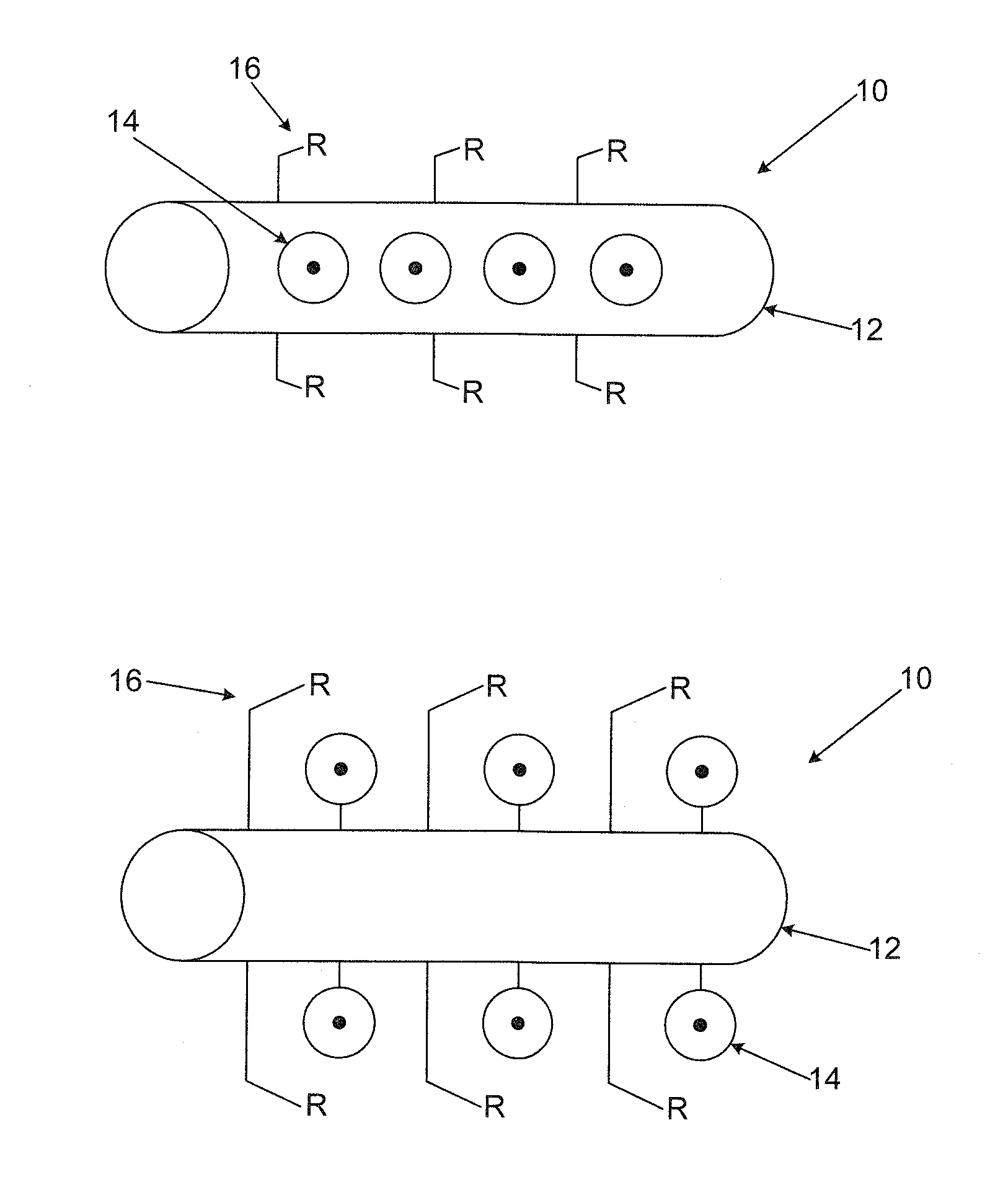
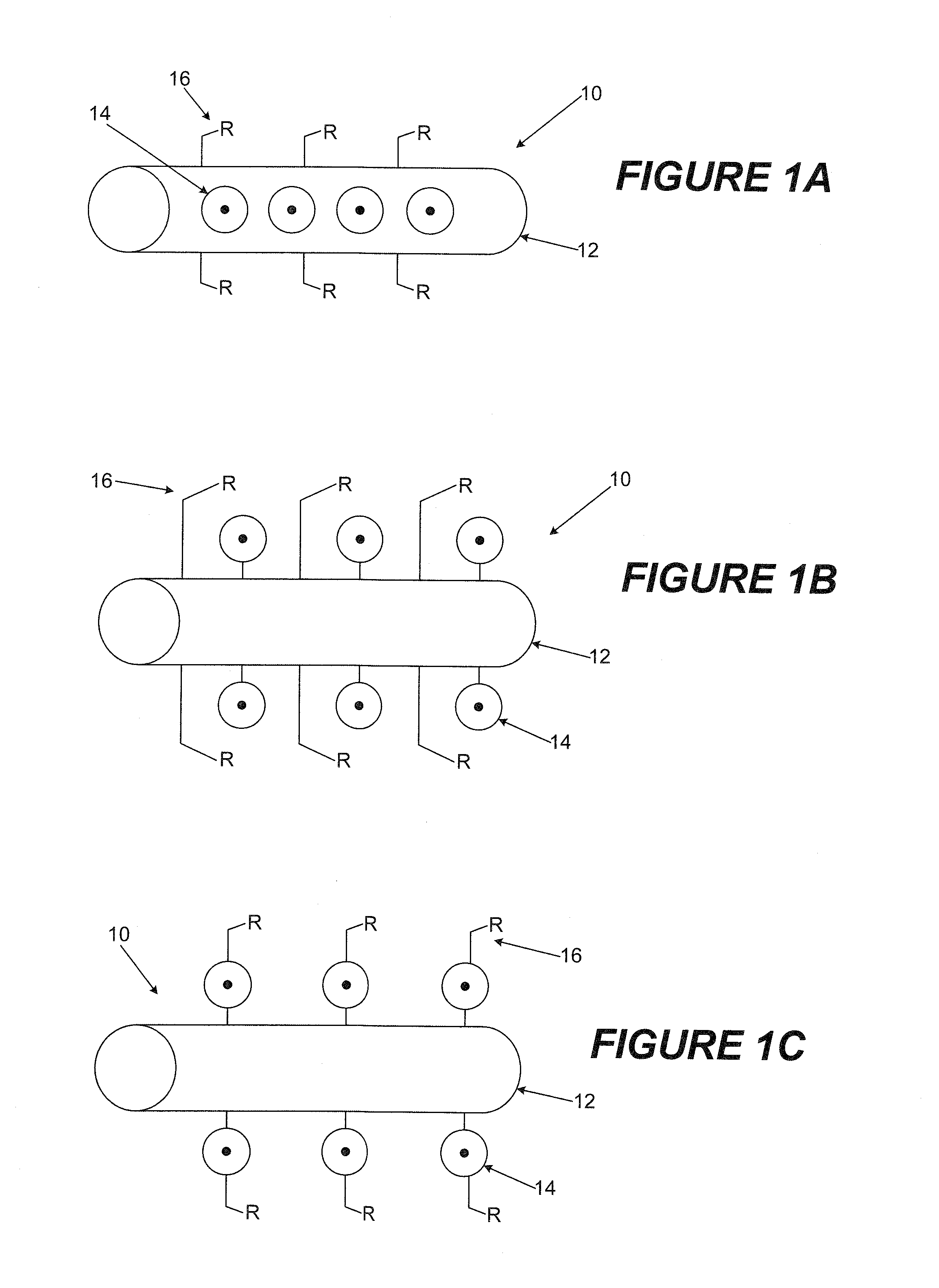
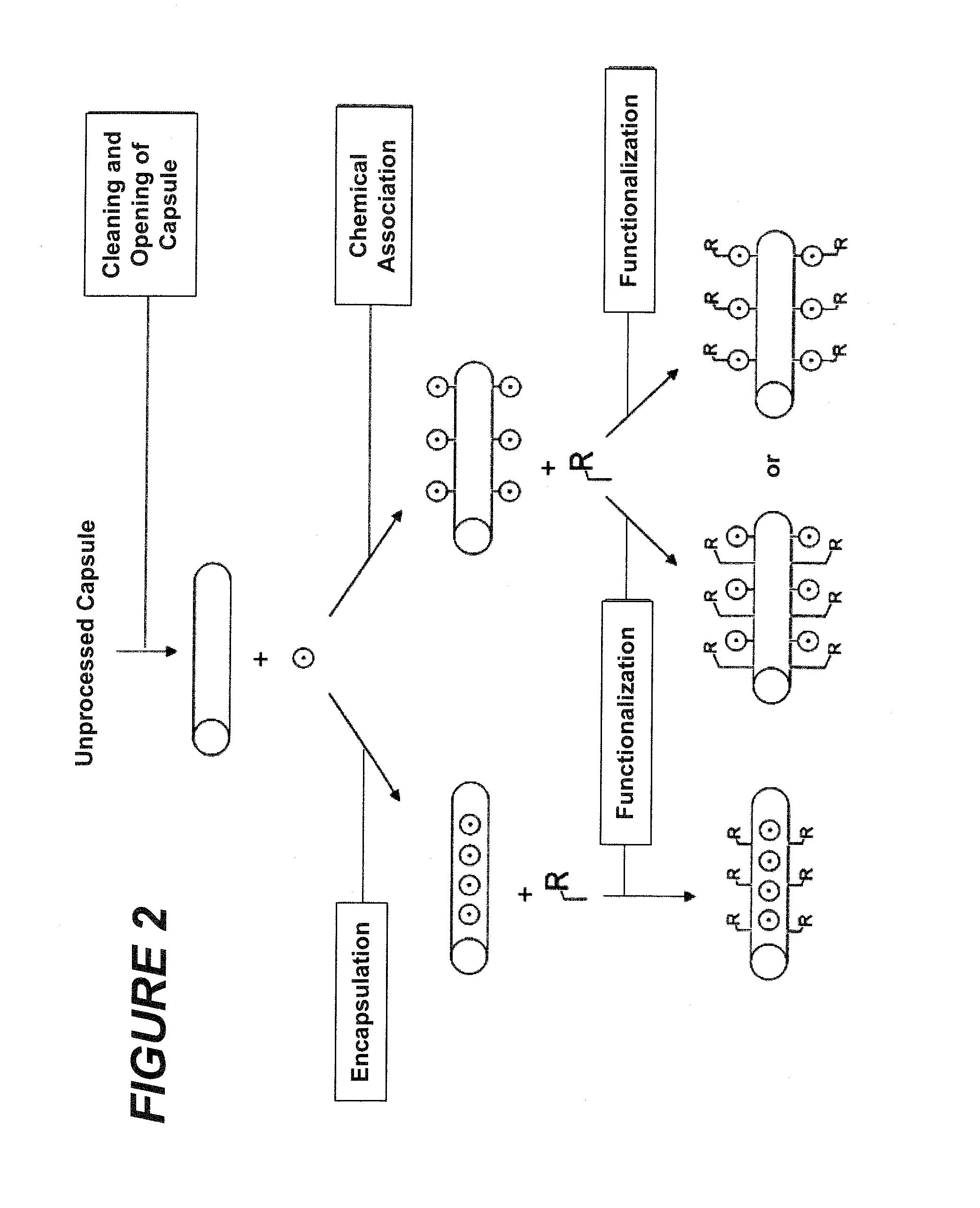
- Development of Raman scattering probes with nanometric capsules containing Raman-active molecules and functionalization chemical groups that allow for specific targeting and dispersion in liquid media, enabling strong and distinct Raman signals without the need for high concentrations of probes.

Method, structure, and apparatus for Raman spectroscopy
PatentInactiveUS7075642B2
Innovation
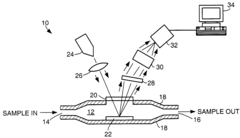
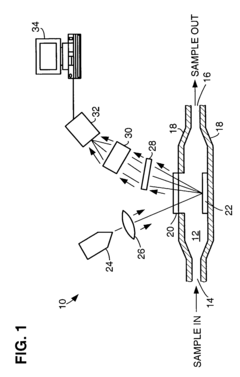
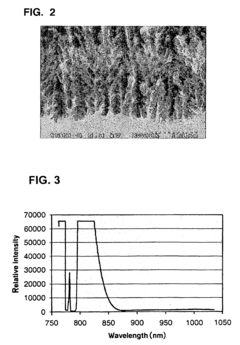
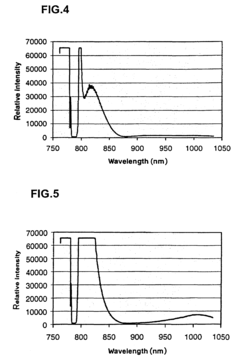
- A Raman spectroscopy apparatus utilizing a porous silicon substrate with controlled porosity and morphology, which significantly reduces background fluorescence, allowing for accurate detection of Raman signals without the need for expensive or complex equipment, and can be manufactured to various sizes.
Standardization Requirements for Spectroscopic Methods
The standardization of spectroscopic methods, particularly for infrared and Raman spectroscopy sensitivity comparisons, requires comprehensive regulatory frameworks to ensure reproducible and reliable analytical results across different laboratories and instruments. Current standardization efforts are primarily coordinated by international organizations including the International Organization for Standardization (ISO), ASTM International, and the International Union of Pure and Applied Chemistry (IUPAC), each contributing specific protocols for spectroscopic method validation and implementation.
Fundamental standardization requirements encompass instrument calibration protocols, reference material specifications, and measurement uncertainty guidelines. For infrared spectroscopy, ISO 7027 and ASTM E1131 establish baseline requirements for wavelength accuracy, photometric precision, and resolution specifications. Raman spectroscopy standardization follows ISO 24597 guidelines, which define laser power stability, spectral resolution criteria, and detector linearity requirements. These standards mandate regular calibration using certified reference materials such as polystyrene films for infrared and silicon wafers for Raman measurements.
Sample preparation standardization represents a critical component affecting sensitivity comparisons between infrared and Raman techniques. Standardized protocols must address sample thickness uniformity, surface preparation consistency, and environmental control parameters including temperature and humidity. The standards require documentation of sample handling procedures, storage conditions, and preparation timeframes to minimize variability in spectroscopic responses.
Quality assurance frameworks within spectroscopic standardization demand implementation of statistical process control methods, including control charts for instrument performance monitoring and interlaboratory comparison studies. These requirements ensure that sensitivity measurements remain within acceptable tolerance limits and provide traceability to international measurement standards. Regular proficiency testing programs validate laboratory competence in executing standardized spectroscopic methods.
Emerging standardization challenges include harmonization of data processing algorithms, establishment of universal spectral databases, and development of artificial intelligence-assisted quality control systems. Future standardization efforts must address the integration of advanced computational methods while maintaining compatibility with existing regulatory frameworks and ensuring global accessibility for diverse analytical laboratories.
Fundamental standardization requirements encompass instrument calibration protocols, reference material specifications, and measurement uncertainty guidelines. For infrared spectroscopy, ISO 7027 and ASTM E1131 establish baseline requirements for wavelength accuracy, photometric precision, and resolution specifications. Raman spectroscopy standardization follows ISO 24597 guidelines, which define laser power stability, spectral resolution criteria, and detector linearity requirements. These standards mandate regular calibration using certified reference materials such as polystyrene films for infrared and silicon wafers for Raman measurements.
Sample preparation standardization represents a critical component affecting sensitivity comparisons between infrared and Raman techniques. Standardized protocols must address sample thickness uniformity, surface preparation consistency, and environmental control parameters including temperature and humidity. The standards require documentation of sample handling procedures, storage conditions, and preparation timeframes to minimize variability in spectroscopic responses.
Quality assurance frameworks within spectroscopic standardization demand implementation of statistical process control methods, including control charts for instrument performance monitoring and interlaboratory comparison studies. These requirements ensure that sensitivity measurements remain within acceptable tolerance limits and provide traceability to international measurement standards. Regular proficiency testing programs validate laboratory competence in executing standardized spectroscopic methods.
Emerging standardization challenges include harmonization of data processing algorithms, establishment of universal spectral databases, and development of artificial intelligence-assisted quality control systems. Future standardization efforts must address the integration of advanced computational methods while maintaining compatibility with existing regulatory frameworks and ensuring global accessibility for diverse analytical laboratories.
Cost-Performance Trade-offs in Sensitivity Enhancement
The cost-performance trade-offs in sensitivity enhancement for infrared and Raman spectroscopy present distinct challenges and opportunities for analytical laboratories and industrial applications. Both techniques offer multiple pathways to improve detection limits, but each approach carries specific financial implications and performance characteristics that must be carefully evaluated.
For infrared spectroscopy, sensitivity enhancement primarily relies on advanced detector technologies and optical configurations. Cooled mercury cadmium telluride (MCT) detectors represent a significant investment, typically costing $15,000-30,000, but provide substantial sensitivity improvements over standard DTGS detectors. The performance gain justifies the cost in applications requiring trace-level detection, offering signal-to-noise ratios 10-100 times better than conventional systems.
Attenuated total reflectance (ATR) accessories present a more modest investment of $3,000-8,000 while enabling direct analysis of samples without extensive preparation. This approach balances cost efficiency with enhanced practical sensitivity for surface analysis and liquid samples, making it attractive for routine analytical workflows.
Raman spectroscopy sensitivity enhancement involves different cost structures and performance considerations. Surface-enhanced Raman spectroscopy (SERS) substrates offer dramatic sensitivity improvements, with enhancement factors reaching 10^6-10^8, but substrate costs range from $50-500 per measurement depending on the application. While individual measurement costs are high, the technique enables single-molecule detection capabilities unattainable through conventional methods.
Resonance Raman enhancement provides cost-effective sensitivity improvements when sample characteristics align with available laser wavelengths. The primary investment involves tunable laser systems costing $50,000-150,000, but operational costs remain relatively low while achieving enhancement factors of 10^2-10^4 for appropriate analytes.
Advanced CCD and EMCCD detectors for Raman systems require investments of $20,000-80,000 but deliver consistent sensitivity improvements across all applications without consumable costs. The long-term cost-effectiveness makes this approach particularly attractive for high-throughput laboratories where amortization over numerous measurements justifies the initial investment.
The optimal cost-performance balance depends heavily on application requirements, sample throughput, and detection limit specifications. Organizations must evaluate both capital expenditure and operational costs when selecting sensitivity enhancement strategies for their specific analytical needs.
For infrared spectroscopy, sensitivity enhancement primarily relies on advanced detector technologies and optical configurations. Cooled mercury cadmium telluride (MCT) detectors represent a significant investment, typically costing $15,000-30,000, but provide substantial sensitivity improvements over standard DTGS detectors. The performance gain justifies the cost in applications requiring trace-level detection, offering signal-to-noise ratios 10-100 times better than conventional systems.
Attenuated total reflectance (ATR) accessories present a more modest investment of $3,000-8,000 while enabling direct analysis of samples without extensive preparation. This approach balances cost efficiency with enhanced practical sensitivity for surface analysis and liquid samples, making it attractive for routine analytical workflows.
Raman spectroscopy sensitivity enhancement involves different cost structures and performance considerations. Surface-enhanced Raman spectroscopy (SERS) substrates offer dramatic sensitivity improvements, with enhancement factors reaching 10^6-10^8, but substrate costs range from $50-500 per measurement depending on the application. While individual measurement costs are high, the technique enables single-molecule detection capabilities unattainable through conventional methods.
Resonance Raman enhancement provides cost-effective sensitivity improvements when sample characteristics align with available laser wavelengths. The primary investment involves tunable laser systems costing $50,000-150,000, but operational costs remain relatively low while achieving enhancement factors of 10^2-10^4 for appropriate analytes.
Advanced CCD and EMCCD detectors for Raman systems require investments of $20,000-80,000 but deliver consistent sensitivity improvements across all applications without consumable costs. The long-term cost-effectiveness makes this approach particularly attractive for high-throughput laboratories where amortization over numerous measurements justifies the initial investment.
The optimal cost-performance balance depends heavily on application requirements, sample throughput, and detection limit specifications. Organizations must evaluate both capital expenditure and operational costs when selecting sensitivity enhancement strategies for their specific analytical needs.
Unlock deeper insights with Patsnap Eureka Quick Research — get a full tech report to explore trends and direct your research. Try now!
Generate Your Research Report Instantly with AI Agent
Supercharge your innovation with Patsnap Eureka AI Agent Platform!