

Innovative Practices for Machining Compacted Graphite Iron
APR 2, 20268 MIN READ
Generate Your Research Report Instantly with AI Agent
PatSnap Eureka helps you evaluate technical feasibility & market potential.
CGI Machining Technology Background and Objectives
Compacted Graphite Iron (CGI) represents a significant advancement in cast iron metallurgy, emerging in the 1970s as an engineered material that bridges the gap between conventional gray cast iron and ductile iron. This unique material features a distinctive graphite morphology characterized by interconnected, vermicular-shaped graphite particles that provide superior mechanical properties compared to traditional gray iron while maintaining excellent thermal conductivity and vibration damping characteristics.
The development of CGI technology was driven by the automotive industry's increasing demands for lightweight, high-performance engine components capable of withstanding higher combustion pressures and temperatures. Unlike gray iron's flake graphite structure or ductile iron's spheroidal graphite, CGI's compacted graphite morphology delivers enhanced tensile strength, fatigue resistance, and thermal shock resistance, making it particularly suitable for diesel engine blocks, cylinder heads, and exhaust manifolds.
However, these advantageous material properties present significant machining challenges that have historically limited CGI's widespread adoption. The interconnected graphite structure, while beneficial for mechanical performance, creates substantial difficulties during cutting operations, including rapid tool wear, poor surface finish quality, and inconsistent dimensional accuracy. Traditional machining approaches developed for gray iron prove inadequate when applied to CGI, necessitating innovative manufacturing strategies.
The primary objective of advancing CGI machining technology centers on developing comprehensive solutions that enable efficient, cost-effective production of high-precision components. This encompasses optimizing cutting tool materials and geometries specifically for CGI's unique microstructure, establishing appropriate cutting parameters that balance productivity with tool life, and implementing advanced cooling and lubrication strategies to manage the challenging thermal conditions generated during machining.
Furthermore, the technology aims to achieve consistent surface integrity and dimensional precision required for critical automotive applications, particularly in engine components where tight tolerances and superior surface quality directly impact performance and durability. The ultimate goal involves establishing standardized machining practices that enable manufacturers to fully exploit CGI's material advantages while maintaining economically viable production processes, thereby accelerating the material's adoption across various industrial applications beyond automotive sectors.
The development of CGI technology was driven by the automotive industry's increasing demands for lightweight, high-performance engine components capable of withstanding higher combustion pressures and temperatures. Unlike gray iron's flake graphite structure or ductile iron's spheroidal graphite, CGI's compacted graphite morphology delivers enhanced tensile strength, fatigue resistance, and thermal shock resistance, making it particularly suitable for diesel engine blocks, cylinder heads, and exhaust manifolds.
However, these advantageous material properties present significant machining challenges that have historically limited CGI's widespread adoption. The interconnected graphite structure, while beneficial for mechanical performance, creates substantial difficulties during cutting operations, including rapid tool wear, poor surface finish quality, and inconsistent dimensional accuracy. Traditional machining approaches developed for gray iron prove inadequate when applied to CGI, necessitating innovative manufacturing strategies.
The primary objective of advancing CGI machining technology centers on developing comprehensive solutions that enable efficient, cost-effective production of high-precision components. This encompasses optimizing cutting tool materials and geometries specifically for CGI's unique microstructure, establishing appropriate cutting parameters that balance productivity with tool life, and implementing advanced cooling and lubrication strategies to manage the challenging thermal conditions generated during machining.
Furthermore, the technology aims to achieve consistent surface integrity and dimensional precision required for critical automotive applications, particularly in engine components where tight tolerances and superior surface quality directly impact performance and durability. The ultimate goal involves establishing standardized machining practices that enable manufacturers to fully exploit CGI's material advantages while maintaining economically viable production processes, thereby accelerating the material's adoption across various industrial applications beyond automotive sectors.
Market Demand for CGI Component Manufacturing
The automotive industry represents the largest consumer segment for compacted graphite iron components, driven by stringent emission regulations and fuel efficiency requirements. Engine manufacturers increasingly specify CGI for cylinder blocks, cylinder heads, and exhaust manifolds due to its superior thermal conductivity and mechanical properties compared to conventional gray iron. The material's ability to withstand higher combustion pressures enables downsized, turbocharged engines that meet modern performance and environmental standards.
Heavy-duty commercial vehicle applications constitute another significant demand driver, particularly for diesel engine components operating under extreme thermal and mechanical stress conditions. CGI's enhanced fatigue resistance and thermal shock tolerance make it ideal for truck and marine engine applications where durability and reliability are paramount. The growing global freight transportation sector continues to fuel demand for robust engine components manufactured from CGI.
Industrial machinery and equipment sectors demonstrate increasing adoption of CGI components, especially in applications requiring dimensional stability under thermal cycling. Compressor housings, pump bodies, and hydraulic components benefit from CGI's reduced thermal expansion characteristics and improved machinability compared to ductile iron alternatives. The renewable energy sector, particularly wind turbine applications, has emerged as a notable growth area for large CGI castings.
The market demand exhibits strong regional variations, with European automotive manufacturers leading CGI adoption due to advanced emission standards and engineering expertise. North American markets show growing interest driven by fuel economy regulations, while Asian markets present significant growth potential as local manufacturers upgrade their material specifications to meet international quality standards.
Manufacturing complexity and specialized machining requirements create both opportunities and challenges for component suppliers. The need for advanced cutting tools, optimized machining parameters, and skilled workforce development drives demand for comprehensive manufacturing solutions rather than simple material substitution. This trend favors suppliers capable of providing integrated engineering and production services.
Supply chain considerations increasingly influence demand patterns, as manufacturers seek reliable sources of high-quality CGI castings with consistent mechanical properties. The limited number of foundries capable of producing premium-grade CGI creates supply constraints that affect market dynamics and pricing structures across different application segments.
Heavy-duty commercial vehicle applications constitute another significant demand driver, particularly for diesel engine components operating under extreme thermal and mechanical stress conditions. CGI's enhanced fatigue resistance and thermal shock tolerance make it ideal for truck and marine engine applications where durability and reliability are paramount. The growing global freight transportation sector continues to fuel demand for robust engine components manufactured from CGI.
Industrial machinery and equipment sectors demonstrate increasing adoption of CGI components, especially in applications requiring dimensional stability under thermal cycling. Compressor housings, pump bodies, and hydraulic components benefit from CGI's reduced thermal expansion characteristics and improved machinability compared to ductile iron alternatives. The renewable energy sector, particularly wind turbine applications, has emerged as a notable growth area for large CGI castings.
The market demand exhibits strong regional variations, with European automotive manufacturers leading CGI adoption due to advanced emission standards and engineering expertise. North American markets show growing interest driven by fuel economy regulations, while Asian markets present significant growth potential as local manufacturers upgrade their material specifications to meet international quality standards.
Manufacturing complexity and specialized machining requirements create both opportunities and challenges for component suppliers. The need for advanced cutting tools, optimized machining parameters, and skilled workforce development drives demand for comprehensive manufacturing solutions rather than simple material substitution. This trend favors suppliers capable of providing integrated engineering and production services.
Supply chain considerations increasingly influence demand patterns, as manufacturers seek reliable sources of high-quality CGI castings with consistent mechanical properties. The limited number of foundries capable of producing premium-grade CGI creates supply constraints that affect market dynamics and pricing structures across different application segments.
Current CGI Machining Challenges and Technical Barriers
Compacted Graphite Iron (CGI) presents unique machining challenges that significantly impact manufacturing efficiency and tool performance. The material's distinctive microstructure, characterized by vermicular graphite particles interconnected in a coral-like formation, creates substantial difficulties during cutting operations. Unlike gray cast iron with flake graphite or ductile iron with spheroidal graphite, CGI's intermediate structure combines the thermal conductivity benefits of gray iron with the mechanical strength of ductile iron, but at the cost of increased machinability complexity.
Tool wear represents the most critical challenge in CGI machining operations. The material's abrasive nature, combined with its tendency to work-harden during cutting, accelerates tool degradation through multiple wear mechanisms. Crater wear, flank wear, and built-up edge formation occur simultaneously, leading to rapid tool failure and frequent replacements. The graphite particles, while providing some lubrication, cannot offset the material's inherent hardness and the presence of hard carbide phases that act as abrasive elements.
Heat generation during CGI machining creates thermal barriers that limit cutting speeds and feed rates. The material's thermal properties, while superior to ductile iron, still result in elevated cutting temperatures that promote tool wear and workpiece distortion. Inadequate heat dissipation leads to thermal cycling effects that cause tool edge chipping and premature failure, particularly in interrupted cutting operations common in engine block and cylinder head manufacturing.
Surface integrity issues pose significant technical barriers in CGI machining. Achieving required surface finish specifications becomes challenging due to the material's tendency to produce torn surfaces and micro-cracks. The heterogeneous microstructure creates inconsistent cutting forces, resulting in surface roughness variations that affect component performance, particularly in critical applications like engine cylinders where surface quality directly impacts sealing and wear characteristics.
Chip formation and evacuation present additional complications in CGI machining processes. The material produces segmented chips that can cause cutting tool damage and workpiece surface defects. Poor chip control leads to chip welding, re-cutting phenomena, and increased cutting forces, further exacerbating tool wear issues and reducing machining stability.
Cutting parameter optimization remains a persistent challenge due to CGI's narrow processing window. The balance between productivity and tool life requires precise control of cutting speed, feed rate, and depth of cut. Traditional machining parameters developed for gray or ductile iron prove inadequate for CGI, necessitating specialized approaches and extensive process development efforts that increase manufacturing costs and complexity.
Tool wear represents the most critical challenge in CGI machining operations. The material's abrasive nature, combined with its tendency to work-harden during cutting, accelerates tool degradation through multiple wear mechanisms. Crater wear, flank wear, and built-up edge formation occur simultaneously, leading to rapid tool failure and frequent replacements. The graphite particles, while providing some lubrication, cannot offset the material's inherent hardness and the presence of hard carbide phases that act as abrasive elements.
Heat generation during CGI machining creates thermal barriers that limit cutting speeds and feed rates. The material's thermal properties, while superior to ductile iron, still result in elevated cutting temperatures that promote tool wear and workpiece distortion. Inadequate heat dissipation leads to thermal cycling effects that cause tool edge chipping and premature failure, particularly in interrupted cutting operations common in engine block and cylinder head manufacturing.
Surface integrity issues pose significant technical barriers in CGI machining. Achieving required surface finish specifications becomes challenging due to the material's tendency to produce torn surfaces and micro-cracks. The heterogeneous microstructure creates inconsistent cutting forces, resulting in surface roughness variations that affect component performance, particularly in critical applications like engine cylinders where surface quality directly impacts sealing and wear characteristics.
Chip formation and evacuation present additional complications in CGI machining processes. The material produces segmented chips that can cause cutting tool damage and workpiece surface defects. Poor chip control leads to chip welding, re-cutting phenomena, and increased cutting forces, further exacerbating tool wear issues and reducing machining stability.
Cutting parameter optimization remains a persistent challenge due to CGI's narrow processing window. The balance between productivity and tool life requires precise control of cutting speed, feed rate, and depth of cut. Traditional machining parameters developed for gray or ductile iron prove inadequate for CGI, necessitating specialized approaches and extensive process development efforts that increase manufacturing costs and complexity.
Existing CGI Machining Solutions and Methodologies
01 Inoculation methods and compositions for producing compacted graphite iron
Various inoculation methods and compositions are used to produce compacted graphite iron with desired graphite morphology. These methods involve adding specific inoculants containing elements such as magnesium, rare earth metals, calcium, and other alloying elements to molten iron. The inoculation process controls the graphite shape to achieve the compacted or vermicular form, which provides superior mechanical properties compared to gray iron while maintaining good castability and thermal conductivity.- Inoculation methods and compositions for producing compacted graphite iron: Various inoculation methods and compositions are used to produce compacted graphite iron with desired graphite morphology. These methods involve adding specific inoculants containing elements such as magnesium, rare earth metals, and other alloying elements to molten iron. The inoculation process controls the nucleation and growth of graphite particles, resulting in a compacted or vermicular graphite structure rather than flake or spheroidal forms. Proper inoculation techniques are critical for achieving the mechanical properties and microstructure characteristics of compacted graphite iron.
- Alloy composition and chemical control for compacted graphite iron production: The chemical composition of the base iron and alloying elements plays a crucial role in producing compacted graphite iron. Specific ranges of carbon, silicon, and trace elements must be carefully controlled to achieve the desired graphite morphology. The balance between graphitizing and carbide-forming elements, along with precise control of sulfur and oxygen content, determines whether the graphite forms in a compacted structure. Advanced composition control methods ensure consistent production of compacted graphite iron with predictable properties.
- Heat treatment processes for compacted graphite iron: Heat treatment processes are applied to compacted graphite iron to optimize its mechanical properties and microstructure. These processes include annealing, normalizing, and austempering treatments that modify the matrix structure while maintaining the compacted graphite morphology. The heat treatment parameters such as temperature, holding time, and cooling rate are carefully controlled to achieve desired hardness, strength, and ductility. These thermal processes can significantly enhance the performance characteristics of compacted graphite iron components.
- Manufacturing methods and casting techniques for compacted graphite iron: Specialized manufacturing and casting techniques are employed to produce compacted graphite iron components with consistent quality. These methods include mold design considerations, pouring practices, and solidification control to ensure proper graphite formation throughout the casting. Process parameters such as pouring temperature, cooling rate, and mold materials are optimized to prevent defects and achieve uniform compacted graphite structure. Advanced manufacturing techniques enable the production of complex-shaped components with reliable mechanical properties.
- Applications and performance characteristics of compacted graphite iron: Compacted graphite iron exhibits unique properties that make it suitable for various industrial applications, particularly in automotive and engine components. The material combines high strength, good thermal conductivity, and excellent damping capacity due to its distinctive graphite morphology. These characteristics provide advantages over both gray iron and ductile iron in specific applications. The compacted graphite structure offers improved mechanical properties compared to flake graphite iron while maintaining better castability and machinability than spheroidal graphite iron.
02 Alloy composition and chemical control for compacted graphite iron
The chemical composition of compacted graphite iron is carefully controlled to achieve the desired microstructure and properties. This includes precise control of carbon, silicon, manganese, sulfur, and trace elements. The balance of these elements, particularly the carbon equivalent and the ratio of various alloying elements, is critical for obtaining the compacted graphite structure. Specific compositional ranges and ratios are maintained to ensure consistent production of high-quality compacted graphite iron with optimal mechanical and thermal properties.Expand Specific Solutions03 Treatment processes and casting methods for compacted graphite iron
Specialized treatment processes and casting methods are employed to manufacture compacted graphite iron components. These include ladle treatment techniques, mold design considerations, and controlled cooling procedures. The treatment process often involves sequential addition of modifying agents and careful control of processing temperatures and times. Advanced casting methods ensure uniform distribution of the compacted graphite structure throughout the casting, minimizing defects and achieving consistent mechanical properties in the final product.Expand Specific Solutions04 Quality control and microstructure analysis of compacted graphite iron
Quality control methods and microstructure analysis techniques are essential for ensuring the production of compacted graphite iron with specified properties. These include metallographic examination to verify graphite morphology, measurement of nodularity and compactness percentages, and mechanical testing. Advanced analytical methods are used to assess the degree of graphite compaction and to distinguish between different graphite forms. These quality control measures ensure that the final product meets the required specifications for specific applications.Expand Specific Solutions05 Applications and performance optimization of compacted graphite iron
Compacted graphite iron is utilized in various industrial applications where its unique combination of properties is advantageous. These applications include engine blocks, cylinder heads, brake components, and other automotive parts requiring high strength, good thermal conductivity, and excellent damping capacity. Performance optimization involves tailoring the microstructure and properties to specific application requirements through controlled processing parameters. The material offers improved performance over gray iron in terms of strength and stiffness while maintaining better castability and machinability compared to ductile iron.Expand Specific Solutions
Key Players in CGI Machining and Tooling Industry
The innovative practices for machining compacted graphite iron (CGI) represent a rapidly evolving technological landscape driven by automotive industry demands for lightweight, high-performance engine components. The market is experiencing significant growth, particularly in diesel engine applications, with the technology transitioning from early adoption to mainstream implementation. Key players demonstrate varying levels of technological maturity: SinterCast AB leads in process control technology, while automotive manufacturers like Toyota Motor Corp., Hyundai Motor Co., and Volvo Lastvagnar AB drive application development. Material specialists including Sandvik Intellectual Property AB and Höganäs AB advance cutting tool solutions, while foundries such as Tupy SA and Zanardi Fonderie SpA focus on production optimization. Research institutions like Chongqing University contribute fundamental knowledge, indicating a collaborative ecosystem spanning the entire value chain from basic research to commercial production.
Sandvik Intellectual Property AB
Technical Solution: Sandvik has developed advanced cutting tool technologies specifically for compacted graphite iron (CGI) machining, including specialized carbide grades and coatings. Their solutions feature optimized geometries with sharp cutting edges and positive rake angles to minimize cutting forces. The company employs PVD coatings like TiAlN and AlCrN to enhance tool life and reduce adhesion. Their machining approach emphasizes controlled cutting parameters with moderate speeds and feeds, combined with effective coolant strategies to manage the abrasive nature of CGI. Sandvik's tools incorporate chip breaker designs that handle the unique chip formation characteristics of CGI, which produces shorter, more broken chips compared to gray iron.
Strengths: Industry-leading cutting tool technology with proven CGI-specific solutions, extensive R&D capabilities. Weaknesses: High tool costs, dependency on premium tooling solutions.
Scania CV AB
Technical Solution: Scania has developed specialized machining protocols for CGI components in heavy-duty diesel engines, focusing on cylinder block and head manufacturing. Their innovative approach includes the use of minimum quantity lubrication (MQL) systems combined with high-pressure coolant delivery to manage the thermal challenges of CGI machining. Scania employs adaptive machining strategies that adjust cutting parameters based on real-time force and vibration monitoring. The company utilizes advanced workholding systems with enhanced clamping force distribution to minimize part distortion during machining. Their process includes specialized surface treatment techniques applied immediately after machining to optimize the surface integrity of CGI components, ensuring proper sealing and durability in demanding heavy-duty applications.
Strengths: Heavy-duty application expertise, robust manufacturing processes, strong focus on durability. Weaknesses: Limited to commercial vehicle applications, conservative approach to new technologies.
Core Innovations in CGI Cutting Tool Technologies
Method for manufacturing mechanical components made of compacted graphite iron or gray cast iron
PatentInactiveEP3325674A1
Innovation
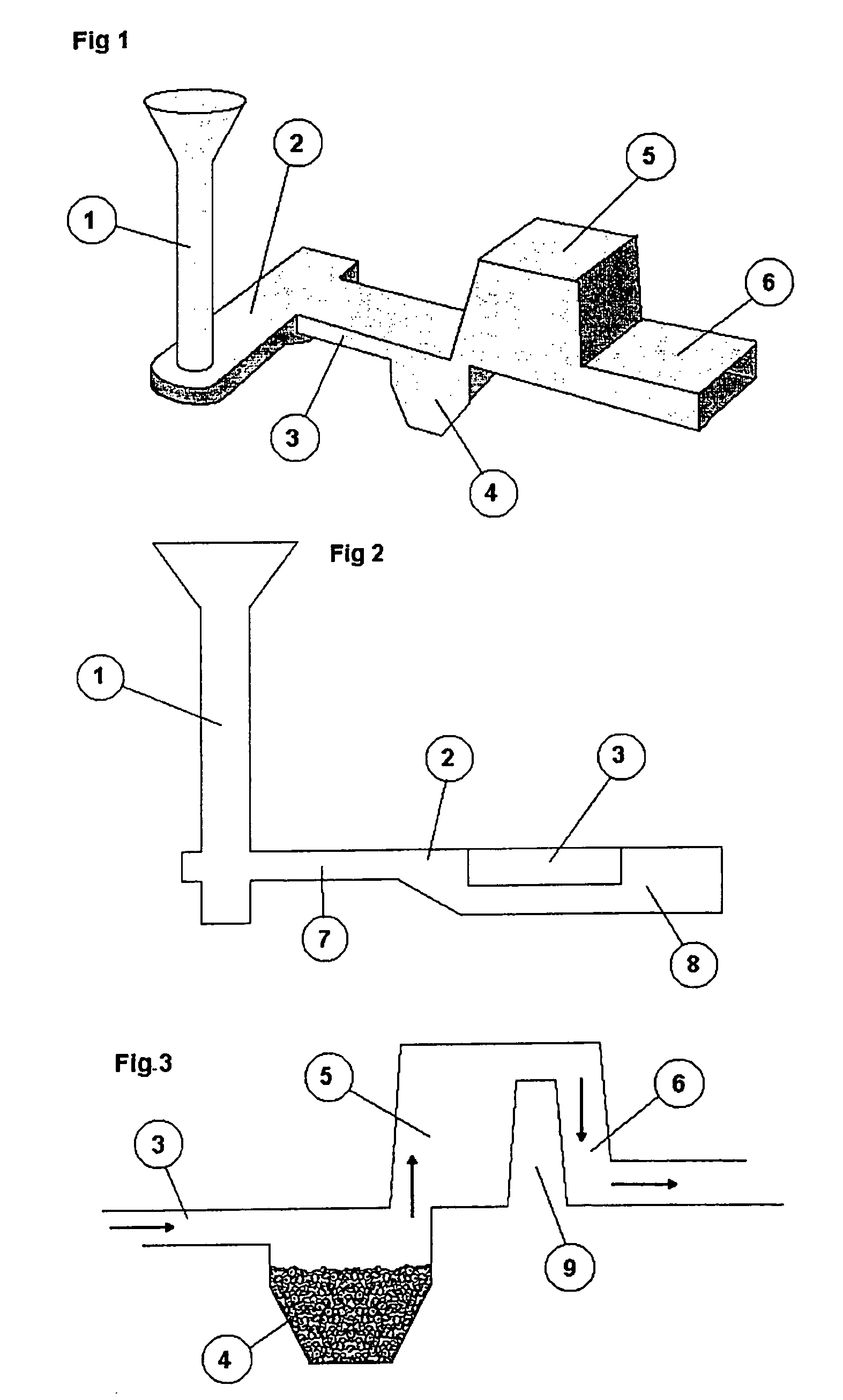
- A method involving casting with a predominantly ferritic structure, followed by partial austenitization and isothermal hardening in a molten salt bath to achieve a pearlitic-ferritic or perferritic matrix with a high ferrite percentage, stabilizing the microstructure up to 550-600°C.
Process for Production of Compacted Graphite Iron
PatentInactiveUS20090183848A1
Innovation
- Adjusting the cerium level based on sulphur content and adding cerium to the oven or ladle, while using a magnesium alloy with lanthanum in the mould to minimize magnesium addition and reduce defects, with a treatment alloy composition of 3-6% magnesium and 0.5-1.5% lanthanum, and optionally including cerium alloy with rare earth elements.
Environmental Impact of CGI Machining Processes
The machining of Compacted Graphite Iron presents significant environmental challenges that require comprehensive assessment and mitigation strategies. Traditional CGI machining processes generate substantial amounts of metallic waste, including chips and swarf that contain graphite particles. These materials pose unique disposal challenges due to their composite nature, requiring specialized handling protocols to prevent environmental contamination.
Cutting fluid management represents one of the most critical environmental concerns in CGI machining operations. The abrasive nature of compacted graphite accelerates cutting fluid degradation, leading to increased consumption rates and more frequent disposal cycles. Contaminated coolants often contain suspended graphite particles and metallic debris, creating complex waste streams that demand specialized treatment before disposal. The frequent replacement of cutting fluids significantly increases the environmental footprint of CGI machining operations.
Air quality management during CGI machining requires particular attention due to the generation of fine graphite particles and metallic dust. These airborne contaminants can pose respiratory hazards to workers and contribute to atmospheric pollution if not properly controlled. Advanced filtration systems and enclosed machining environments have become essential for maintaining acceptable air quality standards while processing CGI materials.
Energy consumption patterns in CGI machining typically exceed those of conventional cast iron due to increased cutting forces and extended machining times. The harder matrix structure of CGI requires higher spindle speeds and feed rates, resulting in elevated power consumption throughout the manufacturing process. This increased energy demand directly correlates with higher carbon emissions and operational costs.
Waste heat generation during CGI machining operations contributes to facility cooling requirements and overall energy consumption. The thermal management challenges associated with CGI processing often necessitate enhanced cooling systems, further increasing the environmental impact of manufacturing operations.
Recent developments in sustainable machining practices have focused on implementing closed-loop coolant systems and advanced chip recycling technologies specifically designed for CGI materials. These innovations aim to minimize waste generation while maintaining machining performance standards, representing crucial steps toward environmentally responsible CGI manufacturing processes.
Cutting fluid management represents one of the most critical environmental concerns in CGI machining operations. The abrasive nature of compacted graphite accelerates cutting fluid degradation, leading to increased consumption rates and more frequent disposal cycles. Contaminated coolants often contain suspended graphite particles and metallic debris, creating complex waste streams that demand specialized treatment before disposal. The frequent replacement of cutting fluids significantly increases the environmental footprint of CGI machining operations.
Air quality management during CGI machining requires particular attention due to the generation of fine graphite particles and metallic dust. These airborne contaminants can pose respiratory hazards to workers and contribute to atmospheric pollution if not properly controlled. Advanced filtration systems and enclosed machining environments have become essential for maintaining acceptable air quality standards while processing CGI materials.
Energy consumption patterns in CGI machining typically exceed those of conventional cast iron due to increased cutting forces and extended machining times. The harder matrix structure of CGI requires higher spindle speeds and feed rates, resulting in elevated power consumption throughout the manufacturing process. This increased energy demand directly correlates with higher carbon emissions and operational costs.
Waste heat generation during CGI machining operations contributes to facility cooling requirements and overall energy consumption. The thermal management challenges associated with CGI processing often necessitate enhanced cooling systems, further increasing the environmental impact of manufacturing operations.
Recent developments in sustainable machining practices have focused on implementing closed-loop coolant systems and advanced chip recycling technologies specifically designed for CGI materials. These innovations aim to minimize waste generation while maintaining machining performance standards, representing crucial steps toward environmentally responsible CGI manufacturing processes.
Quality Standards for CGI Machined Components
Quality standards for CGI machined components represent a critical framework that ensures the reliability and performance of compacted graphite iron parts across diverse industrial applications. These standards encompass dimensional accuracy, surface finish requirements, mechanical property verification, and structural integrity assessments that must be maintained throughout the manufacturing process.
Dimensional tolerance specifications for CGI components typically adhere to ISO 8062 standards, with achievable tolerances ranging from CT8 to CT10 depending on the machining process employed. Surface roughness parameters are governed by ISO 4287 standards, where Ra values between 0.8 to 3.2 μm are commonly specified for critical functional surfaces. These requirements demand precise control of cutting parameters and tool geometry to prevent surface defects such as graphite smearing or matrix tearing.
Mechanical property standards focus on maintaining the inherent characteristics of CGI material post-machining. Tensile strength retention must remain within 95-98% of the as-cast properties, while fatigue strength preservation is crucial for automotive and heavy machinery applications. Hardness uniformity across machined surfaces should not deviate more than ±10 HB from specified values, ensuring consistent wear resistance and load-bearing capacity.
Microstructural integrity standards require verification through metallographic examination to confirm that machining operations have not induced subsurface damage or altered the graphite morphology. The vermicular graphite structure must maintain its characteristic shape factor above 0.2, with nodularity levels below 20% to preserve the material's unique thermal and mechanical properties.
Quality control protocols incorporate advanced inspection techniques including coordinate measuring machines for dimensional verification, surface profilometry for finish assessment, and ultrasonic testing for internal defect detection. Statistical process control methods ensure consistent adherence to these standards throughout production runs, with capability indices typically maintained above 1.33 for critical parameters.
Dimensional tolerance specifications for CGI components typically adhere to ISO 8062 standards, with achievable tolerances ranging from CT8 to CT10 depending on the machining process employed. Surface roughness parameters are governed by ISO 4287 standards, where Ra values between 0.8 to 3.2 μm are commonly specified for critical functional surfaces. These requirements demand precise control of cutting parameters and tool geometry to prevent surface defects such as graphite smearing or matrix tearing.
Mechanical property standards focus on maintaining the inherent characteristics of CGI material post-machining. Tensile strength retention must remain within 95-98% of the as-cast properties, while fatigue strength preservation is crucial for automotive and heavy machinery applications. Hardness uniformity across machined surfaces should not deviate more than ±10 HB from specified values, ensuring consistent wear resistance and load-bearing capacity.
Microstructural integrity standards require verification through metallographic examination to confirm that machining operations have not induced subsurface damage or altered the graphite morphology. The vermicular graphite structure must maintain its characteristic shape factor above 0.2, with nodularity levels below 20% to preserve the material's unique thermal and mechanical properties.
Quality control protocols incorporate advanced inspection techniques including coordinate measuring machines for dimensional verification, surface profilometry for finish assessment, and ultrasonic testing for internal defect detection. Statistical process control methods ensure consistent adherence to these standards throughout production runs, with capability indices typically maintained above 1.33 for critical parameters.
Unlock deeper insights with PatSnap Eureka Quick Research — get a full tech report to explore trends and direct your research. Try now!
Generate Your Research Report Instantly with AI Agent
Supercharge your innovation with PatSnap Eureka AI Agent Platform!