

Investigate Compact Solutions for Haptic Feedback in Portable Tech
JAN 12, 20269 MIN READ
Generate Your Research Report Instantly with AI Agent
PatSnap Eureka helps you evaluate technical feasibility & market potential.
Haptic Feedback Technology Background and Objectives
Haptic feedback technology has evolved significantly since its early implementations in arcade gaming and industrial control systems during the 1970s. The fundamental principle involves creating tactile sensations through mechanical stimulation, enabling users to receive physical responses from digital interactions. Early systems relied on bulky electromagnetic actuators and pneumatic mechanisms, which were impractical for portable applications. The miniaturization revolution in consumer electronics during the 1990s catalyzed the development of compact vibration motors, initially appearing in mobile phones as simple notification alerts. This marked the beginning of haptic integration into everyday portable devices.
The technological landscape shifted dramatically with the introduction of piezoelectric actuators and linear resonant actuators in the early 2000s. These innovations enabled more precise and nuanced tactile feedback while significantly reducing power consumption and physical footprint. The smartphone revolution further accelerated development, as touchscreen interfaces created demand for sophisticated haptic responses that could simulate physical button presses and texture sensations. Modern portable devices now incorporate advanced haptic systems in wearables, gaming controllers, virtual reality headsets, and medical devices, demonstrating the technology's expanding application scope.
Current objectives in compact haptic solutions focus on achieving higher fidelity feedback within increasingly constrained spatial and power budgets. Primary goals include developing actuators that deliver broader frequency ranges and stronger force outputs while maintaining minimal thickness profiles suitable for ultra-thin devices. Energy efficiency remains critical, as haptic systems must operate without significantly impacting battery life in portable applications. Additionally, there is growing emphasis on creating localized multi-point haptic arrays that can generate spatially distinct sensations across device surfaces, enhancing user experience in gaming, navigation, and accessibility applications.
The convergence of haptic technology with emerging fields such as flexible electronics, augmented reality, and Internet of Things devices presents new challenges and opportunities. Research efforts aim to develop solutions that can conform to curved surfaces, operate reliably under various environmental conditions, and integrate seamlessly with other sensory feedback systems. These objectives drive innovation toward next-generation compact haptic solutions that will redefine human-device interaction paradigms in portable technology ecosystems.
The technological landscape shifted dramatically with the introduction of piezoelectric actuators and linear resonant actuators in the early 2000s. These innovations enabled more precise and nuanced tactile feedback while significantly reducing power consumption and physical footprint. The smartphone revolution further accelerated development, as touchscreen interfaces created demand for sophisticated haptic responses that could simulate physical button presses and texture sensations. Modern portable devices now incorporate advanced haptic systems in wearables, gaming controllers, virtual reality headsets, and medical devices, demonstrating the technology's expanding application scope.
Current objectives in compact haptic solutions focus on achieving higher fidelity feedback within increasingly constrained spatial and power budgets. Primary goals include developing actuators that deliver broader frequency ranges and stronger force outputs while maintaining minimal thickness profiles suitable for ultra-thin devices. Energy efficiency remains critical, as haptic systems must operate without significantly impacting battery life in portable applications. Additionally, there is growing emphasis on creating localized multi-point haptic arrays that can generate spatially distinct sensations across device surfaces, enhancing user experience in gaming, navigation, and accessibility applications.
The convergence of haptic technology with emerging fields such as flexible electronics, augmented reality, and Internet of Things devices presents new challenges and opportunities. Research efforts aim to develop solutions that can conform to curved surfaces, operate reliably under various environmental conditions, and integrate seamlessly with other sensory feedback systems. These objectives drive innovation toward next-generation compact haptic solutions that will redefine human-device interaction paradigms in portable technology ecosystems.
Market Demand for Portable Haptic Devices
The portable haptics market is experiencing robust expansion driven by the proliferation of smartphones, wearables, gaming controllers, and augmented reality devices. Consumer expectations for immersive and intuitive interactions have elevated haptic feedback from a luxury feature to a fundamental requirement in portable technology. This shift is particularly evident in the gaming and mobile entertainment sectors, where tactile sensations significantly enhance user engagement and realism.
Wearable devices represent a rapidly growing segment within the portable haptics landscape. Smartwatches and fitness trackers increasingly incorporate haptic alerts for notifications, health monitoring, and navigation guidance. The demand for subtle yet effective feedback mechanisms in these compact form factors has intensified, as users seek devices that communicate information discreetly without visual or auditory interruptions. This trend extends to medical wearables, where haptic cues can provide critical health alerts or therapeutic stimulation.
The gaming industry continues to be a major demand driver, with handheld consoles and mobile gaming platforms requiring sophisticated haptic solutions that deliver nuanced tactile experiences within space-constrained designs. Players expect feedback that mirrors in-game actions with precision, creating pressure for manufacturers to integrate advanced actuators without compromising device portability or battery life. Virtual reality headsets and controllers further amplify this demand, as haptic fidelity directly impacts immersion quality.
Automotive applications are emerging as an unexpected growth area for portable haptic technology. As vehicle interfaces transition toward touchscreens and gesture controls, drivers require tactile confirmation of inputs to maintain focus on the road. Portable haptic solutions integrated into steering wheels, center consoles, and even wearable driver-assistance devices address this safety-critical need while maintaining compact implementations.
Enterprise and professional markets also demonstrate increasing appetite for portable haptic devices. Surgical training simulators, remote operation tools, and accessibility technologies for visually impaired users all benefit from compact haptic feedback systems. These specialized applications often justify premium pricing, encouraging innovation in miniaturization and energy efficiency. The convergence of these diverse market segments creates a substantial and sustained demand for compact haptic solutions that balance performance, size, power consumption, and cost-effectiveness.
Wearable devices represent a rapidly growing segment within the portable haptics landscape. Smartwatches and fitness trackers increasingly incorporate haptic alerts for notifications, health monitoring, and navigation guidance. The demand for subtle yet effective feedback mechanisms in these compact form factors has intensified, as users seek devices that communicate information discreetly without visual or auditory interruptions. This trend extends to medical wearables, where haptic cues can provide critical health alerts or therapeutic stimulation.
The gaming industry continues to be a major demand driver, with handheld consoles and mobile gaming platforms requiring sophisticated haptic solutions that deliver nuanced tactile experiences within space-constrained designs. Players expect feedback that mirrors in-game actions with precision, creating pressure for manufacturers to integrate advanced actuators without compromising device portability or battery life. Virtual reality headsets and controllers further amplify this demand, as haptic fidelity directly impacts immersion quality.
Automotive applications are emerging as an unexpected growth area for portable haptic technology. As vehicle interfaces transition toward touchscreens and gesture controls, drivers require tactile confirmation of inputs to maintain focus on the road. Portable haptic solutions integrated into steering wheels, center consoles, and even wearable driver-assistance devices address this safety-critical need while maintaining compact implementations.
Enterprise and professional markets also demonstrate increasing appetite for portable haptic devices. Surgical training simulators, remote operation tools, and accessibility technologies for visually impaired users all benefit from compact haptic feedback systems. These specialized applications often justify premium pricing, encouraging innovation in miniaturization and energy efficiency. The convergence of these diverse market segments creates a substantial and sustained demand for compact haptic solutions that balance performance, size, power consumption, and cost-effectiveness.
Current Status and Miniaturization Challenges
Haptic feedback technology in portable devices has evolved significantly over the past decade, transitioning from simple vibration motors to sophisticated actuators capable of delivering nuanced tactile sensations. Current mainstream solutions include linear resonant actuators (LRAs), eccentric rotating mass (ERM) motors, and piezoelectric actuators. LRAs have become the dominant choice in smartphones and wearables due to their faster response times and lower power consumption compared to traditional ERMs. Advanced implementations now incorporate voice coil motors (VCMs) and electroactive polymers (EAPs), which offer improved precision and richer haptic experiences. However, these technologies face substantial constraints when applied to increasingly compact portable devices.
The primary challenge in miniaturization centers on the fundamental trade-off between actuator size and haptic intensity. As device form factors shrink, the available internal volume for haptic components diminishes dramatically, yet user expectations for tactile feedback quality continue to rise. Current LRAs typically require minimum dimensions of 7-10mm in length, which becomes prohibitive in ultra-thin devices or compact wearables like earbuds and smart rings. Achieving sufficient displacement amplitude within reduced spatial constraints remains a critical engineering obstacle.
Power efficiency presents another significant bottleneck. Miniaturized haptic actuators must operate within strict power budgets to preserve battery life in portable devices. Piezoelectric solutions, while offering excellent size-to-force ratios, often require high driving voltages that complicate circuit design and increase power consumption. The thermal management of densely packed haptic modules also poses challenges, as heat dissipation becomes more difficult in confined spaces, potentially affecting both performance consistency and device reliability.
Material limitations further constrain miniaturization efforts. Traditional magnetic actuators rely on permanent magnets and coils whose performance degrades disproportionately as dimensions decrease. The magnetic field strength and coil inductance characteristics do not scale linearly, resulting in reduced efficiency and responsiveness in smaller implementations. Additionally, manufacturing precision requirements intensify at smaller scales, increasing production costs and yield challenges. Current fabrication techniques struggle to maintain consistent performance tolerances when producing actuators below certain size thresholds, particularly for components requiring precise air gaps or mechanical alignments.
Integration complexity represents an emerging challenge as haptic systems must coexist with increasingly dense electronic assemblies. Electromagnetic interference from haptic actuators can affect nearby sensors and communication modules, necessitating careful shielding and placement strategies that consume additional space. The mechanical coupling between haptic actuators and device chassis also becomes more critical in compact designs, where unwanted vibration transmission can degrade audio quality or sensor accuracy.
The primary challenge in miniaturization centers on the fundamental trade-off between actuator size and haptic intensity. As device form factors shrink, the available internal volume for haptic components diminishes dramatically, yet user expectations for tactile feedback quality continue to rise. Current LRAs typically require minimum dimensions of 7-10mm in length, which becomes prohibitive in ultra-thin devices or compact wearables like earbuds and smart rings. Achieving sufficient displacement amplitude within reduced spatial constraints remains a critical engineering obstacle.
Power efficiency presents another significant bottleneck. Miniaturized haptic actuators must operate within strict power budgets to preserve battery life in portable devices. Piezoelectric solutions, while offering excellent size-to-force ratios, often require high driving voltages that complicate circuit design and increase power consumption. The thermal management of densely packed haptic modules also poses challenges, as heat dissipation becomes more difficult in confined spaces, potentially affecting both performance consistency and device reliability.
Material limitations further constrain miniaturization efforts. Traditional magnetic actuators rely on permanent magnets and coils whose performance degrades disproportionately as dimensions decrease. The magnetic field strength and coil inductance characteristics do not scale linearly, resulting in reduced efficiency and responsiveness in smaller implementations. Additionally, manufacturing precision requirements intensify at smaller scales, increasing production costs and yield challenges. Current fabrication techniques struggle to maintain consistent performance tolerances when producing actuators below certain size thresholds, particularly for components requiring precise air gaps or mechanical alignments.
Integration complexity represents an emerging challenge as haptic systems must coexist with increasingly dense electronic assemblies. Electromagnetic interference from haptic actuators can affect nearby sensors and communication modules, necessitating careful shielding and placement strategies that consume additional space. The mechanical coupling between haptic actuators and device chassis also becomes more critical in compact designs, where unwanted vibration transmission can degrade audio quality or sensor accuracy.
Mainstream Compact Haptic Solutions
01 Miniaturized actuator designs for haptic feedback
Compact haptic feedback systems utilize miniaturized actuator designs to reduce overall device size while maintaining effective tactile response. These designs incorporate small-scale piezoelectric elements, micro-motors, or electromagnetic actuators that can be integrated into space-constrained devices. The miniaturization techniques focus on optimizing the actuator geometry and material selection to achieve maximum haptic output within minimal physical dimensions.- Miniaturized actuator designs for haptic feedback: Compact haptic feedback systems utilize miniaturized actuator designs to reduce overall device size while maintaining effective tactile response. These designs incorporate small-scale piezoelectric elements, micro-motors, or electromagnetic actuators that can be integrated into space-constrained devices. The miniaturization techniques focus on optimizing the actuator geometry and material selection to achieve maximum haptic output within minimal physical dimensions.
- Integrated haptic modules with reduced footprint: Integrated haptic modules combine multiple components into unified assemblies to achieve compact form factors. These modules integrate actuators, drivers, and control circuits into single packages that minimize space requirements. The integration approach allows for simplified installation and reduced overall device thickness while maintaining haptic performance standards.
- Thin-profile haptic feedback mechanisms: Thin-profile haptic mechanisms employ flat or low-profile actuator configurations to enable integration into slim devices. These mechanisms utilize planar vibration modes, surface-mounted transducers, or distributed actuator arrays that operate within constrained vertical space. The designs prioritize thickness reduction while ensuring adequate haptic sensation delivery across the device surface.
- Multi-functional compact haptic components: Multi-functional haptic components serve dual or multiple purposes to reduce the total number of parts and overall system size. These components combine haptic actuation with structural support, sensing capabilities, or other device functions. The approach eliminates redundant elements and optimizes space utilization through component consolidation.
- Optimized spatial arrangement for haptic systems: Optimized spatial arrangements strategically position haptic components to maximize space efficiency within device enclosures. These arrangements consider the geometric constraints of the device and utilize available gaps, corners, or underutilized areas for haptic element placement. The optimization techniques include three-dimensional packaging strategies and flexible positioning schemes that adapt to various device form factors.
02 Integrated haptic modules with reduced footprint
Integrated haptic modules combine multiple components into unified assemblies to achieve compactness. These modules integrate actuators, drivers, and control circuits into single packages that minimize space requirements. The integration approach allows for efficient placement within mobile devices, wearables, and other compact electronic products while providing reliable haptic feedback functionality.Expand Specific Solutions03 Thin-profile haptic feedback mechanisms
Thin-profile haptic mechanisms are designed to fit within slim device form factors by reducing the vertical height of haptic components. These mechanisms employ flat actuator configurations, thin resonant structures, or surface-mounted haptic elements that provide tactile feedback without adding significant thickness to the device. The thin-profile approach is particularly suitable for touchscreens, tablets, and ultra-thin smartphones.Expand Specific Solutions04 Multi-functional compact haptic systems
Multi-functional haptic systems achieve compactness by combining haptic feedback capabilities with other device functions. These systems integrate haptic actuators with audio speakers, display components, or structural elements to eliminate redundant parts and reduce overall device volume. The multi-functional approach maximizes space efficiency while delivering both haptic and additional sensory outputs.Expand Specific Solutions05 Optimized haptic driver circuits for space efficiency
Optimized driver circuits for haptic actuators reduce the electronic footprint required for haptic feedback systems. These circuits employ advanced power management, integrated control logic, and compact component layouts to minimize the space occupied by driving electronics. The optimization includes efficient signal processing and reduced component count, enabling compact haptic implementations in portable and wearable devices.Expand Specific Solutions
Major Players in Haptic Technology
The haptic feedback technology for portable devices is experiencing rapid evolution as the industry transitions from mature linear resonant actuators to advanced piezoelectric and ultrasonic solutions. The market demonstrates strong growth potential driven by increasing demand for immersive user experiences in smartphones, wearables, and gaming devices. Technology maturity varies significantly across players: AAC Technologies, Apple, and Samsung Electronics lead with established manufacturing capabilities and extensive patent portfolios in miniaturized actuators, while Immersion Corp. specializes in haptic software solutions. Component suppliers like Cambridge Mechatronics and Moving Magnet Technologies focus on precision actuator innovations. Chinese manufacturers including Shenzhen New Degree Technology and BOE Technology Group are advancing force sensing integration. Research institutions such as Beihang University, Southeast University, and South China University of Technology contribute fundamental research in materials and micro-electromechanical systems. The competitive landscape reflects a maturing ecosystem where vertical integration, miniaturization capabilities, and cross-platform compatibility determine market positioning.
AAC Technologies Pte Ltd.
Technical Solution: AAC Technologies has developed advanced linear resonant actuator (LRA) solutions specifically designed for compact portable devices. Their technology utilizes miniaturized electromagnetic actuators with optimized magnetic circuit designs to deliver precise haptic feedback in smartphones, wearables, and gaming controllers. The company's X-axis linear motors achieve high acceleration forces while maintaining ultra-compact form factors below 10mm in length. Their solutions incorporate adaptive drive algorithms that adjust vibration intensity and frequency patterns based on device usage scenarios, enabling rich tactile experiences from 50Hz to 500Hz frequency range. AAC's haptic modules integrate seamlessly with touchscreens and support multi-point haptic rendering for enhanced user interaction. The technology emphasizes energy efficiency through resonance frequency optimization, reducing power consumption by approximately 30% compared to traditional eccentric rotating mass (ERM) motors while delivering superior tactile precision and response times under 10 milliseconds.
Strengths: Industry-leading miniaturization capabilities, excellent power efficiency, fast response time, wide frequency range support. Weaknesses: Higher manufacturing costs compared to traditional ERM solutions, requires sophisticated driver electronics for optimal performance.
Apple, Inc.
Technical Solution: Apple has pioneered the Taptic Engine technology, a sophisticated linear actuator system integrated across iPhone, Apple Watch, and MacBook product lines. The Taptic Engine employs a compact linear resonant actuator driven by precisely controlled electromagnetic forces to generate nuanced haptic feedback patterns. Apple's implementation features advanced waveform synthesis capabilities that create distinct tactile sensations mimicking physical button clicks, texture variations, and dynamic feedback for gaming and UI interactions. The system utilizes high-bandwidth actuator control with sub-millisecond precision, enabling complex haptic effects synchronized with visual and audio cues. Apple's haptic framework supports over 100 distinct feedback patterns through their Core Haptics API, allowing developers to create customized tactile experiences. The technology achieves remarkable compactness through vertical integration of actuator, driver circuitry, and sensor feedback systems, occupying minimal device volume while delivering powerful tactile responses across multiple intensity levels.
Strengths: Exceptional haptic quality and precision, seamless hardware-software integration, extensive developer ecosystem, proven reliability across millions of devices. Weaknesses: Proprietary technology limiting third-party adoption, relatively high component costs, significant engineering resources required for implementation.
Core Patents in Miniature Haptic Systems
Haptic feedback generator, portable device, haptic feedback providing method using the same and recording medium thereof
PatentInactiveUS20120112894A1
Innovation
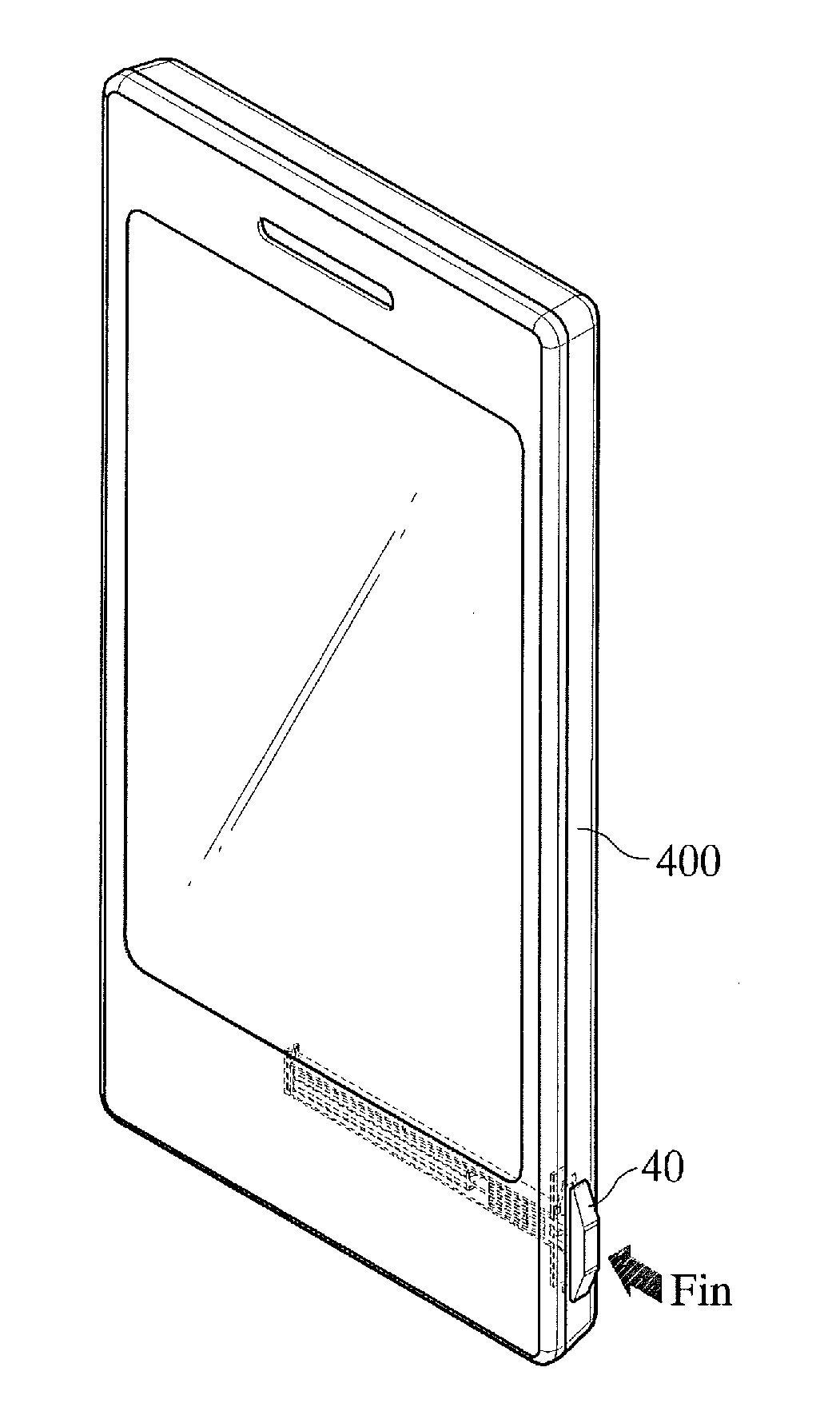
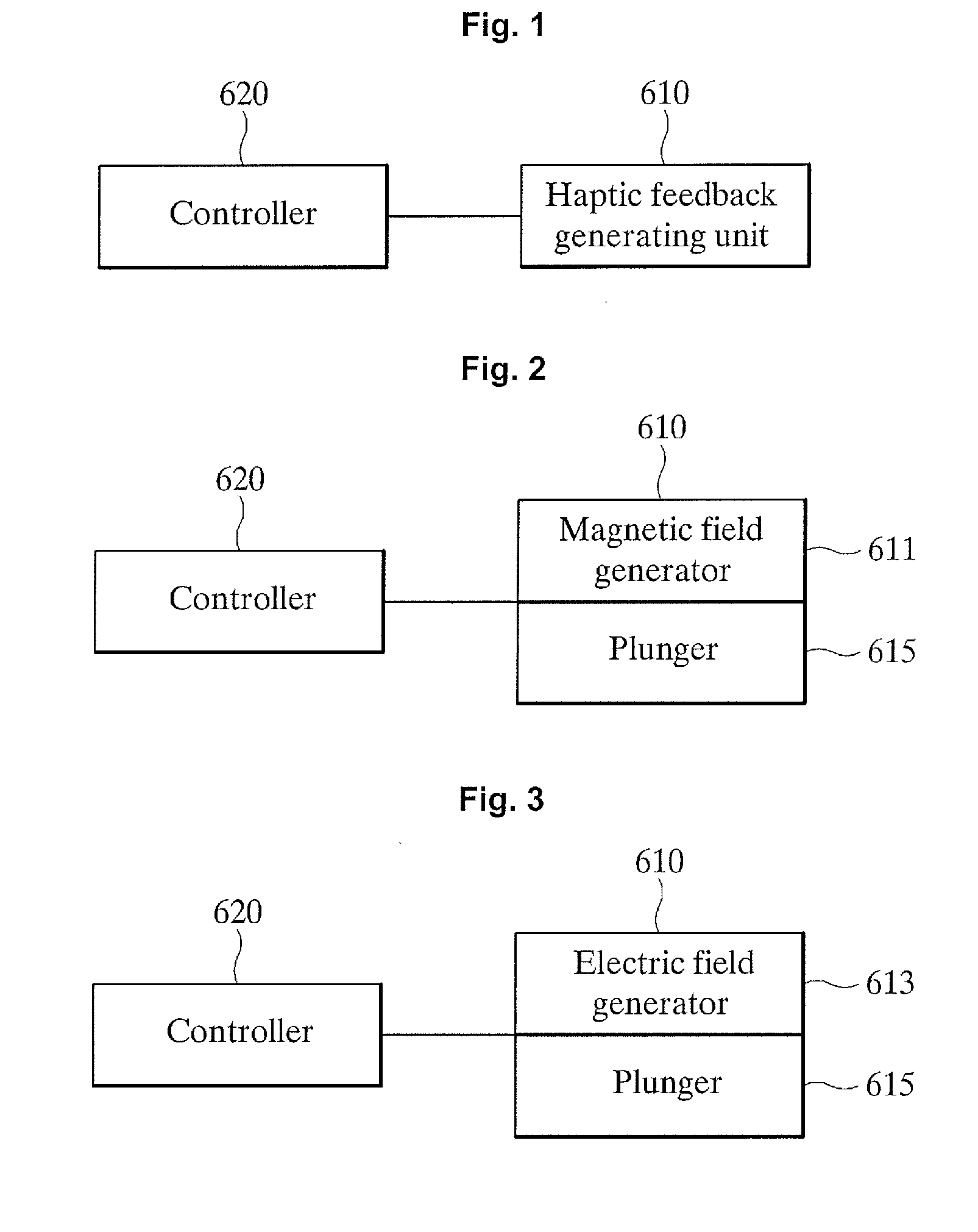
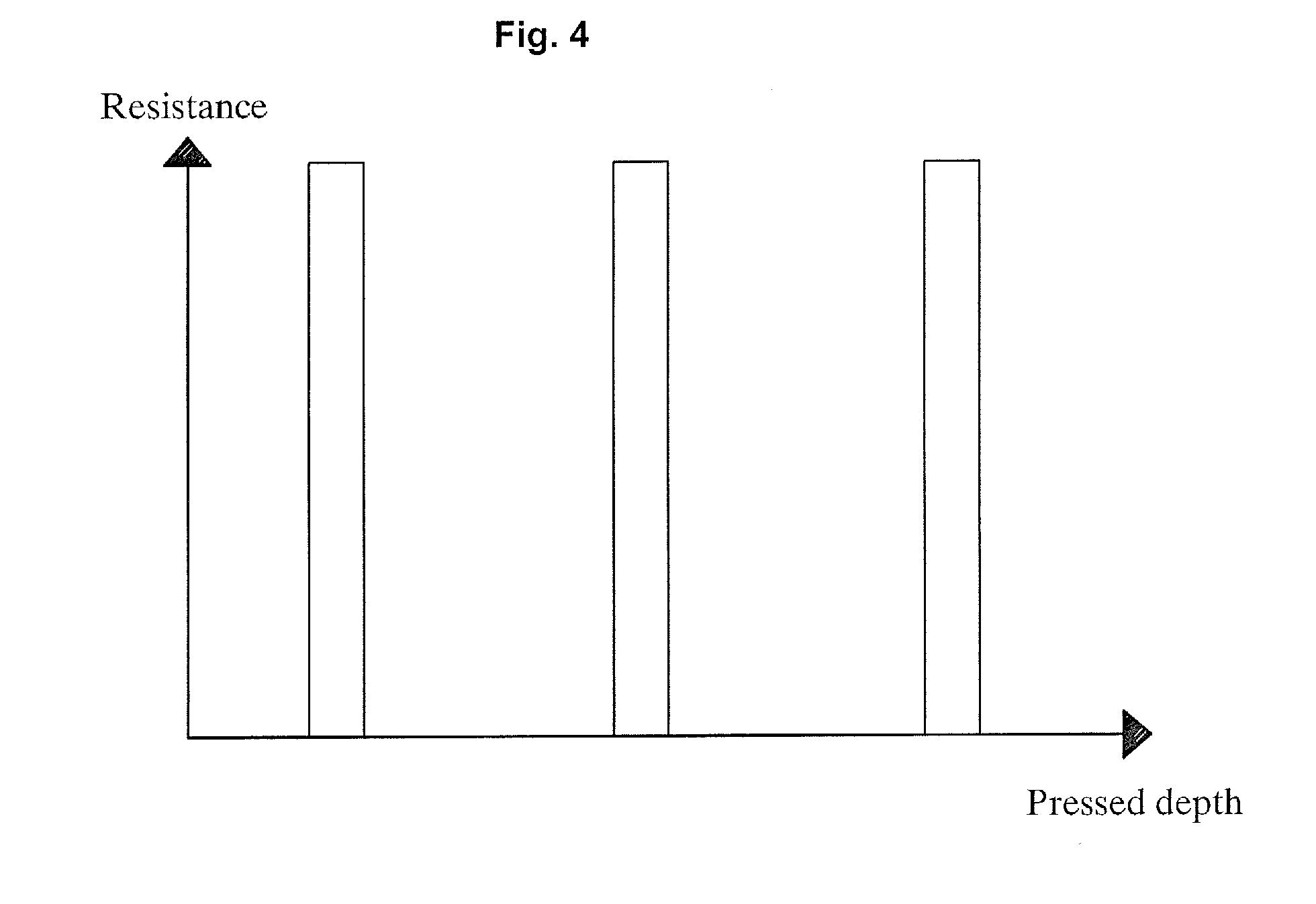
- A haptic feedback generator that uses magneto-rheological or electro-rheological fluids, controlled by a magnetic or electric field, to provide varying resistance levels, allowing for kinesthetic feedback by changing the properties of these fluids in response to user input, thereby simulating the stiffness of objects.

Apparatus for producing haptic feedback and electronic device
PatentWO2018046546A1
Innovation
- A device comprising a piezoelectric actuator and a mechanical structure that converts the actuator's expansion into movement in a perpendicular direction, utilizing a multilayer actuator design with internal electrodes and piezoelectric layers, and a mechanical structure made of steel or bronze, which amplifies the movement range to generate significant haptic feedback.


Power Efficiency in Portable Haptic Devices
Power efficiency stands as a critical determinant of success for haptic feedback systems in portable devices, directly impacting battery life and user experience. The fundamental challenge lies in balancing the energy-intensive nature of haptic actuators with the limited power budgets of smartphones, wearables, and handheld gaming devices. Traditional eccentric rotating mass motors consume significant power, often drawing 100-200mA during operation, which proves unsustainable for battery-constrained applications requiring frequent haptic responses.
Linear resonant actuators have emerged as a more power-efficient alternative, operating at their resonant frequency to minimize energy waste. These devices typically consume 40-60% less power than conventional motors while delivering comparable tactile sensations. The efficiency gains stem from their ability to convert electrical energy into mechanical vibration with minimal heat dissipation, achieving power consumption as low as 50-80mA during active periods.
Piezoelectric actuators represent another promising avenue for power optimization, leveraging the piezoelectric effect to generate haptic feedback with minimal current draw. These components can operate on power levels below 30mA, making them particularly suitable for always-on haptic applications in smartwatches and fitness trackers. However, their implementation requires sophisticated drive circuits and voltage management systems to maintain efficiency across varying load conditions.
Advanced power management strategies play an equally vital role in extending battery life. Duty cycle optimization techniques enable haptic systems to deliver perceptible feedback while remaining active for only brief intervals, typically 10-50 milliseconds per event. Adaptive amplitude control algorithms further reduce power consumption by adjusting vibration intensity based on contextual factors such as user grip strength, device orientation, and ambient noise levels.
Energy harvesting technologies offer supplementary power sources for haptic systems, though their contribution remains limited in current implementations. Kinetic energy recovery from user interactions and thermal gradient exploitation represent emerging research directions that could partially offset the power demands of haptic actuators in future portable devices.
Linear resonant actuators have emerged as a more power-efficient alternative, operating at their resonant frequency to minimize energy waste. These devices typically consume 40-60% less power than conventional motors while delivering comparable tactile sensations. The efficiency gains stem from their ability to convert electrical energy into mechanical vibration with minimal heat dissipation, achieving power consumption as low as 50-80mA during active periods.
Piezoelectric actuators represent another promising avenue for power optimization, leveraging the piezoelectric effect to generate haptic feedback with minimal current draw. These components can operate on power levels below 30mA, making them particularly suitable for always-on haptic applications in smartwatches and fitness trackers. However, their implementation requires sophisticated drive circuits and voltage management systems to maintain efficiency across varying load conditions.
Advanced power management strategies play an equally vital role in extending battery life. Duty cycle optimization techniques enable haptic systems to deliver perceptible feedback while remaining active for only brief intervals, typically 10-50 milliseconds per event. Adaptive amplitude control algorithms further reduce power consumption by adjusting vibration intensity based on contextual factors such as user grip strength, device orientation, and ambient noise levels.
Energy harvesting technologies offer supplementary power sources for haptic systems, though their contribution remains limited in current implementations. Kinetic energy recovery from user interactions and thermal gradient exploitation represent emerging research directions that could partially offset the power demands of haptic actuators in future portable devices.
Integration Methods for Wearable Haptics
The successful deployment of haptic feedback systems in wearable devices hinges on sophisticated integration methodologies that balance mechanical performance, electrical efficiency, and user comfort. Current integration approaches can be categorized into three primary frameworks: surface-mounted integration, embedded integration, and hybrid integration architectures. Surface-mounted methods involve attaching miniature actuators to the inner surfaces of wearable substrates, utilizing adhesive bonding or mechanical fastening techniques. This approach offers flexibility in actuator placement and simplifies maintenance procedures, though it may compromise device profile and aesthetic considerations.
Embedded integration represents a more advanced methodology where haptic components are incorporated directly into the structural layers of wearable materials during manufacturing. This technique employs flexible printed circuit board technology combined with thin-film actuators, enabling seamless integration that maintains device ergonomics. The embedded approach requires precise alignment protocols and specialized encapsulation materials to protect sensitive components from environmental factors and mechanical stress. Recent developments in stretchable electronics have expanded possibilities for embedding actuators within elastic fabrics and silicone-based wearables.
Hybrid integration strategies combine multiple actuator types and placement techniques to optimize spatial coverage and haptic resolution. These systems typically integrate linear resonant actuators for broad-area feedback with piezoelectric elements for localized, high-frequency stimulation. The electrical architecture supporting these integration methods must address power distribution challenges, signal routing complexity, and electromagnetic interference mitigation. Advanced multiplexing techniques and distributed driver circuits enable independent control of multiple haptic zones while minimizing wiring overhead.
Thermal management constitutes a critical consideration across all integration methodologies, as compact actuators generate heat that must be dissipated without compromising user comfort or device reliability. Integration designs increasingly incorporate thermally conductive pathways and phase-change materials to regulate operating temperatures. Furthermore, modular integration frameworks are emerging that allow customizable haptic configurations tailored to specific application requirements, facilitating rapid prototyping and scalable manufacturing processes for diverse wearable platforms.
Embedded integration represents a more advanced methodology where haptic components are incorporated directly into the structural layers of wearable materials during manufacturing. This technique employs flexible printed circuit board technology combined with thin-film actuators, enabling seamless integration that maintains device ergonomics. The embedded approach requires precise alignment protocols and specialized encapsulation materials to protect sensitive components from environmental factors and mechanical stress. Recent developments in stretchable electronics have expanded possibilities for embedding actuators within elastic fabrics and silicone-based wearables.
Hybrid integration strategies combine multiple actuator types and placement techniques to optimize spatial coverage and haptic resolution. These systems typically integrate linear resonant actuators for broad-area feedback with piezoelectric elements for localized, high-frequency stimulation. The electrical architecture supporting these integration methods must address power distribution challenges, signal routing complexity, and electromagnetic interference mitigation. Advanced multiplexing techniques and distributed driver circuits enable independent control of multiple haptic zones while minimizing wiring overhead.
Thermal management constitutes a critical consideration across all integration methodologies, as compact actuators generate heat that must be dissipated without compromising user comfort or device reliability. Integration designs increasingly incorporate thermally conductive pathways and phase-change materials to regulate operating temperatures. Furthermore, modular integration frameworks are emerging that allow customizable haptic configurations tailored to specific application requirements, facilitating rapid prototyping and scalable manufacturing processes for diverse wearable platforms.
Unlock deeper insights with PatSnap Eureka Quick Research — get a full tech report to explore trends and direct your research. Try now!
Generate Your Research Report Instantly with AI Agent
Supercharge your innovation with PatSnap Eureka AI Agent Platform!