

Large Scale Deployment Standards for Superconducting Fault Current Limiters
MAY 21, 20269 MIN READ
Generate Your Research Report Instantly with AI Agent
PatSnap Eureka helps you evaluate technical feasibility & market potential.
Superconducting FCL Technology Background and Deployment Goals
Superconducting Fault Current Limiters represent a revolutionary advancement in electrical power system protection technology, emerging from decades of superconductivity research that began with the discovery of zero electrical resistance phenomena in 1911. The technology leverages the unique properties of superconducting materials, which transition from zero resistance to finite resistance when exposed to fault currents exceeding critical thresholds, providing automatic current limitation without external control systems.
The evolution of superconducting materials has progressed through distinct phases, from low-temperature superconductors requiring liquid helium cooling to high-temperature superconductors operating with liquid nitrogen, and more recently to advanced ceramic and iron-based superconductors offering improved performance characteristics. This progression has fundamentally transformed the feasibility of large-scale FCL deployment by reducing operational complexity and cooling costs.
Modern power grids face unprecedented challenges due to increasing interconnectivity, renewable energy integration, and growing fault current levels that exceed the interrupting capacity of conventional protection equipment. Traditional fault current limitation methods, including series reactors and current-limiting reactors, introduce continuous power losses and voltage drops during normal operation, compromising system efficiency and power quality.
The primary deployment goal for superconducting FCLs centers on achieving seamless integration into existing power infrastructure while maintaining grid stability and reliability. These devices must demonstrate the capability to limit fault currents to manageable levels within the first half-cycle of fault occurrence, protecting downstream equipment from damage while allowing rapid system recovery.
Economic viability represents another critical deployment objective, requiring FCL systems to demonstrate favorable lifecycle cost comparisons against alternative solutions when considering reduced equipment replacement costs, improved system reliability, and enhanced power quality benefits. The technology must achieve standardized performance metrics across diverse operating environments and fault conditions.
Technical deployment goals encompass achieving consistent performance across varying ambient conditions, establishing reliable cryogenic cooling systems with minimal maintenance requirements, and ensuring compatibility with existing protection coordination schemes. Long-term operational stability, typically requiring 20-30 year service life with minimal degradation, remains essential for utility acceptance and widespread adoption in critical power system applications.
The evolution of superconducting materials has progressed through distinct phases, from low-temperature superconductors requiring liquid helium cooling to high-temperature superconductors operating with liquid nitrogen, and more recently to advanced ceramic and iron-based superconductors offering improved performance characteristics. This progression has fundamentally transformed the feasibility of large-scale FCL deployment by reducing operational complexity and cooling costs.
Modern power grids face unprecedented challenges due to increasing interconnectivity, renewable energy integration, and growing fault current levels that exceed the interrupting capacity of conventional protection equipment. Traditional fault current limitation methods, including series reactors and current-limiting reactors, introduce continuous power losses and voltage drops during normal operation, compromising system efficiency and power quality.
The primary deployment goal for superconducting FCLs centers on achieving seamless integration into existing power infrastructure while maintaining grid stability and reliability. These devices must demonstrate the capability to limit fault currents to manageable levels within the first half-cycle of fault occurrence, protecting downstream equipment from damage while allowing rapid system recovery.
Economic viability represents another critical deployment objective, requiring FCL systems to demonstrate favorable lifecycle cost comparisons against alternative solutions when considering reduced equipment replacement costs, improved system reliability, and enhanced power quality benefits. The technology must achieve standardized performance metrics across diverse operating environments and fault conditions.
Technical deployment goals encompass achieving consistent performance across varying ambient conditions, establishing reliable cryogenic cooling systems with minimal maintenance requirements, and ensuring compatibility with existing protection coordination schemes. Long-term operational stability, typically requiring 20-30 year service life with minimal degradation, remains essential for utility acceptance and widespread adoption in critical power system applications.
Market Demand for Large Scale SFCL Grid Integration
The global power grid infrastructure faces unprecedented challenges as renewable energy integration accelerates and grid complexity increases. Traditional circuit breakers struggle with the rapid fault current rise times and high magnitude fault currents characteristic of modern power systems, particularly in high-voltage transmission networks and renewable energy interconnection points. This technical limitation creates substantial market demand for advanced fault current limiting technologies.
Superconducting Fault Current Limiters represent a transformative solution addressing critical grid stability requirements. The technology offers instantaneous fault detection and current limitation without the mechanical delays inherent in conventional protection systems. This capability becomes essential as power grids evolve toward smart grid architectures requiring faster response times and enhanced reliability metrics.
Market drivers for large-scale SFCL deployment stem from multiple converging factors. Grid modernization initiatives worldwide prioritize technologies that enhance system resilience while accommodating bidirectional power flows from distributed generation sources. Utility operators increasingly recognize that conventional fault management approaches cannot adequately address the fault current contributions from inverter-based resources and the complex fault scenarios emerging in interconnected grid networks.
The economic value proposition for SFCL technology extends beyond fault protection capabilities. These systems enable higher power transfer capacities through existing transmission corridors by managing fault current levels that would otherwise require expensive infrastructure upgrades. This characteristic proves particularly valuable in urban areas where new transmission line construction faces significant regulatory and physical constraints.
Regulatory frameworks increasingly emphasize grid reliability standards that favor advanced protection technologies. Power system operators must demonstrate compliance with stringent reliability metrics while managing growing fault current levels that approach or exceed equipment ratings. SFCL technology provides a pathway to maintain compliance without extensive infrastructure replacement programs.
The renewable energy transition amplifies SFCL market demand as wind and solar installations require robust grid integration solutions. These installations often connect to transmission networks through substations where fault current management becomes critical for maintaining system stability. SFCL deployment enables higher renewable penetration levels while preserving grid protection coordination schemes.
Industrial and commercial sectors represent emerging market segments for SFCL applications. Large manufacturing facilities and data centers require exceptional power quality and reliability levels that conventional protection systems cannot guarantee. The instantaneous response characteristics of superconducting limiters align with the stringent uptime requirements of these critical applications.
Superconducting Fault Current Limiters represent a transformative solution addressing critical grid stability requirements. The technology offers instantaneous fault detection and current limitation without the mechanical delays inherent in conventional protection systems. This capability becomes essential as power grids evolve toward smart grid architectures requiring faster response times and enhanced reliability metrics.
Market drivers for large-scale SFCL deployment stem from multiple converging factors. Grid modernization initiatives worldwide prioritize technologies that enhance system resilience while accommodating bidirectional power flows from distributed generation sources. Utility operators increasingly recognize that conventional fault management approaches cannot adequately address the fault current contributions from inverter-based resources and the complex fault scenarios emerging in interconnected grid networks.
The economic value proposition for SFCL technology extends beyond fault protection capabilities. These systems enable higher power transfer capacities through existing transmission corridors by managing fault current levels that would otherwise require expensive infrastructure upgrades. This characteristic proves particularly valuable in urban areas where new transmission line construction faces significant regulatory and physical constraints.
Regulatory frameworks increasingly emphasize grid reliability standards that favor advanced protection technologies. Power system operators must demonstrate compliance with stringent reliability metrics while managing growing fault current levels that approach or exceed equipment ratings. SFCL technology provides a pathway to maintain compliance without extensive infrastructure replacement programs.
The renewable energy transition amplifies SFCL market demand as wind and solar installations require robust grid integration solutions. These installations often connect to transmission networks through substations where fault current management becomes critical for maintaining system stability. SFCL deployment enables higher renewable penetration levels while preserving grid protection coordination schemes.
Industrial and commercial sectors represent emerging market segments for SFCL applications. Large manufacturing facilities and data centers require exceptional power quality and reliability levels that conventional protection systems cannot guarantee. The instantaneous response characteristics of superconducting limiters align with the stringent uptime requirements of these critical applications.
Current SFCL Deployment Status and Standardization Challenges
The global deployment of Superconducting Fault Current Limiters (SFCLs) remains in its nascent stage, with only a limited number of demonstration projects and pilot installations worldwide. Most existing deployments are concentrated in developed countries including Germany, the United States, Japan, and South Korea, where advanced electrical grid infrastructure and substantial research investments have enabled early adoption. These installations primarily serve as proof-of-concept demonstrations rather than commercial-scale implementations, typically operating at medium voltage levels between 10kV and 35kV.
Current SFCL installations face significant technical heterogeneity, with different manufacturers employing varying superconducting materials, cooling systems, and protection mechanisms. This diversity stems from the absence of unified international standards governing SFCL design, performance metrics, and integration protocols. Resistive-type SFCLs using high-temperature superconductors dominate existing deployments, while inductive and hybrid designs remain largely experimental.
The standardization landscape presents substantial challenges across multiple dimensions. Technical standards for superconducting materials, cryogenic systems, and electrical performance criteria remain fragmented among different national and regional organizations. The International Electrotechnical Commission (IEC) has initiated preliminary work on SFCL standards, but comprehensive guidelines for large-scale deployment are still under development. Critical gaps exist in standardizing fault detection algorithms, recovery time specifications, and long-term reliability assessment methodologies.
Grid integration standards pose another significant hurdle, as existing power system protection schemes were not originally designed to accommodate SFCL behavior. The interaction between SFCLs and conventional protection devices requires new coordination protocols and communication standards. Current installations often require custom integration solutions, limiting scalability and increasing deployment costs.
Safety and operational standards represent additional challenges, particularly regarding cryogenic system management, quench protection, and maintenance procedures. The lack of standardized training protocols for utility personnel further complicates widespread adoption. Environmental and regulatory compliance standards vary significantly across jurisdictions, creating barriers for international technology transfer and standardized manufacturing processes.
Economic standardization challenges include the absence of unified cost-benefit analysis frameworks and standardized performance benchmarks that would enable utilities to make informed investment decisions. Without established standards for lifecycle assessment and reliability metrics, utilities remain hesitant to commit to large-scale SFCL deployments, perpetuating the current limited deployment status.
Current SFCL installations face significant technical heterogeneity, with different manufacturers employing varying superconducting materials, cooling systems, and protection mechanisms. This diversity stems from the absence of unified international standards governing SFCL design, performance metrics, and integration protocols. Resistive-type SFCLs using high-temperature superconductors dominate existing deployments, while inductive and hybrid designs remain largely experimental.
The standardization landscape presents substantial challenges across multiple dimensions. Technical standards for superconducting materials, cryogenic systems, and electrical performance criteria remain fragmented among different national and regional organizations. The International Electrotechnical Commission (IEC) has initiated preliminary work on SFCL standards, but comprehensive guidelines for large-scale deployment are still under development. Critical gaps exist in standardizing fault detection algorithms, recovery time specifications, and long-term reliability assessment methodologies.
Grid integration standards pose another significant hurdle, as existing power system protection schemes were not originally designed to accommodate SFCL behavior. The interaction between SFCLs and conventional protection devices requires new coordination protocols and communication standards. Current installations often require custom integration solutions, limiting scalability and increasing deployment costs.
Safety and operational standards represent additional challenges, particularly regarding cryogenic system management, quench protection, and maintenance procedures. The lack of standardized training protocols for utility personnel further complicates widespread adoption. Environmental and regulatory compliance standards vary significantly across jurisdictions, creating barriers for international technology transfer and standardized manufacturing processes.
Economic standardization challenges include the absence of unified cost-benefit analysis frameworks and standardized performance benchmarks that would enable utilities to make informed investment decisions. Without established standards for lifecycle assessment and reliability metrics, utilities remain hesitant to commit to large-scale SFCL deployments, perpetuating the current limited deployment status.
Existing Large Scale SFCL Deployment Solutions
01 Resistive superconducting fault current limiters
These devices utilize the transition of superconducting materials from zero resistance to normal resistance state when fault currents exceed critical values. The sudden increase in resistance limits the fault current effectively. The design typically incorporates high-temperature superconducting materials that can quickly transition between superconducting and resistive states to provide reliable fault current limitation.- Resistive superconducting fault current limiters: These devices utilize the transition of superconducting materials from zero resistance to normal resistance state when fault currents exceed critical values. The sudden increase in resistance limits the fault current effectively. The design typically incorporates high-temperature superconducting materials that can quickly transition between superconducting and resistive states during fault conditions.
- Inductive superconducting fault current limiters: These systems employ superconducting coils and magnetic coupling to limit fault currents through inductive impedance. When a fault occurs, the superconducting coil loses its zero-resistance property, creating impedance that restricts current flow. The design often includes primary and secondary windings with superconducting elements that provide effective current limitation.
- Hybrid superconducting fault current limiters: These advanced systems combine superconducting elements with conventional electrical components such as switches, reactors, or semiconductor devices. The hybrid approach provides enhanced control and reliability by integrating the benefits of superconducting technology with proven conventional protection methods. This design offers improved fault detection and current limiting capabilities.
- Superconducting fault current limiter control and monitoring systems: These systems focus on the control mechanisms, monitoring technologies, and protection schemes for superconducting fault current limiters. They include sophisticated detection algorithms, real-time monitoring of superconducting states, and automated control systems that ensure optimal performance during normal and fault conditions. The technology encompasses sensor integration and intelligent fault discrimination.
- Superconducting materials and cooling systems for fault current limiters: This category covers the development of specialized superconducting materials and cryogenic cooling systems essential for fault current limiter operation. It includes high-temperature superconductors, cooling methodologies, thermal management systems, and material optimization techniques. The focus is on improving the efficiency and reliability of the superconducting elements while reducing operational costs.
02 Inductive superconducting fault current limiters
These systems employ superconducting coils and magnetic coupling mechanisms to limit fault currents through inductive impedance. When fault conditions occur, the superconducting coil loses its zero-resistance property, creating significant impedance that restricts current flow. The design often includes primary and secondary windings with superconducting elements for enhanced performance.Expand Specific Solutions03 Hybrid superconducting fault current limiters
These advanced systems combine superconducting elements with conventional electrical components such as switches, resistors, or reactors. The hybrid approach provides enhanced control capabilities and improved reliability by integrating the benefits of superconducting technology with proven conventional protection methods. The design allows for better coordination with existing power system protection schemes.Expand Specific Solutions04 Flux-lock type superconducting fault current limiters
These devices utilize magnetic flux coupling and superconducting loops to achieve current limitation. The system employs superconducting rings or coils that maintain flux linkage under normal conditions but release the flux during fault conditions, thereby creating impedance to limit fault currents. The design focuses on magnetic field interactions and flux conservation principles.Expand Specific Solutions05 Matrix-type and multi-element superconducting fault current limiters
These systems feature multiple superconducting elements arranged in matrix or parallel configurations to provide distributed fault current limitation. The design incorporates several superconducting units working together to handle high fault currents and provide redundancy. The multi-element approach enhances system reliability and allows for scalable current limiting capacity based on power system requirements.Expand Specific Solutions
Major Players in SFCL Manufacturing and Grid Integration
The superconducting fault current limiter (SFCL) industry is in an emerging growth phase, transitioning from research and development to early commercial deployment. The market remains relatively small but shows significant expansion potential as power grid modernization accelerates globally. Technology maturity varies considerably across players, with specialized companies like Applied Superconductor and American Superconductor leading commercial SFCL development, while major utilities including State Grid Corp. of China, KEPCO, and Nexans are actively piloting deployment projects. Research institutions such as Wuhan University and Huazhong University of Science & Technology continue advancing fundamental superconductor technologies. The competitive landscape features a mix of established electrical equipment manufacturers like Furukawa Electric and LS Electric, alongside pure-play superconductor specialists such as SuperPower and Diboride Conductors, indicating growing industry confidence in large-scale SFCL commercialization despite ongoing technical and economic challenges.
State Grid Corp. of China
Technical Solution: State Grid Corporation of China has developed comprehensive deployment standards for superconducting fault current limiters (SFCLs) focusing on integration with existing power grid infrastructure. Their approach emphasizes standardized installation procedures, maintenance protocols, and operational guidelines for large-scale SFCL deployment across China's national grid network. The company has established technical specifications for SFCL performance requirements, including current limiting capabilities, response times, and recovery characteristics. Their standards cover environmental considerations, safety protocols, and grid compatibility requirements to ensure seamless integration with conventional protection systems. The deployment framework includes standardized testing procedures, commissioning guidelines, and long-term monitoring protocols to maintain system reliability and performance across diverse operating conditions.
Strengths: Extensive grid infrastructure experience and comprehensive standardization capabilities. Weaknesses: Limited international market penetration and potential technology transfer restrictions.
NARI Group Corp.
Technical Solution: NARI Group Corporation has developed comprehensive deployment standards for superconducting fault current limiters as part of China's smart grid modernization initiative. Their standards framework focuses on seamless integration of SFCL technology with digital grid infrastructure, emphasizing standardized communication protocols, automated control systems, and real-time monitoring capabilities. NARI's deployment approach includes detailed specifications for SFCL protection coordination with existing relay systems, fault detection algorithms, and grid stability enhancement features. The company has established guidelines for standardized installation procedures, commissioning protocols, and operational maintenance requirements specifically designed for large-scale utility deployments. Their standards incorporate advanced diagnostic systems, predictive analytics, and remote monitoring capabilities that enable centralized management of multiple SFCL installations across extensive power networks.
Strengths: Strong smart grid integration capabilities and comprehensive power system expertise. Weaknesses: Limited international market presence and potential technology compatibility issues with non-Chinese grid standards.
Core Standards and Protocols for SFCL Grid Integration
Current limiting device
PatentInactiveUS20100157499A1
Innovation
- A fault current limiter design featuring a current limiting unit with separate cooling medium circuits for superconducting elements and the surrounding housing, where the superconducting elements are spatially isolated from the housing, preventing gas bubbles from forming in the surrounding insulation, thus maintaining insulation properties and allowing for a compact, modular, and adaptable design.


Self-triggering superconducting fault current limiter
PatentInactiveUS7440244B2
Innovation
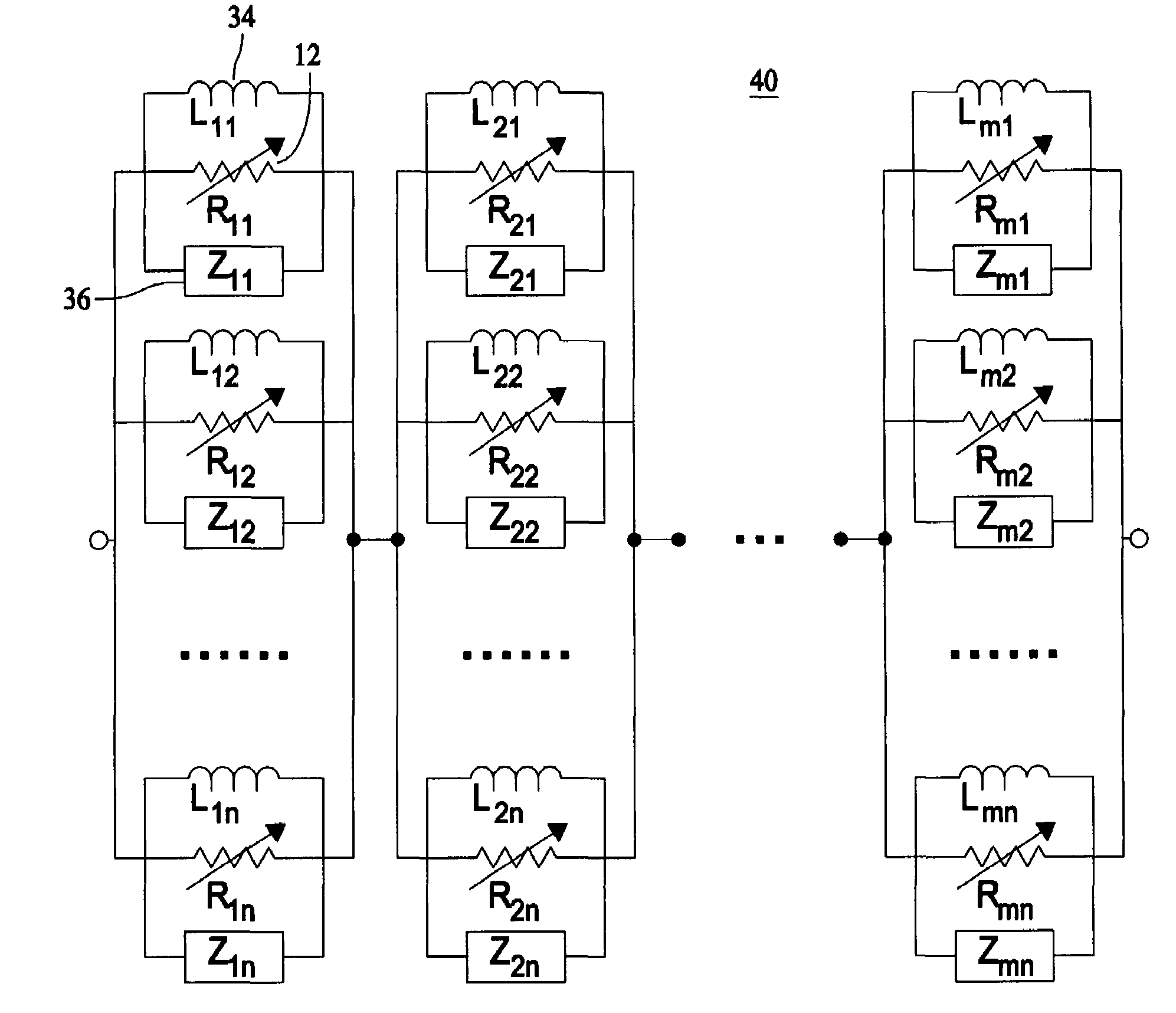
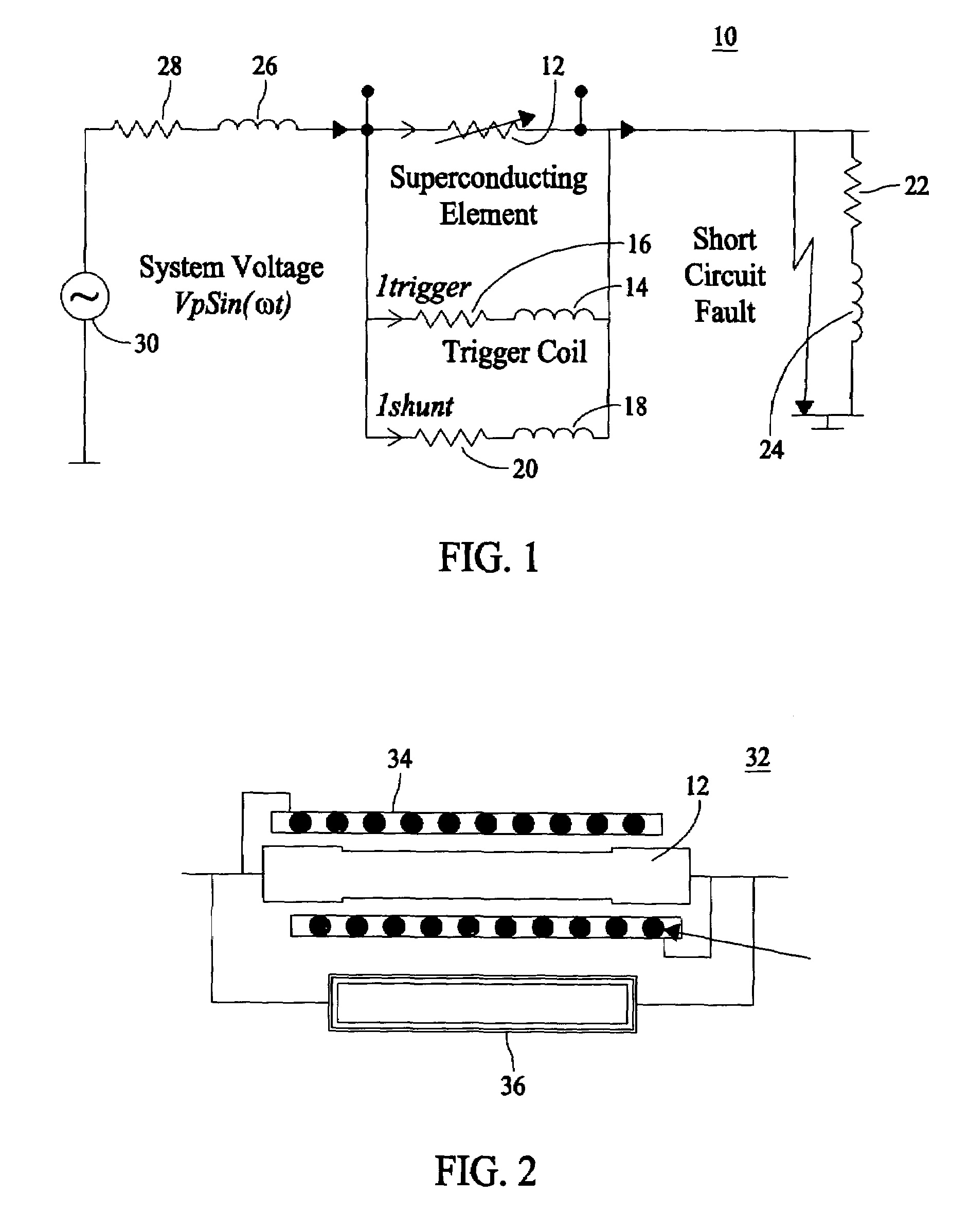
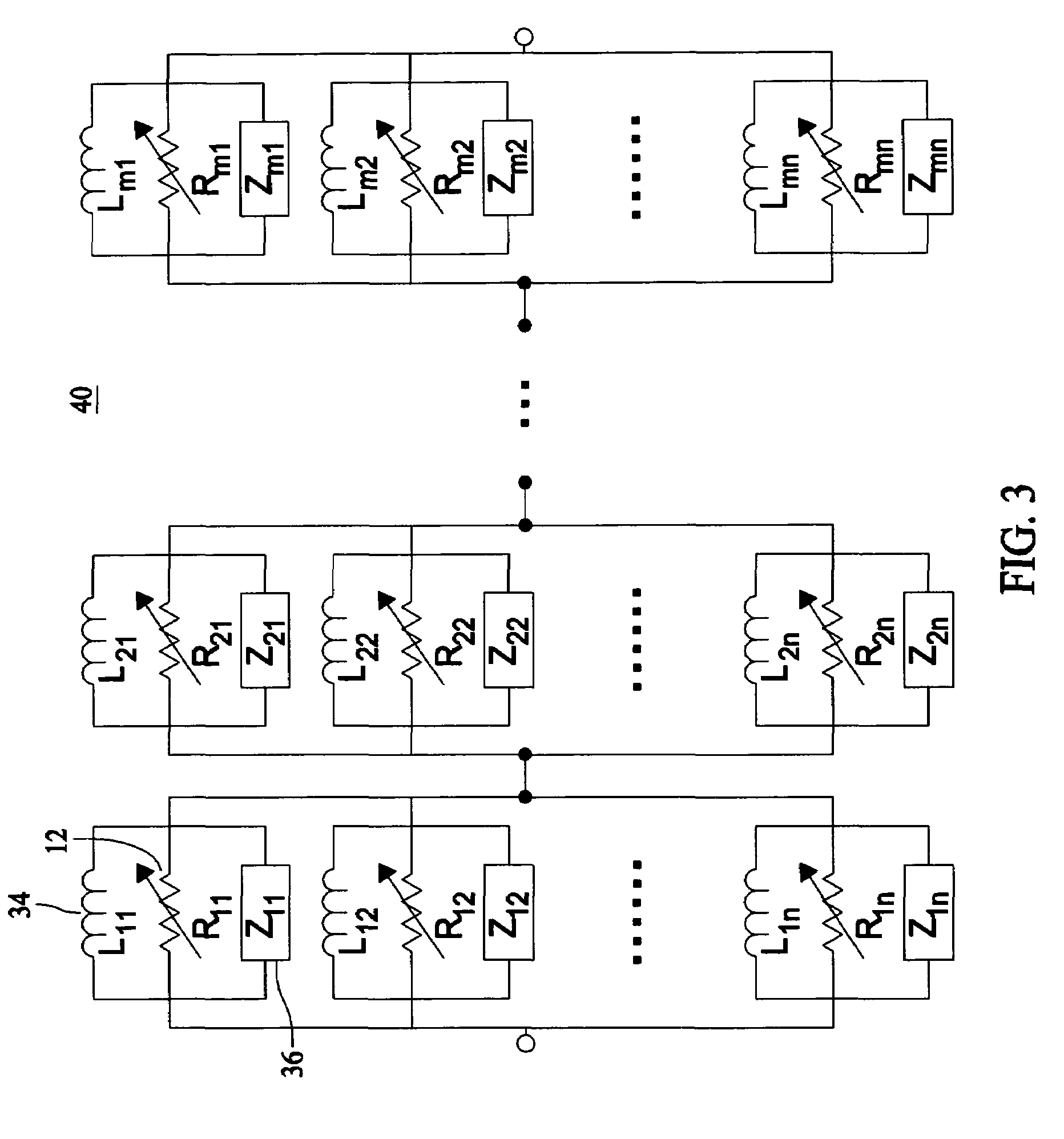
- A passive, scalable matrix fault current limiter design utilizing a trigger coil and shunt impedance, electrically connected in parallel with a superconducting element, where the trigger coil generates a uniform magnetic field to induce quenching and the shunt limits voltage, ensuring uniform quenching and reducing overheating risks.

Grid Code Requirements for SFCL Large Scale Deployment
The integration of Superconducting Fault Current Limiters into power grids requires comprehensive grid code modifications to establish standardized operational frameworks. Current grid codes primarily address conventional protection systems and lack specific provisions for SFCL deployment, creating regulatory gaps that must be addressed for widespread adoption.
Grid codes must define minimum technical specifications for SFCL performance, including response time requirements typically within 1-2 milliseconds, recovery time parameters, and fault current limitation ratios. These specifications should establish clear thresholds for different voltage levels, from distribution networks at 11-33 kV to transmission systems operating at 110 kV and above. The codes must also specify acceptable quench characteristics and recovery protocols to ensure consistent performance across different manufacturers and technologies.
Interconnection standards represent a critical component requiring detailed revision. Grid codes should mandate specific interface requirements between SFCLs and existing protection schemes, including coordination with circuit breakers, relay systems, and automatic reclosing mechanisms. These standards must address potential conflicts between SFCL operation and traditional protection philosophies, particularly regarding fault detection sensitivity and clearing times.
Operational requirements within grid codes should establish mandatory testing protocols for installed SFCLs, including periodic performance verification and condition monitoring standards. The codes must specify acceptable maintenance windows, replacement criteria, and emergency bypass procedures to maintain grid reliability during SFCL maintenance or failure scenarios.
Regulatory frameworks must also address grid planning obligations, requiring transmission system operators to conduct impact assessments when integrating SFCLs into existing networks. These assessments should evaluate effects on system stability, short-circuit levels, and protection coordination throughout the interconnected grid.
Furthermore, grid codes should establish certification requirements for SFCL manufacturers, mandating compliance with international standards such as IEC 62271-1 and IEEE C37.122.4. These certification processes must include type testing, factory acceptance testing, and site acceptance testing protocols to ensure consistent quality and performance across all deployed units.
Grid codes must define minimum technical specifications for SFCL performance, including response time requirements typically within 1-2 milliseconds, recovery time parameters, and fault current limitation ratios. These specifications should establish clear thresholds for different voltage levels, from distribution networks at 11-33 kV to transmission systems operating at 110 kV and above. The codes must also specify acceptable quench characteristics and recovery protocols to ensure consistent performance across different manufacturers and technologies.
Interconnection standards represent a critical component requiring detailed revision. Grid codes should mandate specific interface requirements between SFCLs and existing protection schemes, including coordination with circuit breakers, relay systems, and automatic reclosing mechanisms. These standards must address potential conflicts between SFCL operation and traditional protection philosophies, particularly regarding fault detection sensitivity and clearing times.
Operational requirements within grid codes should establish mandatory testing protocols for installed SFCLs, including periodic performance verification and condition monitoring standards. The codes must specify acceptable maintenance windows, replacement criteria, and emergency bypass procedures to maintain grid reliability during SFCL maintenance or failure scenarios.
Regulatory frameworks must also address grid planning obligations, requiring transmission system operators to conduct impact assessments when integrating SFCLs into existing networks. These assessments should evaluate effects on system stability, short-circuit levels, and protection coordination throughout the interconnected grid.
Furthermore, grid codes should establish certification requirements for SFCL manufacturers, mandating compliance with international standards such as IEC 62271-1 and IEEE C37.122.4. These certification processes must include type testing, factory acceptance testing, and site acceptance testing protocols to ensure consistent quality and performance across all deployed units.
Environmental Impact Assessment of Large Scale SFCL Systems
The environmental implications of large-scale superconducting fault current limiter (SFCL) deployment represent a critical consideration for power grid modernization initiatives. Unlike conventional fault current limiting technologies, SFCL systems offer unique environmental advantages through their operational characteristics and material composition, though they also present specific environmental challenges that require comprehensive assessment.
The primary environmental benefit of SFCL systems stems from their ability to enhance grid stability and reduce power losses during normal operation. By maintaining zero impedance under standard conditions, these devices eliminate continuous energy dissipation that characterizes traditional current limiting solutions. This efficiency translates to reduced carbon emissions from power generation facilities, as less compensatory power production is required to offset system losses.
Cryogenic cooling requirements constitute the most significant environmental consideration for large-scale SFCL deployment. The continuous operation of helium or nitrogen-based cooling systems demands substantial energy input, typically ranging from 10-15% of the device's rated capacity. However, recent advances in closed-loop cooling technologies and high-temperature superconducting materials have substantially reduced this environmental footprint compared to earlier implementations.
Material lifecycle assessment reveals both positive and challenging aspects of SFCL environmental impact. Superconducting materials, particularly rare earth elements used in high-temperature superconductors, require energy-intensive extraction and processing. However, these materials demonstrate exceptional longevity and recyclability, with operational lifespans exceeding 25 years and near-complete material recovery potential at end-of-life.
The electromagnetic field emissions from SFCL systems remain well within established safety thresholds, presenting minimal environmental or health concerns. Additionally, the compact footprint of SFCL installations compared to conventional alternatives reduces land use requirements and associated ecological disruption, particularly valuable in urban deployment scenarios where space constraints and environmental sensitivity intersect.
The primary environmental benefit of SFCL systems stems from their ability to enhance grid stability and reduce power losses during normal operation. By maintaining zero impedance under standard conditions, these devices eliminate continuous energy dissipation that characterizes traditional current limiting solutions. This efficiency translates to reduced carbon emissions from power generation facilities, as less compensatory power production is required to offset system losses.
Cryogenic cooling requirements constitute the most significant environmental consideration for large-scale SFCL deployment. The continuous operation of helium or nitrogen-based cooling systems demands substantial energy input, typically ranging from 10-15% of the device's rated capacity. However, recent advances in closed-loop cooling technologies and high-temperature superconducting materials have substantially reduced this environmental footprint compared to earlier implementations.
Material lifecycle assessment reveals both positive and challenging aspects of SFCL environmental impact. Superconducting materials, particularly rare earth elements used in high-temperature superconductors, require energy-intensive extraction and processing. However, these materials demonstrate exceptional longevity and recyclability, with operational lifespans exceeding 25 years and near-complete material recovery potential at end-of-life.
The electromagnetic field emissions from SFCL systems remain well within established safety thresholds, presenting minimal environmental or health concerns. Additionally, the compact footprint of SFCL installations compared to conventional alternatives reduces land use requirements and associated ecological disruption, particularly valuable in urban deployment scenarios where space constraints and environmental sensitivity intersect.
Unlock deeper insights with PatSnap Eureka Quick Research — get a full tech report to explore trends and direct your research. Try now!
Generate Your Research Report Instantly with AI Agent
Supercharge your innovation with PatSnap Eureka AI Agent Platform!