

Laser Beam Welding Vs Spot Welding: Structural Integrity Comparison
MAY 21, 20269 MIN READ
Generate Your Research Report Instantly with AI Agent
PatSnap Eureka helps you evaluate technical feasibility & market potential.
Laser Beam vs Spot Welding Technology Background and Goals
Welding technology has undergone significant evolution since its inception in the late 19th century, transitioning from basic forge welding to sophisticated automated processes. Spot welding emerged in the early 1900s as a resistance-based joining method, becoming the backbone of automotive manufacturing due to its speed and cost-effectiveness. This technology utilizes electrical resistance to generate heat at the interface between metal sheets, creating localized fusion zones through copper electrode contact.
Laser beam welding represents a more recent technological advancement, gaining industrial prominence in the 1970s with the development of high-power CO2 and later fiber lasers. This process employs concentrated laser energy to create precise, deep penetration welds with minimal heat-affected zones. The technology has evolved from experimental applications to mainstream manufacturing, driven by demands for higher precision and reduced thermal distortion.
The automotive industry's transformation toward lightweight materials and electric vehicles has intensified the need for superior structural integrity in welded joints. Traditional spot welding, while proven and economical, faces limitations in joining dissimilar materials and achieving consistent penetration depths. These constraints have prompted manufacturers to explore laser beam welding as an alternative solution for critical structural applications.
The primary technological goal driving this comparison centers on optimizing joint strength-to-weight ratios while maintaining manufacturing efficiency. Modern vehicle designs require welding processes that can accommodate advanced high-strength steels, aluminum alloys, and hybrid material combinations without compromising structural performance. Additionally, the push toward automated manufacturing demands welding technologies that offer repeatable quality and reduced inspection requirements.
Current research objectives focus on establishing quantitative metrics for structural integrity comparison between these welding methods. This includes evaluating fatigue resistance, tensile strength, and failure modes under various loading conditions. The ultimate goal is to develop selection criteria that enable engineers to choose the optimal welding process based on specific application requirements, material combinations, and performance expectations while considering economic factors and production scalability.
Laser beam welding represents a more recent technological advancement, gaining industrial prominence in the 1970s with the development of high-power CO2 and later fiber lasers. This process employs concentrated laser energy to create precise, deep penetration welds with minimal heat-affected zones. The technology has evolved from experimental applications to mainstream manufacturing, driven by demands for higher precision and reduced thermal distortion.
The automotive industry's transformation toward lightweight materials and electric vehicles has intensified the need for superior structural integrity in welded joints. Traditional spot welding, while proven and economical, faces limitations in joining dissimilar materials and achieving consistent penetration depths. These constraints have prompted manufacturers to explore laser beam welding as an alternative solution for critical structural applications.
The primary technological goal driving this comparison centers on optimizing joint strength-to-weight ratios while maintaining manufacturing efficiency. Modern vehicle designs require welding processes that can accommodate advanced high-strength steels, aluminum alloys, and hybrid material combinations without compromising structural performance. Additionally, the push toward automated manufacturing demands welding technologies that offer repeatable quality and reduced inspection requirements.
Current research objectives focus on establishing quantitative metrics for structural integrity comparison between these welding methods. This includes evaluating fatigue resistance, tensile strength, and failure modes under various loading conditions. The ultimate goal is to develop selection criteria that enable engineers to choose the optimal welding process based on specific application requirements, material combinations, and performance expectations while considering economic factors and production scalability.
Market Demand Analysis for Advanced Welding Technologies
The global welding industry is experiencing unprecedented transformation driven by evolving manufacturing requirements and technological advancement demands. Traditional welding methods face increasing scrutiny as industries prioritize precision, efficiency, and structural reliability. This shift creates substantial market opportunities for advanced welding technologies, particularly laser beam welding systems that offer superior control and consistency compared to conventional spot welding approaches.
Automotive manufacturing represents the largest market segment driving demand for advanced welding solutions. Modern vehicle designs require lightweight materials, complex geometries, and enhanced safety standards that challenge traditional welding capabilities. Electric vehicle production further intensifies these requirements, as battery pack assembly and lightweight chassis construction demand precise joining techniques with minimal heat-affected zones and superior structural integrity.
Aerospace and defense sectors constitute another critical market driving advanced welding technology adoption. These industries require welding solutions capable of handling exotic materials, maintaining strict quality standards, and ensuring long-term structural reliability under extreme conditions. The growing commercial space industry and military modernization programs create additional demand for precision welding technologies that can deliver consistent results across diverse material combinations.
Electronics and semiconductor manufacturing sectors increasingly rely on micro-welding applications where traditional spot welding proves inadequate. The miniaturization trend in consumer electronics, medical devices, and industrial sensors creates demand for welding technologies capable of joining thin materials without compromising component integrity or introducing thermal distortion.
Industrial automation and Industry 4.0 initiatives significantly influence market demand patterns. Manufacturers seek welding solutions that integrate seamlessly with robotic systems, provide real-time quality monitoring, and enable predictive maintenance capabilities. This technological convergence drives preference toward laser-based welding systems that offer programmable parameters, consistent repeatability, and comprehensive process monitoring.
Regional market dynamics reveal varying adoption patterns influenced by industrial development levels, labor costs, and technological infrastructure. Developed markets prioritize quality enhancement and automation integration, while emerging markets focus on productivity improvements and cost-effective solutions. This diversity creates multiple market entry points for advanced welding technologies across different price segments and capability levels.
Market growth projections indicate sustained expansion driven by manufacturing reshoring trends, quality standard elevation, and technological capability requirements. The convergence of materials science advancement, automation integration, and quality assurance demands creates a favorable environment for advanced welding technology adoption across multiple industrial sectors.
Automotive manufacturing represents the largest market segment driving demand for advanced welding solutions. Modern vehicle designs require lightweight materials, complex geometries, and enhanced safety standards that challenge traditional welding capabilities. Electric vehicle production further intensifies these requirements, as battery pack assembly and lightweight chassis construction demand precise joining techniques with minimal heat-affected zones and superior structural integrity.
Aerospace and defense sectors constitute another critical market driving advanced welding technology adoption. These industries require welding solutions capable of handling exotic materials, maintaining strict quality standards, and ensuring long-term structural reliability under extreme conditions. The growing commercial space industry and military modernization programs create additional demand for precision welding technologies that can deliver consistent results across diverse material combinations.
Electronics and semiconductor manufacturing sectors increasingly rely on micro-welding applications where traditional spot welding proves inadequate. The miniaturization trend in consumer electronics, medical devices, and industrial sensors creates demand for welding technologies capable of joining thin materials without compromising component integrity or introducing thermal distortion.
Industrial automation and Industry 4.0 initiatives significantly influence market demand patterns. Manufacturers seek welding solutions that integrate seamlessly with robotic systems, provide real-time quality monitoring, and enable predictive maintenance capabilities. This technological convergence drives preference toward laser-based welding systems that offer programmable parameters, consistent repeatability, and comprehensive process monitoring.
Regional market dynamics reveal varying adoption patterns influenced by industrial development levels, labor costs, and technological infrastructure. Developed markets prioritize quality enhancement and automation integration, while emerging markets focus on productivity improvements and cost-effective solutions. This diversity creates multiple market entry points for advanced welding technologies across different price segments and capability levels.
Market growth projections indicate sustained expansion driven by manufacturing reshoring trends, quality standard elevation, and technological capability requirements. The convergence of materials science advancement, automation integration, and quality assurance demands creates a favorable environment for advanced welding technology adoption across multiple industrial sectors.
Current State and Structural Integrity Challenges
The current landscape of welding technologies presents a complex dichotomy between traditional resistance spot welding and advanced laser beam welding methods. Spot welding remains the dominant joining technique in automotive manufacturing, accounting for approximately 80% of all welding operations in vehicle assembly lines. This prevalence stems from its established infrastructure, cost-effectiveness, and well-understood process parameters developed over decades of industrial application.
Laser beam welding has emerged as a transformative technology, gaining significant traction in high-precision manufacturing sectors. Current adoption rates show a 15-20% annual growth in automotive applications, particularly in premium vehicle segments where structural performance requirements exceed conventional welding capabilities. The technology demonstrates superior penetration depth control and minimal heat-affected zones, addressing critical structural integrity demands.
Contemporary structural integrity challenges in spot welding center on joint consistency and fatigue performance limitations. Traditional spot welding creates localized stress concentrations at weld nuggets, leading to premature failure under cyclic loading conditions. Heat-affected zone variations contribute to unpredictable mechanical properties, with strength variations reaching 20-30% across production batches. Additionally, the overlapping joint configuration inherent to spot welding introduces geometric stress risers that compromise long-term durability.
Laser beam welding faces distinct structural challenges related to process stability and defect formation. Keyhole instability during deep penetration welding can generate porosity and incomplete fusion defects, significantly reducing joint strength. Thermal gradients in laser welding create residual stress patterns that differ substantially from spot welding, requiring new approaches to structural analysis and design optimization.
Material compatibility represents a critical challenge across both technologies. Advanced high-strength steels and aluminum alloys exhibit varying responses to different welding processes, with laser welding showing superior performance in dissimilar material joining applications. However, the rapid cooling rates in laser welding can promote brittle microstructure formation in certain alloy systems.
Quality assurance methodologies for structural integrity assessment remain fragmented between the two technologies. While spot welding benefits from established non-destructive testing protocols, laser welding requires advanced inspection techniques including ultrasonic phased arrays and computed tomography to detect subsurface defects effectively.
Laser beam welding has emerged as a transformative technology, gaining significant traction in high-precision manufacturing sectors. Current adoption rates show a 15-20% annual growth in automotive applications, particularly in premium vehicle segments where structural performance requirements exceed conventional welding capabilities. The technology demonstrates superior penetration depth control and minimal heat-affected zones, addressing critical structural integrity demands.
Contemporary structural integrity challenges in spot welding center on joint consistency and fatigue performance limitations. Traditional spot welding creates localized stress concentrations at weld nuggets, leading to premature failure under cyclic loading conditions. Heat-affected zone variations contribute to unpredictable mechanical properties, with strength variations reaching 20-30% across production batches. Additionally, the overlapping joint configuration inherent to spot welding introduces geometric stress risers that compromise long-term durability.
Laser beam welding faces distinct structural challenges related to process stability and defect formation. Keyhole instability during deep penetration welding can generate porosity and incomplete fusion defects, significantly reducing joint strength. Thermal gradients in laser welding create residual stress patterns that differ substantially from spot welding, requiring new approaches to structural analysis and design optimization.
Material compatibility represents a critical challenge across both technologies. Advanced high-strength steels and aluminum alloys exhibit varying responses to different welding processes, with laser welding showing superior performance in dissimilar material joining applications. However, the rapid cooling rates in laser welding can promote brittle microstructure formation in certain alloy systems.
Quality assurance methodologies for structural integrity assessment remain fragmented between the two technologies. While spot welding benefits from established non-destructive testing protocols, laser welding requires advanced inspection techniques including ultrasonic phased arrays and computed tomography to detect subsurface defects effectively.
Current Structural Integrity Assessment Solutions
01 Laser beam welding process optimization and control
Advanced laser beam welding techniques focus on optimizing welding parameters such as power density, beam focus, and travel speed to achieve superior structural integrity. These methods involve precise control of laser energy distribution and real-time monitoring systems to ensure consistent weld quality and minimize defects that could compromise joint strength.- Laser beam welding process optimization and control methods: Advanced control systems and optimization techniques for laser beam welding processes to ensure consistent weld quality and structural integrity. These methods include real-time monitoring, feedback control systems, and parameter adjustment algorithms that maintain optimal welding conditions throughout the process.
- Spot welding structural design and joint configuration: Structural design principles and joint configurations specifically developed for spot welding applications to maximize structural integrity. This includes optimized electrode positioning, joint geometry, and material preparation techniques that enhance the mechanical properties of welded connections.
- Weld quality inspection and non-destructive testing methods: Comprehensive inspection techniques and non-destructive testing methods for evaluating the structural integrity of laser beam and spot welds. These approaches include ultrasonic testing, radiographic examination, and advanced imaging technologies to detect defects and ensure weld quality meets structural requirements.
- Material properties and metallurgical considerations: Analysis of material behavior and metallurgical factors affecting the structural integrity of welded joints. This encompasses heat-affected zone characteristics, grain structure modifications, residual stress management, and material compatibility assessments for different welding applications.
- Equipment design and welding apparatus improvements: Technological advancements in welding equipment design and apparatus configurations that enhance the structural integrity of welded joints. These improvements include enhanced electrode systems, improved power delivery mechanisms, and specialized tooling designed to optimize weld formation and mechanical properties.
02 Spot welding electrode design and positioning systems
Innovative electrode configurations and positioning mechanisms are developed to enhance spot welding structural integrity. These systems incorporate advanced electrode materials, optimized geometry, and precise positioning controls to ensure uniform current distribution and consistent weld nugget formation, resulting in improved joint reliability and durability.Expand Specific Solutions03 Weld quality monitoring and defect detection methods
Real-time monitoring systems and non-destructive testing techniques are employed to assess weld quality and detect potential defects during the welding process. These methods utilize various sensing technologies and signal processing algorithms to identify irregularities that could affect structural integrity, enabling immediate corrective actions.Expand Specific Solutions04 Material preparation and joint design optimization
Proper material preparation techniques and joint design configurations are critical for achieving optimal structural integrity in welded assemblies. This includes surface treatment methods, gap control, and joint geometry optimization to ensure proper fusion and minimize stress concentrations that could lead to premature failure.Expand Specific Solutions05 Post-welding treatment and structural reinforcement
Post-welding processes and structural reinforcement techniques are applied to enhance the mechanical properties and longevity of welded joints. These methods include heat treatment procedures, stress relief operations, and additional reinforcement elements to improve fatigue resistance and overall structural performance under various loading conditions.Expand Specific Solutions
Key Players in Laser and Resistance Welding Industry
The laser beam welding versus spot welding structural integrity comparison represents a mature automotive manufacturing technology sector experiencing significant evolution. The market, valued in billions globally, is driven by automotive lightweighting demands and electric vehicle proliferation. Technology maturity varies considerably among key players: established automotive manufacturers like BMW, Mercedes-Benz, Toyota, and Ford possess advanced implementation capabilities, while specialized laser technology companies such as TRUMPF and IPG Photonics lead in equipment innovation. Research institutions like Penn State Research Foundation contribute fundamental knowledge advancement. The competitive landscape shows traditional spot welding being increasingly challenged by laser beam welding's superior precision and material compatibility, particularly for advanced high-strength steels and aluminum alloys in premium automotive applications.
Bayerische Motoren Werke AG
Technical Solution: BMW has pioneered the use of laser beam welding technology in premium automotive manufacturing, focusing on applications where structural integrity and aesthetic quality are equally important. Their laser welding systems employ blue laser technology for welding copper and aluminum components, achieving superior electrical conductivity in battery pack assemblies while maintaining structural strength. BMW's laser welding processes feature advanced gap bridging capabilities and real-time quality control systems that monitor weld penetration and detect potential defects. The company has developed specialized welding techniques for multi-material joints, combining steel, aluminum, and carbon fiber components with laser welding to create lightweight structures with exceptional rigidity. Compared to spot welding, BMW's laser welding approach delivers superior fatigue resistance and enables the creation of continuous seam welds that provide enhanced structural continuity and improved crash energy absorption.
Strengths: Multi-material welding expertise, superior aesthetic quality, excellent fatigue resistance, advanced quality control systems. Weaknesses: High technology complexity, significant training requirements, elevated maintenance costs for laser systems.
TRUMPF Laser- und Systemtechnik GmbH
Technical Solution: TRUMPF has developed advanced laser beam welding systems that utilize high-power fiber lasers with precise beam control technology. Their laser welding solutions feature adaptive beam shaping capabilities that can adjust power density and focus position in real-time to optimize penetration depth and minimize heat-affected zones. The company's TruLaser Weld series incorporates intelligent process monitoring systems that use coaxial cameras and pyrometers to detect weld defects during processing. Compared to traditional spot welding, TRUMPF's laser welding technology achieves superior joint strength through deeper penetration and reduced thermal distortion, making it particularly effective for lightweight automotive structures and aerospace applications where structural integrity is critical.
Strengths: Superior precision control, minimal heat-affected zone, excellent penetration depth, real-time quality monitoring. Weaknesses: Higher initial equipment costs, requires skilled operators, limited effectiveness on highly reflective materials.
Core Technologies in Welding Structural Performance
Process for laser beam welding with prior spot welding
PatentInactiveUS20050109740A1
Innovation
- A process that decouples the movement of a tensioning device from the welding beam, allowing for localized clamping during spot welding and maintaining the gap width using a tensioning device, enabling higher welding speeds and efficient laser utilization by alternating between spot welding and welding without continuous clamping.
System for Spot Welding with a Laser Beam
PatentActiveUS20110108529A1
Innovation
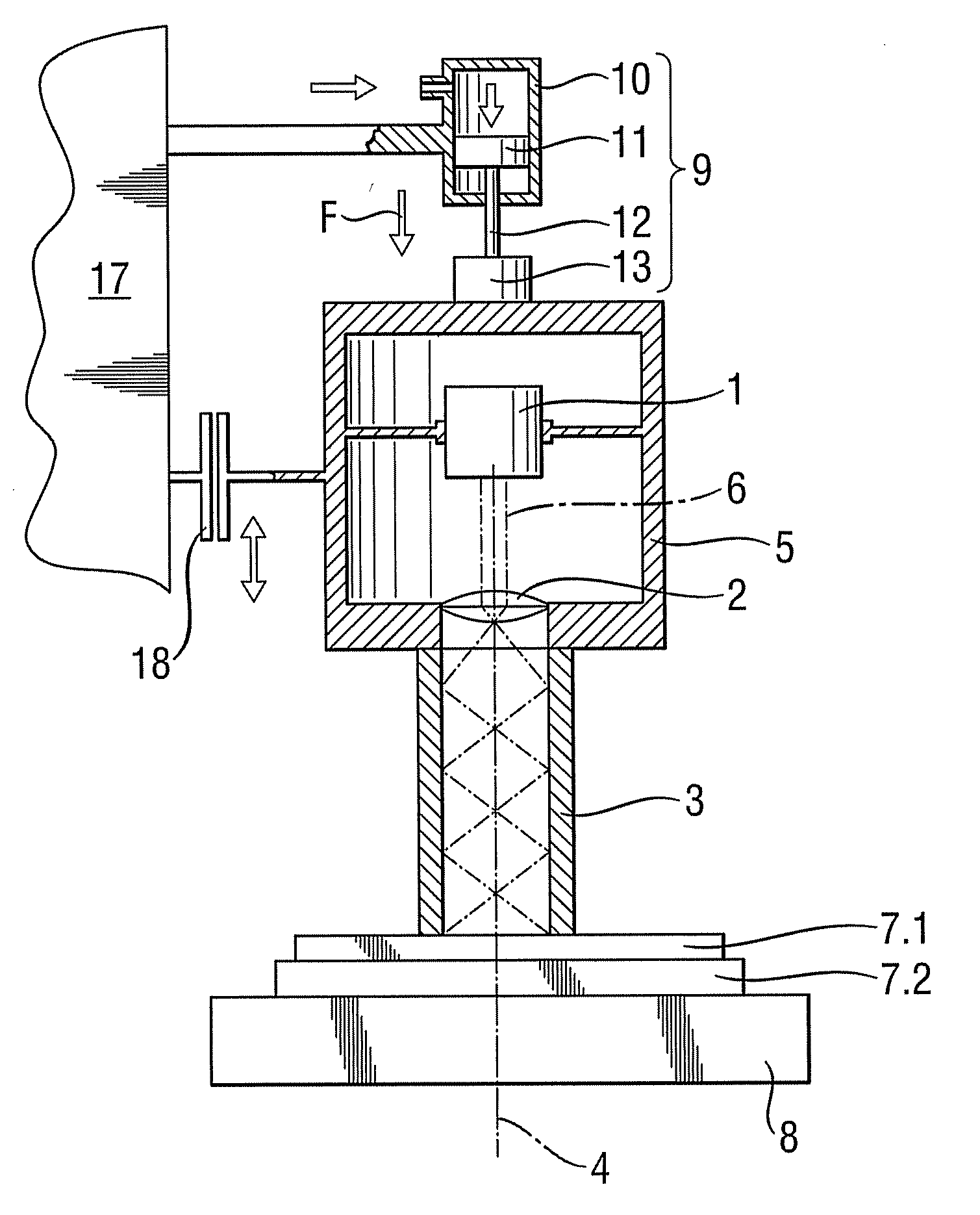
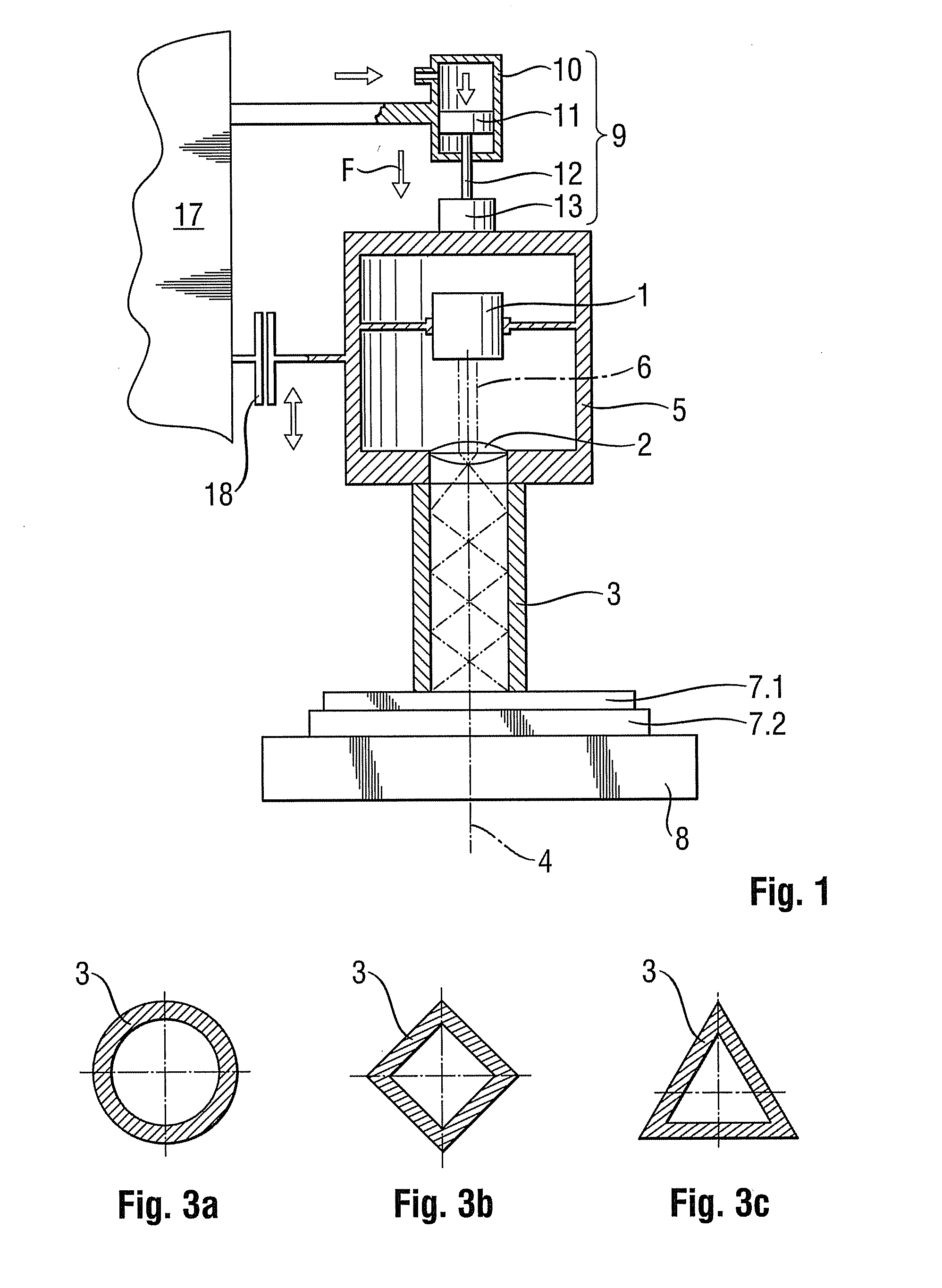
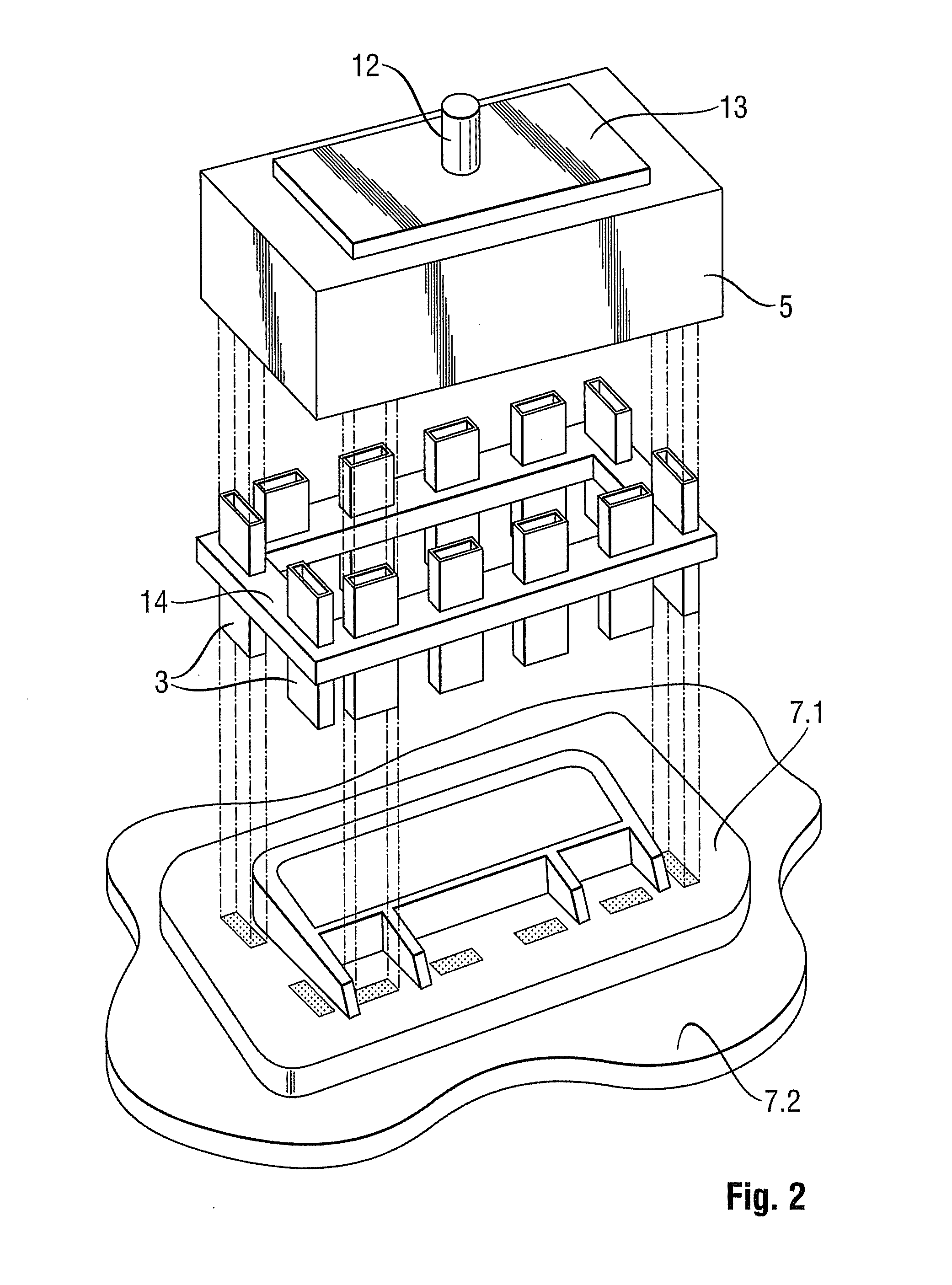
- A system comprising a high-power diode laser, beam-forming optical system, and a tube with a reflective inner surface, allowing for adjustable contact force and weld spot size and shape through multiple reflections and customizable tube configurations, enabling flexible adaptation to various applications.

Safety Standards and Welding Quality Regulations
The safety standards and quality regulations governing laser beam welding and spot welding represent critical frameworks that directly impact structural integrity outcomes in manufacturing applications. These regulatory environments have evolved to address the distinct characteristics and risks associated with each welding technology, establishing comprehensive guidelines for process control, operator safety, and final product quality assurance.
International standards organizations, including ISO, AWS, and IEC, have developed specific protocols for both welding methods. For laser beam welding, ISO 13919 series provides acceptance levels for welded joints, while ISO 11553 addresses safety requirements for laser processing machines. Spot welding operations are primarily governed by AWS D8.1M and ISO 14327, which establish criteria for resistance welding processes and equipment safety measures.
Quality control regulations mandate different inspection methodologies for each welding technique. Laser beam welding requires specialized non-destructive testing protocols due to its deep penetration characteristics and narrow heat-affected zones. Ultrasonic testing, radiographic inspection, and advanced metallographic analysis are typically specified to verify joint integrity and detect potential defects such as porosity or incomplete fusion.
Spot welding quality assurance follows established protocols including peel testing, cross-sectional analysis, and electrode force monitoring. The AWS C1.1 specification defines acceptance criteria for spot weld quality, including minimum nugget diameter requirements and surface appearance standards that directly correlate with structural performance.
Regulatory compliance frameworks increasingly emphasize traceability and process documentation. Modern quality management systems require real-time monitoring of critical welding parameters, including laser power density, beam positioning accuracy for laser welding, and electrode force, current, and time parameters for spot welding operations.
Safety regulations have adapted to address technology-specific hazards. Laser welding operations must comply with stringent laser safety standards, including proper beam containment, operator eye protection, and fume extraction systems. Spot welding safety focuses on electrical hazards, mechanical pinch points, and proper grounding procedures to prevent operator injury and ensure consistent weld quality.
International standards organizations, including ISO, AWS, and IEC, have developed specific protocols for both welding methods. For laser beam welding, ISO 13919 series provides acceptance levels for welded joints, while ISO 11553 addresses safety requirements for laser processing machines. Spot welding operations are primarily governed by AWS D8.1M and ISO 14327, which establish criteria for resistance welding processes and equipment safety measures.
Quality control regulations mandate different inspection methodologies for each welding technique. Laser beam welding requires specialized non-destructive testing protocols due to its deep penetration characteristics and narrow heat-affected zones. Ultrasonic testing, radiographic inspection, and advanced metallographic analysis are typically specified to verify joint integrity and detect potential defects such as porosity or incomplete fusion.
Spot welding quality assurance follows established protocols including peel testing, cross-sectional analysis, and electrode force monitoring. The AWS C1.1 specification defines acceptance criteria for spot weld quality, including minimum nugget diameter requirements and surface appearance standards that directly correlate with structural performance.
Regulatory compliance frameworks increasingly emphasize traceability and process documentation. Modern quality management systems require real-time monitoring of critical welding parameters, including laser power density, beam positioning accuracy for laser welding, and electrode force, current, and time parameters for spot welding operations.
Safety regulations have adapted to address technology-specific hazards. Laser welding operations must comply with stringent laser safety standards, including proper beam containment, operator eye protection, and fume extraction systems. Spot welding safety focuses on electrical hazards, mechanical pinch points, and proper grounding procedures to prevent operator injury and ensure consistent weld quality.
Environmental Impact of Industrial Welding Processes
The environmental implications of laser beam welding and spot welding processes present distinct profiles that significantly influence industrial sustainability strategies. Both technologies generate different types and quantities of environmental impacts throughout their operational lifecycles, necessitating comprehensive assessment for informed decision-making in manufacturing environments.
Laser beam welding demonstrates superior energy efficiency characteristics compared to traditional spot welding methods. The concentrated energy delivery system in laser welding minimizes heat-affected zones, reducing overall energy consumption per weld joint. This precision translates to lower carbon footprint during operation, particularly when considering the reduced need for post-processing treatments and material waste generation.
Atmospheric emissions constitute a critical differentiation factor between these welding technologies. Spot welding processes typically generate higher volumes of metal fumes and particulate matter due to the broader heat distribution and longer exposure times. The electrode degradation in resistance spot welding contributes additional metallic particles to workplace air quality concerns. Conversely, laser beam welding produces more controlled emissions, though specific fume composition may include different metallic compounds depending on base materials and protective gas usage.
Resource consumption patterns reveal significant disparities in environmental impact profiles. Spot welding requires consumable electrodes and extensive cooling systems, generating ongoing material waste streams and higher water consumption. Laser welding systems eliminate electrode consumption while requiring specialized optical components and protective gases, creating different waste categories but generally lower overall material throughput.
Waste heat generation represents another environmental consideration where laser welding demonstrates advantages. The precise energy application reduces thermal distortion and minimizes energy loss to surrounding materials, contributing to improved facility energy management. Spot welding processes dissipate considerable energy as waste heat, requiring enhanced ventilation systems and contributing to facility cooling loads.
Long-term environmental sustainability favors laser beam welding through reduced maintenance requirements, longer equipment lifecycles, and decreased consumable material dependencies. However, the initial manufacturing environmental cost of laser systems and their complex optical components must be considered in comprehensive lifecycle assessments for accurate environmental impact comparisons.
Laser beam welding demonstrates superior energy efficiency characteristics compared to traditional spot welding methods. The concentrated energy delivery system in laser welding minimizes heat-affected zones, reducing overall energy consumption per weld joint. This precision translates to lower carbon footprint during operation, particularly when considering the reduced need for post-processing treatments and material waste generation.
Atmospheric emissions constitute a critical differentiation factor between these welding technologies. Spot welding processes typically generate higher volumes of metal fumes and particulate matter due to the broader heat distribution and longer exposure times. The electrode degradation in resistance spot welding contributes additional metallic particles to workplace air quality concerns. Conversely, laser beam welding produces more controlled emissions, though specific fume composition may include different metallic compounds depending on base materials and protective gas usage.
Resource consumption patterns reveal significant disparities in environmental impact profiles. Spot welding requires consumable electrodes and extensive cooling systems, generating ongoing material waste streams and higher water consumption. Laser welding systems eliminate electrode consumption while requiring specialized optical components and protective gases, creating different waste categories but generally lower overall material throughput.
Waste heat generation represents another environmental consideration where laser welding demonstrates advantages. The precise energy application reduces thermal distortion and minimizes energy loss to surrounding materials, contributing to improved facility energy management. Spot welding processes dissipate considerable energy as waste heat, requiring enhanced ventilation systems and contributing to facility cooling loads.
Long-term environmental sustainability favors laser beam welding through reduced maintenance requirements, longer equipment lifecycles, and decreased consumable material dependencies. However, the initial manufacturing environmental cost of laser systems and their complex optical components must be considered in comprehensive lifecycle assessments for accurate environmental impact comparisons.
Unlock deeper insights with PatSnap Eureka Quick Research — get a full tech report to explore trends and direct your research. Try now!
Generate Your Research Report Instantly with AI Agent
Supercharge your innovation with PatSnap Eureka AI Agent Platform!