

Laser Net Shaping vs LMD: Application Suitability
APR 1, 20269 MIN READ
Generate Your Research Report Instantly with AI Agent
PatSnap Eureka helps you evaluate technical feasibility & market potential.
Laser Additive Manufacturing Background and Objectives
Laser additive manufacturing has emerged as a transformative technology in modern manufacturing, fundamentally altering how complex components are designed and produced across multiple industries. This field encompasses various laser-based processes that build three-dimensional objects layer by layer, offering unprecedented design freedom and manufacturing flexibility compared to traditional subtractive methods.
The evolution of laser additive manufacturing began in the 1980s with early stereolithography systems and has progressively advanced through continuous innovations in laser technology, material science, and process control. Key milestones include the development of selective laser sintering, direct metal laser sintering, and more recently, sophisticated techniques like Laser Net Shaping and Laser Metal Deposition, each addressing specific manufacturing challenges and application requirements.
Laser Net Shaping represents a precision-focused approach that emphasizes near-net-shape manufacturing with minimal post-processing requirements. This technology leverages advanced beam shaping and control systems to achieve superior surface finishes and dimensional accuracy, making it particularly suitable for applications requiring tight tolerances and complex geometries. The process typically operates at lower deposition rates but delivers exceptional quality consistency.
Laser Metal Deposition, conversely, prioritizes high deposition rates and material versatility, enabling rapid prototyping and repair applications. This technology excels in processing a wide range of materials, including metals, ceramics, and composites, while maintaining robust process stability across varying operational conditions. LMD systems demonstrate superior capability in handling large-scale components and multi-material structures.
The primary objective of comparing these technologies centers on identifying optimal application domains where each approach delivers maximum value. Understanding the trade-offs between precision and productivity, material compatibility and process complexity, becomes crucial for strategic technology selection and implementation planning.
Current market demands increasingly favor customized manufacturing solutions that can adapt to diverse application requirements while maintaining cost-effectiveness. The aerospace, automotive, medical device, and tooling industries represent primary target markets, each presenting unique technical specifications and performance criteria that influence technology selection decisions.
The evolution of laser additive manufacturing began in the 1980s with early stereolithography systems and has progressively advanced through continuous innovations in laser technology, material science, and process control. Key milestones include the development of selective laser sintering, direct metal laser sintering, and more recently, sophisticated techniques like Laser Net Shaping and Laser Metal Deposition, each addressing specific manufacturing challenges and application requirements.
Laser Net Shaping represents a precision-focused approach that emphasizes near-net-shape manufacturing with minimal post-processing requirements. This technology leverages advanced beam shaping and control systems to achieve superior surface finishes and dimensional accuracy, making it particularly suitable for applications requiring tight tolerances and complex geometries. The process typically operates at lower deposition rates but delivers exceptional quality consistency.
Laser Metal Deposition, conversely, prioritizes high deposition rates and material versatility, enabling rapid prototyping and repair applications. This technology excels in processing a wide range of materials, including metals, ceramics, and composites, while maintaining robust process stability across varying operational conditions. LMD systems demonstrate superior capability in handling large-scale components and multi-material structures.
The primary objective of comparing these technologies centers on identifying optimal application domains where each approach delivers maximum value. Understanding the trade-offs between precision and productivity, material compatibility and process complexity, becomes crucial for strategic technology selection and implementation planning.
Current market demands increasingly favor customized manufacturing solutions that can adapt to diverse application requirements while maintaining cost-effectiveness. The aerospace, automotive, medical device, and tooling industries represent primary target markets, each presenting unique technical specifications and performance criteria that influence technology selection decisions.
Market Demand for Laser Net Shaping and LMD Applications
The aerospace industry represents the most significant market driver for both Laser Net Shaping and Laser Metal Deposition technologies, with demand primarily centered on manufacturing complex, high-performance components that require exceptional material properties and geometric precision. Aircraft engine manufacturers increasingly seek these additive manufacturing solutions to produce turbine blades, combustion chambers, and heat exchangers that traditional manufacturing methods cannot efficiently create. The ability to produce near-net-shape components with minimal material waste addresses both cost reduction imperatives and sustainability requirements in aerospace manufacturing.
Automotive sector demand has emerged as a rapidly growing market segment, particularly for high-end performance vehicles and electric vehicle applications. Laser Net Shaping finds strong adoption in producing lightweight structural components and complex cooling channels for battery thermal management systems. Meanwhile, LMD technology serves the automotive aftermarket through repair and refurbishment of expensive tooling and dies, offering substantial cost savings compared to complete replacement strategies.
The energy sector, encompassing both traditional oil and gas operations and renewable energy infrastructure, presents substantial market opportunities for both technologies. Wind turbine manufacturers utilize these laser-based processes for producing large-scale components with enhanced fatigue resistance, while the oil and gas industry employs them for creating corrosion-resistant components and repairing high-value equipment in challenging operational environments.
Medical device manufacturing represents a specialized but high-value market segment where both technologies address unique requirements for biocompatible materials and patient-specific geometries. Custom implants, surgical instruments, and prosthetic components drive demand for precise material deposition and complex internal structures that conventional manufacturing cannot achieve.
Industrial tooling and machinery sectors demonstrate consistent demand for LMD applications, particularly for extending equipment lifecycle through repair and enhancement processes. Manufacturing facilities increasingly recognize the economic benefits of restoring worn components rather than purchasing replacements, creating a sustainable market foundation for laser deposition services and equipment.
Market growth trajectories indicate strongest expansion in regions with established aerospace and automotive manufacturing bases, while emerging markets show increasing adoption driven by technology transfer and local manufacturing capability development initiatives.
Automotive sector demand has emerged as a rapidly growing market segment, particularly for high-end performance vehicles and electric vehicle applications. Laser Net Shaping finds strong adoption in producing lightweight structural components and complex cooling channels for battery thermal management systems. Meanwhile, LMD technology serves the automotive aftermarket through repair and refurbishment of expensive tooling and dies, offering substantial cost savings compared to complete replacement strategies.
The energy sector, encompassing both traditional oil and gas operations and renewable energy infrastructure, presents substantial market opportunities for both technologies. Wind turbine manufacturers utilize these laser-based processes for producing large-scale components with enhanced fatigue resistance, while the oil and gas industry employs them for creating corrosion-resistant components and repairing high-value equipment in challenging operational environments.
Medical device manufacturing represents a specialized but high-value market segment where both technologies address unique requirements for biocompatible materials and patient-specific geometries. Custom implants, surgical instruments, and prosthetic components drive demand for precise material deposition and complex internal structures that conventional manufacturing cannot achieve.
Industrial tooling and machinery sectors demonstrate consistent demand for LMD applications, particularly for extending equipment lifecycle through repair and enhancement processes. Manufacturing facilities increasingly recognize the economic benefits of restoring worn components rather than purchasing replacements, creating a sustainable market foundation for laser deposition services and equipment.
Market growth trajectories indicate strongest expansion in regions with established aerospace and automotive manufacturing bases, while emerging markets show increasing adoption driven by technology transfer and local manufacturing capability development initiatives.
Current State and Challenges of Laser Manufacturing Technologies
Laser manufacturing technologies have experienced significant advancement over the past two decades, with Laser Net Shaping (LNS) and Laser Metal Deposition (LMD) emerging as prominent additive manufacturing techniques. Both technologies utilize laser energy to selectively melt and deposit metallic materials, enabling the creation of complex three-dimensional components directly from digital designs. The current technological landscape demonstrates varying levels of maturity across different laser-based manufacturing processes.
LNS technology has achieved considerable commercial success in aerospace and medical device manufacturing, with established process parameters for titanium, stainless steel, and cobalt-chrome alloys. The technology demonstrates excellent dimensional accuracy and surface finish quality, making it suitable for high-precision applications. Current LNS systems can achieve layer thicknesses ranging from 20 to 100 micrometers, with build rates typically between 5-20 cubic centimeters per hour depending on material and geometry complexity.
LMD technology presents a different maturity profile, excelling in repair applications and large-scale component manufacturing. Modern LMD systems can process a broader range of materials including difficult-to-weld alloys and functionally graded materials. The technology achieves higher deposition rates, typically 50-500 cubic centimeters per hour, but with reduced dimensional precision compared to LNS processes.
Several critical challenges persist across both technologies. Material qualification remains a significant bottleneck, as aerospace and medical applications require extensive testing and certification processes that can span multiple years. Process repeatability and quality assurance present ongoing difficulties, particularly in achieving consistent mechanical properties across different build orientations and geometries.
Thermal management represents another fundamental challenge, as both LNS and LMD processes generate significant heat that can lead to residual stresses, distortion, and microstructural variations. Current mitigation strategies include preheating, controlled cooling, and post-process heat treatment, but these add complexity and cost to manufacturing workflows.
The integration of real-time monitoring and control systems remains technologically immature. While various sensing technologies exist for temperature monitoring, melt pool observation, and defect detection, the translation of sensor data into actionable process corrections requires further development. Machine learning approaches show promise but require extensive datasets for training and validation.
Geographically, technology development concentrates in North America and Europe, with significant research activities in Germany, United States, and United Kingdom. Asian markets, particularly Japan and South Korea, focus primarily on equipment manufacturing and process optimization rather than fundamental technology development.
LNS technology has achieved considerable commercial success in aerospace and medical device manufacturing, with established process parameters for titanium, stainless steel, and cobalt-chrome alloys. The technology demonstrates excellent dimensional accuracy and surface finish quality, making it suitable for high-precision applications. Current LNS systems can achieve layer thicknesses ranging from 20 to 100 micrometers, with build rates typically between 5-20 cubic centimeters per hour depending on material and geometry complexity.
LMD technology presents a different maturity profile, excelling in repair applications and large-scale component manufacturing. Modern LMD systems can process a broader range of materials including difficult-to-weld alloys and functionally graded materials. The technology achieves higher deposition rates, typically 50-500 cubic centimeters per hour, but with reduced dimensional precision compared to LNS processes.
Several critical challenges persist across both technologies. Material qualification remains a significant bottleneck, as aerospace and medical applications require extensive testing and certification processes that can span multiple years. Process repeatability and quality assurance present ongoing difficulties, particularly in achieving consistent mechanical properties across different build orientations and geometries.
Thermal management represents another fundamental challenge, as both LNS and LMD processes generate significant heat that can lead to residual stresses, distortion, and microstructural variations. Current mitigation strategies include preheating, controlled cooling, and post-process heat treatment, but these add complexity and cost to manufacturing workflows.
The integration of real-time monitoring and control systems remains technologically immature. While various sensing technologies exist for temperature monitoring, melt pool observation, and defect detection, the translation of sensor data into actionable process corrections requires further development. Machine learning approaches show promise but require extensive datasets for training and validation.
Geographically, technology development concentrates in North America and Europe, with significant research activities in Germany, United States, and United Kingdom. Asian markets, particularly Japan and South Korea, focus primarily on equipment manufacturing and process optimization rather than fundamental technology development.
Current Technical Solutions for Laser Manufacturing
01 Laser net shaping process control and parameter optimization
Advanced control systems and parameter optimization methods are employed in laser net shaping processes to achieve precise dimensional accuracy and surface quality. This includes real-time monitoring of laser power, scanning speed, and powder feed rate to ensure consistent deposition. Process parameters are adjusted based on material properties and desired geometric features to optimize the manufacturing outcome.- Laser net shaping process control and parameter optimization: Advanced control systems and parameter optimization methods are employed in laser net shaping processes to achieve precise dimensional accuracy and surface quality. These systems monitor and adjust key parameters such as laser power, scanning speed, powder feed rate, and beam focus in real-time. Adaptive control algorithms and feedback mechanisms ensure consistent deposition quality and minimize defects during the manufacturing process.
- Material selection and powder characteristics for LMD applications: The suitability of materials for laser metal deposition depends on powder characteristics including particle size distribution, flowability, and chemical composition. Specific alloy compositions and powder preparation methods are developed to enhance deposition quality, reduce porosity, and improve mechanical properties of the final components. Material compatibility with laser processing parameters is critical for successful net shaping applications.
- Geometric accuracy and dimensional control in laser net shaping: Methods for achieving high geometric accuracy in laser net shaping include path planning algorithms, layer thickness control, and compensation strategies for thermal distortion. Advanced scanning strategies and deposition patterns are implemented to minimize dimensional deviations and improve the net-shape capability of the process. Monitoring systems track dimensional changes during fabrication to enable corrective actions.
- Microstructure control and mechanical property enhancement: Laser metal deposition processes are optimized to control microstructure formation and achieve desired mechanical properties in fabricated components. Heat treatment strategies, interlayer temperature management, and scanning pattern optimization influence grain structure, phase composition, and residual stress distribution. These techniques enable the production of components with tailored mechanical characteristics suitable for specific applications.
- Hybrid manufacturing and repair applications using LMD: Laser metal deposition technology is applied in hybrid manufacturing systems combining additive and subtractive processes, as well as in component repair and remanufacturing. Integration with machining operations enables near-net-shape fabrication with final dimensional accuracy achieved through subsequent machining. Repair applications utilize LMD to restore worn or damaged components by depositing material in localized areas, extending component service life.
02 Material suitability and powder characteristics for LMD applications
The selection of appropriate materials and powder characteristics is critical for laser metal deposition applications. Powder particle size distribution, flowability, and chemical composition directly affect the deposition quality and mechanical properties of the final component. Material compatibility with the laser processing parameters ensures optimal melting and bonding characteristics during the additive manufacturing process.Expand Specific Solutions03 Geometric accuracy and dimensional control in laser net shaping
Achieving precise geometric accuracy in laser net shaping requires sophisticated path planning algorithms and dimensional control strategies. This involves compensation for thermal distortion, shrinkage effects, and layer-by-layer accumulation errors. Advanced measurement and feedback systems enable real-time correction to maintain dimensional tolerances throughout the manufacturing process.Expand Specific Solutions04 Laser cladding and surface modification techniques
Laser cladding techniques are utilized to enhance surface properties and repair worn components through controlled material deposition. The process involves melting a thin layer of substrate material along with the deposited material to create a metallurgical bond. Surface modification through laser processing improves wear resistance, corrosion resistance, and extends component service life.Expand Specific Solutions05 Hybrid manufacturing and integration with conventional processes
Hybrid manufacturing approaches combine laser net shaping with conventional machining and forming processes to leverage the advantages of both additive and subtractive manufacturing. This integration enables the production of complex geometries with near-net-shape capabilities while maintaining tight tolerances through subsequent machining operations. The combination reduces material waste and manufacturing time for complex components.Expand Specific Solutions
Key Players in Laser Net Shaping and LMD Industry
The laser net shaping versus laser metal deposition (LMD) technology landscape represents a mature but rapidly evolving sector within additive manufacturing, with significant market expansion driven by aerospace, automotive, and medical applications. The competitive environment features diverse players ranging from established industrial giants like General Electric, Siemens Energy, and Samsung Electronics to specialized laser technology companies such as TRUMPF Laser and Kataoka Corp. Academic institutions including University of Rochester, Zhejiang University, and Beihang University contribute substantial research advancement. Technology maturity varies significantly across applications, with companies like Rolls-Royce and Carl Zeiss Meditec demonstrating advanced implementation in precision manufacturing, while materials specialists including SABIC Global Technologies, Kingfa Sci. & Tech., and LOTTE Chemical drive substrate innovation. The market shows strong growth potential, particularly in high-value manufacturing sectors where precision and material properties are critical.
General Electric Company
Technical Solution: GE has extensively implemented both laser net shaping and LMD technologies across their aviation and power generation divisions. Their laser net shaping applications focus on precision cutting of turbine components and complex geometries in jet engine parts, utilizing high-precision laser systems for material removal with tight tolerances. GE's LMD technology, branded as Direct Metal Laser Melting (DMLM), is used for additive manufacturing of critical engine components including fuel nozzles and heat exchangers. The company has developed proprietary powder metallurgy processes combined with LMD for creating components that would be impossible to manufacture through traditional methods. GE's approach emphasizes the complementary nature of both technologies, using laser net shaping for subtractive processes and LMD for additive applications within the same manufacturing workflow.
Strengths: Extensive industrial experience, integrated manufacturing processes, proven aerospace applications. Weaknesses: Technology primarily focused on internal use, limited commercial availability of systems.
Carl Zeiss Meditec AG
Technical Solution: Carl Zeiss Meditec has developed precision laser technologies for medical device manufacturing, applying both laser net shaping and LMD principles in specialized medical applications. Their laser net shaping technology is used for precision cutting and structuring of medical implants and surgical instruments, utilizing ultrashort pulse lasers for minimal heat-affected zones and superior surface quality. The company's systems enable creation of complex microstructures and surface textures that enhance biocompatibility and osseointegration in implant applications. While not traditionally focused on LMD, Zeiss has explored laser-based additive processes for creating custom medical devices and implants with patient-specific geometries. Their approach emphasizes precision, biocompatibility, and regulatory compliance in medical manufacturing applications. The company's laser systems incorporate advanced beam control and monitoring technologies to ensure consistent quality and traceability required in medical device manufacturing.
Strengths: High precision capabilities, medical industry expertise, regulatory compliance experience. Weaknesses: Limited to medical applications, smaller scale manufacturing focus compared to industrial applications.
Core Patents in Laser Net Shaping vs LMD Technologies
Laser net shape manufacturing and repair using a medial axis toolpath deposition method
PatentInactiveUS20080182017A1
Innovation
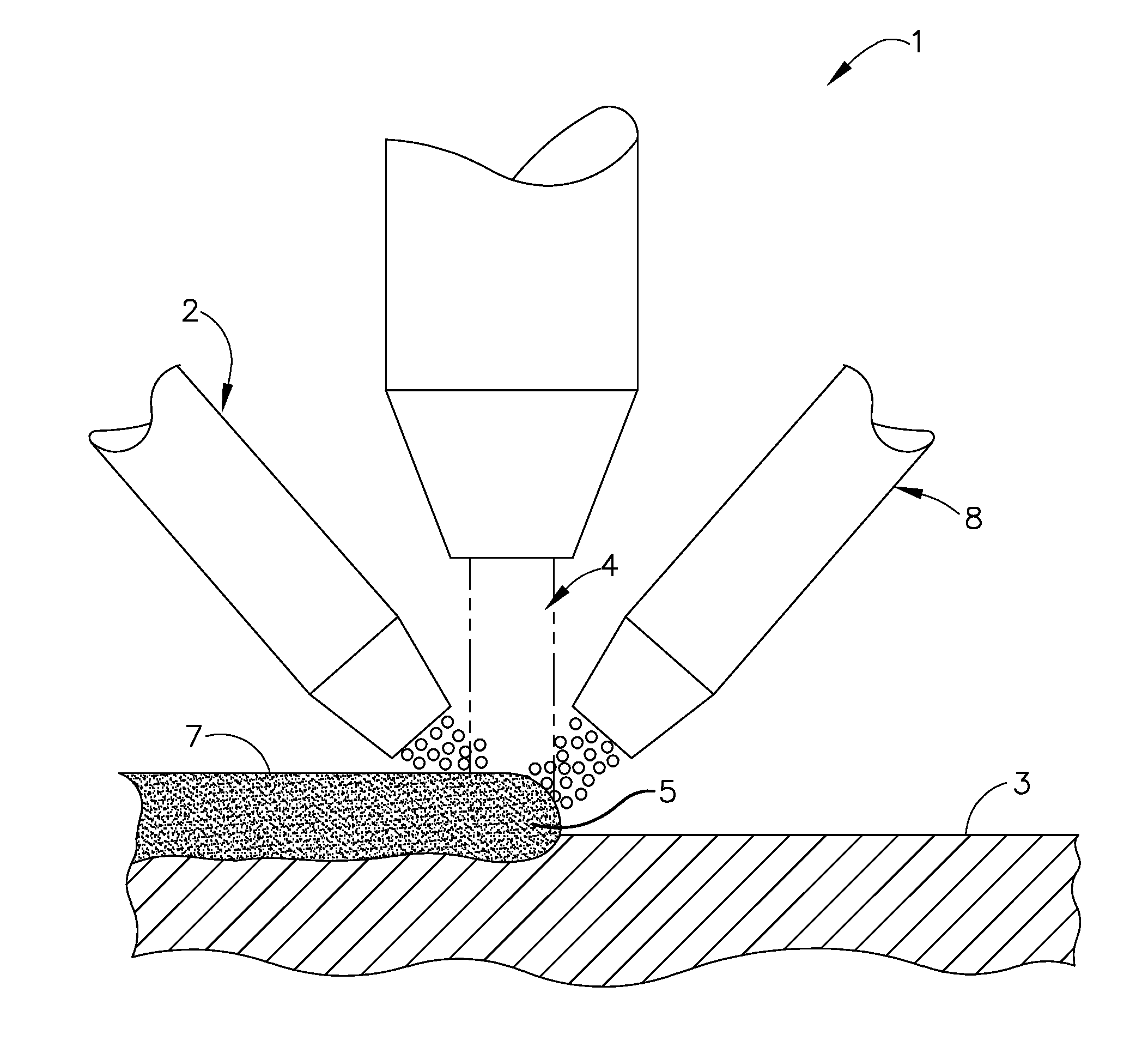
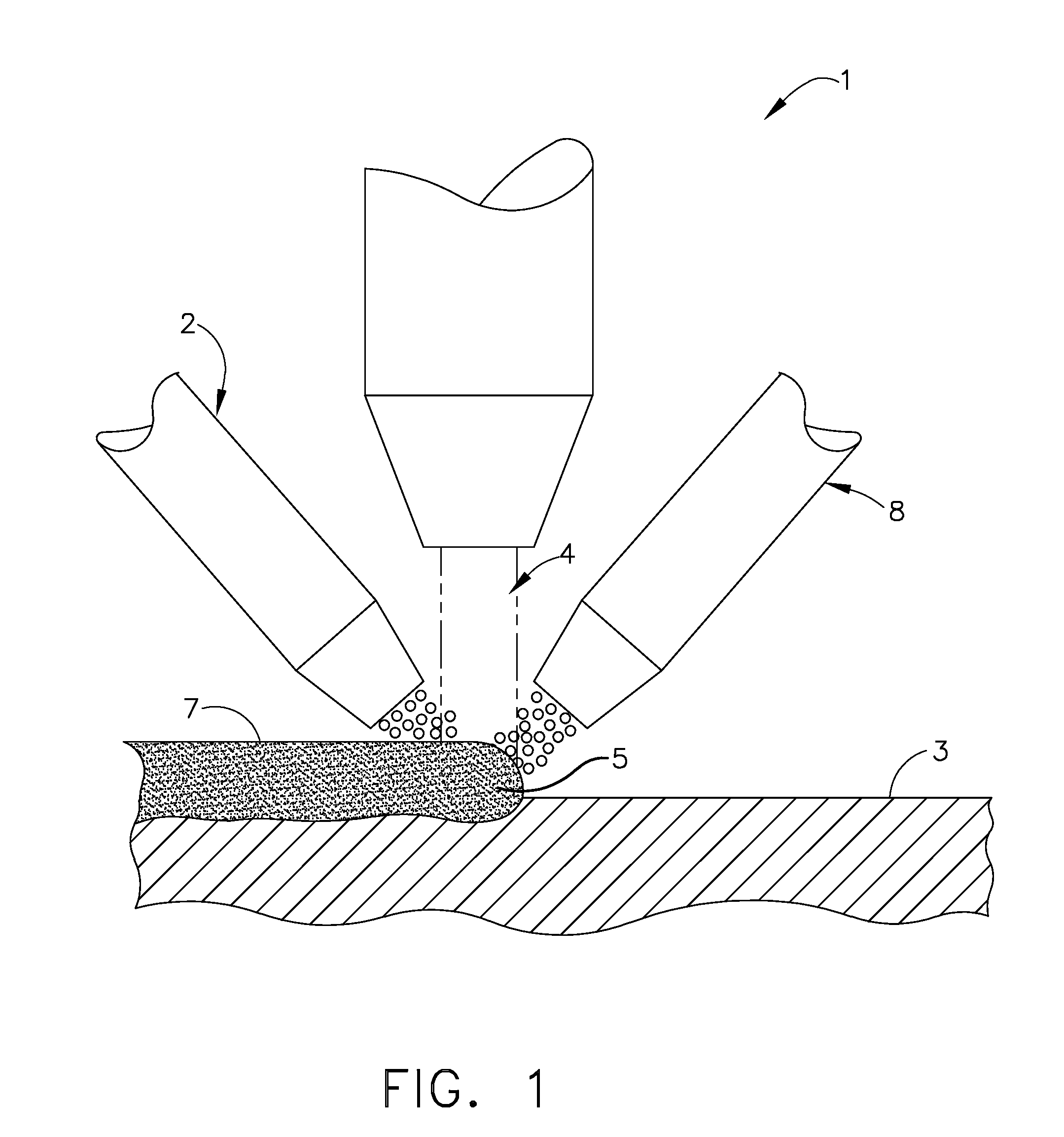
- The method involves digitally slicing a CAD model into deposition layers, determining a medial axis for each layer, and depositing material in a pattern centered on the medial axis to build up layers, reducing fusion imperfections by stabilizing the deposition process with a continuous zigzag toolpath and varying laser power and speed.

Laser net shape manufactured component using an adaptive toolpath deposition method
PatentActiveUS20160076374A1
Innovation
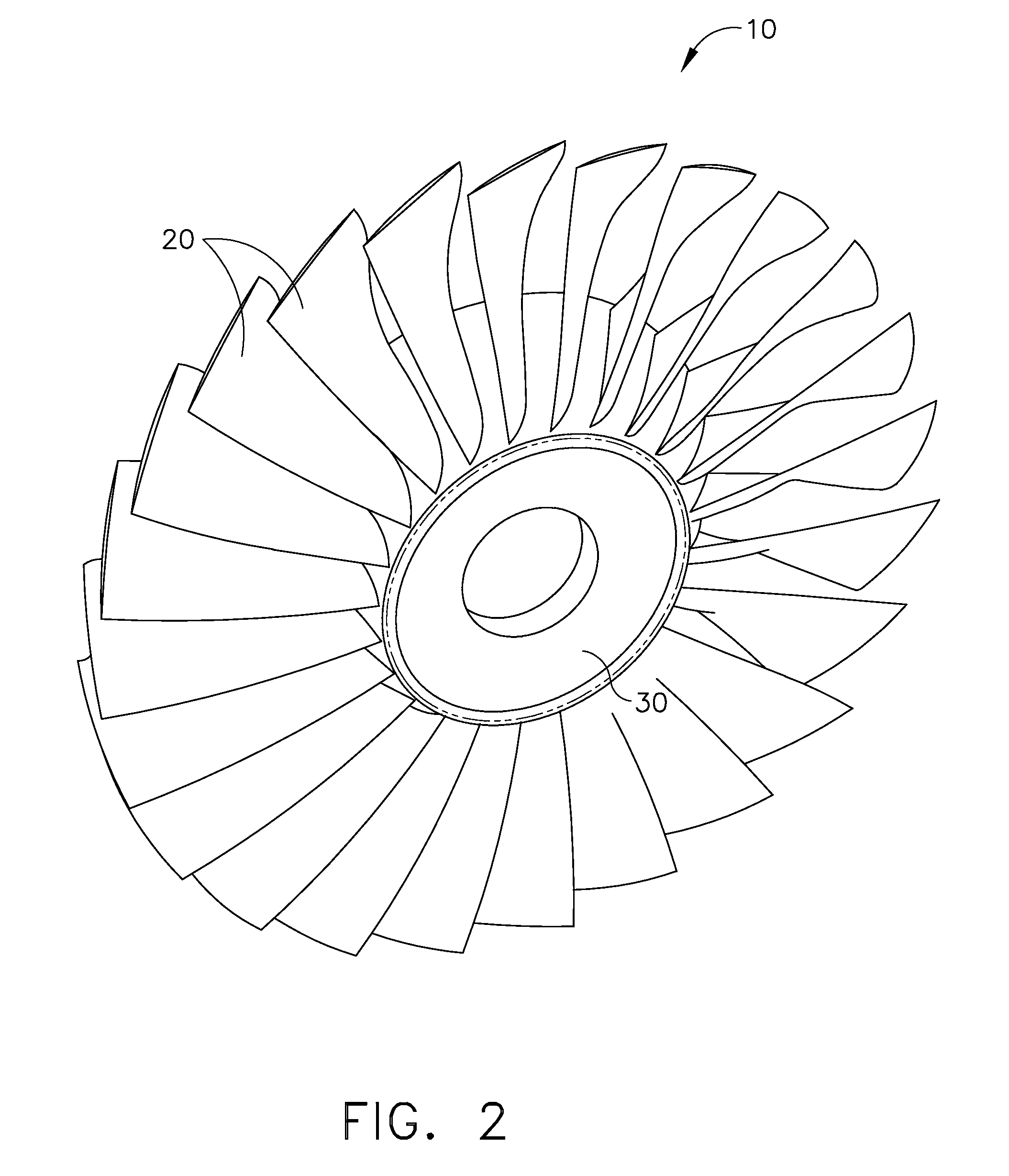
- The adaptive toolpath deposition method in Laser Net Shape Manufacturing (LNSM) uses a laser to deposit thin layers of metal powder with variable bead widths and controlled overlap ratios, allowing for precise 3D geometry creation and minimizing fusion imperfections by dynamically adjusting laser power and toolpath parameters.


Quality Standards for Laser Manufacturing Processes
Quality standards for laser manufacturing processes, particularly in Laser Net Shaping (LNS) and Laser Metal Deposition (LMD), are governed by multiple international frameworks that ensure consistent performance and reliability across different applications. The ISO 17296 series provides comprehensive guidelines for additive manufacturing processes, while ASTM F2792 establishes terminology and classification standards specifically applicable to laser-based manufacturing techniques.
Dimensional accuracy requirements vary significantly between LNS and LMD applications, with tolerances typically ranging from ±0.1mm for general industrial components to ±0.05mm for precision aerospace parts. Surface roughness standards are particularly critical, where Ra values must not exceed 6.3μm for most structural applications, though post-processing can achieve Ra values below 1.6μm when required for functional surfaces.
Material property verification follows established protocols including tensile strength testing per ASTM E8, fatigue testing according to ASTM D7791, and microstructural analysis using standardized metallographic procedures. Porosity levels must remain below 2% for structural applications, with density measurements achieving minimum 99% of wrought material equivalents. These standards ensure that laser-manufactured components meet or exceed conventional manufacturing benchmarks.
Process monitoring and control standards emphasize real-time parameter tracking, including laser power stability within ±2%, powder feed rate consistency, and thermal gradient management. Quality assurance protocols mandate layer-by-layer inspection capabilities, with non-destructive testing methods such as computed tomography becoming increasingly standardized for internal defect detection.
Certification requirements for laser manufacturing facilities include operator qualification programs, equipment calibration schedules, and traceability documentation systems. Environmental controls must maintain specified atmospheric conditions, particularly oxygen levels below 100ppm for reactive materials, ensuring consistent processing conditions that directly impact final component quality and repeatability across production batches.
Dimensional accuracy requirements vary significantly between LNS and LMD applications, with tolerances typically ranging from ±0.1mm for general industrial components to ±0.05mm for precision aerospace parts. Surface roughness standards are particularly critical, where Ra values must not exceed 6.3μm for most structural applications, though post-processing can achieve Ra values below 1.6μm when required for functional surfaces.
Material property verification follows established protocols including tensile strength testing per ASTM E8, fatigue testing according to ASTM D7791, and microstructural analysis using standardized metallographic procedures. Porosity levels must remain below 2% for structural applications, with density measurements achieving minimum 99% of wrought material equivalents. These standards ensure that laser-manufactured components meet or exceed conventional manufacturing benchmarks.
Process monitoring and control standards emphasize real-time parameter tracking, including laser power stability within ±2%, powder feed rate consistency, and thermal gradient management. Quality assurance protocols mandate layer-by-layer inspection capabilities, with non-destructive testing methods such as computed tomography becoming increasingly standardized for internal defect detection.
Certification requirements for laser manufacturing facilities include operator qualification programs, equipment calibration schedules, and traceability documentation systems. Environmental controls must maintain specified atmospheric conditions, particularly oxygen levels below 100ppm for reactive materials, ensuring consistent processing conditions that directly impact final component quality and repeatability across production batches.
Cost-Benefit Analysis of Laser Manufacturing Methods
The economic evaluation of Laser Net Shaping (LNS) and Laser Metal Deposition (LMD) reveals distinct cost structures that significantly influence their application suitability across different manufacturing scenarios. Initial capital investment requirements differ substantially between these technologies, with LNS systems typically demanding higher upfront costs due to their sophisticated powder handling mechanisms and precise control systems. LMD equipment, while still representing significant investment, generally offers more accessible entry points for manufacturers seeking additive manufacturing capabilities.
Operational cost analysis demonstrates that material utilization efficiency serves as a critical differentiator between these technologies. LNS achieves superior powder utilization rates, often exceeding 95%, through its closed-loop powder management system, resulting in minimal waste generation and reduced material costs per component. LMD systems, while improving continuously, typically achieve 70-85% powder utilization efficiency, leading to higher material costs but offering greater flexibility in multi-material applications.
Production throughput considerations reveal complementary strengths between these technologies. LNS excels in high-volume production scenarios where consistent geometric requirements justify the initial setup investments. The technology's ability to produce multiple components simultaneously through optimized build chamber utilization significantly reduces per-unit manufacturing costs in volume production. LMD demonstrates superior cost-effectiveness for low-volume, high-complexity applications where design flexibility and rapid prototyping capabilities outweigh throughput limitations.
Labor cost implications vary significantly based on application requirements. LNS systems generally require less operator intervention during production cycles, reducing labor costs for high-volume manufacturing. However, setup and calibration procedures demand specialized expertise, potentially increasing indirect labor costs. LMD operations typically require more continuous operator oversight but offer greater process adaptability, making them suitable for applications requiring frequent parameter adjustments or material changes.
Post-processing cost considerations further differentiate these technologies' economic profiles. LNS components often require minimal finishing operations due to superior surface quality and dimensional accuracy, reducing downstream processing costs. LMD parts may require additional machining or surface treatment, particularly for critical dimensional features, adding to total manufacturing costs but enabling hybrid manufacturing approaches that combine additive and subtractive processes.
The total cost of ownership analysis must incorporate maintenance requirements, consumable costs, and technology lifecycle considerations. LNS systems typically demonstrate lower maintenance costs due to reduced component wear from powder recycling systems, while LMD systems may require more frequent nozzle replacement and calibration procedures, impacting long-term operational economics.
Operational cost analysis demonstrates that material utilization efficiency serves as a critical differentiator between these technologies. LNS achieves superior powder utilization rates, often exceeding 95%, through its closed-loop powder management system, resulting in minimal waste generation and reduced material costs per component. LMD systems, while improving continuously, typically achieve 70-85% powder utilization efficiency, leading to higher material costs but offering greater flexibility in multi-material applications.
Production throughput considerations reveal complementary strengths between these technologies. LNS excels in high-volume production scenarios where consistent geometric requirements justify the initial setup investments. The technology's ability to produce multiple components simultaneously through optimized build chamber utilization significantly reduces per-unit manufacturing costs in volume production. LMD demonstrates superior cost-effectiveness for low-volume, high-complexity applications where design flexibility and rapid prototyping capabilities outweigh throughput limitations.
Labor cost implications vary significantly based on application requirements. LNS systems generally require less operator intervention during production cycles, reducing labor costs for high-volume manufacturing. However, setup and calibration procedures demand specialized expertise, potentially increasing indirect labor costs. LMD operations typically require more continuous operator oversight but offer greater process adaptability, making them suitable for applications requiring frequent parameter adjustments or material changes.
Post-processing cost considerations further differentiate these technologies' economic profiles. LNS components often require minimal finishing operations due to superior surface quality and dimensional accuracy, reducing downstream processing costs. LMD parts may require additional machining or surface treatment, particularly for critical dimensional features, adding to total manufacturing costs but enabling hybrid manufacturing approaches that combine additive and subtractive processes.
The total cost of ownership analysis must incorporate maintenance requirements, consumable costs, and technology lifecycle considerations. LNS systems typically demonstrate lower maintenance costs due to reduced component wear from powder recycling systems, while LMD systems may require more frequent nozzle replacement and calibration procedures, impacting long-term operational economics.
Unlock deeper insights with PatSnap Eureka Quick Research — get a full tech report to explore trends and direct your research. Try now!
Generate Your Research Report Instantly with AI Agent
Supercharge your innovation with PatSnap Eureka AI Agent Platform!