

Long-Duration Energy Storage vs Renewable Integration: Performance Fit
MAY 18, 20269 MIN READ
Generate Your Research Report Instantly with AI Agent
PatSnap Eureka helps you evaluate technical feasibility & market potential.
Long-Duration Storage and Renewable Integration Background
The global energy landscape has undergone a fundamental transformation over the past two decades, driven by the urgent need to decarbonize power systems and achieve climate neutrality goals. Renewable energy sources, particularly solar photovoltaic and wind power, have experienced unprecedented growth, with their combined capacity increasing from less than 100 GW in 2000 to over 3,000 GW by 2023. However, this rapid expansion has revealed a critical challenge: the inherent intermittency and variability of renewable generation creates significant grid stability and reliability concerns.
Traditional energy storage solutions, primarily lithium-ion batteries, have proven effective for short-duration applications ranging from minutes to several hours. Yet as renewable penetration levels exceed 30-40% in many power systems, the need for longer-duration storage becomes increasingly apparent. Grid operators face challenges during extended periods of low renewable output, seasonal variations, and multi-day weather patterns that can significantly impact generation profiles.
Long-duration energy storage encompasses technologies capable of storing and dispatching energy for periods ranging from 8 hours to several weeks. These systems serve multiple critical functions including load shifting across days or seasons, providing backup power during extended outages, and enabling higher renewable penetration rates without compromising grid reliability. The technology spectrum includes pumped hydro storage, compressed air energy systems, liquid air energy storage, hydrogen-based solutions, and advanced battery chemistries.
The performance fit between long-duration storage and renewable integration represents a complex optimization challenge involving temporal matching, capacity planning, and economic viability. Different renewable resources exhibit distinct generation patterns and predictability characteristics, requiring tailored storage solutions to maximize system efficiency and minimize curtailment losses.
Current market drivers include declining renewable costs, increasingly stringent carbon reduction mandates, and growing recognition that achieving deep decarbonization requires storage durations far exceeding current battery capabilities. The International Energy Agency projects that long-duration storage capacity must increase by over 90 times current levels by 2040 to support net-zero emissions scenarios, highlighting the critical importance of optimizing performance alignment between storage technologies and renewable generation profiles.
Traditional energy storage solutions, primarily lithium-ion batteries, have proven effective for short-duration applications ranging from minutes to several hours. Yet as renewable penetration levels exceed 30-40% in many power systems, the need for longer-duration storage becomes increasingly apparent. Grid operators face challenges during extended periods of low renewable output, seasonal variations, and multi-day weather patterns that can significantly impact generation profiles.
Long-duration energy storage encompasses technologies capable of storing and dispatching energy for periods ranging from 8 hours to several weeks. These systems serve multiple critical functions including load shifting across days or seasons, providing backup power during extended outages, and enabling higher renewable penetration rates without compromising grid reliability. The technology spectrum includes pumped hydro storage, compressed air energy systems, liquid air energy storage, hydrogen-based solutions, and advanced battery chemistries.
The performance fit between long-duration storage and renewable integration represents a complex optimization challenge involving temporal matching, capacity planning, and economic viability. Different renewable resources exhibit distinct generation patterns and predictability characteristics, requiring tailored storage solutions to maximize system efficiency and minimize curtailment losses.
Current market drivers include declining renewable costs, increasingly stringent carbon reduction mandates, and growing recognition that achieving deep decarbonization requires storage durations far exceeding current battery capabilities. The International Energy Agency projects that long-duration storage capacity must increase by over 90 times current levels by 2040 to support net-zero emissions scenarios, highlighting the critical importance of optimizing performance alignment between storage technologies and renewable generation profiles.
Market Demand for Grid-Scale Energy Storage Solutions
The global energy landscape is experiencing unprecedented transformation driven by the urgent need to decarbonize power systems and integrate increasing volumes of renewable energy sources. Grid-scale energy storage solutions have emerged as critical infrastructure components to address the inherent intermittency challenges associated with solar and wind power generation. The market demand for these solutions is accelerating rapidly as utilities, independent power producers, and grid operators seek reliable technologies to maintain grid stability while maximizing renewable energy utilization.
Traditional grid management approaches are becoming inadequate as renewable penetration levels exceed critical thresholds in many regions. Power systems require flexible resources capable of providing multiple grid services including frequency regulation, voltage support, peak shaving, and load shifting. Long-duration energy storage technologies, particularly those capable of discharging for four hours or more, are increasingly recognized as essential for managing daily and seasonal renewable energy variations.
The economic drivers for grid-scale storage deployment are strengthening across multiple market segments. Utility-scale applications are expanding beyond traditional peak shaving to encompass renewable energy firming, transmission deferral, and grid resilience enhancement. Regulatory frameworks in numerous jurisdictions are evolving to create revenue streams for storage assets through capacity markets, ancillary services, and renewable energy credit programs.
Regional market dynamics vary significantly based on renewable energy policies, grid infrastructure maturity, and electricity market structures. Developed markets with high renewable penetration are prioritizing storage solutions that can provide long-duration discharge capabilities to manage extended periods of low renewable generation. Emerging markets are focusing on storage technologies that can support grid modernization efforts while enabling rapid renewable energy deployment.
The demand profile is shifting toward technologies that can demonstrate superior performance characteristics across multiple operational parameters. Grid operators are increasingly evaluating storage solutions based on round-trip efficiency, cycle life, response time, and degradation rates under various operating conditions. The ability to maintain consistent performance across different ambient conditions and operational scenarios has become a key differentiator in technology selection processes.
Market growth is further accelerated by declining technology costs and improving performance metrics across various storage technologies. The convergence of favorable economics, supportive policies, and technical performance improvements is creating a robust demand environment for grid-scale energy storage solutions that can effectively complement renewable energy integration strategies.
Traditional grid management approaches are becoming inadequate as renewable penetration levels exceed critical thresholds in many regions. Power systems require flexible resources capable of providing multiple grid services including frequency regulation, voltage support, peak shaving, and load shifting. Long-duration energy storage technologies, particularly those capable of discharging for four hours or more, are increasingly recognized as essential for managing daily and seasonal renewable energy variations.
The economic drivers for grid-scale storage deployment are strengthening across multiple market segments. Utility-scale applications are expanding beyond traditional peak shaving to encompass renewable energy firming, transmission deferral, and grid resilience enhancement. Regulatory frameworks in numerous jurisdictions are evolving to create revenue streams for storage assets through capacity markets, ancillary services, and renewable energy credit programs.
Regional market dynamics vary significantly based on renewable energy policies, grid infrastructure maturity, and electricity market structures. Developed markets with high renewable penetration are prioritizing storage solutions that can provide long-duration discharge capabilities to manage extended periods of low renewable generation. Emerging markets are focusing on storage technologies that can support grid modernization efforts while enabling rapid renewable energy deployment.
The demand profile is shifting toward technologies that can demonstrate superior performance characteristics across multiple operational parameters. Grid operators are increasingly evaluating storage solutions based on round-trip efficiency, cycle life, response time, and degradation rates under various operating conditions. The ability to maintain consistent performance across different ambient conditions and operational scenarios has become a key differentiator in technology selection processes.
Market growth is further accelerated by declining technology costs and improving performance metrics across various storage technologies. The convergence of favorable economics, supportive policies, and technical performance improvements is creating a robust demand environment for grid-scale energy storage solutions that can effectively complement renewable energy integration strategies.
Current LDES Technologies and Grid Integration Challenges
The current landscape of long-duration energy storage technologies encompasses several distinct approaches, each presenting unique advantages and integration complexities. Pumped hydro storage remains the dominant LDES technology, accounting for over 95% of global grid-scale storage capacity. This mature technology offers exceptional durability and efficiency rates of 70-85%, but faces significant geographical constraints and substantial capital investment requirements for new installations.
Compressed air energy storage represents another established LDES solution, utilizing underground caverns or above-ground vessels to store compressed air for later electricity generation. While offering storage durations of 8-24 hours, CAES systems struggle with relatively low round-trip efficiency of 40-60% and require specific geological formations for optimal performance. Recent developments in adiabatic CAES aim to improve efficiency by capturing and reusing compression heat.
Emerging battery technologies are rapidly evolving to address long-duration requirements. Iron-air batteries demonstrate promising potential with 100-hour discharge capabilities and significantly lower costs than lithium-ion systems. Flow batteries, particularly vanadium redox systems, offer scalable energy capacity independent of power rating, making them suitable for extended discharge periods. However, these technologies face challenges in energy density and system complexity.
Grid integration challenges for LDES technologies center on several critical factors. Intermittency management requires sophisticated forecasting and dispatch algorithms to optimize charging and discharging cycles based on renewable generation patterns and demand fluctuations. The temporal mismatch between renewable generation peaks and demand periods necessitates storage systems capable of bridging multi-hour to seasonal gaps.
Technical integration barriers include grid stability concerns during large-scale charge-discharge operations. LDES systems must provide ancillary services such as frequency regulation and voltage support while maintaining grid reliability. Power electronics and inverter technologies require advancement to handle the unique operational characteristics of different LDES technologies.
Economic integration challenges persist as LDES technologies compete with conventional peaking plants and shorter-duration storage solutions. Current market structures often fail to adequately compensate LDES systems for their capacity value and grid services. Regulatory frameworks lag behind technological capabilities, creating uncertainty for long-term investments in LDES infrastructure.
Scalability remains a fundamental challenge as renewable penetration increases. Most LDES technologies require significant lead times for deployment, creating potential bottlenecks in renewable integration timelines. Manufacturing capacity constraints and supply chain limitations further complicate rapid scaling efforts necessary to support aggressive renewable energy targets.
Compressed air energy storage represents another established LDES solution, utilizing underground caverns or above-ground vessels to store compressed air for later electricity generation. While offering storage durations of 8-24 hours, CAES systems struggle with relatively low round-trip efficiency of 40-60% and require specific geological formations for optimal performance. Recent developments in adiabatic CAES aim to improve efficiency by capturing and reusing compression heat.
Emerging battery technologies are rapidly evolving to address long-duration requirements. Iron-air batteries demonstrate promising potential with 100-hour discharge capabilities and significantly lower costs than lithium-ion systems. Flow batteries, particularly vanadium redox systems, offer scalable energy capacity independent of power rating, making them suitable for extended discharge periods. However, these technologies face challenges in energy density and system complexity.
Grid integration challenges for LDES technologies center on several critical factors. Intermittency management requires sophisticated forecasting and dispatch algorithms to optimize charging and discharging cycles based on renewable generation patterns and demand fluctuations. The temporal mismatch between renewable generation peaks and demand periods necessitates storage systems capable of bridging multi-hour to seasonal gaps.
Technical integration barriers include grid stability concerns during large-scale charge-discharge operations. LDES systems must provide ancillary services such as frequency regulation and voltage support while maintaining grid reliability. Power electronics and inverter technologies require advancement to handle the unique operational characteristics of different LDES technologies.
Economic integration challenges persist as LDES technologies compete with conventional peaking plants and shorter-duration storage solutions. Current market structures often fail to adequately compensate LDES systems for their capacity value and grid services. Regulatory frameworks lag behind technological capabilities, creating uncertainty for long-term investments in LDES infrastructure.
Scalability remains a fundamental challenge as renewable penetration increases. Most LDES technologies require significant lead times for deployment, creating potential bottlenecks in renewable integration timelines. Manufacturing capacity constraints and supply chain limitations further complicate rapid scaling efforts necessary to support aggressive renewable energy targets.
Existing LDES Solutions for Renewable Grid Integration
01 Battery management systems for long-duration energy storage
Advanced battery management systems are designed to optimize the performance and longevity of energy storage systems over extended periods. These systems incorporate sophisticated monitoring, control algorithms, and thermal management to ensure consistent performance during long-duration discharge cycles. The technology focuses on maintaining battery health, preventing degradation, and maximizing energy efficiency throughout the storage duration.- Battery management systems for long-duration energy storage: Advanced battery management systems are designed to optimize the performance and longevity of energy storage systems over extended periods. These systems incorporate sophisticated monitoring, control algorithms, and thermal management to ensure consistent performance during long-duration discharge cycles. The technology focuses on maintaining battery health, preventing degradation, and maximizing energy efficiency throughout the storage duration.
- Grid-scale energy storage integration and performance optimization: Technologies for integrating large-scale energy storage systems into electrical grids while maintaining optimal performance over extended operational periods. These solutions address grid stability, load balancing, and energy dispatch optimization for long-duration applications. The systems are designed to provide reliable energy storage and retrieval capabilities that can sustain grid operations during extended periods of renewable energy intermittency.
- Thermal energy storage systems for extended duration applications: Thermal energy storage technologies designed to maintain performance characteristics over long operational periods. These systems utilize phase change materials, molten salts, or other thermal storage media to store and release energy efficiently over extended durations. The focus is on minimizing thermal losses, maintaining temperature stability, and ensuring consistent energy output throughout the storage period.
- Electrochemical energy storage performance monitoring and control: Advanced monitoring and control systems specifically designed for electrochemical energy storage technologies operating in long-duration scenarios. These systems employ real-time performance tracking, predictive analytics, and adaptive control strategies to maintain optimal storage performance. The technology addresses capacity fade, efficiency degradation, and performance optimization over extended charge-discharge cycles.
- Hybrid energy storage architectures for long-duration performance: Integrated hybrid energy storage systems that combine multiple storage technologies to achieve superior long-duration performance characteristics. These architectures leverage the complementary properties of different storage methods to optimize overall system performance, efficiency, and durability. The systems are designed to automatically switch between storage modes based on operational requirements and performance optimization algorithms.
02 Grid-scale energy storage integration and performance optimization
Technologies for integrating large-scale energy storage systems into electrical grids while maintaining optimal performance over extended operational periods. These solutions address power quality, grid stability, and energy dispatch optimization for long-duration applications. The systems are designed to provide reliable energy delivery and grid support services while maintaining efficiency across varying load conditions.Expand Specific Solutions03 Thermal energy storage systems for extended duration applications
Thermal energy storage technologies designed for long-duration energy storage applications, focusing on maintaining thermal efficiency and performance over extended periods. These systems utilize various thermal storage media and heat transfer mechanisms to store and release energy efficiently. The technology addresses thermal losses, material degradation, and system performance optimization for prolonged energy storage cycles.Expand Specific Solutions04 Energy storage system monitoring and predictive maintenance
Advanced monitoring and diagnostic systems for tracking the performance of long-duration energy storage installations. These technologies employ sensors, data analytics, and machine learning algorithms to predict system behavior, identify potential issues, and optimize maintenance schedules. The focus is on ensuring consistent performance throughout the storage system's operational life while minimizing downtime and maintenance costs.Expand Specific Solutions05 Electrochemical energy storage performance enhancement
Technologies for improving the performance characteristics of electrochemical energy storage systems during long-duration operation. These innovations focus on electrode materials, electrolyte formulations, and cell design optimization to maintain capacity, efficiency, and cycle life over extended periods. The solutions address issues such as capacity fade, internal resistance growth, and performance degradation in long-duration storage applications.Expand Specific Solutions
Key Players in LDES and Renewable Energy Markets
The long-duration energy storage market for renewable integration is experiencing rapid growth as the industry transitions from early adoption to mainstream deployment. Market expansion is driven by increasing renewable penetration requirements and grid stability needs, with the sector approaching technological maturity through diverse storage solutions. Key players demonstrate varying technological approaches: State Grid Corp. of China and regional subsidiaries lead in grid-scale integration infrastructure, while Samsung SDI and LG Energy Solution advance battery technologies. Pintail Power LLC innovates with hybrid thermal storage systems, and established industrial giants like Bosch, Hitachi, and Honeywell leverage their engineering expertise for comprehensive energy solutions, indicating a competitive landscape spanning traditional utilities, battery manufacturers, and technology integrators.
State Grid Corp. of China
Technical Solution: State Grid Corporation develops comprehensive long-duration energy storage solutions including pumped hydro storage, compressed air energy storage (CAES), and large-scale battery systems. Their approach focuses on integrating multiple storage technologies to optimize renewable energy utilization across China's vast grid network. The company operates pumped hydro facilities with storage durations of 6-12 hours and is developing advanced CAES systems capable of 8+ hour duration storage. Their renewable integration strategy includes smart grid technologies that coordinate storage charging during peak solar and wind generation periods, with sophisticated forecasting algorithms to predict renewable output and optimize storage dispatch accordingly.
Strengths: Massive scale deployment capability, diverse technology portfolio, extensive grid integration experience. Weaknesses: Geographic constraints for pumped hydro, high infrastructure investment requirements, complex regulatory coordination needs.
Samsung SDI Co., Ltd.
Technical Solution: Samsung SDI develops advanced lithium-ion battery systems specifically designed for long-duration energy storage applications. Their technology focuses on high-capacity battery modules with enhanced cycle life exceeding 6,000 cycles, optimized for grid-scale renewable integration. The company's energy storage solutions feature intelligent battery management systems that can efficiently store excess renewable energy during peak generation periods and discharge during low generation or high demand periods. Their modular design allows for scalable deployment from residential to utility-scale applications, with power ratings ranging from 1MW to 100MW+ installations.
Strengths: Proven battery technology with high energy density and long cycle life, established manufacturing scale. Weaknesses: Higher initial capital costs compared to other storage technologies, performance degradation in extreme temperatures.
Core Technologies in Advanced Energy Storage Systems
Integrated energy storage systems for renewable energy
PatentActiveUS11705777B2
Innovation
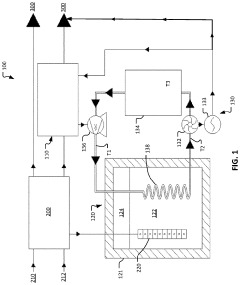
- An integrated hybrid energy storage system (YKESS) combining FESS and MSESS, where FESS delivers instant power and MSESS stores energy as heat, synergistically enhancing strengths and minimizing weaknesses of both systems. This system includes flywheels for rapid energy delivery and molten salt for long-term storage, with the MSESS powering the FESS when energy levels are low, ensuring continuous and efficient energy supply.
Long duration energy storage
PatentPendingUS20250328709A1
Innovation
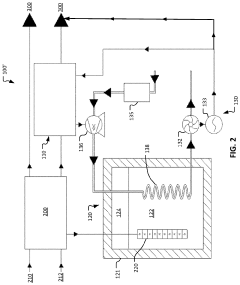
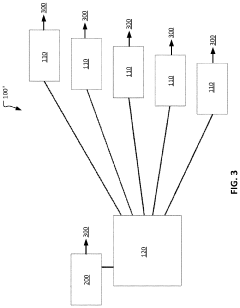
- A stochastic model, such as a Markov chain model, is used to optimize the level of energy stored in a power system by considering probabilistic variability in weather over extended time horizons, treating stored energy as inventory rather than a source of energy generation, and minimizing the impact of renewable energy production variation.


Energy Policy Framework for Storage Integration
The integration of long-duration energy storage systems with renewable energy sources requires a comprehensive policy framework that addresses regulatory, economic, and technical considerations. Current energy policies across major markets are evolving to accommodate the unique characteristics of storage technologies, recognizing their dual role as both generation and load resources.
Regulatory frameworks must establish clear definitions and classifications for energy storage systems, distinguishing between short-term grid services and long-duration applications. The Federal Energy Regulatory Commission (FERC) Order 841 in the United States exemplifies progressive policy development by enabling storage participation in wholesale markets, while similar initiatives in Europe through the Clean Energy Package provide market access mechanisms for storage operators.
Economic incentives play a crucial role in storage deployment, with policies ranging from investment tax credits to capacity payments for grid reliability services. The California Self-Generation Incentive Program and Germany's renewable energy storage subsidies demonstrate how targeted financial mechanisms can accelerate market adoption. These policies must balance cost recovery for storage investments while ensuring grid benefits are appropriately valued.
Grid interconnection standards require updating to accommodate bidirectional power flows and extended discharge durations characteristic of long-duration storage. Traditional interconnection procedures designed for conventional generation assets often inadequately address storage-specific technical requirements, creating deployment barriers that policy frameworks must resolve.
Market design reforms are essential to capture the full value proposition of long-duration storage in renewable integration scenarios. Policies should enable storage systems to participate in multiple value streams simultaneously, including energy arbitrage, capacity provision, and ancillary services. The development of long-term capacity markets and renewable energy certificates trading mechanisms provides additional revenue opportunities for storage operators.
Environmental permitting processes need streamlined approaches for storage technologies, particularly for emerging solutions like compressed air energy storage or pumped hydro facilities. Policy frameworks should establish expedited review procedures while maintaining environmental protection standards, recognizing storage's role in enabling renewable energy deployment and reducing overall system emissions.
Regulatory frameworks must establish clear definitions and classifications for energy storage systems, distinguishing between short-term grid services and long-duration applications. The Federal Energy Regulatory Commission (FERC) Order 841 in the United States exemplifies progressive policy development by enabling storage participation in wholesale markets, while similar initiatives in Europe through the Clean Energy Package provide market access mechanisms for storage operators.
Economic incentives play a crucial role in storage deployment, with policies ranging from investment tax credits to capacity payments for grid reliability services. The California Self-Generation Incentive Program and Germany's renewable energy storage subsidies demonstrate how targeted financial mechanisms can accelerate market adoption. These policies must balance cost recovery for storage investments while ensuring grid benefits are appropriately valued.
Grid interconnection standards require updating to accommodate bidirectional power flows and extended discharge durations characteristic of long-duration storage. Traditional interconnection procedures designed for conventional generation assets often inadequately address storage-specific technical requirements, creating deployment barriers that policy frameworks must resolve.
Market design reforms are essential to capture the full value proposition of long-duration storage in renewable integration scenarios. Policies should enable storage systems to participate in multiple value streams simultaneously, including energy arbitrage, capacity provision, and ancillary services. The development of long-term capacity markets and renewable energy certificates trading mechanisms provides additional revenue opportunities for storage operators.
Environmental permitting processes need streamlined approaches for storage technologies, particularly for emerging solutions like compressed air energy storage or pumped hydro facilities. Policy frameworks should establish expedited review procedures while maintaining environmental protection standards, recognizing storage's role in enabling renewable energy deployment and reducing overall system emissions.
Grid Stability and Storage Performance Optimization
Grid stability represents a fundamental challenge in the integration of long-duration energy storage systems with renewable energy sources. The intermittent nature of solar and wind generation creates significant fluctuations in power supply, requiring sophisticated storage solutions that can maintain frequency regulation, voltage control, and load balancing across extended timeframes. Modern grid infrastructure must accommodate bidirectional power flows while ensuring system reliability during both peak demand periods and renewable energy droughts.
Performance optimization of energy storage systems involves multiple technical parameters that directly impact grid stability. Round-trip efficiency, response time, and cycling durability emerge as critical metrics for evaluating storage performance in grid applications. Battery energy storage systems typically achieve 85-95% round-trip efficiency with millisecond response times, making them ideal for frequency regulation and short-term grid balancing. However, their performance degrades significantly over extended discharge periods, limiting their effectiveness for seasonal energy storage requirements.
Pumped hydro storage and compressed air energy storage technologies demonstrate superior performance characteristics for long-duration applications, maintaining stable output over periods ranging from hours to weeks. These systems exhibit slower response times but provide exceptional cycling stability and minimal performance degradation over extended operational periods. The geographic constraints and infrastructure requirements of these technologies create additional optimization challenges for grid integration.
Advanced control algorithms and predictive analytics play crucial roles in optimizing storage performance for grid stability applications. Machine learning models can forecast renewable generation patterns and grid demand fluctuations, enabling proactive storage dispatch strategies that maximize system efficiency while maintaining grid reliability. Real-time monitoring systems continuously assess storage state-of-charge, grid frequency deviations, and voltage stability to optimize charging and discharging cycles.
The integration of multiple storage technologies within hybrid systems offers enhanced performance optimization opportunities. Combining fast-response battery systems with long-duration mechanical storage creates complementary performance profiles that address both immediate grid stability needs and extended energy balancing requirements. This approach enables optimized resource allocation based on specific grid conditions and renewable generation forecasts.
Emerging technologies such as liquid air energy storage and advanced flywheel systems demonstrate promising performance characteristics for grid stability applications. These technologies offer improved efficiency profiles and reduced environmental constraints compared to traditional mechanical storage solutions, potentially enabling more flexible deployment strategies for grid optimization.
Performance optimization of energy storage systems involves multiple technical parameters that directly impact grid stability. Round-trip efficiency, response time, and cycling durability emerge as critical metrics for evaluating storage performance in grid applications. Battery energy storage systems typically achieve 85-95% round-trip efficiency with millisecond response times, making them ideal for frequency regulation and short-term grid balancing. However, their performance degrades significantly over extended discharge periods, limiting their effectiveness for seasonal energy storage requirements.
Pumped hydro storage and compressed air energy storage technologies demonstrate superior performance characteristics for long-duration applications, maintaining stable output over periods ranging from hours to weeks. These systems exhibit slower response times but provide exceptional cycling stability and minimal performance degradation over extended operational periods. The geographic constraints and infrastructure requirements of these technologies create additional optimization challenges for grid integration.
Advanced control algorithms and predictive analytics play crucial roles in optimizing storage performance for grid stability applications. Machine learning models can forecast renewable generation patterns and grid demand fluctuations, enabling proactive storage dispatch strategies that maximize system efficiency while maintaining grid reliability. Real-time monitoring systems continuously assess storage state-of-charge, grid frequency deviations, and voltage stability to optimize charging and discharging cycles.
The integration of multiple storage technologies within hybrid systems offers enhanced performance optimization opportunities. Combining fast-response battery systems with long-duration mechanical storage creates complementary performance profiles that address both immediate grid stability needs and extended energy balancing requirements. This approach enables optimized resource allocation based on specific grid conditions and renewable generation forecasts.
Emerging technologies such as liquid air energy storage and advanced flywheel systems demonstrate promising performance characteristics for grid stability applications. These technologies offer improved efficiency profiles and reduced environmental constraints compared to traditional mechanical storage solutions, potentially enabling more flexible deployment strategies for grid optimization.
Unlock deeper insights with PatSnap Eureka Quick Research — get a full tech report to explore trends and direct your research. Try now!
Generate Your Research Report Instantly with AI Agent
Supercharge your innovation with PatSnap Eureka AI Agent Platform!