

Maximize ABS Pressure Resistance for High-Load Tasks
MAR 11, 20269 MIN READ
Generate Your Research Report Instantly with AI Agent
PatSnap Eureka helps you evaluate technical feasibility & market potential.
ABS Pressure Enhancement Background and Objectives
Acrylonitrile Butadiene Styrene (ABS) has emerged as one of the most versatile thermoplastic polymers since its commercial introduction in the 1950s. Originally developed to combine the strength of acrylonitrile and styrene with the toughness of polybutadiene, ABS has evolved through decades of material science advancement. The polymer's unique three-phase morphology, consisting of a continuous styrene-acrylonitrile copolymer matrix with dispersed polybutadiene rubber particles, provides an exceptional balance of mechanical properties that has made it indispensable across multiple industries.
The evolution of ABS technology has been marked by several critical milestones, beginning with basic polymerization techniques in the 1960s, advancing through improved grafting processes in the 1980s, and culminating in today's sophisticated molecular engineering approaches. Recent developments have focused on enhancing specific performance characteristics, with pressure resistance becoming increasingly crucial as applications demand higher load-bearing capabilities.
Contemporary industrial applications increasingly require materials capable of withstanding extreme mechanical stresses while maintaining dimensional stability and structural integrity. High-load tasks in automotive components, aerospace applications, industrial machinery housings, and pressure vessel systems demand ABS formulations that can resist deformation, cracking, and failure under sustained or cyclical pressure loads. The challenge lies in optimizing the polymer's inherent properties without compromising other essential characteristics such as processability, impact resistance, and thermal stability.
Current market demands are driving the need for enhanced pressure-resistant ABS variants that can operate reliably under loads exceeding 50 MPa while maintaining long-term performance stability. Industries are seeking materials that can replace traditional metals and ceramics in weight-sensitive applications without sacrificing mechanical performance.
The primary objective of maximizing ABS pressure resistance centers on developing advanced polymer formulations and processing techniques that significantly enhance the material's ability to withstand high mechanical loads. This involves optimizing molecular architecture, improving interfacial adhesion between polymer phases, and incorporating reinforcement strategies that maintain the material's inherent advantages while dramatically improving pressure tolerance.
Key technical targets include achieving compressive strength improvements of 40-60% over standard ABS grades, enhancing creep resistance under sustained loading conditions, and developing formulations capable of maintaining structural integrity at pressures up to 80 MPa. Additionally, the objective encompasses maintaining or improving impact resistance, ensuring consistent performance across varying temperature ranges, and preserving the material's excellent processability characteristics that make ABS attractive for complex manufacturing applications.
The evolution of ABS technology has been marked by several critical milestones, beginning with basic polymerization techniques in the 1960s, advancing through improved grafting processes in the 1980s, and culminating in today's sophisticated molecular engineering approaches. Recent developments have focused on enhancing specific performance characteristics, with pressure resistance becoming increasingly crucial as applications demand higher load-bearing capabilities.
Contemporary industrial applications increasingly require materials capable of withstanding extreme mechanical stresses while maintaining dimensional stability and structural integrity. High-load tasks in automotive components, aerospace applications, industrial machinery housings, and pressure vessel systems demand ABS formulations that can resist deformation, cracking, and failure under sustained or cyclical pressure loads. The challenge lies in optimizing the polymer's inherent properties without compromising other essential characteristics such as processability, impact resistance, and thermal stability.
Current market demands are driving the need for enhanced pressure-resistant ABS variants that can operate reliably under loads exceeding 50 MPa while maintaining long-term performance stability. Industries are seeking materials that can replace traditional metals and ceramics in weight-sensitive applications without sacrificing mechanical performance.
The primary objective of maximizing ABS pressure resistance centers on developing advanced polymer formulations and processing techniques that significantly enhance the material's ability to withstand high mechanical loads. This involves optimizing molecular architecture, improving interfacial adhesion between polymer phases, and incorporating reinforcement strategies that maintain the material's inherent advantages while dramatically improving pressure tolerance.
Key technical targets include achieving compressive strength improvements of 40-60% over standard ABS grades, enhancing creep resistance under sustained loading conditions, and developing formulations capable of maintaining structural integrity at pressures up to 80 MPa. Additionally, the objective encompasses maintaining or improving impact resistance, ensuring consistent performance across varying temperature ranges, and preserving the material's excellent processability characteristics that make ABS attractive for complex manufacturing applications.
Market Demand for High-Load ABS Applications
The automotive industry represents the largest consumer segment for high-load ABS applications, driven by stringent safety regulations and increasing vehicle production volumes globally. Modern vehicles require ABS components that can withstand extreme pressure conditions during emergency braking scenarios, particularly in heavy-duty vehicles, commercial trucks, and high-performance automobiles. The shift toward electric vehicles has further intensified demand for advanced ABS materials that can handle the unique braking characteristics and weight distributions of battery-powered systems.
Aerospace and defense sectors constitute another critical market segment, where ABS components must meet exceptionally rigorous pressure resistance standards. Aircraft braking systems, landing gear components, and various structural elements require materials capable of maintaining integrity under extreme operational conditions. The growing commercial aviation market and increasing defense spending worldwide continue to drive demand for high-performance ABS solutions in these applications.
Industrial machinery and heavy equipment manufacturing sectors show substantial growth potential for pressure-resistant ABS applications. Construction equipment, mining machinery, and manufacturing systems increasingly rely on ABS components that can withstand high hydraulic pressures and mechanical stresses. The global infrastructure development boom, particularly in emerging markets, has created sustained demand for robust ABS materials in these applications.
The oil and gas industry presents significant opportunities for specialized high-load ABS applications, particularly in downhole equipment, pipeline systems, and processing facilities. These environments demand materials that can maintain structural integrity under extreme pressure and temperature conditions while resisting chemical degradation. Offshore drilling operations and deep-water exploration activities have particularly stringent requirements for pressure-resistant materials.
Medical device manufacturing represents an emerging high-value market segment for advanced ABS applications. Surgical instruments, diagnostic equipment, and implantable devices require materials that combine biocompatibility with exceptional mechanical properties. The aging global population and increasing healthcare spending drive continuous growth in this sector.
Market dynamics indicate a clear trend toward customized ABS formulations tailored to specific high-load applications. End-users increasingly demand materials that not only meet basic pressure resistance requirements but also offer enhanced durability, chemical resistance, and processing characteristics. This trend creates opportunities for material suppliers to develop specialized grades and capture premium pricing in niche applications.
Aerospace and defense sectors constitute another critical market segment, where ABS components must meet exceptionally rigorous pressure resistance standards. Aircraft braking systems, landing gear components, and various structural elements require materials capable of maintaining integrity under extreme operational conditions. The growing commercial aviation market and increasing defense spending worldwide continue to drive demand for high-performance ABS solutions in these applications.
Industrial machinery and heavy equipment manufacturing sectors show substantial growth potential for pressure-resistant ABS applications. Construction equipment, mining machinery, and manufacturing systems increasingly rely on ABS components that can withstand high hydraulic pressures and mechanical stresses. The global infrastructure development boom, particularly in emerging markets, has created sustained demand for robust ABS materials in these applications.
The oil and gas industry presents significant opportunities for specialized high-load ABS applications, particularly in downhole equipment, pipeline systems, and processing facilities. These environments demand materials that can maintain structural integrity under extreme pressure and temperature conditions while resisting chemical degradation. Offshore drilling operations and deep-water exploration activities have particularly stringent requirements for pressure-resistant materials.
Medical device manufacturing represents an emerging high-value market segment for advanced ABS applications. Surgical instruments, diagnostic equipment, and implantable devices require materials that combine biocompatibility with exceptional mechanical properties. The aging global population and increasing healthcare spending drive continuous growth in this sector.
Market dynamics indicate a clear trend toward customized ABS formulations tailored to specific high-load applications. End-users increasingly demand materials that not only meet basic pressure resistance requirements but also offer enhanced durability, chemical resistance, and processing characteristics. This trend creates opportunities for material suppliers to develop specialized grades and capture premium pricing in niche applications.
Current ABS Pressure Limitations and Technical Barriers
ABS (Acrylonitrile Butadiene Styrene) materials face significant pressure resistance limitations when deployed in high-load industrial applications. Current ABS formulations typically exhibit maximum pressure tolerance ranging from 2-8 MPa under continuous loading conditions, with performance degradation occurring at elevated temperatures above 60°C. This limitation stems from the inherent molecular structure of ABS, where the rubber phase provides impact resistance but compromises overall mechanical strength under sustained pressure loads.
The primary technical barrier lies in the trade-off between impact resistance and pressure tolerance. Standard ABS grades demonstrate excellent toughness at ambient conditions but experience creep deformation and stress cracking when subjected to prolonged high-pressure environments. The butadiene rubber domains, while enhancing impact properties, create weak points in the polymer matrix that become failure initiation sites under sustained mechanical stress.
Temperature sensitivity represents another critical limitation affecting pressure resistance performance. ABS materials exhibit significant property degradation as operating temperatures approach the glass transition temperature of the styrene-acrylonitrile phase (approximately 105-115°C). This thermal sensitivity restricts the application of ABS in high-pressure systems where elevated temperatures are common, such as hydraulic systems, pressure vessels, and industrial piping applications.
Chemical compatibility issues further compound pressure resistance limitations. ABS materials demonstrate susceptibility to environmental stress cracking when exposed to certain solvents, oils, and chemical agents commonly present in high-load industrial environments. This chemical sensitivity can accelerate failure mechanisms under pressure, reducing the effective service life and reliability of ABS components.
Manufacturing-related constraints also contribute to pressure resistance limitations. Conventional injection molding and extrusion processes can introduce molecular orientation effects, weld line weaknesses, and residual stress concentrations that compromise pressure-bearing capabilities. These processing-induced defects become critical failure points when components are subjected to high-pressure loading conditions.
Current reinforcement strategies, including glass fiber addition and mineral filling, provide limited improvement in pressure resistance while often compromising other desirable ABS properties such as processability and surface finish quality. The challenge lies in developing enhanced formulations that maintain the beneficial characteristics of ABS while significantly improving pressure tolerance for demanding industrial applications.
The primary technical barrier lies in the trade-off between impact resistance and pressure tolerance. Standard ABS grades demonstrate excellent toughness at ambient conditions but experience creep deformation and stress cracking when subjected to prolonged high-pressure environments. The butadiene rubber domains, while enhancing impact properties, create weak points in the polymer matrix that become failure initiation sites under sustained mechanical stress.
Temperature sensitivity represents another critical limitation affecting pressure resistance performance. ABS materials exhibit significant property degradation as operating temperatures approach the glass transition temperature of the styrene-acrylonitrile phase (approximately 105-115°C). This thermal sensitivity restricts the application of ABS in high-pressure systems where elevated temperatures are common, such as hydraulic systems, pressure vessels, and industrial piping applications.
Chemical compatibility issues further compound pressure resistance limitations. ABS materials demonstrate susceptibility to environmental stress cracking when exposed to certain solvents, oils, and chemical agents commonly present in high-load industrial environments. This chemical sensitivity can accelerate failure mechanisms under pressure, reducing the effective service life and reliability of ABS components.
Manufacturing-related constraints also contribute to pressure resistance limitations. Conventional injection molding and extrusion processes can introduce molecular orientation effects, weld line weaknesses, and residual stress concentrations that compromise pressure-bearing capabilities. These processing-induced defects become critical failure points when components are subjected to high-pressure loading conditions.
Current reinforcement strategies, including glass fiber addition and mineral filling, provide limited improvement in pressure resistance while often compromising other desirable ABS properties such as processability and surface finish quality. The challenge lies in developing enhanced formulations that maintain the beneficial characteristics of ABS while significantly improving pressure tolerance for demanding industrial applications.
Existing ABS Pressure Enhancement Solutions
01 ABS resin composition with enhanced pressure resistance through polymer blending
Improving pressure resistance of ABS materials by blending with other polymers such as polycarbonate, polyamide, or modified rubbers. The polymer blending approach creates synergistic effects that enhance mechanical strength and impact resistance while maintaining processability. Specific ratios and compatibilizers are used to optimize the blend properties and achieve superior pressure resistance performance.- ABS resin composition with enhanced pressure resistance through polymer blending: Improving pressure resistance of ABS materials by blending with other polymers such as polycarbonate, polyamide, or modified rubbers. The polymer blending approach creates synergistic effects that enhance mechanical strength and impact resistance while maintaining processability. Specific ratios and compatibilizers are used to optimize the blend properties for high-pressure applications.
- Reinforcement with inorganic fillers and fibers: Incorporation of inorganic fillers such as glass fibers, carbon fibers, or mineral fillers to significantly improve the pressure resistance and dimensional stability of ABS materials. The reinforcing agents are dispersed within the ABS matrix to enhance load-bearing capacity and reduce deformation under pressure. Surface treatment of fillers may be applied to improve interfacial adhesion.
- Chemical modification and grafting techniques: Enhancement of ABS pressure resistance through chemical modification methods including grafting reactions, crosslinking, or introduction of functional groups. These modifications alter the molecular structure to improve intermolecular forces and crystallinity, resulting in better mechanical properties and pressure resistance. The modification process can be performed during polymerization or post-processing.
- Optimization of processing conditions and molding parameters: Improvement of pressure resistance through careful control of processing parameters such as injection molding temperature, pressure, cooling rate, and mold design. Proper processing conditions help achieve optimal molecular orientation, reduced internal stress, and improved crystalline structure. Post-treatment processes like annealing may also be employed to enhance dimensional stability and pressure resistance.
- Multi-layer structure and composite design: Development of multi-layer or composite structures where ABS is combined with other materials in layered configurations to achieve superior pressure resistance. The design utilizes different materials in strategic layers to optimize stress distribution and prevent failure under high pressure conditions. Co-extrusion or lamination techniques are commonly employed to create these structures.
02 Incorporation of reinforcing fillers and additives to improve ABS pressure resistance
Enhancement of ABS pressure resistance through the addition of reinforcing fillers such as glass fibers, carbon fibers, mineral fillers, or nano-particles. These reinforcing agents improve the structural integrity and load-bearing capacity of the ABS material. The fillers are dispersed uniformly throughout the matrix to provide enhanced mechanical properties including tensile strength, flexural strength, and pressure resistance.Expand Specific Solutions03 Modification of ABS molecular structure and polymerization process
Improving pressure resistance by modifying the molecular structure of ABS through controlled polymerization processes, adjusting the ratio of acrylonitrile, butadiene, and styrene components, or introducing functional groups. The molecular weight distribution, grafting degree, and crosslinking density are optimized to enhance the material's resistance to pressure and mechanical stress. Advanced polymerization techniques ensure better phase morphology and interfacial adhesion.Expand Specific Solutions04 Surface treatment and coating technologies for ABS pressure resistance
Application of surface treatments or protective coatings to enhance the pressure resistance of ABS materials. These treatments may include plasma treatment, chemical modification, or application of protective layers that improve surface hardness and resistance to deformation under pressure. The surface modification techniques create a barrier that distributes stress more evenly across the material surface.Expand Specific Solutions05 Optimization of processing conditions and molding parameters for pressure-resistant ABS products
Enhancement of ABS pressure resistance through optimization of manufacturing processes including injection molding parameters, extrusion conditions, temperature profiles, and cooling rates. Proper control of processing conditions ensures optimal molecular orientation, reduced internal stress, and improved crystallinity. The manufacturing parameters are adjusted to minimize defects and maximize the structural integrity of the final product under pressure conditions.Expand Specific Solutions
Key Players in High-Performance ABS Industry
The ABS pressure resistance maximization market represents a mature industrial segment within the broader engineering plastics industry, currently valued at several billion dollars globally with steady growth driven by automotive, electronics, and industrial applications. The competitive landscape is characterized by established chemical giants and specialized materials companies operating across different technological maturity levels. Leading players like Bayer AG, Robert Bosch GmbH, and Continental Teves AG represent the high-maturity tier with advanced polymer chemistry and automotive integration capabilities. Chinese companies including Kingfa Sci. & Tech. Co., Ltd., Wanhua Chemical Group Co., Ltd., and Shanghai Kumho Sunny Plastics Co. Ltd. demonstrate rapidly advancing technical capabilities in modified ABS formulations. Mid-tier players such as Qingdao Haier New Material Development Co., Ltd. and various regional manufacturers focus on application-specific solutions, while research institutions like Nantong University contribute to fundamental materials science advancement, creating a multi-layered competitive ecosystem.
Robert Bosch GmbH
Technical Solution: Bosch has developed advanced ABS systems with enhanced pressure resistance capabilities for high-load automotive applications. Their latest generation ABS units incorporate reinforced hydraulic components and optimized valve designs that can withstand pressures up to 180 bar during emergency braking scenarios. The company utilizes high-strength aluminum alloys and precision-engineered sealing systems to ensure reliable performance under extreme conditions. Their modular ABS architecture allows for scalable pressure handling based on vehicle weight and application requirements, with specialized variants for commercial vehicles and heavy-duty applications that can handle significantly higher hydraulic pressures than standard passenger car systems.
Strengths: Market-leading ABS technology with proven reliability and extensive automotive industry experience. Weaknesses: Higher cost compared to basic systems and complexity in integration.
Kingfa Sci. & Tech. Co., Ltd.
Technical Solution: Kingfa has developed specialized high-performance ABS plastic compounds engineered for maximum pressure resistance in industrial and automotive applications. Their modified ABS formulations incorporate glass fiber reinforcement and impact modifiers that significantly enhance mechanical strength and pressure tolerance. The company's proprietary blending technology creates ABS materials with tensile strength exceeding 60 MPa and improved creep resistance under sustained loading conditions. These materials are specifically designed for hydraulic system components, pressure vessels, and structural applications where standard ABS would fail under high mechanical stress and pressure loads.
Strengths: Advanced material science expertise and customizable ABS formulations for specific pressure requirements. Weaknesses: Limited to material supply rather than complete system solutions and dependency on downstream manufacturers.
Core Innovations in ABS Molecular Structure Design
High Flow Thermoplastic Resin Composition with Excellent Chemical Resistance, Impact Resistance and Gloss
PatentActiveUS20100168315A1
Innovation
- A thermoplastic resin composition combining a styrene-acrylonitrile copolymer with functional groups capable of reacting with polyester, an acrylonitrile-butadiene-styrene copolymer with low acrylonitrile content, and a polyester resin, optimized in specific weight ratios to enhance chemical resistance, impact resistance, fluidity, and gloss.


Chemical and Impact Resistant Thermoplastic Resin Composition Having Improved Extrudability
PatentInactiveUS20100249314A1
Innovation
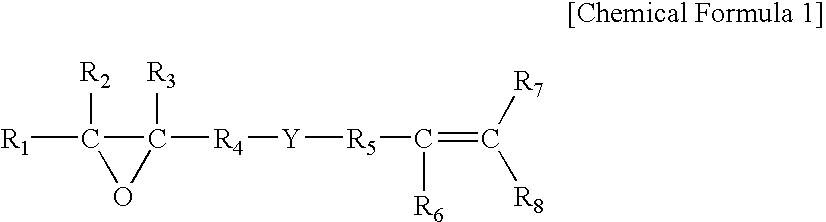
- A thermoplastic resin composition comprising an epoxy group-containing vinyl copolymer resin, a rubber modified aromatic vinyl copolymer resin, a polyester resin, and an ultra-high molecular weight aromatic vinyl-vinyl cyanide copolymer resin, or an epoxy-based additive, which enhances melt strength, extrudability, chemical resistance, and impact resistance.

Material Safety Standards for High-Pressure ABS
The establishment of comprehensive material safety standards for high-pressure ABS applications represents a critical framework for ensuring reliable performance in demanding industrial environments. These standards encompass multiple dimensions of material behavior, including mechanical properties, thermal stability, chemical resistance, and long-term durability under sustained pressure loads. Current international standards such as ASTM D638, ISO 527, and specialized pressure vessel codes provide foundational guidelines, yet specific requirements for high-pressure ABS applications often necessitate more stringent criteria tailored to operational conditions exceeding conventional parameters.
Material certification processes for high-pressure ABS typically require extensive testing protocols that validate performance across temperature ranges from -40°C to 80°C while maintaining structural integrity under pressures up to 10 MPa. These protocols include hydrostatic pressure testing, cyclic fatigue analysis, and environmental stress cracking resistance evaluation. The standards mandate specific molecular weight distributions, impact strength thresholds exceeding 200 J/m, and tensile strength minimums of 40 MPa to ensure adequate safety margins during high-load operations.
Quality assurance frameworks within these safety standards emphasize traceability throughout the manufacturing process, from raw material sourcing to final product validation. This includes mandatory documentation of polymer grade specifications, additive compositions, and processing parameters that directly influence pressure resistance capabilities. Batch testing requirements typically involve statistical sampling methods with confidence levels of 95% or higher, ensuring consistent material properties across production runs.
Regulatory compliance aspects encompass both national and international safety codes, with particular attention to pressure equipment directives and industrial safety regulations. These standards often require third-party certification from accredited testing laboratories and periodic re-evaluation of material performance data. The integration of risk assessment methodologies helps establish appropriate safety factors, typically ranging from 2.5 to 4.0 for critical applications, depending on the specific use case and potential failure consequences.
Emerging safety standard developments focus on incorporating advanced testing methodologies such as digital image correlation for strain analysis and accelerated aging protocols that better predict long-term performance under high-pressure conditions.
Material certification processes for high-pressure ABS typically require extensive testing protocols that validate performance across temperature ranges from -40°C to 80°C while maintaining structural integrity under pressures up to 10 MPa. These protocols include hydrostatic pressure testing, cyclic fatigue analysis, and environmental stress cracking resistance evaluation. The standards mandate specific molecular weight distributions, impact strength thresholds exceeding 200 J/m, and tensile strength minimums of 40 MPa to ensure adequate safety margins during high-load operations.
Quality assurance frameworks within these safety standards emphasize traceability throughout the manufacturing process, from raw material sourcing to final product validation. This includes mandatory documentation of polymer grade specifications, additive compositions, and processing parameters that directly influence pressure resistance capabilities. Batch testing requirements typically involve statistical sampling methods with confidence levels of 95% or higher, ensuring consistent material properties across production runs.
Regulatory compliance aspects encompass both national and international safety codes, with particular attention to pressure equipment directives and industrial safety regulations. These standards often require third-party certification from accredited testing laboratories and periodic re-evaluation of material performance data. The integration of risk assessment methodologies helps establish appropriate safety factors, typically ranging from 2.5 to 4.0 for critical applications, depending on the specific use case and potential failure consequences.
Emerging safety standard developments focus on incorporating advanced testing methodologies such as digital image correlation for strain analysis and accelerated aging protocols that better predict long-term performance under high-pressure conditions.
Sustainability in High-Performance ABS Development
The development of high-performance ABS materials for maximum pressure resistance in heavy-duty applications presents significant sustainability challenges that require innovative approaches to balance performance requirements with environmental responsibility. Traditional ABS manufacturing processes often rely on energy-intensive polymerization methods and petroleum-based feedstocks, creating substantial carbon footprints that conflict with modern sustainability objectives.
Bio-based feedstock integration represents a promising pathway for sustainable ABS development, where renewable raw materials such as bio-derived acrylonitrile and styrene can replace conventional petroleum-based components. Recent advances in biotechnology have enabled the production of these monomers from agricultural waste and biomass, potentially reducing the environmental impact by up to 40% while maintaining the mechanical properties essential for high-load applications.
Circular economy principles are increasingly being incorporated into ABS production through advanced recycling technologies. Chemical recycling processes can break down post-consumer ABS waste into its constituent monomers, enabling closed-loop manufacturing systems. This approach not only reduces waste disposal issues but also decreases the demand for virgin materials, contributing to resource conservation while maintaining the high-pressure resistance characteristics required for demanding applications.
Energy efficiency optimization in manufacturing processes has become a critical focus area, with companies implementing advanced process control systems and heat recovery technologies. These improvements can reduce energy consumption by 25-30% during polymerization and processing stages, significantly lowering the overall environmental impact without compromising material performance standards.
Green chemistry approaches are being explored to minimize the use of hazardous solvents and catalysts in ABS production. Alternative synthesis routes utilizing supercritical carbon dioxide as a reaction medium and environmentally benign catalysts show promise for reducing toxic emissions while achieving the molecular structures necessary for enhanced pressure resistance properties.
Life cycle assessment methodologies are becoming standard practice for evaluating the environmental impact of high-performance ABS materials throughout their entire lifecycle, from raw material extraction to end-of-life disposal, enabling manufacturers to make informed decisions about sustainable development strategies.
Bio-based feedstock integration represents a promising pathway for sustainable ABS development, where renewable raw materials such as bio-derived acrylonitrile and styrene can replace conventional petroleum-based components. Recent advances in biotechnology have enabled the production of these monomers from agricultural waste and biomass, potentially reducing the environmental impact by up to 40% while maintaining the mechanical properties essential for high-load applications.
Circular economy principles are increasingly being incorporated into ABS production through advanced recycling technologies. Chemical recycling processes can break down post-consumer ABS waste into its constituent monomers, enabling closed-loop manufacturing systems. This approach not only reduces waste disposal issues but also decreases the demand for virgin materials, contributing to resource conservation while maintaining the high-pressure resistance characteristics required for demanding applications.
Energy efficiency optimization in manufacturing processes has become a critical focus area, with companies implementing advanced process control systems and heat recovery technologies. These improvements can reduce energy consumption by 25-30% during polymerization and processing stages, significantly lowering the overall environmental impact without compromising material performance standards.
Green chemistry approaches are being explored to minimize the use of hazardous solvents and catalysts in ABS production. Alternative synthesis routes utilizing supercritical carbon dioxide as a reaction medium and environmentally benign catalysts show promise for reducing toxic emissions while achieving the molecular structures necessary for enhanced pressure resistance properties.
Life cycle assessment methodologies are becoming standard practice for evaluating the environmental impact of high-performance ABS materials throughout their entire lifecycle, from raw material extraction to end-of-life disposal, enabling manufacturers to make informed decisions about sustainable development strategies.
Unlock deeper insights with PatSnap Eureka Quick Research — get a full tech report to explore trends and direct your research. Try now!
Generate Your Research Report Instantly with AI Agent
Supercharge your innovation with PatSnap Eureka AI Agent Platform!