

Maximizing Lyocell Wearability Through Improved Design
MAR 13, 20269 MIN READ
Generate Your Research Report Instantly with AI Agent
PatSnap Eureka helps you evaluate technical feasibility & market potential.
Lyocell Fiber Technology Background and Wearability Goals
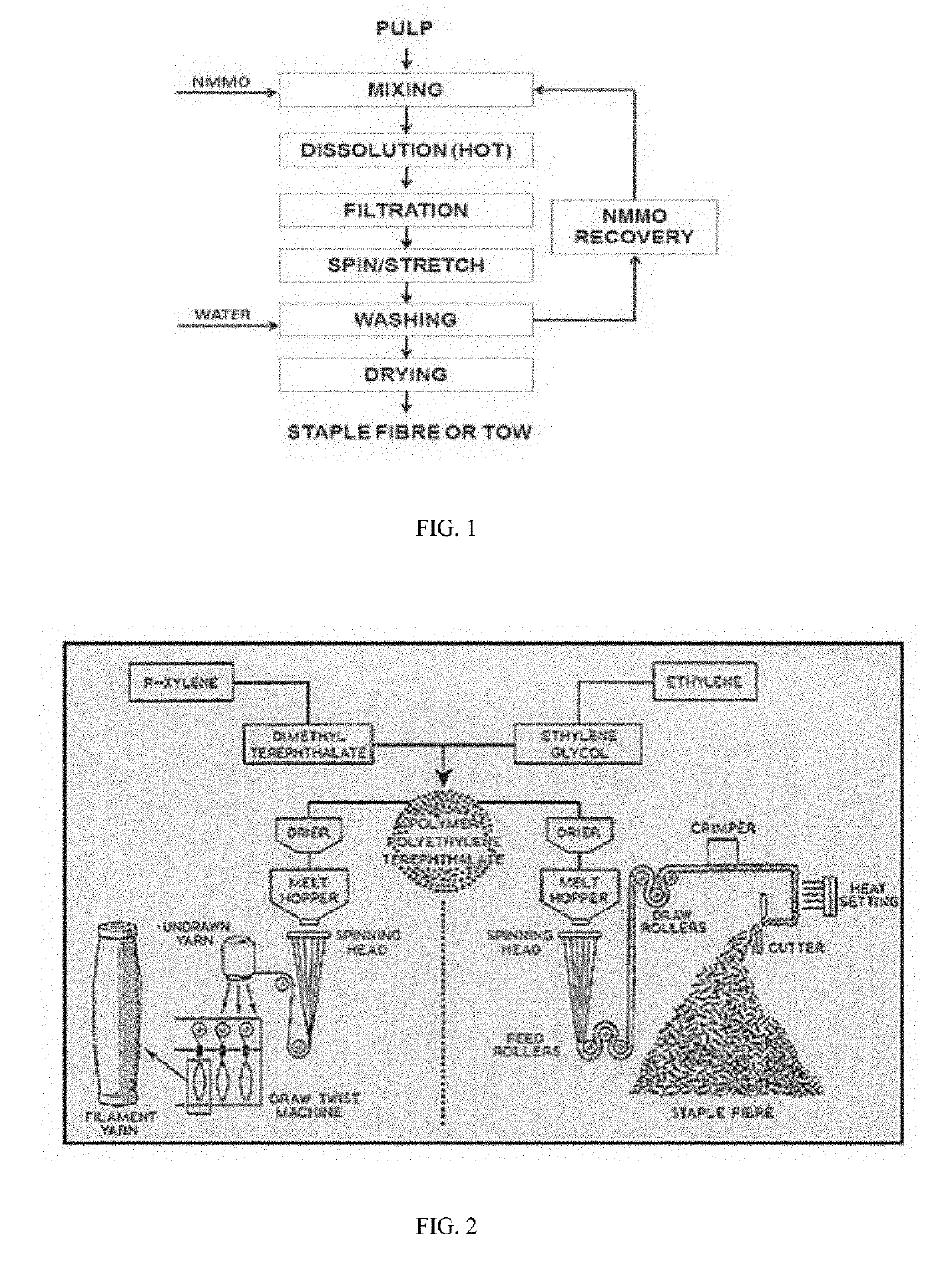
Lyocell fiber represents a significant advancement in regenerated cellulose technology, emerging from decades of research into sustainable textile manufacturing. Developed in the 1970s and commercialized in the 1990s, lyocell is produced through a closed-loop process using N-Methylmorpholine N-oxide (NMMO) as a direct solvent for cellulose dissolution. This innovative manufacturing approach distinguishes lyocell from traditional viscose rayon by eliminating harmful chemicals like carbon disulfide, while achieving superior fiber properties through controlled molecular orientation during the spinning process.
The evolution of lyocell technology has been driven by the textile industry's pursuit of combining natural fiber comfort with synthetic fiber performance characteristics. Unlike conventional cotton or polyester, lyocell exhibits unique moisture management properties, with moisture regain rates of 11-13% that enable exceptional breathability while maintaining structural integrity when wet. The fiber's smooth surface morphology and controlled crystalline structure contribute to its distinctive hand feel and drape characteristics.
Current wearability challenges in lyocell applications center on optimizing the balance between comfort, durability, and aesthetic appeal across diverse garment categories. The primary technical objective involves enhancing dimensional stability while preserving the fiber's inherent moisture-wicking capabilities and soft tactile properties. Fibrillation tendency, while contributing to the characteristic peach-skin feel, requires careful management to prevent excessive pilling and surface roughening during wear and laundering cycles.
The strategic goal of maximizing lyocell wearability encompasses several interconnected technical targets. Improving tensile strength retention under wet conditions remains crucial for garment longevity, particularly in activewear and intimate apparel applications where moisture exposure is frequent. Additionally, optimizing dye uptake uniformity and color fastness properties ensures consistent aesthetic performance throughout the garment lifecycle.
Advanced fiber modification techniques, including crosslinking treatments and surface engineering approaches, present opportunities to enhance performance characteristics without compromising lyocell's biodegradability and comfort attributes. The integration of micro-encapsulation technologies and functional finishes offers pathways to introduce additional performance features such as antimicrobial properties, UV protection, and enhanced wrinkle resistance while maintaining the fiber's natural breathability and moisture management capabilities.
The evolution of lyocell technology has been driven by the textile industry's pursuit of combining natural fiber comfort with synthetic fiber performance characteristics. Unlike conventional cotton or polyester, lyocell exhibits unique moisture management properties, with moisture regain rates of 11-13% that enable exceptional breathability while maintaining structural integrity when wet. The fiber's smooth surface morphology and controlled crystalline structure contribute to its distinctive hand feel and drape characteristics.
Current wearability challenges in lyocell applications center on optimizing the balance between comfort, durability, and aesthetic appeal across diverse garment categories. The primary technical objective involves enhancing dimensional stability while preserving the fiber's inherent moisture-wicking capabilities and soft tactile properties. Fibrillation tendency, while contributing to the characteristic peach-skin feel, requires careful management to prevent excessive pilling and surface roughening during wear and laundering cycles.
The strategic goal of maximizing lyocell wearability encompasses several interconnected technical targets. Improving tensile strength retention under wet conditions remains crucial for garment longevity, particularly in activewear and intimate apparel applications where moisture exposure is frequent. Additionally, optimizing dye uptake uniformity and color fastness properties ensures consistent aesthetic performance throughout the garment lifecycle.
Advanced fiber modification techniques, including crosslinking treatments and surface engineering approaches, present opportunities to enhance performance characteristics without compromising lyocell's biodegradability and comfort attributes. The integration of micro-encapsulation technologies and functional finishes offers pathways to introduce additional performance features such as antimicrobial properties, UV protection, and enhanced wrinkle resistance while maintaining the fiber's natural breathability and moisture management capabilities.
Market Demand for Enhanced Lyocell Textile Products
The global textile industry is experiencing a significant shift toward sustainable and high-performance fiber solutions, with lyocell emerging as a frontrunner in meeting evolving consumer expectations. Market demand for enhanced lyocell textile products has intensified as consumers increasingly prioritize environmental responsibility alongside superior comfort and durability. This growing preference stems from heightened awareness of fashion industry environmental impacts and the desire for clothing that maintains quality through extended wear cycles.
Consumer behavior analysis reveals a strong preference for textiles that combine natural fiber comfort with synthetic fiber performance characteristics. Enhanced lyocell products address this demand by offering improved moisture management, enhanced durability, and superior drape properties compared to conventional lyocell formulations. The athleisure and activewear segments demonstrate particularly robust demand, driven by lifestyle changes emphasizing versatility and performance in everyday clothing.
Market research indicates substantial growth potential in premium textile segments where enhanced lyocell can command higher price points. Luxury fashion brands and performance apparel manufacturers are actively seeking sustainable alternatives to conventional synthetic fibers without compromising functional properties. This trend creates opportunities for lyocell products with improved design characteristics such as enhanced elasticity, better color retention, and superior wrinkle resistance.
The hospitality and healthcare sectors represent emerging market opportunities for enhanced lyocell textiles. These industries require fabrics that maintain hygiene standards while providing comfort and durability under frequent washing cycles. Enhanced lyocell formulations with antimicrobial properties and improved dimensional stability address these specific sector requirements effectively.
Geographic market analysis shows strongest demand growth in developed economies where sustainability consciousness is highest, particularly in North America and Europe. However, emerging markets in Asia-Pacific demonstrate increasing interest as disposable income rises and environmental awareness expands. The premium positioning of enhanced lyocell products aligns well with growing middle-class purchasing power in these regions.
Supply chain considerations reveal that brands are willing to invest in enhanced lyocell despite higher initial costs, recognizing long-term value through improved customer satisfaction and brand differentiation. Market feedback consistently emphasizes the importance of maintaining lyocell's inherent breathability and softness while addressing traditional limitations such as wrinkling and dimensional instability through innovative design approaches.
Consumer behavior analysis reveals a strong preference for textiles that combine natural fiber comfort with synthetic fiber performance characteristics. Enhanced lyocell products address this demand by offering improved moisture management, enhanced durability, and superior drape properties compared to conventional lyocell formulations. The athleisure and activewear segments demonstrate particularly robust demand, driven by lifestyle changes emphasizing versatility and performance in everyday clothing.
Market research indicates substantial growth potential in premium textile segments where enhanced lyocell can command higher price points. Luxury fashion brands and performance apparel manufacturers are actively seeking sustainable alternatives to conventional synthetic fibers without compromising functional properties. This trend creates opportunities for lyocell products with improved design characteristics such as enhanced elasticity, better color retention, and superior wrinkle resistance.
The hospitality and healthcare sectors represent emerging market opportunities for enhanced lyocell textiles. These industries require fabrics that maintain hygiene standards while providing comfort and durability under frequent washing cycles. Enhanced lyocell formulations with antimicrobial properties and improved dimensional stability address these specific sector requirements effectively.
Geographic market analysis shows strongest demand growth in developed economies where sustainability consciousness is highest, particularly in North America and Europe. However, emerging markets in Asia-Pacific demonstrate increasing interest as disposable income rises and environmental awareness expands. The premium positioning of enhanced lyocell products aligns well with growing middle-class purchasing power in these regions.
Supply chain considerations reveal that brands are willing to invest in enhanced lyocell despite higher initial costs, recognizing long-term value through improved customer satisfaction and brand differentiation. Market feedback consistently emphasizes the importance of maintaining lyocell's inherent breathability and softness while addressing traditional limitations such as wrinkling and dimensional instability through innovative design approaches.
Current Lyocell Wearability Issues and Design Challenges
Lyocell fibers, despite their inherent advantages as sustainable cellulosic materials, face significant wearability challenges that limit their widespread adoption in high-performance textile applications. The primary technical constraint stems from the fiber's hygroscopic nature, which leads to dimensional instability when exposed to moisture. This characteristic manifests as excessive shrinkage during washing cycles, often exceeding 5-8% in both length and width directions, creating substantial fit and appearance issues for garments.
The mechanical properties of lyocell present another critical challenge area. While the fiber exhibits excellent wet strength compared to other cellulosic fibers, it demonstrates a tendency toward fibrillation under mechanical stress, particularly in wet conditions. This fibrillation process results in surface pilling, reduced fabric smoothness, and compromised aesthetic appeal over extended wear cycles. The phenomenon is particularly pronounced in blended fabrics where lyocell interacts with synthetic fibers having different mechanical behaviors.
Thermal regulation properties, though generally favorable, present design complexities when optimizing for specific end-use applications. Lyocell's moisture management characteristics can vary significantly depending on fiber modification, yarn construction, and fabric architecture. Achieving consistent moisture wicking and breathability across different garment zones remains a persistent challenge for designers seeking to maximize comfort performance.
Color fastness and dye uptake irregularities constitute additional wearability concerns. Lyocell's unique fiber structure can lead to uneven dye penetration, resulting in color variations and reduced wash fastness compared to conventional cotton or synthetic alternatives. This limitation particularly affects dark and vibrant color applications where consistent appearance is critical for consumer acceptance.
Surface texture modification challenges further complicate design optimization efforts. Traditional finishing treatments often compromise lyocell's inherent sustainability benefits while failing to adequately address the fiber's tendency toward surface roughening during use. The development of eco-friendly surface treatments that maintain both performance and environmental credentials remains an ongoing technical challenge.
Manufacturing process variations introduce additional complexity in achieving consistent wearability performance. Differences in spinning parameters, fiber length distribution, and post-processing treatments can significantly impact final fabric behavior, making standardization across production facilities a persistent industry challenge that directly affects end-product reliability and consumer satisfaction.
The mechanical properties of lyocell present another critical challenge area. While the fiber exhibits excellent wet strength compared to other cellulosic fibers, it demonstrates a tendency toward fibrillation under mechanical stress, particularly in wet conditions. This fibrillation process results in surface pilling, reduced fabric smoothness, and compromised aesthetic appeal over extended wear cycles. The phenomenon is particularly pronounced in blended fabrics where lyocell interacts with synthetic fibers having different mechanical behaviors.
Thermal regulation properties, though generally favorable, present design complexities when optimizing for specific end-use applications. Lyocell's moisture management characteristics can vary significantly depending on fiber modification, yarn construction, and fabric architecture. Achieving consistent moisture wicking and breathability across different garment zones remains a persistent challenge for designers seeking to maximize comfort performance.
Color fastness and dye uptake irregularities constitute additional wearability concerns. Lyocell's unique fiber structure can lead to uneven dye penetration, resulting in color variations and reduced wash fastness compared to conventional cotton or synthetic alternatives. This limitation particularly affects dark and vibrant color applications where consistent appearance is critical for consumer acceptance.
Surface texture modification challenges further complicate design optimization efforts. Traditional finishing treatments often compromise lyocell's inherent sustainability benefits while failing to adequately address the fiber's tendency toward surface roughening during use. The development of eco-friendly surface treatments that maintain both performance and environmental credentials remains an ongoing technical challenge.
Manufacturing process variations introduce additional complexity in achieving consistent wearability performance. Differences in spinning parameters, fiber length distribution, and post-processing treatments can significantly impact final fabric behavior, making standardization across production facilities a persistent industry challenge that directly affects end-product reliability and consumer satisfaction.
Current Design Solutions for Lyocell Wearability Enhancement
01 Lyocell fiber blending and fabric composition
Lyocell fibers can be blended with other fibers such as cotton, polyester, or wool to enhance wearability characteristics. The blending ratios and fabric construction methods significantly affect the comfort, durability, and performance of the final textile product. Different blending compositions can optimize properties like moisture management, breathability, and dimensional stability while maintaining the inherent advantages of lyocell fibers.- Lyocell fiber blending and fabric composition: Lyocell fibers can be blended with other fibers such as cotton, polyester, or wool to enhance wearability characteristics. The blending ratios and fabric structures are optimized to improve comfort, durability, and dimensional stability. Different blend compositions provide varying levels of moisture management, softness, and strength, making the fabrics suitable for various apparel applications.
- Surface treatment and finishing processes: Various finishing treatments can be applied to lyocell fabrics to improve their wearability properties. These treatments include enzymatic treatments, resin finishing, and mechanical processes that enhance the fabric's resistance to pilling, improve dimensional stability, and reduce fibrillation. Surface modifications help maintain the fabric's appearance and performance during repeated wear and washing cycles.
- Moisture management and comfort properties: Lyocell fabrics exhibit excellent moisture absorption and release properties that contribute to wearer comfort. The fiber structure and fabric construction can be optimized to enhance breathability, moisture wicking, and quick-drying characteristics. These properties make lyocell suitable for activewear and everyday clothing where comfort during extended wear is essential.
- Dimensional stability and anti-shrinkage treatments: Lyocell fabrics can undergo specific treatments to improve dimensional stability and reduce shrinkage during washing and wearing. These treatments involve chemical or physical modifications that stabilize the fiber structure and prevent excessive dimensional changes. Enhanced dimensional stability ensures that garments maintain their fit and appearance throughout their lifecycle.
- Durability enhancement and abrasion resistance: Various methods can be employed to improve the durability and abrasion resistance of lyocell fabrics for better wearability. These include fiber modifications, fabric construction techniques, and post-treatment processes that strengthen the fabric structure. Enhanced durability ensures that lyocell garments withstand repeated wear, washing, and mechanical stress while maintaining their aesthetic and functional properties.
02 Surface treatment and finishing processes for lyocell fabrics
Various surface treatment methods can be applied to lyocell fabrics to improve their wearability properties. These treatments include enzymatic treatments, chemical modifications, and mechanical finishing processes that enhance softness, reduce pilling tendency, and improve abrasion resistance. The finishing processes can also modify the surface characteristics to achieve desired aesthetic and functional properties without compromising the environmental benefits of lyocell.Expand Specific Solutions03 Moisture management and comfort properties
Lyocell fabrics exhibit excellent moisture absorption and release properties that contribute to enhanced wearing comfort. The fiber structure allows for efficient moisture transport and quick drying characteristics, making the fabric suitable for various applications. Modifications to the fiber cross-section and fabric structure can further optimize these moisture management properties to improve overall wearability in different climatic conditions.Expand Specific Solutions04 Dimensional stability and anti-fibrillation treatments
Lyocell fibers have a tendency to fibrillate when wet, which can affect the fabric's appearance and durability. Various treatment methods have been developed to control fibrillation and improve dimensional stability during washing and wearing. These treatments help maintain the fabric's shape, reduce shrinkage, and extend the garment's lifespan while preserving the desirable properties of lyocell such as drape and softness.Expand Specific Solutions05 Durability enhancement and wear resistance
Improving the durability and wear resistance of lyocell fabrics is essential for extending garment life and maintaining appearance retention. Various approaches include optimizing spinning parameters, applying protective coatings, and incorporating reinforcing treatments. These methods enhance resistance to abrasion, pilling, and repeated washing cycles while maintaining the fabric's comfort and aesthetic qualities. The durability improvements make lyocell fabrics more suitable for everyday wear and demanding applications.Expand Specific Solutions
Key Players in Lyocell Fiber and Textile Industry
The lyocell wearability enhancement market represents a rapidly evolving sector within the sustainable textile industry, currently in its growth phase with expanding market opportunities driven by increasing consumer demand for eco-friendly fabrics. The market demonstrates significant potential with established players like Lenzing AG leading through their TENCEL brand, while Asian manufacturers including Yibin Grace Group, HI-TECH FIBER Group Corporation, and various Chinese companies such as Dangyang Hongyang New Material Technology and Shandong Tianxian New Material are scaling production capabilities. Technology maturity varies considerably across the competitive landscape, with Lenzing AG and HYOSUNG Corp representing advanced technological sophistication, while emerging players like Acegreen Eco-Material Technology and specialized fiber manufacturers are developing innovative processing techniques. Research institutions including China Textile Academy, Donghua University, and Qingdao University contribute to technological advancement, supporting the industry's transition toward improved fiber properties and enhanced wearability characteristics through collaborative innovation efforts.
Lenzing AG
Technical Solution: Lenzing AG has developed advanced TENCEL™ lyocell fibers with enhanced moisture management properties and improved fiber structure for better wearability. Their technology focuses on optimizing the spinning process to create fibers with superior breathability, moisture absorption rates of up to 50% more than cotton, and enhanced softness through controlled fibrillation. The company has also developed specialized fiber variants like TENCEL™ Modal and TENCEL™ Lyocell with REFIBRA™ technology, incorporating recycled cotton waste to improve sustainability while maintaining excellent drape and comfort properties for textile applications.
Strengths: Market leader in lyocell production with proven sustainable manufacturing processes and superior moisture management properties. Weaknesses: Higher production costs compared to conventional fibers and limited production capacity for specialized variants.
China Textile Academy
Technical Solution: China Textile Academy has conducted extensive research on lyocell fiber structure optimization and surface modification techniques to improve wearability characteristics. Their research focuses on controlled fibrillation processes, chemical surface treatments, and blending technologies with other natural fibers to enhance comfort, reduce static buildup, and improve fabric hand-feel. The academy has developed several patented processes for creating lyocell fibers with improved elasticity and reduced tendency for wrinkling, contributing to better garment performance and consumer satisfaction.
Strengths: Strong research capabilities and extensive knowledge base in fiber science with government support for innovation. Weaknesses: Limited commercial production capabilities and slower technology transfer to industrial applications compared to private companies.
Core Innovations in Lyocell Fiber Structure and Processing
Ultra soft fabric and process of manufacturing same
PatentInactiveUS20190323152A1
Innovation
- A textile fabric made with 100% cellulose in the warp and 100% multi-filament polyester in the weft, using a warp-faced weaving structure, combined with resin finishing and curing, and processed using RoCoS compact technology and Manforts E-control technology to achieve enhanced durability and comfort.

Cellulose fiber
PatentActiveEP3090081A1
Innovation
- Adjusting process parameters such as pulp composition, spinning conditions, and air gap dynamics to produce Lyocell fibers with specific Höller factors, achieving a balance between high wet strength and flexibility, similar to viscose fibers, without the need for additional chemicals.
Sustainable Textile Regulations and Environmental Standards
The global textile industry faces increasingly stringent environmental regulations that directly impact lyocell production and design optimization. The European Union's REACH regulation establishes comprehensive chemical safety requirements, mandating detailed registration and evaluation of substances used in textile manufacturing. This framework particularly affects lyocell fiber treatment processes and finishing chemicals, requiring manufacturers to demonstrate environmental safety throughout the production chain.
The Global Organic Textile Standard (GOTS) has emerged as a leading certification framework for sustainable textiles, establishing strict criteria for organic fiber content, environmental compliance, and social responsibility. For lyocell manufacturers focusing on enhanced wearability, GOTS certification requires adherence to specific water treatment standards, energy consumption limits, and chemical usage restrictions that influence design choices and processing methodologies.
OEKO-TEX Standard 100 provides another critical regulatory framework, testing for harmful substances in textile products and establishing confidence limits for consumer safety. This standard directly impacts lyocell wearability enhancement strategies, as it restricts the use of certain finishing agents and treatments that might otherwise improve comfort properties but pose environmental or health risks.
The Cradle to Cradle Certified Product Standard introduces circular economy principles into textile regulation, emphasizing material health, renewable energy use, and biodegradability. This framework encourages lyocell designers to consider end-of-life scenarios when developing improved wearability features, promoting solutions that maintain both performance and environmental responsibility.
Regional regulations such as California's Proposition 65 and China's GB 18401 National Textile Safety Standard create additional compliance requirements that influence global lyocell design strategies. These regulations establish specific limits for formaldehyde content, pH values, and heavy metal concentrations, constraining the selection of treatments and additives used to enhance fabric performance.
The emerging EU Strategy for Sustainable and Circular Textiles introduces extended producer responsibility concepts, requiring manufacturers to consider the entire lifecycle impact of their products. This regulatory shift compels lyocell producers to integrate sustainability metrics into wearability improvement initiatives, balancing performance enhancements with environmental stewardship requirements.
The Global Organic Textile Standard (GOTS) has emerged as a leading certification framework for sustainable textiles, establishing strict criteria for organic fiber content, environmental compliance, and social responsibility. For lyocell manufacturers focusing on enhanced wearability, GOTS certification requires adherence to specific water treatment standards, energy consumption limits, and chemical usage restrictions that influence design choices and processing methodologies.
OEKO-TEX Standard 100 provides another critical regulatory framework, testing for harmful substances in textile products and establishing confidence limits for consumer safety. This standard directly impacts lyocell wearability enhancement strategies, as it restricts the use of certain finishing agents and treatments that might otherwise improve comfort properties but pose environmental or health risks.
The Cradle to Cradle Certified Product Standard introduces circular economy principles into textile regulation, emphasizing material health, renewable energy use, and biodegradability. This framework encourages lyocell designers to consider end-of-life scenarios when developing improved wearability features, promoting solutions that maintain both performance and environmental responsibility.
Regional regulations such as California's Proposition 65 and China's GB 18401 National Textile Safety Standard create additional compliance requirements that influence global lyocell design strategies. These regulations establish specific limits for formaldehyde content, pH values, and heavy metal concentrations, constraining the selection of treatments and additives used to enhance fabric performance.
The emerging EU Strategy for Sustainable and Circular Textiles introduces extended producer responsibility concepts, requiring manufacturers to consider the entire lifecycle impact of their products. This regulatory shift compels lyocell producers to integrate sustainability metrics into wearability improvement initiatives, balancing performance enhancements with environmental stewardship requirements.
Consumer Comfort and Performance Testing Methodologies
Consumer comfort and performance testing methodologies for lyocell fabrics require comprehensive evaluation frameworks that address both subjective user experiences and objective performance metrics. These methodologies encompass physiological comfort assessments, durability evaluations, and sensory analysis protocols specifically tailored to lyocell's unique fiber characteristics and intended applications.
Physiological comfort testing forms the foundation of lyocell wearability assessment. Thermal regulation testing measures moisture vapor transmission rates, air permeability, and thermal conductivity under controlled environmental conditions. Skin contact comfort evaluations utilize standardized protocols including wet cling assessment, surface friction measurements, and pH compatibility testing. These tests simulate real-world wearing conditions through controlled chamber environments that replicate various climate scenarios and activity levels.
Mechanical performance testing focuses on fabric behavior during wear and care cycles. Tensile strength measurements, both dry and wet, evaluate fabric integrity under stress conditions typical of garment use. Dimensional stability testing assesses shrinkage and stretch recovery properties through repeated washing and drying cycles. Pilling resistance and abrasion testing determine surface durability and appearance retention over extended wear periods.
Sensory evaluation methodologies incorporate trained panel assessments and consumer preference studies. Tactile property evaluation measures hand feel characteristics including softness, smoothness, and drape using both instrumental methods and human sensory panels. Comparative wear trials involve controlled user groups wearing lyocell garments alongside benchmark materials, documenting comfort ratings, fit satisfaction, and overall performance feedback through structured questionnaires and biometric monitoring.
Advanced testing protocols integrate wearable sensor technologies to capture real-time physiological responses during fabric interaction. Skin temperature monitoring, moisture accumulation tracking, and movement comfort analysis provide quantitative data supporting subjective comfort assessments. These methodologies enable comprehensive evaluation of lyocell fabric modifications and design improvements, ensuring enhanced wearability through evidence-based development approaches.
Physiological comfort testing forms the foundation of lyocell wearability assessment. Thermal regulation testing measures moisture vapor transmission rates, air permeability, and thermal conductivity under controlled environmental conditions. Skin contact comfort evaluations utilize standardized protocols including wet cling assessment, surface friction measurements, and pH compatibility testing. These tests simulate real-world wearing conditions through controlled chamber environments that replicate various climate scenarios and activity levels.
Mechanical performance testing focuses on fabric behavior during wear and care cycles. Tensile strength measurements, both dry and wet, evaluate fabric integrity under stress conditions typical of garment use. Dimensional stability testing assesses shrinkage and stretch recovery properties through repeated washing and drying cycles. Pilling resistance and abrasion testing determine surface durability and appearance retention over extended wear periods.
Sensory evaluation methodologies incorporate trained panel assessments and consumer preference studies. Tactile property evaluation measures hand feel characteristics including softness, smoothness, and drape using both instrumental methods and human sensory panels. Comparative wear trials involve controlled user groups wearing lyocell garments alongside benchmark materials, documenting comfort ratings, fit satisfaction, and overall performance feedback through structured questionnaires and biometric monitoring.
Advanced testing protocols integrate wearable sensor technologies to capture real-time physiological responses during fabric interaction. Skin temperature monitoring, moisture accumulation tracking, and movement comfort analysis provide quantitative data supporting subjective comfort assessments. These methodologies enable comprehensive evaluation of lyocell fabric modifications and design improvements, ensuring enhanced wearability through evidence-based development approaches.
Unlock deeper insights with PatSnap Eureka Quick Research — get a full tech report to explore trends and direct your research. Try now!
Generate Your Research Report Instantly with AI Agent
Supercharge your innovation with PatSnap Eureka AI Agent Platform!